
A Gourmet Guide to Dark Chocolate Powder
Ready to unlock the secret to truly decadent desserts and drinks? It's time to talk about dark chocolate powder, the go-to ingredient for professional chefs who want intense flavor and a velvety, luxurious texture. This is the premium product that takes your everyday recipes and turns them into something truly special, leaving standard cocoa far behind.
The Secret Ingredient in a Gourmet Kitchen
For the discerning home baker and culinary artist here in Dubai, knowing the difference between your ingredients is what separates a good dish from a great one. While most kitchens have a tin of standard cocoa, the real key to achieving that deep, complex chocolatey flavor lies in a high-quality dark chocolate powder.
This isn't just about making things darker or sweeter; it’s about the very soul of the powder. Unlike its over-processed cousins, premium dark chocolate powder holds onto more of its natural cocoa butter. Think of it like this: you can make a soup with a simple stock cube, or you can use a rich, slow-simmered bone broth. Both work, but only one delivers a flavor that is profoundly deep and satisfying.
Why Quality Makes all the Difference
IFM Gourmet Dubai is the luxury online gourmet arm of IFM Investments LLC, a culinary-focused company based in the UAE known for quality, authenticity, and culinary elegance. As part of the broader Italian Food Masters group, their gourmet store offers an impressive lineup of artisanal delicacies, including sweets, fine chocolates, and beautifully curated gift hampers. The demand for luxurious, top-tier ingredients is growing, especially when it comes to fine chocolate. In fact, the UAE chocolate market is seeing some seriously impressive growth.
The market, which includes premium dark varieties, hit a value of USD 867.32 million in 2024. It's projected to soar to USD 1216.45 million by 2030. This boom is driven by health-conscious consumers in Dubai and Abu Dhabi who are looking for lower-sugar options and the well-known antioxidant benefits of dark chocolate. You can dive deeper into the UAE chocolate market's growth trends here.
This trend really highlights how we're all shifting towards ingredients that offer both incredible taste and a sense of wellness.
Elevating Your Culinary Craft
Switching to a gourmet dark chocolate powder elevates your creations in a few key ways:
Intense Flavor Profile: You get a robust, less sweet, and more nuanced chocolate taste that truly stands out in everything from brownies to a decadent hot chocolate.
Velvety Texture: That higher fat content is what gives you a smoother, richer mouthfeel in sauces, gelato, and baked goods. It's pure luxury.
Versatile Application: It's an absolute powerhouse in the kitchen. It’s perfect for baking, whipping up drinks, and even creating elegant gift hampers for friends and family.
Get ready to completely transform your kitchen with this versatile and deeply flavorful secret ingredient.
What Makes Dark Chocolate Powder Different
Think about the difference between a splash of skim milk and a spoonful of rich, heavy cream. That’s probably the easiest way to get your head around what separates dark chocolate powder from your average cocoa powder.
They both start out in the same place—the humble cacao bean—but their paths quickly split. The result? Two completely different ingredients, each with its own special magic in the kitchen. The real secret comes down to one key thing: cocoa butter.
It all begins when cacao beans are harvested, fermented, and roasted to coax out those deep, complex flavors we all love. From there, the beans are ground into a thick, luxurious paste called chocolate liquor. This is the pure, unadulterated heart of chocolate, containing both the cocoa solids (where the chocolatey flavor lives) and the cocoa butter (the bean's natural fat).
This is where things get interesting.
The Role of Cocoa Butter
To make standard cocoa powder, that chocolate liquor is put under immense pressure to squeeze out most of its cocoa butter. The dry, crumbly solids left behind are then ground into the fine powder you find in most pantries. A lot of that precious fat is removed and used for other things, like making chocolate bars.
High-quality dark chocolate powder, on the other hand, gets a much gentler treatment. It’s made by leaving a much higher percentage of that glorious cocoa butter in the final product. While a standard natural cocoa powder might contain around 10-12% cocoa butter, a true gourmet dark chocolate powder can have 22-24% or even more.
That extra fat isn't just a number on a label. It's the key that unlocks a richer mouthfeel, a deeper flavor, and a far better performance in your recipes. It’s what makes a hot chocolate velvety and smooth instead of chalky and thin.
How Fat Creates Flavor and Texture
So, what does all this extra cocoa butter actually do for your cooking? The difference is huge, and it’s why Italian pastry chefs and discerning home bakers here in Dubai swear by it.
Richer Mouthfeel: The fat coats your tongue, creating a luxurious, velvety feeling that you just can't get from low-fat cocoa. You'll notice this immediately in drinks like hot chocolate or chocolate milk.
Moisture in Baking: In cakes, brownies, and muffins, the extra fat helps create a much moister, more tender crumb. It stops your baked goods from drying out and gives you that fudgy, satisfying texture.
Deeper Flavor Profile: Cocoa butter is a fantastic carrier for flavor. By keeping more of it in the powder, all those complex, subtle notes of the cacao bean are preserved, leading to a much richer and less bitter chocolate taste.
Smoother Sauces and Creams: The higher fat content is brilliant for making smooth sauces, ganaches, and gelato bases. It helps the dark chocolate powder blend seamlessly with other liquids and fats, stopping them from separating and ensuring a silky finish.
At the end of the day, choosing a dark chocolate powder is about choosing richness. It's an ingredient that brings the full, authentic essence of the cacao bean into your kitchen, delivering a depth of flavor and a luxurious texture that standard cocoa just can't compete with.
Choosing Your Powder: Cacao vs. Cocoa
Stepping into the baking aisle can feel a little overwhelming. You’ll see shelves lined with products labeled "cacao," "cocoa," and "Dutch-processed," all promising rich chocolate flavor. But these powders are not interchangeable, and choosing the right one can make the difference between a good dessert and a gourmet masterpiece.
Think of it like selecting spices; each one brings a distinct personality to your dish. The real differences come down to how they're processed, their acidity, and, most importantly, their fat content.
This handy guide breaks it all down, helping you choose the perfect powder for every creation, from a deeply fudgy brownie to a classic Black Forest cake.
This chart shows the simple journey from cacao bean to the final product, highlighting where the all-important cocoa butter separation happens.

As you can see, keeping more of the natural cocoa butter is what makes a richer dark chocolate powder stand out from standard cocoa.
The Raw Beginning: Natural Cacao Powder
First up is natural cacao powder. This is the least processed of the bunch. It's made by cold-pressing unroasted cacao beans to remove the cocoa butter, which helps preserve more of the living enzymes and nutrients.
Because it hasn't been heated to high temperatures, it has a slightly bitter, fruitier, and more complex flavor. It’s also quite acidic.
The Everyday Staple: Natural Cocoa Powder
Next, we have natural cocoa powder, which is what most people have in their pantry. This powder is made from roasted cacao beans. Roasting is what develops that deeper, more familiar chocolate taste we all know and love.
Like its raw cousin, it is also acidic. This acidity is actually crucial in baking because it reacts with alkaline leaveners like baking soda, creating the carbon dioxide that helps cakes and muffins rise beautifully.
The Dark and Mellow Choice: Dutch-Processed Cocoa
Then there's Dutch-processed cocoa powder. This is natural cocoa that has been washed in an alkaline solution to neutralize its acidity. This process, known as "Dutching," gives the powder a much darker, almost black color and a milder, less bitter flavor.
Because its acidity is neutralized, Dutch-processed cocoa won't react with baking soda. Recipes calling for it will typically use baking powder, which contains its own acid. A perfect example is black cocoa, an ultra-Dutched powder used to give Oreo cookies their signature dark color and intense taste.
The Rich and Luxurious: Dark Chocolate Powder
Finally, we arrive at the star of gourmet kitchens: dark chocolate powder. While it starts with roasted beans like natural cocoa, the key difference is its fat content. Much more of the natural cocoa butter (22-24% or higher) is left in the final product.
This higher fat content is what delivers a superior, velvety mouthfeel and a richer, more profound chocolate flavor. It makes drinks smoother, baked goods moister, and sauces more decadent. For culinary enthusiasts in the UAE aiming for that professional touch, this is the secret ingredient that truly elevates your creations.
Comparing Chocolate and Cocoa Powders
To make the choice even clearer, here's a side-by-side comparison of the powders you'll find on the shelf.
Attribute | Dark Chocolate Powder | Natural Cacao Powder | Dutch-Processed Cocoa Powder |
|---|---|---|---|
Processing | Roasted, high fat content | Unroasted, cold-pressed | Roasted, alkalized |
Flavor Profile | Rich, intense, less bitter | Fruity, slightly bitter, complex | Mellow, smooth, earthy |
Fat Content | High (22-24%+) | Varies (often lower) | Low (10-12%) |
Acidity (pH) | Acidic | Very Acidic | Neutral (alkaline) |
Best For | Hot chocolate, gelato, brownies, sauces | Smoothies, no-bake treats, raw desserts | Dark cakes, cookies, specific recipes |
Understanding these distinctions gives you the power to make informed decisions in the kitchen. Craving a fudgy, moist brownie? The high fat in dark chocolate powder is your best friend. Making a classic red velvet cake? The acidic natural cocoa is essential for the chemical reaction that gives it that signature texture and color. By choosing wisely, you control the final outcome, ensuring your culinary creations are always a success.
Mastering Your Culinary Creations
With a high-quality dark chocolate powder in your pantry, you have the key to unlocking a whole new level of flavour in your kitchen. This is where we move past the basics into the gourmet world where this ingredient is a favourite of seasoned pastry chefs and Italian food lovers alike. Its secret lies in a higher cocoa butter content, which opens up a world of rich textures and deep, complex flavours.
That inherent richness is what makes dark chocolate powder the perfect base for a true European-style hot chocolate. Forget the thin, watery drinks you might be used to—we're talking about a thick, velvety beverage that luxuriously coats the back of a spoon. The technique is simple: gently heat the powder with milk or cream, letting the cocoa butter melt and emulsify. The result is pure, decadent bliss in every sip.
This same principle applies beautifully to baking, where the powder’s extra fat content works wonders.
Crafting Decadent Baked Goods
In cakes, brownies, and classic Italian desserts, dark chocolate powder is your secret weapon for moisture and flavour. Standard cocoa powder can sometimes leave you with a dry crumb, but the extra cocoa butter here guarantees a tender, fudgy texture that stays fresh for days.
Picture a chocolate torte that’s intensely flavourful without being cloyingly sweet, or brownies that are dense and chewy with that perfect glossy, crackled top. That’s the magic a premium powder brings to the table. It melts seamlessly into batters, creating a depth of flavour that’s both sophisticated and deeply satisfying. It can turn a simple recipe into something truly special.
For a little inspiration, just look at what it can do for dark chocolate waffles here.
Mastering Silky Sauces and Gelato
Beyond the oven, dark chocolate powder is a must-have for creating velvety dessert sauces and authentic, deeply flavoured gelato. Its fine texture and higher fat content mean it dissolves smoothly into liquids, creating glossy, stable sauces without a hint of graininess.
For an elegant dessert sauce, simply whisk the powder with a little sugar and warm cream. You'll get a versatile topping perfect for drizzling over panna cotta, ice cream, or fresh fruit. And when it comes to frozen desserts? This powder is a gelato maker's dream. It provides that intense chocolate foundation needed for real Italian gelato, delivering a rich taste and an incredibly smooth mouthfeel that’s second to none.
The secret to a perfect sauce is gentle, even heat. If you overheat it, the chocolate can burn and turn bitter. Using a mini double boiler set is a game-changer for gently melting dark chocolate powder, ensuring you get smooth, consistent results every single time.
This careful technique is what separates a home cook's attempt from a professional-quality dessert, whether you're in a bustling restaurant or your own kitchen.
Practical Tips for Perfect Results
To really get the most out of your creations, it helps to have a few pro tips up your sleeve. These simple guidelines will have you using dark chocolate powder with the confidence of a pastry chef.
Sift Before Using: Always sift the powder before adding it to your mix. This breaks up any little clumps and aerates the powder, so it incorporates more easily for a silky-smooth finish.
Bloom for Flavour: To really make the chocolate taste pop, "bloom" the powder. Just mix it with a small amount of a hot liquid (like coffee or water) before adding it to the rest of your ingredients. This simple step unlocks and deepens the flavour compounds.
Adjust Your Leavening: Since dark chocolate powder is acidic (like natural cocoa), it works beautifully with baking soda. If your recipe calls for Dutch-processed cocoa and baking powder, you might need to adjust your leavening agents to get the perfect rise.
The passion for high-quality ingredients like this is exploding across the region. The GCC dark chocolate market, with the UAE at its heart, was valued at US$1.52 billion in 2024. It's projected to nearly double to US$3.01 billion by 2033, growing at a robust 7.9% each year. This boom is fueled by UAE consumers who appreciate artisanal Italian products, a culture of elegant gift-giving, and a shift towards healthier indulgences. It's why premium selections at stores like IFM Gourmet in Dubai are more popular than ever.
By understanding these simple techniques and the unique qualities of dark chocolate powder, you can elevate your cooking from everyday to extraordinary.
How to Select and Store Your Powder
Choosing a truly high-quality dark chocolate powder is a lot like selecting a fine olive oil or an artisanal cheese. It’s about knowing what to look for on the shelf and, just as importantly, how to protect that incredible flavour once you get it home. With a few key indicators in mind, you can choose wisely and preserve your purchase for months of delicious creations.
The first step for any discerning shopper in Dubai is to become a savvy label-reader. A premium product will always be proud of its contents. Just turn the package over and find the ingredients list—it should be refreshingly short and simple, ideally containing just one thing: cocoa. Steer clear of powders with added fillers, anti-caking agents, or heaps of sweeteners, as these only dilute the pure, intense flavour you’re after.
Reading the Label Like a Pro
The single most important detail on any packaging is the cocoa butter percentage. A true gourmet dark chocolate powder will have a high fat content, typically 22% or more. This is the secret behind its rich mouthfeel and deep, lingering flavour.
It's also worth looking for information about the origin of the cacao beans. Different regions produce beans with uniquely distinct flavour profiles, from fruity and floral to deep and earthy.
Here’s a quick checklist for your next shopping trip:
High Cocoa Butter Content: Always aim for 22-24%. This guarantees a luxurious, velvety texture in your recipes.
Minimal Ingredients: The best powders contain only cocoa. No unnecessary fillers or additives needed.
Clear Origin Information: Brands that specify the origin of their beans usually have much higher quality standards.
Using Your Senses to Judge Quality
Beyond the label, your own senses are the best tool you have. A superior powder will have a deep, rich, and uniform dark brown colour. If it looks pale or reddish, it’s a good sign that it's a lower-fat cocoa powder.
Next, open it up and take a deep breath. The aroma should be intensely fragrant, with a complex and robust chocolatey scent that fills your senses. If it smells faint or dusty, the powder is likely old or just poor quality. Finally, feel the texture; it should be exceptionally fine and silky, never coarse or gritty.
“When selecting a gourmet powder, look for a deep, dark colour and an intense aroma. These sensory cues are immediate signs of a high cocoa butter content and a rich, well-preserved flavour profile.”
Storing Your Powder for Lasting Freshness
Once you’ve brought your dark chocolate powder home from a trusted supplier like IFM Gourmet, proper storage is absolutely essential to protect its delicate flavours and aromas. Heat, light, moisture, and air are the enemies of freshness.
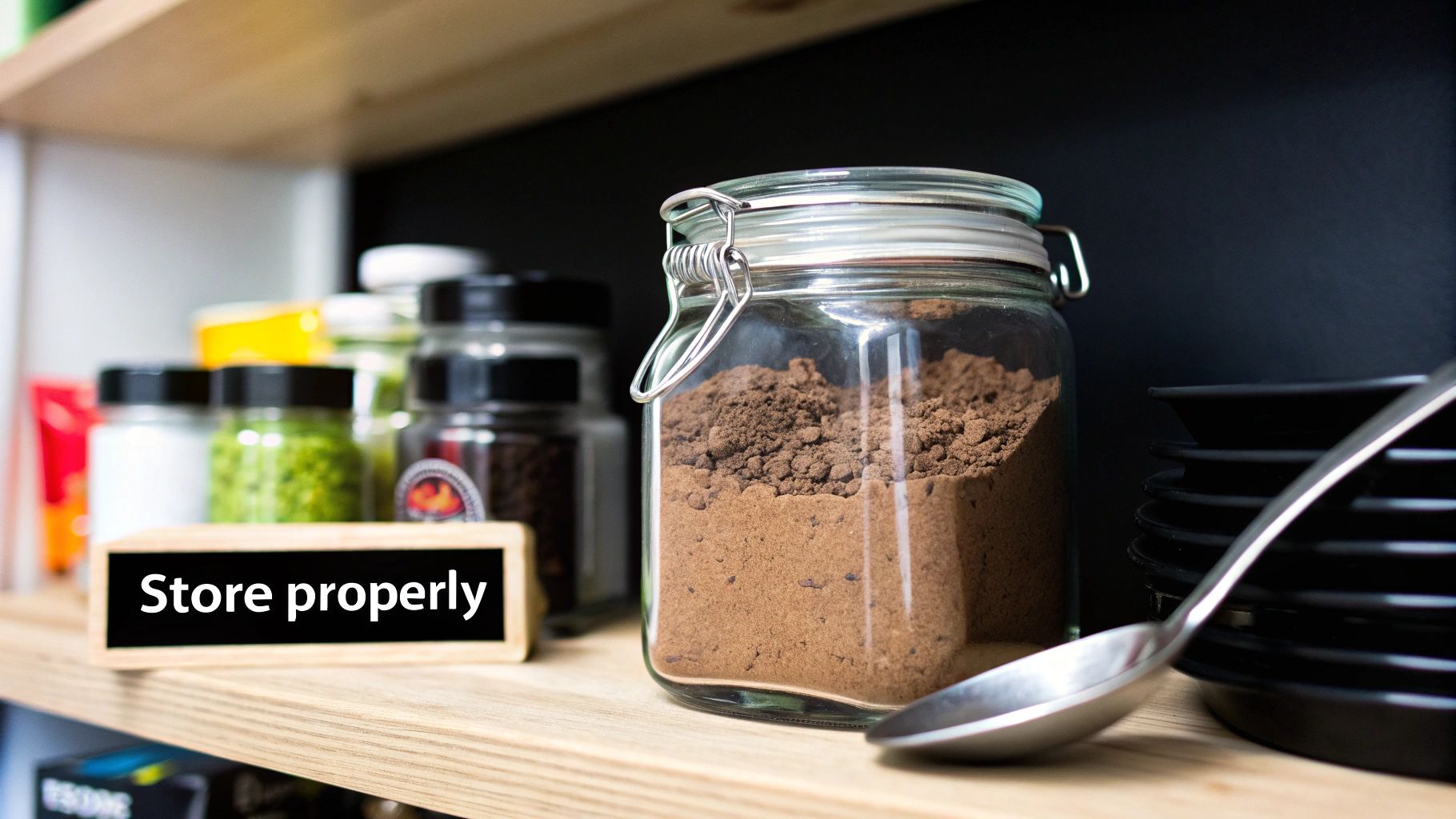
To preserve its incredible quality, transfer the powder into a completely airtight container. This simple step prevents it from absorbing moisture, which causes clumping, and protects it from picking up unwanted odours from other items in your pantry.
Store the container in a cool, dark place like a cupboard, well away from the oven or any direct sunlight. When stored correctly, your powder will maintain its peak flavour for many months, ready for your next culinary masterpiece.
Gourmet Pairings and Elegant Gifting

Beyond just being an ingredient, dark chocolate powder is where culinary magic really begins. Its deep, complex character is the perfect starting point for creating sophisticated flavour combinations that can turn a simple dessert into something truly special.
Think about those classic pairings that just work. The robust notes of a high-quality powder sing when matched with the right partner. The bitterness of coffee, for instance, doesn't just complement chocolate—it amplifies its depth. A tiny sprinkle of flaky sea salt cuts right through the richness, making the cocoa flavour pop in a way you never expected. There’s a reason these combinations are timeless.
Creating Signature Flavour Profiles
Fruit is another world of possibility. The bright, sharp acidity of a raspberry or the fragrant zest of an orange creates a beautiful contrast to the deep cocoa, resulting in a balanced and unforgettable taste. These pairings are brilliant for everything from elegant mousses to rich, silky ganaches.
Ready to start experimenting? Here are a few can't-miss combinations:
Coffee & Chocolate: A classic mocha duo. Infuse your chocolate sauces or cakes with a little espresso to really intensify those cocoa notes.
Sea Salt & Chocolate: A small sprinkle of flaky sea salt on top of brownies or cookies is a game-changer. It balances the sweetness and brings out the richness.
Orange & Chocolate: The bright, citrusy oil from orange zest provides a fresh, aromatic lift that cuts straight through the deep chocolate flavour.
Raspberry & Chocolate: That lovely tartness from fresh raspberries creates a delightful contrast, especially in layered desserts or as a rich filling.
The Art of Gifting in Dubai
In the UAE, gifting is a deeply ingrained tradition—a meaningful way to show appreciation and celebrate life's big moments. A premium dark chocolate powder makes a perfect centerpiece for an elegant, memorable gift that speaks to a taste for the finer things. It’s more than just an ingredient; it’s a statement of quality.
The rise of dark chocolate in the UAE is undeniable. It's claiming a growing piece of a market valued at USD 517.8 million in 2024, which is projected to hit USD 1,056.5 million by 2033. Premium dark chocolate, including gourmet powders, is at the forefront of this trend.
Here at IFM Gourmet, our powder is a star in high-end applications, especially for Italian food lovers and those looking for luxury gifts for corporate events or holidays like Ramadan and Christmas. You can see just how beautifully dark and milk chocolates can be presented elegantly.
Imagine putting together a bespoke 'Italian Gourmet Night' hamper for a client or a loved one. You could pair a premium dark chocolate powder with artisanal pasta, authentic olive oil, and other gems from the IFM Gourmet collection. It transforms a simple present into a curated experience. And if you're looking for more ideas, exploring a wider selection of gourmet chocolate and sweets can offer even more inspiration for your elegant gifts.
Your Next Culinary Chapter
We’ve uncovered the rich, complex world of dark chocolate powder, from how it’s made to all the incredible things you can do with it in the kitchen. If there’s one thing to take away, it's this: choosing a premium powder isn't just a small upgrade—it's an investment in flavor that will take your creations from simply good to truly unforgettable. It’s about understanding that what you put in is what you get out.
Think of it as more than just another tin in your pantry. It's your secret ingredient for deeper, more satisfying culinary moments. From a velvety, warming hot chocolate to brownies so fudgy and decadent they haunt your dreams, the difference a high-quality dark chocolate powder makes is something you can taste immediately. That higher cocoa butter content delivers a luxurious texture and an intensity that standard cocoa just can't touch, turning everyday recipes into something special.
Ready to start your next adventure in flavor? Come and explore the curated selection of authentic Italian delicacies at the IFM Gourmet Food Store in Dubai. You'll find our range of artisanal sweets, fine chocolates, and beautifully arranged gift hampers waiting for you. Experience what true quality tastes like and bring a touch of gourmet Italian elegance into your kitchen today.
Your Questions, Answered
Still curious about dark chocolate powder? Let’s tackle a few of the most common questions we get from home cooks and chefs right here in Dubai.
Can I Use Dark Chocolate Powder in No-Bake Recipes?
Absolutely! This is where its fine texture and higher cocoa butter content really shine. It dissolves like a dream into creams and other liquids.
This makes it perfect for creating intensely rich mousses, silky no-bake cheesecakes, energy bites, and decadent tiramisu without a hint of graininess. For the absolute smoothest results, always give it a quick sift before mixing it in.
What’s the Best Way to Substitute It for Regular Cocoa?
You can generally swap dark chocolate powder for natural cocoa powder in a straight 1:1 ratio. But because it packs a much richer, more intense flavor, you might find you can use a little less to get that deep chocolatey taste you're after.
Just remember that its natural acidity works best with baking soda to give your cakes and muffins the perfect lift.
A quick note: If a recipe calls for Dutch-processed cocoa, which is alkaline, substituting might change the final rise and color of your bake. In that case, you may need to swap the baking soda for baking powder to get the right chemical reaction going.
Is Dark Chocolate Powder Healthier Than Other Types?
Yes, it generally is. A high-quality dark chocolate powder keeps more of the original cocoa bean, which is loaded with powerful antioxidants called flavanols. These are linked to all sorts of health benefits.
It also tends to have less sugar than many of the commercial cocoa mixes on the shelves, making it a fantastic choice if you want pure, rich flavor without the extra additives.
Ready to bring that authentic Italian quality into your own kitchen? Explore the premium selection at IFM Gourmet and taste the difference yourself. Shop our gourmet collection today!


Comments