A Guide to Olive Oil in a Bottle and How to Choose the Best
A great olive oil in a bottle is more than just a container; it's a guardian, shielding its precious flavor and health benefits from enemies like light and air. Think of the bottle and its label not as mere packaging, but as the story of the liquid gold inside—a journey from the olive grove straight to your kitchen. Understanding this story is the first step toward choosing a truly exceptional oil.
The Secret Language of an Olive Oil Bottle
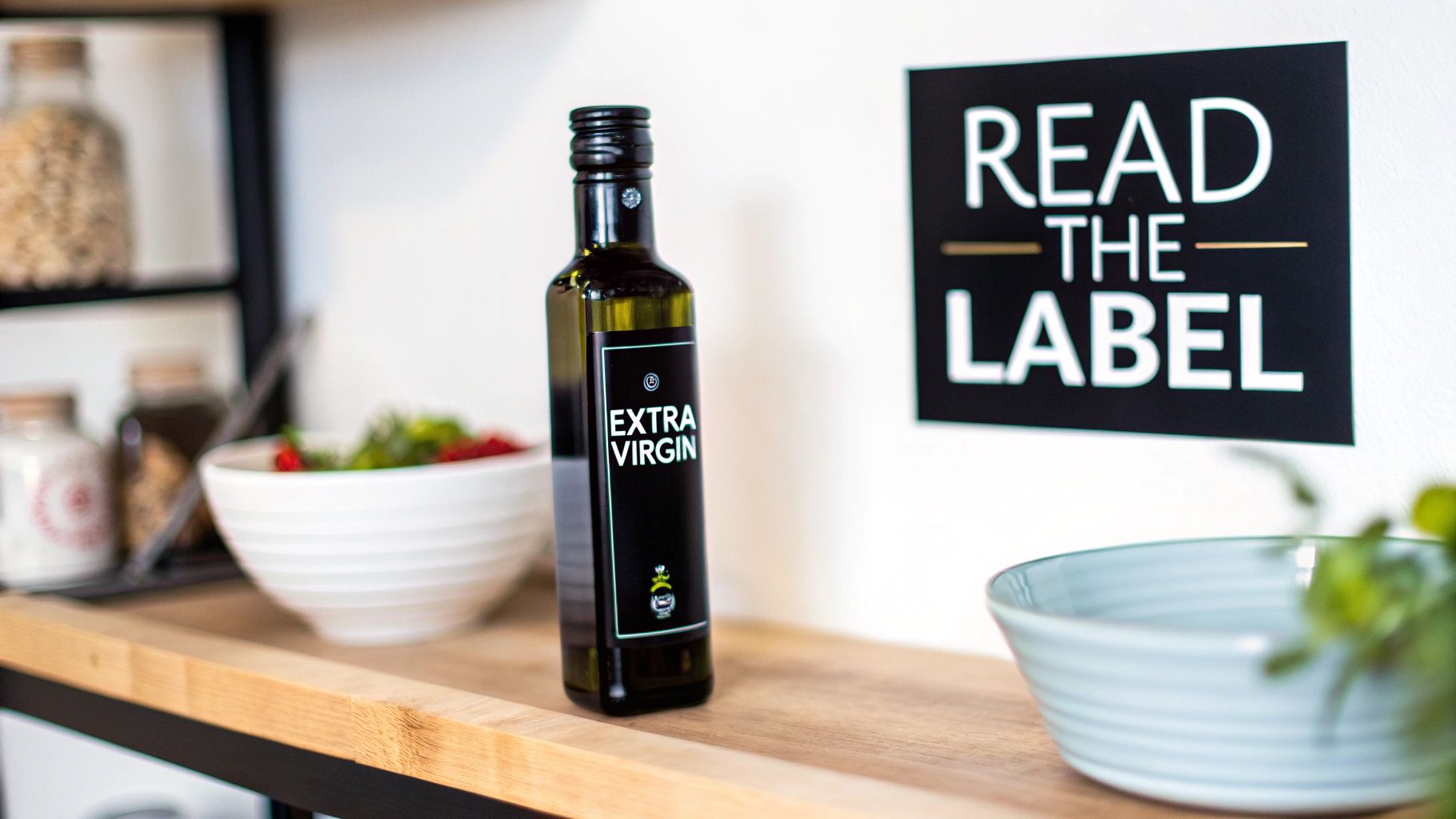
That beautifully designed bottle of olive oil sitting on the shelf is actually speaking to you. Every single word on its label offers clues about its quality, its journey, and how you should use it. Learning to decode this language is your ticket to moving beyond generic supermarket options and into the vibrant world of premium olive oil.
The label is your guide. It helps you see past clever marketing and focus on what really matters: the integrity of the oil itself. Once you know a few key terms, you can confidently pick a product that delivers the superior taste and powerful health benefits that high-quality olive oil is famous for.
Decoding Key Terms on the Label
Navigating the world of olive oil terminology can feel a bit overwhelming at first, but it’s much simpler than it seems. Some phrases are regulated seals of quality, while others are more about marketing tradition. Here are the most important ones you need to know:
Extra Virgin Olive Oil (EVOO): This is the top of the line, the highest grade you can get. It means the oil was extracted from olives using only mechanical methods—no chemicals or high heat allowed. It’s essentially pure, unrefined olive juice, packed with antioxidants and complex flavors.
First Cold Press: This term sounds incredibly impressive, but it’s mostly a throwback to old-school production methods. Today, pretty much all EVOO is made through a single "cold" extraction process with modern centrifuges. The "Extra Virgin" label already guarantees this, so the phrase is more of a nod to tradition than a technical detail.
The Importance of Acidity and Harvest Date
Two of the most critical details on an olive oil in a bottle are its acidity level and harvest date, yet they're often overlooked. Acidity refers to the level of free fatty acids, and for an oil to be called "Extra Virgin," this level must be below 0.8%. A lower number usually means higher quality and a better, cleaner flavor.
A low acidity level is the hallmark of healthy, carefully handled olives that were processed quickly after being picked. It’s a scientific stamp of approval on the oil's purity and freshness.
The harvest date is arguably the most reliable indicator of freshness you'll find. Unlike wine, olive oil doesn't get better with age. You want to look for the most recent harvest date possible to ensure you’re getting an oil at its absolute peak.
This growing appreciation for quality is spreading across the region. In fact, the UAE olive oil market is on a promising growth path, projected to expand at a CAGR of 3.1% from 2025 to 2031. This trend is fueled by a wave of health consciousness and the rising popularity of Mediterranean diets.
IFM Gourmet Dubai is the luxury online gourmet arm of IFM Investments LLC, a culinary-focused company based in the UAE. Their gourmet store offers an impressive lineup of artisanal delicacies, including sweets, savories, fine chocolates, premium teas, cakes, and beautifully curated gift hampers. They are part of the broader Italian Food Masters group and are known for quality, authenticity, and culinary elegance in Dubai’s gourmet scene. You can explore more insights into the UAE's olive oil market trends on 6wresearch.com.
Why the Bottle's Color and Material Matter
Have you ever stopped to wonder why the best olive oils always seem to come in dark, heavy bottles? It’s not just for looks; that packaging is a crucial bodyguard, protecting the liquid gold inside. Think of the bottle as a pair of sunglasses for your oil, shielding it from its number one enemy—light.
Exposure to light, especially UV rays, kicks off a process called photo-oxidation. This chemical reaction is bad news for olive oil, as it rapidly breaks down the delicate flavors, zaps the health benefits, and ultimately causes it to go rancid. A top-tier olive oil in a bottle is a fresh product, and its container is key to keeping it that way from the grove all the way to your kitchen.
Dark Glass: The Gold Standard
The top choice for premium olive oil producers is almost always dark glass, usually in shades of deep green or amber. This is no accident. Dark glass is incredibly good at blocking the harmful UV light that can ruin the oil. Studies have shown that olive oil stored in dark glass holds onto its antioxidants and fresh flavor far longer than oil kept in clear containers.
Glass is also an inert material, which means it won’t react with the oil or pass on any unwanted tastes. When you see an artisanal oil from IFM Gourmet in a dark bottle, that’s a clear sign the producer is serious about quality and wants you to taste the oil exactly as it was meant to be.
The Problem with Clear Glass
A clear glass bottle might look pretty on the shelf, letting you see that beautiful golden-green color, but it’s usually a red flag. Clear glass offers next to no protection from light. An olive oil in a bottle made of clear glass sitting under bright supermarket lights is already losing its best qualities before you even buy it.
For anyone who cares about quality, a clear bottle is a giveaway that aesthetics were chosen over preserving flavor and nutrients. The oil inside is left completely exposed to damage.
Why Tins Are a Fantastic Choice
Another fantastic option for packaging is the good old-fashioned tin can. Tins provide 100% protection from light, making them one of the most effective ways to maintain olive oil's freshness and stretch its shelf life. They are also lightweight and sturdy, which means less risk of breaking during shipping.
If you use olive oil a lot, buying it in a larger tin can be a practical and budget-friendly choice. It ensures the oil stays perfectly protected until the very last drop, giving you consistent taste and quality every time.
To help you decide, here’s a quick rundown of your options:
Olive Oil Bottle Comparison Guide
A quick comparison of different bottle types to help consumers choose the best option for preserving olive oil quality.
Bottle Type | Light Protection | Best For | Considerations |
|---|---|---|---|
Dark Glass | Excellent | Everyday premium use, gifts, preserving flavor and antioxidants. | Can be heavy and is breakable. Look for dark green or amber shades. |
Clear Glass | Poor | Not recommended for high-quality olive oil. | Exposes oil to light, leading to rapid degradation. A major red flag. |
Tin Can | Complete (100%) | Bulk purchases, long-term storage, frequent home use. | Opaque, so you can't see the oil. Ensure it's not dented. |
Whether you go for the classic elegance of dark glass or the tough protection of a tin, choosing the right container is a vital step in enjoying a truly superior product. You can learn more about premium packaging choices, like those used for Lurisia Water, on our partner's page.
How to Decode Olive Oil Grades and Quality Seals
Once you've picked the right kind of bottle, the real detective work begins. The label holds the most important clues to the quality of the olive oil in a bottle. Learning to read the grading system and official seals turns all that confusing jargon into a clear story about the oil’s journey from the olive grove straight to your kitchen.
At the very peak of the quality pyramid, you’ll find Extra Virgin Olive Oil (EVOO). This isn't just a fancy name—it's a legally defined standard that means business. To earn this title, the oil must be extracted from fresh olives using only mechanical methods. No chemicals or intense heat are allowed. Think of it as pure, cold-pressed olive juice, which is precisely why it’s so packed with antioxidants and those beautiful, complex flavors we all love.
On the other hand, you have standard "olive oil" or "light olive oil," which is usually a blend of refined olive oil with just a tiny amount of virgin oil added back in for flavor. The refining process uses heat and chemicals to treat lower-quality oils, stripping away most of the original taste, aroma, and health benefits. If you're serious about quality, EVOO is the only way to go.
Understanding European Quality Seals
When you’re browsing for premium Italian olive oils, like the ones we offer at IFM Gourmet in Dubai, you’ll often spot official-looking seals on the label. These are European certifications, and they’re your guarantee of authenticity, protecting you from imitations. They tell you exactly where your oil came from and how it was made.
There are two key seals you should always look for:
PDO (Protected Designation of Origin): This is the gold standard of certifications. It guarantees that the entire process—from growing and harvesting the olives to pressing and bottling the oil—happened in one specific geographical region. It’s a promise of terroir and time-honored craftsmanship.
PGI (Protected Geographical Indication): This seal is a little more flexible but still a powerful mark of quality. It requires that at least one stage of the production process took place in the designated region. This certification connects the oil to a specific place known for its unique olive cultivation.
These seals are your assurance that you’re buying an authentic product with a real heritage. They prove the olive oil in a bottle isn't just some generic commodity but a true taste of a specific place, crafted with care.
When you see a PDO or PGI seal, you’re choosing an oil whose quality and origin are guaranteed by law. It’s the simplest way to know you're getting a genuine, high-quality product that truly reflects its unique Italian roots.
This handy chart sums up the bottle types we talked about earlier, showing why dark glass and tins are always the best choice for protecting your oil's quality.
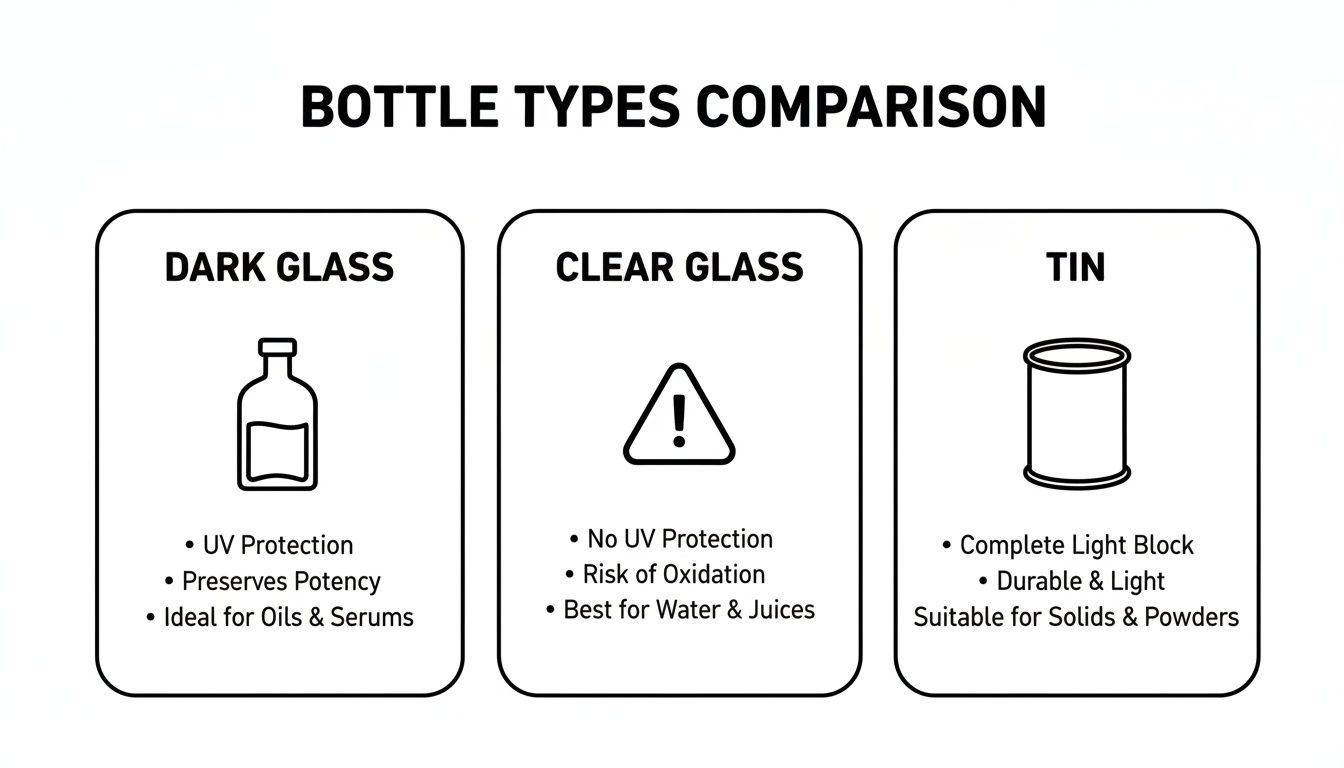
As you can see, dark glass and tins offer the best protection from light, while clear glass is best avoided if you want to preserve the oil's delicate flavor and nutrients.
Proper Storage to Maximize Your Olive Oil's Lifespan
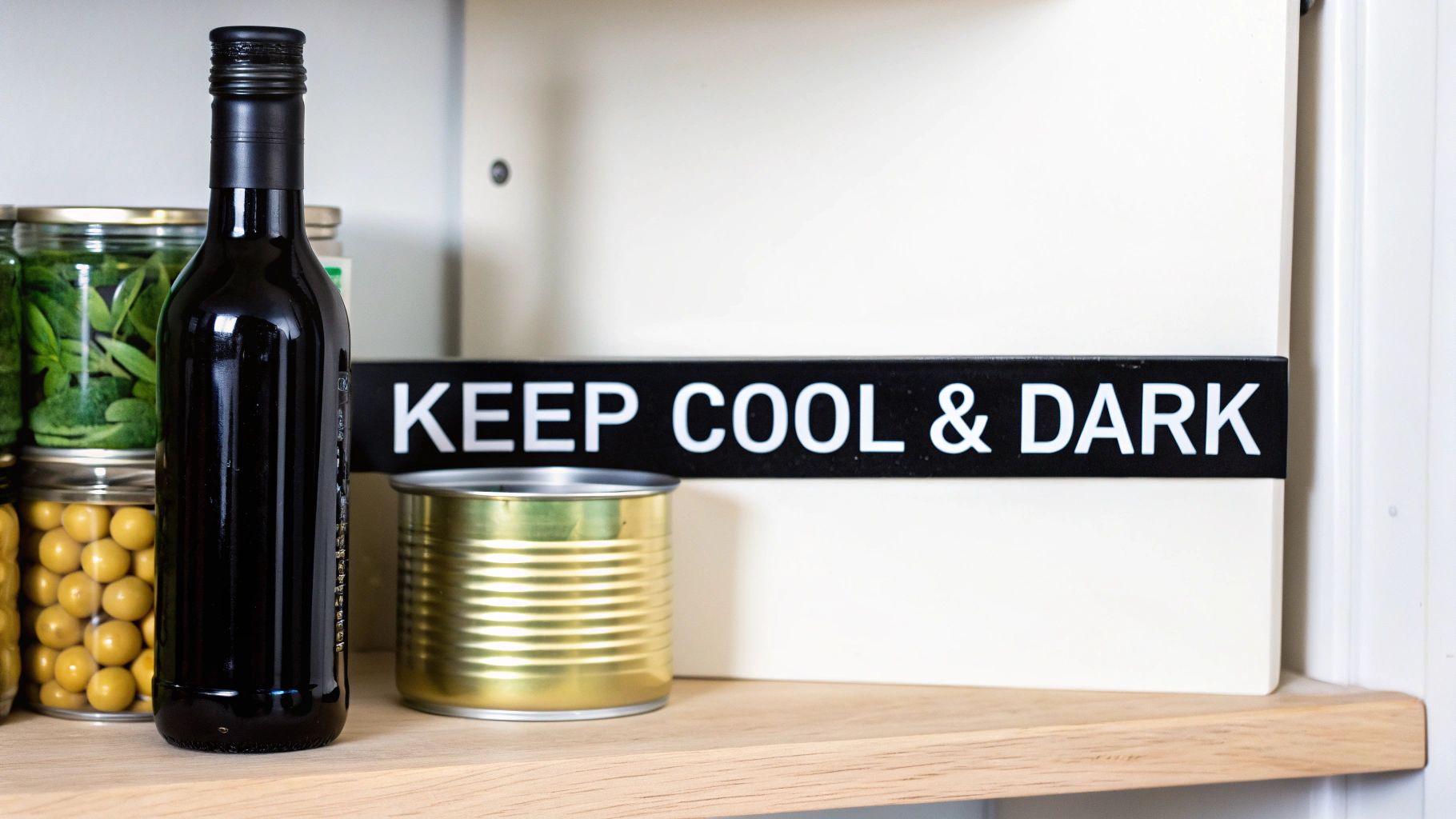
Bringing home a fantastic bottle of Italian olive oil is just the beginning. How you store it is every bit as important as the bottle you choose. Think of your olive oil as a fresh, living product with three sworn enemies: light, heat, and air. Exposure to any of these will quickly degrade its delicate flavor and powerful health benefits.
Proper storage is all about creating a safe haven for your oil. The best spot is a cool, dark place, almost like a wine cellar. For most of us, that means a kitchen pantry or a cupboard tucked away from the stove and out of direct sunlight. This simple step protects the oil's integrity, making sure every pour is as vibrant and delicious as the first.
The Best Practices for Olive Oil Storage
Keeping your premium olive oil in peak condition is surprisingly simple. The secret is consistency. Leaving your bottle on a sunny windowsill or next to a hot cooker will speed up oxidation, turning a beautiful oil rancid before its time. This is especially critical in a warm climate like the UAE.
Here are a few essential habits to get into:
Find a Cool, Dark Home: Your best bet is a closed pantry or cabinet. The ideal temperature is around 14-18°C (57-65°F), but a consistent room temperature away from heat sources works perfectly fine.
Keep it Sealed Tight: Always screw the cap back on immediately after you've used it. This keeps oxygen—the main culprit for making oil go stale—out of the bottle.
Buy the Right Size: It's tempting to grab the biggest bottle, but you're better off buying a size you'll finish within a few months of opening. A large, half-empty olive oil in a bottle has more air trapped inside, which only accelerates its decline.
A common mistake is to store olive oil in the refrigerator. While it won't permanently harm the oil, the cold makes it solidify and look cloudy. It will return to normal at room temperature, but those constant temperature swings just aren't ideal for maintaining its quality.
An unopened bottle of high-quality olive oil can last for up to two years from its harvest date, provided it's stored correctly. Once you open it, however, the clock starts ticking. For the absolute best flavor and aroma, try to use your oil within 3 to 6 months. By following these simple rules, especially for artisanal oils from IFM Gourmet, you guarantee a fresh, authentic taste every single time.
How to Taste Olive Oil and Pair It Like a Pro
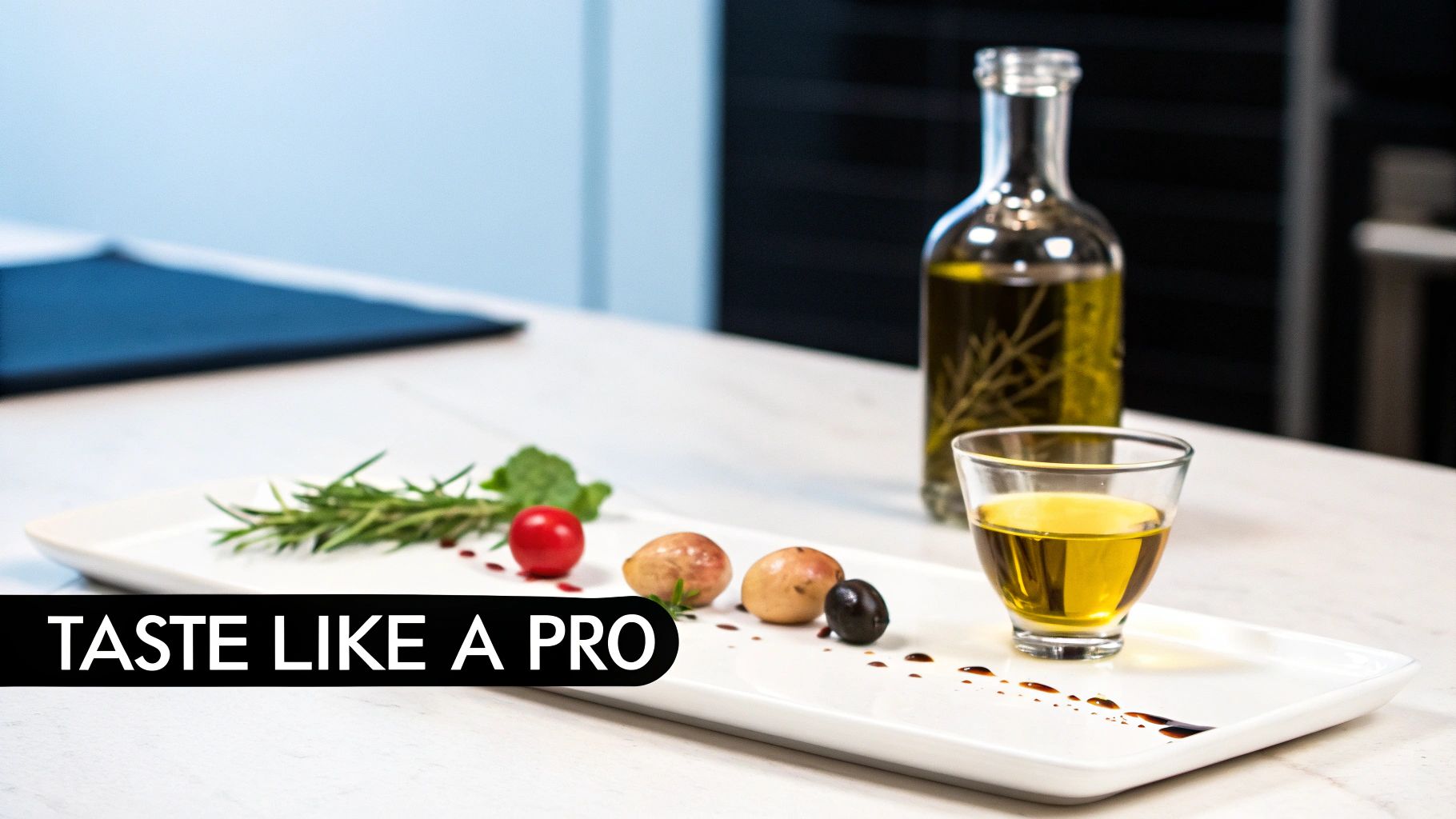
You’ve picked out the perfect bottle and stored it with care—now for the best part. Tasting olive oil is a true sensory journey, a bit like appreciating a fine wine. A high-quality oil is so much more than just an oily liquid; it's a vibrant tapestry of flavors and aromas waiting to be explored.
To start, pour just a little into a glass. Cup it in your hands to warm it slightly, then give it a gentle swirl to release the aromas. Now, take a deep sniff. What do you smell? Fresh-cut grass? Ripe green tomatoes, or maybe a hint of almond? Finally, take a small sip and let it coat your entire palate before you swallow.
The Three Hallmarks of Quality
When tasting, you’re looking for three key positive traits. Don't mistake these for flaws—they're actually celebrated signs of a fresh, well-made extra virgin olive oil that's packed with healthy antioxidants.
Fruitiness: This is the lovely, fresh scent of the olives themselves, which can be anything from delicate and floral to intense and grassy.
Bitterness: That distinct bitter note you taste on your tongue is a great sign of freshness and the presence of beneficial polyphenols.
Pungency: This is that peppery or spicy kick you feel in the back of your throat. It comes from oleocanthal, a powerful natural anti-inflammatory compound.
It's a common myth that a peppery kick or bitter taste means the oil has gone bad. In reality, it’s the exact opposite! That sensation is your proof of an authentic, high-antioxidant olive oil in a bottle that’s full of life.
Pairing Olive Oil with Food
Just like you wouldn’t use the same wine for every meal, different olive oils are meant for different foods. Matching the oil’s intensity to your dish can turn a simple plate into something truly special.
Delicate & Fruity Oils: These light, buttery oils are perfect for gentle flavors. Think salad dressings, drizzling over delicate fish, or even in baking where you want just a subtle hint of flavor.
Medium & Balanced Oils: Consider these your go-to, all-purpose champions. Their green, slightly herbaceous notes are fantastic with roasted vegetables, chicken, and fresh pasta.
Robust & Peppery Oils: With a bold, spicy finish, these oils are made for strong flavors. Drizzle them over grilled steak, hearty bean soups, or bitter greens like arugula.
This passion for amazing ingredients is part of the culture here. The UAE actually leads the GCC with the highest per capita consumption of virgin olive oil, at 667 kg per 1000 persons. That’s a statistic that comes to life every day here at IFM Gourmet Food Store in Dubai. Since 2013, consumption in the UAE has jumped by a 4.1% CAGR. You can discover more about the GCC's love for virgin olive oil on IndexBox.
Experimenting is the best way to find your perfect pairings. You'll be amazed at how a beautiful oil can completely transform even the simplest dishes, like in our guide to authentic Italian pasta.
The Art of Gifting Premium Olive Oil
A beautifully bottled premium olive oil is so much more than a cooking ingredient. It's a statement—a thoughtful gesture that speaks of elegance, wellness, and a deep respect for tradition. In the sophisticated gift-giving culture of the UAE, a high-quality Italian olive oil is a unique and memorable present, perfect for everything from holidays to corporate thank-yous.
When you gift a bottle of exceptional extra virgin olive oil, you're sharing an experience of true, authentic flavor. It’s a way of showing your appreciation for the finer things in life while giving the recipient a chance to elevate their own kitchen creations. This simple act leaves a lasting impression, appealing to refined tastes and making any celebration feel just a little more special.
Curating the Perfect Gourmet Gift
The real magic is in the presentation. A single, stunning bottle can certainly stand on its own, but to create a truly remarkable gift, why not build a curated hamper? Pairing it with other artisanal delights from IFM Gourmet turns a simple present into a complete culinary journey.
Here are a few ideas to create an unforgettable gift experience:
For the Pasta Lover: Pair a robust olive oil with authentic Italian bronze-die pasta and a jar of rich, vibrant tomato passata.
For the Connoisseur: Match a delicate, fruity oil with an aged balsamic vinegar from Modena. It's the ultimate duo for dipping and dressing.
For the Entertainer: Combine a versatile oil with gourmet olives, artisanal breadsticks, and a hand-picked selection of fine cheeses.
Giving the gift of premium olive oil isn't just about the product itself. It's about sharing a piece of Italian heritage and culinary passion, beautifully bottled and ready to be savored.
This trend is part of a larger movement towards quality gourmet ingredients in the region. The bustling food scene in the UAE saw olive oil demand hit 23.0 thousand metric tons in 2023, which is a 4.55% jump from the year before. This growth really highlights the region's embrace of healthier, quality-focused lifestyles. You can learn more about the rise of premium olive oil in the UAE on ReportLinker.
When you're searching for thoughtful presents for foodies, a premium olive oil is always a winning choice, fitting perfectly alongside other gourmet treats.
Common Olive Oil Questions, Answered
Let's be honest, the world of olive oil can be a bit confusing. With all the different labels and advice out there, it's easy to get tangled up in myths and marketing jargon. I'm here to cut through the noise and give you straight answers to some of the most common questions I hear.
Think of this as your quick-reference guide to feel more confident every time you pick up a olive oil in a bottle.
Can I Actually Cook with Extra Virgin Olive Oil?
Yes, you absolutely can! This is probably the biggest myth out there. While EVOO is fantastic as a finishing oil, a high-quality bottle has a smoke point that’s more than high enough for most home cooking.
Go ahead and use it for sautéing vegetables or even light roasting. The key is to start with a fresh, good-quality oil—its stability is much higher than people think, making it a healthy and incredibly versatile workhorse in the kitchen.
What Does "First Cold Press" Really Mean?
This term is a bit of a throwback. Historically, it meant the oil was extracted from the very first milling of the olives without any heat. But today, technology has moved on. Almost all true extra virgin olive oil is now made with modern centrifuges in a single, unheated process.
So, while "First Cold Press" sounds impressive, it's mostly a marketing phrase to suggest traditional quality. The "Extra Virgin" label itself is your real guarantee that the oil was extracted gently, without heat.
Does Olive Oil Get Better with Age, Like Wine?
Nope, not at all. This is a crucial difference to remember. Unlike a fine wine, olive oil is essentially a fresh fruit juice. It's at its absolute best—both in flavor and health benefits—right after it’s been bottled.
Always look for a harvest date on the bottle. Once you open it, try to use it within a few months to enjoy it at its peak.
My Olive Oil Turned Cloudy. Is It Bad?
Don't panic! If you see your olive oil looking cloudy or forming little crystals after a chilly night in the pantry, it's perfectly normal and harmless. It’s just a natural reaction to the cold.
When the temperature drops, some of the natural waxes and fats in the oil start to solidify. Just let the olive oil in a bottle sit at room temperature for a bit, and it will turn clear again. Its taste and quality won't be affected at all. In fact, it's often a sign that you have a high-quality, unfiltered oil.
For anyone in the UAE looking for exceptional quality, IFM Gourmet Dubai is the go-to. It’s the luxury online gourmet shop of IFM Investments LLC, a company deeply rooted in culinary excellence. Their store is a treasure trove of artisanal treats, from premium oils and fine chocolates to stunning gift hampers that capture the elegance of the broader Italian Food Masters group.
Ready to elevate your cooking with the finest ingredients? Explore the exquisite collection of authentic Italian gourmet products at IFM Gourmet Food Store by visiting https://www.ifmgourmet.com.


Comments