A Guide to Organic Olive Oil
So, what exactly is organic olive oil? At its core, it’s simply olive oil that comes from olives grown the old-fashioned way—without any synthetic pesticides, herbicides, or fertilizers. It’s a promise of farming that works with nature, not against it, keeping the final product pure from the grove all the way to your kitchen.
What "Organic Olive Oil" Really Means
When you spot the word "organic" on a bottle, it’s more than just a marketing buzzword. It tells the entire story of that oil, starting from its life in the olive grove. This isn't just a plot of land for growing fruit; it's a living, breathing ecosystem.
Think about a typical conventional olive farm for a moment. To get the biggest harvest, farmers might rely on chemical fertilizers to pump up the trees and synthetic pesticides to keep bugs away. It works, but this approach can leave chemical residues behind and throw the natural balance of the soil and local environment out of whack.
Now, let's wander into an organic olive grove. The philosophy here is completely different. Instead of chemicals, farmers trust in nature’s own toolkit. They build up the soil with rich compost, welcome beneficial insects to handle pests, and manage weeds with cover crops or by hand. The goal is to create healthy, resilient soil that nurtures strong trees, which naturally produce incredible, flavorful olives.
The Guarantee Behind the Seal
That "organic" label isn't just for show—it's a legally protected and strictly regulated standard. Before a producer can earn an official organic certification, they have to follow a tough set of rules and pass rigorous inspections. It’s all about ensuring the integrity of the oil at every single step.
Here’s what that certification guarantees:
No Synthetic Chemicals: This is the big one. Organic farmers are forbidden from using synthetic pesticides, herbicides, and genetically modified organisms (GMOs). Period.
Healthy Soil Management: Organic farming is all about building and maintaining healthy soil with compost, crop rotation, and other natural methods. Great soil leads to healthier trees and, you guessed it, better-tasting olives.
Total Traceability: Every single batch of organic olive oil can be traced right back to the grove where the olives were picked. This level of accountability prevents any funny business and ensures you’re getting exactly what you paid for.
Sustainable Practices: The entire system is designed to promote ecological balance and protect biodiversity. That means protecting water sources, supporting local wildlife, and keeping the environment healthy for generations to come.
In short, an organic seal is your guarantee of purity and a real commitment to environmental stewardship. It certifies that the oil in your bottle is free from synthetic chemical residues and was produced in a way that truly respects the earth.
This deep-rooted commitment to natural farming is what truly sets organic olive oil apart. It's a choice that reflects a genuine appreciation for both our own health and the health of our planet, giving us a product that is pure, authentic, and bursting with natural flavor. When you choose organic, you’re casting a vote for a cleaner, more sustainable way of eating.
Organic vs Conventional Olive Oil Compared
Standing in the grocery aisle, staring at a wall of olive oil, it's easy to get a little lost. What’s the real difference between organic and conventional, anyway? The truth is, the distinction goes way beyond the label on the bottle—it starts in the soil and impacts everything from the environment to the flavor you taste on your plate.
At its core, this is a tale of two very different farming philosophies. Conventional farming is often geared toward getting the biggest, most efficient harvest possible, which means using synthetic pesticides and chemical fertilizers. On the other hand, organic farming treats the olive grove as a complete, living ecosystem that sustains itself.
Think of it this way: a conventional grove is managed with precise chemical inputs for a predictable outcome. An organic grove, however, is a hive of natural activity. You'll find cover crops nourishing the soil and beneficial insects keeping pests at bay. The whole system just works in harmony. This basic difference is what shapes the final oil.
Farming Methods and Chemical Exposure
The biggest split comes down to what is—and isn't—sprayed on the trees and soil. Conventional olive farming allows for synthetic pesticides and herbicides to handle threats like the pesky olive fruit fly. While these chemicals are regulated, it's possible for trace amounts to stick around on the olives and make their way into the oil.
Organic production, however, draws a hard line: no synthetic chemicals allowed. Instead, farmers get creative with nature's own solutions:
Pest Control: They might introduce natural predators or use simple sticky traps, all while encouraging biodiversity in the grove to naturally manage pest levels.
Weed Management: Forget chemical herbicides. Organic farmers use cover crops, mulch, or good old-fashioned manual removal to handle weeds.
Fertilization: The soil gets its nutrients from natural compost and organic matter. This builds healthy soil for the long haul instead of just giving it a short-term chemical jolt.
This graphic really breaks down the principles behind organic production.
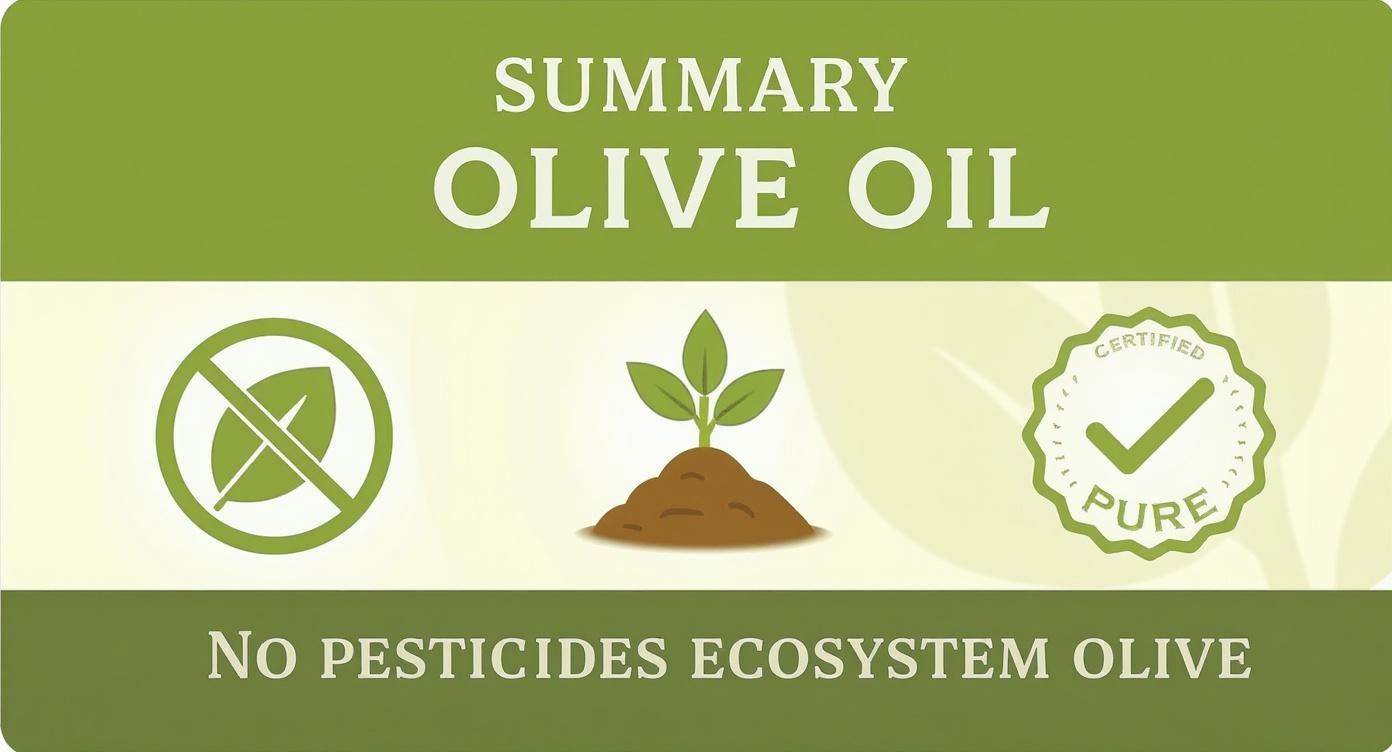
As you can see, it's a deep commitment. Avoiding pesticides, nurturing a healthy ecosystem, and passing rigorous certifications all come together to ensure the final product is as pure as it gets.
To make things clearer, let's break down the main differences side-by-side.
Organic vs Conventional Olive Oil: A Quick Comparison
This table offers a snapshot of how these two approaches stack up against each other, from the farm to your kitchen.
Attribute | Organic Olive Oil | Conventional Olive Oil |
|---|---|---|
Pesticide Use | Prohibited. Natural methods used instead. | Permitted synthetic pesticides and herbicides. |
Fertilizers | Natural compost and organic matter. | Synthetic chemical fertilizers are common. |
Soil Health | Focus on building long-term soil vitality and biodiversity. | May lead to soil degradation over time. |
Environmental Impact | Promotes biodiversity and reduces chemical runoff. | Higher risk of water contamination and soil erosion. |
Certification | Requires strict third-party organic certification. | Follows general agricultural regulations. |
Flavor Profile | Often more complex and robust, reflecting the terroir. | Can be more uniform and less nuanced. |
Ultimately, the choice comes down to what you value most—be it environmental stewardship, purity of ingredients, or flavor complexity.
Environmental Impact and Sustainability
The environmental footprint left by these two methods couldn't be more different. The heavy reliance on synthetic chemicals in conventional farming can degrade the soil and lead to chemical runoff into water sources, affecting nearby ecosystems. Over time, it creates a dependency on outside inputs that can throw the natural environment out of balance.
Organic farming is designed to do the opposite—it's regenerative. By creating healthy, living soil, it helps the land hold more water, cuts down on erosion, and brings more biodiversity to the area. This approach isn't just about growing olives; it’s about nurturing the land for years to come, making it a truly sustainable practice.
Choosing organic olive oil is not just a culinary decision; it's an investment in agricultural practices that protect biodiversity and preserve the health of our planet.
Nutrient Density and Flavor Profile
While any good olive oil has health benefits, there's growing evidence that the nutrient profiles can differ. Olives grown organically in rich, complex soil may pack a bigger punch of polyphenols. These are the powerful antioxidants responsible for that peppery kick in high-quality oil and many of its health-promoting properties.
This difference often comes through in the taste. An oil from trees that draw their nutrients from a thriving ecosystem tends to have a more robust and complex flavor. A great organic olive oil expresses its terroir—the unique character of the land it came from.
For culinary experts like those at IFM Gourmet Dubai, this purity is everything. As the luxury online arm of IFM Investments LLC and part of the broader Italian Food Masters group, they are known for quality, authenticity, and culinary elegance. The care taken in organic farming creates an oil that isn't just an ingredient; it becomes the star of the dish, meeting the high standards of Dubai's gourmet scene.
The Health Benefits of Choosing Organic
When you pick up a bottle of organic olive oil, you're doing more than just choosing a cooking ingredient. You're making a conscious choice for your health, benefiting from what's inside the oil and, just as crucially, what's been left out.
The most straightforward advantage is purity. Organic farming standards are incredibly strict, banning synthetic pesticides, herbicides, and fertilizers. This means the oil you get is clean, without the chemical residues often found in conventionally farmed products. It’s a simple way to reduce your daily chemical load and support your long-term wellness.
But the real magic is in what organic olive oil is packed with. The holistic, natural farming methods often lead to a higher concentration of the good stuff, elevating this kitchen staple into a genuine superfood.
The Power of Polyphenols
The secret to olive oil's incredible health profile? Polyphenols. These are natural micronutrients loaded with antioxidant power. Think of them as your body's personal defense squad, working 24/7 to protect your cells from the damage caused by free radicals and oxidative stress.
This kind of cellular wear-and-tear is a major driver of aging and many chronic diseases. By neutralizing these harmful molecules, polyphenols help keep your cells strong and support your overall vitality. In fact, studies show that olives grown in the rich, biodiverse soil of an organic grove can yield oil with a much higher polyphenol count than conventionally grown ones.
You can actually taste the quality. That peppery, slightly bitter finish you find in top-tier organic olive oil is the signature of a high polyphenol count—a flavor that experts recognize as a sign of potent health benefits. That kick at the back of your throat is the taste of powerful antioxidants at work.
Fighting Inflammation Naturally
Chronic inflammation is at the root of so many modern health problems, from achy joints to heart disease. One of the star polyphenols in olive oil, oleocanthal, has some seriously impressive anti-inflammatory properties.
Amazingly, scientists have found that oleocanthal works in a way that's surprisingly similar to ibuprofen, helping to cool down inflammation throughout the body. Making a high-quality organic olive oil a regular part of your diet can create a natural, food-based anti-inflammatory effect.
Choosing an organic olive oil rich in polyphenols is like adding a daily dose of natural anti-inflammatory goodness to your meals. It's a simple, delicious way to support your body’s ability to manage inflammation and stay healthy.
This makes it an essential part of any diet focused on long-term wellness and preventing disease.
Supporting a Healthy Heart
The heart-health benefits of olive oil are probably the most famous, and for good reason. Organic extra virgin olive oil is the heart and soul of the Mediterranean diet, celebrated worldwide for protecting cardiovascular health. This is mostly thanks to its high concentration of monounsaturated fats, especially oleic acid.
These healthy fats support your heart in a few key ways:
Improving Cholesterol Levels: They help lower the "bad" LDL cholesterol while giving a boost to the "good" HDL cholesterol, creating a healthier overall balance.
Lowering Blood Pressure: The polyphenols get to work on the lining of your blood vessels (the endothelium), improving their function and helping to lower blood pressure.
Preventing Oxidation: The antioxidants shield LDL cholesterol particles from oxidative damage, which is a critical first step in the hardening of the arteries.
Bringing a great organic olive oil into your kitchen is one of the tastiest and most effective ways to look after your heart. Whether you're drizzling it over a fresh salad or finishing a piece of grilled fish, every drop is actively nourishing your cardiovascular system. This commitment to purity is why culinary experts, like the team at IFM Gourmet Dubai, always prioritize authentic, high-quality organic ingredients for their curated selection of artisanal delicacies.
Exploring Flavors and Culinary Pairings
Not all olive oils are created equal, and this is where the journey with organic olive oil gets really exciting. Once you move past the health benefits, you step into a world of flavor—a complex landscape shaped by the type of olive, when it was picked, and the unique character of the land it grew on, a concept the experts call terroir.
Using a good organic olive oil isn't just about cooking. It’s about finishing a dish with an ingredient that can take it from simple to absolutely sublime.
The flavor profiles of organic olive oils can swing wildly, from delicate and buttery with hints of ripe fruit to bold and peppery with a grassy, herbaceous kick. This incredible diversity is what makes it such a fun and versatile tool in the kitchen. A mild, fruity oil might be perfect for baking, while a robust, pungent one can hold its own against the heartiest grilled meats.
When you start to understand this spectrum, you can use olive oil as a true finishing condiment, just like you would a fine wine or a flaky sea salt.
What Shapes the Flavor of Your Oil
The unique taste you find in every bottle of organic olive oil is a direct story of its origins. Three main things work together to give it a distinct personality.
Olive Variety (Cultivar): Just like with grapes for wine, there are hundreds of olive cultivars, and each has its own flavor profile. For instance, the Spanish Arbequina olive gives a mild, nutty oil, while the Greek Koroneiki is famous for its robust, peppery character.
Harvest Time: Olives picked early in the season, while they're still green, make an oil that’s intensely grassy, bitter, and pungent. That kick is a great sign of high polyphenol content! Olives harvested later, when they're ripe and dark, produce a much smoother, buttery oil with less bite.
Terroir: This beautiful French term really captures the essence of a place. The soil, climate, and even the altitude of an olive grove all leave their mark on the oil. It's why an organic olive oil from Tuscany tastes completely different from one grown in the hills of Greece.
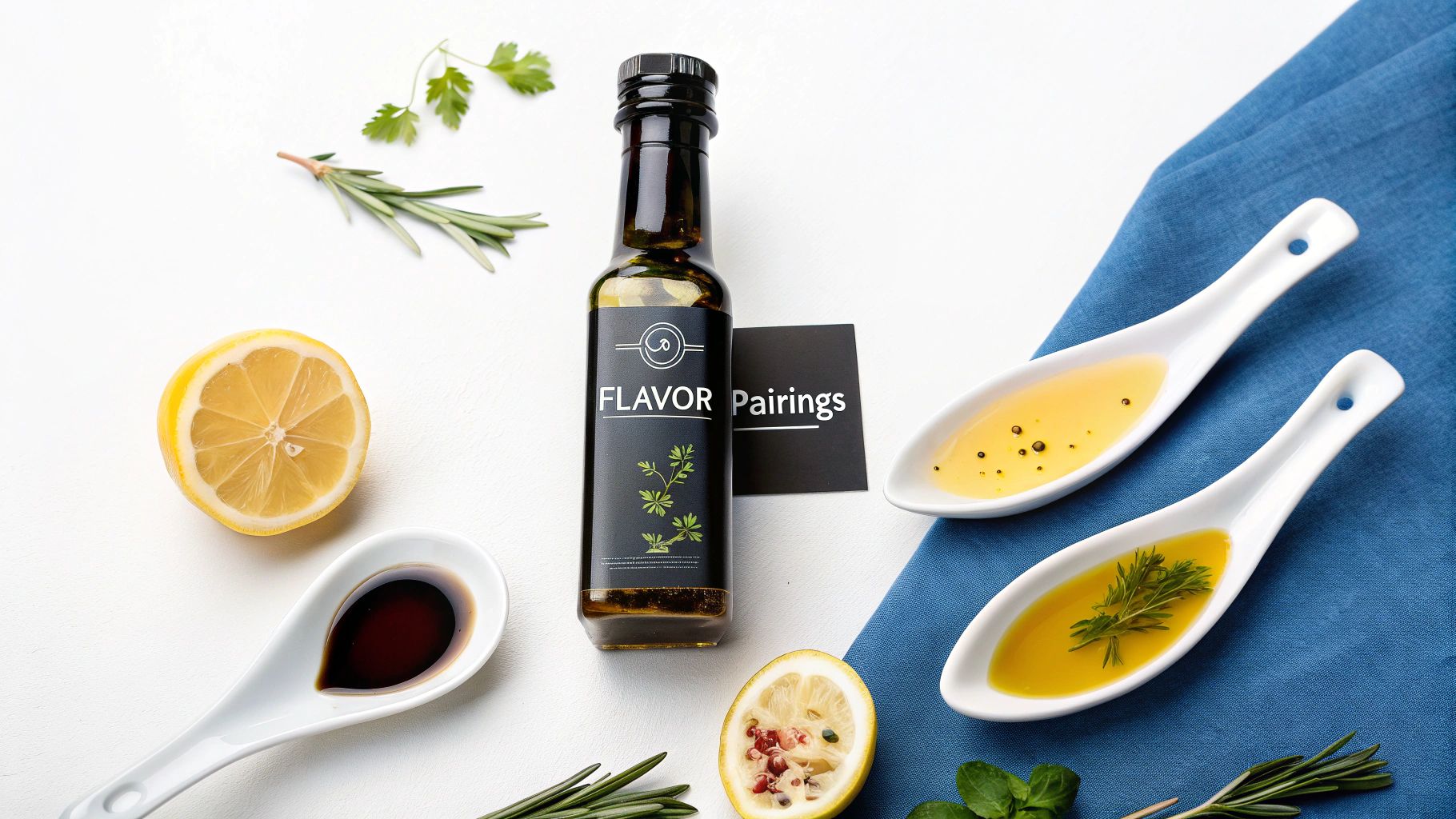
These elements all combine to create a signature taste. For culinary experts like the team at IFM Gourmet Dubai, sourcing oils with these distinct and authentic flavor profiles is everything. It's how they elevate the gourmet experience for food lovers in Dubai, offering an impressive lineup of artisanal delicacies that showcase true quality.
Perfect Pairings for Every Palate
Once you start thinking about organic olive oil in terms of its flavor intensity, pairing it with food becomes intuitive and fun. Here’s a simple guide to get you going.
Mild & Fruity Organic Olive OilThese oils are delicate and smooth, often with a slightly sweet, buttery finish. They’re perfect for dishes where you don't want the oil to steal the show.
Best Uses: Drizzling over flaky white fish, baking into lemon cakes or muffins, whipping up homemade mayonnaise, or as a base for light vinaigrettes.
Medium & Herbaceous Organic Olive OilThese are your fantastic all-rounders, with a perfect balance of fruitiness and a pleasant peppery finish. You might notice notes of green grass, artichoke, or tomato leaf.
Best Uses: Finishing roasted vegetables, tossing with pasta, drizzling on bruschetta, or dressing a classic Caprese salad. For some great pasta inspiration, you can find ideas for authentic Italian dishes that are a perfect match for these oils.
Robust & Peppery Organic Olive OilThese are bold, flavor-forward oils with a strong peppery kick at the back of your throat and a distinct bitterness. That intensity is a tell-tale sign of a high concentration of healthy polyphenols.
Best Uses: Drizzling over grilled steaks, finishing hearty bean soups, pairing with bitter greens like arugula, or simply for dipping a great crusty bread.
A simple rule of thumb? Match the intensity. Delicate foods call for delicate oils, while bold dishes demand robust ones. This way, the oil enhances your meal instead of overpowering it.
Host Your Own Olive Oil Tasting
Honestly, the best way to really get a feel for the nuances of organic olive oil is to taste it on its own. Hosting a little tasting at home is an eye-opening (and delicious) experience.
Gather Your Oils: Pick out three different organic olive oils—one mild, one medium, and one robust.
Pour and Warm: Pour about a tablespoon of each into a small, clean glass. A wine glass is perfect for this. Cup the glass in your hands to gently warm the oil, which helps release all its aromas.
Smell (The "Nose"): Swirl the oil and bring the glass to your nose. Take a deep breath. What do you smell? Fresh-cut grass, green apple, tomato, or something else entirely?
Taste (The "Palate"): Take a small sip and let it coat your tongue. Try to notice three key things: fruitiness (any sweet, ripe notes), bitterness (on the sides of your tongue), and pungency (that peppery tickle in your throat).
This simple exercise will train your palate to pick up on the distinct characteristics of high-quality organic olive oil, giving you the confidence to get more creative in the kitchen.
How to Choose and Store Your Olive Oil
Walking into the olive oil aisle can feel like a test. With so many bottles vying for your attention, how do you pick a truly exceptional organic olive oil? The secret isn't complicated—it’s about knowing what to look for on the label before you even step into the shop.
Making the right choice means bringing home an oil that’s fresh, flavorful, and packed with all the goodness you expect. And once it's in your kitchen, storing it properly is just as crucial to protect its quality down to the last drop.
Decoding the Label: An Expert Guide
Think of the bottle's label as your roadmap to quality. Just a few key terms can tell you almost everything about the oil inside. Learning to spot them is the first step toward never buying a subpar bottle again.
Keep an eye out for these critical details:
Extra Virgin Olive Oil (EVOO): This is the top tier. It signifies the oil was extracted using only mechanical means—no chemicals or high heat—and meets strict quality standards. Always look for this designation.
Cold-Pressed or Cold-Extracted: These terms are your guarantee that the oil wasn't heated above 27°C (80.6°F) during processing. This gentle approach is essential for preserving the oil's delicate flavors, aromas, and valuable polyphenols.
Harvest Date: This might be the single most important date on the label, even more than the "best by" date. Olive oil is a fresh product that loses its magic over time. The most recent harvest date ensures maximum freshness.
The harvest date tells you exactly when the olives were picked and pressed. An oil is at its absolute best within 18 to 24 months of this date, so always grab the newest one you can find.
Why Packaging Is a Non-Negotiable
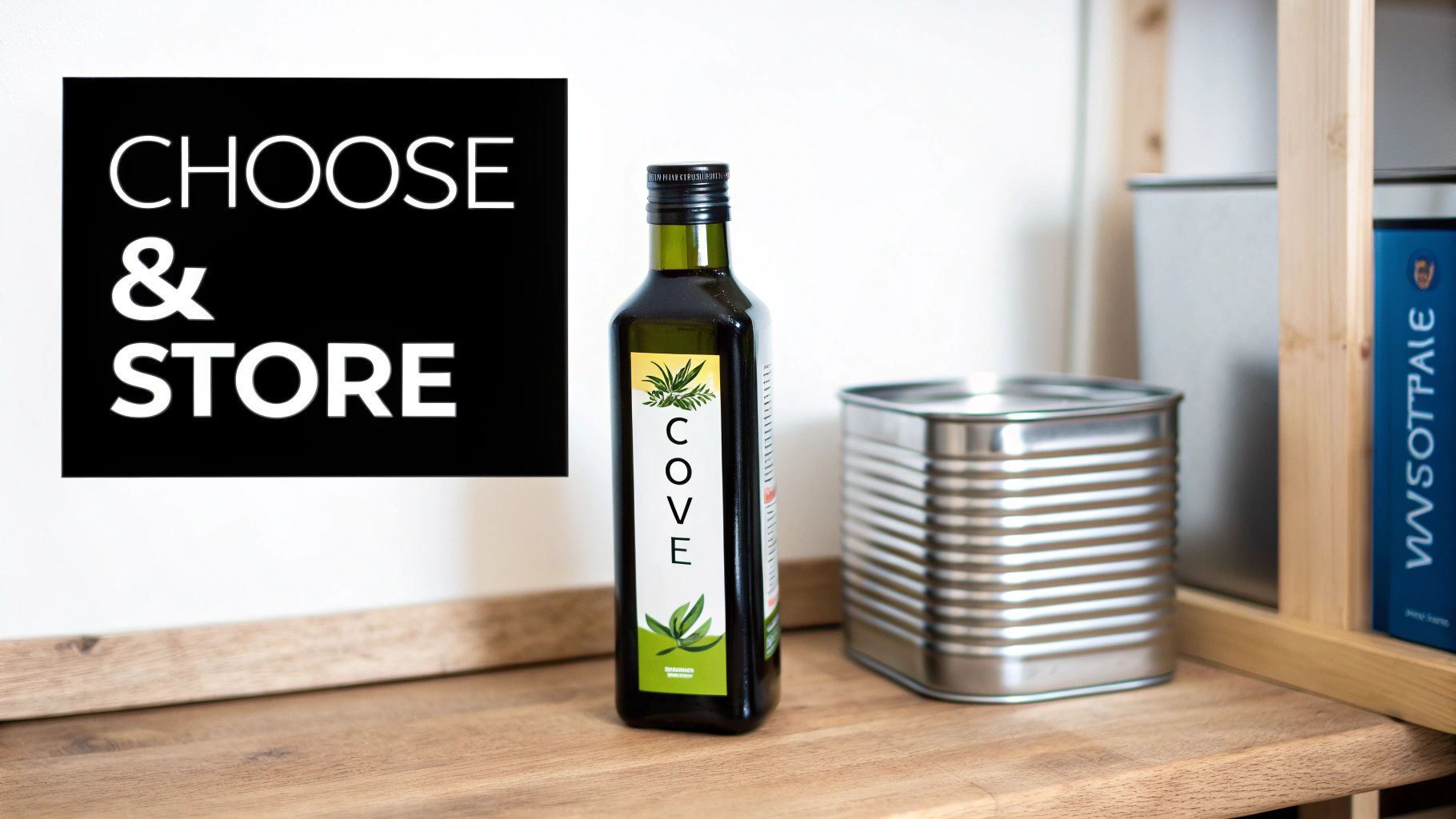
How your olive oil is bottled isn’t just about looking good on the shelf—it’s about preservation. The two greatest enemies of olive oil are light and air. Both cause oxidation, which quickly turns a beautiful oil rancid, destroying its flavor and health benefits.
That’s why packaging is non-negotiable. Always choose organic olive oil sold in dark, protective containers. This is an area where premium suppliers really shine. For instance, brands featured by luxury purveyors know that presentation is tied to preservation. This commitment is clear in Dubai’s gourmet scene, where experts like IFM Gourmet Dubai—the luxury online gourmet arm of IFM Investments LLC—offer artisanal delicacies, from fine chocolates to curated gift hampers, in packaging designed to protect their integrity.
Look for these packaging options:
Dark Glass Bottles: Green or brown glass is fantastic for shielding the oil from damaging UV rays.
Tins or Cans: Opaque metal offers 100% protection from light. It's a traditional and highly effective choice.
And a word of warning: steer clear of clear glass bottles, no matter how appealing they look. They leave the oil completely exposed, starting the degradation process before it even leaves the store.
Simple Rules for Proper Storage
Once you’ve brought your precious bottle home, your job is to guard it against its other enemies: heat and oxygen. Storing it correctly is simple and will keep your oil tasting fresh and vibrant for much longer.
Think of it like a fine wine—it needs the right environment. Following a few simple rules, like those detailed in our guide to food categories, can make all the difference. The ideal spot is a cool, dark place, like a kitchen cupboard or pantry. Most importantly, keep it away from the stove! The constant heat from cooking will speed up oxidation and ruin the oil’s delicate character. And always, always screw the cap on tightly after each use to keep air out.
The Growing Demand for Organic Olive Oil
The movement toward healthier, more mindful eating isn't just a fleeting trend—it’s a global shift that has put organic olive oil squarely in the spotlight. People everywhere are starting to look past the price tag, wanting to know the story behind their food. They’re choosing purity, environmental responsibility, and, of course, incredible flavor.
This growing awareness is changing everything from home kitchens to the shelves of the finest gourmet shops. In places known for luxury and quality, like Dubai, this demand is especially noticeable. Savvy shoppers are actively searching for premium, health-forward products that fit a wellness lifestyle. They get it: a great organic olive oil is more than just a cooking fat. It’s a core ingredient that elevates both the taste and the nutritional punch of every meal.
A Surge in Regional Popularity
The Middle East and Africa (MEA) region has become a hotbed for the olive oil market's growth, with organic varieties leading the charge. The MEA olive oil market, valued at USD 834.17 million, is expected to climb to USD 1,213.79 million by 2032.
What's fueling this? A deeper appreciation for olive oil's health perks and the timeless appeal of Mediterranean food. As more people in the region make healthier and more sustainable choices, organic olive oil is perfectly positioned to meet that demand. You can dive deeper into these numbers and read the full research on the MEA olive oil market.
This chart shows just how much the olive oil market is expected to grow in the Middle East and Africa.
The clear upward line says it all—consumers want more olive oil, and organic options are a huge part of that story.
Navigating the Market's Challenges
Even with such a bright future, the road isn't completely smooth. Producers of organic olive oil face some unique hurdles that can affect both its availability and its price. The careful, chemical-free farming required for organic certification simply costs more than conventional methods.
On top of that, the industry has to stay vigilant against fraud. It's an unfortunate reality that lower-quality oils are sometimes mislabeled and sold as premium organic products. These challenges make it all the more important to choose suppliers you can trust, like IFM Gourmet Dubai, who are dedicated to authenticity and quality. Their culinary-focused approach ensures that every product in their gourmet store, from premium teas to fine chocolates, meets the highest standards.
By sourcing from reputable names, you can be sure you're getting the genuine, flavorful experience that makes organic olive oil so special.
Common Questions About Organic Olive Oil
It's completely normal to have questions when you start digging into the world of olive oil. The more you care about high-quality, pure ingredients, the more you want to be sure you're making the right choice. This little guide is here to give you clear, simple answers to the questions we hear most often about organic olive oil.
Think of it as your quick cheat sheet, clearing up any confusion and helping you feel confident about what you bring into your kitchen.
Is Organic Olive Oil Really Better for You?
In a nutshell, yes. The biggest win is what's not in the bottle: synthetic pesticide and herbicide residues. Choosing organic means you're not exposing yourself to those potentially harmful chemicals.
But there’s more to it. Organic farming methods often lead to healthier, more robust olive trees. These trees can produce olives with a higher concentration of polyphenols—the powerful antioxidants behind many of olive oil's famous health perks, like its anti-inflammatory effects and heart health support.
When you choose organic, you’re getting a cleaner product, which is a massive plus for your long-term well-being.
The true value of organic olive oil is twofold: it's not just about what it has more of—like beneficial compounds—but also about what it's missing—synthetic chemical residues.
Why Is Organic Olive Oil More Expensive?
That higher price tag is a direct reflection of the intense care and manual labor that goes into producing it. Organic farmers can't just spray cheaper, synthetic pesticides and fertilizers. Instead, they have to rely on more hands-on methods to control pests and weeds.
On top of that, the process involves:
Certification Costs: Farmers have to pay for strict third-party inspections to earn that certified organic seal.
Lower Yields: Organic farming often results in slightly smaller harvests compared to conventional methods designed to squeeze out every last drop.
Soil Management: Building and maintaining rich, healthy soil using natural methods like composting and cover crops takes a lot of time and resources.
You’re not just paying for olive oil; you're investing in a guarantee of purity, environmental care, and sustainable farming.
Can You Cook with Organic Extra Virgin Olive Oil?
Absolutely! This is one of the biggest myths out there. High-quality organic olive oil isn't just safe for cooking; it's a fantastic choice for sautéing, roasting, and even some light frying. The smoke point is usually around 190-207°C (375-405°F), which is plenty high for most of the cooking we do at home.
The trick is just to use it wisely. While those beautiful, delicate flavors are at their peak in raw dishes like salad dressings or a finishing drizzle over pasta, its stability makes it a healthy and flavorful workhorse for everyday meals.
The growing demand for pure, high-quality products is making waves globally. In the MEA region, for instance, Turkey is becoming a major player, boosting its olive oil production by an incredible 32% in a recent year, largely thanks to government support for sustainable agriculture. While the region still grapples with challenges like product adulteration (something less common in established European markets), the consumer-led push for organic is undeniably moving the industry forward. You can dive deeper into these regional market dynamics.
Ready to taste the difference that premium ingredients make? Discover a world of culinary excellence at IFM Gourmet Dubai, where we bring the finest artisanal Italian delicacies to your kitchen in Dubai and across the UAE. Explore our collection today.


Comments