
A Guide to White Balsamic Vinegar in Dubai
If you've only ever known the deep, dark intensity of traditional balsamic, you're in for a treat. Meet white balsamic vinegar: its lighter, crisper, and altogether brighter cousin. Made from white grapes, it delivers a gentle sweetness and a clean, fruity flavor that can elevate a dish without changing its color. It’s a sophisticated pantry staple that's quickly becoming a favorite in Dubai's vibrant food scene.
The Allure of Golden Balsamic Vinegar
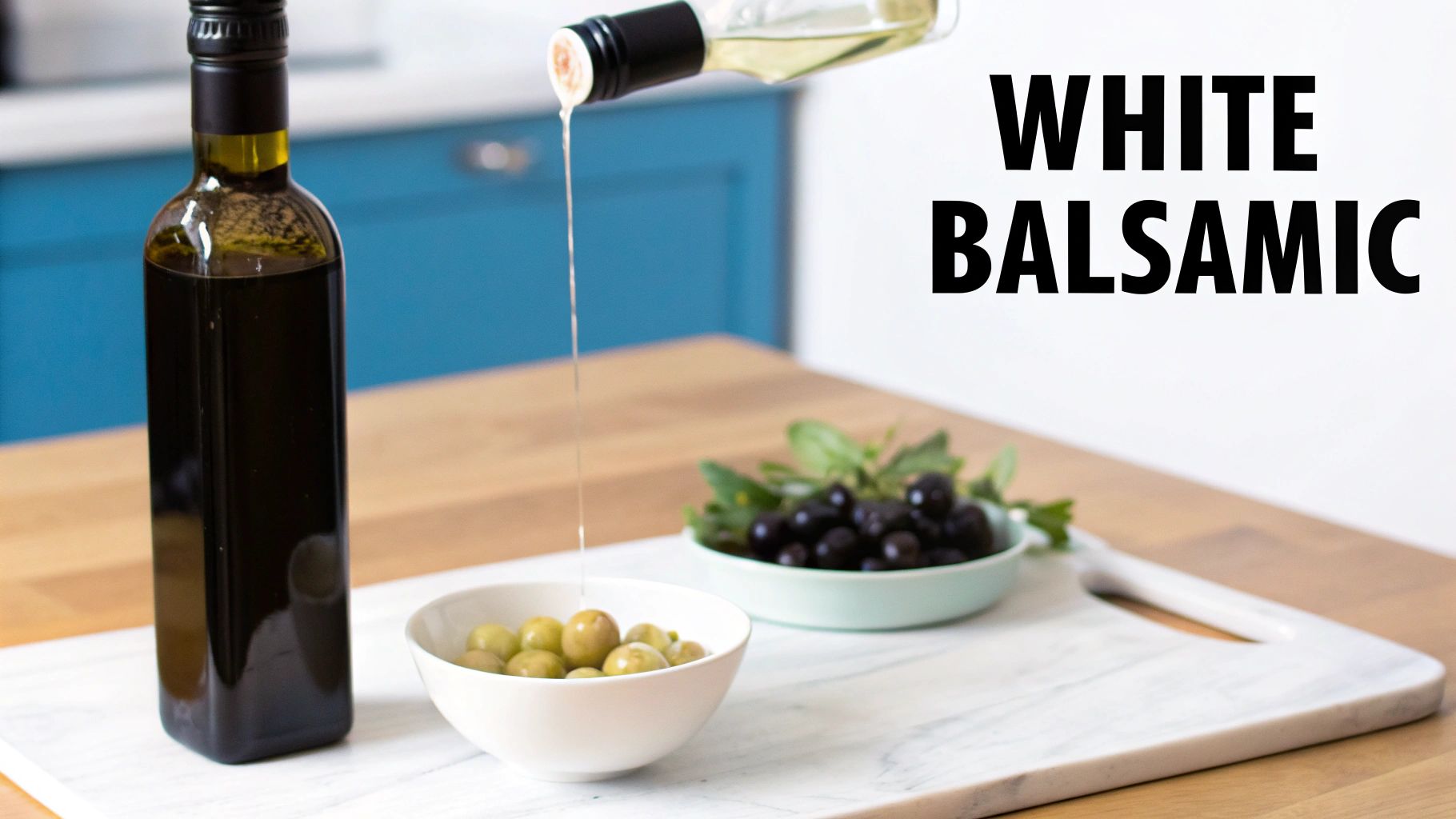
Let’s step into the world of white balsamic vinegar, a culinary gem that offers a refreshing twist on a classic. While it shares the same Italian heritage as its darker counterpart, its personality is entirely its own. Picture the familiar richness of balsamic, but dialed back—made zippier, more delicate, and incredibly versatile.
The magic starts with high-quality white grapes, usually the Trebbiano variety. The process diverges from dark balsamic right from the start. The grape "must"—the freshly pressed juice—is cooked gently at a low temperature. This is the crucial step. By avoiding high heat, the sugars don't caramelize and darken, which is how the vinegar keeps its beautiful, pale golden hue. The result? A condiment with a nuanced sweetness, free of the heavy, molasses notes you find in aged balsamic.
Why It Belongs in Your Pantry
The real appeal of white balsamic is its unique ability to enhance flavors without stealing the show. Its clean, crisp profile adds a bright acidity that lifts a dish, making it perfect for all sorts of meals. Think of it as the secret ingredient that adds a little sparkle.
Here are a few reasons why it’s becoming a must-have for home cooks and chefs alike, especially in the gourmet kitchens of Dubai:
Aesthetic Preservation: It won't stain your lighter-colored ingredients. Your potato salads, creamy sauces, and fresh fruit platters stay looking fresh and vibrant.
Delicate Flavor Profile: With a fruit-forward sweetness that’s less intense, it complements instead of dominates. This makes it perfect for delicate fish, chicken, and fresh vegetables.
Versatile Acidity: Its gentle tang is exactly what you need for bright, refreshing vinaigrettes, marinades, and glazes that are perfectly balanced.
The magic of white balsamic vinegar is its subtlety. It adds a layer of complexity and a bright, acidic lift that enhances the natural flavours of your food, allowing the primary ingredients to truly shine.
As the luxury online gourmet arm of IFM Investments LLC, IFM Gourmet Dubai recognizes the culinary elegance this ingredient brings. This guide will walk you through everything you need to know about this golden elixir—from how it's made to finding the perfect bottle for your kitchen or including it in a stunning gift hamper from our luxury online store.
Here’s a look at how this beautiful condiment is made. Think of it less like a rigid recipe and more like an art form—a delicate dance of tradition, patience, and culinary precision.
The whole process starts with the grapes. Specifically, white grapes like Trebbiano, which are chosen for their crisp, clean character. This is the first clue that we're aiming for something light and bright.
Now, here's where white balsamic really charts its own course. The grape must—that's the freshly pressed juice with all the skins and seeds—is cooked very, very gently. The temperature is kept low, never getting hotter than 80°C. Why? This is the secret to keeping that beautiful, pale golden color. It stops the sugars from caramelizing and turning dark, which is exactly what happens with traditional balsamic.
This gentle heating is what keeps the final vinegar tasting fresh and fruity, instead of developing those deep, molasses notes you find in its darker cousin.
A Quick, Light Touch in the Barrel
Once the must is cooked, it gets a splash of high-quality white wine vinegar. This is what gives it that signature tangy kick and balances out the natural sweetness from the grapes. From there, it’s off to the aging barrels.
But this isn't a long, slow slumber. The aging process for white balsamic is much shorter and more restrained.
Duration: It’s typically aged for just up to a year. Any longer, and it would start picking up too much color and woody flavor.
Barrels: The barrels are often made from woods like ash or oak, chosen because they won't stain the vinegar or overpower its delicate taste. They just add a whisper of complexity.
Environment: Everything happens in a controlled setting, letting the flavors mellow out and come together in perfect harmony.
The real magic in making white balsamic is in what doesn't happen. By skipping the intense heat and long aging, the makers preserve the bright, zesty soul of the white grapes. The result is a vinegar that’s refreshingly light and incredibly versatile.
This careful, gentle process creates a condiment with a personality all its own. It strikes a perfect balance between sweet and tangy with a clean finish. It’s the ideal ingredient when you want to add a sophisticated touch to a dish without weighing it down—a philosophy we live by at IFM Gourmet Dubai. It’s proof that sometimes, the most elegant results come from the lightest touch.
Comparing White and Dark Balsamic Vinegar
So, you're standing in the aisle, looking at two bottles: white balsamic and dark balsamic. What’s the real difference? While they come from the same Italian family, think of them as cousins with very different personalities. Knowing which one to invite to your culinary party is the secret to making a good dish great.
The first, most important difference is how they're made, starting with the grapes and the heat. Traditional dark balsamic uses a mix of red and white grapes, like Lambrusco or Trebbiano. The grape must (the freshly pressed juice) is simmered for hours, slowly caramelizing the sugars. This is what gives it that iconic deep, dark color and complex flavor.
On the other hand, white balsamic vinegar is made only from white grapes, like Trebbiano. The must is cooked very gently at a low temperature, a careful process designed specifically to keep it from browning. The goal is to preserve its light, golden hue.
This one decision in the kitchen—high heat versus low heat—sets off a chain reaction, influencing everything from how long the vinegar ages to how it tastes on your tongue.
The Role of Aging and Time
Time in the barrel is where these two vinegars really go their separate ways. Dark balsamic is patient. It undergoes a long aging process, spending a minimum of 12 years (and often much longer) in a series of wooden barrels. This extended slumber allows it to develop that incredible, syrupy consistency and a rich flavor full of notes like fig, cherry, and molasses.
White balsamic is a bit more youthful and energetic. It's aged for a much shorter time, usually no more than a year. This isn't a shortcut; it's intentional. This brief aging mellows the vinegar just enough while keeping the bright, fruity essence of the grapes front and center. The result? A thinner, crisper condiment with a clean finish, without the heavy, woody notes of its darker relative.
This diagram breaks down the simple but crucial steps in crafting the delicate profile of white balsamic.
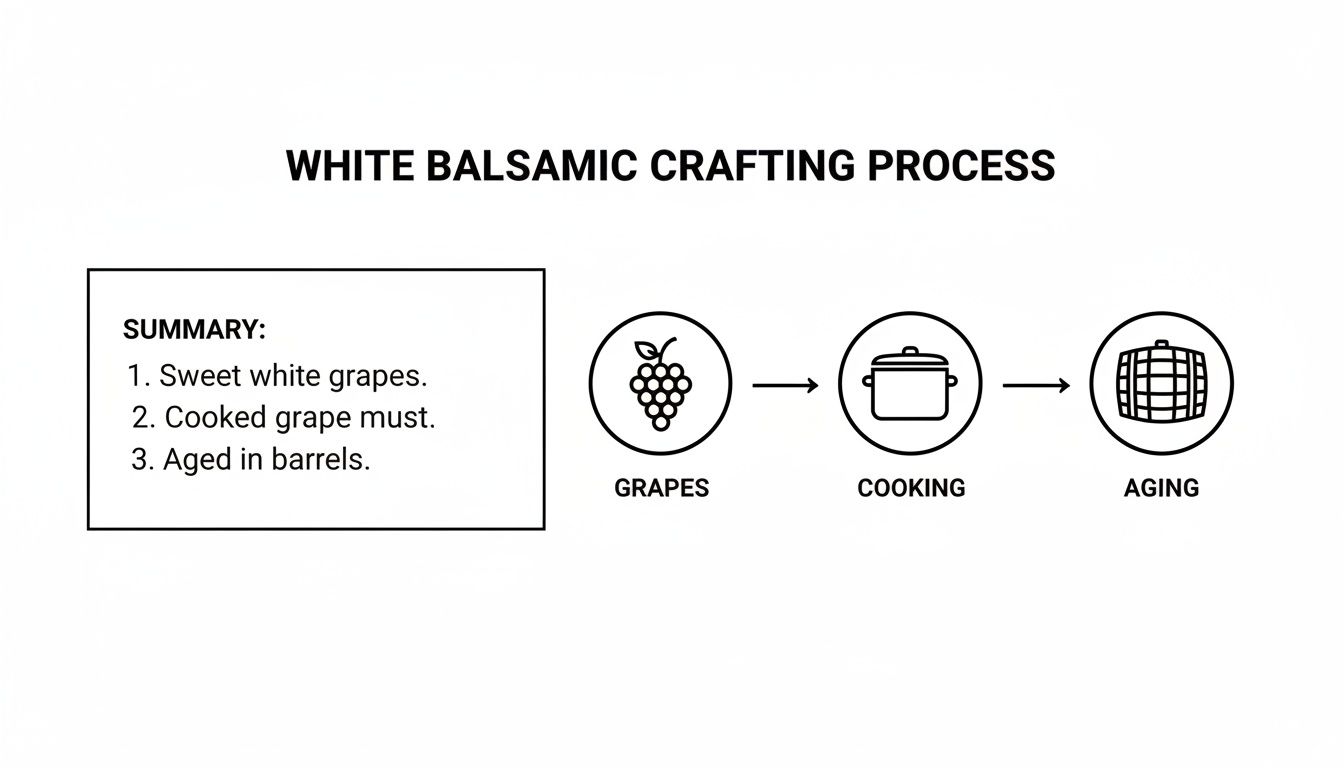
As you can see, the gentle cooking and quick aging are key to preserving that pale color and crisp flavor we love.
Flavor and Culinary Applications
For any cook, the most important question is: how does it taste and what do I do with it? Here, the two vinegars are worlds apart, making them perfect for very different jobs in the kitchen.
Dark Balsamic Vinegar:
Taste: Deep, sweet, tangy, and complex with a thick, almost velvety texture. It carries rich notes of dried fruit, molasses, and wood from the barrels.
Best For: It's a star player in hearty dishes. Use it for glazing roasted meats like beef or duck, drizzling over a wedge of aged Parmesan, or adding a new dimension to rich sauces and stews.
White Balsamic Vinegar:
Taste: Light, clean, and crisp with a gentle sweetness and a zesty finish. The flavor is all about the fruit—it’s much less intense than its dark counterpart.
Best For: It shines in lighter fare where you want a hint of sweet acidity without overpowering other ingredients or staining your beautiful food. Perfect for salad dressings, light marinades for fish or chicken, and sauces for fresh vegetables.
Think of dark balsamic as the finishing touch, a bold statement drizzled on at the end. White balsamic is more of a team player, brightening and lifting the natural flavors already in the dish.
White Balsamic vs Dark Balsamic At a Glance
Sometimes, seeing things side-by-side makes it all click. This table breaks down the essential differences between these two fantastic vinegars.
Attribute | White Balsamic Vinegar | Dark Balsamic Vinegar |
|---|---|---|
Grapes | Primarily white grapes (e.g., Trebbiano) | A blend of red and white grapes |
Cooking Process | Cooked gently at low temperatures to avoid browning | Simmered for hours, leading to deep caramelization |
Aging Period | Short, typically up to one year | Long, often 12 years or more |
Colour | Pale, clear gold | Deep, dark brown |
Flavour Profile | Crisp, light, fruity, and mildly sweet | Rich, complex, sweet, and syrupy |
Best Uses | Vinaigrettes, light sauces, marinades, fruit salads | Glazes, rich sauces, cheese pairings, finishing drizzles |
So, which one should you choose? It all depends on what you’re making. If you're preparing a delicate sea bass or a vibrant fruit salad and want to keep its colors bright, white balsamic is your clear winner. For that bold finish on a steak or a rich flavor boost in a reduction sauce, dark balsamic is the one you want.
At IFM Gourmet Dubai, we celebrate both for their unique contributions to the culinary world, offering artisanal options for every palate and dish.
How to Use White Balsamic in Your Kitchen
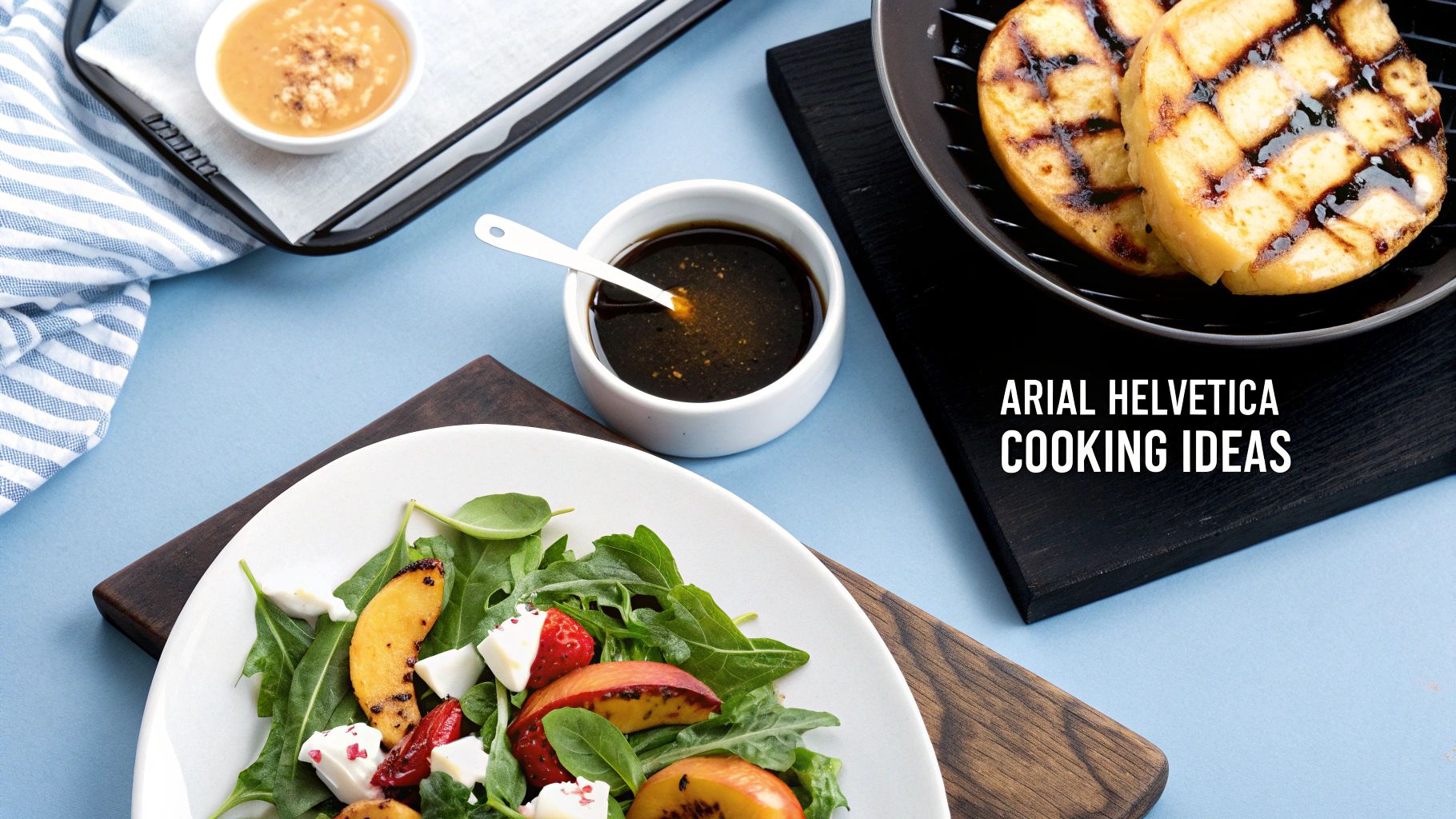
Now that you know what makes white balsamic vinegar so special, it’s time for the fun part—bringing its bright, crisp flavor into your own cooking. Its versatility is really its greatest strength, moving easily from simple dressings to elegant sauces and even some surprising desserts.
Unlike its dark and syrupy cousin, white balsamic enhances dishes with a gentle, fruity sweetness that won't overpower delicate ingredients or stain them a dark color. This makes it an essential tool for any home chef looking to add a touch of culinary flair to everyday meals. Its clean finish and balanced acidity can lift flavors in ways you might not expect.
From a quick weekday salad to a sophisticated weekend dinner, this golden condiment is ready to become a staple in your pantry. Let’s explore some practical and creative ways to put it to work.
Mastering the Classic Vinaigrette
The most popular and straightforward way to use white balsamic vinegar is in a vinaigrette. Its light body and mild sweetness create a dressing that is refreshing and beautifully balanced, perfect for everything from simple greens to complex fruit salads.
Making your own is incredibly simple. The classic ratio is three parts high-quality extra virgin olive oil to one part white balsamic vinegar. From there, you can customize it to your heart's content.
Here are a few ideas to get you started:
Simple Herb Vinaigrette: Whisk together olive oil, white balsamic, a teaspoon of Dijon mustard, finely chopped fresh herbs like parsley or chives, and a pinch of salt and pepper.
Citrus Splash: Add a squeeze of fresh lemon or orange juice to your basic vinaigrette for an extra layer of brightness.
Creamy Delight: For a richer texture, blend in a small amount of Greek yogurt or tahini.
For a touch of elegance in your kitchen, a beautiful Stoneware Olive Oil Dispenser can make measuring and mixing effortless. A well-made vinaigrette is a simple luxury that can transform any salad.
Beyond Salads: Sauces and Marinades
White balsamic’s gentle acidity makes it an exceptional ingredient for sauces and marinades, especially for lighter proteins like chicken, fish, and seafood. It tenderizes the meat without being too aggressive.
One of my favorite techniques is using it to deglaze a pan. After searing chicken or fish, remove the protein and add a splash of white balsamic to the hot pan. As it sizzles, scrape up all those flavorful browned bits from the bottom. Whisk in a knob of butter and some fresh herbs to create a quick, restaurant-quality pan sauce that’s both bright and savory.
It also works beautifully as a marinade base. Combine it with olive oil, garlic, and your favorite herbs to marinate vegetables before grilling or roasting. This simple step adds a subtle sweet-and-sour note that caramelizes wonderfully under heat—it's especially delicious with asparagus, bell peppers, and zucchini. For those who love Italian staples, a touch of white balsamic can brighten up a simple pasta aglio e olio.
The true beauty of white balsamic vinegar lies in its ability to add a complex layer of flavor without any heaviness. It provides the perfect acidic counterpoint to rich ingredients, creating a balanced and memorable dish every time.
Surprising Sweet Applications
One of the most delightful and unexpected ways to use white balsamic vinegar is in sweet dishes. Its fruity, less-assertive profile allows it to pair wonderfully with fruits and desserts, adding a sophisticated tang that cuts through sweetness.
Try drizzling a small amount over a bowl of fresh berries, sliced peaches, or melon. The vinegar's acidity heightens the natural sweetness of the fruit, making the flavors pop in a way that is both surprising and delicious. It's a perfect light and healthy dessert.
For a more indulgent treat, reduce the vinegar over low heat until it thickens into a light syrup. This glaze is phenomenal drizzled over vanilla ice cream, panna cotta, or a simple cheesecake. The contrast between the creamy dessert and the tangy syrup is truly exceptional. You can even use it to finish grilled fruits like peaches or pineapples, adding a gourmet touch to a simple barbecue.
Finding Premium White Balsamic in Dubai
Once you get a taste for the bright, crisp character of white balsamic vinegar, the next step is finding a truly exceptional bottle. In a culinary hub like Dubai, quality is everything. Knowing what to look for ensures you bring home an authentic taste of Italy, not a bland imitation.
Your search for premium ingredients will lead you to specialists who value heritage and craftsmanship. In the UAE, IFM Gourmet Dubai is the luxury online gourmet arm of IFM Investments LLC, a culinary-focused company based in the UAE. As part of the broader Italian Food Masters group, they are known for quality, authenticity, and culinary elegance in Dubai’s gourmet scene.
Decoding the Label for Authenticity
When you’re picking out a bottle of white balsamic, the label is your best friend. It tells you the story of what’s inside—its origin, ingredients, and quality. A few key terms will help you spot a superior product.
Look for these signs of a high-quality white balsamic vinegar:
‘Condimento Bianco’: This Italian term translates to "white condiment" and is often used for authentic white balsamic made in the traditional style.
Origin: Seeing Modena, Italy, on the label is a very good sign. This region is the heartland of balsamic production, and its producers follow centuries-old standards.
Simple Ingredients: The ingredient list should be short and sweet. Great white balsamic is just white grape must and white wine vinegar—that's it. Steer clear of bottles with added sugars, artificial colors, or thickeners.
Why IFM Gourmet Dubai is Your Destination for Italian Delicacies
As a premier destination for fine foods, IFM Gourmet Dubai curates a selection that reflects a true commitment to quality. Their impressive lineup of artisanal delicacies, including sweets, savories, fine chocolates, premium teas, cakes, and beautifully curated gift hampers, champions true Italian culinary elegance. It’s a trusted source for home chefs and food lovers who want the real deal.
The growing appetite for gourmet products in the UAE has made specialty items much more accessible. In fact, the national balsamic vinegar market was valued at approximately USD 13.01 million in 2024 and is expected to keep growing. This trend is driven by a demand for premium, health-conscious ingredients, which helps make niche products like fine white balsamic vinegar more available.
For the discerning palate, choosing a purveyor like IFM Gourmet Dubai means investing in authenticity. It’s more than just an ingredient; it’s about experiencing a piece of Italian culinary heritage, delivered with care right to your kitchen.
The Perfect Gift: Bespoke Hampers for Every Occasion
The elegance of a high-quality white balsamic vinegar makes it a thoughtful and sophisticated gift. Its versatility and gourmet appeal are a standout addition to a bespoke gift hamper, perfect for any celebration in the UAE—from corporate events to birthdays and anniversaries.
Imagine a beautifully curated hamper from IFM Gourmet Dubai. Alongside a bottle of exquisite white balsamic, you could include artisanal pasta, premium olive oil, and fine chocolates. A gift like that speaks volumes about your taste and appreciation for quality. And if you're exploring regional luxuries, you might enjoy a guide to Arabian luxury scents in the UAE, which offers a glimpse into another facet of the premium market here.
Whether you're stocking your own pantry or searching for the perfect present, choosing a premium white balsamic from a trusted source like IFM Gourmet Dubai ensures you’re getting a product that is both delicious and authentic.

Got Questions About White Balsamic Vinegar?
As you start playing around with white balsamic vinegar in your kitchen, you'll probably have a few questions. Getting straight answers will help you use and store this amazing ingredient like a pro, making sure every drop is as delicious as the last. Here are some of the most common things people ask.
How Should I Store White Balsamic Vinegar?
Keeping that delicate, fruity flavor fresh is all about proper storage. The good news? It’s incredibly easy.
No, it doesn't need to be refrigerated. The vinegar's natural acidity is a fantastic preservative, keeping it perfectly happy at room temperature. For the best results, just find a cool, dark spot for it—a pantry or cupboard is ideal. Keep it away from heat sources like the stove and direct sunlight. And always twist the cap on tight to keep the air out.
What Is the Shelf Life After Opening?
One of the best things about vinegar is how long it lasts. As long as you store it right, an opened bottle of white balsamic vinegar will stay at its best for about three to four years.
It’s safe to use pretty much forever thanks to its acidity, but that vibrant aroma and crisp taste will slowly start to fade over time. You might also see a little bit of sediment at the bottom of the bottle eventually. Don't worry—that’s just a natural part of the aging process and is completely harmless.
To get the most out of your vinegar, try to use it within a few years of opening. That way, you’re always enjoying it at its peak, just like the artisans in Modena intended.
Can It Be a Substitute for White Wine Vinegar?
Yes, you can definitely swap white balsamic for white wine vinegar, but just keep the taste difference in mind. White balsamic is much sweeter and has a softer, less aggressive tang.
If a recipe calls for white wine vinegar and you're using white balsamic as a one-to-one replacement, you might want to cut back on other sweet ingredients like sugar or honey to keep things balanced. It's a fantastic substitute in salad dressings, light pan sauces, and marinades where its fruitier, more mellow profile can really add something special.
Is White balsamic Vinegar a Healthy Choice?
Absolutely! It’s a wonderful way to pack your meals with flavor without adding extra fat, sodium, or calories. It’s also loaded with beneficial antioxidants from the grapes and can even help with digestion.
To really maximize the health perks, always go for a high-quality, authentic product without any added sugars or artificial extras. Enjoyed in moderation, white balsamic vinegar is a delicious and healthy addition to any diet, aligning perfectly with the focus on culinary wellness we champion here at IFM Gourmet Dubai.
Ready to explore the bright and elegant world of authentic Italian white balsamic? Visit IFM Gourmet Dubai to discover our curated selection of artisanal delicacies and elevate your home cooking.


Comments