Buckwheat Soba Noodles: A Practical Guide for Home Cooks

You've bought a packet labelled “soba”, boiled it like spaghetti, and ended up with a sticky bundle that breaks when you lift it. That result is common in Dubai kitchens because buckwheat soba noodles aren't all made the same. The flour ratio changes the flavour, texture, cooking time, gluten status and price, while the UAE shelf often places blended wheat-and-buckwheat noodles beside premium 100% buckwheat versions.
The practical answer is simple: read the ingredient list before trusting the picture on the front. Once you know the buckwheat percentage, you can choose the right noodle for a cold salad, a hot broth or a fast stir-fry, then cook it with enough water and a proper cold rinse.
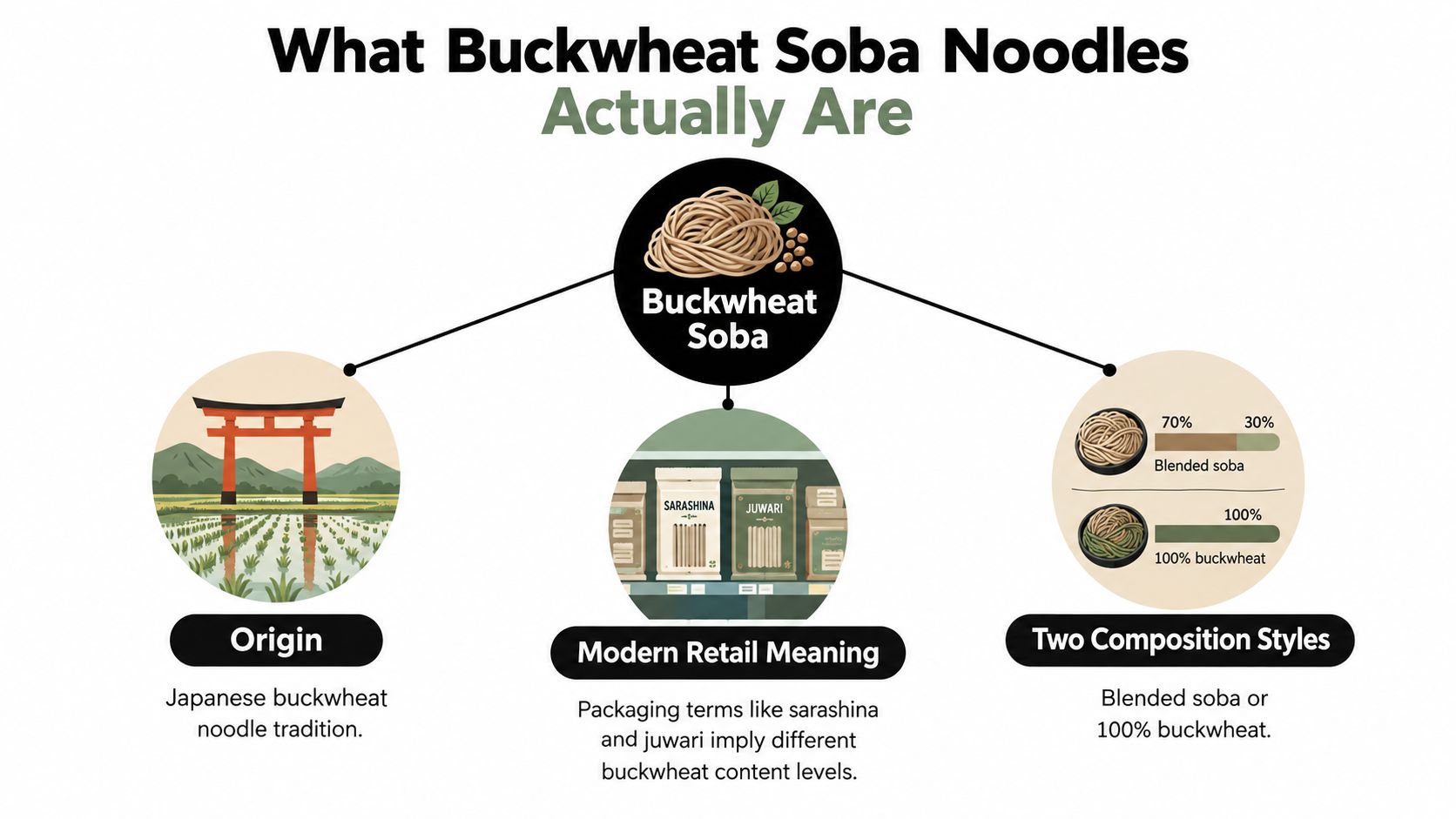
What Buckwheat Soba Noodles Actually Are
Soba is the Japanese name for noodles traditionally associated with buckwheat. Buckwheat itself isn't wheat. It's a pseudo-cereal with a distinctive earthy, toasted aroma, and its flour gives noodles a grey-beige colour and a slightly nutty flavour.
Modern retail soba, however, covers several formulations. Many packets contain added wheat flour because wheat gluten gives the noodle elasticity and makes it easier to boil, drain and serve without breakage. A product can therefore look like traditional soba while behaving more like a wheat-supported noodle.
The flour ratio changes the experience
The main styles are useful shorthand, but the packet's actual ingredient declaration remains the final authority.
Juwari means 100% buckwheat. It has the strongest buckwheat character and a more delicate, brittle texture.
Ni-hachi traditionally means 80% buckwheat and 20% wheat. The wheat adds spring and makes the noodle more forgiving.
Sarashina refers to a refined style made from the paler inner part of buckwheat. It tends to be finer, lighter and more delicate in flavour.
UAE shelves also carry products that use “soba” prominently while containing a much larger wheat share. One Spinneys listing identifies its Hakubaku organic soba as 29% buckwheat and 69% wheat flour on the product page. A Carrefour UAE listing similarly describes a 200g organic soba with 62% wheat flour and 35% buckwheat flour in its product details.
What to look for on the packet
A darker grey-beige noodle usually suggests a more pronounced buckwheat presence, though colour alone can mislead. The aroma should be gently toasted and grain-like rather than strongly floury. Thickness also matters. Fine noodles suit chilled dipping preparations, while sturdier strands cope better with broth and wok cooking.
Arabic-English packaging may show “buckwheat” in one panel and “wheat flour” in another, so check the ingredient list and allergen statement rather than relying on terms such as organic, Japanese-style or 100% natural. The percentage is the most useful purchasing signal. Brand reputation matters, but it can't compensate for choosing the wrong formulation for the dish.
100% Buckwheat Versus Blended Soba in the UAE
The UAE shelf makes the procurement trade-off clear. A 200g 100% buckwheat soba is listed by Carrefour UAE at AED 30.29, or about AED 15 per 100g in Carrefour's retail assortment. A 300g blended soba at AED 16.79 works out to about AED 5.60 per 100g, roughly a threefold difference. Spinneys lists a 270g Hakubaku blend at AED 11.75, with its panel showing 29% buckwheat and 69% wheat flour on the UAE grocery listing.
The price reflects more than branding. Juwari, or 100% buckwheat soba, has a firmer, more pronounced grain flavour and a narrower cooking window. It also tends to appear in smaller volumes on UAE shelves, where blended packs suit broader everyday demand. Ni-Hachi, the traditional blended style, is springier, milder and easier to manage for a weekday meal.
Feature | 100% Buckwheat (Juwari) | Blended Soba (Ni-Hachi) |
|---|---|---|
Main signal | Buckwheat flour is the sole flour | Buckwheat is combined with wheat flour |
Texture | Delicate and firm when carefully cooked, with a greater risk of breakage | Springier and more forgiving |
Flavour | Deeper, nuttier and more toasted | Milder, with a softer grain character |
Gluten position | Intended for gluten-free use when the label and facility controls support it | Contains wheat and isn't gluten-free |
Best use | Chilled soba, tasting portions and careful plating | Hot broths, stir-fries and family meals |
UAE pricing position | Specialty and premium | Mainstream and easier for regular cooking |
The label outranks the front-of-pack imagery. A packet showing a buckwheat field may still be wheat-heavy, and “soba” alone does not establish gluten-free status. Check the flour order, percentage declarations and allergen wording.
Shelf-side rule: If the packet doesn't make the buckwheat ratio clear, treat the ratio as unknown rather than assuming it's a premium soba.
Bilingual packaging can list buckwheat, wheat and gluten differently across its Arabic and English panels. Compare both panels with the ingredients. Choose pure buckwheat for a first tasting or chilled serving. Choose the blend for a family stir-fry, where sturdier strands handle sauce and repeated tossing better.
Buying and Storing Soba Like a Home Chef
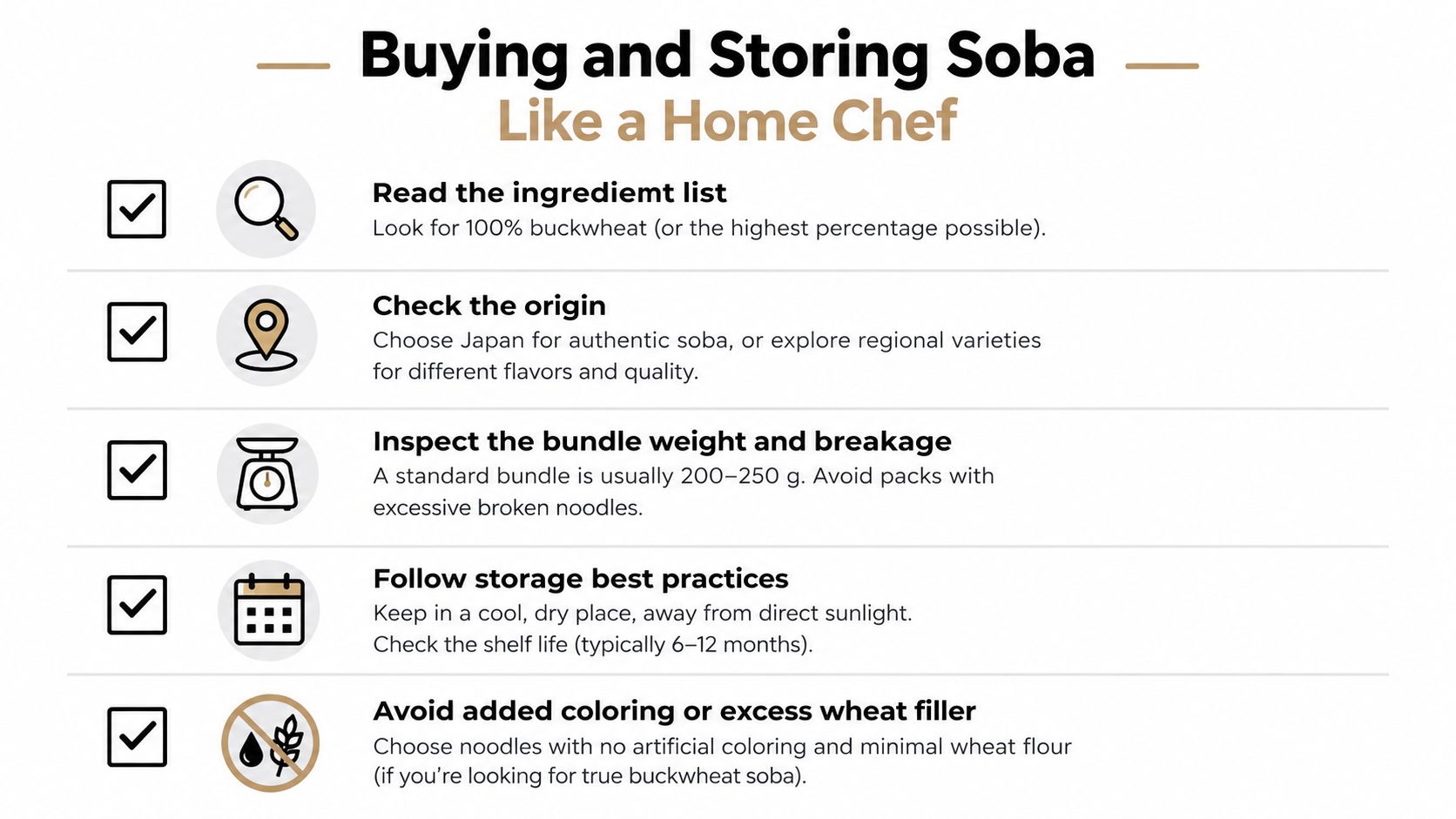
Start at the back of the packet, not the front. Find the ingredient list, identify the buckwheat percentage, confirm whether wheat appears, and check the stated origin. Japanese origin can be useful context, but it doesn't replace reading the formulation.
A practical shelf check
Read the ratio: A high buckwheat percentage usually means more flavour and less tolerance for rough cooking.
Check the bundles: Broken strands suggest careless handling or an old, brittle pack.
Inspect the date: Avoid heavily discounted stock when the date is unclear or close.
Check allergens: Missing or vague wheat information is a reason to choose another product.
Compare formats: A tasting pack and a larger everyday pack serve different purposes.
UAE kitchens add one storage concern, humidity. Keep dry noodles in their original packaging inside a sealed container, away from steam, sunlight and the hob. A cool, air-conditioned cupboard is preferable to a warm cabinet beside the oven. Dry soba is generally a pantry product with a long shelf life, but follow the printed date and discard packs that smell stale or show moisture damage.
For cooked noodles, cool them quickly, drain them thoroughly and refrigerate them in a sealed container. If you're freezing cooked soba, portion it before freezing so you can thaw only what you need. The texture won't be identical to freshly cooked noodles, so use frozen portions in a hot preparation rather than for a carefully plated cold dish.
A 200g bundle can serve two as a main meal or four in soup, depending on the amount of broth, vegetables and protein. For strict gluten-free households, separate the noodle pot, colander, tongs and serving bowls from equipment used for wheat pasta. If you're exploring other wheat-free formats, this guide to buy gluten free buckwheat pasta can help you compare labels beyond soba.
For broader pantry organisation, this ingredient category guide is useful when separating dry staples, sauces and specialty products.
My usual buying approach is to keep one premium juwari pack for tasting and a blended multipack for weeknight cooking. That gives you a clear comparison without forcing every meal to depend on a delicate noodle.
Cooking Soba Noodles the Right Way
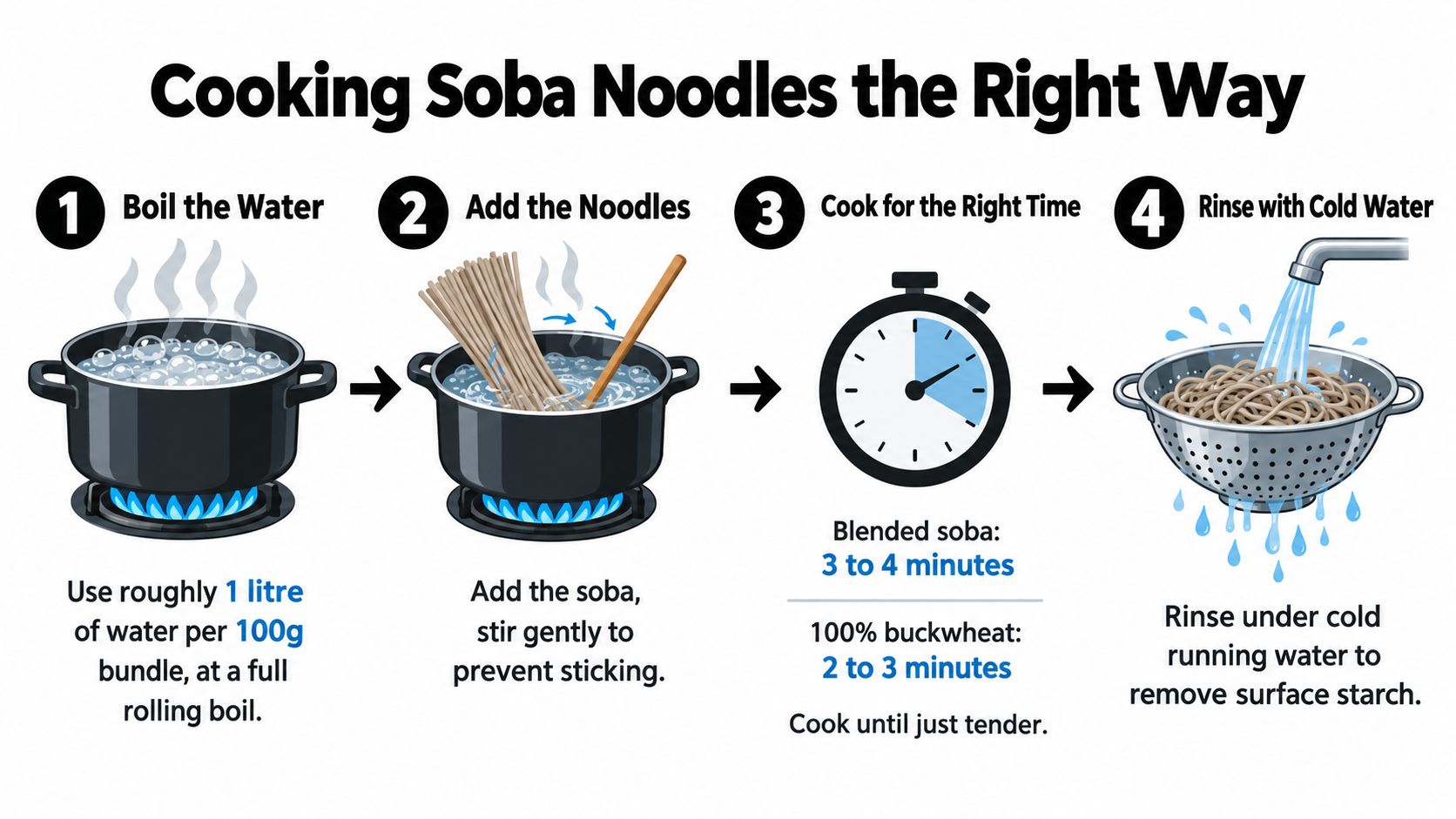
A reliable soba routine is boil, loosen, drain, rinse and chill. Packet directions still take priority because flour ratios and noodle thickness vary, but this method suits the blended and pure-buckwheat products commonly sold in UAE shops.
Build the cooking method around water and timing
Use about 1 litre of water per 100g of noodles and wait for a full rolling boil. Choose a pot with room for the noodles to move. Add them gradually, then stir gently for the first 30 seconds to separate the strands. After that, limit agitation. Fragile all-buckwheat noodles break easily when stirred throughout cooking.
Blended soba often takes around 4 to 5 minutes, while pure buckwheat may finish sooner. As noted earlier, the 100% buckwheat Clearspring pack specifies 2 litres of water and 5 to 7 minutes of cooking. Start checking before the stated time and stop when the centre is just tender. The noodles should hold together without a hard core.
Dubai's desalinated tap water is soft but can carry a noticeable chlorine taste. If the cooked noodles taste flat or slightly chemical, use filtered water for the boiling step. Skip salting the water entirely. Soy sauce, dashi and dipping sauce already provide enough sodium.
Rinsing is part of cooking
Drain the noodles immediately, then rinse them under cold running water. Lift and separate the strands gently with your fingers as the water removes surface starch. This stops residual cooking and removes the gummy coating that forms when hot noodles sit together.
The rinse matters even more if you plan to stir-fry. Unrinsed strands clump, catch on the wok and take up sauce unevenly. For hot broth, rinse first, then warm the noodles briefly in the broth, or put them in the serving bowl and pour the broth over them. Freshly drained, overcooked noodles dropped straight into soup can become soft and porridge-like.
For a visual reference on handling strands, this pasta preparation visual shows the basic preparation flow, although soba still requires the cold-rinse step.
If you are serving within 15 minutes, drain thoroughly and keep the noodles loosely covered. Do not pack them tightly. For a cold salad, toss them with a small amount of neutral or sesame oil after rinsing. For hot service, keep noodles separate from the sauce until the last moment, so they retain their bite.
Three Soba Recipes for UAE Kitchens
The most useful soba recipes are adaptable. Dubai cooks already work with soy sauce, sesame, cucumber, cabbage, spring onion and leftover chicken, so the noodle can fit into the pantry without requiring a full specialist shop.
A hot dashi bowl for a quiet evening
For one serving, use one 90g to 100g bundle, a light katsuo-dashi broth, soy sauce, mirin and sliced spring onion. Cook and rinse the noodles first, then warm them briefly in the finished broth. Add shredded chicken, tofu or mushrooms if you want a more substantial bowl.
Finish with toasted nori and a small pinch of shichimi togarashi. The broth should taste savoury but not aggressively salty, because the noodles bring a gentle roasted grain flavour that disappears under a heavy sauce.
A chilled sesame bowl for Dubai heat
Cook one bundle, rinse it thoroughly and chill it well. Toss with sliced Lebanese cucumber, edamame, spring onion and a dressing made from tahini, soy sauce, grated ginger, rice vinegar and a little water to loosen it.
Lebanese cucumber works perfectly when Japanese cucumber isn't available. A squeeze of lime adds brightness, while sesame seeds and shredded nori provide texture. Serve the noodles cool, not wet, and dress them just before eating so the sauce doesn't pool at the bottom.
A fast yakisoba-style stir-fry
Use one bundle per person, plus cabbage, capsicum and whatever cooked protein is already in the fridge. Chicken, prawns, tofu or thinly sliced beef all work. For a quick sauce, combine soy sauce, sesame oil, ginger and a small amount of honey.
Cook the noodles, rinse and drain them well before adding them to the wok. The rinse prevents clumping, then the high heat helps the sauce coat the strands. Add the noodles near the end, toss briefly and finish with spring onion, toasted sesame and shichimi.
If mirin isn't in your cupboard, combine honey with rice vinegar for a practical substitute. Keep the sauce restrained. Soba can become heavy when paired with too much oil, sweetener or salty seasoning, particularly in the UAE heat.
Gluten, Nutrition and Smart Substitutions
Buckwheat is naturally gluten-free, yet many soba noodles contain wheat flour. That distinction matters for anyone with coeliac disease, a wheat allergy or a medically required gluten-free diet. A packet should not be treated as gluten-free just because “buckwheat” appears prominently on the front.
The buckwheat percentage is the first procurement signal. A 100% buckwheat product is the stronger starting point, but strict gluten-free shoppers must also check allergen declarations and cross-contamination information. Shared cooking water, utensils or colanders can make an otherwise suitable noodle unsafe.
Nutrition needs label reading
The Hakubaku product listed by Spinneys provides 10.9g protein, 68.8g carbohydrates, 1.8g fat and 892mg sodium per 100g, according to its nutrition panel on the UAE listing. That makes the label useful for comparing a mixed-flour product with a 100% buckwheat pack available through UAE retailers such as Carrefour. Check sodium per 100g rather than relying on the product name, then account for the sauce and broth added at home.
Buckwheat is valued for compounds such as rutin, minerals including magnesium and a useful protein profile. Those qualities do not make every soba dish light. Portion size, salty broth, sweet dressing and sesame oil can outweigh the nutritional advantages of choosing a higher-buckwheat noodle.
Substitute | Best For | Gluten-Free |
|---|---|---|
Shirataki | Low-carbohydrate meals | Usually, check the packet |
Rice noodles | Coeliac caution and wheat-free cooking | Usually, check for cross-contact |
Whole-wheat spaghetti | Pantry fallback when soba isn't available | No |
Spiralised courgette | Vegetable-led meals | Yes, when uncontaminated |
Shirataki has a very different texture and needs careful rinsing. Rice noodles are more neutral but lack buckwheat's roasted aroma. Whole-wheat spaghetti works for stir-fries in a pinch, while spiralised courgette suits a fresh salad and needs little cooking.
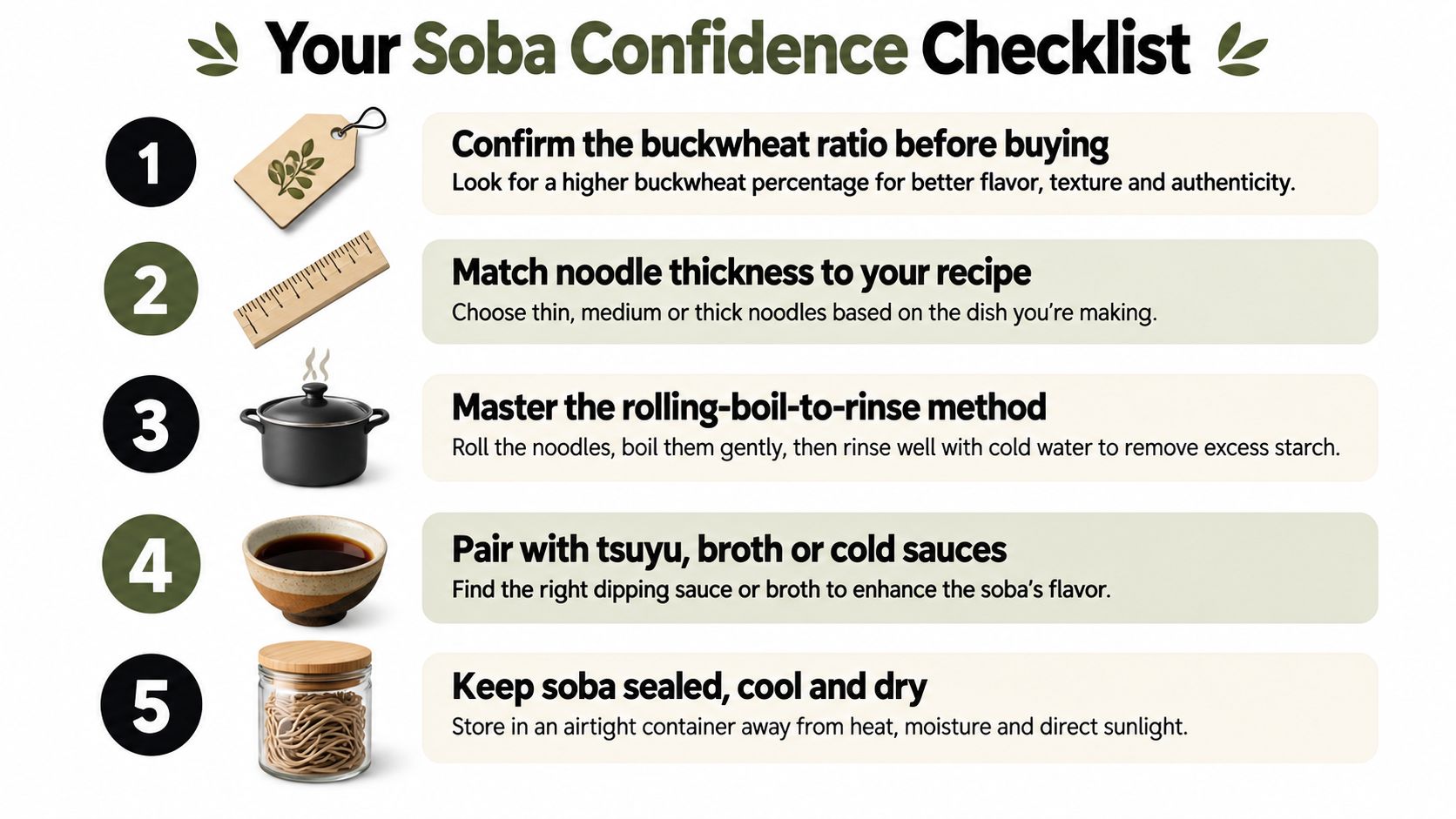
Your Soba Confidence Checklist
Good soba comes from repeatable decisions rather than expensive equipment. Use this five-part routine whenever you buy and cook a new packet.
Confirm the buckwheat ratio. Check the ingredient list at Carrefour, Waitrose or another UAE retailer before choosing the product. The percentage tells you more than a bowl photograph or the word “premium”.
Match thickness to the dish. Fine noodles suit chilled sesame bowls and dipping sauces. A sturdier blended strand is the safer choice for broth or wok cooking.
Control the boil and rinse. Use plenty of water, stir gently at the start, test before the packet's maximum time, then rinse under cold running water. This is the step that separates clean strands from a sticky mass.
Keep two sauces ready. A warm dashi sauce with soy and mirin covers winter-style bowls. A cold sesame-ginger sauce works better for hot Dubai afternoons. Store garnishes such as spring onion, nori and sesame where they're easy to reach.
Keep a safe alternative available. If a coeliac guest is eating, use a separately prepared gluten-free noodle and separate cooking equipment. Store dry soba sealed, cool and dry, and keep prepared noodles chilled rather than leaving them exposed to kitchen heat.
A new packet often needs a small adjustment. Change one variable at a time, such as water volume, cooking time or rinse intensity, and note what happens. By the second or third batch, you'll know which noodle belongs in your broth, which one holds up in a wok and which deserves a simple chilled serving.
IFM Gourmet Food Store offers a carefully selected gourmet range for Dubai and the wider UAE, including ingredients suited to thoughtful home cooking, entertaining and gifting. Visit IFM Gourmet Food Store to explore its curated food selection and find pantry ingredients that can turn a simple soba meal into a more considered dining experience.


Comments