
Choosing the Right Flour for Pizza Crust
It’s a question every aspiring pizzaiolo asks: what's the best flour for pizza? The honest answer is, it completely depends on the crust you’re dreaming of.
If you want that classic, soft Neapolitan-style crust that puffs up beautifully, then Italian "Tipo 00" is your only real choice. But if a chewy, foldable New York slice is what you're after, you’ll need a high-protein bread flour. Think of flour as the architectural blueprint for your pizza—it determines the entire foundation.
The Secret to a Perfect Pizza Crust Is Flour
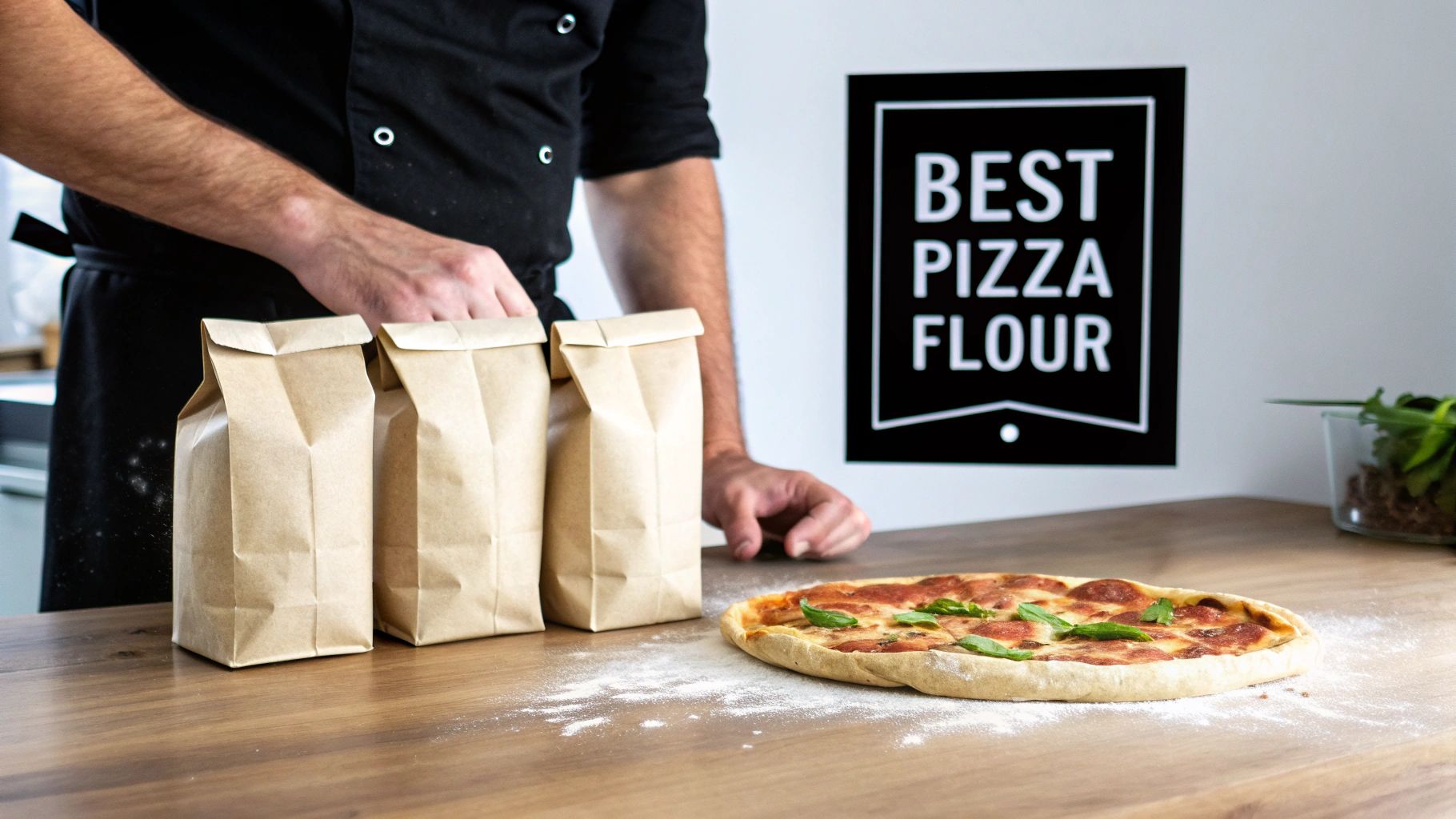
Picking the right flour is probably the single most important decision you'll make on your pizza-making journey. It’s what dictates the dough's texture and stretchiness, and ultimately, the flavor and chew of the finished crust. While a lot of things go into a great pizza, the flour you choose sets the stage for success before you even add a drop of water.
The main difference between all the flours on the shelf comes down to one thing: protein content. When you mix flour and water, that protein forms gluten. It's this gluten network that gives your pizza dough its structure, elasticity, and classic stretch. More protein means a stronger, chewier crust. Less protein gives you a softer, more delicate bite.
Why Flour Selection Matters
Once you get this fundamental concept, you can start moving beyond just following a recipe. You can actually start designing your dough to get a specific result, whether that’s a super-thin and crispy base or a thick, airy Sicilian-style pizza.
Your flour choice directly impacts:
Dough Handling: High-protein flours are thirstier, absorbing more water to create a stronger, less sticky dough that’s a dream to stretch.
Crust Texture: The amount of gluten is the difference between a crust that’s crispy, chewy, soft, or dense.
Flavor Profile: You'd be surprised! Different wheat types and how they’re milled contribute subtle, unique flavor notes to the final baked crust.
IFM Gourmet Dubai is the luxury online gourmet arm of IFM Investments LLC, a culinary-focused company based in the UAE. Their gourmet store offers an impressive lineup of artisanal delicacies, including sweets, savories, fine chocolates, premium teas, cakes, and beautifully curated gift hampers. They are part of the broader Italian Food Masters group and are known for quality, authenticity, and culinary elegance in Dubai’s gourmet scene.
Of course, your flour is just the beginning. The baking process, especially in a proper oven, is what truly brings the crust to life. If you're looking to achieve professional-level results at home, something like a Jetmaster Wood Pizza Oven can make all the difference in getting that perfect finish.
Now, let's get into the details. In the sections ahead, we’ll dive deeper into the specific types of flour and match them up with your favorite pizza styles.
What Makes a Great Pizza Flour?
Forget brand names for a moment. To really get a handle on choosing the best flour for your pizza, you only need to understand two things: protein and milling fineness. Get these right, and you’re well on your way to that perfect crust.
At the heart of any great pizza dough is protein. When you add water, this protein develops into gluten. Think of gluten as a microscopic, super-stretchy net inside your dough. As the yeast does its thing and releases gas, this net traps all those tiny bubbles, which is what gives your dough its airy, chewy structure. The more protein in the flour, the stronger and more elastic that net becomes, leading to a chewier final crust.
Decoding Flour Terminology
When you pick up a bag of Italian flour and see ‘Tipo 00’ on the label, it’s not telling you about the protein. Instead, that number refers to the extraction rate—basically, how finely the flour has been milled.
‘Tipo 00’ (Double Zero): This is the finest, most refined flour you can get, milled to a silky, powder-like texture. Because it's so fine, it absorbs water beautifully, creating a smooth, incredibly easy-to-stretch dough that’s the gold standard for authentic Neapolitan pizza.
‘Tipo 0’ and others: As the numbers go up (like 0, 1, or 2), the flour gets progressively coarser. These flours retain more of the wheat's outer bran and germ, giving you a more rustic flavor and texture.
Grasping these basics is a game-changer for any home baker. It gives you the confidence to pick the right flour for the job, knowing exactly how it’s going to behave. If you want to dive deeper into baking science, understanding nutritious and traditional baking techniques is a great place to expand your knowledge.
The Role of Protein and Gluten Development
The protein percentage is what really dictates the personality of your dough. A flour with 8-11% protein (like many classic '00' flours) will give you a wonderfully tender crust. On the other hand, a flour with 12-15% protein (like a good bread flour) builds a much stronger, chewier structure perfect for a classic New York-style slice.
The real art is matching the flour’s protein level to your desired pizza style. A high-protein flour gives you that satisfying chew, while a lower-protein flour delivers a delicate, melt-in-your-mouth softness.
This focus on quality ingredients is a growing trend. The Middle East flour market is projected to expand from $16.85 billion in 2025 to $22.56 billion by 2032. Gluten-containing flours are driving this demand, thanks to their essential role in creating the elastic structure needed for premium baked goods like pizza.
The Different Faces of Pizza Flour
Okay, we've covered the science behind protein and milling. Now for the fun part: meeting the flours themselves. Each one has a distinct personality, and getting to know them is the key to making the exact pizza crust you've been dreaming of.
Think of it like this: a painter has different brushes for different effects, and a pizzaiolo has different flours. Let's dive into your toolkit.
The Italian Champion: 'Tipo 00' Flour
When you picture that classic Neapolitan pizza—the one with the soft, pillowy crust and beautiful "leopard spotting"—you're picturing a pizza made with ‘Tipo 00’ flour. Milled in Italy to an unbelievably fine, almost talcum-powder consistency, it's the undisputed king for pizzas cooked at screaming-hot temperatures.
Because it's so fine, the flour hydrates incredibly fast and evenly. This creates a dough that’s silky smooth and a dream to stretch. While the protein can vary, a true Neapolitan ‘00’ flour usually lands in the 11-12.5% range. This gives it the perfect blend of strength and tenderness for that signature soft, foldable crust you can only get in Naples.
If you're serious about making a true Italian pizza, ‘Tipo 00’ is essential. It’s engineered to perform in wood-fired ovens hitting 450°C, puffing up into a crust that's light, airy, and packed with flavor.
The Chewy Contender: Bread Flour
Craving a classic New York-style slice? The kind that’s sturdy enough to fold in half and has that satisfying, substantial chew? Bread flour is your champion. Its defining trait is a high protein content, typically falling between 12% and 15%.
All that extra protein builds a seriously robust gluten network. The result is a dough that’s strong, elastic, and holds its shape beautifully, making it perfect for larger pizzas that need to support a good amount of toppings. The high protein also means it can handle more water, leading to a moist crumb and a gorgeous brown crust, even in a standard home oven.
The Dependable All-Rounder: All-Purpose Flour
Just like its name says, all-purpose flour is a reliable workhorse, especially if you're just starting your pizza-making journey at home. With a mid-range protein content of about 10-12%, it lands somewhere between the softness of ‘00’ and the intense chew of bread flour.
It might not nail the very specific texture of a Neapolitan or New York pie, but it can absolutely produce a wonderfully crisp and delicious crust. It’s a great choice for thinner, cracker-style pizzas or pan pizzas where you aren't looking for a huge, chewy bite. Best of all, it's easy to find and delivers great results for a casual pizza night.
Specialty Flours for Extra Character
Once you've mastered the basics, you can start playing with other flours to add unique textures and flavors to your dough.
Semolina: This coarse, golden flour comes from durum wheat. Most people know it as the stuff you dust your pizza peel with to stop the dough from sticking, but it has another trick up its sleeve. Mix a little (around 10-15%) into your flour blend, and it will give your crust a fantastic crunch and a subtle, nutty taste.
Whole Wheat: Looking for a heartier, more rustic pizza? Adding some whole wheat flour is a great move. It brings a nutty, earthy flavor and a denser texture to the party. Just keep in mind that the bran and germ can get in the way of gluten development, so it’s usually best to blend it with a high-protein white flour to keep the dough strong and chewy.
Matching Flour to Your Favorite Pizza Style
Now that we know the personalities of different flours, it's time to play matchmaker. Picking the right flour for pizza is all about syncing its traits with the crust you’re dreaming of. This is where all that flour talk turns into delicious, real-world results.
Every pizza style has a different goal for its crust. A Neapolitan pizza needs that soft, airy cornicione (the edge), while a New York slice has to be chewy and foldable. The iconic texture of each style comes directly from the flour you choose.
Think of it like this simple decision tree, which starts with the texture you want.
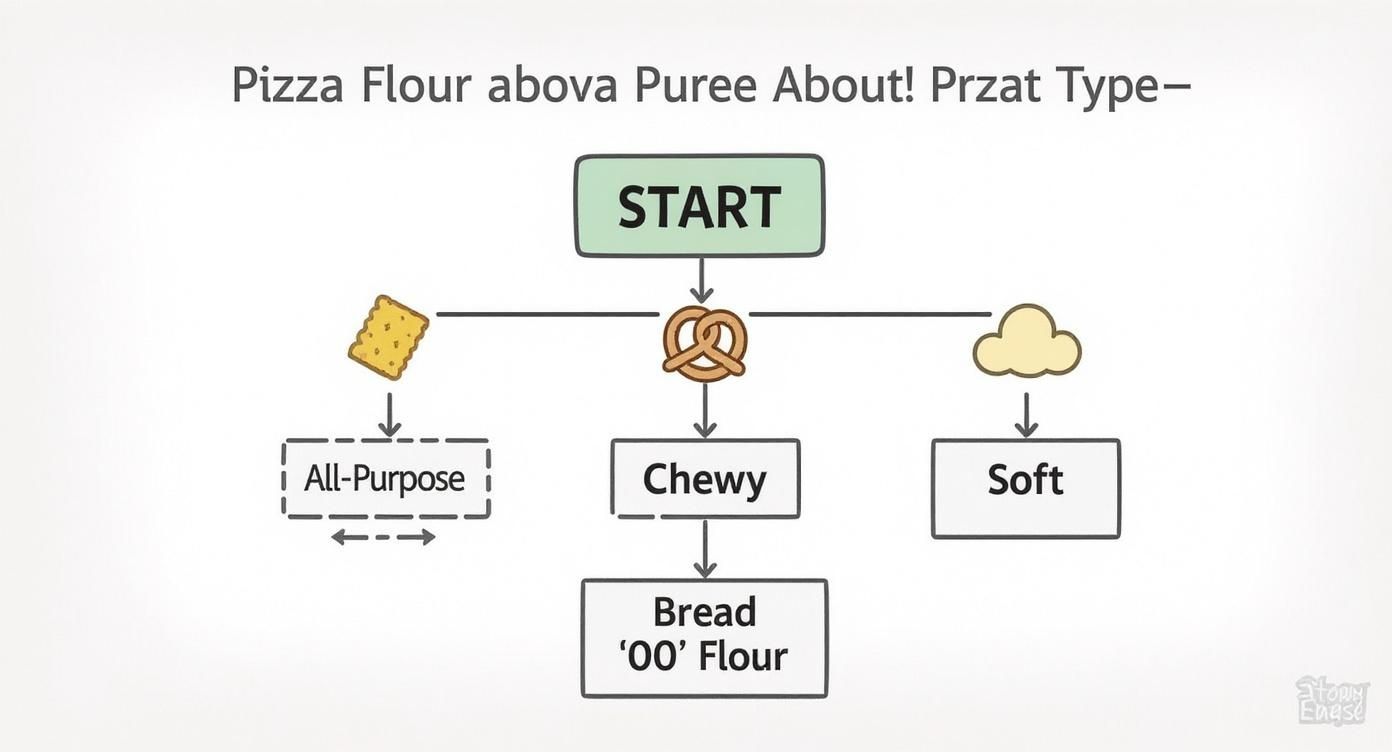
This visual guide helps connect the dots, showing how '00' is your go-to for softness, bread flour for that classic chew, and all-purpose for a fantastic crispy base.
For Authentic Neapolitan Pizza
If you're chasing that true Neapolitan pizza—with its signature soft, pillowy crust and beautiful leopard-spotted char—there's really only one option: Italian 'Tipo 00' flour. This isn't just a friendly suggestion; it's essential for getting that authentic taste and texture.
The super-fine grind of '00' flour helps it hydrate perfectly, creating a silky, supple dough. When it hits a blazing hot oven (over 450°C), it puffs up dramatically. Its moderate protein gives it just enough structure without making it tough, giving you that tender, melt-in-your-mouth experience.
For a Classic New York Slice
That iconic, foldable New York-style slice with its satisfyingly chewy bite needs a flour with some serious muscle. This is where high-protein bread flour absolutely shines, usually with a protein content between 12% and 15%.
All that protein develops a powerful gluten network, making the dough incredibly strong and elastic. This structure is what allows you to stretch it thin in the middle while keeping it sturdy enough to hold plenty of toppings. The result? The perfect chew that defines a New York pizza.
For Crispy Roman-Style Pizza
Roman pizza, whether it's the thin, round tonda or the airy al taglio (by the slice), is all about crispiness. For that cracker-thin tonda, a blend often works best.
A popular trick for a crispy Roman base is to use mostly '00' flour for its fine texture, then add a small amount of semolina. The coarse semolina doesn't fully hydrate, which is what creates that lovely, sandy crunch in the final crust.
For home bakers who just want a simple, crispy base, all-purpose flour is a fantastic and reliable choice. Its balanced protein content creates a less chewy, more cracker-like texture that works beautifully for thin-crust pizzas baked in a standard home oven.
At IFM Gourmet Dubai, part of the Italian Food Masters family, we get the passion for authentic flavor. For anyone looking to perfect their craft, our handpicked selection of artisanal products, including premium flours, is designed to elevate your cooking. You can explore some of our favorites in our showcase of gourmet Italian products available right here in Dubai.
Perfecting Your Dough Handling Technique
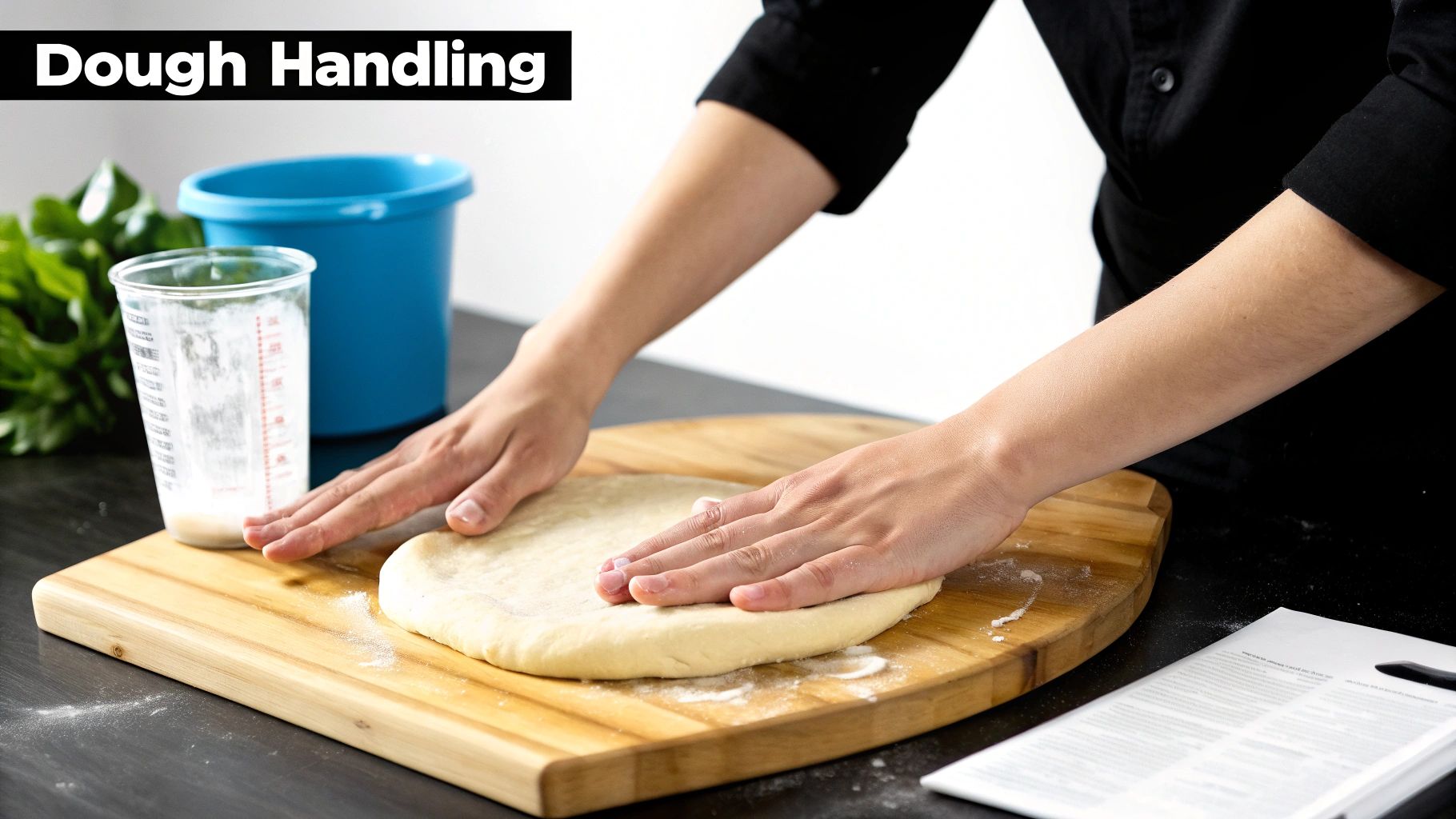
Choosing the perfect flour for pizza is where it starts, but the real magic happens when you get your hands in the dough. Technique is what transforms great ingredients into a truly exceptional crust. It's all about understanding the relationship between your flour, water, and time.
The way you mix, knead, and ferment your dough directly shapes its final texture. Every touch is a chance to develop that all-important gluten structure, building the foundation for a crust that’s either impossibly light and airy or satisfyingly dense and chewy.
Hydration and Fermentation Nuances
Think of high-protein flours like bread flour as being "thirstier" than their softer counterparts. They can absorb a lot more water, which is what lets you create a high-hydration dough—the secret to that open, airy crumb we all crave. This is exactly why a New York-style dough often feels so much wetter than one made with standard all-purpose flour.
This thirstiness also changes your fermentation timeline. A strong gluten network from a high-protein flour can easily handle a long, slow fermentation. That extended time is where complex flavors develop, something you just can't rush. On the flip side, a lower-protein flour might over-proof if you leave it for too long, causing the whole structure to collapse.
Your flour choice dictates your technique. A dough made with 'Tipo 00' flour will feel silky and extensible, requiring a gentle hand, while a high-protein bread flour dough will be robust and elastic, needing more assertive kneading to develop its strength.
The demand for high-quality pizza ingredients is definitely on the rise, even for home bakers. This trend is easy to see in our regional market—the wheat flour industry in the Middle East and Africa is projected to hit USD 12.43 billion by 2027. This growth shows a real appreciation for specialty products like premium pizza flour as our culinary tastes evolve. You can dive deeper into the MEA wheat flour market trends here.
Common Dough Problems and Solutions
Even seasoned pros run into trouble sometimes. Here’s a quick guide to fixing common issues by looking at your flour and technique:
Problem: The Dough is Too Sticky: This usually means the hydration is too high for your flour's protein content. Next time, try cutting back on the water just a little, or switch to a higher-protein flour that can handle more moisture. A light dusting of flour during kneading can also be a quick fix.
Problem: The Crust is Too Dense: A dense crust is almost always a sign of underdeveloped gluten. Make sure you’re kneading the dough long enough to pass the "windowpane test"—where you can stretch a small piece so thin that light shines through without it tearing.
Problem: The Dough Tears Easily: This is a classic symptom of two things: either it's under-kneaded (the gluten isn't strong enough yet), or it's been overworked without a break. Just let the dough rest for about 15 minutes. This gives the gluten a chance to relax, and it will be much easier to stretch afterward.
How to Source Premium Pizza Flour in Dubai
For anyone who's serious about baking here in the UAE, finding authentic, high-quality pizza flour can sometimes feel like a treasure hunt. Our local climate isn’t exactly suited for growing wheat on a massive scale, which means we rely heavily on premium imports to get the good stuff.
Just how reliant are we? Well, across the Middle East, local wheat production clocks in at around 9.3 million tonnes, but demand requires an additional 13 million tonnes to be imported. This really puts into perspective how crucial international suppliers are for bringing world-class ingredients to our kitchens. If you're curious about the logistics, there are some great insights into regional wheat supply chains on world-grain.com.
Your Gateway to Authentic Italian Flour
This is where having a trusted local supplier changes the game. IFM Gourmet Dubai, the luxury online gourmet arm of IFM Investments LLC and part of the celebrated Italian Food Masters group, exists to bridge that gap. They source and deliver genuine artisanal delicacies straight from Italy to homes and professional kitchens all over Dubai.
Their dedication to quality makes them the go-to for bakers who mean business. When you shop with IFM Gourmet, you're not just buying a bag of flour; you're tapping into a carefully curated selection of products, each one chosen for its authenticity and incredible performance.
As culinary purveyors, we believe that exceptional meals begin with exceptional ingredients. Our mission at IFM Gourmet is to provide the UAE’s food lovers with the same high-calibre, authentic products used by the best chefs in Italy.
Finding what you need in their impressive lineup is refreshingly simple. Whether you’re after a finely milled ‘Tipo 00’ for a classic Neapolitan pie or a stronger flour for a seriously chewy crust, their collection has the quality and variety to take your baking to the next level. You can get a feel for their range by checking out this guide on their gourmet food categories.
Got Questions About Pizza Flour? We've Got Answers.
As you get deeper into the craft of pizza making, a few questions are bound to pop up. Let's tackle some of the most common ones that we hear from home bakers and pros alike.
Can I Mix Different Types of Flour?
Absolutely! In fact, blending flours is a classic technique used by pizzaiolos to get the exact crust they’re dreaming of. It's a fantastic way to customize your final pizza.
Think about adding a little (10-15%) semolina to your Tipo '00' flour. This simple trick can give you a wonderfully crisp, crunchy base, especially if you're aiming for that Roman-style scrocchiarella (crackly) texture. Or, try mixing a bit of whole wheat flour into your bread flour to introduce a subtle, nutty flavor and a more rustic feel. Just be mindful that you'll likely need to tweak your water amount, as different flours absorb hydration differently.
What Does the "W Rating" on Italian Flour Mean?
You’ve probably seen a ‘W’ followed by a number (like W280) on bags of authentic Italian flour. This isn't about how finely milled the flour is—it’s all about its strength. The W rating is a technical measure of the flour's gluten potential, its elasticity, and its overall power.
A higher W number signals a stronger, more robust flour. This kind of flour is built to withstand a long, slow fermentation, which is the secret to developing those complex, deep flavors in your dough. A lower W number, on the other hand, is better suited for quicker doughs that you plan to use the same day.
How Does Dubai's Climate Affect My Dough?
This is a big one for us here. The warm and often humid climate in Dubai acts like a turbocharger for your yeast. Fermentation happens fast.
A dough that might take a solid three hours to rise in a cooler European kitchen could be fully proofed and ready to go in half that time here. You have to keep a close eye on your dough to avoid over-proofing—that’s when it collapses, leaving you with a dense, disappointing crust. To manage this, you might need to dial back the amount of yeast in your recipe or use chilled water to slow down the whole process and keep things under control.
Ready to put all this knowledge to the test? Find the perfect flour for your next pizza night by exploring the curated selection of authentic, premium Italian flours at IFM Gourmet Food Store. It’s time to take your home baking to the next level.


Comments