Discover bottle olive oil: How to choose quality and flavor
Standing in the olive oil aisle, it's easy to feel a bit lost. The sheer number of bottles can be intimidating, making it tough to figure out where to even start. But here’s the secret: a top-notch bottle of olive oil is so much more than a simple cooking fat. It's a flavor booster, a finishing touch, and the quiet hero of a well-stocked pantry. This guide is here to change the way you look at this kitchen staple, turning what was once a quick grab-and-go purchase into a confident, informed choice.
From Pantry Staple to Culinary Star
Let's be real—most of us don't give much thought to the olive oil we buy. It's just something we use to get things started in a pan or to toss a quick salad. But what if that same bottle could be your kitchen's secret weapon? Imagine adding a peppery zing to a finished soup or a bright, fruity note to grilled fish. The journey from a basic pantry item to a culinary superstar all starts with understanding what’s really inside the bottle.
This guide will demystify the labels and help you appreciate the liquid gold they hold. We’ll dive into why not all oils are the same and teach you how to read a label like a pro. Knowing the difference is the key to unlocking the incredible potential of this ancient ingredient.
Why Quality Matters in Every Drop
A truly great bottle of olive oil is an investment in both taste and health. It’s packed with antioxidants and complex flavors that cheaper, mass-produced oils just can't replicate. It's about appreciating the craft and care that goes into every bottle, from the olive grove right to your kitchen counter. Understanding these subtleties can elevate your cooking in a big way, turning a simple meal into something truly memorable—just imagine the difference it makes on a gourmet Italian pizza.
Here in the UAE, the appreciation for premium ingredients is growing fast. The Middle East and Africa olive oil market was valued at USD 834.17 million and is expected to climb to USD 1,213.79 million by 2032. This surge shows a clear demand for healthier, more flavorful options. You can read more about the growth of the olive oil market in the region.
At IFM Gourmet Dubai, we believe everyone deserves access to the finest artisanal foods. As the luxury online gourmet arm of IFM Investments LLC, we’ve handpicked a selection of authentic olive oils that represent the very best in quality and culinary elegance, helping you make every single dish extraordinary.
Understanding the Different Olive Oil Grades
Stepping into the world of olive oil can feel like learning a new language, with terms like "extra virgin" and "refined" on every bottle. But it's simpler than you think. Think of it as the difference between a master artisan's finest work and a solid, everyday tool—each has a purpose in your kitchen.
Extra Virgin vs. Virgin Olive Oil
At the very top of the hierarchy is Extra Virgin Olive Oil (EVOO). This is the masterpiece, the purest expression of the olive. It's made by cold-pressing olives right after harvest—a purely mechanical process with no heat or chemicals. This gentle method keeps the oil's rich flavor, vibrant color, and high concentration of healthy antioxidants and polyphenols intact.
Just a step below is Virgin Olive Oil. It’s also produced without chemicals or heat, but you can think of it as a skilled apprentice's work compared to the master's. It might have slight imperfections in flavor or aroma, and its acidity can be a bit higher—up to 2% compared to EVOO's strict 0.8% maximum. While still a quality product, it doesn't quite hit the flawless standard of its extra virgin cousin.
This simple hierarchy shows how to think about olive oil. Some bottles are meant to be the star of the dish, while others play a supporting role.

The infographic above nails it: Extra Virgin Olive Oil is a 'Culinary Star,' perfect for finishing dishes, while other grades are reliable 'Pantry Staples' for general cooking.
The Workhorse Oils: Refined and Pure
When a recipe calls for high-heat cooking like frying or searing, you need an oil that can take the heat. This is where refined and pure olive oils come in. These oils start out as virgin olive oil but then undergo processing—like filtration and heating—to remove impurities and neutralize the flavor.
This refining process gives the oil a much higher smoke point, making it perfect for high-temperature cooking. The trade-off? It also strips away most of the nuanced aromas, flavors, and beneficial polyphenols you find in EVOO.
So what about a bottle of olive oil that's just labeled "Olive Oil" or "Pure Olive Oil"? This isn't a separate grade but a blend. It's mostly refined olive oil with a small amount of extra virgin or virgin oil mixed back in for a touch of color and flavor. It’s a versatile option for everyday cooking when you want a higher smoke point but not a strong olive taste.
Olive Oil Grades at a Glance
To make it even easier, here's a quick comparison of the most common grades of bottled olive oil to help you choose the right one for your culinary needs.
Grade | Extraction Method | Flavor Profile | Best Used For |
|---|---|---|---|
Extra Virgin | Cold-pressed, no chemicals | Robust, fruity, peppery | Finishing, dressings, dipping, low-heat cooking |
Virgin | Cold-pressed, no chemicals | Milder, with some flavor defects | Everyday cooking, sautéing, marinades |
Pure / Olive Oil | Blend of refined and virgin | Neutral, with a hint of olive | General cooking, baking, roasting |
Refined | Processed with heat/filters | Very neutral, light flavor | High-heat cooking, frying, searing |
Choosing the right grade really comes down to what you're making. You wouldn't use your best finishing oil for deep-frying, just as you wouldn't use a neutral oil for a flavorful salad dressing.
Choosing the Right Grade for Your Kitchen
So, how do you decide which bottle to grab? It all comes down to how you plan to use it.
Here’s a quick guide to help you pick the perfect grade:
For Finishing and Flavor: Always choose a high-quality Extra Virgin Olive Oil. Its complex, fruity, and peppery notes are meant to be enjoyed raw. Drizzle it over salads, soups, grilled fish, or fresh bread.
For Everyday Cooking: A good-quality EVOO is also great for sautéing or roasting at low to medium temperatures, infusing your food with beautiful flavor. A reliable Virgin Olive Oil also offers a great balance of quality and value for daily use.
For High-Heat Applications: When you need to fry, sear, or bake at high temperatures, a Refined or Pure Olive Oil is your best friend. Their neutral flavor won't overpower your other ingredients, and their high smoke point prevents the oil from burning.
At IFM Gourmet Dubai, we understand that every dish deserves the right ingredient. Our curated collection focuses on premium, authentic oils to ensure that when you're looking for that 'culinary star' quality, you find it. From robust EVOOs perfect for finishing a classic Italian pasta to more delicate options for vinaigrettes, we have the tools to elevate your cooking. By selecting the correct grade, you honor both the ingredient and the final dish, unlocking a new level of culinary elegance in your home kitchen.
Why Origin and Harvest Dates Matter
Think of a bottle of olive oil like a fine wine—it tells the story of where it came from. The specific combination of soil, climate, and olive variety, known as terroir, gives each oil its unique personality. This is why a peppery, green oil from Tuscany tastes so different from a golden, buttery one from Andalusia.
It's this sense of place that creates the magic in the bottle. Understanding the link between origin and flavor is your first step toward choosing olive oil with confidence, moving past generic supermarket shelves and into a world of true artisanal quality.
Decoding Labels of Origin
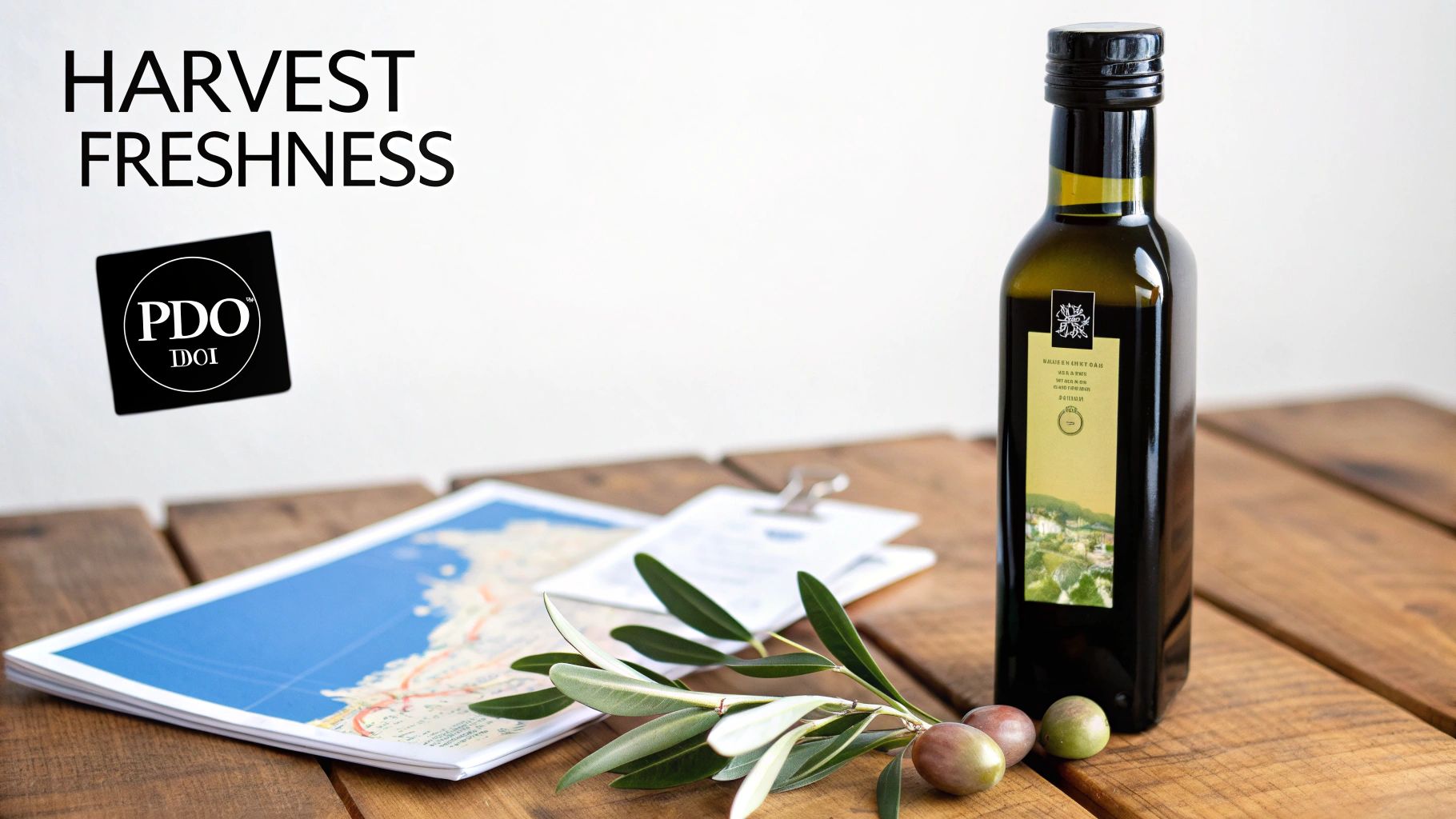
Ever see letters like PDO or PGI on a label and just skim past? Don't. These aren't just acronyms; they are legally binding guarantees of authenticity, ensuring the oil in your hands is the real deal from a specific region, made according to time-honored methods.
Here’s a quick guide to what they mean:
PDO (Protected Designation of Origin): This is the top-tier certification. It guarantees every single part of the process—from growing and harvesting the olives to pressing and bottling—took place in that specific region.
PGI (Protected Geographical Indication): This label is a bit more flexible but still a mark of quality. It means at least one stage of production happened in the designated area, connecting the oil’s character to its geographical home.
These seals are your protection against fraud and a promise that the oil you're buying is a true taste of its heritage.
The Global Landscape of Olive Oil
While Italy and Spain often steal the spotlight, fantastic olive oil is crafted all around the Mediterranean and beyond. Each region offers its own unique flavor profile. For instance, Tunisia is a major player, with its bottled olive oil export revenues soaring by nearly 90 percent in the first part of the 2023/24 crop year. Between November and May, the country exported oil valued at an incredible €1.159 billion, though it still has room to grow its packaged oil sector. You can read more about the trends in Tunisian olive oil exports.
"The only way to learn what olive oil you like is to try it. So rather than buying five bottles of the same olive oil, buy five different varieties. It’s like wine. There is no definitive ‘best.’ It’s all about what you like."
This advice is spot on. The best way to find your favorite is to explore. Try a robust Coratina from Puglia, Italy, or a delicate Arbequina from Catalonia, Spain, and see what you prefer.
Why the Harvest Date Is Your Best Friend
If you only look for one thing on an olive oil label, make it the harvest date. Unlike wine, olive oil does not get better with age. It's a fresh fruit juice, and its flavor and health benefits start to fade the moment it’s pressed. Freshness is everything.
The "best by" date can be a trap. It's often set for two years after the bottling date, not the harvest. An oil could have been sitting in a tank for a year before it was even bottled, meaning it's far from fresh when you get it.
Always, always look for the harvest date. A good producer will proudly display it because it’s a clear sign of a high-quality product. To get the best flavor, use your oil within 12 to 18 months of its harvest. Here at IFM Gourmet Dubai, we make this easy by sourcing oils with clear origins and the most recent harvest dates, so you know you're always getting the freshest, most vibrant flavor.
How to Actually Taste Olive Oil
So, you're ready to taste olive oil like a pro? First, forget everything you know about dipping a piece of bread into a shallow dish at a restaurant. A true tasting is a full sensory experience, a lot like sampling a fine wine, designed to unlock the oil's real character and quality. It’s all about tuning into your senses to discover what’s truly inside that bottle of olive oil.
To get started, you’ll need to isolate the oil’s aroma and flavor. Professionals use a small, blue-tinted glass so they aren't swayed by the color—which, by the way, tells you nothing about the quality. For at-home tasting, a small wine glass or even a shot glass works just fine.
Pour about a tablespoon into your glass. The next step is crucial: warming it up. Cup the glass in one hand and place your other hand over the top to trap the aromas. Swirl it gently for about a minute. This simple motion coaxes the aromatic compounds to life, setting the stage for the most important part of the tasting: the smell.
The Three Pillars of Flavor
Now, lift the glass to your nose, remove your hand, and take a deep sniff. What do you notice? A high-quality extra virgin olive oil should have a fresh, clean scent. This aroma is called fruitiness, and it’s the first of the three positive traits you’re looking for.
Don't expect it to smell like a basket of apples, though. Instead, you're searching for specific notes:
Green Fruitiness: Picture fresh-cut grass, a green tomato leaf, artichoke, or even green almonds.
Ripe Fruitiness: These are softer, more mellow notes like ripe tomato, red apple, or hints of butter and nuts.
Next up is the taste. Take a small, quick sip and let the oil coat your entire tongue. This is where you’ll meet the next two key characteristics: bitterness and pungency.
Don’t shy away from bitterness! A noticeable bitter kick, especially on the sides of your tongue, isn't a defect. It’s a sign of fresh, healthy olives packed with antioxidants.
Finally, you should feel a peppery or spicy tickle at the back of your throat. It might even make you cough, and that’s a good thing! This is pungency, the third and final marker of a premium oil. That kick comes from oleocanthal, a powerful anti-inflammatory compound. The stronger the peppery finish, the more of these beneficial polyphenols you’re getting.
Identifying Flavor Profiles
Once you can pick out fruitiness, bitterness, and pungency, you can start identifying the distinct flavor profiles in a bottle of olive oil. Just like with wine, different oils have different intensities and dominant notes.
Here are a few common profiles to look for:
Delicate and Buttery: These oils are incredibly smooth and mellow. Think notes of ripe apple and almond with a very gentle peppery finish. They're perfect for drizzling over fish or using in baking.
Medium and Fruity: A wonderfully balanced profile. You'll get a clear grassy or herbaceous aroma, a pleasant bitterness, and a solid peppery kick. This is your all-around star for salads, vegetables, and pasta.
Robust and Peppery: These are the bold ones. They pack an intense punch with strong notes of green tomato vine and artichoke, followed by a powerful, lingering peppery sensation. They stand up beautifully to strong flavors like grilled steak, hearty soups, and bitter greens.
By practicing this tasting method, you’ll go from just buying oil to truly appreciating it. You'll learn its nuances, confidently choose bottles that match your palate, and take your cooking to the next level. At IFM Gourmet Dubai, our curated selection offers a whole world of profiles, just waiting for you to explore and find the perfect match for your kitchen.
Matching the Right Oil to Your Dish
Okay, so you've got the basics down on grades, origins, and flavors. Now for the fun part: actually using this knowledge in the kitchen. This is where we move beyond the label and learn how to pair the perfect bottle of olive oil with the right dish, taking your cooking from simply good to truly great.
Think of your olive oils like different knives in a chef's roll. You wouldn't use a delicate paring knife to chop through bone, right? It's the same idea here. A beautiful, expensive finishing oil has its moment to shine, and that moment is definitely not in a screaming hot frying pan.
For Drizzling and Finishing
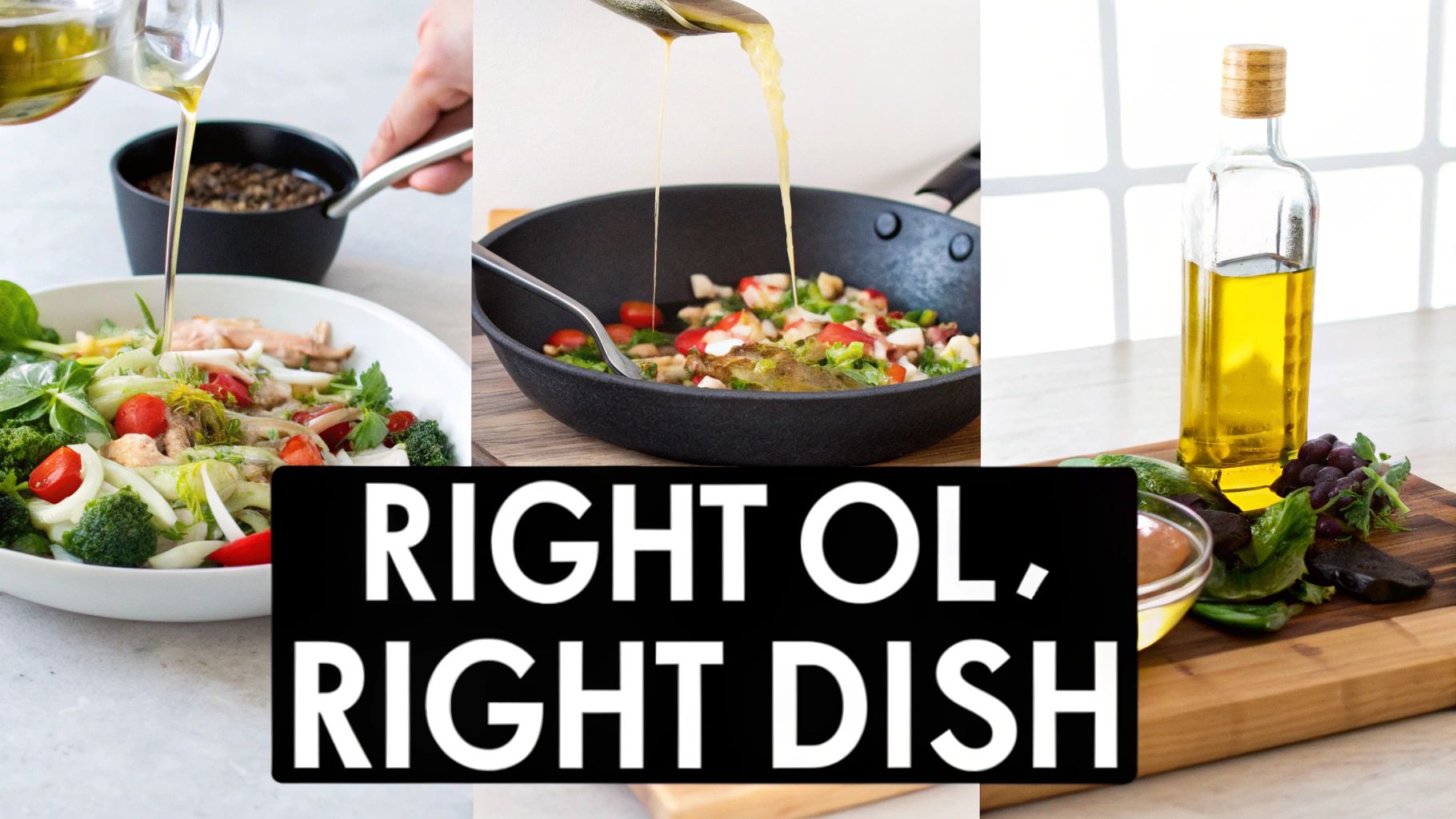
This is where your best Extra Virgin Olive Oil belongs—the robust, flavorful bottles with complex aromas and that peppery kick. This is your finishing oil, the final flourish that adds an unmistakable layer of flavor and elegance. It's meant to be enjoyed raw, where all its character can be appreciated.
Get generous with it in these moments:
Fresh Salads: A bold EVOO is all you need for a perfect vinaigrette. Just add a splash of vinegar and a pinch of salt. Done.
Grilled Fish or Steak: Drizzle it on just before serving. The fruity, peppery notes cut through the smoky char beautifully.
Rustic Bread: Nothing beats the classic Italian starter of dipping fresh, crusty bread into a pool of high-quality oil.
Soups and Stews: A final swirl of pungent, green oil can brighten up a hearty lentil soup or a rich minetrone, adding a whole new dimension of flavor.
The key with a finishing oil is to complement, not conquer. A delicate oil is stunning with subtle flavors like white fish. A more robust, peppery oil can stand up to a rich steak or a classic pasta dish. As our guide on pairing pasta with the perfect sauce illustrates, the right combination is everything.
For Everyday Cooking and Sautéing
For your daily cooking—sautéing vegetables, building sauces, or making marinades—a reliable, good-quality EVOO is your workhorse. You don't need to break out the priciest bottle, but using a solid extra virgin oil will infuse your food with a wonderful base of flavor that you just can't get from a neutral oil. Its smoke point is more than high enough for most medium-heat cooking.
For High-Heat Frying
When you're really turning up the heat, you need an oil that can handle it. This is the job for Refined Olive Oil or a "Pure Olive Oil" blend. The refining process gives these oils a much higher smoke point, making them perfect for frying, searing, or high-heat roasting. Their neutral flavor also means they won't get in the way of what you're cooking.
How to Spot a Fake Bottle Olive Oil
Sadly, not all that glitters is gold in the olive oil world. To make sure you're getting the real deal, you have to shop smart. Here are a few red flags and green lights to watch for.
What to Look For:
A Harvest Date: This is the most crucial piece of information. Freshness is everything, so always look for the most recent harvest date you can find.
Dark Glass or Tins: Light is olive oil's worst enemy and makes it go bad quickly. Any serious producer will package their oil in protective dark bottles or tins.
Specific Origin Details: Vague labels are a bad sign. Look for PDO or PGI seals, or at least the specific estate or region where the olives were grown and pressed.
What to Avoid:
Suspiciously Low Prices: If it seems too good to be true, it is. Producing real extra virgin olive oil is an expensive process. A huge bottle for a bargain price is a major red flag.
Vague Labels: Phrases like "Product of the Mediterranean" without a specific country are a way to hide a blend of low-quality oils.
Clear or Plastic Bottles: These offer zero protection from light and are a sure sign of a low-grade product.
Olive oil consumption and demand can change quite a bit depending on the region's harvest and pricing. For instance, in the 2022/23 crop year, Morocco's per capita consumption reached 4.0 kilograms—one of the highest around—while other countries saw their numbers level off. You can learn more about olive oil consumption trends in the MENA region.
At IFM Gourmet Dubai, we do the hard work for you, sourcing only authentic, traceable oils from producers we trust. We take the guesswork out of finding a great bottle.
Finding and Gifting Premium Olive Oil in Dubai
In a city like Dubai that truly appreciates luxury and thoughtful gestures, finding the perfect gift can be a fun challenge. While flowers and chocolates are always nice, a beautifully presented bottle of olive oil is a uniquely sophisticated and elegant alternative—perfect for any host, client, or food-loving friend.
This is exactly where IFM Gourmet Dubai comes in. As the luxury online gourmet arm of IFM Investments LLC, a culinary-focused company based in the UAE, we've become the go-to destination for Dubai’s connoisseurs. Our entire mission is to bring culinary elegance and authenticity right to your doorstep, curating a selection of the world's finest artisanal delicacies.
Your Destination for Culinary Elegance
At the heart of our collection is a lineup of premium olive oils we've chosen with incredible care, sourced from respected producers who share our passion for quality. These aren't just pantry staples; they're an expression of terroir, craftsmanship, and culinary heritage. They represent the very best of what a bottle of olive oil can be—a true taste of a specific place and time.
But it doesn't stop at olive oil. IFM Gourmet opens up a whole world of gourmet treasures. Our store is a celebration of flavor, featuring:
Artisanal sweets and savories
Exquisite fine chocolates and premium teas
Beautifully baked cakes and confections
Expertly curated gift hampers for any occasion
This amazing variety means you can pair a world-class olive oil with other delicacies, creating a truly memorable gift that says a lot about your taste and appreciation for the finer things.
Crafting the Perfect Gourmet Gift
When you choose a gift from IFM Gourmet, you're choosing authenticity and elegance. Just imagine presenting a dinner party host with a robust, peppery Tuscan EVOO, perfect for drizzling over their favorite dishes. Or, for a corporate client, a beautifully arranged hamper featuring a delicate finishing oil, fine chocolates, and premium tea makes an impression that lasts.
For anyone looking to create a truly bespoke gift or make their product stand out, custom bottle labels can take the presentation of a premium olive oil to the next level, adding a personal touch that enhances the entire experience.
When you gift an exceptional olive oil, you're not just giving a product. You are sharing an experience—an invitation to explore new flavors, elevate everyday meals, and appreciate the simple, profound joy of great food. It is a gesture of refined taste and genuine care.
As part of the respected Italian Food Masters group, IFM Gourmet is a name you can trust for the highest standards in Dubai's gourmet scene. We take all the guesswork out of finding the perfect bottle of olive oil, ensuring that every selection from our store is a guarantee of quality, flavor, and distinction. Let us help you find the perfect expression of culinary elegance for your next gift.
Common Questions About Bottled Olive Oil
Even after getting to know the basics, a few questions always seem to pop up. Let's clear the air and give you some quick, straightforward answers to the things people wonder about most. We want to make sure every bottle of olive oil in your pantry is used to its full potential.
One of the biggest questions is always about storage. Just remember olive oil’s three main enemies: heat, light, and air. Exposing your oil to any of these will cause its delicate flavors to break down and turn rancid much faster than you’d think. Always store it in a cool, dark place like a pantry or cupboard—and please, never right next to the stove.
The bottle itself is your first line of defense. Stick to oils sold in dark glass bottles or opaque tins, as they give the oil essential protection from damaging light. To really understand the importance of how your bottle of olive oil is packaged, it helps to look at the bigger picture in The Ultimate Guide to Containers Food Packaging, which covers how packaging impacts everything from safety to shelf life.
Shelf Life and Freshness
So, how long does that bottle actually last? It really depends on whether it's been opened. An unopened bottle, tucked away properly, will stay fresh for about 18 to 24 months from its harvest date. And that's the key—always look for the harvest date, not just the "best by" date, for a true sign of freshness.
Once you crack that seal, the clock starts ticking much faster. Oxygen gets in and starts to degrade the oil. It’s best to use an opened bottle within 30 to 60 days to enjoy its peak flavor and all those great health benefits. Don't be tempted to "save" your best oil for a special occasion; make tonight's dinner special instead.
The biggest mistake you can make is treating olive oil like wine; it absolutely does not get better with age. Think of it as fresh fruit juice. The faster you use it after opening, the better the experience.
Can You Cook with Extra Virgin Olive Oil?
This is probably the biggest myth we need to bust. For years, people have been told not to cook with Extra Virgin Olive Oil, but that’s just not true. While you wouldn't want to use your priciest, most complex finishing oil for deep-frying, a good quality EVOO is fantastic for most types of cooking.
Here’s what you need to know:
Smoke Point: A quality EVOO has a smoke point between 190°C and 215°C. That's well above the temperature you need for most everyday cooking, including sautéing and roasting.
Flavor Infusion: Cooking with EVOO infuses your food with a wonderful depth of flavor you just can't get from neutral oils like canola or vegetable.
Health Benefits: The healthy monounsaturated fats in EVOO are quite stable and hold up well to heat, meaning they retain many of their beneficial properties even when cooked.
So go ahead and sauté your vegetables or pan-sear a piece of chicken with a good quality Extra Virgin Olive Oil. Save the super-premium, peppery oils for drizzling over a finished dish, but don't be afraid to make your everyday EVOO your go-to cooking oil.
Ready to explore the world of authentic, premium olive oils? Discover the curated collection at IFM Gourmet Dubai and find the perfect bottle to elevate your next meal. Visit our store to shop now at https://www.ifmgourmet.com.


Comments