
Ground Coriander Seeds: A Practical Guide to Flavour and Use

You reach for a small jar while building a tomato sauce, seasoning a lamb rub, or finishing a tray of roasted vegetables. The label says ground coriander, but the spice can seem mysterious. Is it the same as fresh coriander? Why does one jar smell bright and lemony while another smells dusty? And should you buy the powder, or grind coriander seeds yourself?
The answer begins with a simple idea. Ground coriander seeds are a modest pantry ingredient, but freshness, sourcing, storage, and the way you use them all change the result. In an Italian kitchen, where a few good ingredients often carry a dish, understanding this humble spice can make sauces, soups, meats, and vegetables taste more considered.
What Ground Coriander Seeds Actually Are
The jar contains the dried seed of the Coriandrum sativum plant, crushed into a soft, sandy powder. The seeds come from the plant's small, round fruits, which become tan and ribbed as they mature. Fresh coriander leaves are often called cilantro, but the leaves and seeds behave very differently in cooking, even though they come from the same plant.
The seed has a gentle character. It doesn't bring the sharp, leafy flavour associated with fresh coriander leaves. Instead, it offers a warm citrus impression, mild sweetness, and a rounded savoury quality that sits comfortably behind other ingredients. That makes ground coriander seeds less of a dramatic finishing spice and more of a quiet pantry workhorse.
Why the seed itself matters
Cooks may encounter larger Moroccan or Indian coriander seeds and smaller European types. Size, shape, and oil content influence how the seeds smell when crushed and how expressive the finished powder becomes. The difference isn't always obvious from the packet, so the best guide is the aroma when you open it.
For UAE buyers, the commercial quality of whole coriander seed is often described through practical specifications. Export-oriented lots are commonly traded at 98% minimum purity, with 5% maximum broken or split kernels and moisture ceilings around 8 to 10%, according to UAE seed and spice trade specifications. These details aren't just paperwork. Lower moisture helps reduce caking, mould risk, and volatile-oil loss during storage and grinding, while a high proportion of split seeds can point to mechanical damage and quicker aroma loss.
Kitchen translation: If your coriander powder is pale, clumped, and almost scentless, the problem may be age or storage rather than the recipe.
A good ground coriander should pour easily, look buff to light brown, and smell recognisably warm and citrusy. Think of it as the spice equivalent of a well-kept bottle of olive oil. It doesn't need to dominate the dish, but it should still have something lively to give.
Flavour Profile and How It Compares to Whole Seeds
Taste ground coriander in layers. First comes warm citrus peel, followed by a soft toasted nuttiness. A faint peppery note may appear underneath, along with a clean lift that some people describe as lightly floral or almost soapy when the seed is especially fresh.
That aroma comes largely from volatile oil, with linalool as the key aroma compound. UAE-linked supplier information commonly places coriander-seed volatile oil at about 0.5 to 1.5%, as described in regional coriander seed supplier information. Once the seed is milled, its increased surface area gives those aromatic compounds more opportunity to evaporate and oxidise.
The sensory difference
Whole seeds keep their aroma enclosed until you crack, toast, or grind them. Pre-ground coriander gives you speed and even distribution, but it begins releasing its fragrance as soon as it is milled. That is why an older powder often tastes earthier, softer, and slightly musty, while freshly crushed seed smells brighter and more rounded.
Attribute | Whole Coriander Seeds | Ground Coriander |
|---|---|---|
Aroma | Protected and concentrated until crushed | Immediately available, but fades more quickly |
Texture in a dish | Occasional crunch or freshly ground grit | Smooth, even powder |
Best release | Toasted, crushed, or ground just before cooking | Bloomed in oil or stirred directly into a mixture |
Everyday advantage | Fresher flavour and control over quantity | Fast measuring and consistent distribution |
Rub a pinch between your palms before adding it to a sauce or rub. The warmth and friction wake up some of the remaining aroma, much as a cook might crush dried herbs before adding them to a pot. If you enjoy paying attention to how aroma changes after grinding, the same freshness principle is clearly explained through using ground espresso for bake-shop quality, where surface area also affects flavour.
For a stronger result, bloom the powder briefly in olive oil with onion, garlic, or chilli. Keep the heat moderate. High heat can flatten delicate aromas before they have time to season the rest of the dish.
Where Ground Coriander Shines in Italian and Fusion Cooking
Ground coriander earns its place in Italian cooking when it supports familiar flavours rather than trying to rewrite them. Its citrus warmth works particularly well beneath fennel and black pepper in Sicilian-style sausage and salame preparations. The result is aromatic without tasting like a generic curry blend.
A small amount can also deepen a slow-cooked ragù. It doesn't need to announce itself beside tomato, onion, wine, and meat. Instead, it adds a gentle warm edge that makes the sauce feel more layered. In a bean-based soup such as Tuscan ribollita, a restrained pinch can brighten the earthy combination of beans, greens, bread, and olive oil.
Italian dishes with a wider spice vocabulary
Italian food has always made room for ingredients that travel. Ground coriander is especially natural in Italian-inspired dishes that already welcome herbs, citrus, and warm spices.
Sicilian sausage: Pair coriander with fennel seed and black pepper for a subtle citrus background.
Ragù: Add a small pinch while the onion and meat cook, then taste before adding more.
Ribollita: Use it to lift the bean and vegetable base without masking the greens.
Lamb with salsa verde: Rub the meat with coriander before grilling, then serve with a sharp parsley sauce.
Charred octopus: Add a little coriander to the gremolata alongside lemon zest and parsley.
Roasted cauliflower: Combine it with smoked paprika and lemon for a smoky, bright vegetable side.
A Ligurian-inspired ras el hanout rub for grilled fish can also use coriander as a central note, particularly alongside cumin, dried herbs, and citrus zest. The blend is not a traditional Ligurian staple, but it creates a convincing meeting point between coastal Italian cooking and North African spice traditions. For cooks exploring that direction, bringing Middle Eastern flavours home offers useful context for building a more confident spice cupboard.
A little ground coriander in tomato passata or pangrattato can lift the whole plate. You can even pair a coriander-seasoned vegetable topping with a classic Italian base, such as the Pizza IFM Gourmet Dubai visual suggests through its connection with gourmet Italian food culture.
Cooking rule: Coriander should make the dish feel warmer and more open, not make diners ask why the sauce suddenly tastes unfamiliar.
Whole Seeds Versus Pre-Ground in the UAE Market
A UAE shopper may find whole dried coriander seeds in packets from Indian or Middle Eastern brands, alongside pre-ground jars from supermarket labels and imported European tins. Both formats can work well, but they suit different cooking habits.
Whole seeds give you control. You can toast only what you need, grind a small quantity, and adjust the texture from coarse and rustic to fine and smooth. They also make it easier to judge the seed's condition before grinding. The drawback is that you need a spice grinder, mortar and pestle, or a strong small blender, and you need to spend a little more time preparing dinner.
Pre-ground powder is convenient for weekday sauces, spice rubs, marinades, and baking. It distributes evenly and saves a step, but its aroma depends heavily on when it was milled and how the jar was stored. Imported specialty packaging may also cost more than a simple local whole-seed packet, so the premium only makes sense when the product offers a freshness, traceability, or flavour benefit that you can notice.
A practical UAE buying decision
The UAE coriander market is import-dependent, with regional redistribution through trading hubs and reported sourcing mainly from India and the Russian Federation in recent years, according to UAE coriander seed market information. That origin mix can change between batches, so a clear origin statement and good storage information are useful when comparing products.
Factor | Whole Seeds | Pre-Ground Powder |
|---|---|---|
Freshness | Usually stronger after toasting and grinding | Depends on milling date and storage |
Convenience | Requires a grinding step | Ready to measure |
Value | Grind exactly what you need | Useful when speed matters |
Texture | Can be coarse, medium, or fine | Consistently fine |
Best use | Special dishes and aroma-led cooking | Quick sauces, rubs, and everyday seasoning |
Choose whole seeds if you cook coriander-led dishes often or enjoy grinding spices as part of the cooking ritual. Choose a pre-ground jar if you use small amounts in several weekday recipes and can buy a pack with clear labelling and sensible storage guidance. The comparison is similar to the choice explained in Cumbre Coffee roasting freshness, where the whole form protects aroma until you are ready to use it.
Storage, Shelf Life and Smart Substitutes
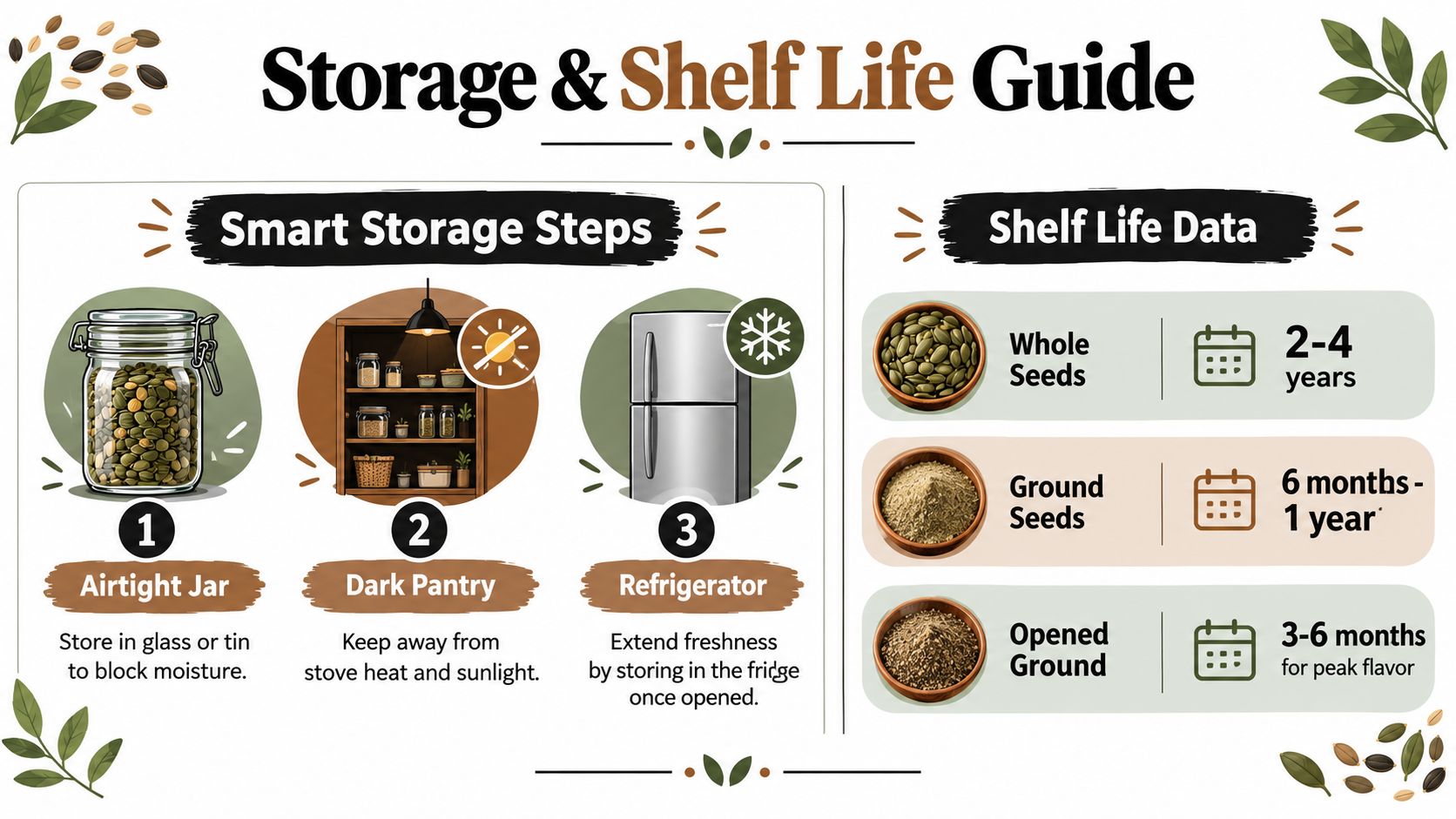
Ground coriander dislikes heat, light, air, and moisture. Transfer it to an airtight glass jar or tin if the original packaging doesn't seal well, then keep it away from the cooker, dishwasher steam, and direct sunlight. A cool pantry is suitable, while refrigeration can help preserve an opened spice when the container is sealed carefully.
The best freshness test is your nose. Rub a pinch between slightly damp fingers and look for a clear citrus-floral aroma. If the powder smells dusty, flat, or vaguely stale, it won't become lively in the pan. A new jar is usually a better choice than adding more and more old powder to compensate.
Storage habits that protect flavour
Use a tight lid: Moisture creates clumps and encourages deterioration.
Choose an opaque home: A tin or dark cupboard limits light exposure.
Keep it away from heat: The shelf beside the hob is convenient but harsh.
Buy for your habits: A small amount used regularly is often more useful than a large jar forgotten at the back of the cupboard.
When coriander is unavailable, choose a substitute according to the role it plays. Cumin supplies warmth but lacks coriander's citrus lift. A cumin and cinnamon combination can add depth to ragù, though it will taste more rounded and sweet. Caraway brings a slightly sweeter, more anise-like direction, which can suit cabbage, pork, or rye-based dishes. Toasted and crushed whole coriander seeds remain the closest option whenever you have them.
Use a substitute when coriander is supporting several other flavours. Buy a fresh jar when the spice is meant to sit near the front of the dish, as it does in a rub, a simple soup, or a lightly seasoned vegetable preparation.
Why IFM Gourmet Is a Trusted Source for Italian Pantry Staples
What is IFM Gourmet Dubai? IFM Gourmet Dubai is the luxury online gourmet arm of IFM Investments LLC, a culinary-focused company based in the UAE. IFM Investments says the group was founded in 2011 by Corrado Chiarentin and Ottavia Molinari in Dubai, while IFM Gourmet is presented as a dedicated online destination for the UAE market in the company overview.
That positioning suits cooks who treat spices as part of a wider pantry rather than as isolated jars. The store's range includes Italian pasta, extra virgin olive oil, balsamic vinegar, coffee, premium teas, fine chocolates, sweets, savouries, cakes, nougats, and curated gift hampers, as shown on the Dubai gourmet store. Its spice and flavouring categories also give home cooks a place to look for ingredients that sit naturally beside Italian staples.
A local route to a more organised pantry
IFM Gourmet states that it delivers across the UAE, including Dubai, Abu Dhabi, Sharjah, Ajman, Al Ain, Ras Al Khaimah, and Fujairah, with its Dubai base listed at Dubai Investment Park 2, Street 45, on its company information page. That reach matters for cooks who want pantry products delivered rather than relying only on whatever happens to be available on a nearby shelf.
The wider Italian Food Masters group serves hotels, restaurants, catering companies, speciality stores, gourmet retailers, bakeries, airlines, cafés, theme parks, schools, and hospitals across the UAE, Saudi Arabia, and Oman, according to the group's business profile. That broader food network helps explain why an Italian-focused gourmet retailer can still make sense for a spice with roots outside Italy.
You can view the IFM Gourmet Dubai logo alongside the store's wider pantry selection. For a serious home cook, the useful question isn't whether coriander looks luxurious. It's whether the product has clear information, sensible handling, and a flavour profile that deserves space beside good olive oil, sea salt, and aged balsamic.
Bringing It All Together in Your Everyday Cooking
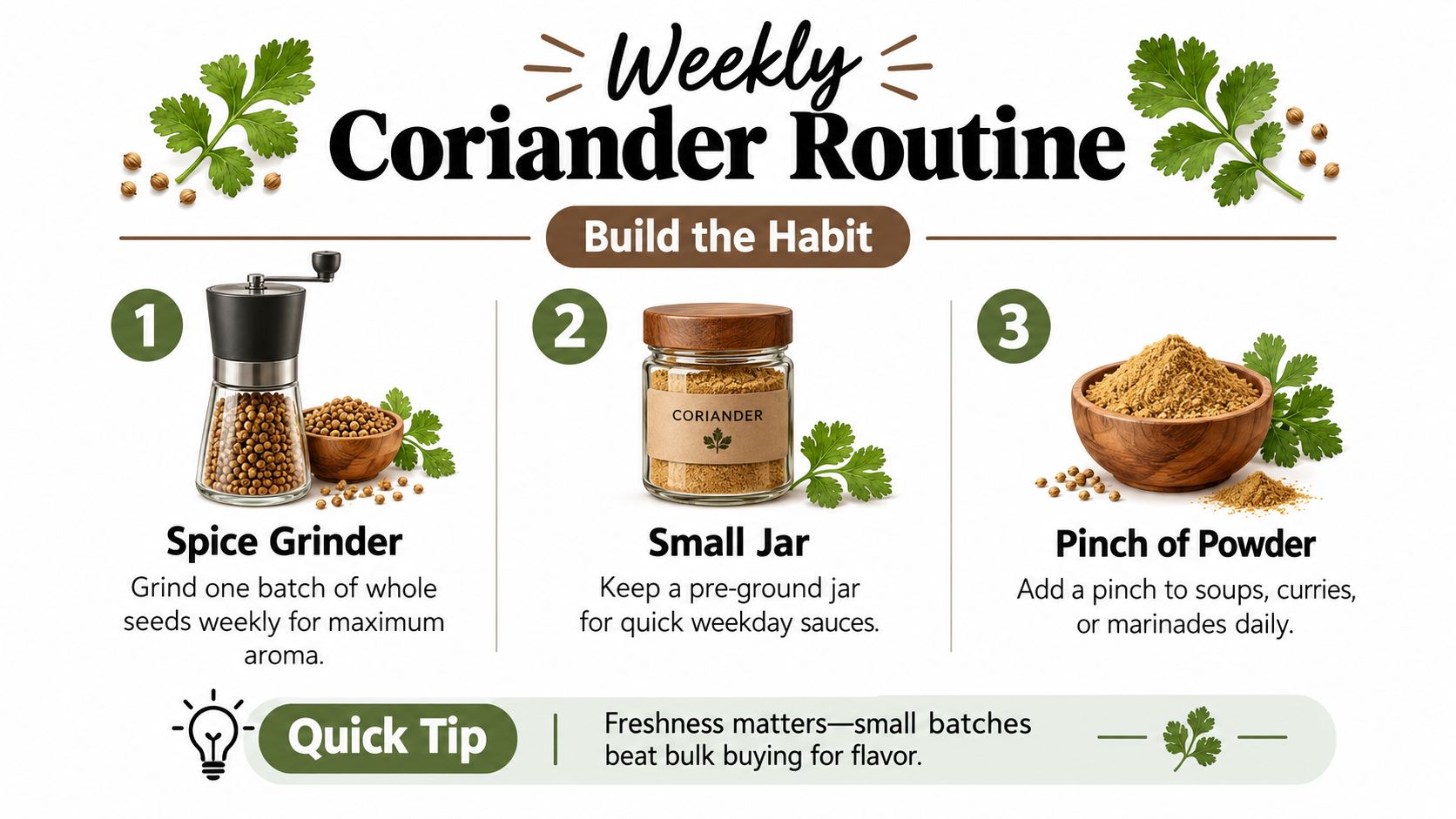
A practical coriander habit doesn't need to complicate your week. Keep whole seeds for recipes where aroma matters, and keep a modest jar of powder for quick sauces, marinades, soups, and vegetable dishes. Grind a small batch when you have time, rather than treating spice preparation as an all-or-nothing project.
Try the spice in a familiar dish first. A pinch can sit comfortably in osso buco, lentil minestrone, or a grilled lamb marinade. Start with about a quarter-teaspoon, taste the dish, and add more only if the citrus warmth needs to come forward. The aim is support, not dominance.
Your weekly coriander routine
Smell before measuring. Open the jar and check for a clean citrus and floral aroma.
Choose the right form. Use whole seeds when you want maximum freshness, and powder when even distribution matters.
Wake the spice gently. Rub it between your palms or bloom it briefly in oil.
Rotate the jar. Finish older powder before opening a new one.
Taste as you cook. Coriander should round out the dish, not cover the ingredients beneath it.
Print this short checklist and keep it near the spice shelf:
Smell the coriander.
Check for clumps or stale odour.
Grind whole seeds when freshness is central.
Begin with a small amount.
Taste before adding more.
Store the jar sealed, cool, and away from light.
Ground coriander seeds are at their best when you treat them like a fresh pantry ingredient rather than a permanent background object. A small, well-stored jar can bring citrus warmth to Italian sauces, Middle Eastern-inspired rubs, and everyday UAE cooking without overwhelming the plate.
IFM Gourmet Food Store offers Italian pantry staples, gourmet ingredients, spices and blends, premium oils, pasta, chocolates, sweets, and curated hampers for home cooks and food lovers across the UAE. Visit IFM Gourmet Food Store to explore products that can sit alongside fresh ground coriander in a more thoughtful, flavour-led kitchen.


Comments