
How to Make Pistachios Ice Cream From Scratch
Real, authentic pistachio ice cream is a world away from the bright green, artificially flavoured tubs you often find in shops. It’s a luxurious dessert defined by its incredibly rich, nutty flavour and wonderfully creamy texture.
When you craft it at home, you get to control everything, especially the quality of the ingredients. It’s all about honouring the true, unadulterated taste of premium pistachios.
The Art of Authentic Pistachio Ice Cream
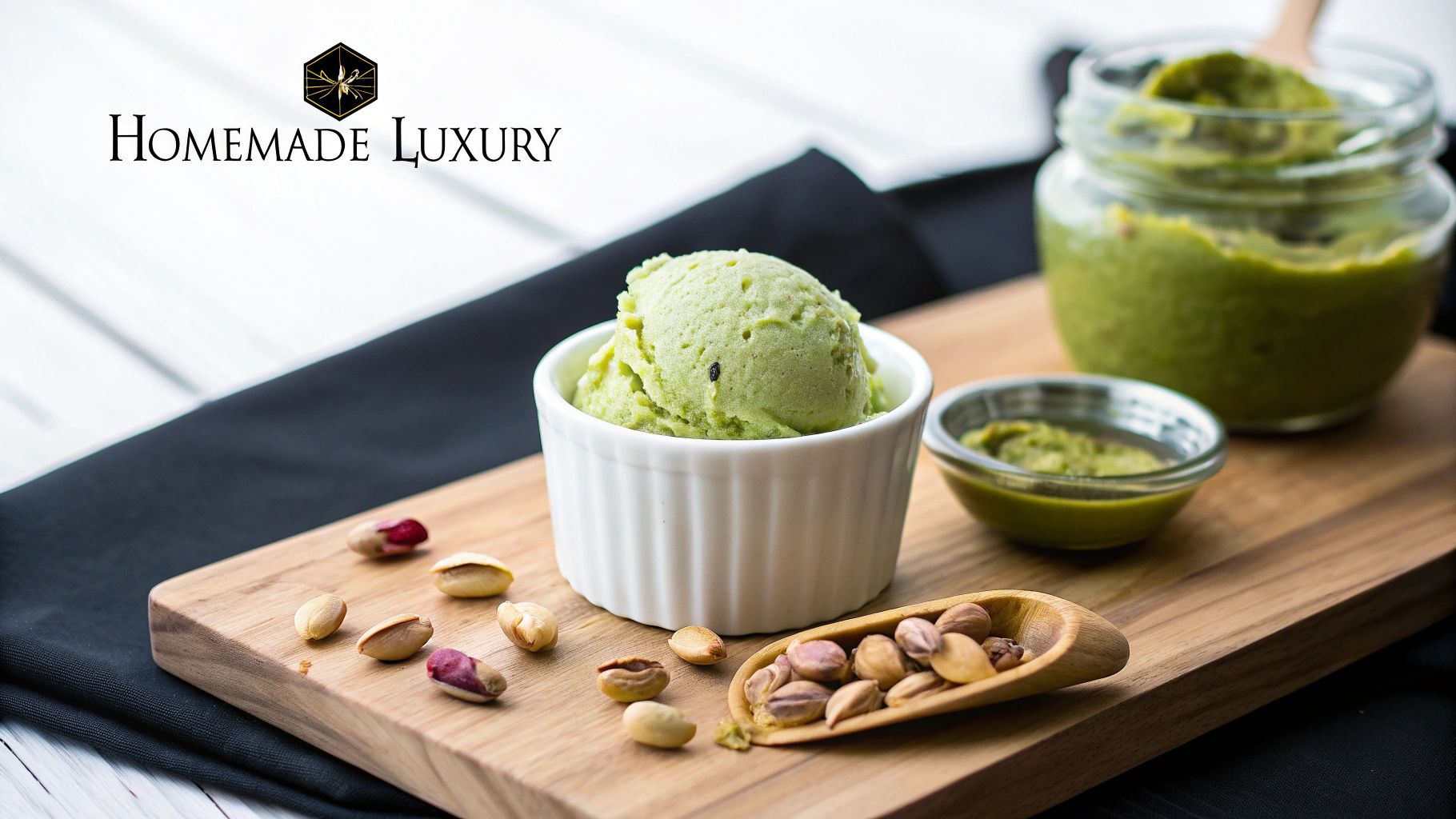
Forget everything you think you know about pistachio ice cream. The neon green versions are usually packed with almond extract and food colouring to fake a flavour that isn't really there.
True pistachio ice cream is a completely different experience. It has a subtle, earthy green hue and a deep, nutty complexity that only comes from using genuine pistachios.
This guide is your invitation to create that authentic experience right in your own kitchen. It’s more than just a set of instructions; it’s about exploring techniques and celebrating quality ingredients. This passion for culinary elegance is the spirit behind IFM Gourmet Dubai. As the luxury online gourmet arm of IFM Investments LLC, a culinary-focused company in the UAE, their store offers an impressive lineup of artisanal delicacies, including sweets, fine chocolates, and premium ingredients. Part of the broader Italian Food Masters group, IFM Gourmet is known for quality and authenticity in Dubai's gourmet scene, a commitment we'll bring to making this dessert.
Why Is This Flavour So Popular?
The love for pistachio isn't just a fleeting trend; it’s a deep-rooted cultural appreciation, especially here in the UAE. Pistachio has become a premium favourite in the Middle East and Africa's ice cream market, driven by a regional love for nuts and high consumption rates.
The market recently hit a staggering USD 80.61 billion, with a projected growth of 5.41% CAGR. This demand is clear in the UAE, where take-home ice cream, perfect for family gatherings, holds a 52.84% market share. You can read more about these growing Middle East ice cream market trends on Tridge.
Gelato vs. Ice Cream: A Key Distinction
Before we dive in, it’s good to know the two main paths you can take. Each one offers a unique texture and flavour.
Italian Gelato: Known for its dense, silky-smooth texture and intense flavour. It’s made with more milk than cream and churned slowly, which means less air gets in. The result is a richer taste that's served slightly warmer than ice cream.
Classic Ice Cream: This style is much creamier and lighter. It has a higher fat content from heavy cream and often uses a custard base with egg yolks. It’s churned faster, whipping more air into the mix for a fluffier, more decadent mouthfeel.
This guide will give you the know-how to master both methods. By focusing on premium ingredients and proper technique, you'll create a homemade pistachio ice cream that rivals any gourmet shop, delivering unparalleled flavour every single time.
Choosing Ingredients for the Best Flavour
Let's be honest, the secret to an unforgettable pistachio ice cream isn't some complex, hidden technique. It all comes down to the quality of the ingredients you start with. This is the philosophy we live by at IFM Gourmet; authenticity is everything. If you want a dessert that screams real pistachio, you have to begin with the best.
This means looking past what you find in a typical supermarket aisle and hunting down ingredients that pack a pure, concentrated punch. Every single component, from the pistachios themselves to the milk and cream, has a huge role to play in the final taste and texture of your homemade masterpiece.
Selecting the Perfect Pistachios
The star of the show is, of course, the pistachio, and the variety you pick will define the entire flavour profile. Not all pistachios are the same, and when you're aiming for a gourmet result, it really pays to be a bit picky.
Two of the most celebrated varieties you'll find are:
Bronte Pistachios from Sicily: Often called "green gold," these nuts are famous for their brilliant colour and an intense, aromatic flavour with a slightly resinous note. They are a premium choice for a reason and deliver a truly spectacular taste.
Turkish Antep Pistachios: These are a bit smaller but boast a rich, buttery, and deeply nutty flavour. They aren’t as sweet as their Sicilian cousins, which gives them a more robust and earthy character.
No matter which origin you choose, the golden rule is to always use raw, unsalted pistachios. Roasted and salted nuts will bring competing flavours to the party, completely overpowering the delicate, sweet notes you're trying to highlight in your ice cream. Starting raw gives you total control.
Pistachio Paste Versus Whole Nuts
Once you've sourced your perfect pistachios, you have a decision to make: grind them yourself or go with a high-quality, ready-made pistachio paste. Both paths lead to deliciousness, but they get you there in different ways.
Using a premium pistachio paste—which is just a super-smooth butter made from finely ground nuts—is a brilliant shortcut. It practically guarantees an ultra-smooth, silky texture in your ice cream, with absolutely zero graininess. A great paste should be 100% pistachios, maybe with a little oil, but never any added sugar or artificial flavourings. This is the secret many Italian gelaterias use to get that flawless consistency.
On the other hand, grinding your own nuts gives you a fresher, more rustic flavour. You can give them a light toast right before grinding to wake up their essential oils, which adds a whole other layer of complexity. This route might leave you with a slightly more textured ice cream, but many people love that authentic, homemade feel.
Key Takeaway: For the smoothest, professional-grade texture that mimics a true Italian gelato, a high-quality pistachio paste is your best friend. For a robust, fresh, and slightly more textured result, grinding your own raw pistachios is the way to go.
Pistachio Forms Ingredient Comparison
Choosing between whole nuts and a pre-made paste really depends on the final result you're aiming for. One gives you ultimate freshness and a rustic charm, while the other offers unparalleled smoothness and convenience. Here’s a quick breakdown to help you decide.
Ingredient Form | Flavour Profile | Texture Impact | Preparation Time | Best For |
|---|---|---|---|---|
Whole Pistachios (Ground at home) | Fresh, vibrant, and deeply nutty. Can be enhanced by light toasting. | Can be slightly grainy if not processed finely, creating a rustic feel. | Higher; requires blanching, peeling, and grinding. | Artisanal recipes where a slightly rustic texture is desired. |
High-Quality Pistachio Paste | Concentrated, pure, and consistent pistachio flavour. | Produces an exceptionally smooth, silky, and professional-grade texture. | Minimal; simply measure and incorporate into the base. | Achieving a perfectly smooth gelato or ice cream with minimal effort. |
Ultimately, both are fantastic options. It just comes down to whether you prioritise a perfectly smooth texture or a fresher, more rustic character.
Building the Perfect Creamy Base
Beyond the pistachios, the rest of your ingredients create the canvas for that incredible flavour. This is no place to cut corners; high-quality dairy is absolutely essential for a rich, creamy result.
Always reach for full-fat whole milk and heavy cream (or double cream) with a high butterfat content. That fat is what gives ice cream its luxurious mouthfeel and, more importantly, prevents large, crunchy ice crystals from forming. Skimping here will only lead to a thin, icy texture.
If you’re making a classic custard-style (crème anglaise) base, fresh, high-quality eggs are a must. The yolks add richness, act as a natural emulsifier for a super creamy texture, and bring a subtle depth of flavour that ties everything together.
Finally, think about your sweetener. Caster sugar works perfectly well, but you can get a little more technical. Adding a small amount of glucose syrup or inverted sugar can dramatically improve the texture and stop crystallisation, keeping your ice cream beautifully smooth for longer. It's another little trick the pros use to get that perfect, scoopable consistency right out of the freezer.
The Authentic Italian Pistachio Gelato Method
If you're after that pure, intense flavour of a true Italian dessert, making authentic pistachio gelato is the ultimate kitchen adventure. Gelato is a different beast entirely from its creamy American cousin. It's denser, served a touch warmer to really let the flavours sing, and has a silky, almost elastic texture that is simply divine.
This method is all about honouring that tradition. We're aiming for a pistachio experience that transports you straight to a Roman gelateria.
The foundation of real gelato is its base, which traditionally relies on whole milk rather than heavy cream. This lower fat content is exactly why the flavour is so much more direct and powerful. Without a high percentage of butterfat coating your tongue, the pure, nutty essence of the pistachio shines through with stunning clarity.
Crafting the Perfect Gelato Base
Creating the base is a careful process, but don't worry, it's not overly complicated. The goal is a stable, smooth liquid that will churn into a dense, velvety final product. It starts by gently warming whole milk with sugar and a stabiliser—a small amount of cornflour works well, or a specific gelato stabiliser if you can get your hands on one. This simple step is key to preventing ice crystals from forming later on.
The real magic happens when you bring in the pistachio. Unlike a custard-based ice cream, you'll often blend your pistachio paste directly into the warm milk base. This allows the nutty flavour to completely meld with the dairy, creating a seamless and deeply flavourful mixture. The trick is to ensure the paste is fully incorporated, leaving no lumps behind. A quick blitz with an immersion blender can work wonders here.
This guide helps show the difference between using whole nuts or a paste for your pistachio ice cream journey, guiding you toward intense flavour or a perfectly smooth texture.
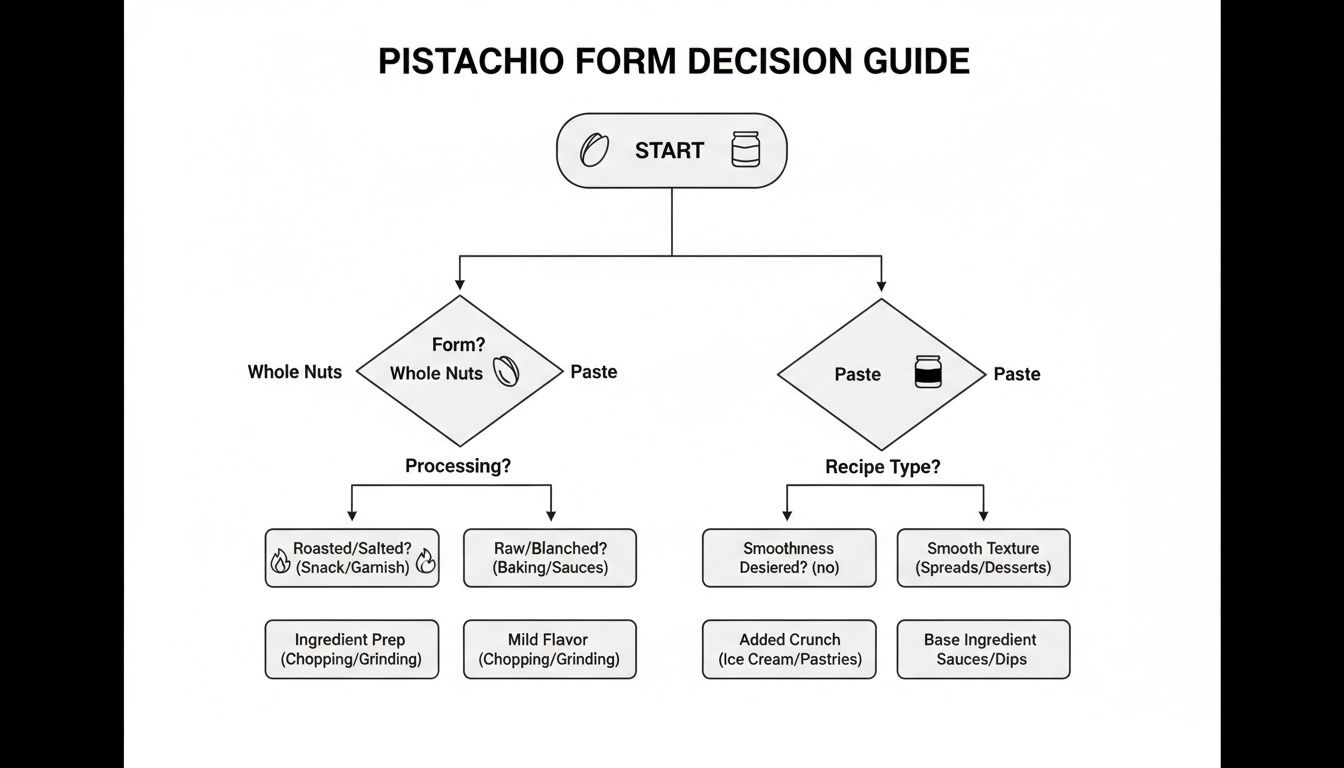
As you can see, while grinding your own nuts offers a fresh, robust flavour, using a high-quality paste is the most direct route to achieving that flawlessly smooth texture so characteristic of authentic gelato.
The Critical Role of Temperature Control
In the world of gelato, temperature is everything. Every single stage, from chilling the base to churning and storing, has to be managed with precision to get that perfect texture. After you've prepared your base, it must be chilled rapidly and then aged in the refrigerator for at least four hours—though overnight is even better.
This aging process, known as maturazione in Italian, is non-negotiable. It gives the proteins in the milk time to relax and the stabilisers a chance to fully hydrate. This crucial resting period results in a smoother, more stable gelato that churns beautifully and resists iciness. Rushing this step is a classic mistake that leads straight to a grainy final product.
The love for pistachio ice cream, especially in the Middle East and Africa, is a testament to its incredible flavour, backed by a strong supply chain. The MEA ice cream market was valued at USD 4.19 billion and is projected to hit USD 6.09 billion by 2031. Pistachio exports to the region have tripled, surpassing 100 million pounds last fiscal year. This boom is fuelled by rising incomes and a growing youth population, with total ice cream consumption reaching 1.2 billion litres recently—a 7.3% increase. You can discover more insights into the booming MEA ice cream market on Verified Market Research.
Mastering the Churn for Silky Smoothness
Churning gelato is a delicate dance. Unlike ice cream, which is churned quickly to whip in air, gelato is churned very, very slowly. This technique minimises the amount of air incorporated into the mixture, a concept known as "overrun." A typical ice cream can have an overrun of 50% or more, meaning it's literally half air.
Authentic gelato, by contrast, has a much lower overrun, usually around 20-30%. This is the secret behind its incredible density and rich mouthfeel. You're getting more flavour and less air in every single spoonful.
When you churn your chilled pistachio base, the aim is to freeze it until it reaches the consistency of soft-serve. It should be thick, smooth, and just barely holding its shape. This slow, deliberate process ensures the ice crystals that form are minuscule, which is exactly what gives gelato its signature silky smoothness. Over-churning will make it too hard, while under-churning will leave it soupy.
Once churned, the gelato needs a final "hardening" stage in the freezer. Just transfer it to a pre-chilled, airtight container and freeze for at least two to three hours. This firms it up to the perfect scooping consistency. And remember, gelato is traditionally served warmer than ice cream—around -12°C to -14°C. Letting it sit at room temperature for a few minutes before serving will bring it to the ideal temperature, unlocking its full, glorious pistachio flavour.
How to Make Classic Creamy Pistachio Ice Cream
If you absolutely love the rich, decadent texture of traditional ice cream, this classic custard-based method is for you. We’re going for something lusciously creamy and full-bodied, a world away from the dense, milk-forward profile of Italian gelato.
The secret? A beautifully made crème anglaise. This classic French custard base uses egg yolks to create a velvety mouthfeel that’s simply second to none. It’s what gives proper pistachio ice cream its signature richness. Mastering this technique, from gently tempering the eggs to perfectly chilling the base, is your key to a truly indulgent dessert.
Building the Custard Foundation
The heart of this ice cream is its custard base. This isn't just about mixing milk and cream; it's a bit of kitchen science. The lecithin in the egg yolks acts as a natural emulsifier, binding the fat from the cream and the water from the milk. This step is what prevents ice crystals and gives you that incredibly smooth, creamy texture we're all after.
First, you'll want to gently heat the heavy cream, whole milk, and about half your sugar in a saucepan. Bring it to a gentle simmer—just until you see small bubbles forming around the edges. Be careful not to boil it, as that can scald the milk and spoil the flavour.
While that's warming up, whisk the egg yolks and the rest of the sugar in a separate bowl. Keep going until the mixture turns pale and thickens up a bit. This preps the yolks for the next crucial stage.
The Art of Tempering Eggs
Tempering is probably the single most important technique in making custard-based ice cream. It's how you slowly raise the temperature of the egg yolks without scrambling them. Rush this, and you’ll end up with sweet, cooked egg bits in your base—a mistake you just can't fix.
The right way to do it is to slowly pour a small amount of the hot cream mixture into the egg yolks while whisking constantly. Start with just a ladleful. This gradually warms the yolks. Continue adding the hot cream, little by little, whisking the entire time, until about half of it is incorporated.
Once the yolk mixture feels warm to the touch, you can confidently pour it all back into the saucepan with the rest of the cream. Now, put the pan back on a low heat. Stir constantly with a wooden spoon or spatula, making sure to scrape the bottom so nothing sticks.
Pro Tip: Your custard is ready when it has thickened enough to coat the back of your spoon. Dip the spoon in, pull it out, and draw a line with your finger through the custard. If the line holds its shape and doesn't run, your crème anglaise is perfect.
Infusing the Pistachio Flavour
With your custard base perfectly cooked, it's time to bring in the star of the show. You’ll want to mix in your high-quality pistachio paste or freshly ground pistachios while the base is still warm. This helps the nutty oils and flavours infuse deeply into the cream and milk.
Stir the pistachio paste directly into the warm custard until it’s completely smooth and has a beautiful, uniform colour. If you're using homemade ground pistachios, now is the time to add them. Some chefs add a tiny drop of almond extract to enhance the nuttiness, but for a pure pistachio experience, I say let the main ingredient shine on its own.
The love for pistachio has sparked some amazing flavour innovations, especially here in the Middle East. Brands are launching pistachio variants that connect with local traditions, celebrating indigenous ingredients. The regional ice cream market, valued at USD 7.12 billion, is projected to hit USD 8.42 billion by 2030. While supermarkets and hypermarkets currently handle 55.21% of sales, online retail is growing fast, giving dessert lovers in Dubai easy access to gourmet treats like this. You can discover more about the rise of pistachio in the MEA ice cream market at Mordor Intelligence.
Chilling and Churning to Perfection
Patience is key when making great ice cream. After infusing the flavour, strain the custard base through a fine-mesh sieve into a clean bowl. This catches any tiny bits of cooked egg or nut solids, guaranteeing that perfectly smooth texture.
Now, the base needs to get really cold. Cover the bowl with plastic wrap, pressing it right onto the surface of the custard to stop a skin from forming. Let it chill in the fridge for at least four hours, but overnight is even better. A properly cold base churns faster and creates a creamier final product with fewer ice crystals.
Finally, pour your cold pistachio custard into your ice cream maker and churn it according to the manufacturer’s instructions. It’s ready when it looks like thick soft-serve. Transfer the ice cream to an airtight, freezer-safe container and freeze for at least two to four hours to let it firm up before you dig in.
Troubleshooting Common Ice Cream Problems
Even when you follow a recipe to the letter, things can go sideways. It’s frustrating when your homemade pistachio ice cream doesn’t turn out quite right, but don't hang up your apron just yet. Most common issues are surprisingly easy to fix.
Figuring out what went wrong is the first step to perfecting your technique. Let's walk through the most frequent pitfalls so you can get that flawless, gourmet-quality scoop every single time.
Why Is My Ice Cream Icy or Grainy?
The number one enemy of creamy, luxurious ice cream is iciness. That dreaded crunchy texture is the result of large ice crystals forming while your base freezes. It’s a common problem, but thankfully, almost always preventable.
The usual culprits are:
A lukewarm base: Your ice cream or gelato base needs to be completely chilled before it goes anywhere near the churn. We’re talking at least 4 hours in the fridge, though overnight is even better. A warm base takes much longer to freeze, giving those large ice crystals plenty of time to form and ruin the party.
Not enough fat: Fat is what delivers that rich, silky mouthfeel. If you opt for low-fat milk or cream, you're pretty much guaranteed an icy result. There simply isn’t enough fat to coat the water molecules and keep the ice crystals tiny. Always, always use full-fat dairy for the creamiest texture.
A slow churn: This often happens if your ice cream maker's bowl isn't frozen solid or if you overfill the machine. The churning becomes slow and inefficient, which, you guessed it, leads to the formation of large, unwelcome ice crystals.
Here's a pro tip: Keep your ice cream maker’s freezer bowl in the absolute coldest part of your freezer for at least 24 hours before you plan to use it. This ensures it’s powerful enough to freeze your base quickly, which is absolutely critical for a smooth finish.
Boosting a Weak Pistachio Flavour
There's nothing more disappointing than pistachio ice cream that tastes more like sweet cream than actual pistachios. You've invested in beautiful, high-quality nuts, and you want that flavour to shine. If your final product is a bit underwhelming, a few things could be at play.
First, look at the pistachios themselves. Gently toasting raw pistachios before you grind them is a game-changer. It awakens their natural oils and deepens their nutty aroma. Just watch them like a hawk—a burnt flavour is impossible to get rid of.
Also, think about when you add the flavour. For rich custard bases, stirring in your pistachio paste or ground nuts while the base is still warm helps the flavour infuse more deeply. If you're making a gelato, make sure the paste is blended completely into the milk. And don't forget a final pinch of sea salt in your base. Salt is a natural flavour enhancer and it really makes those pistachio notes pop.
Common Ice Cream Issues and Solutions
Sometimes you just need a quick-reference guide. Here’s a little table to help you diagnose and fix any issues that might crop up while you're making your delicious pistachio ice cream.
Problem | Likely Cause | How to Fix It |
|---|---|---|
Icy Texture | The base wasn't cold enough before churning, or the fat content was too low. | Chill the base for at least 4 hours (overnight is best). Always use full-fat milk and cream. |
Grainy or Sandy Feel | The sugar didn't fully dissolve, or the custard base was overheated, causing eggs to curdle. | Ensure sugar is completely dissolved in the warm base. Cook custard gently over low heat and strain it before chilling. |
Weak Flavour | Not enough pistachios were used, or their flavour wasn't fully extracted. | Use a high-quality pistachio paste for concentrated flavour. Lightly toast nuts before grinding to enhance their taste. |
Doesn't Freeze Firm | Too much sugar or alcohol (if using extracts) in the base, which lowers the freezing point. | Double-check your recipe's measurements. Reduce sweeteners or alcohol-based flavourings if the issue persists. |
With these tips in your back pocket, you’re well on your way to mastering homemade pistachio ice cream and leaving those common problems behind.
How to Serve and Store Your Creation
You've put in the effort, and now it's time for the final, crucial steps. The way you store and serve your homemade pistachios ice cream is just as important as the recipe itself—it’s the key to preserving that perfect, creamy texture you worked so hard to create.
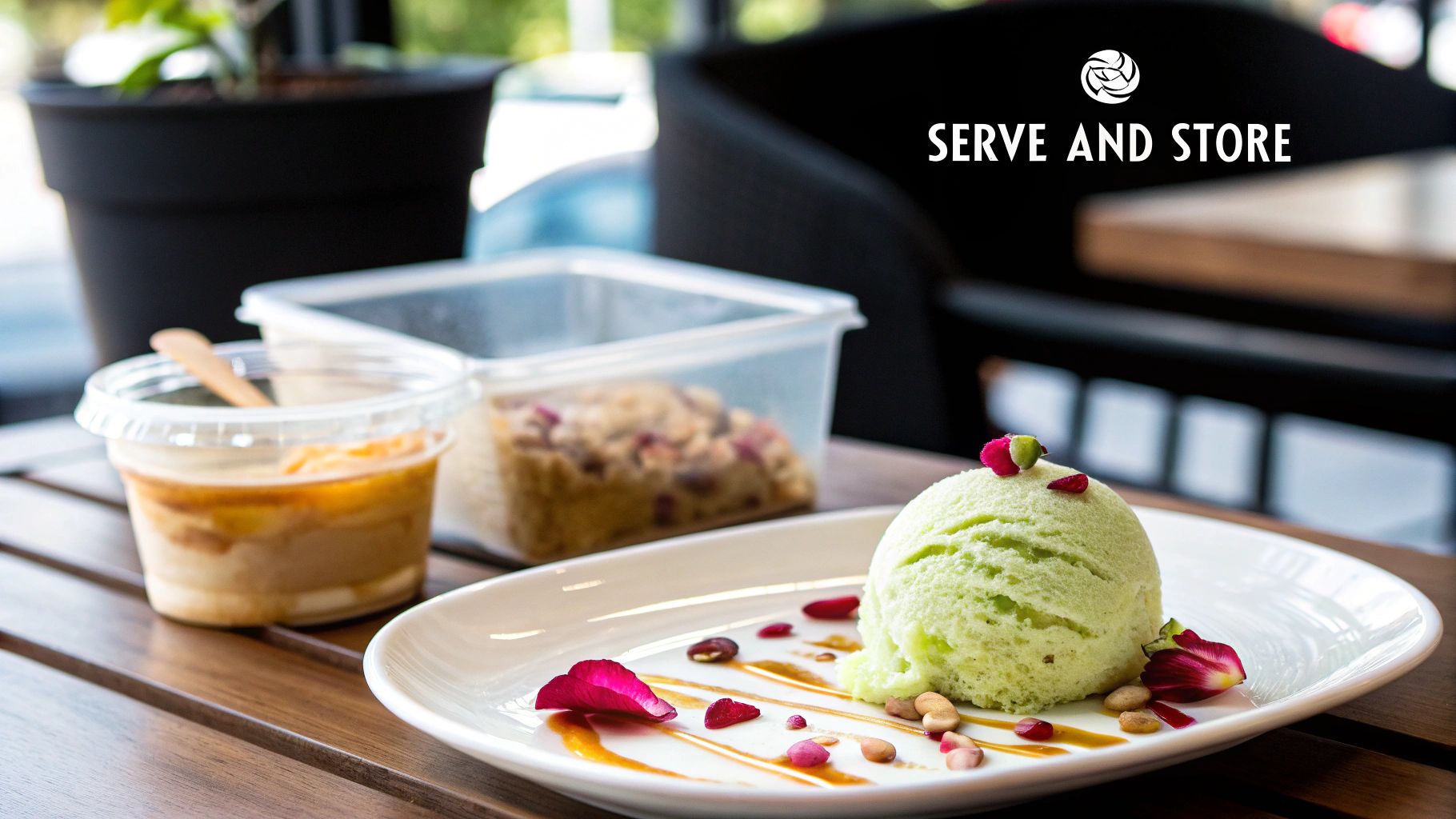
To avoid the dreaded freezer burn and those crunchy ice crystals, always reach for a shallow, airtight container. Here's a pro tip: press a small piece of parchment paper directly onto the surface of the ice cream before sealing the lid. This simple trick adds an extra layer of protection against air, keeping every single scoop as smooth as the first.
Tempering for the Perfect Scoop
Ever tried scooping ice cream straight from the freezer, only to nearly bend your spoon in half? Homemade ice cream freezes much harder than commercial versions because it’s all-natural, without any artificial softeners. The secret to a perfect, effortless scoop is tempering.
It’s easier than it sounds. Just let the ice cream sit at room temperature for about 5-10 minutes before you plan to serve it. This slight softening brings it to the ideal scooping temperature and, more importantly, unlocks its full, nuanced pistachio flavour.
Elegant Pairing Suggestions
Serving your pistachio ice cream is where you can really get creative and turn a simple dessert into a memorable finale. The nutty, subtle sweetness of pistachio is a dream to pair with a whole variety of flavours and textures.
Think about these elegant combinations:
A Touch of Sweetness and Spice: A delicate drizzle of premium honey or a light sprinkle of fragrant, edible rose petals can add a beautiful touch of Middle Eastern elegance.
Contrasting Textures: Nothing beats the contrast of hot and cold. Serve a scoop alongside a warm, gooey chocolate lava cake or with crisp, freshly made waffles. You can find fantastic recipes for waffles that make a truly delightful pairing.
Fruity Companions: The tartness of fresh raspberries or a sour cherry compote cuts through the richness of the ice cream beautifully, creating a bright and refreshing balance.
By mastering the art of storage and getting creative with your pairings, you transform your homemade treat from a simple dessert into a sophisticated experience worthy of any gourmet table.
Frequently Asked Questions
When you're chasing that perfect scoop of homemade pistachio ice cream, a few questions always seem to come up. Getting these small details right is often what separates a pretty good dessert from a truly unforgettable one. Let's tackle some of the most common queries.
Why Is My Ice Cream Not Bright Green?
This is a great sign! Authentic pistachio ice cream, made from nothing but real nuts, will have a lovely, subtle earthy green colour—sometimes even a muted brownish-green.
That vibrant, almost neon green you see in many commercial ice creams? That comes from artificial food colouring. A natural, softer hue is the hallmark of a genuine, high-quality dessert.
Can I Use Salted and Roasted Pistachios?
For the best, most authentic flavour, you'll want to stick with raw, unsalted pistachios.
Roasted nuts can bring an overpowering flavour that throws off the delicate balance of the creamy base. Any added salt will also make your finished ice cream taste, well, salty. Starting with raw nuts gives you complete control over the final taste profile.
How Can I Prevent Ice Crystals?
Ah, the age-old enemy of creamy, dreamy ice cream. The key to avoiding a grainy texture from ice crystals is patience and temperature control.
Make sure your custard base is deeply chilled before it goes anywhere near the churner. We're talking at least four hours in the fridge, but overnight is even better. Your ice cream maker's bowl also needs to be frozen solid.
A Pro Tip: Storing your finished ice cream in an airtight container, tucked away in the coldest part of your freezer, is the best way to maintain that perfectly smooth, scoopable texture for longer.
If you're exploring other refreshing frozen treats, you might also love the look of this beautiful Wild Berries Sorbet.
Ready to start your culinary journey? Explore the finest authentic Italian ingredients at IFM Gourmet Dubai and elevate your home cooking today. Discover our collection at https://www.ifmgourmet.com.


Comments