Powdered Eggs Whites: The Professional Guide

You've weighed the sugar, cleaned the mixer bowl and prepared the piping bags. Then the egg whites let you down. The liquid batch is awkward to store, the carton takes up valuable refrigerator space, and a warm UAE kitchen gives you little room for inconsistency when you're making macarons, meringues or royal icing.
Powdered egg whites solve a practical kitchen problem, but only when you treat them as a technical ingredient rather than a simple substitute. The powder must be reconstituted correctly, matched to the right application and protected from heat and humidity. For UAE bakers, those details matter as much as the recipe itself.
Why Professional Bakers Choose Powder
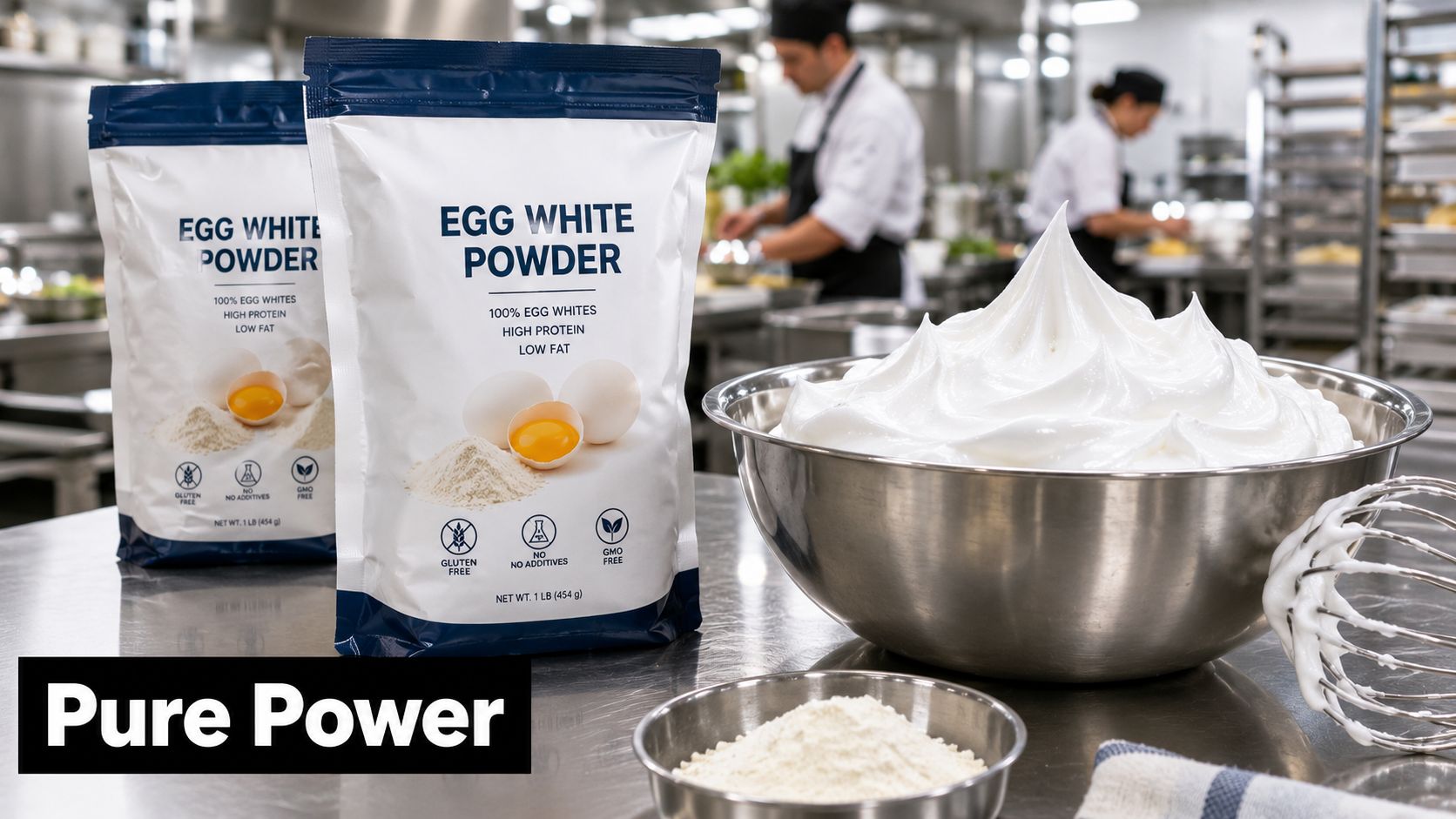
A busy baker usually notices the advantage of powder before noticing the food science. Liquid pasteurised egg whites arrive cold, occupy refrigerator space and need to be used within a limited window after opening. Powdered whites sit neatly in a dry store, can be portioned for one batch and remove the daily job of separating eggs.
That convenience becomes more valuable when production needs to stay consistent. A pastry chef making royal icing for decorated biscuits doesn't want each batch to vary because one carton contains slightly more liquid or because fresh eggs were separated at different temperatures. A measured powder and water combination gives the team a repeatable starting point.
Practical rule: Powder is most useful when you value predictable batching, clean storage and controlled formulation more than the immediate convenience of opening a carton.
The UAE already has a structured trade in egg powder. One UAE trade dataset records 46 egg powder shipments imported between September 2023 and August 2024, supplied by 6 foreign exporters to 18 UAE buyers, with activity down 10% from the previous twelve months. A separate buyer dataset lists 42 egg powder importers, sourcing from 10 suppliers, while the top three firms account for 60% of imports and the largest importer holds 24% of shipments. These figures describe the broader egg-powder category, which commonly includes powdered whites, yolks and whole egg products, but they still show that the UAE has an established specialist supply chain. UAE egg powder import and buyer data
Why this suits commercial kitchens
Powder also reduces a common source of waste. You don't need to open a full container when a small icing batch needs only a measured amount of egg white. The dry format is particularly useful for catering teams, pastry sections and home bakers who may make one recipe one day and nothing egg-based for several days afterwards.
IFM Gourmet Dubai is the luxury online gourmet arm of IFM Investments LLC, a Dubai-based culinary-focused company. Founded in 2011 by Corrado Chiarentin and Ottavia Molinari, the business forms part of the wider Italian Food Masters group and offers artisanal sweets, savouries, fine chocolates, premium teas, cakes and curated gift hampers. That mix reflects the kind of UAE food culture where specialty ingredients serve both professional kitchens and serious home cooks. IFM Gourmet Dubai company information
Powder isn't automatically better. Liquid pasteurised whites can be faster for a small batch, especially when you already have chilled storage and don't need long-term stock control. Powder earns its place when consistency, compact storage and measured production outweigh the convenience of pouring from a carton.
Reconstitution Ratios and Handling
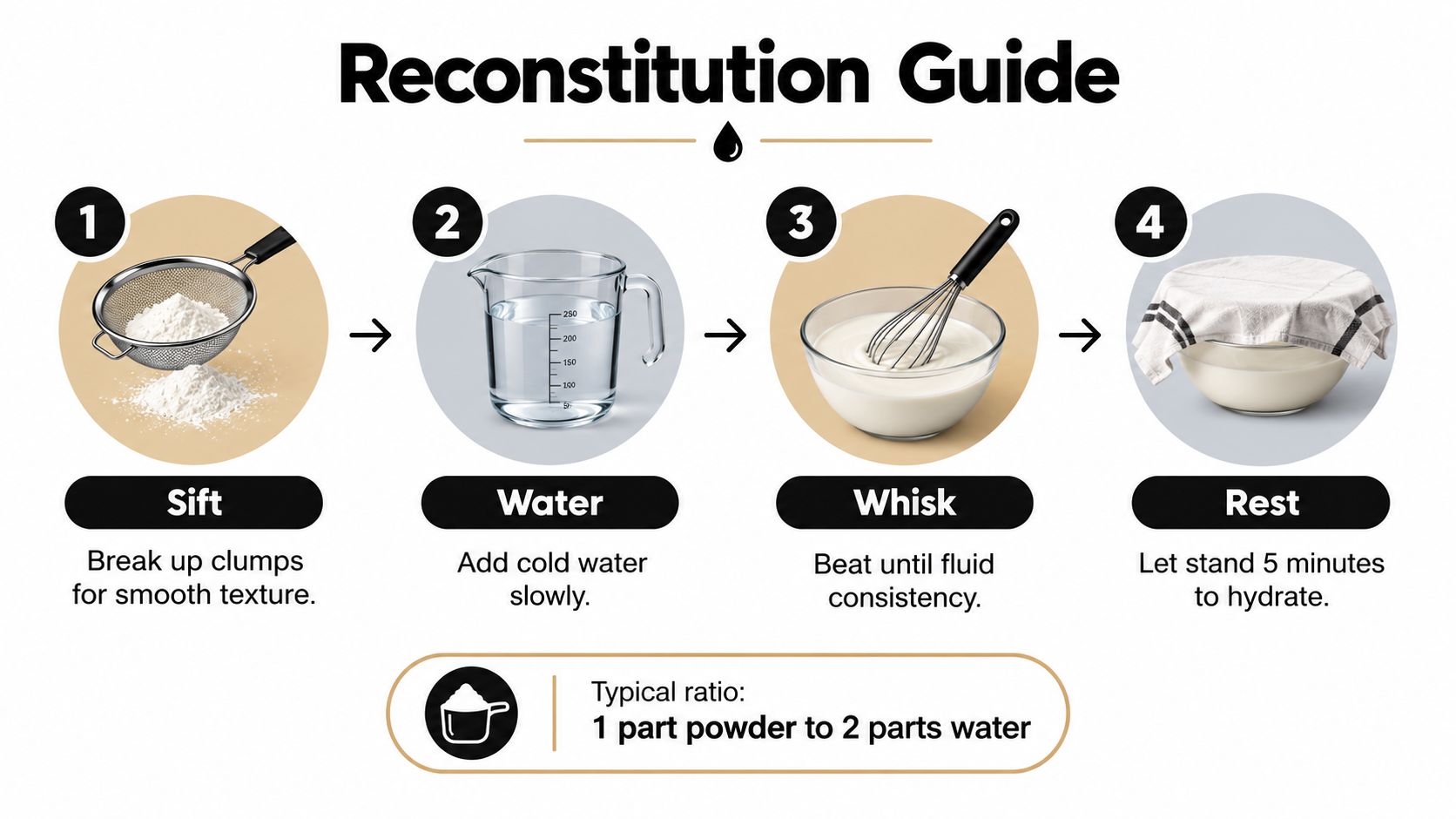
The standard starting point is simple: use about two parts water to one part powder by volume. This benchmark is intended to restore handling close to liquid egg whites, making it suitable for controlled batching and dosing. Egg white powder functionality and reconstitution guidance
The ratio works because the dry proteins need time to absorb water evenly. Add the powder too quickly, or pour water onto a compact mound of powder, and the outside can hydrate into a paste while dry particles remain trapped inside. Those lumps may disappear during vigorous mixing, but they can leave the final foam less uniform.
A reliable mixing method
Sift the powder first. Pass it through a fine sieve into a clean bowl. This breaks up compacted particles and helps the powder meet the water evenly.
Add cold water gradually. Pour the water into the bowl in a slow stream while whisking gently. Cold water gives you more control and avoids warming the mixture before you decide how it will be used.
Whisk until fluid. The mixture should look smooth and pourable, with no dry pockets around the base or sides. A balloon whisk works for a home batch, while a paddle or whisk attachment suits larger quantities.
Allow hydration time. Leave the mixture to stand for 5 minutes before the final whipping stage. This resting period lets the proteins finish absorbing water instead of competing with the mechanical action of the whisk.
Don't treat the two-to-one ratio as a universal recipe for every brand or application. A stiff royal icing, a macaron shell and an angel food cake may require different final consistencies after hydration. Start with the benchmark, then adjust the finished formulation rather than making a large change to the initial water quantity.
Temperature matters during mixing. Warm water can speed hydration, but excessive heat can affect the proteins before you whip them. For UAE kitchens, cold or cool water is the safer default, particularly when the bowl, mixer and surrounding room are already warm.
Keep the bowl completely free from fat. Butter residue, oil from a nearby ingredient or traces of yolk can interfere with foam formation. If the reconstituted whites look grainy or refuse to build volume, check the bowl and whisk before blaming the powder.
Understanding Performance Grades
The label egg white powder doesn't tell you enough about how the ingredient will behave. Commercial products are commonly offered in regular, high-whip and high-gel grades, and those grades exist because different recipes need different protein performance.
A high-whip powder is the logical choice when aeration comes first. It suits meringues, some royal icings, macarons and other recipes where the egg-white proteins must create a large, stable foam. The objective is not just to make bubbles. The foam needs to hold its shape while sugar, almond flour or another ingredient is added.
A high-gel powder is better when the finished product depends on a firm heat-set structure. It can suit products where bite, resilience and internal set matter more than maximum expansion. Using high-gel powder in a recipe designed for a light, lofty foam can leave you with a denser result, while choosing high-whip powder for a structure-led application may not give the firmness you need.
Grade | Main strength | Suitable direction |
|---|---|---|
Regular | Balanced functionality | General baking and mixed applications |
High-whip | Foam volume and stability | Meringues, macarons and aerated icings |
High-gel | Heat-set structure and bite | Firm confectionery and structure-led pastries |
The mistake is choosing by price or by the words “pure egg white” alone. Read the technical specification, ask the supplier which grade is intended for your product and run a small test before committing to a production batch.
A high-whip powder can't compensate for a greasy bowl, poor hydration or a humid storeroom. Grade selection works only after handling is under control.
For a bakery producing several styles of dessert, keeping separate notes for each grade is worthwhile. Record the powder type, water quantity, hydration time and final result. That simple record turns a vague ingredient choice into a repeatable production method.
Baking and Confectionery Applications
Powdered egg whites are especially effective when a recipe needs a clean foam or a dependable binding network. Reconstituted proteins surround air bubbles during whipping, then help stabilise the structure as the mixture dries or heats. That makes the ingredient useful in macarons, royal icing, angel food cake, meringues and selected frosting systems.
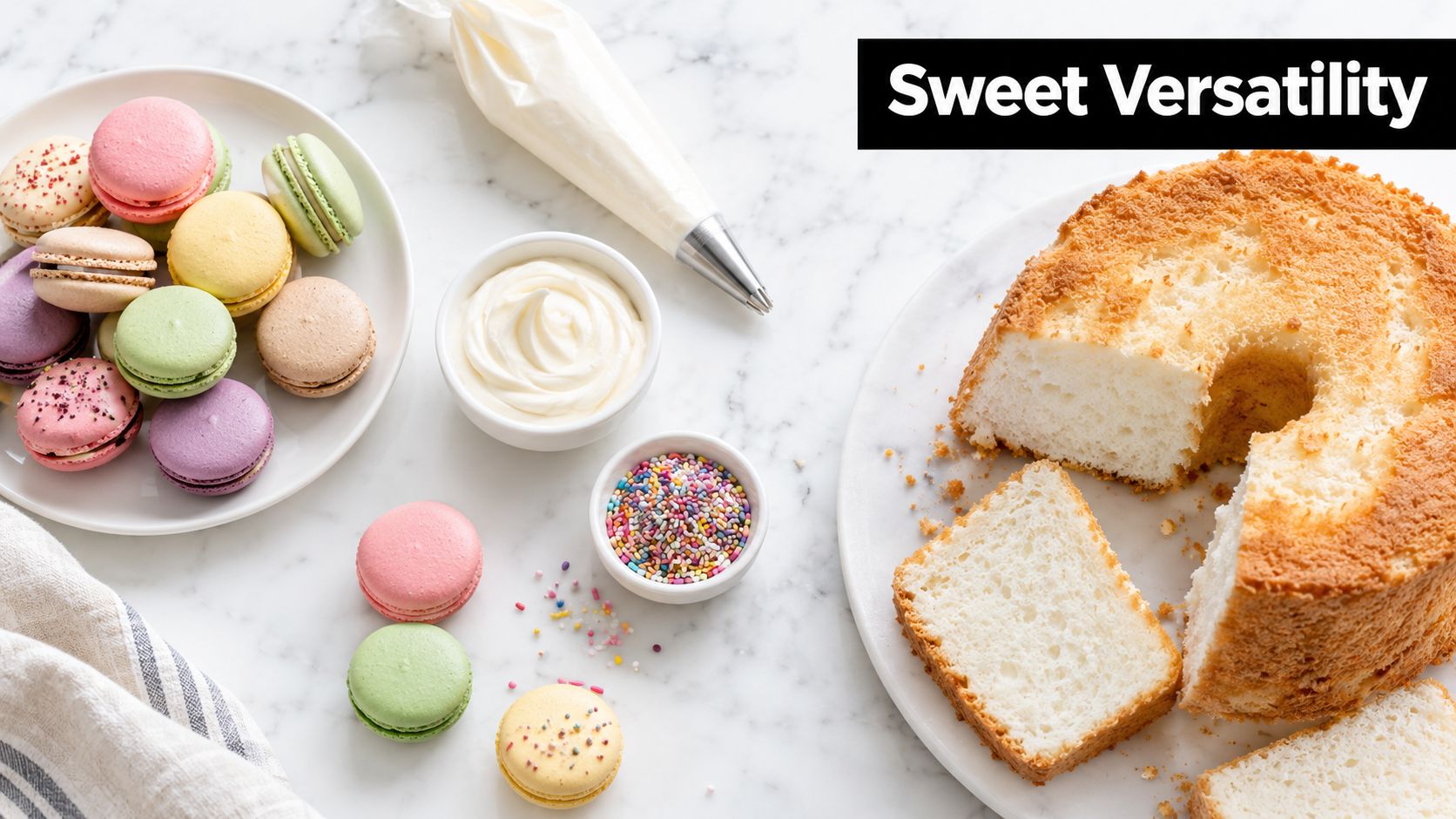
For macarons, hydrate the powder fully before combining it with the meringue ingredients. A high-whip grade can give the foam enough strength to carry sugar and almond mixture, but the macaronage stage still demands restraint. Overmixing collapses the structure, while undermixing leaves peaks and uneven shells.
For royal icing, pasteurised powder is useful when decorated biscuits will remain at room temperature. The icing needs a smooth, stable body for piping and flooding. Add water slowly after mixing if the icing is too firm, because correcting a stiff mixture is easier than recovering an icing that has become runny.
Angel food cake depends on a light foam that expands in the oven and supports the cake's delicate crumb. A clean bowl, fully hydrated whites and careful folding matter more than aggressive mixing. High-gel powder isn't the natural first choice here because the recipe prioritises lift over a firm, chewy set.
Working safely in a warm kitchen
Keep the dry powder sealed between uses and measure it away from steam, boiling pans and open dishwashers. If the packet sits open while you prepare a large recipe, humid air can create small clumps before you notice them.
Reconstitute only what you need for the current batch. Once mixed, handle the liquid as a perishable egg product, follow the supplier's storage instructions and avoid leaving it on a warm bench. Pasteurised powder is the safer option for recipes that contain raw or lightly heated egg uses, but pasteurisation doesn't make poor hygiene acceptable.
A practical workflow is to sift the powder, add cool water, whisk until smooth, rest for 5 minutes, then proceed with the recipe. Keep all equipment grease-free and return the dry container to a cool, dry cupboard immediately after measuring.
For a visual reference on whipped and baked applications, this waffles image guide can also help when planning a broader breakfast or dessert menu.
The following video offers another visual example of working with egg-based foams and finished pastry textures.
Storage and Safety in the UAE Climate
In the UAE, moisture is the main enemy of dry egg white powder. Imported egg-product guidance identifies drying and packing as critical control points and recommends cooling, sealing and low-humidity storage so the powder's water activity remains below about 0.7. Risk profile for imported eggs and egg products
That figure isn't a target to test casually in a home cupboard. It explains why an opened bag can deteriorate when exposed to humid air. Moisture uptake creates caking, reduces whipping performance and can increase microbial risk. A sealed container, dry scoop and prompt resealing protect both safety and functionality.
What to do in a UAE storeroom
Choose the coolest dry location: Keep unopened powder away from ovens, dishwashers, direct sunlight and areas where steam collects.
Use an airtight container after opening: Keep the original label and batch information with the product so staff can identify it and follow the supplier's date guidance.
Never scoop with a wet utensil: A small amount of water can start localised clumping and contaminate the remaining powder.
Check the texture before mixing: Discard product with an unusual odour, visible contamination or signs of severe moisture damage rather than trying to break it apart.
Treat reconstituted powder as liquid egg: Keep it controlled during preparation and don't leave leftovers sitting in a warm production area.
The GCC guidance places dried egg albumen within the regulated egg-products category. It states that pasteurisation is mandatory for powdered eggs and that imported products require permits and Arabic labelling under UAE controls. GCC guide for imported foods and egg products
That regulatory context matters for caterers and event kitchens. Staff need clear ingredient records, allergen communication and sensible separation from ready-to-eat food. Organisers handling multiple dishes can use this practical resource on allergen compliance for event managers when building menus and service procedures.
Liquid pasteurised whites offer easier visual inspection and immediate use, but they depend on reliable refrigeration. Powder offers storage efficiency, yet demands stricter moisture control. Neither format removes the need for sanitation, traceability and correct temperature management.
Comparing Powder vs. Liquid Options
Powder and liquid pasteurised whites solve different kitchen problems. Liquid is ready to pour and usually makes sense when a kitchen produces egg-based recipes continuously, has dependable chilled storage and wants to avoid a hydration step. Powder is more compact, easier to portion and better suited to intermittent production or dry stock management.
The decision should begin with the recipe. A home baker making one small omelette or a quick batter may find liquid whites more convenient. A pastry kitchen producing meringue shells, icing or macarons across changing production days may prefer powder because each batch starts from a measured dry ingredient.
Consideration | Powdered whites | Liquid pasteurised whites |
|---|---|---|
Storage | Dry, compact and less dependent on refrigerator space | Requires chilled storage |
Preparation | Needs accurate water measurement and hydration | Ready for immediate use |
Portioning | Useful for small, controlled batches | Convenient for frequent high-volume use |
Climate risk | Sensitive to humidity after opening | Sensitive to refrigeration and temperature control |
Consistency | Strong when the grade and ratio are controlled | Strong when the product is fresh and well handled |
Powdered egg whites are also not the same as a sports supplement. UAE retail listings market egg-white protein as a nutrition product, but culinary powder is selected for whipping, binding and heat-set performance. If your objective is a smoothie or protein drink, check the product's intended use, formulation and nutrition panel rather than assuming a baking ingredient is interchangeable with a supplement. UAE egg-white protein retail example
A working checklist
Select the grade: Choose high-whip for aeration and high-gel for a firmer set.
Measure carefully: Begin with the two-parts-water-to-one-part-powder benchmark and adjust the finished recipe only when needed.
Hydrate fully: Sift, add cool water gradually, whisk smooth and allow the mixture to stand for 5 minutes.
Protect the powder: Seal it immediately and keep it away from UAE heat, steam and humidity.
Control the equipment: Use a clean, grease-free bowl and whisk.
Match the format to production: Choose liquid for immediate, frequent use and powder for compact storage and measured batches.
Separate culinary and supplement products: Use each format for its stated purpose.
For a further breakfast application, this pancakes image guide shows how egg-based ingredients can fit into a broader menu without treating every powder as a direct substitute for liquid whites.
IFM Gourmet Food Store offers specialty ingredients and artisanal Italian products for home cooks, hospitality teams and event planners across Dubai and the UAE. Visit IFM Gourmet Food Store to explore its gourmet selection and choose ingredients that support more organised baking, dessert preparation and gifting.


Comments