
Roasted Sesame Dressing How to Make It Perfectly at Home

You've bought a bottle of sesame dressing, tossed it through a crisp salad, and ended up with something overly sweet, flat, or strangely oily. Homemade roasted sesame dressing fixes that problem at the source. You control the toast, the acidity, the salt, and the texture, so the finished sauce tastes nutty, creamy, lightly sweet, and properly savoury rather than merely thick.
The method also suits a UAE pantry. Japanese-style dressings already have a visible place in modern retail. In 2025, Carrefour UAE listed Yamamori Roasted Sesame Dressing 220 ml at AED 13.79 and Kewpie Roasted Sesame Dressing 210 g at AED 19.99, while Spinneys UAE listed the Yamamori product at AED 14.00. Carrefour's UAE listing shows how familiar this style has become for home cooks and foodservice buyers.
Why Homemade Roasted Sesame Dressing Tastes Better
The difference begins with the sesame seeds. Raw seeds can taste mild and slightly grassy, but gentle dry-toasting brings out a deeper, rounder aroma. As the seeds warm, their natural oils become more expressive, giving the dressing the toasted character that bottled versions often soften with sweetness, stabilisers, or heavy seasoning.
A good homemade version has several notes working together:
Nutty sesame: Toasted white sesame seeds provide the main flavour and a faintly grainy texture when crushed.
Creamy body: Tahini, Japanese mayonnaise, or finely ground seeds can give the dressing weight.
Bright acidity: Rice vinegar keeps the sauce from tasting heavy.
Gentle sweetness: Honey or sugar rounds off vinegar and soy sauce.
Umami depth: Light soy sauce adds savoury complexity without overpowering the sesame.
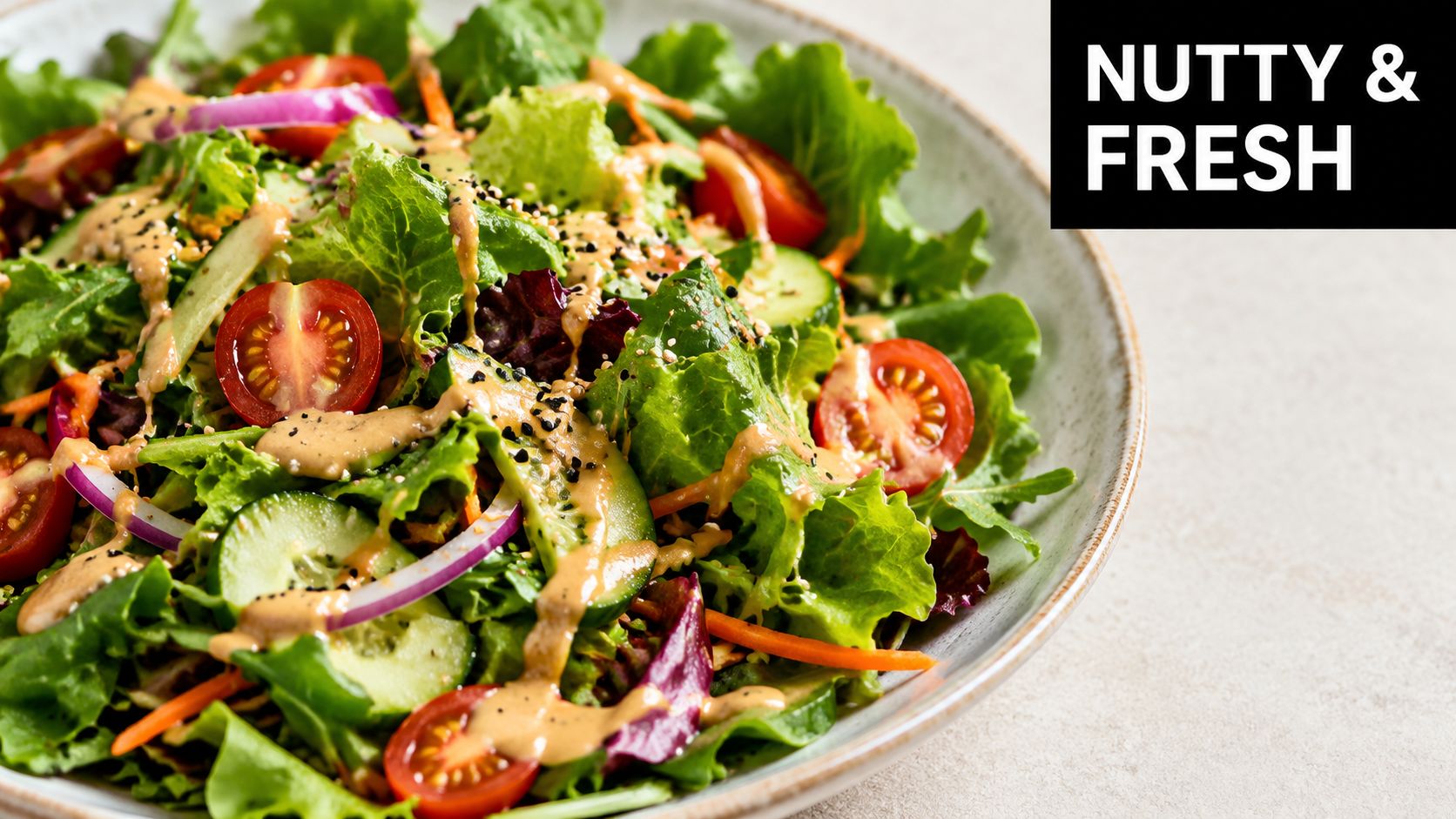
Fresh control matters
Commercial dressing is convenient, and it can be useful for a quick lunch or a busy service. The trade-off is that the flavour is fixed before it reaches your kitchen. If your cabbage is sweet, your grilled aubergine is smoky, or your salad needs more sharpness, a homemade dressing lets you respond immediately.
I prefer to make the dressing slightly sharper than I think I need at the bowl stage. Lettuce, cucumber, and chilled noodles dilute flavour, while warm vegetables absorb it. A dressing that tastes perfectly balanced from the spoon can seem muted once it meets the food.
The UAE also has the ingredient base to support this style of cooking. The country imported US$37.84 million of sesame seeds, totalling 23.89 million kg, in 2023, with Sudan and India the largest suppliers according to World Integrated Trade Solution sesame import data. That import-driven supply matters because sesame seed and sesame oil are the foundation of this dressing.
IFM Gourmet Dubai fits naturally into this premium pantry conversation. It's the luxury online gourmet arm of IFM Investments LLC, a UAE culinary-focused company associated with artisanal delicacies, fine chocolates, premium teas, cakes, savouries, and curated gift hampers. Its wider group includes Italian Food Masters, connecting Japanese-style sesame technique with carefully chosen Italian oils, vinegars, and pantry ingredients.
Practical rule: If the sesame smells flat before you start, no amount of whisking will create a lively dressing.
What You Need Before You Start
Prepare the ingredients before heating the pan. Sesame seeds can move from fragrant to bitter quickly, and having the vinegar, soy sauce, sweetener, and oils ready means you can cool them at the right moment instead of rushing.
Build the flavour base
Use white sesame seeds for a clean, classic roasted aroma. Choose seeds that look dry and pale, without a stale or oily smell. They'll become lightly golden in the pan, but they shouldn't turn dark brown.
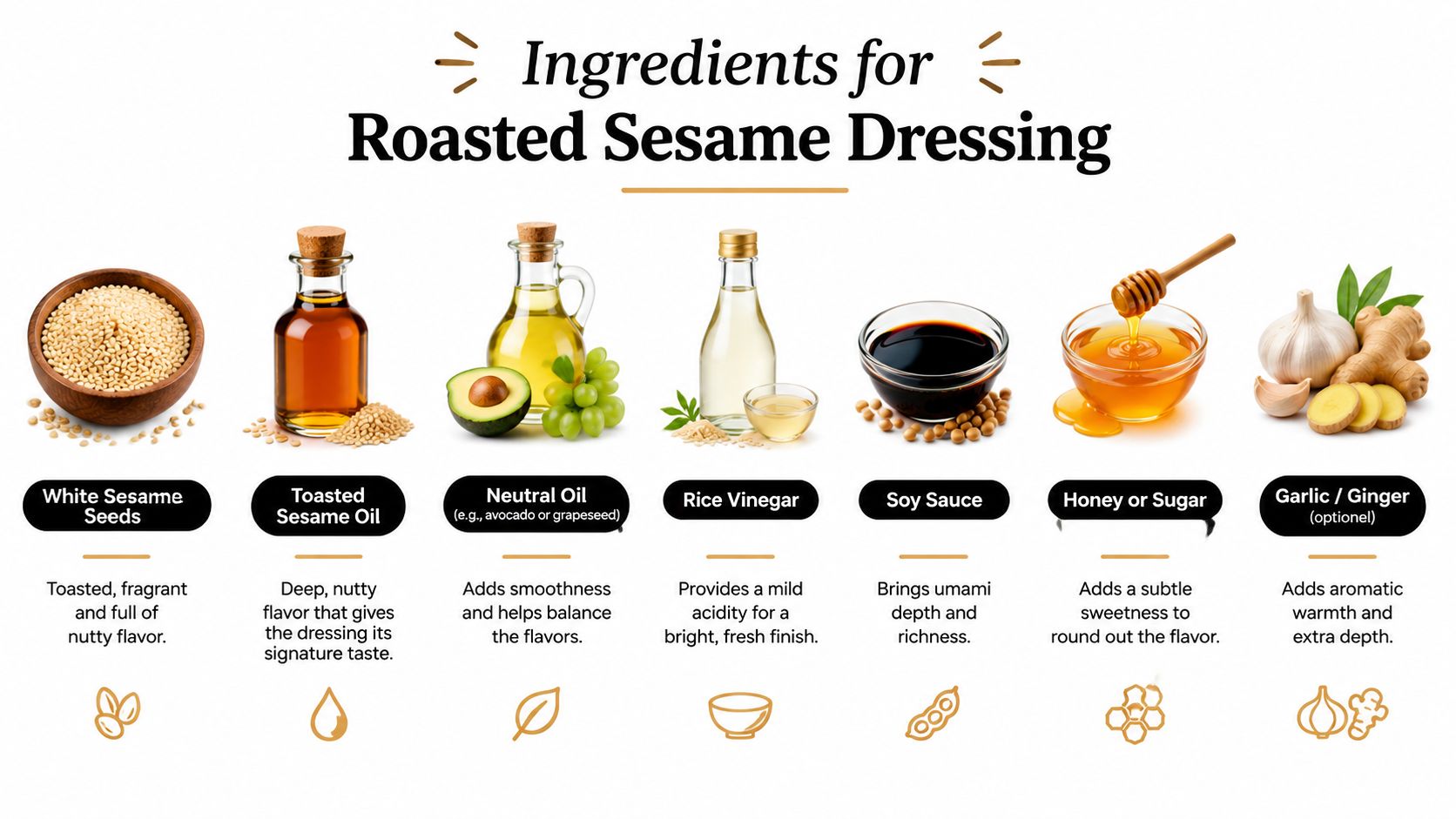
For the liquid ingredients, gather:
Toasted sesame oil: This supplies concentrated roasted depth. Use it as a flavouring oil, not the entire liquid base.
Neutral oil: Avocado, grapeseed, or another mild oil softens the intensity and helps create a smoother emulsion.
Rice vinegar: Its gentle acidity suits sesame and soy. Italian white balsamic can work too, especially if you want a softer, slightly rounded finish.
Light soy sauce: It contributes salt and umami. Dark soy sauce can make the dressing heavier and more assertive.
Honey or sugar: Honey blends quickly and adds body. Sugar works, but give it time to dissolve.
Optional tahini or mayonnaise: Tahini reinforces the sesame profile, while Japanese mayonnaise produces a richer, more restaurant-style texture.
Optional garlic or ginger: Add a small amount when you want extra savoury warmth, but don't let either hide the toasted seed aroma.
IFM Gourmet Dubai is presented as a luxury online gourmet arm of IFM Investments LLC, with a selection spanning artisanal foods, premium pantry products, teas, chocolates, cakes, and gifting. Its own materials describe a UAE operation that includes Italian, Mediterranean, and KM Zero ingredients, making it a practical sourcing option for cooks pairing sesame dressing with Italian vinegars, oils, and pasta. The company also says its wider group includes distribution, luxury retail, and manufacturing divisions in Dubai Investments Park 2. See IFM Gourmet's company information for that wider context.
Keep the equipment simple
A dry skillet, spice grinder or mortar, whisk, mixing bowl, and lidded jar are enough. A mortar gives you more control over texture. Stop when the seeds become coarse and fragrant, or continue until they form a rough paste if you want a thicker dressing.
If you're comparing sesame oils for cooking and finishing, this guide to types and uses of sesame oil is useful because it distinguishes intensely aromatic toasted oil from milder versions. That distinction matters here. A small amount of toasted oil should lift the dressing, not make it taste harsh.
Before you begin, taste the oils on their own. Fresh oil should smell clean and nutty. If it smells paint-like, dusty, or bitter, replace it. Premium ingredients help, but freshness and proportion matter more than price.
How to Toast and Emulsify for Perfect Flavor and Texture
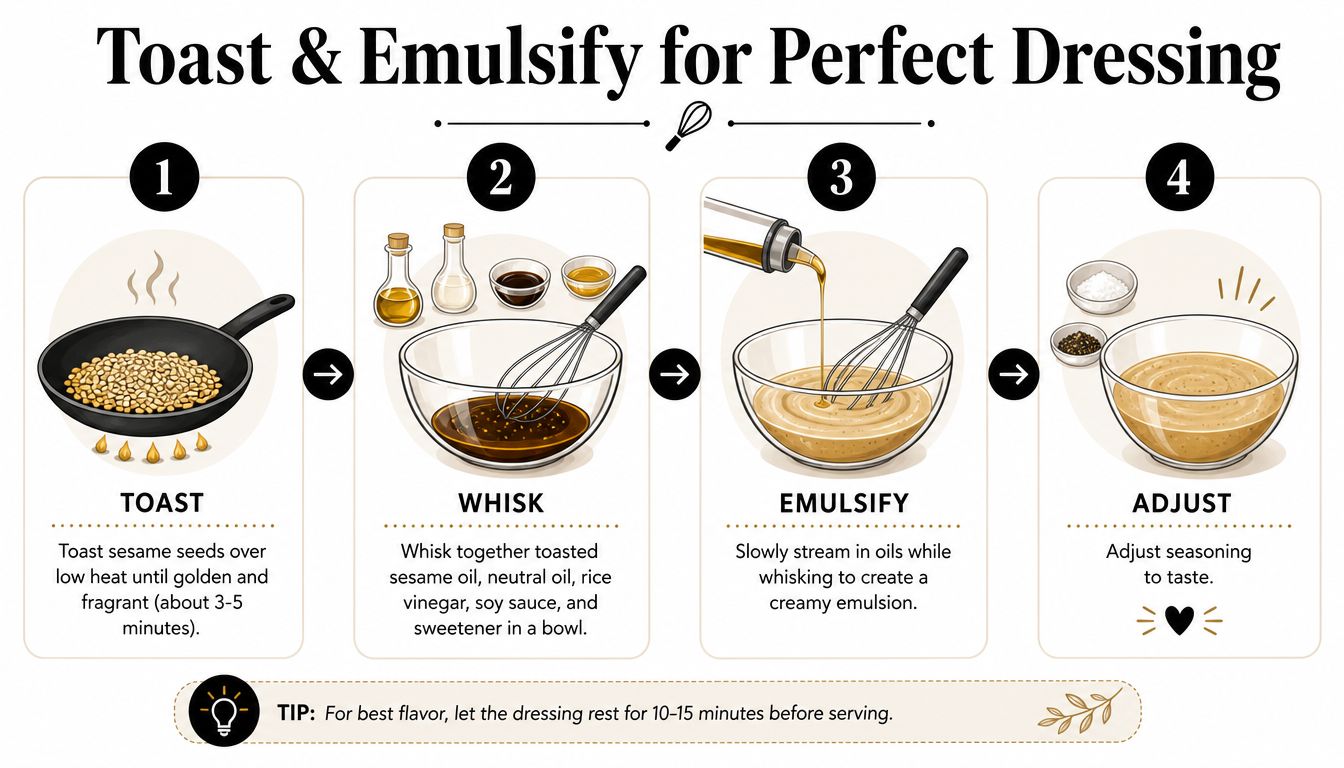
Start with a dry skillet over low to medium-low heat. Add the sesame seeds in a single layer and stir or shake the pan regularly. You're looking for a light golden colour, a puffed appearance, and a clear roasted fragrance. The moment the aroma becomes warm and nutty, remove the pan from the heat.
The pan stays hot after you switch it off, so tip the seeds onto a cool plate. Leaving them in the skillet can push them past fragrant into bitter. This is the most common mistake in the entire recipe.
Crush the seeds while they're aromatic
Once the seeds have cooled slightly, grind them in a mortar or spice grinder. A coarse grind gives the dressing texture and small bursts of sesame. A finer grind releases more oil and creates a silkier sauce.
Don't grind hot seeds into a paste immediately. Heat can make the mixture oily and difficult to judge. Cooling them briefly keeps the aroma cleaner and makes it easier to decide how much texture you want.
Emulsify in the right order
Whisk the crushed sesame with rice vinegar, soy sauce, and honey or sugar first. This dissolves the sweetener and distributes the salt before the oils enter the bowl.
Add toasted sesame oil and neutral oil gradually while whisking continuously. Pouring both oils in too quickly can leave a slick layer on top. A slow stream gives the vinegar and sesame particles time to suspend the oil, producing a glossy dressing that clings to leaves.
Use a spoonful of water if the mixture becomes too thick. Water loosens the dressing without adding more oil, which is especially helpful when tahini or mayonnaise is involved. Add it gradually because a dressing that looks thick in the bowl can spread well once tossed.
Taste with the food you plan to serve. Dip in a cabbage strand or a piece of grilled courgette rather than tasting only from the spoon. Then adjust in small steps:
More vinegar makes the sauce brighter.
More honey softens sharpness.
More soy sauce increases salt and umami.
More neutral oil rounds out aggressive acidity.
More water creates a lighter pour.
The best texture is not the thickest one. It should coat the food lightly, then leave enough acidity behind to keep each bite fresh.
For a useful perspective on choosing and using packaged nuts and seeds in everyday snacks, browse this healthy snack aisle help. The same practical principle applies here: aroma and freshness determine whether a seed adds flavour or merely texture.
A short visual demonstration can help you recognise the correct consistency:
Tasty Variations to Suit Every Taste
Keep the roasted sesame base intact, then change one accent at a time. That approach preserves the dressing's identity while letting you match it to a diet, a dish, or the people at the table.
Variation | Key Swap | Flavor Profile | Best For |
|---|---|---|---|
Vegan | Replace mayonnaise with tahini and use maple syrup or sugar | Nutty, smooth, savoury | Plant-based salads and grain bowls |
Spicy | Add chilli crisp or a pinch of togarashi | Warm, smoky, gently hot | Noodles, grilled vegetables, barbecue sides |
Citrus | Replace part of the vinegar with yuzu or lemon juice | Bright, fragrant, lively | Cucumber, prawns, cold noodles |
Extra-creamy | Add tahini or Japanese mayonnaise | Dense, rounded, rich | Slaws, dipping, iceberg or romaine |
Choose by texture first
For a vegan dressing, use tahini as the creamy element and loosen it with water before adding oil. Tahini can seize when it meets acid, so whisk steadily and add liquid gradually. The result has more sesame character and less of the soft, eggy richness associated with mayonnaise.
Spicy versions need restraint. Chilli crisp contributes heat and oil, so reduce the neutral oil slightly rather than adding it on top of the original balance. Togarashi gives a drier, more aromatic heat and works particularly well with shredded cabbage.
Citrus is the cleanest choice for warm-weather lunches. Yuzu gives a floral Japanese note, while lemon is more direct and easier to pair with Italian ingredients. If the citrus tastes sharp, add a little extra honey rather than more oil.
For an indulgent texture, Japanese mayonnaise makes the dressing cling to slaw and cooked vegetables. Tahini gives a more roasted, earthy finish. Don't use both heavily at once, or the sauce can become dense and mask the vinegar.
A product image from IFM Gourmet Dubai's culinary selection reflects the kind of Italian pantry setting where these cross-cultural combinations make sense. Sesame dressing over pasta is not traditional Italian cuisine, but carefully chosen oil, vinegar, and pasta can make the pairing feel deliberate rather than random.
Serving Ideas for Salads Grilled Vegetables and Pasta
A jar of roasted sesame dressing earns its place when it can move beyond one salad. Its strongest pairings have either crisp texture, smoky edges, or a neutral starch that can carry the toasted flavour.
Start with crisp vegetables
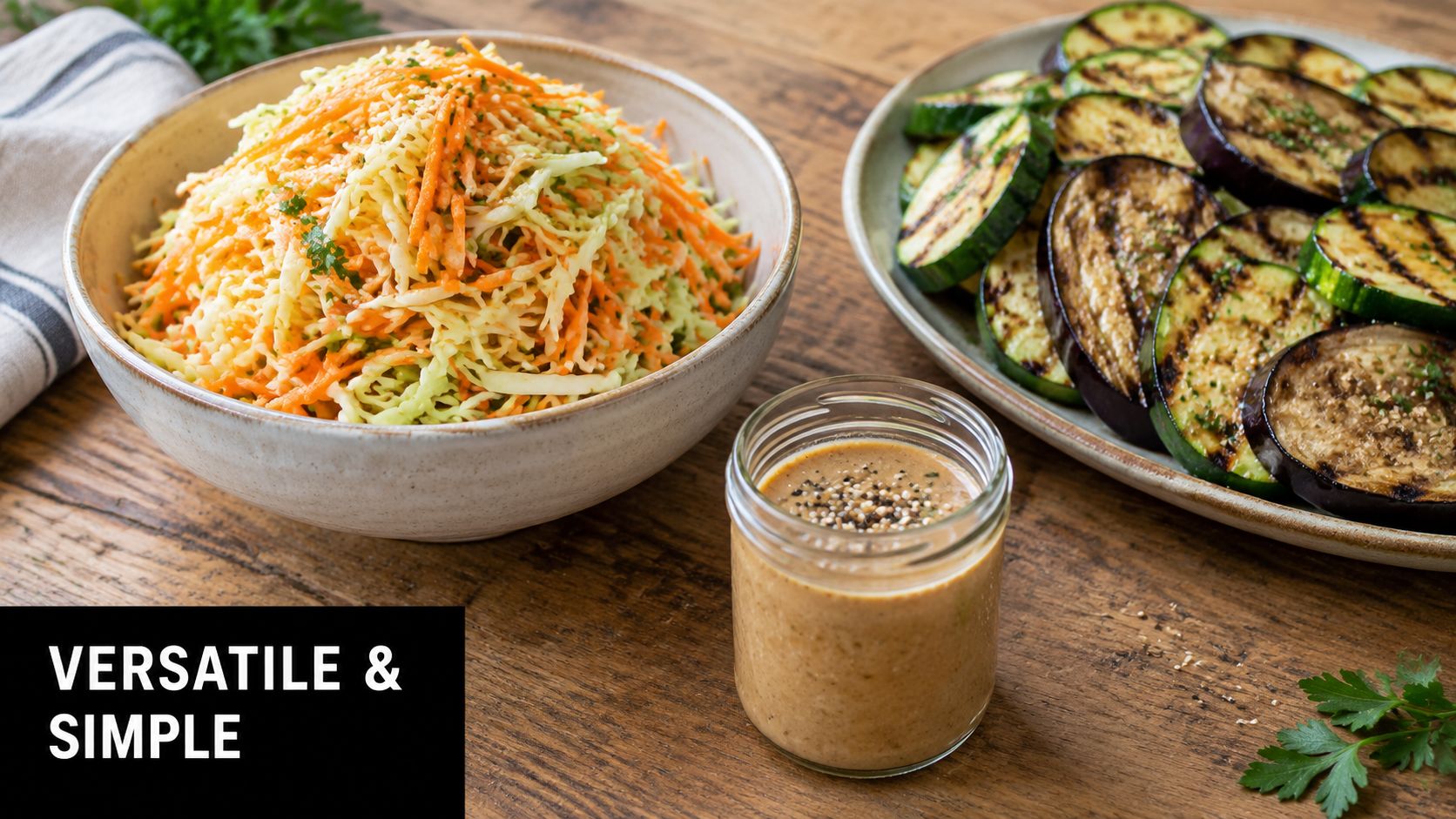
Shred cabbage and carrot finely, then toss only when you're ready to eat. The dressing brings richness to the cabbage and makes a simple slaw feel complete, while carrot adds sweetness and colour. Cucumber, radish, and spring onion also work, but dry them well so the sauce doesn't become watery.
For leafy salads, use less dressing than you think you need. Add a small amount, toss from the bottom, and inspect the leaves before adding more. Heavy pouring makes greens collapse quickly, especially in warm UAE kitchens.
Use heat to create contrast
Grilled courgette, aubergine, peppers, and mushrooms pair beautifully with sesame because their browned surfaces need a bright, savoury finish. Brush or spoon the dressing over vegetables after grilling rather than before. Sugar and honey can catch on the grill, while the vinegar loses its lift under prolonged heat.
Warm grain bowls are another easy route. Spoon the dressing over rice, quinoa, roasted vegetables, and chickpeas just before serving. Add toasted seeds or fresh herbs for contrast, but keep the garnish restrained so the sauce remains the central flavour.
Make the Italian Japanese fusion intentional
Cold soba is an obvious match, but bronze-die Italian pasta also works when you treat the dish like a chilled noodle salad. Choose a shape that holds dressing, cool it thoroughly, and add shredded cabbage, sliced courgette, basil, or spring onion. The pasta's rough surface catches the emulsion, while sesame oil and vinegar provide a bridge between the two traditions.
You can explore a related pasta presentation through this IFM Gourmet pasta selection image. The wider IFM Investments ecosystem includes Italian Food Masters, which says it serves hotels, restaurants, caterers, specialty stores, gourmet retailers, bakeries, airlines, cafés, theme parks, schools, and hospitals across the UAE, Saudi Arabia, and Oman. That makes the Italian pantry connection relevant to both home entertaining and professional food settings.
Use the dressing as a dip for tempura, drizzle it over a grain bowl, or pack it separately for lunchboxes. Keeping the sauce apart from delicate greens preserves texture until the meal begins.
Storage Troubleshooting and Gifting Tips to Finish Strong
Fresh dressing doesn't inherit the storage life of a commercial bottle. A UAE retail listing for a branded roasted sesame dressing shows a 12-month shelf life, but that operational detail applies to the packaged product, not a homemade mixture. Commercial processing, packaging, and labelled handling conditions are different from a jar whisked together in your kitchen.
Refrigerate homemade dressing in a clean, sealed jar and use it within 7 to 10 days. The shorter window protects flavour and freshness. Shake before serving because sesame particles and oil can separate as the mixture rests.
Fix the common problems
Bitter flavour: The seeds were over-toasted. Start again with lower heat and remove them as soon as they smell fragrant.
Oil on the surface: The oils entered too quickly. Whisk in a little water, then slowly incorporate the mixture again.
Too thick: Add water a teaspoon at a time until it pours smoothly.
Too salty: Add vinegar, neutral oil, and a little sweetener rather than adding more water.
Too sharp: Increase honey or sugar gradually, then taste with the intended salad.
Flat flavour: Add a small amount of toasted sesame oil or freshly ground seeds, not a large amount of soy sauce.
Don't gift homemade dressing as though it were a shelf-stable commercial condiment. Use a clean bottle, write the preparation date and storage instruction clearly, and tell the recipient to refrigerate it. For a festive presentation, place it alongside sesame crackers, pasta, vinegar, or other pantry items in a curated gourmet hamper.
IFM Gourmet Dubai is described as serving retail and corporate clients with curated gourmet selections, luxury hampers, and bespoke gifting services. Its 2025 press release also describes a focus on Italian, Mediterranean, and KM Zero ingredients in the UAE, which suits a hamper built around this Japanese-inspired dressing and Italian pantry pairings.
For the ingredients around this recipe, visit IFM Gourmet Food Store, which offers Italian gourmet products, artisanal pastas, premium oils, vinegars, condiments, sweets, and curated gift hampers across Dubai and the wider UAE. Choose a sesame dressing pairing for your next salad, pasta lunch, or festive food gift, and build the rest of the table from the same pantry.

Comments