
Small Bottled Water in UAE: Buyer’s Guide

A guest arrives at a Dubai hotel after a long flight. In the suite, the room is beautifully prepared, the welcome hamper is carefully arranged, and a compact bottle of water sits beside the coffee service. If the bottle looks out of place, feels warm, or has a label that clashes with the room, the detail is noticed even if nobody mentions it.
That's the operational reality of small bottled water. It's a hydration product, but it's also part of room presentation, table service, event logistics, guest comfort, and brand perception. The right format supports a smooth service. The wrong one creates waste, awkward handling, and a quality signal that doesn't match the rest of the experience.
The Importance of Choosing the Right Water
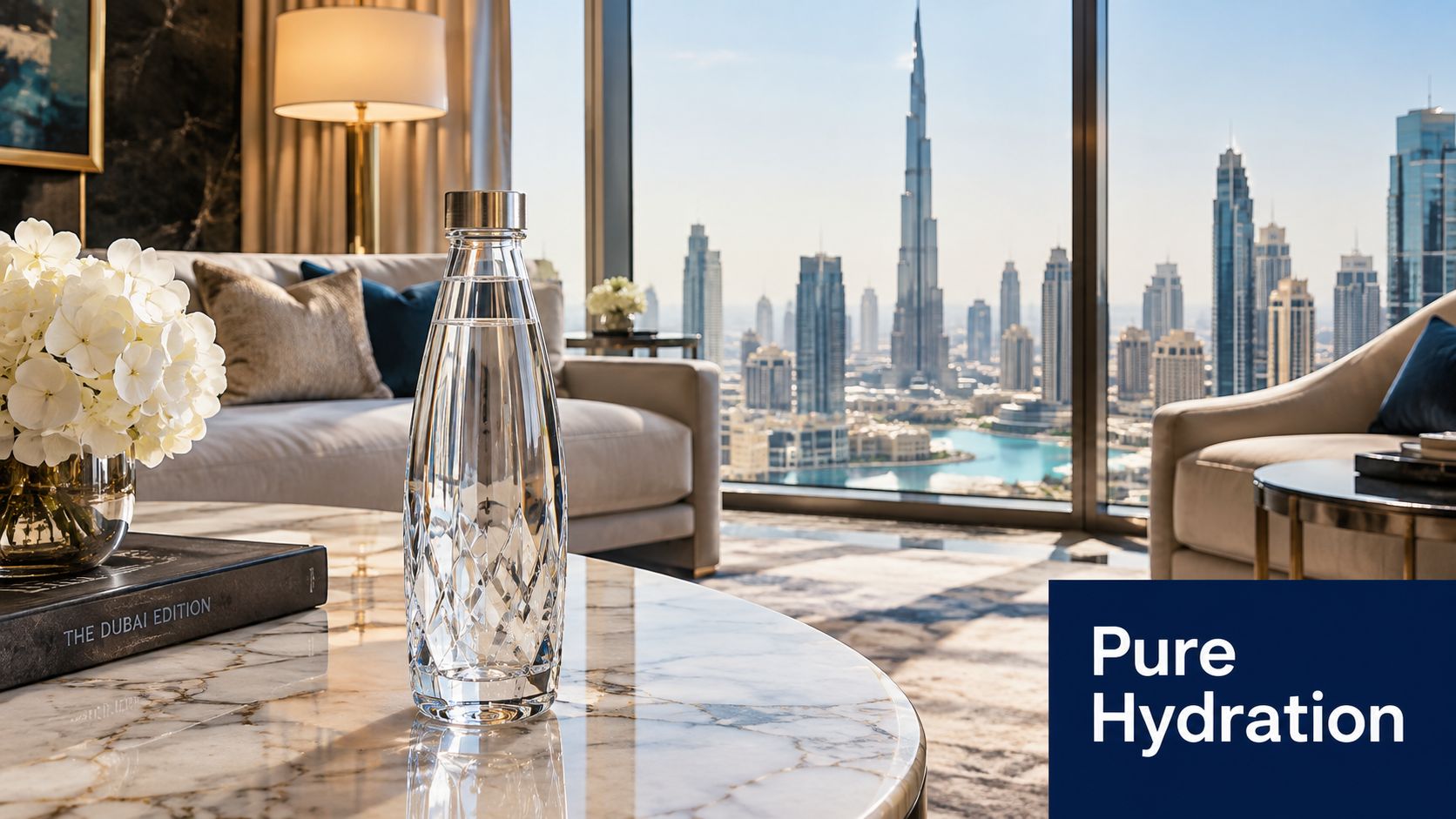
An executive dinner in a Dubai private dining room places clear demands on the water service. With aligned glassware and restrained table styling, a 330 mL glass bottle can sit neatly beside each place setting. A larger plastic bottle may disrupt the table's proportions and make the service feel more casual than the occasion requires.
For procurement managers, the bottle is part of the operating specification. Select the format according to where it will be served, how long it may remain in use, and how staff will replenish it. In a 40-room boutique hotel, replacing 500 mL PET bottles with 330 mL glass bottles at place settings reduced unfinished water by about 30% and cut tray spills during room service, while the property maintained par levels at 1.5 bottles per occupied room per day. The result depends on the service model, but the example shows why bottle size should be tested through operations rather than chosen from a catalogue alone.
The service decision behind the bottle
Assess small bottled water as part of the complete guest experience and supply process. A room-service bottle must fit securely on a tray, tolerate delivery through the property, and sit appropriately beside other amenities. An event bottle requires dependable case handling, fast replenishment, and packaging that suits the event identity.
Use these questions before approving a SKU:
Guest context: Is it intended for a suite, meeting room, restaurant table, spa, minibar, or outdoor event?
Service duration: Will the guest drink it immediately, or could it remain in the room for several hours?
Presentation: Does the bottle suit the property's colours, glassware, and table setting?
Waste control: Is the serving size appropriate, or will much of the water remain unopened or unfinished?
Supply reliability: Can the distributor maintain consistent stock, delivery timing, and replacement support?
Compare packaged bottles with filtered water and refill stations where the operating model supports reusable vessels. Offices, gyms, and public areas may suit that approach. Single-serve bottles remain practical where hygiene, portability, guest expectations, or service speed carry greater weight.
For a broader comparison of packaged and filtered water economics, buyers can review this guide to the cheapest drinking water option in Melbourne. UAE conditions differ, but the purchasing discipline is transferable: compare the full operating cost and guest experience, not the bottle price alone.
Practical rule: If the bottle does not improve service, presentation, or guest convenience, reassess the SKU.
The UAE packaged-water market is large enough to justify close procurement control. One market estimate values it at about USD 1.5 billion, with Dubai and Abu Dhabi serving as dominant consumption centres because of population density, tourism, and infrastructure intensity, according to UAE packaged water market analysis. For high-end UAE properties, small-format water is therefore a recurring guest-facing supply, not a minor purchasing detail.
Understanding Water Types and Sources
For a hotel procurement manager, “water” is not one product. Source, carbonation, mineral profile, packaging, and service context all affect how a bottle performs at the table. Identify the water type before comparing bottle design or price. A premium presentation cannot compensate for a profile that does not suit the guest experience.
Still water for broad daily use
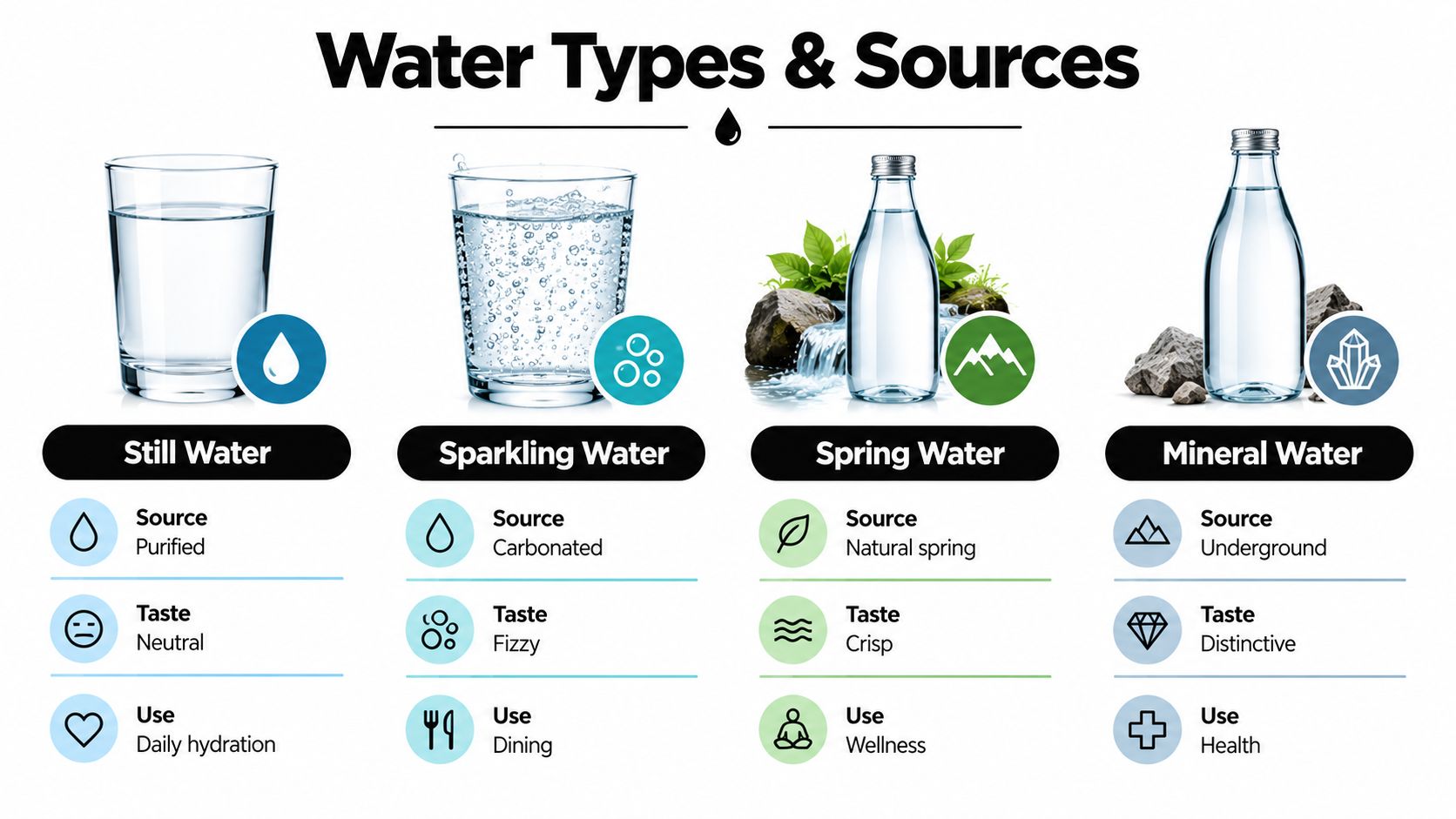
Still water is non-carbonated and usually offers the most neutral drinking experience. It may be purified, filtered, spring-sourced, or mineral water without carbonation. “Still” describes the absence of bubbles, not a single source category.
Still water suits bedrooms, conferences, gyms, transport, and general guest hydration. It pairs with coffee, tea, breakfast, and most food styles because it does not add acidity or carbonation to the palate. For UAE properties, it is generally the practical core format for routine service, where predictable taste and broad guest acceptance matter more than a distinctive profile.
Sparkling water for dining and ceremony
Sparkling water is carbonated, either naturally or through added carbonation. Its lively texture and sharper taste make it appropriate for formal meals, rich dishes, aperitif-style occasions, and selected welcome services.
Use it as a deliberate choice rather than a universal replacement for still water. Carbonation may be inconvenient in a guest room, beside a laptop, or during a fast-paced meeting. It works better in restaurants, minibar upgrades, welcome trays, and curated gift hampers where the presentation and drinking occasion justify the choice.
For imported Italian formats, buyers can compare the presentation of Lurisia Water with other premium options. Assess more than the label and bottle shape. Closure performance, glass weight, case configuration, breakage risk, and delivery conditions must fit the operation.
Spring water and mineral water
Spring water comes from a natural underground source and is collected at the spring or through a borehole accessing that source. Its character may be crisp and clean, but taste depends on the source and on the treatment permitted for the product.
Mineral water also comes from an underground source, but its identity is more closely connected to a stable mineral composition. Spring water makes a stronger statement about origin, while mineral water communicates more about naturally occurring minerals. The categories may overlap in everyday consumer language, so procurement teams should verify the label, source description, and technical documentation.
A distinctive mineral profile can suit a chef-led restaurant or tasting menu, where the beverage programme supports a more noticeable palate. A neutral still water is more flexible for high-volume guest service. For buyers comparing oxygenated options in the local market, Oxy Plus Water Dubai provides context on format and positioning.
Taste is only one procurement filter. Confirm source consistency, import paperwork, packaging integrity, storage requirements, replacement availability, and delivery reliability. These details affect service continuity as directly as the water itself.
Analysts estimate UAE bottled-water consumption at roughly 260 litres per person annually, according to UAE bottled water market research. The level of everyday use increases the operational value of consistent supply and repeatable quality. A distinctive water may suit a premium restaurant, while guests generally expect the same hotel to provide dependable quality across repeated stays.
Selecting the Perfect Bottle Size
At a 120-guest corporate lunch, limited table space changes the right bottle choice. A 330 mL glass bottle at each place setting can feel premium without leaving the waste associated with a larger serving. The most useful formats for UAE hospitality buyers are 250 mL, 330 mL, and 500 mL, each suited to a different service condition.
A 250 mL bottle works well for children's amenities, airline-style service, short meetings, and controlled tastings. Its small footprint makes placement simple and limits unfinished volume. Some adults may find it insufficient during a longer meeting or a warm outdoor event, so portion size should match expected drinking time.
A 330 mL bottle usually offers the strongest balance for premium individual service. It fits a place setting, minibar, dessert or coffee service, and gift selection without taking over the available space. A 500 mL bottle provides more comfortable hydration for guest rooms, transport, pool areas, and extended sessions. It also needs more storage room and leaves more unfinished water when guests want only a small serving.
The UAE market supports this distinction. The 331 to 500 mL segment held 40.18% of market share in 2025, according to Dubai premium water packaging analysis. Sub-330 mL formats, including 250 mL and 200 mL packs, held a stable 8% to 10% share for uses such as children's lunchboxes and airline service, according to the same analysis.
Bottle size | Strongest use cases | Main operational advantage | Watch-out |
|---|---|---|---|
250 mL | Children's amenities, airline-style service, short meetings, tasting settings | Small footprint and controlled portion | May feel insufficient for adults over a long service |
330 mL | Restaurant settings, minibars, corporate gifts, room service | Balance of elegance, portability, and volume | Requires replenishment if guests consume several bottles |
500 mL | Guest rooms, pool areas, transport, outdoor events | More practical hydration per bottle | Greater risk of unfinished water and larger storage footprint |
Use the service channel to set the final specification. In fine dining, the bottle should support the table setting without overwhelming it. Regional packaging guidance identifies 750 mL as the dominant table-service format in GCC fine dining, while 330 mL and 250 mL formats suit individual settings, room service, and amenity programmes. Smaller bottles are particularly practical when each guest receives a personal serving or when the table already carries several beverages.
Meeting rooms require a check of duration, seating density, and access to refills. A 330 mL bottle fits more easily beside a notepad and laptop. A 500 mL bottle is better for a longer session or a venue where staff cannot replenish promptly. For minibars, 330 mL maintains a refined appearance while preserving shelf capacity. Poolside service generally benefits from 500 mL, provided staff keep stock chilled and remove unfinished bottles promptly.
Place the proposed bottle on the actual tray, table, minibar shelf, or amenity box before approving the case pack. Catalogue images cannot show whether the neck, diameter, or height interferes with service.
A mixed hydration system may suit a large hotel better than one universal format. Individual bottles can serve suites and formal events, while a floor standing water cooler can serve staff areas or back offices. This separates guest-facing presentation from back-of-house hydration and prevents one bottle size from carrying incompatible operational demands.
Decoding Labels and Quality Standards
A polished bottle can still create compliance problems. Before approving a SKU, the label and supplier file should show the water's origin, classification, treatment, traceability, and eligibility for consistent supply in the UAE.
Begin with the source statement. Confirm that the wording is clear and consistent across the bottle, technical sheet, and purchasing documents. For imported products, discrepancies in the source description can delay approval or raise questions during a regulatory review.
Review the water classification and mineral information against the intended service. A distinctive mineral profile may suit a restaurant programme or a specific food pairing. A hotel selecting neutral water for daily guest use may need a milder profile that works across different preferences and menus.
A UAE-focused label review checklist
Source and classification: Confirm the declared category and ensure it matches the technical sheet and supplier documentation.
Mineral profile: Check the listed composition when mineral character is part of the product's positioning or menu presentation.
Treatment details: Record whether the water has been filtered, purified, carbonated, or otherwise processed.
Conformity documentation: Request the supplier's current ESMA conformity certificate and verify that it relates to the exact SKU, size, and packaging format under review.
Packaging information: Confirm bottle material, closure type, case configuration, and recycling instructions before setting storage and receiving procedures.
Traceability: Ensure the commercial paperwork identifies the importer or responsible supplier and supports batch or lot tracking.
Language and legibility: Confirm bilingual Arabic/English labeling, batch/lot code, expiry date, and importer details are printed legibly and match the technical sheet. Photograph the approved label for the receiving file.
UAE oversight of bottled-water products has tightened, so compliance belongs in the buying decision from the start. Request the conformity certificate and Arabic/English label proof before approving the SKU. Treat these documents as part of product selection, not paperwork to collect after the order is placed.
Verify before approving
Ask for the product specification, source documentation, conformity information, approved label artwork, and delivery conditions. Confirm that the same SKU will arrive consistently, particularly when the bottle, glass colour, cap, or label forms part of a guest-facing standard.
Receiving staff should compare incoming cases with the approved reference. Inspect seals, cartons, glass, odour, expiry details, batch codes, and label language. Record damaged cases and isolate any shipment that does not match the approved sample.
Keep a reference unit or clear label photograph in the purchasing file. It gives the receiving team a practical way to identify substitutions before they reach a room, table, minibar, or event.
Quality control starts at receiving. A compliant product can still fail operationally if damaged cases, warm stock, or unapproved substitutions reach the guest.
Sustainability and Storage Best Practices
A hotel may need chilled water beside a pool, a sealed bottle in a minibar, and a formal glass presentation at dinner on the same day. Sustainability decisions should therefore follow the service point. Use refill systems where guests can access them comfortably, and specify small bottles for occasions requiring portability, hygiene, controlled portions, or a defined presentation standard.
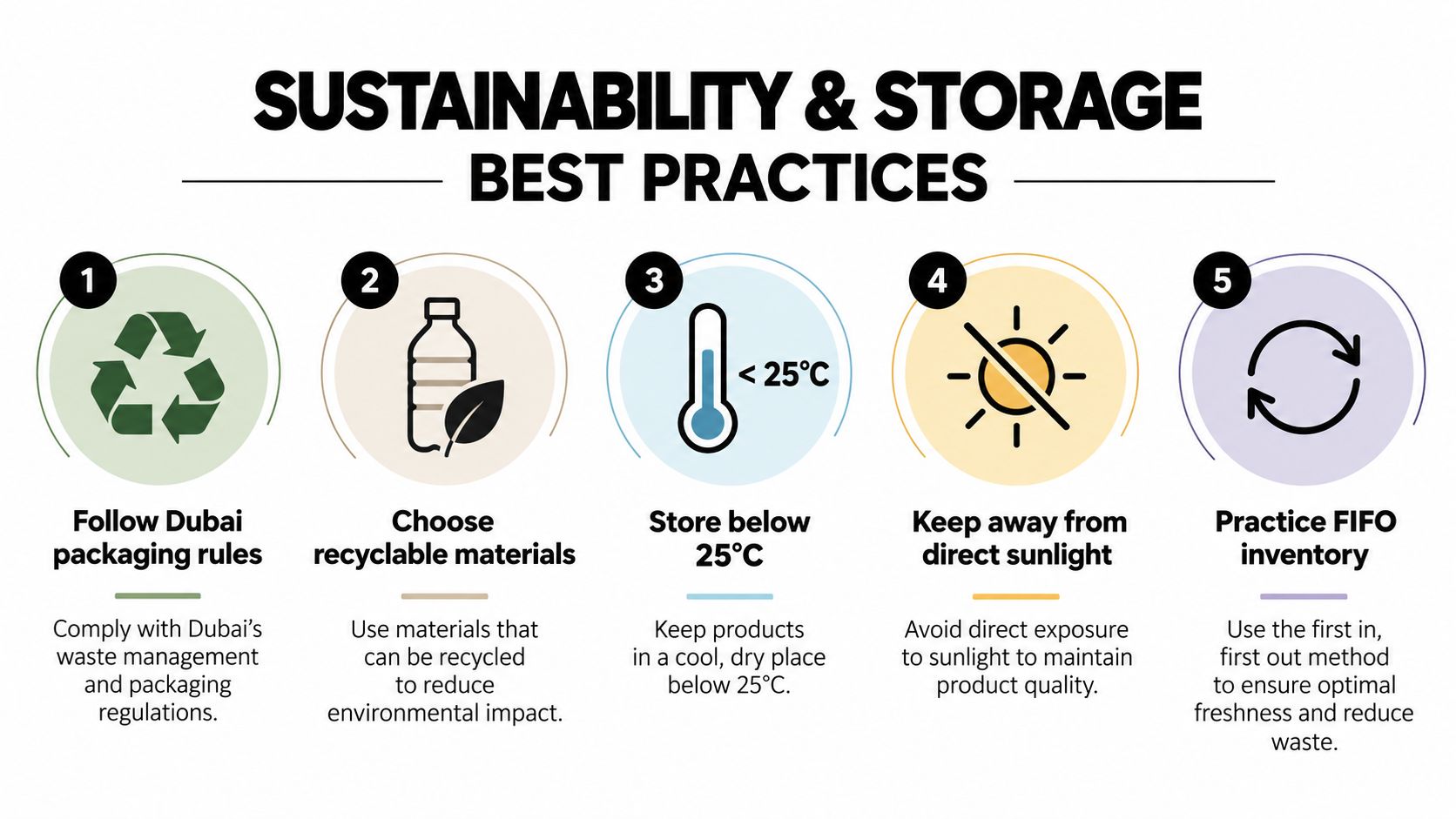
Dubai's packaging direction makes material selection an operational issue. Guidance is pushing producers towards 25% recycled content from 2026, while market reporting says a 250 mL bottle made from 100% rPET launched for the UAE in January 2025. Lightweight bottle designs have already reduced plastic per litre by 22% in the region, as described in UAE bottled water market reporting.
Procurement should assess the complete service cycle: bottle format, material, delivery distance, storage requirements, breakage exposure, recycling route, and guest expectation. The lowest-impact choice is the one that works reliably without creating avoidable waste through damage, over-chilling, or unused stock.
Choose materials with a use case in mind
Glass supports a premium presentation in restaurants, suites, and gifting, but it increases case weight, handling effort, and breakage risk. rPET and other recyclable plastic formats may suit transport, poolside service, conferences, and high-volume replenishment better. Compare the full route from receiving dock to guest table before approving the material.
Dubai Can's progress shows the direction of travel. The initiative reportedly eliminated the equivalent of more than 30 million 500 mL bottles in its first three years, while Dubai's final single-use plastic phase took effect on 1 January 2026, according to UAE premium bottled water market reporting. Operators should document why a disposable format is needed and avoid it where a refill system provides the same service standard.
Store water as a food-service product
Store glass SKUs below 25°C on pallets 15 cm off the floor. Segregate still and sparkling water in colour-coded bins, and set par levels at three days of chilled stock plus seven days of ambient stock. This arrangement protects packaging, reduces unnecessary refrigeration, and gives the team a clear replenishment routine.
Keep the storage area clean, dry, organised, and separate from chemicals, odours, direct sunlight, and heat. Use a simple handling procedure:
Rotate by arrival date: Move earlier deliveries forward and issue them first.
Protect packaging: Keep cartons away from damp surfaces, impact points, and unstable stacks.
Inspect before service: Remove bottles with broken seals, damaged caps, cracked glass, or compromised labels.
Chill according to demand: Refrigerate stock for confirmed service windows instead of cooling every case.
Separate formats: Identify still, sparkling, glass, and plastic SKUs clearly to prevent service errors.
A smaller bottle can match the portion to a short meeting, gift presentation, children's service, or minibar visit. It can also create unnecessary waste when staff open one for every minor interaction despite having a suitable refill point or larger shared vessel. Review the service design, not only the packaging specification.
Ask suppliers for packaging composition, recycling guidance, delivery conditions, and a process for damaged or excess stock. Agree who records breakage, who removes unusable cases, and how usable stock is redistributed before expiry.
Very small bottles still have a place. UAE retail listings include formats down to 140 mL and 200 mL. They suit portion control, gifting, children's service, and tightly managed hospitality moments. They are less suitable where a refill system can provide the same convenience without disposable packaging.
Why Buy from IFM Gourmet Dubai
A hotel may need small bottled water for a suite, a minibar, a boardroom, or a corporate gift. The procurement decision therefore includes presentation, pack format, and coordination with the wider guest experience, not only the water itself.
IFM Gourmet Dubai is the luxury online gourmet arm of IFM Investments LLC, offering curated hampers and gourmet ingredients to private clients, hospitality partners, and corporate gifting programmes, as described by IFM Investments LLC. Its range includes artisanal sweets, savouries, fine chocolates, premium teas, cakes, and gift hampers. That wider selection helps buyers place water within a complete culinary presentation instead of ordering it as an isolated commodity.
A practical fit for premium service
IFM Gourmet Dubai serves private clients, hospitality partners, and corporate gifting programmes across the UAE, according to the company's corporate information. This positioning suits buyers who need water for an Italian dining concept, luxury hamper, room amenity, or formal event. It also gives procurement teams one supplier relationship for selected food gifts and supporting beverage details.

The store's water range includes Lurisia spring water in glass bottles, with 330 mL, 500 mL, and 750 mL formats available through its product offering. Lurisia Stille natural mineral spring water is listed in 330 mL glass bottles in a pack of 20. Lurisia Bolle sparkling mineral spring water is also listed in 330 mL glass bottles in a pack of 20, based on the store's supplied product information.
Before approving a recurring order, confirm current stock, delivery conditions, pack configuration, and the intended service setting. Those checks determine whether a format works for room placement, table service, gifting, or event distribution.
IFM Gourmet Food Store offers Italian gourmet ingredients, artisanal delicacies, spring water, curated hampers, and custom corporate and event services across Dubai and the UAE. Visit IFM Gourmet Food Store to review small bottled water options for hotel amenities, fine dining, premium gifting, and organised hospitality service.


Comments