What Is a Truffle: what is truffle and a guide to the culinary diamond
A truffle isn't just a mushroom. It’s a rare, edible fungus that spends its entire life underground, celebrated for an intense, earthy aroma and a flavor that’s truly unforgettable. Unlike mushrooms that pop up above ground, these culinary diamonds are far more mysterious, making them one of the most prized ingredients on the planet.
The Underground Culinary Diamond
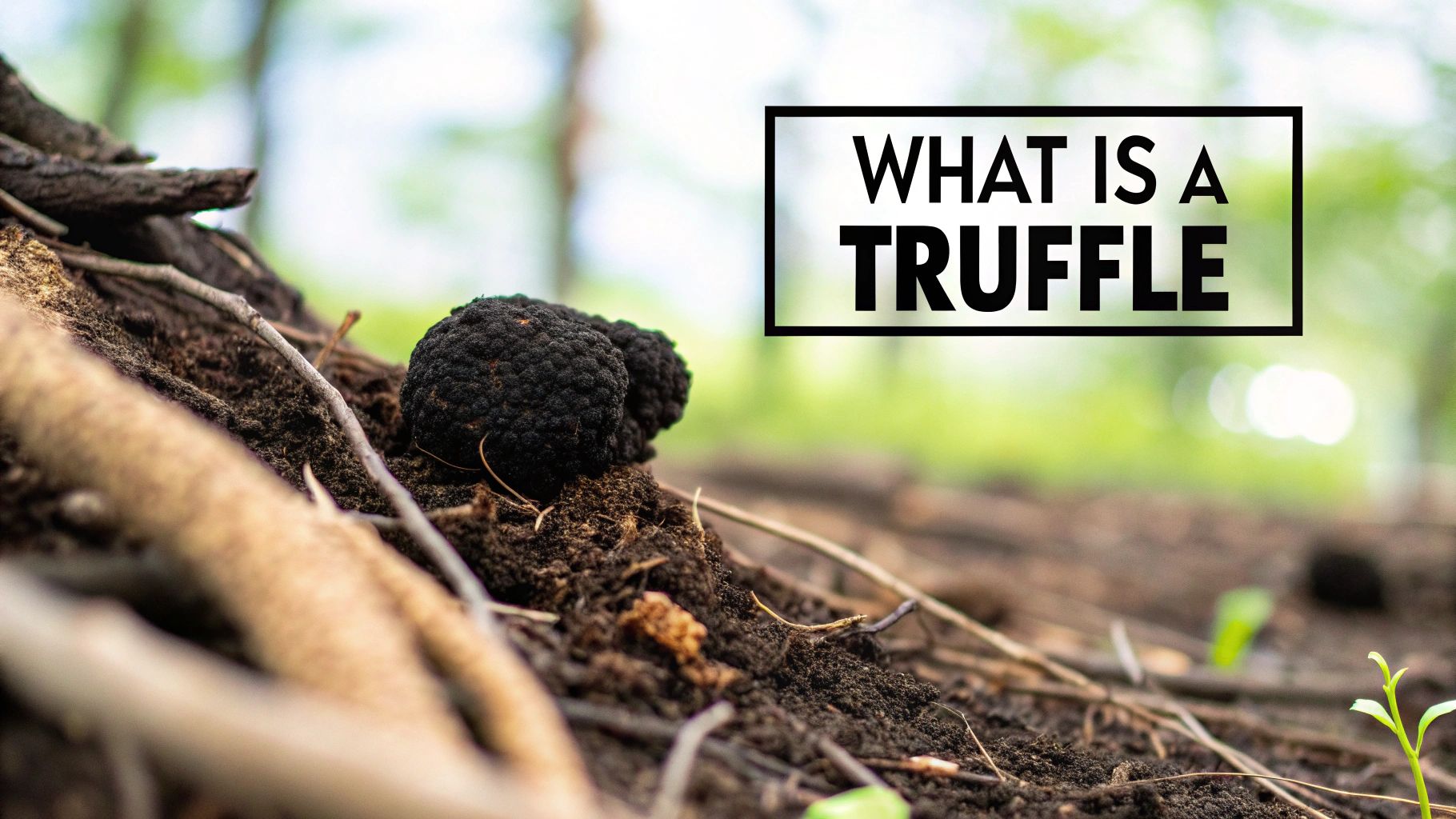
So, what exactly is a truffle? Think of a treasure buried just a few inches beneath the soil, one you could never find just by looking. That’s a truffle. It’s not a plant or an animal; it's the fruiting body of a very particular kind of subterranean fungus.
Its elusive nature and incredible value have rightfully earned it the nickname 'the diamond of the kitchen'. The comparison isn't just about price—it’s about the rarity and the complex, multi-layered experience it delivers. The first thing you'll notice is its powerful scent, an aroma so potent it can turn a simple plate of pasta into a gourmet masterpiece.
A Unique Partnership with Nature
Truffles are picky about where they grow. Their very existence relies on a special, symbiotic relationship with the roots of certain trees, like oak, hazel, poplar, and beech. This natural partnership is called mycorrhiza, and it’s a perfect example of teamwork.
What the tree gives: The tree provides the fungus with essential sugars from photosynthesis—energy the fungus can't make on its own.
What the truffle gives back: In return, the fungus expands its network of fine threads (called mycelium) deep into the soil. This network acts like a super-extension of the tree’s own roots, pulling in water and vital minerals that the tree would otherwise struggle to find.
This delicate balance is why truffles are so notoriously difficult to farm. They need the perfect storm of conditions: the right soil, a specific pH level, a suitable climate, and a healthy host tree. If any part of that ecosystem is disturbed, truffles simply won't form. This makes wild truffles incredibly precious and their availability so unpredictable from one year to the next.
For a quick summary of what makes a truffle so special, take a look at the table below.
Truffle Characteristics at a Glance
Characteristic | Description |
|---|---|
Origin | The fruiting body of a subterranean fungus. |
Growth | Grows entirely underground in a symbiotic relationship with tree roots. |
Key Feature | An intensely powerful and complex aroma. |
Rarity | Requires specific soil, climate, and host trees to grow. |
Harvest Method | Found using specially trained dogs, not by sight. |
This unique combination of factors is what cements the truffle’s status as a culinary legend.
The truffle’s entire life cycle happens out of sight, deep within the soil. Its powerful aroma is a survival mechanism, designed to attract animals that will dig it up, consume it, and spread its spores to create the next generation.
From Earth to Table
Because truffles are completely hidden, finding them is a true art form. You might have heard stories of pigs being used to hunt them, but their habit of gobbling up the treasure led hunters to switch to specially trained dogs. These truffle hounds have an incredible sense of smell that can pinpoint the exact location of a ripe truffle without damaging it.
This whole process—the collaboration between the hunter, their loyal dog, and the forest—adds another layer of romance and tradition to the truffle’s story. It’s a powerful reminder of the effort it takes to bring this exceptional ingredient from the woods of Europe to the finest kitchens in Dubai and around the world. And it all starts with understanding what this incredible fungus really is.
The Rich History and Mystique of Truffles
The obsession with truffles is hardly a modern trend. Their story is tangled in centuries of history, long before they ever graced the tables of today's finest restaurants. The journey from a mysterious underground fungus to a symbol of pure luxury is as deep and complex as its flavor.
Even ancient civilizations were fascinated by this culinary puzzle. The Greeks and Romans didn't just love truffles for their taste; they believed they held mystical powers. The prevailing theory? That truffles were created when the god Jupiter hurled lightning bolts at the earth. This divine origin story only deepened their mystique, making them a show-stopping feature at lavish Roman feasts.
A Journey Through Time
After the fall of the Roman Empire, the truffle’s star faded. During the Middle Ages—often called the truffle’s "dark ages"—it was largely ignored and, at times, even bizarrely linked to witchcraft. For centuries, it vanished from the tables of the elite.
It took the Renaissance to bring the truffle back into the spotlight and restore its reputation. The French court, especially under King Louis XIV, went wild for it, cementing its status as a food truly fit for kings. This comeback ignited a culinary obsession across Europe, transforming what was once a peasant's lucky find into a delicacy craved by aristocrats and food lovers alike.
The legendary 18th-century French gastronome Jean Anthelme Brillat-Savarin famously dubbed the truffle "the diamond of the kitchen." The name stuck, perfectly capturing its immense value, its rarity, and the incredible effort it takes to bring it from the forest to the plate.
The Art of the Truffle Hunt
A huge part of the truffle's mystique comes from the secretive, ancient tradition of how it’s harvested. You can't just plant and pick truffles like other crops; you have to hunt for them. This age-old practice, known as truffle hunting, is a delicate partnership between human and animal.
Originally, pigs—specifically sows—were the go-to hunters. They have a natural instinct for the truffle's scent, but they also have a frustrating habit of eating the treasure themselves, which often led to a tug-of-war with their human partners.
Today, the companion of choice for a truffle hunter, or tartufaio, is a specially trained dog. Breeds like the Lagotto Romagnolo are popular for their sharp sense of smell and more disciplined nature. The bond between the hunter and dog is everything—a partnership built over years of training, patience, and absolute trust.
The hunt itself is a ritual steeped in tradition. Hunters often head out in the cool, damp hours of the early morning or late evening, when the truffle's aroma hangs heaviest in the air. They follow their dogs through the woods, watching intently for the subtle scratch or signal that a prize lies buried just beneath the soil.
This timeless tradition is exactly why the truffle remains so special. Each one is unearthed not by a machine, but through a unique collaboration with nature. It’s this deep connection to the land and to history that makes every shaving of truffle more than just food—it’s a taste of a rich and storied past, a direct link to the European forests and the generations who have worshipped this culinary diamond.
Black Truffles vs White Truffles Explained
When you step into the world of truffles, you’ll quickly meet the two main stars of the show: the robust Black Truffle and the elusive White Truffle. While both are prized delicacies, they are far from interchangeable. Knowing the difference is the real secret to unlocking their full potential in your kitchen.
Think of it like this: the black truffle is a rich, resonant cello, its deep notes capable of harmonizing within a full orchestra (or a complex sauce). The white truffle, on the other hand, is a delicate flute—its ethereal melody is best heard on its own, floating above a simple arrangement.
The Aromatic White Truffle
The White Truffle (Tuber magnatum pico) is the rarer and more precious of the two. Harvested mainly in Italy’s Piedmont region from October to December, its arrival is a celebrated event in the culinary world.
Appearance: They have a smooth, pale ochre exterior and a creamy, marbled interior.
Aroma: This is what white truffles are all about. They boast an intense, complex scent with notes of garlic, honey, and hay. It's an aroma so powerful yet so delicate that it can fill an entire room.
Flavor: Its flavor is more subtle than its scent, offering hints of shallots and a unique, musky quality that is truly unforgettable.
Here’s the golden rule with white truffles: never cook them. Heat completely destroys their delicate aromatic compounds, wiping out the very essence of what makes them so special. They are a finishing touch, best shaved fresh over simple, warm dishes like pasta, risotto, or eggs. The gentle heat from the food is all that’s needed to release their incredible perfume.
The Versatile Black Truffle
The Black Truffle (Tuber melanosporum), often called the Périgord truffle, is more widely available and incredibly versatile. Found mainly in France, Spain, and Italy, its peak season runs from December to March.
Appearance: It has a rough, bumpy, dark exterior that looks a bit like a lump of coal. Inside, its flesh is dark with intricate white veining.
Aroma: Black truffles have a deep, earthy, and robust aroma, often described as chocolatey, with hints of musk and damp forest floor.
Flavor: Its flavor is much more pronounced than the white truffle's. It's rich and nutty with a slightly sweet finish—a taste that holds its own in more complex dishes.
Unlike its pale cousin, the black truffle’s flavor is actually intensified by gentle heat. This makes it perfect for infusing into sauces, butters, and oils. You can even tuck thin slices under the skin of a chicken before roasting to let its incredible taste seep into the meat. At IFM Gourmet, you'll find an array of products that capture this rich flavor, making it easy to bring into your own cooking.
While both black and white truffles are a wonder of nature, their distinct characteristics demand different culinary approaches. Understanding when to use heat and when to serve fresh is the secret to making the most of your truffle experience.
This infographic shows the journey of the truffle from an ancient delicacy to a modern gourmet staple.
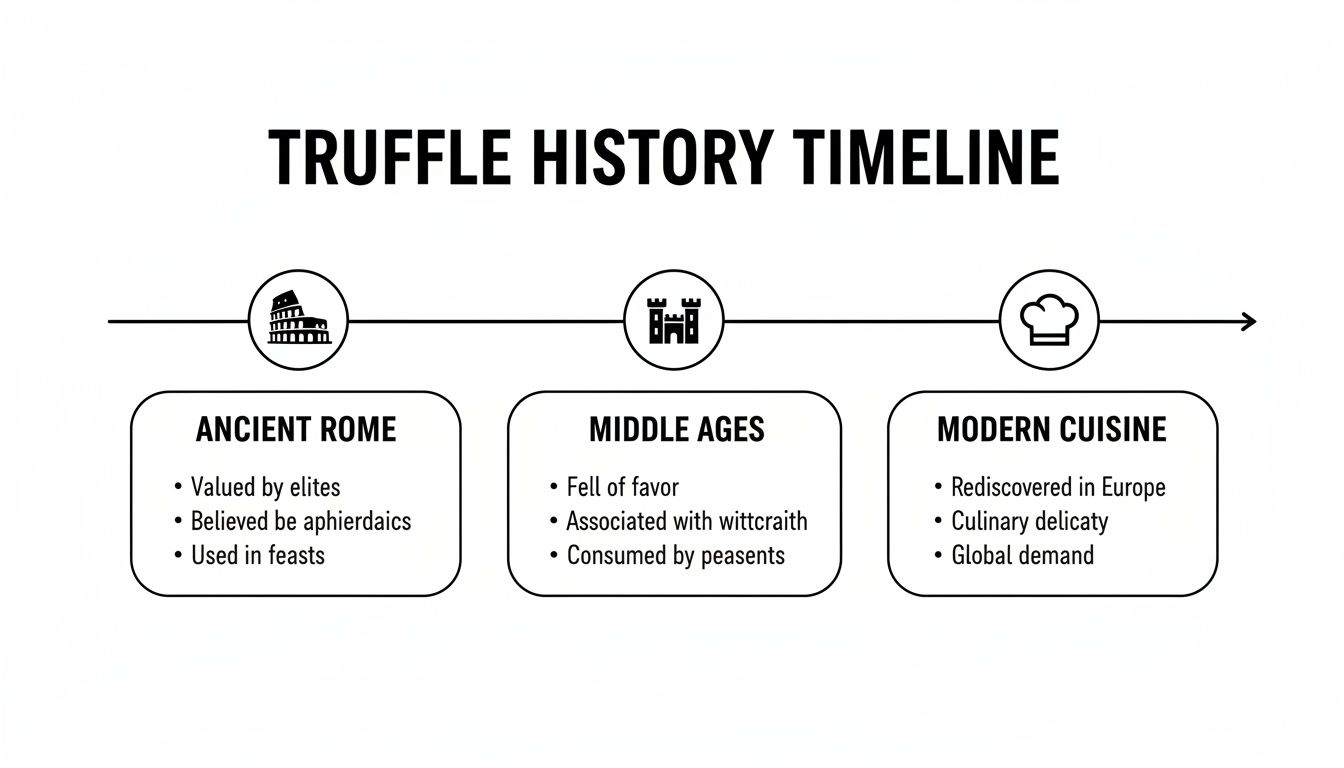
The timeline highlights how the truffle has been a symbol of luxury and mystique for thousands of years, evolving from a food of Roman gods to the star of Michelin-starred kitchens.
White Truffle vs Black Truffle a Culinary Showdown
To make it even clearer, let's put these two culinary titans head-to-head. This table breaks down their key differences so you can choose the right one for your next meal.
Feature | White Truffle (Tuber magnatum) | Black Truffle (Tuber melanosporum) |
|---|---|---|
Peak Season | October - December | December - March |
Origin | Primarily Piedmont, Italy | France, Spain, Italy |
Aroma | Intense, complex, with notes of garlic, honey, and hay | Deep, earthy, and robust, with hints of chocolate and musk |
Flavor | Subtle, delicate, with shallot and musky notes | Pronounced, rich, and nutty |
Best Use | Shaved fresh over simple, warm dishes (pasta, eggs, risotto) | Infused into sauces, butters, or cooked in dishes |
Cooking | Never cook it. Heat destroys the aroma. | Gentle heat enhances its flavor. |
Price | Significantly more expensive and rare | More accessible and affordable |
Ultimately, both truffles offer a spectacular experience, but in very different ways. The choice simply comes down to what you're trying to achieve in your dish.
Choosing The Right Truffle For You
So, which one should you choose? Your decision really depends on your dish and what you want to achieve.
If you’re aiming for a show-stopping, aromatic finish for a simple, elegant meal, the white truffle is your answer. A few paper-thin shavings are all it takes to create a memorable dining moment.
If you're looking to build a deep, earthy flavor into a sauce, soup, or roast, the black truffle is the superior choice. Its ability to withstand gentle cooking allows its flavor to meld beautifully with other ingredients, creating a rich and complex dish.
Ultimately, knowing what a truffle is in its different forms empowers you to cook with confidence. Whether you're a seasoned chef or a home cook in Dubai looking to elevate a meal, understanding this fundamental difference will help you make the perfect choice at IFM Gourmet every time.
Bringing Truffle Flavors into Your Kitchen
Knowing what a truffle is and how black and white varieties differ is one thing, but bringing that incredible flavor into your own home? That’s where the real fun starts.
While fresh truffles are an unforgettable treat, their short season and high price tag can make them a rare indulgence. The good news is that high-quality, truffle-infused products can bring that touch of luxury to your kitchen any day of the week, making it accessible for any home cook.
The trick is to start with genuinely good ingredients that capture the true essence of the truffle. Products like the ones you’ll find at IFM Gourmet Dubai—aromatic oils, finishing salts, and rich sauces—give you a consistent and reliable way to add that coveted flavor to your cooking. Think of them as your gateway to gourmet, transforming everyday meals into something special without any fuss.
Simple Ways to Elevate Your Dishes
You don’t need to be a professional chef to cook with truffles. In fact, the beauty of infused products is their sheer simplicity and versatility. A little truly goes a long way, and the goal is always to enhance, not overpower, the other ingredients on the plate.
Here are a few easy ideas to get you started:
Drizzle Truffle Oil: A light drizzle of high-quality truffle oil is the perfect finishing touch for a hot-from-the-oven pizza or a simple bowl of pasta. It also adds a wonderful aromatic kick to French fries, popcorn, or creamy mashed potatoes.
Use Truffle Salt: Try swapping your regular salt for truffle salt when seasoning a perfectly seared steak, roasted vegetables, or even your morning scrambled eggs. It adds a subtle yet unmistakable layer of earthy flavor.
Incorporate Truffle Honey: Want to create a show-stopping cheese board? Just drizzle a little truffle honey over aged cheeses like Pecorino or Parmesan. That sweet-and-savory combination is completely unforgettable.
These small additions require almost no effort but deliver a huge impact, letting the truffle’s unique character take center stage.
Your Pantry's Secret Weapon
Keeping a few truffle products in your pantry is like having a secret weapon on hand for any occasion. They’re perfect for those last-minute meals or when you want to impress guests without spending hours in the kitchen. A simple mushroom risotto, for example, becomes instantly decadent with a spoonful of black truffle sauce stirred in right at the end.
Here in the UAE, truffles have become a beloved luxury for lovers of fine Italian food. IFM Gourmet Dubai is leading the way in Dubai, importing premium truffle flavorings and products that elevate home cooking. This focus on top-tier imports showcases the UAE's role as a gourmet hub, where truffle-infused olive oils and condiments are always in high demand, especially during festive seasons like Ramadan and Diwali. For IFM customers, this means access to authentic truffle products that pair beautifully with everything from San Marzano tomatoes to artisanal bronze-die pastas, turning a simple dinner at home into a true celebration.
The secret to using truffle products effectively is to add them at the end of the cooking process. High heat can diminish their delicate aroma, so think of them as a finishing touch that adds a final layer of luxurious flavour just before serving.
Ultimately, bringing the taste of truffles into your kitchen is all about having fun and experimenting. Start with a quality product, use it sparingly, and see for yourself how its incredible profile can transform your favorite dishes from simple to sublime.
How to Select and Store Truffle Products
When you invest in truffles—whether they're fresh nuggets of earthy gold or a beautifully infused product—you're bringing a piece of true culinary luxury into your kitchen. To make the most of that investment, you need to know how to pick the best and store them correctly. It’s the secret to making sure every dirham spent translates into an unforgettable flavor experience.
For fresh truffles, trust your senses. They're your best guide. A great fresh truffle should feel firm and dense in your hand, almost like a potato. If it feels spongy, soft, or has any damp spots, that’s a clear sign it's past its prime.
But the most telling sign is the aroma. A ripe, fresh truffle has an absolutely intoxicating, powerful, and clean earthy scent that fills the air. If it smells weak, musty, or just… off, walk away. A clean, unbroken skin without too much dirt is also a good sign that it’s been handled with care.
Decoding Truffle Product Labels
When you're choosing truffle-infused products like oils, pastes, or salts from a purveyor like IFM Gourmet Dubai, the ingredient label is your roadmap to authenticity. You’re on the hunt for products made with real truffles, not synthetic chemical shortcuts.
Here's what to look for on the label:
Actual Truffle Pieces: The ingredients should clearly name the truffle variety, like "Black Winter Truffle (Tuber melanosporum)" or "White Truffle (Tuber magnatum)."
Natural Flavors: Be wary of vague terms like "truffle aroma" or "truffle flavoring." While some high-end products use natural extracts, many use synthetic compounds that deliver a one-note, often aggressive smell.
A High-Quality Base: For truffle oil, the foundation should be a quality extra virgin olive oil. For salts, a good sea salt. The carrier is just as important as the truffle itself.
A genuinely authentic truffle product lets the complex, multi-layered flavor of the truffle take center stage. It should taste earthy and sophisticated, never artificial. At IFM Gourmet Dubai, our commitment to authenticity means every product is curated to deliver this genuine experience.
Preserving Your Culinary Treasure
Proper storage is absolutely critical for protecting your truffle's delicate aroma, especially in a climate like Dubai's. Fresh truffles are incredibly perishable and lose their magic fast, so they need immediate attention.
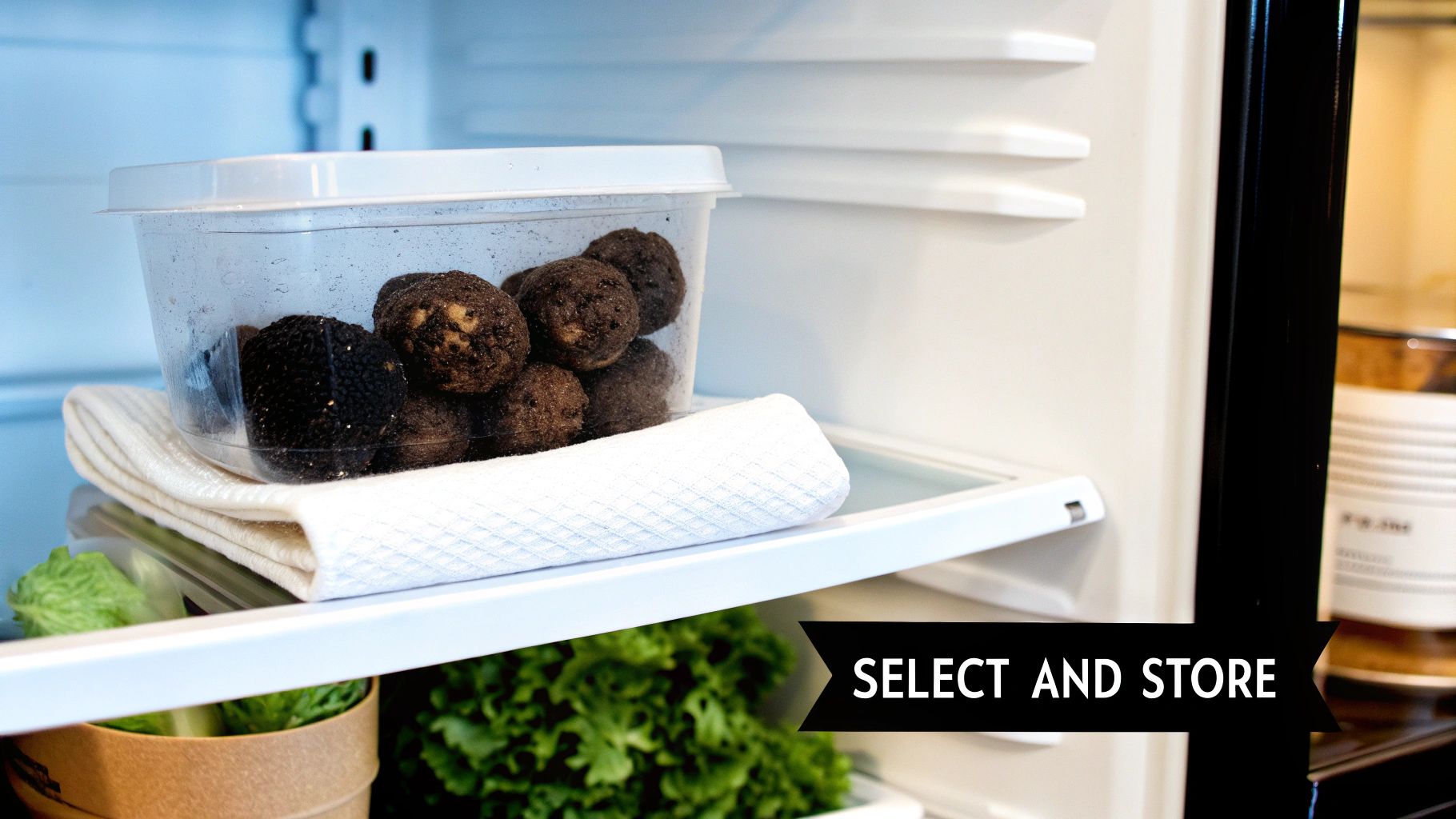
For Fresh Truffles:Gently brush off any excess dirt, but don't wash them with water until right before you use them. Wrap each truffle individually in a clean paper towel to absorb any moisture, then place them in an airtight glass jar in the fridge. The key is to change the paper towel every single day to keep them dry. For the best, most powerful flavor, use fresh truffles within 5-7 days.
For Truffle Products:Infused products have a much longer shelf life, but they still need a little care. Always store oils, pastes, and salts in a cool, dark place away from sunlight, like a pantry. Heat and light are the enemies of that delicate truffle aroma and will cause it to fade quickly. Once opened, make sure you seal the container tightly after every use to keep its character potent and fresh.
Gifting and Entertaining with Truffles in Dubai
In the UAE, hospitality isn't just a tradition; it's a heartfelt expression of respect and generosity. When you give a gift or host a dinner, you’re sharing a piece of yourself. For those moments that demand something truly exceptional, truffles offer a level of sophistication that feels right at home in Dubai's culture of premium experiences.
Think of truffles as the ultimate language of culinary luxury. For hosts and gift-givers, they're a way to make a powerful, memorable statement. It shows you have impeccable taste and a real desire to offer the very best, turning a simple meal into an event and a nice present into a treasured memory.
The Ultimate Expression of Culinary Luxury
For major celebrations like Ramadan, Diwali, or important corporate milestones, a standard gift just doesn't cut it. This is where a curated truffle-filled hamper from IFM Gourmet Dubai makes a real impact. These aren't just collections of food; they're thoughtfully assembled experiences.
Imagine presenting a stunning hamper that includes:
A bottle of premium white truffle-infused extra virgin olive oil to finish dishes with a flourish.
A jar of rich black truffle sauce, ready to transform pasta or risotto in an instant.
Delicate truffle salt to add an earthy, savory kick to steaks or morning eggs.
A decadent pot of truffle honey, the perfect partner for a platter of fine cheeses.
A gift like this says so much more than words. It communicates quality, authenticity, and thoughtfulness, making it the perfect gesture for impressing valued clients or honoring loved ones during the festive season.
Effortless Elegance for Entertaining
When you have guests over, you want to create an atmosphere that feels both luxurious and genuinely welcoming. Truffle products are your secret weapon for achieving this with ease. You can craft incredible dishes without spending all day in the kitchen—the key is to let the magnificent flavour of the truffle do all the work.
Truffles don’t need complex recipes to shine. Their power lies in their ability to elevate the simplest ingredients. A touch of truffle turns a familiar dish into an extraordinary culinary moment, making your guests feel truly special.
Start the evening with appetizers that are simple but unforgettable. A creamy burrata drizzled with black truffle oil and a sprinkle of sea salt is a guaranteed showstopper. For the main course, a basic risotto or a plate of fresh pasta tossed in butter becomes a gourmet masterpiece with just a few shavings of fresh truffle or a spoonful of truffle sauce.
Even a casual get-together feels elevated when you serve something like a gourmet pizza finished with truffle oil, as shown in this guide to crafting the perfect truffle pizza.
By bringing these exquisite flavours to your table, you're not just serving food. You’re creating a sophisticated and memorable dining experience that reflects the warmth and generosity at the heart of Dubai’s vibrant culture.
Your Top Truffle Questions, Answered
As you start exploring the world of truffles, a few questions always seem to pop up. To help you feel more confident in the kitchen, we've put together answers to some of the most common queries from food lovers and home chefs right here in Dubai. These insights will clear up any confusion and hopefully get you excited to experiment.
Real vs. Synthetic Truffle Oil
This is probably the biggest question out there. What's the real story with truffle oil?
Authentic truffle oil is a beautiful thing. It’s made by gently infusing a high-quality olive oil with actual, real pieces of truffle. This slow process captures the true, complex, and earthy aroma of the truffle itself. Synthetic oil, on the other hand, is made with a lab-created chemical compound designed to mimic that famous scent. The result is often an aggressive, one-note flavor that completely misses the elegant depth of the real deal.
Here at IFM Gourmet Dubai, we're all about authenticity. We make sure our products deliver the genuine, sophisticated flavor that only real truffles can provide. As the luxury online arm of IFM Investments LLC and part of the Italian Food Masters group, our gourmet store is known for quality and culinary elegance in Dubai's gourmet scene.
Can You Cook Fresh Truffles?
Another great question. The answer really depends on which kind of truffle you’re holding.
White Truffles: Think of these as incredibly delicate. Heat is their enemy—it completely destroys their precious aroma. They should never be cooked. Instead, thinly shave them over a finished, warm dish like pasta, eggs, or risotto right before serving to release their incredible perfume.
Black Truffles: These are much more robust. In fact, a bit of gentle heat actually helps to bring out their deep, earthy flavor. They’re perfect for infusing sauces, mixing into butter, or even tucking under the skin of a chicken before you roast it.
If your dish needs a longer cooking time, a high-quality truffle paste or sauce is a great way to get a more consistent and reliable flavor.
So, Why Are They So Expensive?
It all comes down to two things: they are incredibly rare, and they are incredibly difficult to find.
Truffles aren't something you can just farm like other crops. They grow wild, forming a special relationship with the roots of certain trees in very specific types of soil and climate. On top of that, they grow completely underground, so they have to be hunted by specially trained dogs with a keen sense of smell.
This combination of a short, unpredictable growing season and huge global demand from chefs and foodies makes them one of the most prized ingredients in the world.
The best way to enjoy truffles is to let them be the star. Pair them with simple, fairly neutral foods that won’t overpower their unique flavor. Classics like pasta, risotto, eggs, and potatoes are perfect partners, and fats like butter and cheese are fantastic carriers for their amazing aroma.
Now that you have these key points down, you’re ready to choose, use, and enjoy truffles like a true connoisseur.
Ready to explore the world of authentic truffle flavors? Discover the curated selection of premium truffle oils, salts, and sauces at IFM Gourmet Dubai and elevate your home cooking in Dubai today. https://www.ifmgourmet.com


Comments