
Your Guide to Arabic Coffee Beans Flavors and Traditions
When you dive into the world of coffee here in Dubai, you'll quickly come across two terms that sound almost the same but mean very different things: Arabic coffee and Arabica beans.
It’s a common point of confusion, but the distinction is simple once you see it. Think of it this way: Italian cuisine has "pasta" (the final, delicious dish) and "durum wheat" (the essential grain used to make it). The relationship is just like that.
Arabic coffee, or Qahwa as it’s known locally, is the finished drink—a cherished tradition and a symbol of hospitality. It's defined by its unique preparation, light roast, beautiful golden colour, and fragrant spices like cardamom.
On the other hand, Arabica is the type of coffee bean itself, the raw ingredient. It’s the most popular and celebrated coffee species in the world, making up over 60% of global coffee production, loved for its smooth, aromatic, and complex flavours.
Arabic Coffee vs Arabica Beans: What's The Real Difference?
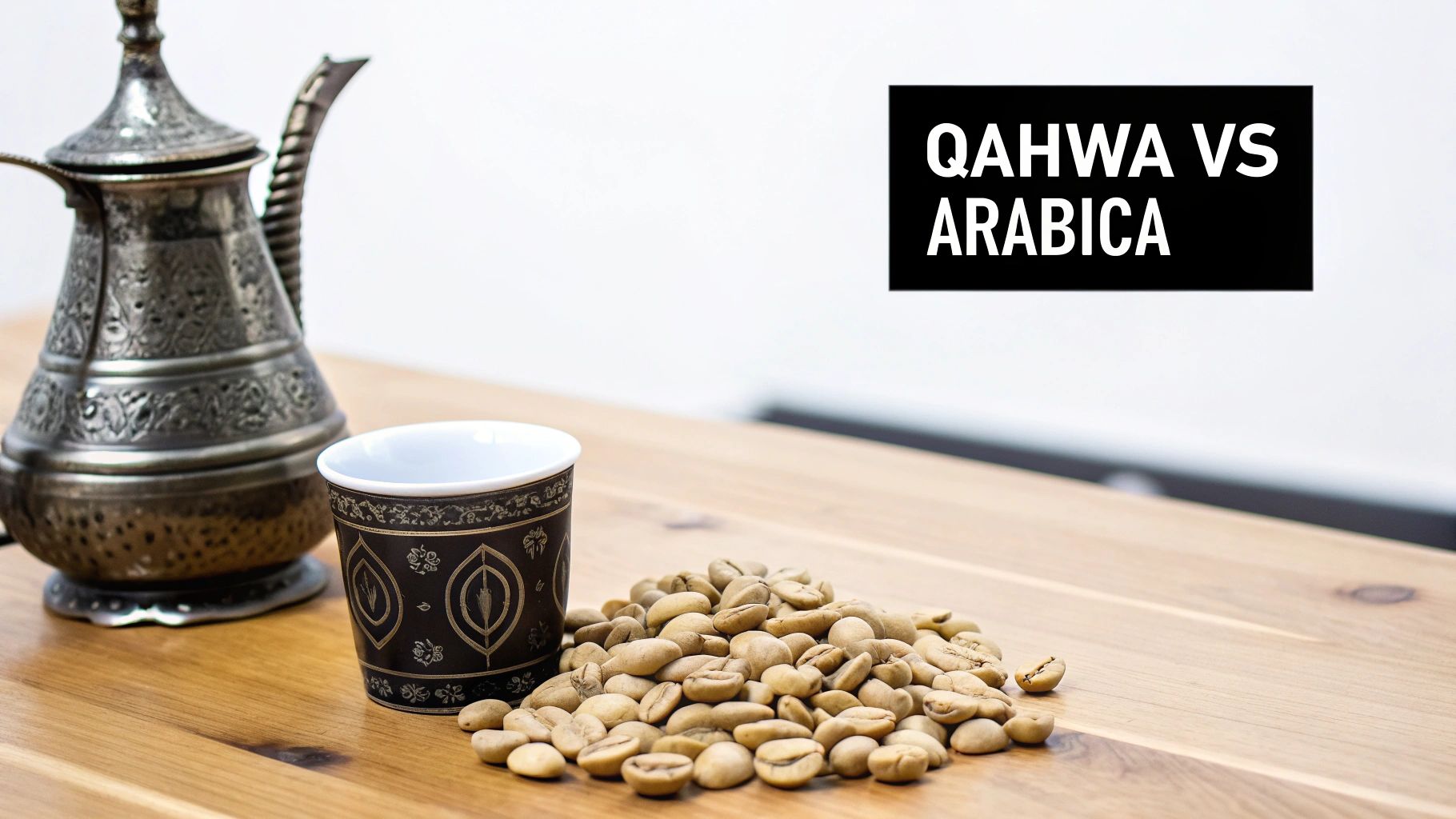
So, while authentic Qahwa is almost always made from Arabica beans, not all Arabica beans are destined to become Arabic coffee. One is the art, the other is the canvas.
To make it even clearer, here’s a quick breakdown to help you navigate your next coffee conversation like a pro.
Arabic Coffee vs Arabica Beans At a Glance
This simple table cuts right through the confusion, highlighting the key differences between the traditional beverage and the bean itself.
Attribute | Arabic Coffee (Qahwa) | Arabica Coffee Beans |
|---|---|---|
What It Is | A traditionally prepared beverage | A species of coffee bean |
Form | A brewed, liquid drink | Solid, unbrewed beans |
Typical Roast | Very light to light, sometimes greenish | Can be any roast level (light, medium, dark) |
Flavour Profile | Light, floral, often spiced with cardamom or saffron | Varies by origin; can be fruity, floral, chocolaty, nutty |
Cultural Role | A symbol of hospitality and tradition in the Middle East | A global commodity used in countless coffee preparations |
As you can see, one is a cultural experience steeped in tradition, while the other is the versatile starting point for countless coffee styles enjoyed worldwide.
The Heart of Dubai's Coffee Scene
This connection between Qahwa and high-quality Arabica is at the very core of the UAE’s incredible coffee culture. The Middle East's specialty coffee scene, valued at a staggering USD 1.2 billion, has been growing at 15% each year since 2020, cementing the UAE as a hub for premium beans.
Discerning coffee lovers are increasingly choosing whole bean Arabica, which is on track to claim 42.82% of the whole bean market by 2025. This isn't just a trend; it's a deep-seated desire for quality and authenticity, much like how Italian food lovers passionately seek out the finest ingredients for their kitchens. You can learn more about the rise of specialty coffee in the region to see just how big this movement has become.
This is exactly why we at IFM Gourmet Dubai have such a profound respect for the tradition of authentic Qahwa. As the luxury online gourmet arm of IFM Investments LLC, and part of the broader Italian Food Masters group, we are known for quality, authenticity, and culinary elegance. Just as true Italian cuisine depends on superior ingredients, an exceptional cup of Arabic coffee starts with the finest Arabica beans. Our gourmet store offers an impressive lineup of artisanal delicacies that perfectly complement this ethos, from sweets and fine chocolates to premium teas and beautifully curated gift hampers. It’s this shared passion for quality that beautifully connects these two vibrant culinary worlds.
Tracing the Origins of Arabic Coffee Culture
The incredible story of coffee doesn’t actually start in Arabia. Its roots trace back to the ancient highlands of Ethiopia, where a goat herder named Kaldi legendarily discovered its stimulating power after watching his goats become wildly energetic from eating the bright red berries of a mysterious bush.
That humble discovery was the first step in a journey that would take coffee around the entire world. From Ethiopia, the plant we know as Coffea Arabica journeyed across the Red Sea to Yemen during the 15th century. It was there, in the famous port city of Mocha, that the beans were first roasted and brewed into something resembling the coffee we enjoy today.
From Spiritual Brew to Social Ritual
In Yemen, Sufi monasteries embraced the rich, dark beverage, calling it qahwa. They found it was the perfect aid to stay alert during long nights of meditation and prayer.
But it didn't stay a secret for long. Soon, qahwa moved beyond the monastery walls and into the public sphere. Coffeehouses, known as qahveh khaneh, began popping up across the Arabian Peninsula, quickly becoming the heart of social life. They were bustling hubs where people from all walks of life gathered to share news, play chess, and enjoy music over a cup of freshly brewed coffee.
This shift from a spiritual drink to a social cornerstone was huge. Coffee became tangled up in the fabric of daily life, transforming from just a beverage into the very essence of community and connection.
The coffeehouse became the epicentre of social and intellectual life in the Arab world, a place where ideas were brewed alongside the beans themselves. This communal spirit is the foundation of the hospitality rituals that define Arabic coffee culture today.
This deep sense of community is something many cultures can relate to. It reminds me of the vibrant spirit of an Italian piazza, where food and drink aren't just for fuel—they're the threads that weave people together.
The Bedouin Influence and the Birth of a Ceremony
When coffee culture travelled into the desert with the Bedouin tribes, it gained an even deeper layer of meaning. For these nomadic people, hospitality wasn’t just a courtesy; it was a pillar of honour and survival. Offering coffee to a guest became the ultimate gesture of welcome and respect, wrapped in a beautiful and precise set of rituals.
The very act of preparing and serving arabic coffee beans evolved into a ceremony that showcased the host's generosity and skill.
Roasting the Beans: The host would roast green beans over an open fire, letting the rich, welcoming aroma fill the air.
Grinding with Rhythm: Using a brass mortar, the host would grind the roasted beans. The rhythmic pounding often served as an audible invitation to neighbours to come and join.
Brewing in the Dallah: The coarse grounds were then brewed in a traditional pot called a dallah, almost always with cardamom added for its signature fragrance and flavour.
Serving the coffee followed its own strict etiquette. The host poured a small amount into a tiny, handleless cup called a finjan and served guests in order of status, always starting with the most honoured. This intricate ceremony cemented qahwa's role as so much more than a drink—it became the language of Arabian hospitality, a tradition proudly alive in homes and majlises across the UAE today.
Decoding the Flavour of Arabic Coffee Beans
The true character of authentic Arabic coffee beans isn't just about where they're grown. It's found in the delicate art of roasting and the fragrant embrace of traditional spices. Unlike the dark, intense roasts you'll find in Italian espresso culture, authentic Arabic coffee celebrates a much lighter touch to preserve the bean's natural, nuanced flavours.
Think of it like the difference between a sun-dried tomato and one fresh off the vine. The sun-dried one is deep and concentrated, while the fresh tomato is bright, delicate, and subtly sweet. The light roast for Arabic coffee is just like that fresh tomato—it highlights the bean's inherent qualities rather than overwhelming them with heat.
This gentle approach stops any bitter notes from developing, allowing the coffee’s more floral, fruity, and acidic characteristics to really shine. What you get is a brew that's refreshingly light with a clean, elegant finish.
The Signature Spices of Qahwa
What truly makes Arabic coffee iconic is its aromatic infusion of spices. These aren't just an afterthought; they're woven into the very fabric of the flavour profile, creating the taste of Qahwa that has been cherished for centuries. The goal is to create a perfect harmony where the coffee and spices dance together.
The most essential spice is cardamom. It lends a fragrant, slightly sweet aroma that's instantly recognisable. Saffron is often added for its luxurious golden colour and subtle, earthy notes, while cloves can introduce a warm, woody sweetness to the blend.
Cardamom: The heart and soul of Arabic coffee, giving it that distinctive sweet and spicy aroma.
Saffron: Adds a beautiful golden hue and a delicate, hay-like fragrance.
Cloves: Offer a warm, pungent sweetness that adds a new layer of complexity.
Rosewater (less common): Sometimes a final floral splash is added at the end of brewing.
This careful balancing act transforms a simple beverage into a full sensory experience. If you're drawn to the rich aromas of coffee, you might also be interested in the world of coffee scented perfume, where these captivating scents find new life.
From Light Roasts to Golden Brews
Understanding the roast level is the secret to appreciating what makes Arabic coffee so special. The beans are roasted just enough to dry them out and release their aromatic oils, but never so much that they turn dark and lose their delicate notes. This creates a spectrum of light roasts, each with its own unique personality.
Here in the UAE, the preference for lighter, more aromatic profiles is clear. The local coffee market has become a powerhouse, valued at over USD 3.2 billion as of early 2025, with specialty coffee leading the way. This incredible growth is driven by a demand for premium Arabica beans that suit the sophisticated palates of gourmands across Dubai, including lovers of fine Italian cuisine. In fact, Arabica beans dominate the regional market with a 69.62% share, as Gulf coffee drinkers prefer its smooth, less bitter taste over Robusta.
This table breaks down how the different roast levels and spices come together to create the final brew you'll enjoy.
Arabic Coffee Roast Levels and Flavour Notes
The journey from a pale bean to a rich, dark one dramatically changes the final taste in your cup. Here’s a quick guide to understanding the most common roast levels for Arabic coffee.
Roast Level | Bean Colour | Common Flavour Profile | Typical Spices Added |
|---|---|---|---|
Light "Saudi" Roast | Pale, yellowish-beige | Bright, floral, high acidity, tea-like | Saffron, cloves, cardamom |
Medium-Light "Gulf" Roast | Light golden brown | Balanced, slightly nutty, mild sweetness | Primarily cardamom |
Dark "Turkish" Roast | Dark brown (not oily) | Bolder, more body, notes of caramel | Cardamom (optional) |
As you can see, the roast is just the beginning. The spices add the final, signature touch that defines each regional style.
The lighter the roast, the more the coffee retains its original terroir—the unique flavours of the soil and climate where it was grown. This is why origin plays such a crucial role in selecting the best arabic coffee beans.
A bean from Yemen, for example, might offer notes of wine and dried fruit, while one from Ethiopia could be far more floral and citrusy. By choosing a light roast, you’re choosing to taste the story of the bean's journey from the farm to your cup. It’s this focus on origin and subtle flavour that resonates deeply with us at IFM Gourmet Dubai, where every single ingredient is chosen for its authenticity and exceptional quality.
How to Brew Traditional Arabic Coffee at Home
Bringing the authentic Qahwa experience into your kitchen is more than just making coffee—it's a rewarding ritual. It fills your home with incredible aromas and the warm spirit of Arabian hospitality. Thankfully, brewing traditional Arabic coffee is simpler than it seems, as long as you focus on fresh ingredients and a gentle, patient process. The key is to honour the steps passed down through generations.
The journey from bean to cup is a simple, elegant flow. This visual guide shows how the bean's origin, a signature light roast, and fragrant spices all come together to create that unique, unforgettable flavour.
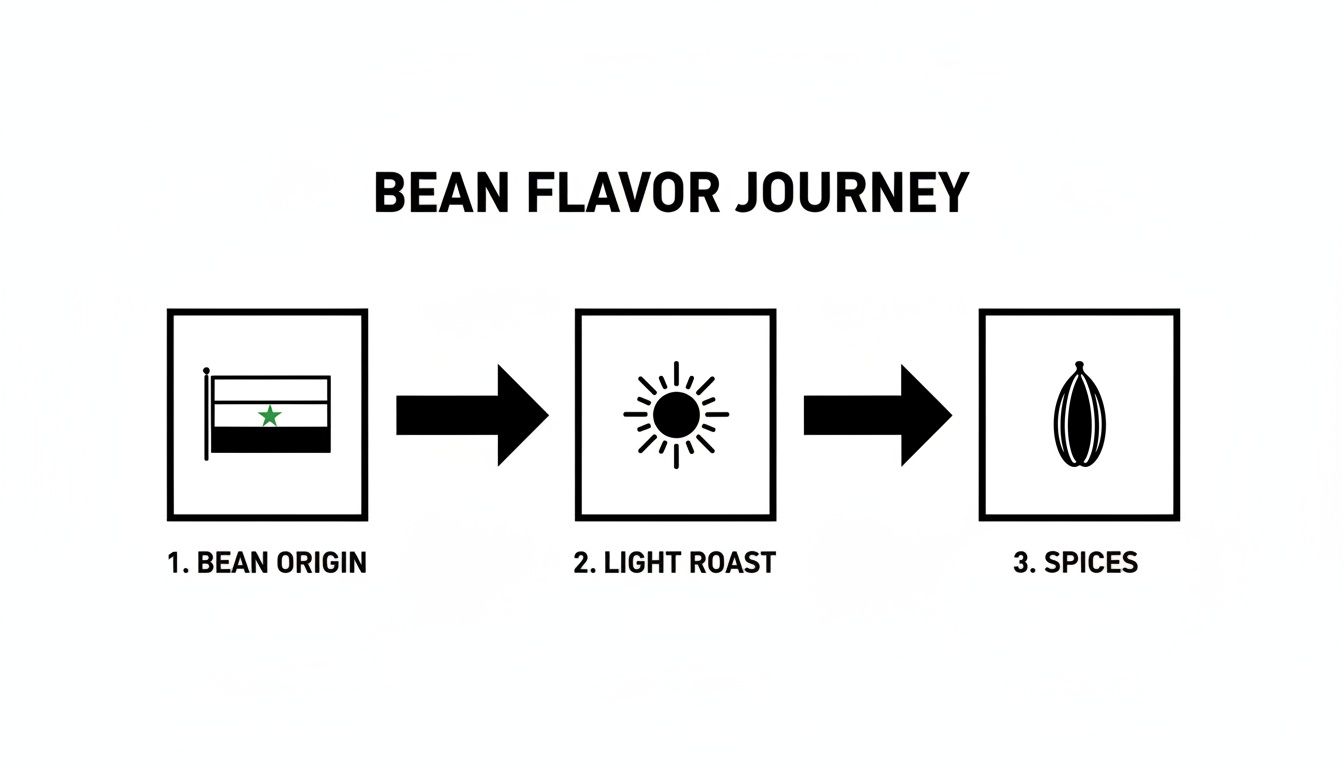
As you can see, the final taste is a delicate balance. It's part the bean's natural character and part the aromatic spices you add during brewing. Now, let’s walk through how to bring this beautiful tradition to life in your own home.
Gathering Your Essential Tools and Ingredients
Before you start, you’ll need a few key items. The star of the show is the dallah, the traditional long-spouted Arabic coffee pot designed for both brewing and elegant serving. You'll also want small, handleless cups known as finjan for the authentic serving experience.
For the ingredients, always start with high-quality, lightly roasted arabic coffee beans. To get that authentic texture and flavour, the beans must be ground to a coarse consistency, almost like rough sand.
Here’s your checklist:
Water: Good-quality, filtered water is a must for a clean taste. For those who appreciate the finer details, you can learn more about how premium water enhances beverages and truly elevate your brew.
Coffee: Coarsely ground, light-roast Arabica beans.
Cardamom: Whole green pods, which you'll crush lightly just before using to release their fragrant oils.
The Step-by-Step Brewing Process
Mastering the art of brewing Qahwa is all about patience and observation. This isn't a quick espresso pull; it's a slow, gentle simmer that coaxes the most delicate flavours from the coffee grounds.
Follow these steps for a perfect brew every single time.
Boil the Water: Fill your dallah with three cups of cold, filtered water. Bring it to a rolling boil over a medium heat.
Add the Coffee: As soon as it boils, take the dallah off the heat. Let it sit for about 30 seconds. This lets the water cool just enough to avoid burning the coffee. Now, add three tablespoons of your coarse coffee grounds.
The First Simmer: Put the dallah back on the stove, but turn the heat down to the lowest possible setting. Let it simmer very gently for 10-12 minutes. It’s crucial not to let it boil again—this will make the coffee bitter. You’ll see a thin foam, called wajh (face), form on the surface. That’s the sign of a great brew!
Add Spices and Rest: Take the dallah off the heat one more time. Add one tablespoon of lightly crushed cardamom pods. If you like, a pinch of saffron here adds a beautiful colour and aroma. Now, let the coffee rest off the heat for five minutes.
This resting period is essential. It allows the rich flavours of the spices to fully infuse into the brew and gives the coarse grounds time to settle at the bottom. This little trick ensures your pour is perfectly clear.
Serving with Grace and Tradition
The final step—the serving ritual—is just as important as the brewing. Arabic coffee is a gesture of welcome, and how it’s presented reflects a host's generosity and respect for their guests.
To serve, hold the dallah in your left hand and the stack of finjan cups in your right. Pour just a small amount of coffee, filling each cup about a quarter full. Always serve your guests starting with the most honoured or eldest.
When a guest has had enough, they simply signal this by gently shaking their empty cup from side to side as they hand it back. It’s a beautiful tradition that turns a simple cup of coffee into a memorable, shared experience.
Pairing Coffee and Crafting the Perfect Gourmet Gift
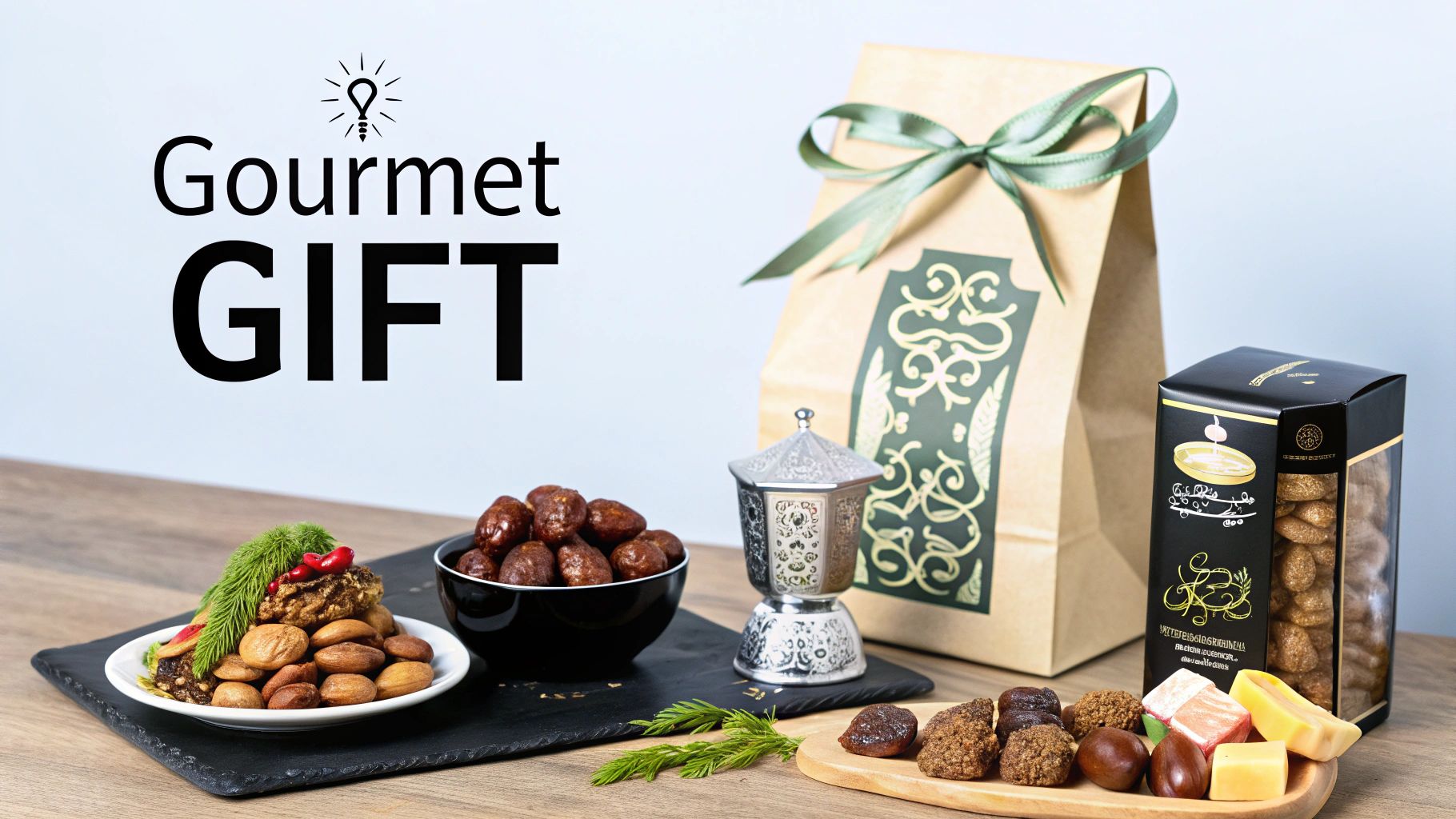
The ritual of serving Arabic coffee is about so much more than just the drink. It’s a chance to create a full sensory experience. The light, aromatic, and spiced character of Qahwa makes it a beautiful canvas for a whole world of flavours—from timeless classics to the exciting fusions that define Dubai’s vibrant food scene.
Getting these pairings right is the secret to taking your hospitality to the next level. It’s how you turn a simple cup of coffee into something truly memorable, creating a perfect harmony between your arabic coffee beans and the treats you serve alongside them.
Traditional Pairings Rooted in Heritage
For centuries, the most treasured companion to Arabic coffee has been the humble date. It’s a classic for a reason. The natural, caramel-like sweetness of a good date offers the perfect counterpoint to the coffee's subtle bitterness and fragrant cardamom spice. This isn't just a flavour pairing; it's a deep-seated cultural tradition that says "welcome."
Of course, dates aren't the only friends of Qahwa.
Assorted Nuts: Think lightly roasted, unsalted almonds, pistachios, and walnuts. They add a satisfying crunch and an earthy flavour that grounds the coffee’s more floral notes.
Dried Fruits: Apricots and figs bring a gentle, chewy sweetness that complements the brew without ever stealing the spotlight.
These simple, elegant pairings really honour the authentic spirit of Qahwa, letting the coffee’s own character shine.
A Fusion of Italian Elegance and Arabian Tradition
Here in Dubai, culinary worlds don't just meet—they create something new and wonderful together. Pairing Arabic coffee with artisanal Italian delicacies is one of those sophisticated experiences we love. At IFM Gourmet Dubai, we celebrate this exact fusion, finding that the delicate craftsmanship of Italian sweets beautifully elevates the traditional coffee ritual.
Just imagine serving your fragrant Qahwa with delicate Italian nougats or a selection of fine chocolates. The creamy textures and rich cocoa notes provide a luxurious contrast to the coffee's light body. It's this blend of local tradition and European elegance that really defines modern gourmet culture in the UAE.
Creating a memorable pairing is about balance. The goal is not to overpower the delicate Qahwa, but to introduce complementary textures and flavours that elevate the entire experience for your guests.
For a truly unique twist, why not serve your coffee with some of our other gourmet treats? For example, the simple, buttery goodness of our premium waffles and crêpes offers a fantastic textural contrast.
Crafting the Ultimate Gourmet Gift Hamper
A beautifully put-together gift hamper is one of the most thoughtful ways to share the authentic Arabic coffee experience. It’s a perfect gift for special occasions like Ramadan, Eid, or as a distinguished corporate gesture. The secret is to assemble a collection that tells a story of quality and taste.
You'll want to start with a foundation of premium, lightly roasted arabic coffee beans. From there, you can build out with complementary gourmet items right from our collection at IFM Gourmet.
The Classic Arabian: Combine the beans with an assortment of premium dates, roasted nuts, and maybe even a small, elegant dallah pot.
The Italian Fusion: Pair the coffee with artisanal Italian chocolates, soft nougats, and perhaps a small panettone for a festive touch.
The Ultimate Connoisseur: Create a truly luxurious hamper featuring the coffee, gourmet chocolates, a selection of fine teas, and our premium truffle-infused honey.
For gift shoppers at IFM, curating hampers with these UAE-sourced Arabica beans alongside panettone for Ramadan or Christmas adds that luxurious, local-global fusion touch that foodies in the UAE crave. And if you're really looking to impress a coffee aficionado, exploring some unique coffee lover gifts can give you brilliant inspiration for your next hamper.
Your Arabic Coffee Questions, Answered
As you get more familiar with this wonderful tradition, a few questions naturally pop up. To help you on your coffee journey, here are some straightforward answers to the things people most often ask about authentic arabic coffee beans and how to brew them. Think of these as quick, practical tips to clear up any confusion.
Can I Use Arabic Coffee Beans in a French Press or Espresso Machine?
You can, but you probably won't like the result. It will be worlds away from a traditional Qahwa. Arabic coffee beans are roasted very lightly on purpose. The goal is to create a delicate, almost tea-like drink that isn’t bitter, which is best achieved by simmering it slowly in a dallah.
If you put these beans through a high-pressure espresso machine or let them sit in a French press, you’ll likely get a cup that tastes weak, maybe even a bit sour, and lacks the deep body you'd expect from a darker roast. To really appreciate what these beans have to offer, sticking to the traditional dallah method is the way to go.
How Should I Store My Arabic Coffee Beans?
Freshness is everything, especially with these delicate beans. To keep those beautiful aromas intact, you need to protect your coffee from its four biggest enemies: air, moisture, heat, and light.
The best way to store your arabic coffee beans is in an opaque, airtight container. Keep it somewhere cool and dark, like a kitchen pantry or a cupboard. Try to avoid the fridge or freezer—condensation can form, which is a sure-fire way to ruin the beans' flavour.
For the freshest possible taste, always buy whole beans. Grind them right before you plan to brew. This one simple step makes a huge difference you can taste in every cup.
Is Arabic Coffee Stronger Than Regular Coffee?
That really depends on what you mean by "strong."
If you’re talking about caffeine, then the answer is usually no. Because Qahwa is made with 100% Arabica beans and isn't brewed under pressure, a small finjan cup will typically have less caffeine than your average cup of drip coffee or an espresso shot.
But if "strong" means flavour, then absolutely! Arabic coffee has a very powerful and unique taste, thanks to the spices like cardamom and saffron. It’s a different kind of strength—more aromatic and fragrant than bold and bitter. Don't let the light roast and golden colour fool you; the flavour is anything but weak.
Ready to explore a world of authentic flavours? Discover the finest gourmet ingredients, from premium coffee to artisanal Italian delicacies, at IFM Gourmet Dubai. Let us help you create unforgettable food moments. Visit our online store today.


Comments