Your Guide to The Best organic organic olive oil in Dubai
When you see the words organic olive oil on a bottle, it means so much more than a marketing term. It’s a promise—a guarantee that the olives inside were grown without any synthetic pesticides or fertilizers. The entire journey, from the soil to the bottle, is guided by strict, nature-first principles to give you a purer, more authentic oil.
What Makes Organic Olive Oil Different?
In the world of gourmet food, 'organic' isn't just a label. It’s a commitment to purity, environmental harmony, and, ultimately, superior quality. For an ingredient as essential as olive oil, this distinction truly matters. Think of an organic olive grove as a complete, self-sustaining ecosystem where nature is trusted to do what it does best: produce incredible fruit.
This is a world away from conventional farming, where synthetic chemicals might be used to increase yields or fight off pests. Organic farming turns to nature's own toolkit instead. This means using rich compost to feed the soil and even encouraging helpful insects to act as a natural pest control. The entire focus is on building healthier soil, which in turn grows healthier trees and produces olives bursting with flavor.
The Core Principles of Organic Production
So, what really sets organic olive oil apart? It all comes down to a few core principles that guide its path from the grove to your table. These aren't just casual guidelines; they're strict rules verified by official certifying bodies, so you know you're getting the real deal.
No Synthetic Chemicals: This is the heart and soul of organic farming. No synthetic pesticides, herbicides, or fertilizers ever touch the groves. This not only protects the soil and local wildlife but also ensures no unwanted chemical residues end up in your oil.
A Focus on Soil Health: Organic farmers are dedicated to building and maintaining healthy soil through natural methods like cover cropping and composting. Soil that's teeming with microorganisms creates stronger trees that are naturally better at fending off diseases.
GMO-Free: Genetically modified organisms are strictly forbidden in anything labeled organic. This ensures the olives are exactly as nature intended, preserving their traditional character and authentic taste.
The 'organic' label is your foundational guarantee. While it doesn't automatically mean the oil is the best-tasting one on the shelf, a truly great olive oil should never contain chemical residues. Think of the organic certification as the essential starting point for exceptional quality.
Your Trusted Source for Authenticity
For food lovers in Dubai, finding authentic, high-quality products can feel like a quest. This is where a trusted curator like IFM Gourmet Dubai makes all the difference. As the luxury online gourmet arm of IFM Investments LLC, their name is synonymous with culinary elegance and authenticity in Dubai's gourmet scene. They do the hard work for you by carefully selecting artisanal delicacies, including premium organic olive oils, and ensuring every bottle on their shelf meets the highest standards. Their expertise brings the pure taste of an organic grove right to your kitchen.
The Journey from Organic Grove to Gourmet Bottle
Every bottle of authentic organic olive oil tells a story that starts long before it ever touches a gourmet shelf. This is a journey defined by a deep respect for nature and an absolute commitment to purity. It's a careful, patient process that stands in stark contrast to conventional methods, where speed and volume often win out over quality.
It all begins in certified organic olive groves, where the soil itself is treated like a living, breathing partner. Instead of synthetic fertilizers, farmers feed the earth with natural compost and cover crops, creating a vibrant ecosystem. This rich soil grows stronger, more resilient trees that can naturally fight off pests, helped along by beneficial insects instead of chemical sprays.
From Careful Harvest to Gentle Pressing
The harvest is a make-or-break moment, and timing is everything. Organic olives are usually hand-picked to prevent any bruising, which can kick off oxidation and ruin the oil’s final flavor. You won't see the aggressive mechanical shakers used in mass-market operations here; this gentle handling protects the fruit’s integrity, making sure only the very best olives move on to the press.
This is where the term 'first cold press' really comes into play.
First Press: This simply means the olives are crushed only one time. While re-pressing the olive paste could get more oil out, the quality would drop dramatically.
Cold Press: The temperature during the entire extraction process is kept below 27°C. Using this gentle, purely mechanical method protects the oil's delicate flavors and preserves the high concentration of healthy polyphenols and nutrients that heat would otherwise destroy.
Conventional producers might use high heat or even chemical solvents to squeeze out every last drop of oil, but that completely compromises the taste and health benefits. Organic standards flat-out forbid these practices. The result is a final product that is just as pure and potent as the fruit it came from.

As you can see, superior organic oil is a direct result of starting with healthy, naturally cultivated soil and pure, unblemished olives.
Ensuring Purity from Press to Pantry
After pressing, the journey isn’t over. The freshly-made organic olive oil is handled with extreme care to maintain its pristine quality. It’s stored in stainless steel tanks to protect it from its three main enemies: light, oxygen, and heat. This step is absolutely crucial for preventing rancidity and locking in that fresh, vibrant character.
The entire organic philosophy is built on prevention. By focusing on healthy soil and gentle handling from the start, producers eliminate the need for the chemical quick-fixes common in conventional farming. The result is a cleaner, more flavorful oil.
Finally, the oil is bottled, almost always in dark glass to continue protecting it from light degradation as it makes its way to your kitchen. The commitment to organic principles often goes beyond the oil itself, with producers seeking out sustainable packaging solutions that match their eco-conscious philosophy. From the grove to the bottle, every single decision is made with one goal in mind: to deliver an uncompromised, authentic, and truly exceptional organic olive oil.
How to Read Olive Oil Labels Like an Expert
Stepping into the world of gourmet oils can feel a little overwhelming, especially with shelves full of beautiful bottles all vying for your attention. But the label on a bottle of organic olive oil is your roadmap to quality. It tells a detailed story about what's inside, and once you know the language, you can shop with total confidence.
Learning to decode this information is the key to making sure you always bring home the very best.
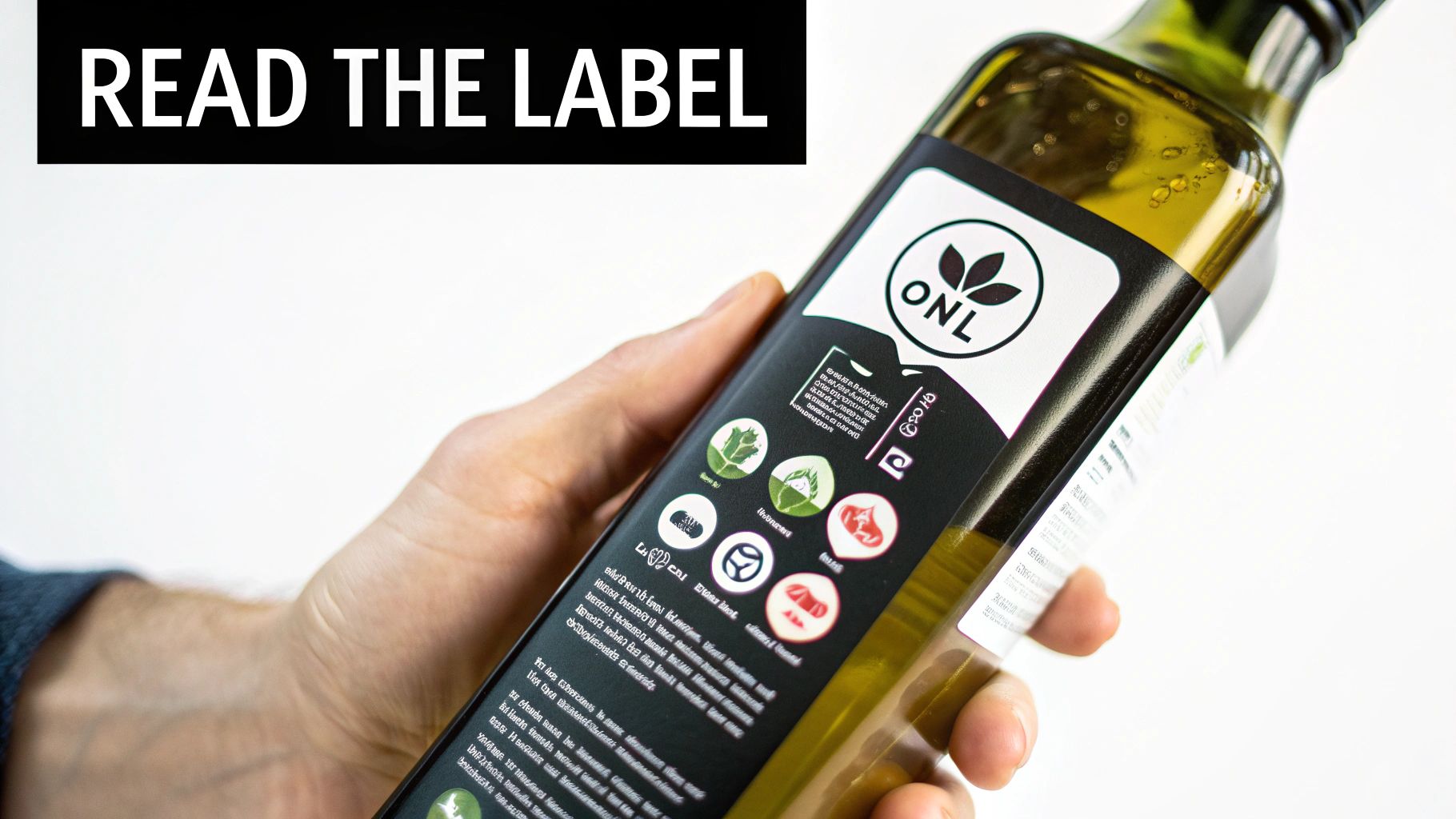
You'll see a lot of terms thrown around, but a few are absolutely critical. Understanding them is the first step to telling a truly premium product apart from a standard one. These are the non-negotiable markers of quality.
Decoding Key Quality Terms
When you pick up a bottle, certain phrases should jump out at you. They aren't just marketing fluff; they represent specific production standards that have a direct impact on the oil's flavor, aroma, and nutritional punch.
Extra Virgin Olive Oil (EVOO): This is the top of the pyramid, the highest grade you can get. It’s an unrefined oil made using only mechanical methods—no chemicals, no high heat. To earn the "extra virgin" title, an oil must pass rigorous chemical tests and a sensory tasting panel to prove it has zero defects and a genuine fruity character.
Cold-Pressed or Cold-Extracted: This term guarantees the temperature during the extraction process never went above a cool 27°C. This gentle handling is crucial. It preserves the delicate flavors and the powerful, healthy antioxidants (polyphenols) that are so easily destroyed by heat.
Unfiltered: Sometimes you'll see this called 'olio nuovo' (new oil). It simply means the oil hasn't been passed through a filter after pressing. The result is a slightly cloudy appearance because tiny bits of olive fruit are still suspended in the oil, often giving it a more intense, peppery flavor.
When you see these terms together, you're looking at an oil that is pure, carefully crafted, and bursting with authentic olive taste.
The Importance of Organic Certification
For anyone looking for the purest organic olive oil, the certification logo is your most reliable guarantee. These symbols are proof that the oil has met incredibly strict standards from the grove all the way to the bottle, assuring you it’s completely free from synthetic pesticides and chemicals.
In the UAE, one of the most common and trusted certifications on European oils is the EU's 'Euro-leaf' logo. That little green leaf made of stars is a powerful symbol of authenticity, confirming the oil follows strict organic farming and production rules.
When you spot that logo, you know the product's origin is verified and its organic claims are legitimate. It’s a vital visual shortcut for any discerning shopper.
Comparing Olive Oil Quality Tiers
The difference between grades of olive oil isn't just a small detail—it's enormous. A side-by-side comparison makes it crystal clear why organic extra virgin olive oil is in a class of its own, offering a world of flavor and health benefits that other types just can't touch.
Here's a quick breakdown to help you see the difference.
Comparing Olive Oil Quality Tiers
Attribute | Organic Extra Virgin Olive Oil | Extra Virgin Olive Oil | Virgin Olive Oil | Refined 'Pure' or 'Light' Olive Oil |
|---|---|---|---|---|
Farming Method | Certified organic; no synthetic chemicals | Conventional; may use pesticides | Conventional; may use pesticides | Sourced from conventional groves |
Extraction Process | Mechanical, cold-pressed (<27°C) | Mechanical, cold-pressed (<27°C) | Mechanical pressing, no chemicals | Refined with heat and chemicals |
Acidity Level | Extremely low (typically <0.8%) | Low (must be <0.8%) | Slightly higher (up to 2%) | Chemically neutralised |
Flavour Profile | Complex, fruity, peppery, no defects | Fruity, no flavour defects | Mild flavour, may have slight defects | Bland, neutral, very little flavour |
Health Benefits | Highest levels of polyphenols | High levels of polyphenols | Lower polyphenol content | Very few beneficial compounds remain |
As you can see, the path from a conventionally-farmed, refined oil to a certified organic EVOO involves a huge leap in both process and final quality.
Actionable Tips for Verifying Quality
Beyond those main terms, a couple of extra details on the label can give you crucial clues about how fresh and high-quality the oil really is.
Check the Harvest Date: This is your best friend for freshness. Olive oil is a fresh fruit juice; it doesn't get better with age. Always look for a date from the most recent harvest season to get the best flavor and benefits.
Look for Country of Origin: A specific region, estate, or country (like "Product of Italy") is a much better sign of quality than vague phrases like "Packed in the EU." It shows traceability and a producer's pride in where their olives came from.
With this simple checklist, you can navigate the olive oil aisle like a pro and choose a truly exceptional organic olive oil that will take your cooking to the next level.
Exploring the Health Benefits and Flavor Profiles
The real magic of a high-quality organic olive oil goes way beyond a certification sticker. It’s about the incredible flavor packed into every drop and the profound impact it has on our health. Unlike many conventional oils that can taste a bit flat, organic olive oil delivers a sensory experience that’s complex, vibrant, and a true reflection of the land it came from.
It all starts in the soil. Healthy, organically farmed earth gives the olive trees everything they need to produce exceptional fruit. This, in turn, leads to a more concentrated, expressive oil that you can really taste.
A Symphony of Flavors in Every Drop
A great organic olive oil is never just ‘oily’. It’s a full-on flavor experience that can completely elevate a dish. The final taste is a direct result of the olive variety, when it was harvested, and the care that went into pressing it.
Think of it like the difference between a simple table grape and a fine wine grape. One is good, but the other has been cultivated for an extraordinary depth of flavor. The same principle applies to olives destined for premium organic oil.
Here are some of the key tasting notes you’ll come across:
Fruity: This can be anything from the soft, ripe notes of apple and banana to the sharper, green taste of artichoke or freshly mown grass.
Peppery: That distinctive kick you feel at the back of your throat? That’s the good stuff. This peppery sensation is caused by oleocanthal, a powerful natural anti-inflammatory compound and a sure sign of a fresh, high-quality oil.
Bitter: Don't be afraid of bitterness! In the world of olive oil, it's a sign of excellence. This desirable trait points to a high concentration of healthy polyphenols, telling you the oil is fresh and loaded with antioxidants.
Buttery: Some of the more delicate oils, often from olives picked later in the season, have a wonderfully smooth, mild, and almost creamy feel.
Because no synthetic chemicals are used in organic farming, these authentic, nuanced flavors are able to shine through, pure and unadulterated.
The Powerful Health Advantages of Organic Olive Oil
Interestingly, the flavor of an organic olive oil is directly linked to its health benefits. Those peppery and bitter notes are your taste buds’ way of telling you the oil is packed with polyphenols. These are potent antioxidants and a cornerstone of the Mediterranean diet's famous health-giving properties.
Studies have shown that organic farming methods can lead to a significant increase in the polyphenol content of olive oil. This means you're not just getting better flavour; you're getting a more powerful boost of natural, health-promoting compounds with every drizzle.
These powerful antioxidants, along with the oil's high monounsaturated fat content (mostly oleic acid), are a dream team for your body. They help fight oxidative stress, reduce inflammation, and are strongly linked to better heart health. By choosing organic, you're ensuring you get the highest possible concentration of these amazing compounds.
Practical Culinary Pairings for Every Palate
Once you start understanding these flavor profiles, you can use organic olive oil as more than just a cooking fat—it becomes a key finishing ingredient. Just like you'd pick the right spice for a dish, you can choose the perfect olive oil to make the flavors pop.
Here are a few practical tips to get you started:
For Bold Dishes: A robust, peppery oil with grassy notes is the perfect match for grilled steaks, hearty bean soups, or drizzled over bitter greens like arugula. Its strong character holds its own and complements powerful flavors.
For Delicate Foods: A milder, buttery, or fruity oil works beautifully with more subtle dishes. Think baking, dressing a simple salad, or finishing grilled fish where you want richness without overwhelming the star of the show.
For Everyday Use: A well-balanced oil with a nice fruitiness and just a hint of pepper is a fantastic all-rounder. It's perfect for making vinaigrettes, sautéing vegetables, or creating a beautiful base for a flavorful pasta sauce. For some authentic Italian ideas, you can explore classic pasta recipes from IFM Gourmet's collection.

When you match the oil's profile to your food, you stop just cooking with oil and start seasoning with it. It’s a simple switch that can take your home cooking to a whole new level.
Finding Authentic Organic Olive Oil in the UAE
Here in the UAE, the demand for premium, health-conscious foods has absolutely soared. More than ever, discerning shoppers are on the hunt for authentic, high-quality ingredients, and organic olive oil is right at the top of that list. But with this popularity comes a crowded market, where the genuine treasures can be hard to spot among low-quality imitations.
This isn't just a feeling; the numbers back it up. Between 2020 and 2023, retail sales of imported extra virgin and organic olive oils into the GCC jumped by an estimated 12–18% each year. Walk through any major supermarket in Dubai or Abu Dhabi, and you'll see organic oils now take up 10–15% of the premium olive oil shelf space, often with a price tag to match.
With so many bottles vying for your attention, knowing how to spot a fake or just a poorly made oil is an essential skill. A few simple red flags can save you from disappointment and make sure you’re getting the real deal.
Red Flags to Watch For
When you're browsing the aisle, keep a sharp eye out for signs that an oil isn't what it claims to be. The most obvious giveaway? A suspiciously cheap price. Producing genuine organic olive oil is a meticulous, labor-intensive process. If the price seems too good to be true, it almost certainly is.
Beyond the price, the packaging and label tell a crucial story.
Clear Glass Bottles: Light is one of olive oil's biggest enemies, causing it to break down and go rancid. Any serious producer will use dark glass bottles or opaque tins to protect their oil. A clear bottle is a huge warning sign.
Vague Labelling: You want specifics. A quality oil will proudly display its country of origin, the harvest date, and the type of olives used. Vague phrases like "Packed in the EU" or "Product of Mediterranean Olives" are often used to hide less-than-prestigious origins.
Missing Certifications: If an oil says it's organic, it needs the paperwork to prove it. The lack of an official certification seal (like the EU 'Euro-leaf') is a dealbreaker. This is your only real guarantee that the oil has met strict organic farming and production standards.
These simple checks are your first line of defense, helping you quickly weed out the products that won't deliver the quality or flavor you're looking for.
The Role of a Specialty Curator
In a market where authenticity is everything, your best bet is often a specialty curator you can trust, like IFM Gourmet Dubai. As the luxury online gourmet arm of IFM Investments LLC, their reputation is built on quality, authenticity, and culinary elegance. They don’t just stock everything; they carefully hand-pick their entire collection of artisanal foods, from sweets and savories to premium oils, based on incredibly strict criteria.
A trusted gourmet store acts as your personal quality filter. Their reputation is built on sourcing authentic, exceptional products, saving you the guesswork and ensuring every item meets a high standard of excellence.
This curated approach means every bottle of organic olive oil they offer has already been vetted for its superior quality, transparent sourcing, and incredible flavor. By relying on experts who have done the hard work for you, you can shop with complete confidence, knowing you're investing in a genuine, top-tier product that will truly elevate your cooking.
For a deeper look into the world of fine ingredients, explore IFM Gourmet's curated categories.
Why Organic Olive Oil Makes a Perfect Gourmet Gift
In a place like Dubai, where gifting is a refined art form, a present is so much more than just an item. It's a message—a sign of respect, appreciation, and shared good taste. While extravagant gifts are part of the culture, something that is both elegant and truly thoughtful stands out. This is exactly where a premium bottle of organic olive oil comes in. It’s a sophisticated, healthy, and delicious choice that says you care.
Giving a bottle of high-quality organic olive oil shows a modern, genuine thoughtfulness. It moves beyond the usual, offering something both useful and special. For the foodies in your life, it’s an exciting invitation to explore new flavors. For your health-conscious friends, it's a perfect nod to their lifestyle.
Curating a Memorable Gourmet Experience
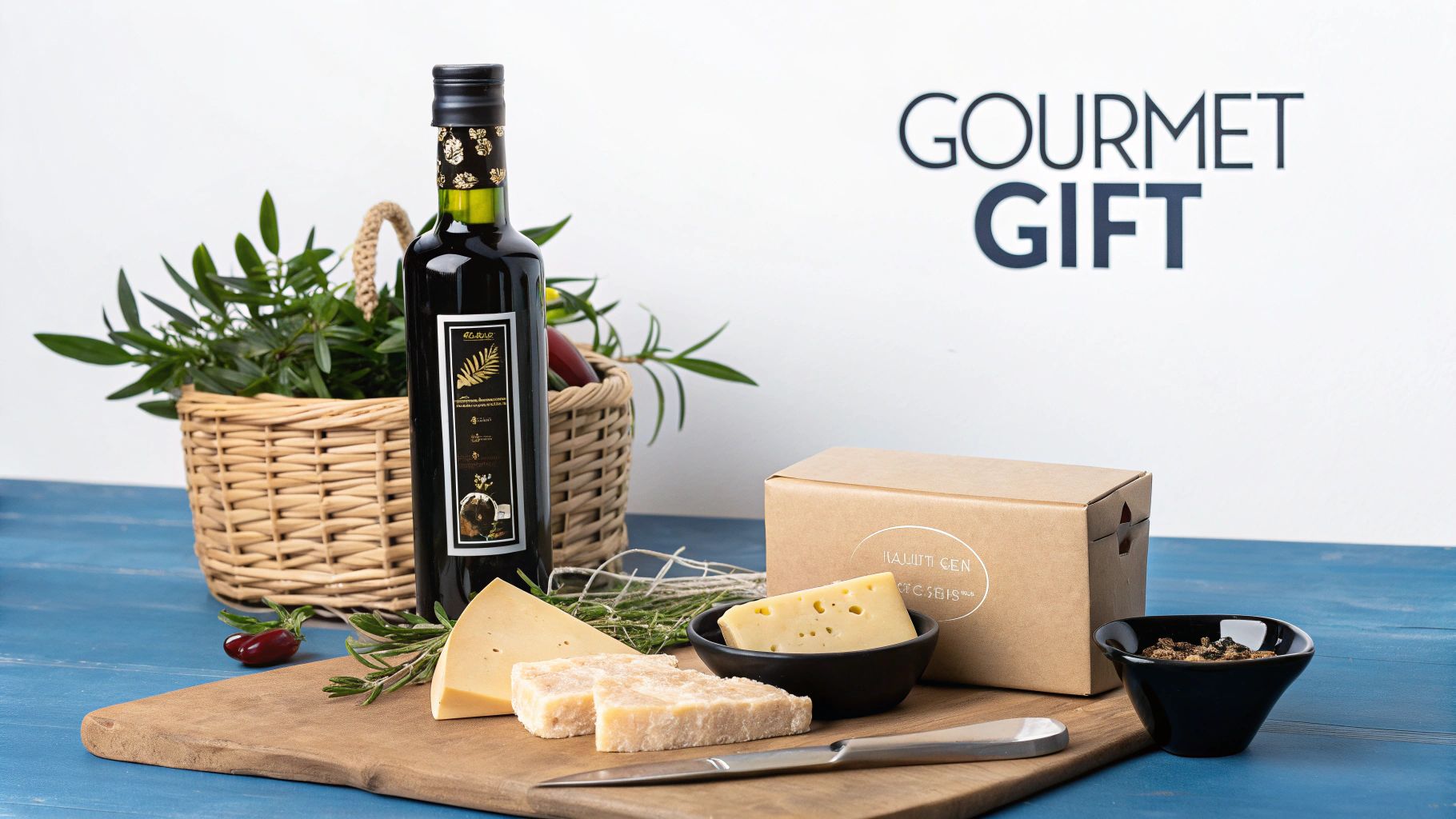
The real magic of a gift is in how it’s presented. A single bottle of incredible olive oil is a wonderful gesture, but pairing it with other artisanal products transforms it into a full-blown experience. It turns a simple ingredient into a sophisticated, unforgettable present, perfect for everything from corporate events to personal celebrations.
At IFM Gourmet Dubai, we live and breathe culinary elegance. As the luxury online gourmet arm of IFM Investments LLC, a culinary-focused company based in the UAE, we offer an impressive lineup of artisanal delicacies, including sweets, savories, fine chocolates, premium teas, cakes, and beautifully curated gift hampers. As part of the broader Italian Food Masters group, our name is known for quality, authenticity, and style in Dubai’s gourmet scene.
With our expertise, creating the perfect gift hamper is effortless. Imagine pairing a bold, peppery organic olive oil with other exquisite items to create a stunning themed collection.
A thoughtfully assembled gift tells a story. Pairing an oil with complementary flavors and textures shows a deep level of consideration that is always appreciated and remembered long after the occasion has passed.
Here are a few ideas to get you started:
The Italian Classic: Match a great olive oil with an aged balsamic vinegar from Modena, a wedge of authentic Parmigiano-Reggiano, and a bag of artisanal bronze-die pasta.
The Health-Conscious Hamper: Complement the oil with a selection of organic nuts, premium loose-leaf green tea, and a jar of pure, raw honey.
The Bread Dipper's Delight: Pair it with a fresh, crusty sourdough loaf, a mix of gourmet olives, and a blend of dried herbs like oregano and rosemary for dipping.
Understanding the rich history of gifting can deepen your appreciation for making such a thoughtful choice. When you select organic olive oil, you're not just giving a product—you're sharing an experience built on purity, exceptional flavor, and well-being.
Your Top Questions About Organic Olive Oil
Diving into the world of organic olive oil often sparks a few questions. To help you get the most from every drop, we’ve put together answers to the most common queries we hear from our fellow food lovers here in the UAE. Think of this as your quick-start guide to storing, using, and enjoying your oil like a seasoned pro.
This is your go-to reference for all the practical details, making sure you have all the information you need right at your fingertips.
How Should I Store My Organic Olive Oil to Keep It Fresh?
Proper storage is the number one thing you can do to protect your oil’s incredible flavor and health benefits. Olive oil has three main enemies: heat, light, and air. To keep it in perfect condition, always store your organic olive oil in a cool, dark place like a pantry or cupboard, well away from the stove.
Make sure the cap is screwed on tightly after every use. This keeps oxygen from getting in and degrading the oil. While it might seem like a good idea, we don’t recommend refrigerating it. Condensation can form inside the bottle, which harms the quality, and the oil will solidify, making it a hassle to pour when you need it.
Is Paying More for Organic Olive Oil Really Worth It?
Absolutely. That higher price tag on organic olive oil is a direct reflection of a more thoughtful, hands-on, and sustainable way of farming. It represents a serious commitment to avoiding synthetic pesticides and chemical fertilizers—which is better for you and for the planet.
This dedication to quality almost always translates into a superior, more complex flavor and a higher concentration of those amazing antioxidants called polyphenols. It's best to see it not just as another item in your shopping cart, but as an investment in exceptional taste and your own well-being.
Can I Use Organic Extra Virgin Olive Oil for Cooking?
Yes, and you absolutely should! This is one of the biggest myths out there. A high-quality organic extra virgin olive oil has a smoke point of around 190-207°C, making it a perfectly safe and wonderfully flavorful choice for most everyday cooking, including sautéing, roasting, and even baking.
While it's famous for that finishing drizzle, its rich character brings incredible depth to cooked dishes, too. For extremely high-heat methods like deep-frying, a more neutral oil might be a better fit, but for nearly everything else, it’s an excellent—and healthy—option.
What Does the Harvest Date on a Bottle Mean?
The harvest date is the single most important clue to an olive oil's freshness and quality. Unlike a fine wine, olive oil is basically a fresh fruit juice. It does not get better with age and is at its peak right after it's made.
This date tells you exactly when the olives were picked and pressed. When you're shopping, always look for the most recent harvest date you can find, ideally from within the last year. A "best by" date is helpful, but the harvest date gives you a much clearer, more honest picture of the oil's true freshness.
At IFM Gourmet Food Store, we believe that exceptional ingredients are the heart of every great meal. Explore our curated collection of authentic, premium organic olive oils and taste the difference that quality makes.


Comments