
A Guide to Organic Cider Vinegar
When you picture cider vinegar, you might think of the clear, amber liquid common in most supermarkets. But true organic cider vinegar is something entirely different. It’s a natural, tangy creation made from fermented organic apples, often cloudy and containing a curious, strand-like substance known as the 'mother.' This is the hallmark of a high-quality, raw, and unpasteurised product.
What Makes Organic Cider Vinegar Special?
It all starts with the apples. The journey begins with fruit that’s been grown organically—a promise that no synthetic pesticides or fertilizers were used. For those of us who care about what goes into our food, especially here in the UAE, this commitment to purity is a huge deal.
This clean beginning paves the way for a natural, two-step fermentation that turns simple apple juice into a vinegar brimming with complex flavor. But the real star of the show, especially in artisanal varieties, is something called the ‘mother.’
Why the ‘Mother’ Matters
Think of the ‘mother’ as the life force of the vinegar, much like a sourdough starter is for bread. It’s a living colony of good bacteria, proteins, and enzymes that grows naturally during fermentation.
If you see the 'mother' floating in your bottle, it’s a clear sign the vinegar is:
Raw and Unfiltered: It hasn't been heat-treated (pasteurised) or stripped of its natural goodness.
Alive: It’s packed with the beneficial microorganisms people often seek out for wellness.
Authentic: That cloudy, web-like appearance is a stamp of traditional, small-batch quality.
In short, the 'mother' is the signature of real, high-quality organic cider vinegar. Its cloudy look isn't a flaw—it's proof of a robust, living product full of natural benefits.
This is a world away from the mass-produced cider vinegars, which are typically pasteurised and heavily filtered. That process makes them look clear and uniform and extends their shelf life, but it also completely removes the 'mother' and many of the delicate compounds that make organic cider vinegar a staple in any serious kitchen.
Organic vs Conventional Cider Vinegar At a Glance
It can be tricky to spot the difference on the shelf. Here’s a quick breakdown to help you choose the best quality for your kitchen.
Feature | Organic Cider Vinegar | Conventional Cider Vinegar |
|---|---|---|
Appearance | Cloudy, with visible strands (the 'mother') | Crystal clear, uniform color |
Processing | Raw, unfiltered, and unpasteurised | Pasteurised and filtered |
Core Component | Contains the living 'mother' | 'Mother' is removed |
Flavor Profile | Complex, tangy, robust apple flavor | Milder, one-dimensional, acidic taste |
Production | Small-batch, traditional fermentation | Mass-produced for consistency |
Source | Made from organically grown apples | Often made from conventionally grown apples |
Ultimately, choosing organic cider vinegar with the 'mother' means you're getting a product that’s alive, more flavorful, and closer to its natural state.
The demand for natural and organic foods is soaring. The apple cider vinegar market in the Middle East and Africa was valued at USD 144.47 million in 2025, with the UAE alone making up USD 42.14 million of that. And those numbers are only expected to climb. This shift shows just how much shoppers are prioritizing quality ingredients. You can find more details about the regional apple cider vinegar market on marketgrowthreports.com. For the discerning home cook or chef, knowing the difference isn't just a detail—it's everything.
The Journey From Orchard to Bottle
The story of a truly great organic cider vinegar is one of patience. It’s a natural transformation that begins long before a bottle ever lands in your kitchen.
It all starts in pristine orchards where apples are grown under strict organic standards, completely free from synthetic pesticides and fertilizers. This commitment to purity is what gives the final vinegar a clean, robust flavor that simply can’t be faked.
These carefully chosen organic apples are picked at peak ripeness, when they are bursting with the natural sugars needed to kickstart fermentation. They’re then washed and crushed—skins, cores, and all—to press out every last drop of precious juice. This raw, unfiltered juice is the foundation of what will become a vibrant, living vinegar.
This visual guide shows the simple, natural progression from fruit to finished vinegar.
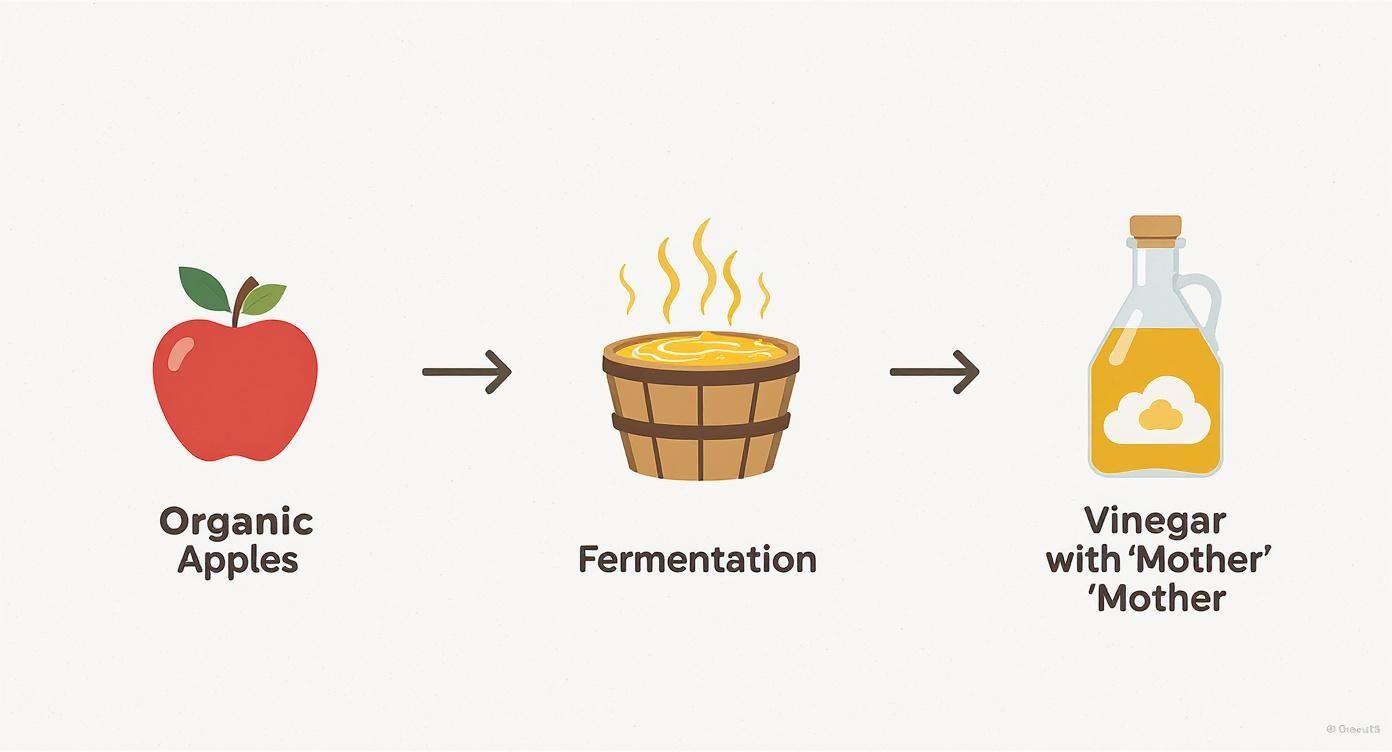
As you can see, the entire process relies on natural fermentation to create a raw, living product complete with the beneficial 'mother'.
The Two-Stage Fermentation Process
The real magic happens during a two-stage fermentation, a method that’s been trusted for centuries to create the highest quality vinegar. This isn’t a rushed, industrial process; it's a slow, deliberate transformation that allows complex flavors and beneficial compounds to develop over time.
First comes the alcoholic fermentation. Natural yeasts, either present on the apples or added by the producer, get to work consuming the sugars in the fresh-pressed juice. This converts the sweet apple juice into a dry, alcoholic liquid known as hard cider.
Once the sugars are gone, the second stage begins. This is where acetobacter, a special type of beneficial bacteria, takes over. These microorganisms are the architects of vinegar, converting the alcohol in the hard cider into acetic acid—the compound that gives vinegar its signature tangy taste and sharp aroma. This patient process can take several weeks or even months to complete properly.
Why Artisanal Methods Matter
The difference between a mass-produced vinegar and an artisanal organic cider vinegar comes down to this patient, natural method. Industrial processes often use heat and heavy filtration to speed things up and create a perfectly clear, uniform product. While that’s efficient, it strips the vinegar of its most valuable component: the 'mother'.
The slow, natural fermentation is what sets artisanal organic cider vinegar apart. It allows the 'mother'—a colony of beneficial bacteria and enzymes—to form and thrive, preserving the raw, living nature of the final product.
This traditional approach not only protects the delicate flavor compounds from the original apples but also ensures the vinegar retains all its beneficial properties. It’s a method that values quality over speed, resulting in a product with real character, depth, and integrity.
This focus on quality is driving consumer interest right here in the region. The specialty vinegar market, which includes premium organic cider vinegar, is seeing strong growth in the Middle East and Africa. In 2023, this market generated USD 80.4 million and is projected to hit USD 126.6 million by 2030.
While balsamic currently leads, the demand for organic cider vinegar is rising fast as more people seek out natural, certified products. You can discover more insights about the specialty vinegar market on grandviewresearch.com. This trend shows a growing appreciation for the authentic production methods that define true gourmet quality.
Elevating Your Culinary Creations
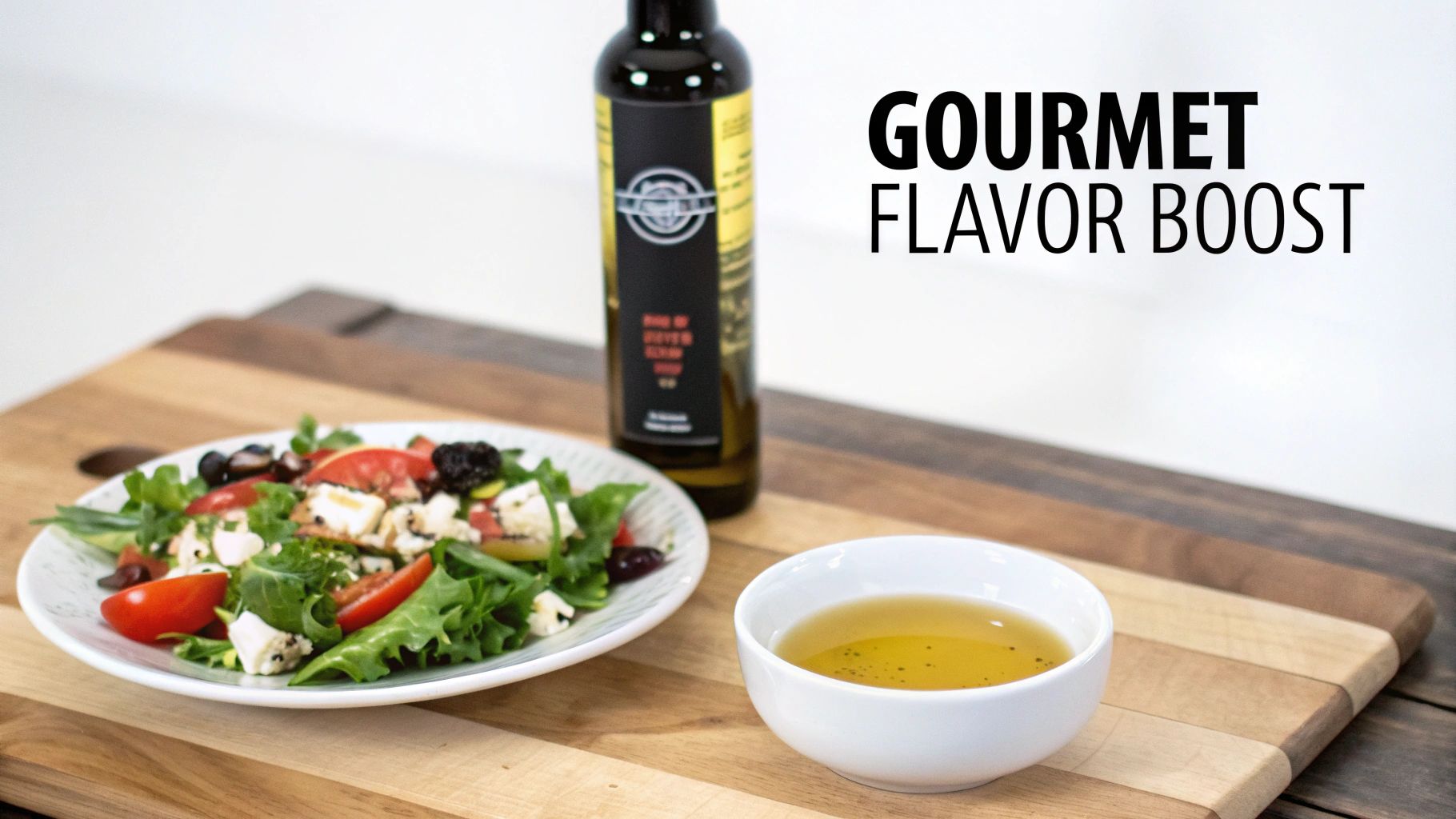
Now that we know its artisanal roots, let's bring organic cider vinegar from the pantry to the center of your kitchen. It’s so much more than a wellness shot; this ingredient is a secret weapon for any home cook or pro chef. Its bright, complex acidity lifts, balances, and totally transforms a dish, adding a touch of gourmet sophistication with just a splash.
Forget the one-note sharpness of your average vinegar. A good quality organic cider vinegar brings a nuanced, fruity tang that plays well with a huge range of flavors without stealing the show. It's this unique personality that makes it an essential tool for turning everyday meals into something special.
The Foundation of Flavor: Vinaigrettes
The most classic use for organic cider vinegar is in a vinaigrette, and for good reason. A well-made dressing is the soul of a great salad, and this vinegar provides the perfect acidic backbone.
To whip up a simple but elegant vinaigrette, stick to the classic 3:1 ratio—three parts high-quality extra virgin olive oil to one part organic cider vinegar. That's your base. From there, the magic begins.
For a creamy touch, whisk in a teaspoon of Dijon mustard.
To add some sweetness, drizzle in a little honey or maple syrup.
For an aromatic kick, add finely minced garlic, shallots, or fresh herbs like thyme and oregano.
This simple formula lets the bright apple notes of the vinegar shine through, creating a dressing that truly enhances your greens and veggies, not just drowns them.
The secret to a brilliant vinaigrette is all about balance. Organic cider vinegar offers a smoother, less aggressive tang than other vinegars, making it easier to craft dressings that are bright and flavorful without being harsh on the palate.
It's the perfect finish for everything from a simple garden salad to a hearty Mediterranean bowl packed with feta, olives, and grilled chicken. This is the kind of versatile dressing that quickly becomes a kitchen staple.
A Natural Powerhouse in Marinades and Sauces
Beyond dressings, organic cider vinegar really shows its muscle in more complex cooking. The natural acetic acid makes it a fantastic tenderizer for meats, breaking down tough fibers for incredibly succulent results. When you use it in a marinade, it not only softens the protein but also infuses it with a subtle, tangy depth.
Think about a marinade for pork or chicken: combine organic cider vinegar with soy sauce, garlic, ginger, and a hint of brown sugar. You get this beautiful balance of salty, sweet, and sour that caramelizes perfectly when it hits the grill.
In the world of sauces, it’s all about balance.
In rich, heavy sauces, a splash of organic cider vinegar cuts right through the fat, adding a much-needed brightness that keeps the dish from feeling overwhelming.
In classic Italian agrodolce, it’s the star of the show. This sweet-and-sour sauce pairs vinegar with a sweetener like honey, creating a glaze that is absolutely phenomenal on roasted vegetables, fish, or poultry.
For barbecue sauces, it provides that essential tangy counterpoint to the sweetness of tomato and molasses, creating a much more complex and satisfying flavor.
To really step up your game, having a well-equipped food preparation area is key for organizing your gourmet ingredients and bringing these dishes to life.
Pairing Organic Cider Vinegar in Your Kitchen
Knowing how to pair this vinegar can unlock a whole new world of flavor in your cooking. Its versatility is its greatest strength, complementing a huge array of ingredients. Here’s a quick guide to get you started.
Pairing Organic Cider Vinegar in Your Kitchen
A guide to pairing the bright acidity of organic cider vinegar with various foods to enhance flavour.
Food Category | Best Pairing Application | Flavour Outcome |
|---|---|---|
Leafy Greens & Salads | Vinaigrettes, dressings | Brightens and enhances fresh flavours without wilting delicate leaves. |
Pork & Poultry | Marinades, glazes | Tenderises the meat while adding a tangy, fruity note that complements the protein. |
Rich Stews & Soups | Finishing splash | Cuts through richness, balances heavy flavours, and adds a final touch of brightness. |
Root Vegetables | Roasting, pickling | Adds a sharp counterpoint to the earthy sweetness of carrots, beets, or potatoes. |
Legumes & Grains | Dressings for bean salads, quinoa bowls | Lifts the earthy tones of beans and grains, making them more vibrant and flavourful. |
Once you master these pairings, you’ll start using organic cider vinegar not just as an ingredient, but as a tool to refine and perfect your cooking. It’s that thoughtful use of acidity that often separates a good cook from a great one. And if you're exploring more Italian flavors, you might enjoy our guide on pasta types and their perfect sauce pairings.
Understanding the Wellness Benefits
Beyond its punchy flavor in the kitchen, organic cider vinegar has carved out a serious reputation in wellness circles. While it’s certainly not a miracle cure, its natural makeup offers some compelling benefits that fit beautifully into a healthy, holistic lifestyle. The conversation nearly always begins with two key players: acetic acid and the probiotic-rich 'mother.'
Acetic acid is the main active compound in any vinegar, giving it that characteristic sharp taste and many of its talked-about effects. The 'mother,' however, is something special you'll only find in raw, unpasteurized varieties. That cloudy, web-like stuff is a powerhouse of beneficial bacteria and enzymes—in other words, probiotics that are crucial for a balanced gut. These two elements are really the heart of the wellness story behind this ancient tonic.
Supporting Healthy Digestion
A happy digestive system is the foundation of good health, and organic cider vinegar—especially with the 'mother'—can be a great ally. The live cultures it contains are similar to the good bacteria you find in fermented foods like yogurt and kimchi, helping to nurture a healthy gut environment.
Many people also find that a small, diluted amount before a meal helps get the digestive juices flowing, potentially making the whole process of breaking down food a bit smoother. Think of it as a gentle heads-up for your digestive system, prepping it for the job ahead. Of course, vinegar isn't the only tool in the box; if you're curious, you can explore other natural remedies for digestive issues to round out your routine.
This interest in natural wellness isn't just a niche trend. Across the Middle East and Africa, consumers are clearly leaning towards organic foods. A 2021 survey showed that 55% of vinegar consumers in the region chose organic options over synthetic ones—a preference that's especially strong in health-conscious markets like the UAE.
Aiding Blood Sugar Management
One of the most researched aspects of organic cider vinegar is how it might influence blood sugar levels. The acetic acid seems to get in the way of enzymes that break down starches and complex carbs.
By slowing down starch digestion, acetic acid may help prevent the sharp blood sugar spikes that often follow a carb-heavy meal. This leads to a more gradual release of glucose into the bloodstream, which is fantastic for maintaining stable energy.
This doesn't make it a replacement for medical advice, but it does suggest that using it in a balanced meal—like in a vinaigrette over a salad served with your pasta—could be a simple, supportive move for your metabolic health. It’s a small tweak that works in harmony with a mindful diet.
A Holistic Approach to Wellness
It’s crucial to see organic cider vinegar as just one piece of a much larger wellness puzzle, not a standalone fix. Its benefits truly shine when woven into an already healthy lifestyle that includes a balanced diet and regular movement.
Here are a few easy ways to fit it into your daily routine:
Morning Tonic: Kickstart your day by mixing one to two teaspoons into a large glass of water.
Mealtime Enhancer: Whisk it into dressings or marinades to add a burst of flavor and a little digestive support to your meals.
Post-Meal Drink: A diluted sip after a big meal can sometimes help with feelings of fullness and digestion.
Ultimately, the power of organic cider vinegar comes from its pure, unprocessed state. The dynamic duo of acetic acid and the living 'mother' offers a simple yet effective way to support your body’s natural rhythm, making it a truly valuable staple for any health-conscious pantry.
How to Choose and Store Your Vinegar
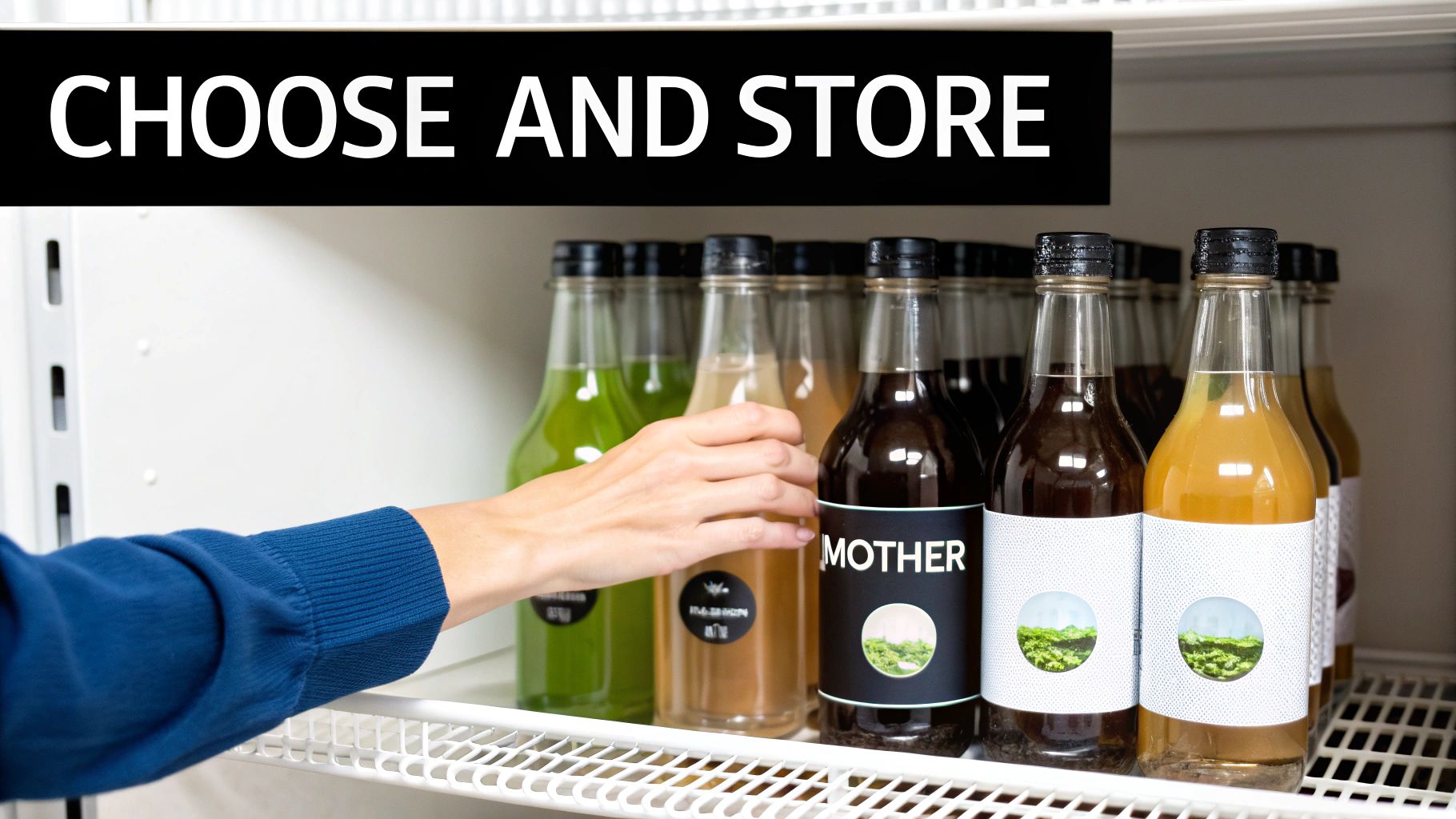
Navigating the world of artisanal vinegars might seem a little overwhelming at first, but picking a high-quality organic cider vinegar is actually quite simple once you know what to look for. The goal is to find a product that’s as close to its natural, living state as possible. This is how you get the full depth of flavor and all the beneficial properties that make it so special.
The most important words on the label aren't just marketing buzz—they're your road map to quality and authenticity. Think of them as a simple checklist for excellence.
Decoding the Label
When you're choosing your next bottle, keep an eye out for these key terms. They are your best guide to picking a truly premium organic cider vinegar.
Raw & Unpasteurised: This tells you the vinegar hasn’t been blasted with high heat. Pasteurization kills off bacteria (both the good and the bad) to create a uniform, shelf-stable product. By choosing 'raw' and 'unpasteurised', you’re ensuring the vinegar’s living enzymes and beneficial bacteria are all intact.
Unfiltered: Filtering is done to make a liquid crystal-clear, but this process also strips away the most valuable part of the vinegar. An unfiltered product will look cloudy, and that’s a very good sign.
With the ‘Mother’: This is the most critical indicator of a high-quality, living vinegar. The 'mother' is that cloudy, web-like substance you see floating inside—it's a colony of beneficial bacteria that proves you've got an authentic and potent product. If the label says 'with the mother,' you know you’re getting the real deal.
An official organic certification is your guarantee of purity. It confirms the apples were grown without synthetic pesticides or fertilizers, giving you a cleaner final product from the orchard all the way to your bottle.
Proper Storage for Lasting Quality
Once you’ve brought your premium organic cider vinegar home, storing it correctly is key to preserving its flavor and integrity. The good news? Its natural acidity makes it remarkably stable and easy to care for.
Contrary to what many people think, organic cider vinegar does not need to be refrigerated. Its high acetic acid content is a natural preservative, preventing any harmful bacteria from growing. A cool, dark place like a kitchen pantry or cupboard is the perfect spot. Keeping it away from direct sunlight and heat will protect its delicate flavors and beneficial enzymes from breaking down over time.
Don't be surprised if you see the 'mother' continue to grow or change in the bottle—this is a great sign! It just means your vinegar is alive and healthy. A growing 'mother' is proof of a robust, unpasteurised product, so just give the bottle a gentle shake before you use it to mix everything back in. Stored properly, your vinegar will maintain its quality for years to come.
Your Guide to Gourmet Vinegar with IFM Gourmet
So, you've learned what sets a truly premium organic cider vinegar apart. Now for the fun part: bringing that exceptional quality into your own kitchen. For those of us here in the UAE who love to cook, this is where a whole world of artisanal ingredients opens up, letting you pair this amazing vinegar with other top-tier foods. It’s all about creating that complete gourmet experience, from a stunning salad dressing to a memorable marinade.
When you add a great organic cider vinegar to your pantry, it becomes a cornerstone ingredient. It's meant to be surrounded by other foods that match its calibre, enhancing everything it touches. This is exactly why having a trusted supplier with a curated selection is so important for home cooks and professional chefs alike.
Your Destination for Culinary Excellence in Dubai
For anyone in Dubai seeking out these exceptional ingredients, IFM Gourmet Dubai is the place to go. It's the luxury online gourmet arm of IFM Investments LLC, a culinary-focused company based in the UAE. Their gourmet store offers an impressive lineup of artisanal delicacies, including sweets, savories, fine chocolates, premium teas, cakes, and beautifully curated gift hampers. As part of the broader Italian Food Masters group, their name is known for quality, authenticity, and culinary elegance in Dubai’s gourmet scene.
This commitment to excellence makes IFM Gourmet Dubai the perfect place to find complementary ingredients for your organic cider vinegar creations. Their selection turns simple pairings into something special, ensuring every element on the plate is up to the highest standard. You can explore their offerings and see the IFM Gourmet logo, a symbol of quality in Dubai.
Creating Perfect Pairings with IFM Gourmet
The real magic happens when you start combining the bright, tangy notes of a great cider vinegar with other gourmet foods. Just imagine whisking it into a vinaigrette to drizzle over a fresh salad topped with IFM Gourmet’s artisanal cheeses or cured meats. That sharp acidity cuts right through the richness for a perfectly balanced bite.
Here are a few ideas to get you started, using ingredients you might find at a fine food purveyor:
Elegant Dressings: Keep it simple and refined. Combine your organic cider vinegar with a premium extra virgin olive oil and just a touch of honey. It's the perfect finish for salads with delicate greens and beautifully aged cheeses.
Robust Marinades: This is where you can build some serious flavor. Create a marinade for prime cuts of meat or poultry with a blend of cider vinegar, garlic, fresh herbs, and one of their specialty mustards. It will tenderize the protein while infusing it with incredible depth.
Artisanal Pickling: Use it to quick-pickle fresh vegetables like cucumbers, carrots, or red onions. These pickles are a fantastic, crisp accompaniment to rich, savory dishes, adding that much-needed tangy contrast.
When you source both your organic cider vinegar and its companion ingredients from a trusted gourmet specialist, you’re ensuring a cohesive level of quality that takes your entire meal from good to truly exceptional.
This approach really transforms cooking into an art form, where every single ingredient is chosen with care and purpose. For those of us in Dubai and across the UAE, having access to a curated collection like this makes building a gourmet pantry both easy and inspiring, turning any meal into an occasion.
Frequently Asked Questions
When you bring a new artisanal ingredient into your kitchen, a few questions are bound to pop up. To help you get the most out of your organic cider vinegar, here are some clear, straightforward answers to the things we hear most often.
How Much Organic Cider Vinegar Should I Use Daily?
There’s no strict, universal rule, but balance is key. For wellness routines, a good starting point is one to two teaspoons (5–10 ml) up to one to two tablespoons (15–30 ml) a day, always diluted in a big glass of water.
The best advice? Start with a smaller amount and listen to your body. When you're cooking with it in dressings or marinades, just follow the recipe—the vinegar's job there is all about building incredible flavor.
Is the Mother in Vinegar Safe to Consume?
Absolutely! The 'mother' isn't just safe; it's what makes raw, unpasteurised cider vinegar so special. That cloudy, web-like stuff is a powerhouse of beneficial bacteria, enzymes, and proteins that form naturally during fermentation.
Think of the 'mother' as the very heart of the vinegar. When you consume it, you're getting the full spectrum of living compounds that make this product so powerful.
Why Is My Organic Cider Vinegar Cloudy?
That cloudiness you see is a fantastic sign of quality, not a flaw. A cloudy appearance is your guarantee that the vinegar is raw, unfiltered, and still contains the beneficial 'mother'.
It’s the complete opposite of those crystal-clear, mass-produced vinegars you see on most supermarket shelves. That clarity is achieved by filtering and pasteurising the liquid, which unfortunately strips away all the good stuff. So, embrace the cloud—it tells you you’ve got an authentic, high-quality product in your hands.
Does Organic Cider Vinegar Ever Expire?
Organic cider vinegar has an incredibly long shelf life—so long, in fact, that it’s often considered non-perishable. Its high acetic acid content is a natural preservative, stopping any harmful bacteria from growing.
While it won't really "spoil," the flavor profile might soften or change very subtly over many years. To keep it at its best, just store it in a cool, dark place away from sunlight with the cap screwed on tight. You might even notice the 'mother' continues to grow over time, which is a totally normal sign of a healthy, living vinegar.
Ready to elevate your culinary creations? Discover the finest artisanal ingredients at IFM Gourmet Food Store, Dubai's premier destination for authentic gourmet foods delivered across the UAE. Explore our curated selection and bring culinary excellence to your kitchen. https://www.ifmgourmet.com


Comments