
Balsamic Vinegar Salad Dressing: Types, Recipes, and Tips at IFM Gourmet Dubai

You're standing in the kitchen with a bowl of crisp lettuce, ripe tomatoes, and perhaps a little mozzarella, but the dressing is the weak point. The supermarket bottle promises balsamic flavour, yet the first taste is either sugary, sharp, or oddly flat. A well-made balsamic vinegar salad dressing should do more than wet the leaves. It should bring acidity, sweetness, aroma, and richness into balance.
That balance depends on two decisions: choosing a balsamic vinegar that suits the job and building a stable emulsion. In the UAE, where shelves carry everything from affordable commercial condiments to imported artisanal bottles, understanding the difference can help you spend wisely and cook with confidence.

The Problem with Store-Bought Dressings
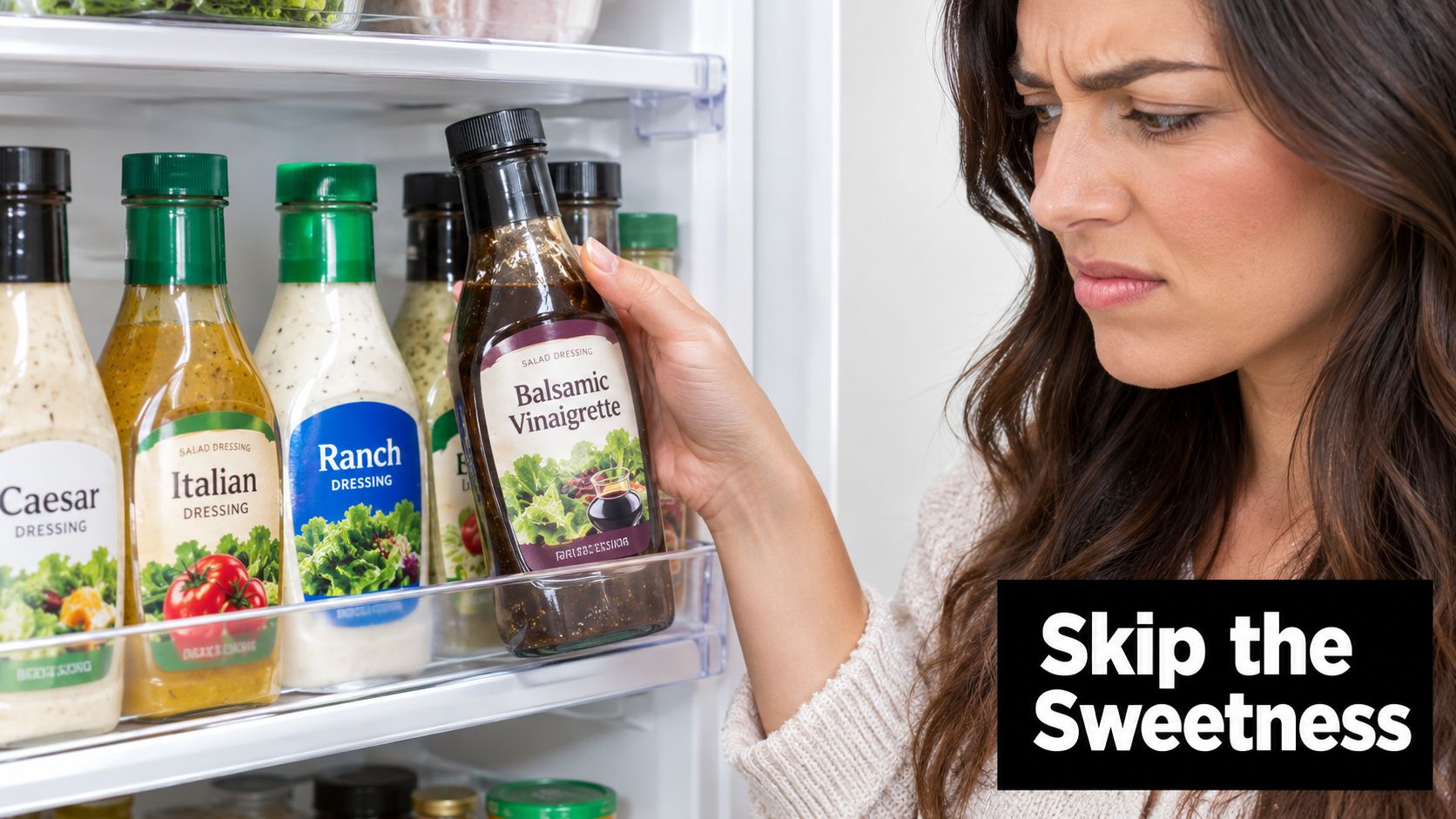
You open a bottle of balsamic vinaigrette, shake it hard, and pour it over a salad. For the first few bites, the dressing tastes acceptable. Then the sweetness takes over, the vinegar disappears, and a dark, oily layer collects at the bottom of the bowl. Your salad is fresh, but the dressing makes it feel heavy and unfinished.
That experience is common because bottled vinaigrettes are designed for convenience and consistency, not necessarily for the character of a carefully prepared kitchen dressing. Many products are blends containing water, oil, balsamic vinegar, and added caramel, as seen in this UAE balsamic dressing listing. The label may say “balsamic”, but the liquid inside can taste very different from a simple mixture of vinegar, olive oil, mustard, and seasoning.
Why artisanal balsamic changes the result
A commercial dressing often tries to deliver sweetness and colour quickly. An artisanal balsamic can offer a more layered profile, with fruitiness, gentle acidity, and a fuller finish. That difference matters most when the salad itself is simple. On leaves, tomatoes, cucumber, or grilled vegetables, the dressing has nowhere to hide.
The UAE market reflects this broad range of choices. One market estimate places balsamic vinegar sales at USD 13.01 million in 2024, with a projection of USD 18.37 million by 2032, at a projected 4.40% CAGR. The same report says conventional balsamic vinegar held 72% of the market in 2024, which indicates that affordable mainstream products remain central to everyday use (UAE balsamic vinegar market data).
That doesn't make a mass-market bottle useless. It may be perfectly suitable for a large family salad, a marinade, or a dressing where mustard, herbs, and garlic provide extra flavour. The mistake is expecting every bottle to perform like a concentrated finishing vinegar.
Kitchen insight: Choose the vinegar according to the dish. A practical everyday bottle belongs in a generous vinaigrette, while a more complex balsamic deserves a lighter hand.
Understanding Balsamic Vinegar Types
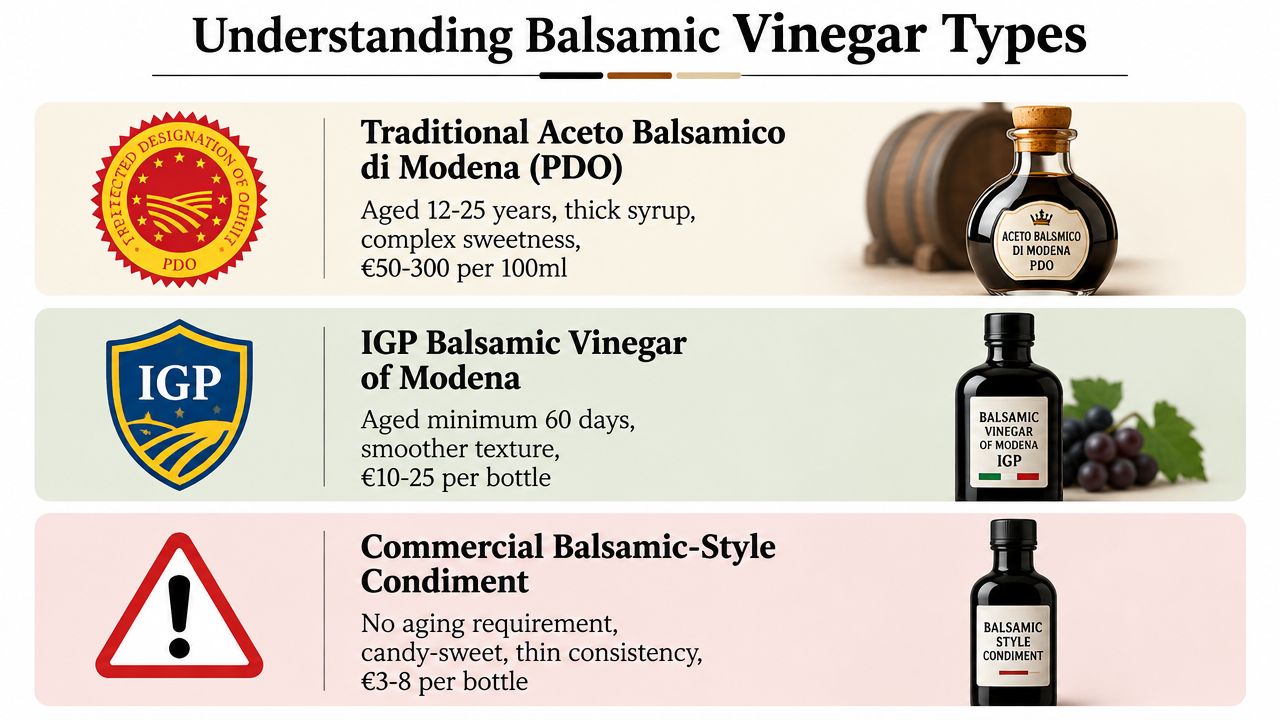
The phrase “balsamic vinegar” covers products with very different production methods, textures, and uses. Reading the front label alone can be misleading, so look at the certification, ingredient list, texture, and intended purpose.
Traditional balsamic
Traditional Balsamic Vinegar of Modena, marked DOP or PDO, represents the most formal and restricted style. It's associated with concentrated grape must, long maturation, and a thick, syrup-like texture. This kind of vinegar is usually treated as a finishing ingredient rather than a base for a large bowl of salad dressing.
Its deep sweetness and complexity can be wasted if you dilute it heavily with oil. Use a small drizzle over shaved Parmesan, grilled vegetables, strawberries, or a finished salad where its aroma remains noticeable.

IGP balsamic vinegar
IGP, or PGI, balsamic vinegar of Modena is more accessible and versatile. It can offer a rounded, fruity acidity and a smoother texture while remaining practical for vinaigrettes, marinades, sauces, and everyday cooking. A PGI mark helps shoppers identify a product connected to the protected geographical category, but the flavour can still vary between producers.
For a UAE home chef, this is often the most useful middle ground. It can bring more depth than a basic condiment without making every dressing feel precious.
Commercial balsamic-style condiments
Commercial balsamic-style products are built for affordability and broad appeal. Some are thin, strongly sweet, or coloured to resemble a darker, richer vinegar. They can work in recipes where the dressing includes honey, mustard, herbs, or fruit, but they may taste unbalanced when paired only with olive oil.
Type | Typical role | What to look for |
|---|---|---|
Traditional DOP or PDO | Finishing vinegar | Thick texture, concentrated flavour, formal certification |
IGP or PGI | Vinaigrettes and cooking | Protected-origin mark, balanced acidity, clean ingredient list |
Commercial condiment | Everyday mixing and marinades | Affordable format, sweetness, thin consistency |
Acidity also affects your recipe. UAE retail products are commonly sold at around 6% acidity, so an underbuilt oil phase can make a dressing taste sharp or thin. If you enjoy comparing food and beverage memberships, you can also browse wine club benefits and tiers for a broader perspective on how producers organise premium offerings and tasting experiences.
The best purchase isn't automatically the most expensive bottle. It's the one whose flavour and texture match how you'll use it. For a daily vinaigrette, a balanced IGP product may offer better value than reserving traditional balsamic for a preparation that will dilute its character.
Making Classic Balsamic Vinaigrette
A dependable vinaigrette starts with proportion, but technique determines whether it tastes integrated or separates immediately. A useful benchmark is 9 parts oil, 3 parts acid, and 1 part emulsifier, as described in this culinary explanation of vinaigrette emulsion technique. For a small home batch, that translates into a slightly more oil-forward dressing than the familiar three-to-one formula.
A reliable method
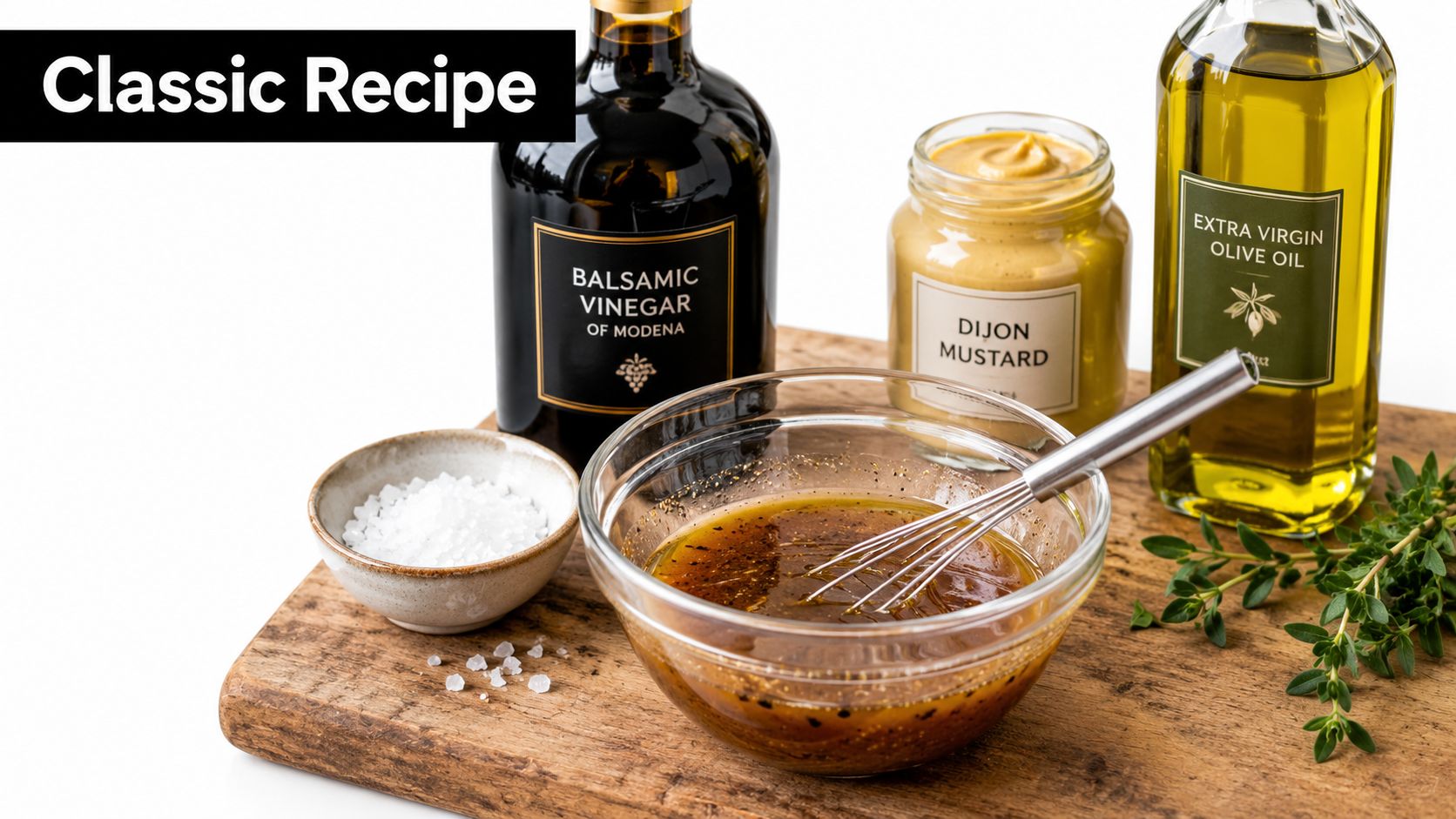
Start with the acid and emulsifier. In a bowl, whisk together balsamic vinegar, Dijon mustard or honey, salt, and black pepper. Adding the emulsifier first gives the vinegar a structure that can help hold the oil droplets apart instead of allowing them to reunite at once.
Pour in extra virgin olive oil slowly while whisking continuously. Don't tip it in all at once. The whisk creates mechanical shear, breaking the oil into smaller droplets and coating them with the acid and emulsifier. That produces a creamier dressing that clings to leaves instead of pooling beneath them.
A practical starting formula is:
Acid: Use balsamic vinegar as the flavour centre.
Emulsifier: Add Dijon mustard for savouriness, honey for sweetness, or a combination when the vinegar is particularly bright.
Oil: Add extra virgin olive oil gradually until the dressing tastes rounded.
Seasoning: Finish with salt and freshly ground pepper, then taste on a leaf rather than from the spoon alone.
Practical rule: Taste the dressing with the food it will accompany. A vinaigrette that seems strong by itself may be perfectly balanced once it meets unsalted lettuce or roasted vegetables.
If the result tastes too sharp, increase the oil slightly or add a small amount of honey. If it feels dull, add a little more vinegar or salt. If it separates quickly, whisk again and check that the oil was incorporated gradually.
This base works across Mediterranean-style meals, especially salads with tomato, cucumber, olives, feta, roasted peppers, or grilled chicken. For more ideas on building uncomplicated dishes around vegetables, grains, herbs, and olive oil, explore this simple Mediterranean meals guide.
Creative Balsamic Dressing Variants
Once your classic vinaigrette is stable, change one element at a time. That makes it easier to understand whether you're adding sweetness, heat, texture, or fragrance.
Honey mustard
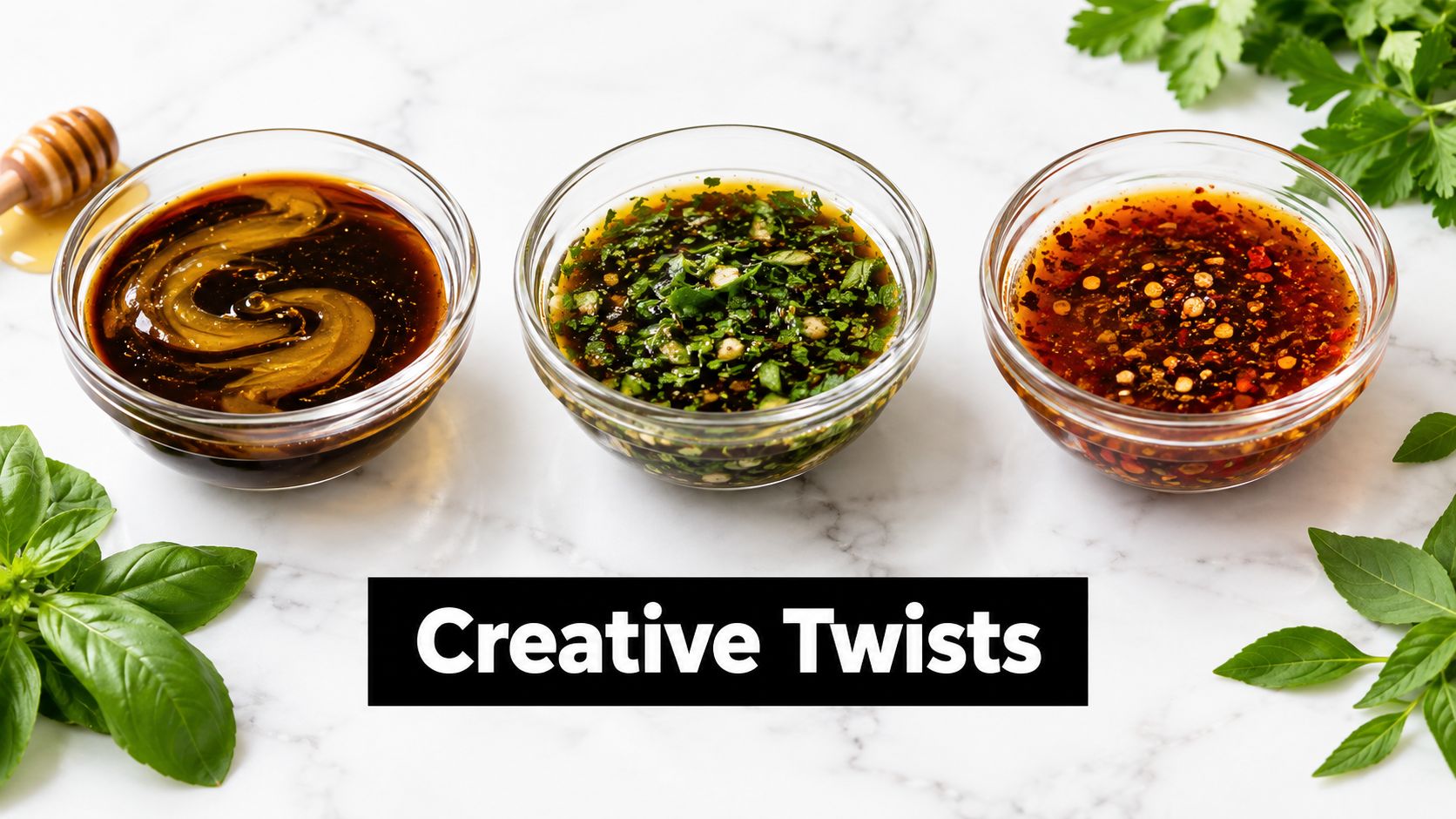
Whisk balsamic vinegar with Dijon mustard and honey before adding olive oil. This version tastes rounded and familiar, with enough sweetness to soften bitter leaves such as rocket. It suits roast chicken, apple salads, grilled halloumi, and lunch boxes.
Use honey carefully. Too much can make the dressing taste like a sweet sauce rather than a vinaigrette. If the salad contains fruit, reduce the honey so the ingredients don't compete.
Fig and chilli
For a darker, richer dressing, combine balsamic vinegar with a small spoonful of fig spread, a little chilli, mustard, and olive oil. The fig adds body and a jammy note, while chilli keeps the mixture from becoming heavy.
This variant is better with high-quality ingredients: grilled steak, roasted aubergine, walnuts, blue cheese, or bitter greens. It's less suitable for delicate lettuce, where the fig flavour may dominate.
Fruit and herb
Blend or whisk balsamic vinegar with a little mashed strawberry, raspberry, or peach, then add olive oil and fresh herbs. Basil works with strawberry and tomato, while mint suits peach and cucumber. Strain the mixture if you want a smoother finish.
The fruit version brings brightness to mild cheeses and leafy salads. It also works as a finishing drizzle over roasted vegetables, provided you keep the texture light.
A helpful comparison is to think about the dressing's centre of gravity:
Honey mustard is smooth, savoury, and adaptable.
Fig and chilli is deep, warm, and suited to hearty foods.
Fruit and herb is fresh, aromatic, and best with delicate or summery combinations.
For a pasta salad, a variation with roasted vegetables, herbs, and a balsamic dressing can be paired with a visual serving reference such as this pasta presentation image. The image isn't a recipe, but it can help you think about colour, contrast, and how much dressing the ingredients can carry.
Selecting Quality Balsamic in the UAE
Shopping for balsamic vinegar in the UAE can feel confusing because price and quality don't always move together.
Read the bottle before judging it
Id you are looking for the Balsamic Vinegar Original search for the IGP or PGI mark if you want a protected-origin balsamic for regular cooking. Then inspect the ingredients. A shorter, clearer list usually makes it easier to understand whether you're buying vinegar, concentrated grape must, oil, water, caramel, or added sweeteners.
Match the bottle to the quantity and purpose. A moderately priced bottle may be the sensible choice for weekly salads, while a more concentrated product can be reserved for finishing. If you're cooking for a buffet or preparing delivery meals, choose a dressing that remains pleasant after mixing and doesn't rely only on sweetness for impact.
IFM Gourmet Dubai is the luxury online gourmet arm of IFM Investments LLC, and the company describes its Dubai operation as part of the broader Italian Food Masters umbrella (IFM Gourmet company information). Its range includes Italian gourmet ingredients and balsamic products suitable for salads. You can also use this Lurisia water product image as a visual example of how Italian products are presented in a curated gourmet setting.
Store unopened vinegar away from direct heat and strong light. Once you've made the dressing, keep it in a clean, sealed glass jar and label it with the ingredients so you'll remember whether it contains mustard, honey, garlic, or fresh herbs.
Storing and Using Your Dressings
A homemade balsamic vinaigrette is at its best when you treat it as a fresh kitchen preparation rather than a permanent pantry product. Pour it into a clean glass jar with a secure lid, refrigerate it, and shake or whisk it before serving. Oil may cloud or thicken when chilled, so let the jar warm slightly before pouring.
Fresh ingredients need extra care. Garlic, herbs, fruit, and dairy can change the dressing's keeping quality, so make smaller batches when those ingredients are included. Discard the dressing if it develops an unpleasant smell, mould, unexpected bubbling, or a flavour that seems distinctly wrong.
For meal preparation, keep the dressing separate from the leaves. Add it just before serving, especially with tender lettuce, cucumber, or spinach. A small jar also makes entertaining easier because guests can dress their own portions without turning the entire salad soft.
Premium vinegar earns its place when you can taste its complexity without burying it under excess sugar or oil. Use a modest amount, mix it carefully, and let the salad provide the canvas. IFM Gourmet Dubai also has a physical UAE presence associated with Dubai Investment Park and Green Community, alongside its online gourmet offering, which gives shoppers another route to explore Italian ingredients (IFM Gourmet location information).
Visit IFM Gourmet Food Store to explore authentic Italian balsamic vinegars, glazes, olive oils, and other ingredients for a more expressive salad dressing. Choose a bottle that matches your recipe, then bring it home and turn a simple bowl of greens into a carefully balanced dish.
Balsamic Vinegar Salad Dressing: Types, Recipes, and Tips at IFM Gourmet Dubai
Comments