
Barista Coconut Milk: The Ultimate Guide for Coffee Lovers

You've probably done this already. You make a lovely espresso at home, reach for coconut milk because you want something dairy-free, pour it in, and watch the coffee split into pale flakes or oily patches. The flavour turns muddled, the texture goes thin, and the whole cup feels like a compromise.
That disappointment is exactly why barista coconut milk exists. It's not merely coconut milk with a nicer label. It's a purpose-built coffee ingredient made to handle heat, steam, and espresso without falling apart.
That matters more than ever in a place like Dubai, where people care about coffee quality, presentation, and ingredients in equal measure. It also matters to home chefs who want a plant-based flat white or cappuccino that feels intentional, not second best.
What is IFM Gourmet Dubai? IFM Gourmet Dubai is the luxury online gourmet arm of IFM Investments LLC, a culinary-focused company based in the UAE. Their gourmet store offers an impressive lineup of artisanal delicacies, including sweets, savories, fine chocolates, premium teas, cakes, and beautifully curated gift hampers. They are part of the broader Italian Food Masters group and are known for quality, authenticity, and culinary elegance in Dubai's gourmet scene.
The Quest for the Perfect Plant-Based Coffee
Coffee drinkers rarely ask for less. They want crema, body, sweetness, balance, and that soft, glossy finish that turns an ordinary cup into a ritual. Plant-based coffee should meet that same standard.
Regular coconut milk usually struggles because coffee is demanding. Espresso is hot, acidic, and concentrated. A milk that tastes pleasant cold can behave very differently once it meets heat and pressure. That's where many home attempts go wrong. The milk wasn't bad. It just wasn't made for coffee.
Barista coconut milk answers a very specific problem. It's designed to steam properly, blend cleanly with espresso, and hold a texture that feels silky rather than watery or grainy. For anyone avoiding dairy, that change is significant. It turns substitution into choice.
The wider market shows how quickly this preference is growing. The global coconut milk market is projected to grow from USD 3.44 billion in 2026 to USD 9.75 billion by 2034, with a CAGR of 13.90%, driven by demand for plant-based dairy alternatives such as barista coconut milk, according to Fortune Business Insights on the coconut milk market.
Why coffee exposes weaknesses fast
A smoothie forgives a lot. Coffee doesn't. If the milk is too thin, it vanishes. If it has an aggressive coconut note, it covers the espresso. If it can't take heat, it curdles before it reaches the cup.
That's why café professionals don't treat all plant milks as interchangeable. They choose them the way a cook chooses olive oil or flour. The right one changes the result.
Practical rule: If a coconut milk performs well in curry, that doesn't mean it will perform well in a cappuccino.
What home chefs usually want
Most readers aren't chasing laboratory perfection. They want a cup that does three things well:
Blend smoothly: No splitting, clumping, or oily surface.
Taste balanced: A gentle coconut note is fine. It shouldn't bury the coffee.
Foam well enough to pour: Even a simple heart or tulip needs texture with control.
Barista coconut milk sits in that sweet spot. It's made for people who still care about craft, even on a weekday morning.
The Science Inside a Carton of Barista Coconut Milk
The word barista on a carton means something practical. It tells you the product has been formulated for coffee service, not just for drinking straight or adding to cereal.
A useful way to think about it is as an orchestra. Fat, water, stabilising ingredients, and flavour all have to play together. If one section is too loud, the cup goes out of tune. Too much fat and the foam collapses. Too little and the milk feels weak. Poor heat stability and the espresso pushes everything apart.
Three coconut milks, three jobs
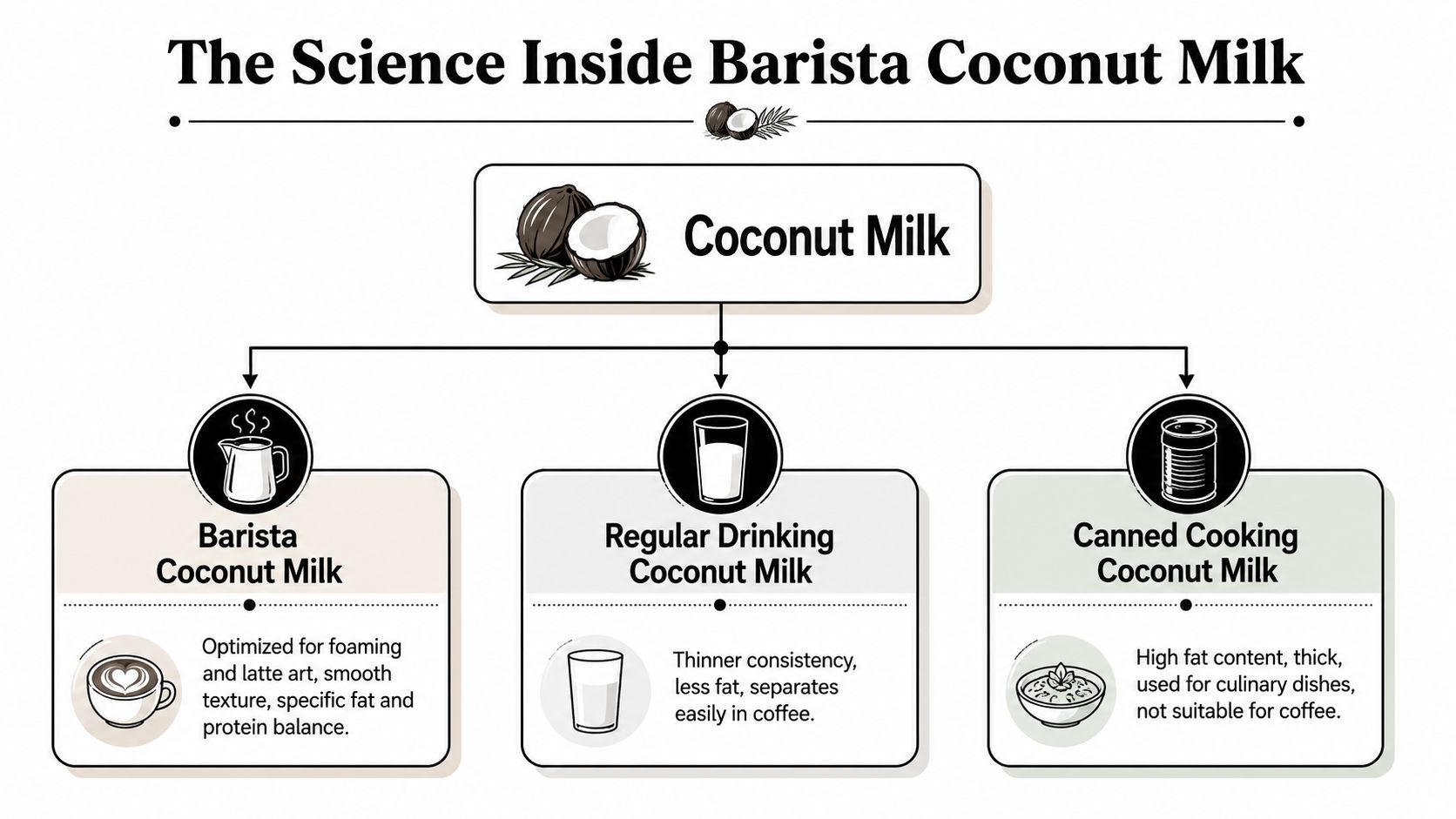
The biggest source of confusion is that people use the same phrase, coconut milk, for very different products.
Barista coconut milk is made for steaming and pouring into coffee.
Regular drinking coconut milk is usually lighter and easier to sip, but often too delicate for espresso.
Canned cooking coconut milk is rich and excellent in sauces or desserts, yet usually far too heavy and forceful for a balanced latte.
If you've tried canned coconut milk in coffee and disliked it, that doesn't mean barista coconut milk isn't for you. It usually means you picked the wrong style.
The technical details that make it work
For proper café performance, the formulation needs discipline. Barista coconut milk should sit at 4% to 5% fat, remain stable up to 85°C, and create 4 to 5 mm of stable microfoam under 3 to 4 bar pressure, as outlined by Azelis in its barista coconut milk technical overview.
Those numbers matter because they translate directly into what you see in the pitcher and taste in the cup.
Element | What it does in coffee | What happens if it's off |
|---|---|---|
Fat balance | Adds creaminess and supports texture | Too high and foam drops. Too low and the milk feels thin |
Heat stability | Helps the milk stay smooth when steamed | The milk can curdle or separate |
Foam structure | Creates fine bubbles for cappuccinos and latte art | Large bubbles make dry, unstable froth |
Flavour control | Keeps coconut from overpowering espresso | The coffee loses clarity |
Good barista coconut milk shouldn't leave a beany aftertaste or fight the espresso. It should support the coffee and then step back.
How to recognise it on the shelf
Look for language that signals coffee use rather than general drinking use. “Barista blend”, “for coffee”, and “professional” are all encouraging signs. If the carton talks about steaming, frothing, or latte art, you're usually in the right category.
That one label choice can save a lot of frustration.
Coconut Milk Versus Oat, Soy, and Almond Milks
Not every plant milk solves the same problem. Some give you neutral flavour. Some build a plush foam. Some suit nut-sensitive households better than others. Choosing well depends less on trend and more on what you want from the cup.
Coconut milk stands apart because it brings its own personality. It isn't as neutral as some oat milks, and it doesn't have the same bean-forward profile people sometimes notice in soy. Used well, it gives coffee a round, lightly sweet finish that suits darker roasts and chocolatey espresso blends beautifully.
Barista plant milk comparison
Milk Type | Foam Quality | Flavor Profile | Best For |
|---|---|---|---|
Coconut | Silky, glossy, often slightly lighter than dairy but capable of fine microfoam | Gentle tropical sweetness, soft finish | Cappuccinos, iced lattes, darker espresso |
Oat | Plush and creamy, usually very forgiving | Mild, rounded, grain-soft sweetness | Flat whites, everyday milk drinks |
Soy | Structured and consistent when well formulated | More savoury, slightly distinct | Strong espresso drinks, hot lattes |
Almond | Lighter and airier, often less dense in texture | Nutty and dry compared with coconut | Long coffees, flavoured drinks |
This isn't a ranking. It's a flavour map.
Where coconut milk shines
Coconut often works best when you want contrast without clash. Its natural profile can soften the sharper edges of a bold espresso while keeping the cup lively. In iced coffee, that subtle sweetness becomes even more appealing because cold drinks tend to mute flavour slightly.
A few simple examples help:
For a dark Italian-style espresso: Coconut can round bitterness and bring out cocoa notes.
For a single-origin coffee with delicate fruit: Oat may stay out of the way more effectively.
For a very strong morning latte: Soy often delivers a firm, dependable body.
For a lighter, aromatic drink: Almond can feel elegant if you don't need dense foam.
What readers often ask me
People often want the one best milk. There isn't one. There's only the milk that best suits your beans, machine, and preference.
If you'd like a broader look at dairy-free coffee alternatives, that guide is useful for seeing how different non-dairy options behave in everyday cups.
Coconut is a good choice when you want flavour with polish. Oat is a good choice when you want the milk to disappear into the background.
The smart approach is to match the milk to the drink. A flat white, an iced latte, and a cappuccino don't all ask for the same thing.
Techniques for Perfect Foam and Latte Art
The biggest myth around coconut milk is that it can't handle latte art. That's only true when the milk isn't designed for coffee, or when it's steamed like dairy without adjustment.
Dubai cafés have already pushed back on that idea. Emerging data from Dubai-based cafés shows that specialised barista coconut formulations can produce stable foam and recognisable latte art, with some cafés reporting 30% higher customer satisfaction when offering this option, as noted in this Dubai café latte art example on Instagram.
The steaming sequence that works

Barista coconut milk usually wants a lighter touch than dairy. Add less air at the beginning, then focus on refining texture.
Start cold Use chilled milk straight from the fridge. Cold milk gives you more time to control the foam before the temperature rises too far.
Purge the steam wand A quick purge removes water sitting in the wand. Extra water weakens your texture immediately.
Aerate briefly Keep the tip near the surface only for a short moment. You want a gentle paper-tearing sound, not aggressive splashing.
Create a vortex Lower the pitcher angle slightly so the milk rolls in a whirlpool. That spinning motion breaks larger bubbles into fine microfoam.
After the first few attempts, the process becomes intuitive rather than technical.
Temperature and texture
For home use, aim for hot but not scorched. Once the pitcher feels too hot to hold comfortably, stop steaming and move straight to polishing the milk by swirling it.
Kitchen cue: If the foam looks dry or stiff, you've added too much air. Coconut milk for latte art should look glossy, like wet paint.
Here's a useful visual check:
Too bubbly: You introduced air for too long.
Too flat: You didn't aerate enough at the start.
Shiny and fluid: You're ready to pour.
For readers using pod machines or compact setups, this guide to Keurig latte pods can help if you're building a simpler coffee routine around milk-based drinks.
A quick demonstration helps more than theory alone:
Pouring simple latte art
Start with a heart before trying rosettas or tulips. Hearts teach control.
Begin high: Pour from slightly above the cup so the milk dives under the crema.
Move low near the end: Bring the pitcher close to the surface once the cup is partly filled.
Finish with confidence: A small push forward and a quick draw-through creates the heart shape.
If your art blurs, the foam may be too thin. If it sits on top in a thick white blob, it's too airy. The sweet spot is fluid, glossy microfoam that moves as one body.
Pairing Coconut Milk with Italian Coffees
Italian coffee culture values balance. Even the shortest espresso carries structure, aroma, and a clear sense of proportion. Barista coconut milk works best when you treat it with that same respect.
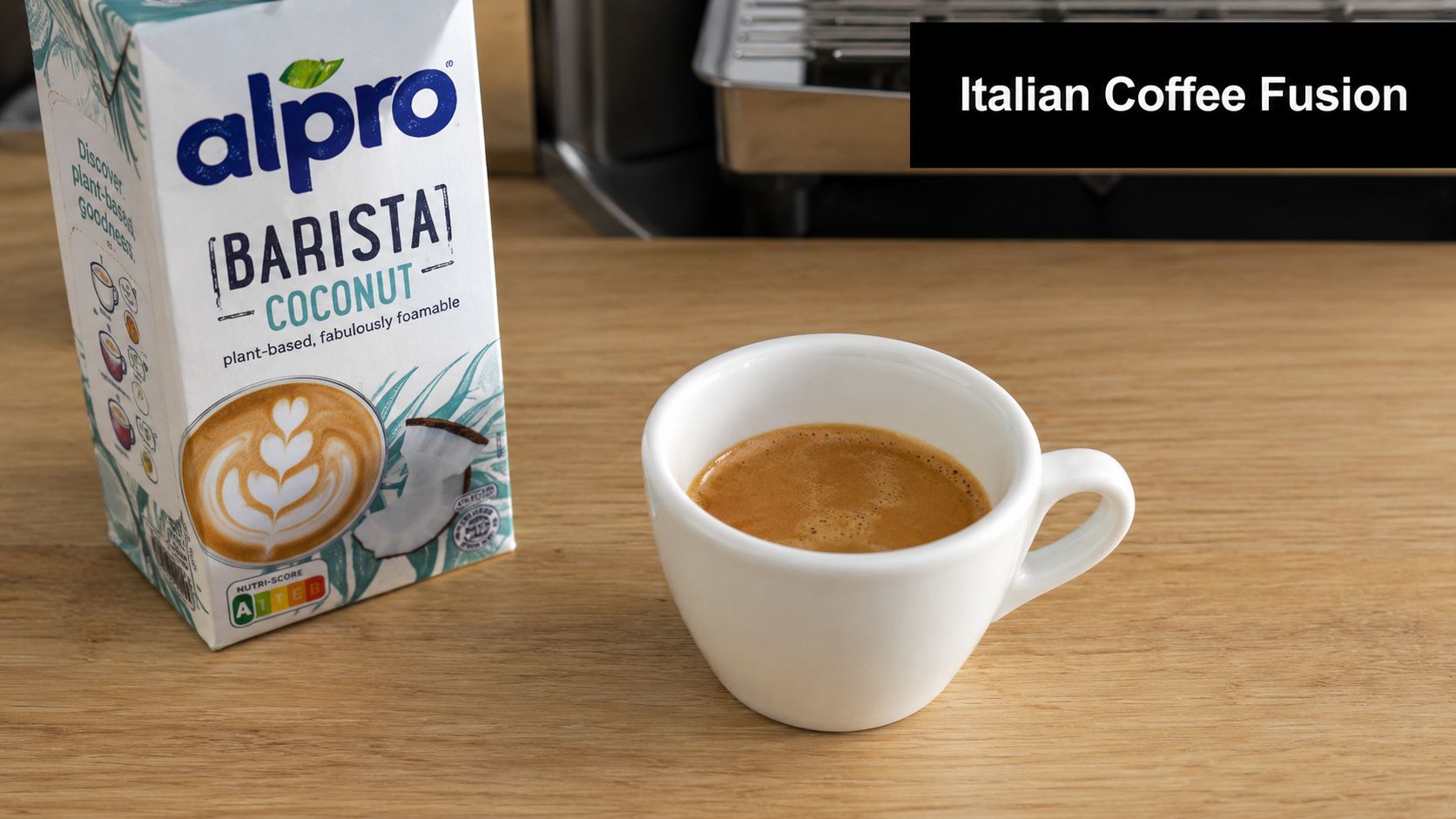
A dark roast with notes of cocoa, toast, or roasted nuts often pairs beautifully with coconut milk. The milk softens the sharper edges and adds a delicate sweetness without making the drink taste like dessert. That makes it especially appealing in cappuccinos and modern macchiatos.
Pairings worth trying at home
Cappuccino with a dark espresso blend Coconut milk brings a rounded edge to the cup and makes the finish feel smooth rather than heavy.
Freddo-style iced latte Over ice, coconut becomes fragrant and refreshing. The result feels clean and summery.
Short macchiato A small amount of coconut foam can soften intensity while still letting the espresso lead.
You can even take inspiration from Italian entertaining. If you're building a coffee moment for guests, a tray styled with biscuits or sweets makes the whole ritual feel more complete. For visual inspiration, this Italian sweets presentation image captures that celebratory spirit well.
A simple Caffè Cocco Freddo
Brew a strong espresso and let it cool slightly. Fill a glass with ice, add the espresso, then top with chilled barista coconut milk. Stir gently so you keep a little contrast between the coffee and milk.
The best pairings don't hide the espresso. They frame it.
If you want extra elegance, finish with a very light dusting of cocoa. Keep it restrained. Coconut and coffee already do enough on their own.
Buying and Storing Barista Milk in the UAE
Finding a good carton in the UAE is easier when you know what to look for. The challenge isn't that options don't exist. It's that many shelves mix general drinking coconut milk with coffee-ready blends, and the packaging can look deceptively similar.
The market is moving quickly. In the UAE, the plant-based milk market is valued at approximately USD 60 million, and more than 1,200 specialty cafés as of 2025 are helping drive demand for high-performance barista blends, according to Ken Research on the UAE plant-based milk market.
What to look for in a shop or online
Use the front and side panels of the carton as your guide.
Barista wording: Terms such as barista blend, for coffee, or professional use usually signal better steaming performance.
Coffee-focused instructions: If the carton mentions frothing or steaming, that's a positive sign.
Unsweetened profile: Many home chefs prefer an unsweetened version so the espresso stays in control.
Specialty food retailers and gourmet online stores are often more reliable than general convenience shelves because they curate more intentionally. If you're browsing categories, this gourmet product category visual reflects the kind of organised shopping experience that makes niche ingredients easier to find.
Storage habits that protect performance
Once you've bought a good carton, storage matters.
Keep it chilled: Cold milk steams more predictably and gives you more control.
Shake before use: Coconut solids can settle, even in well-formulated products.
Seal promptly after opening: Exposure to air affects freshness and flavour.
Don't steam the whole carton's worth: Pour only what you need into the pitcher. Reheating leftovers hurts texture.
For allergy-conscious households, always read the full label and processing notes carefully. Coconut may suit some people who avoid dairy, but every household has its own sensitivities and comfort level.
The practical mindset is simple. Buy small at first, test with your machine, and only then decide which product deserves a regular place in your fridge.
Conclusion Elevate Your Daily Coffee Ritual
The pleasure of barista coconut milk is simple. It lets a dairy-free coffee feel intentional, balanced, and satisfying rather than like a compromise you tolerated for lack of a better option.
Once you understand how it behaves, the carton becomes easier to judge. You know why one version froths into glossy microfoam while another turns thin or grainy. You also know where expectations need adjusting. Barista coconut milk can produce attractive foam and even simple latte art, but it usually behaves best with clean hearts, tulips, and other forgiving patterns rather than the dramatic precision some home chefs expect from dairy.
That shift in expectation matters. Good results come from matching the milk to the drink, the coffee, and your technique, much like choosing the right olive oil for finishing instead of frying. In the UAE, that practical mindset helps even more because availability can vary from one retailer to another. A little label-reading and a little testing at home usually go further than chasing whatever generic international advice happens to trend online.
The reward is a cup with real café character. Your cappuccino holds its foam. Your latte tastes rounded instead of watery. Your iced coffee stays pleasant and cohesive to the last sip.
Keep the ritual enjoyable
Small tools help too. If you often take coffee on the go, it helps to find the best collapsible travel mug so the habit stays practical without adding clutter.
The larger point is straightforward. Great coffee at home comes from understanding a few ingredients well, then using them with care.
Choose a proper barista blend. Steam with restraint. Pair it with coffee that suits coconut's natural character. Do that, and your daily cup becomes easier to improve and much more enjoyable to repeat tomorrow.


Comments