Catering for Companies: UAE Corporate Event Guide 2026

You're three days out from a client breakfast in Dubai, the headcount has changed twice, the halal dishes are fine, the gluten-free plates are not labelled, and the venue just called to say the warming cabinet is running late. That's the world of catering for companies in the UAE. The difference between a smooth event and a messy one is rarely the food alone, it's the planning, the controls, and the supplier discipline behind it.
In Dubai and Abu Dhabi, corporate catering is not a side activity. It's a repeat buying habit built around meetings, board lunches, office celebrations, client hosting, and gifting. Industry benchmarks show companies that cater place orders about 3.4 times per month, the median per-head spend for office lunch catering is $28.50, and the average corporate catering order value is $1,640 CaterCamp corporate catering statistics. That is exactly why strong catering teams treat this as an operating function, not an occasional perk.
The companies that get this right stop thinking like consumers and start thinking like procurement managers. They lock down service levels, build reliable vendor relationships, and plan for weekday demand, because 44% of caterers say the strongest demand lands on Tuesday through Thursday and 82% of companies use catering as a recruiting or retention tool CaterCamp corporate catering statistics. In a market like Dubai, presentation matters, but consistency matters more.
Why Corporate Catering Success Matters for Your UAE Company
The office manager had done everything right on paper. She confirmed the lunch, shared the dietary notes, and emailed the floor plan. Then the delivery arrived short, the hot items were lukewarm, and the client in the room noticed before the facilities team did. That is the point where catering stops looking like admin and starts showing up as brand delivery.
Treat catering like a recurring business process
In UAE offices, catering should be run like a repeat service line, not treated as a one-off event. Orders come back for board lunches, visiting teams, internal celebrations, and client hosting, so every weak handoff gets exposed again and again. Supplier selection, menu control, and delivery discipline matter because the same mistakes will keep reappearing if the process is loose.
For Dubai businesses, especially those competing in a market where presentation is scrutinised, catering supports three things at once. It keeps employees fed and appreciated. It makes guests feel looked after. It signals that the company understands service standards and can manage details without hand-holding.
Practical rule: If you would not trust a supplier to handle a client presentation, do not trust them to handle a client lunch.
Why repeat occasions dominate in Dubai and Abu Dhabi
The UAE business culture is built around hospitality. Offices host visiting teams, hotels run internal meetings, agencies stage launches, and event planners need dependable food partners for recurring briefs. That makes catering a steady B2B function, not a side activity.
Operationally, hidden failures cause the most damage. Dubai venues often have tight loading bays, strict access windows, and building rules that change from one tower to the next. Add halal handling, allergy separation, and live service expectations, and the job becomes a logistics exercise as much as a food order. A supplier that cannot manage approvals, transport timing, and on-site coordination will fail even if the menu looks strong.
Corporate buyers in the UAE should also treat compliance as part of the brief. Labelling, ingredient disclosure, temperature control, and clean service ware are not optional details when guests include executives, clients, or staff with dietary restrictions. The companies that avoid problems are the ones that ask for these controls before the first quote, not after the trays arrive.
Use a simple checklist before you confirm any order. Check building access. Confirm the service window. Verify allergen labelling. Ask who handles setup, replenishment, and waste removal. Then compare suppliers on how clearly they answer those questions, because that tells you more than a glossy menu ever will.
The right mindset is simple. Buy catering as a repeatable operating system that affects morale, client trust, and your company's reputation in front of the people who matter. For a useful external comparison on event planning discipline, see the Cape Town corporate event planning guide, which shows how structured planning reduces event-day mistakes.
Planning Your Corporate Catering Event A Timeline and Budget Framework
Most catering failures in the UAE start with bad timing. Someone books the room first, sends the invite second, and treats food as an afterthought. That sequence creates rushed choices, inflated costs, and service gaps that show up on the day. Use a planning calendar that starts with the event purpose and ends with a signed-off dispatch sheet.
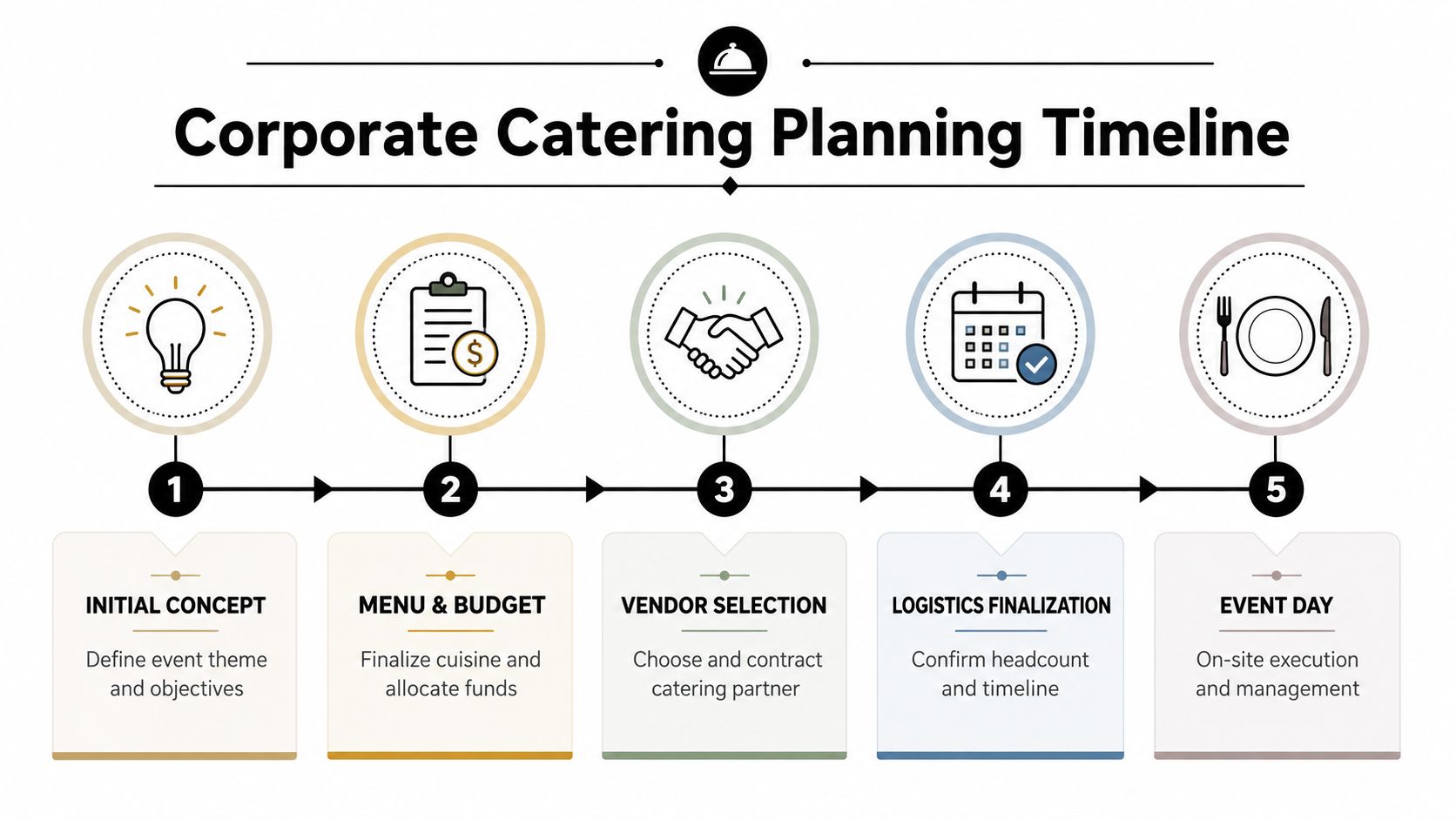
Build the timeline backwards from the event
Start with the event type and the building rules. An executive board lunch needs tighter menu control and a shorter service window than a conference breakfast. A client reception in Dubai Marina needs more attention to presentation, access timing, and replenishment than an internal team meal. A gift hamper programme for Ramadan or Diwali needs earlier sign-off because packaging, customisation, and delivery slots become harder to coordinate fast.
The practical sequence is straightforward.
Initial concept. Define the purpose, audience, service style, and dietary mix.
Menu and budget. Fix the cuisine style, headcount assumptions, and delivery scope.
Vendor selection. Shortlist suppliers that can handle the volume and timing.
Logistics finalisation. Lock the floor plan, arrival time, access point, and service team.
Event day. Run the brief, supervise the setup, and record what worked.
That sequence keeps pressure out of the final week. Early decisions reduce fire-fighting later, especially when HR, procurement, and facilities all need the same information. One shared document beats three message threads and a trail of incomplete approvals. For a second perspective on event sequencing, the Cape Town corporate event planning guide shows the same discipline in a different market.
Budget for food, labour, and failure points
A lot of companies budget only for the menu. That misses the total cost. You need room for staffing, transport, service equipment, last-minute replacements, and a contingency line for headcount changes or venue restrictions. If those items are missing, the cheapest menu becomes the most expensive event.
Practical rule: A catering budget without logistics is merely a guess.
Use the same template every time. List the event objective, expected guest count, dietary notes, delivery window, service style, approvals, and emergency contacts. Then get the caterer to confirm what is included and what is not. If the quote stays vague, it will turn into a dispute later.
Treat the budget as an operations document, not a shopping list. Build in the cost of coordination, not just the cost of food. If the event includes branded service or a specialist menu item, such as a pizza set-up from the IFM Gourmet Dubai pizza service visual, confirm the equipment, staffing, and delivery sequence before you approve the spend.
Menu Selection and Dietary Management for Mixed-Workplace Events
Menus in Dubai do not fail because they are too simple. They fail because they try to impress in the wrong ways. Corporate catering works when the food looks deliberate, travels well, and serves a mixed crowd without forcing the organiser to build a separate meal plan for every desk.
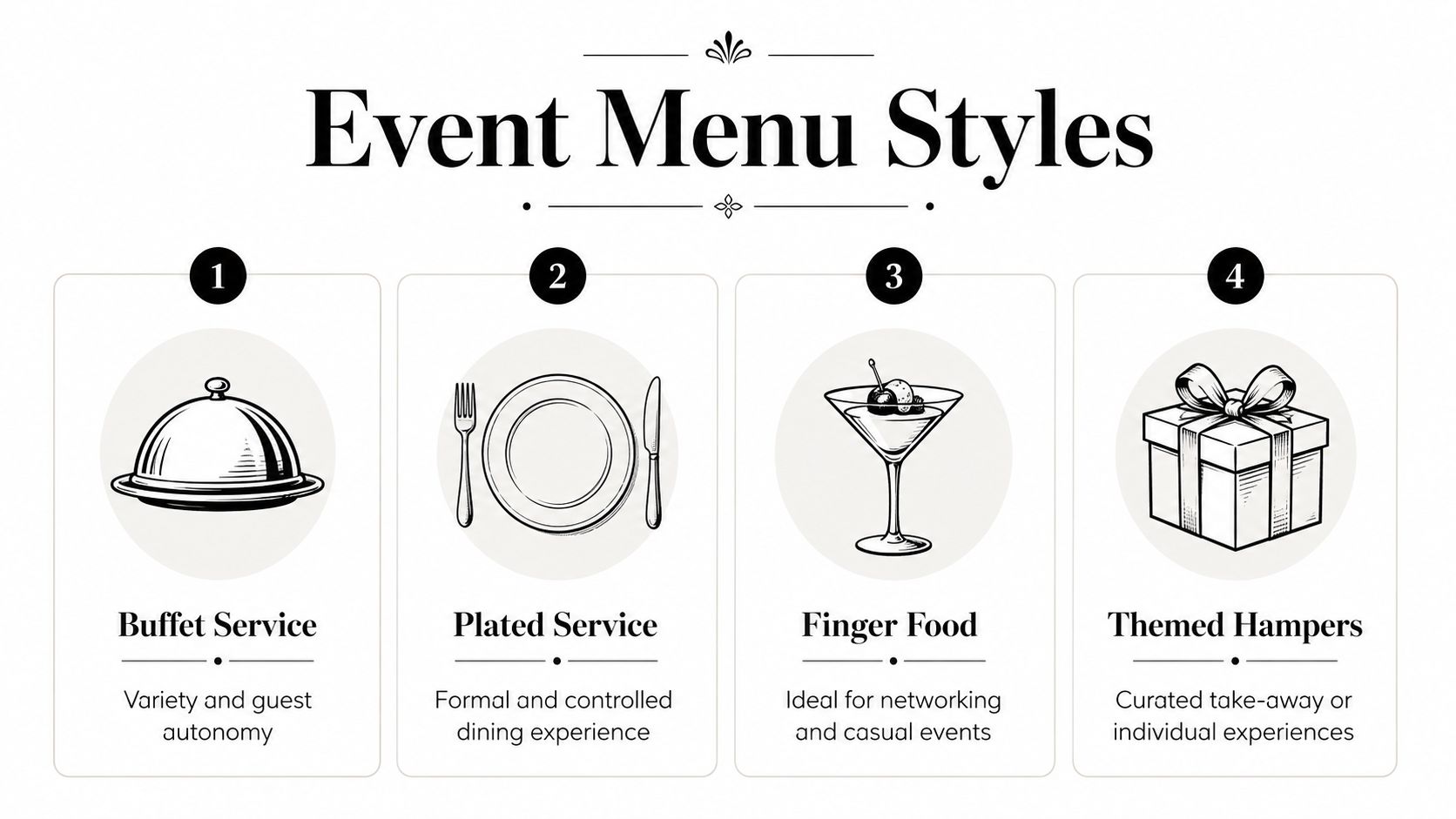
Match the menu style to the room
Buffet service works best for larger internal events, training days, and relaxed team gatherings where guests can move at their own pace. It gives variety and flexibility, but it still needs control points, clear signage, and steady replenishment. In a crowded room, a buffet turns into a bottleneck quickly if the flow is not planned.
Plated service suits executive meetings, formal client lunches, and premium hospitality moments. It looks polished and feels controlled, but the kitchen has less room for delay. One late plate affects the whole room, so plated events demand sharper kitchen timing and tighter service coordination.
Finger food is the right answer for networking events, launch nights, and short receptions. People can talk while eating, which matters more than a sit-down sequence in many Dubai business settings. The trade-off is simple, small items still have to feel substantial, or the event will seem cheap.
Themed hampers fit individual gifting, office appreciation packs, and hybrid events where people collect food rather than dine together. They also work well when companies want something premium but logistically simple. A good hamper feels curated, not overloaded, and the contents should match the purpose of the event.
The menu architecture matters more than the menu adjectives. A polished spread is one that holds up under traffic, temperature change, and mixed expectations. If the format cannot survive the room, the food concept is wrong.
Manage dietary needs without turning the menu into a puzzle
The big operational challenge in the UAE is serving vegetarian, halal, gluten-free, and high-protein preferences together without breaking the menu into awkward fragments. Recent workplace catering coverage notes that lunch programmes are increasingly shaped by dietary restrictions and popular-item data, but it leaves a real gap on how to build one order stream that works for mixed teams Forbes workplace catering coverage. That gap matters here because Dubai teams are diverse, international, and highly label-conscious.
Build around a core menu that works for everyone, then add protected alternatives. Keep sauces separate. Label proteins clearly. Use ingredients that are naturally flexible. Do not make the kitchen assemble bespoke plates for every preference unless the event is small enough to justify it. In Dubai, the fastest way to create service errors is to over-customise a mixed guest list.
A corporate catering workflow tool also helps keep the mix under control. The catering management software guide is useful context for organisers who need to track notes, menu revisions, and service timing without losing special requests.
Practical rule: The best mixed-workplace menu prioritises accuracy over volume.
IFM Gourmet Food Store's gourmet range can fit into this kind of programme when a company needs premium chocolates, teas, cakes, or curated hampers for office gifting and small corporate moments. One practical use is a branded appreciation box for an end-of-quarter team lunch, where the food is part meal, part gift, not just catering.
For a visual example of how premium food presentation can be handled in a corporate setting, see this IFM Gourmet Dubai pizza visual.
Staffing, Service Options, and Logistics Checklist
The food can be excellent and the event can still fail at the service layer. In corporate catering, the difference shows up in the details, the way trays are carried, the way labels are placed, the way a runner handles a last-minute change without disturbing the room. Dubai venues punish weak coordination, so staffing and logistics deserve the same attention as the menu.
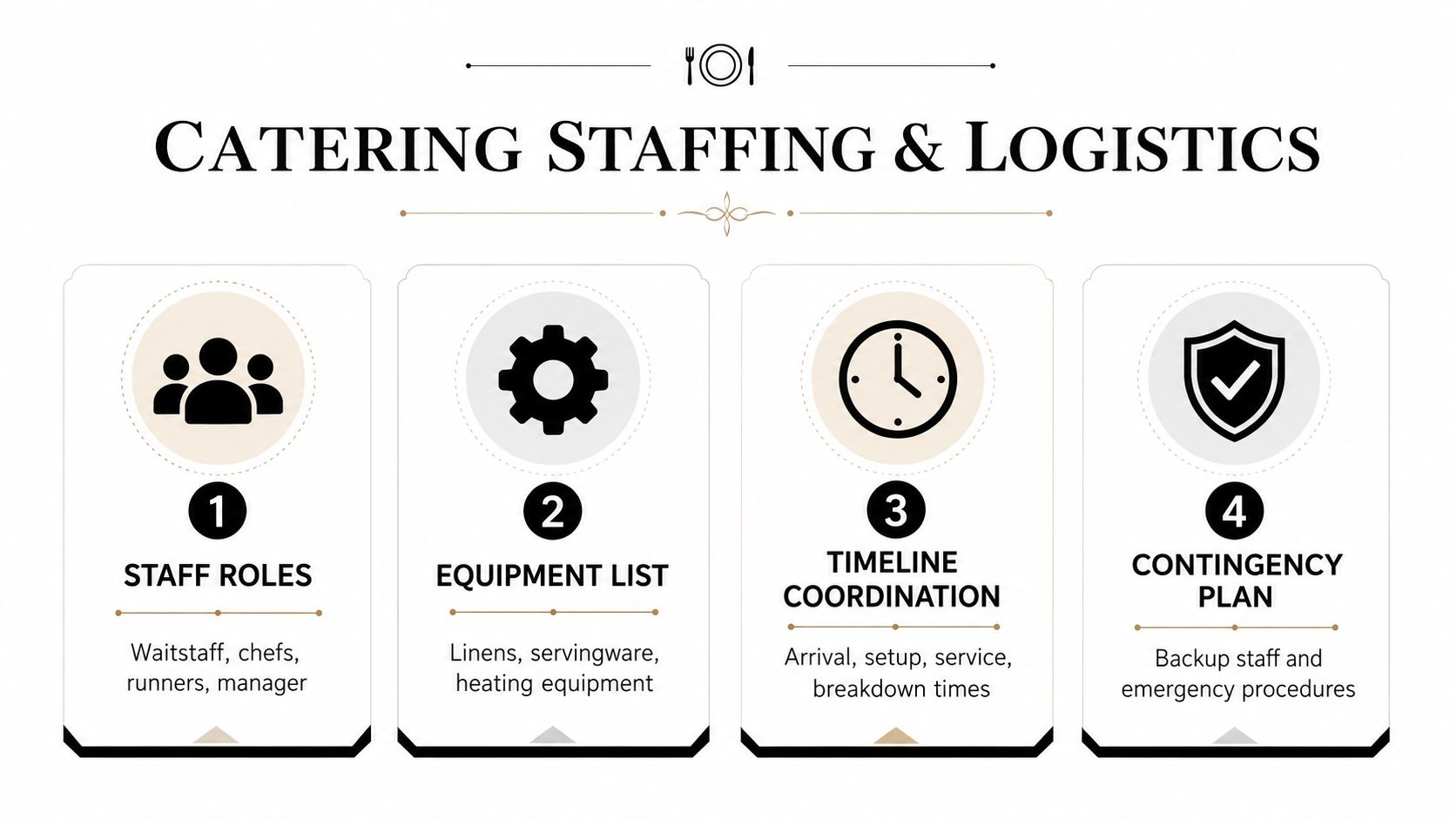
Use a role-based staffing plan
Do not book “catering staff” as one vague line item. Split the work by function so every task has an owner.
Waitstaff: Handle service, clearing, and guest-facing presentation.
Chefs: Manage final finishing, portion control, and hot station quality.
Runners: Move replacement items, ice, disposables, and emergency stock.
Event manager: Owns timing, communication, and fixes when something slips.
For larger office catering in Dubai, assign one person to hold the overall service brief and one person to control the delivery check-in. If those roles blur, missing trays, late refills, and awkward service gaps show up right when the meeting starts.
The essential tips from Uptown Rent A Car fit this work because event logistics always depend on timing, access, and backup planning.
Follow the Gulf Food Code controls without cutting corners
UAE corporate catering should be built around the Gulf Food Code controls for reheated foods and hot holding. Cooked foods that are cooled and then reheated must reach at least 74°C before service, and hot-held foods must stay at 63°C or above Technomic Gulf Food Code guidance. This is the baseline requirement for safe multi-drop office catering.
Use shallow pans for chilling, label production times, reheat in blast or combination ovens to core temperature, and verify with calibrated probe thermometers at dispatch and arrival. If your caterer cannot explain that workflow, do not assume the team will manage it correctly on site.
Practical rule: Hot food that arrives visually perfect but fails temperature checks is a liability, not a success.
Lock down the equipment and arrival sequence
List the equipment before the event, not on the morning of the event. That means chafing dishes, coffee urns, serving utensils, linen, bins, plates, cups, and backup utensils. Then schedule arrival, setup, service, and breakdown in writing.
A good caterer will confirm access rules, lift usage, loading bay restrictions, and the service route. In Dubai towers, those small building rules create bigger delays than kitchen issues. If the organiser and caterer both assume the venue will sort it out, the event usually pays for that assumption.
Contracting and Payment Tips for Corporate Catering Buyers
A weak catering contract turns into arguments, delays, and surprise charges. A strong one removes ambiguity before anyone starts cooking. If you buy catering for a company, insist on clear terms. The cheapest quote often becomes the most expensive invoice once service changes start.
Pre-qualify the vendor before you compare prices
Do not compare menus from vendors you have not checked properly. Pre-qualification should cover experience with UAE corporate events, visible health and safety standards, and references from similar jobs. A supplier may handle private dinners well and still struggle with multi-drop office service, and that difference matters.
Procurement also needs to look beyond food quality. The UAE faces strong pressure around sustainability and local sourcing expectations, and industry discussion around supplier diversity shows that buyers increasingly care about who they buy from as much as what they buy ezCater supplier diversity coverage. The practical move is simple. Ask vendors how they source, what they can report, and whether their procurement story matches your company's ESG language.
Write the contract so there's no room for guesswork
Your agreement should spell out the scope of services, payment terms, cancellation policy, liability, and dispute handling. It should also define what happens if headcount changes, if the venue changes access times, or if service is delayed. If those items are not written down, somebody will invent a version later.
Use milestone payments when the event is large or the customisation is heavy. That keeps both sides accountable. A deposit, a pre-event balance, and a final approval against the confirmed headcount is cleaner than a single lump sum with vague deliverables.
Practical rule: If a clause would embarrass you in a dispute, it needs to be written before the event, not argued after it.
Avoid hidden costs by asking for the same level of detail every time. Staffing, transport, equipment, overtime, and premium packaging should not appear as an afterthought. In Dubai, where premium presentation often comes with premium logistics, undefined extras are where budgets leak.
IFM Gourmet A Partner for Premium Corporate Catering in the UAE
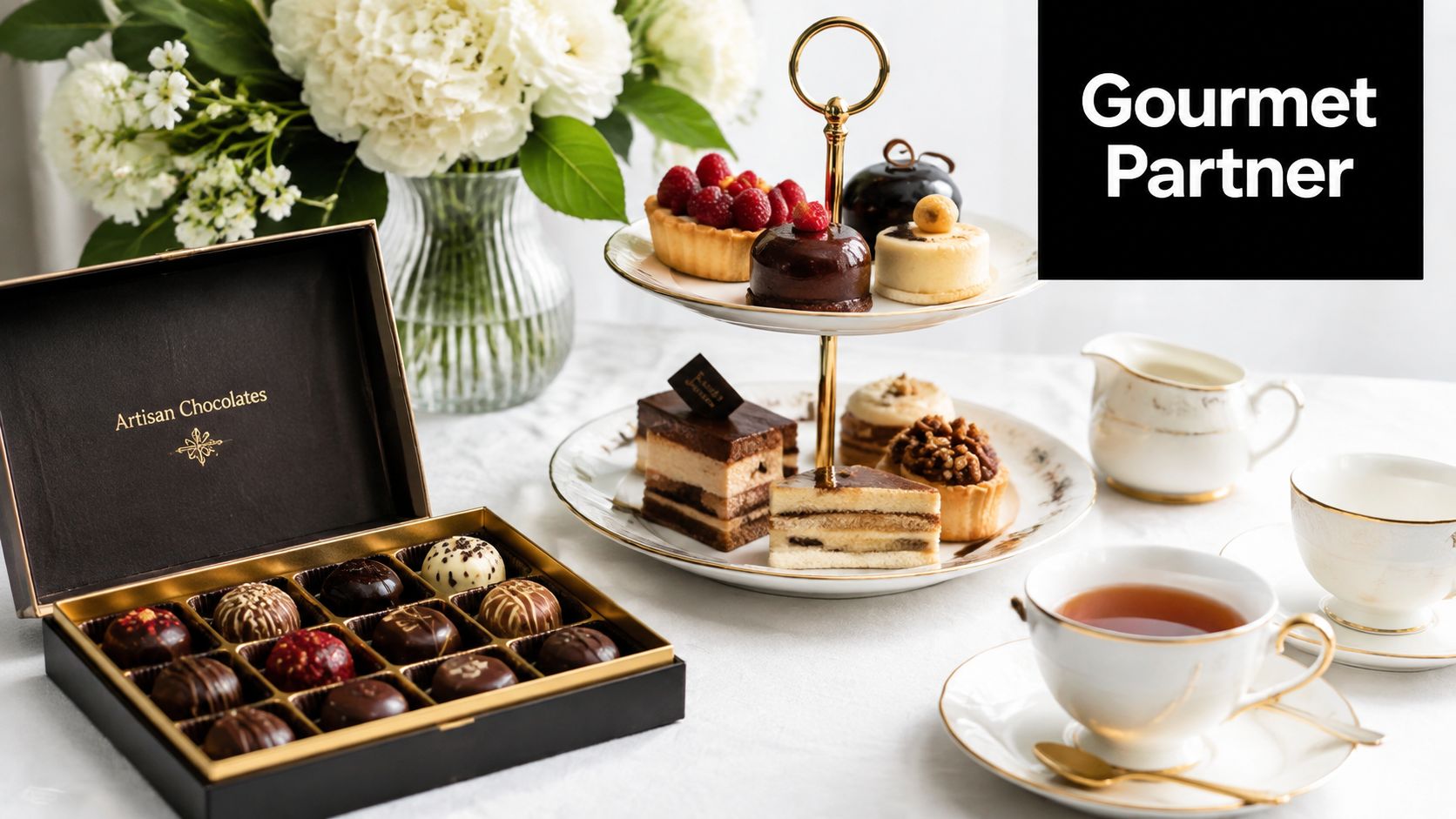
IFM Gourmet Dubai is the luxury online gourmet arm of IFM Investments LLC, part of the broader Italian Food Masters group. Its strength is curation as much as product range. The offer covers artisanal delicacies, fine chocolates, premium teas, cakes, sweets, savories, and curated gift hampers, which makes it a practical fit for premium corporate hosting in Dubai. The appeal lies in controlled, polished food service for companies that want quality and presentation to align.
Where it fits in a corporate programme
IFM Gourmet makes sense where the brief is less about feeding a crowd and more about shaping a moment. Client thank-yous, executive breakouts, premium afternoon tea, branded gifting, and themed office celebrations all sit in that zone. Artisanal panettone, pandoro, chocolates, olive oils, and other Italian staples feel appropriate there, because they support the event instead of distracting from it.
For event planners, the operational benefit is straightforward. A gourmet arm like this can support a mixed set of needs, from food-led gifting to curated experiences, without forcing every occasion into the same template. It also fits the Dubai market well because the UAE imported about AED 40.7 billion in food and beverage products in 2023, and the country's retail environment is shaped by premium, specialist demand rather than a purely mass grocery model UAE food and beverage import and retail context.
Why premium sourcing matters in the UAE
The hidden advantage in a premium supplier is consistency under pressure. A corporate team in DIFC or Business Bay does not need theatre. It needs a supplier that understands delivery windows, presentation standards, and the expectation that a small event still looks deliberate. Curated gourmet products outperform generic trays in those settings because the goal is a compact service that feels considered, not improvised.
IFM Gourmet Food Store also reflects the broader UAE pattern of import-led gourmet retail, where authenticity and product specificity matter. Its catalogue spans bronze-die pastas, olive oils, balsamic vinegars, panettone, pandoro, fine chocolates, teas, and hamper-ready products that suit festive and corporate occasions.
A tea-and-chocolate spread for a visiting client group shows the point clearly. The food supports conversation rather than replacing a meal, so the arrangement stays simple while the standard stays high. That is the kind of detail that clients remember.
For reference, the IFM Gourmet logo asset is a useful brand marker when companies want to align a premium food presentation with a recognisable Dubai-based gourmet identity.
Key Takeaways and Next Steps for Flawless Corporate Catering
Strong corporate catering in the UAE depends on three things. First, a planning process that starts early and gives every task a named owner. Second, a menu that handles mixed dietary needs without disrupting service. Third, a supplier contract that still works when the event gets busy and the details begin changing.
Companies that succeed with catering for companies treat it as a repeat operating rhythm rather than an occasional perk. They track what gets ordered, what gets eaten, what gets wasted, and which suppliers solve problems without drama. They also stop chasing the cheapest quote and start rewarding reliability, because the same supplier will likely serve them again next week.
Use this simple action plan for your next event.
One-page brief: Write the purpose, headcount, service style, delivery window, and dietary notes on one page.
Vendor check: Ask each supplier how they handle staffing, temperature control, contingency stock, and change requests.
Contract scan: Confirm scope, cancellation, liability, and any extra charges before signing.
Post-event review: Record what worked, what ran late, and what the team would change next time.
Keep a recurring supplier scorecard. Make it practical, not polished. Track on-time delivery, presentation, responsiveness, and food quality, then compare suppliers over several events. That record gives procurement a clear view of which partners deserve repeat business and which ones create avoidable friction.
Practical rule: The best catering relationship gets easier after each event, because the supplier learns your building, your people, and your standards.
In Dubai, office hospitality works best when it is systemised early. Build one template, use it every time, and stop rewriting the brief for every lunch, meeting, or client visit.
If you need premium gifting, corporate hampers, or gourmet food for office events in Dubai, IFM Gourmet Food Store can support that brief with curated Italian delicacies, fine chocolates, cakes, teas, and event-ready products. Visit IFM Gourmet Food Store to source food that fits your next corporate meal, client gesture, or premium team occasion.


Comments