
Chocolate Powder Price in the UAE: A Smart Buyer's Guide

In the UAE, chocolate powder price typically runs from about AED 8 for a 200g value pack to over AED 45 for a small premium jar, and pack size and grade explain much of that spread. A larger format can deliver a much lower cost per 100g, while a refined, imported cocoa can carry a far higher shelf price.
You may notice this while shopping in Dubai, Abu Dhabi, or another UAE emirate. Two containers can look almost identical, yet one costs noticeably more. The difference usually isn't the colour of the label. It comes from what sits behind it, including the cocoa grade, processing method, pack economics, import route, brand positioning, and intended use.
A useful comparison begins with the product itself. A sweetened drinking mix isn't priced in the same way as unsweetened cocoa for professional baking. A premium alkalised cocoa isn't equivalent to a value-oriented milk powder mix, even if both are described casually as chocolate powder.
The UAE market also depends heavily on imported cocoa products. That means the price you see reflects more than the beans. Freight, processing, packaging, retailer margins, stock purchased earlier, and seasonal demand can all affect the final tag.
Why Chocolate Powder Price in the UAE Confuses Most Buyers
A Dubai grocery aisle can create a misleading impression. You might see two brown jars beside one another, both suitable for a hot drink, but with a price gap of roughly AED 30. A first-time buyer may assume that one brand is charging more for its name.
Sometimes branding does matter. However, the larger explanation often sits in the formulation and pack size. One container may hold sweetened drinking powder, while the other contains concentrated, unsweetened cocoa designed for baking. Their prices can't be compared fairly until you know what you're buying.
The price tag is the final stage
Chocolate powder moves through several stages before it reaches a UAE shelf:
Cocoa beans are grown, traded, and processed.
Manufacturers turn the cocoa into powder or a prepared chocolate mix.
Importers bring the product into the UAE and manage freight, storage, and compliance.
Retailers add their own operating costs, margins, and promotions.
The shopper pays the final price for the pack, not for the cocoa ingredient alone.
Upstream prices can therefore influence the shelf, but they don't control it immediately. UAE cocoa bean tracking recorded a local price of US$2.37 per kg, equivalent to AED 8.72 per kg, in May 2026, up 19.6% year on year, according to UAE cocoa bean price tracking. That figure describes beans, not a finished retail jar, so the two prices shouldn't be treated as interchangeable.
Practical rule: Compare like with like first. Check whether each product is a sweetened drink mix, natural cocoa, alkalised cocoa, or a professional foodservice powder.
This guide follows the pricing journey from bean to jar, then turns it into a practical buying method. You'll see why pack size changes the unit cost, how natural and Dutch-process cocoa differ, which price levels suit daily drinks or gourmet gifting, and why global cocoa headlines may not appear on UAE shelves straight away.
Chocolate Powder and Cocoa Powder Explained Simply
At the supermarket, two packages may both promise a chocolate drink, yet their contents can serve very different purposes. Knowing the difference helps explain why shelf prices vary and prevents you from comparing a ready-to-drink mix with a baking ingredient.
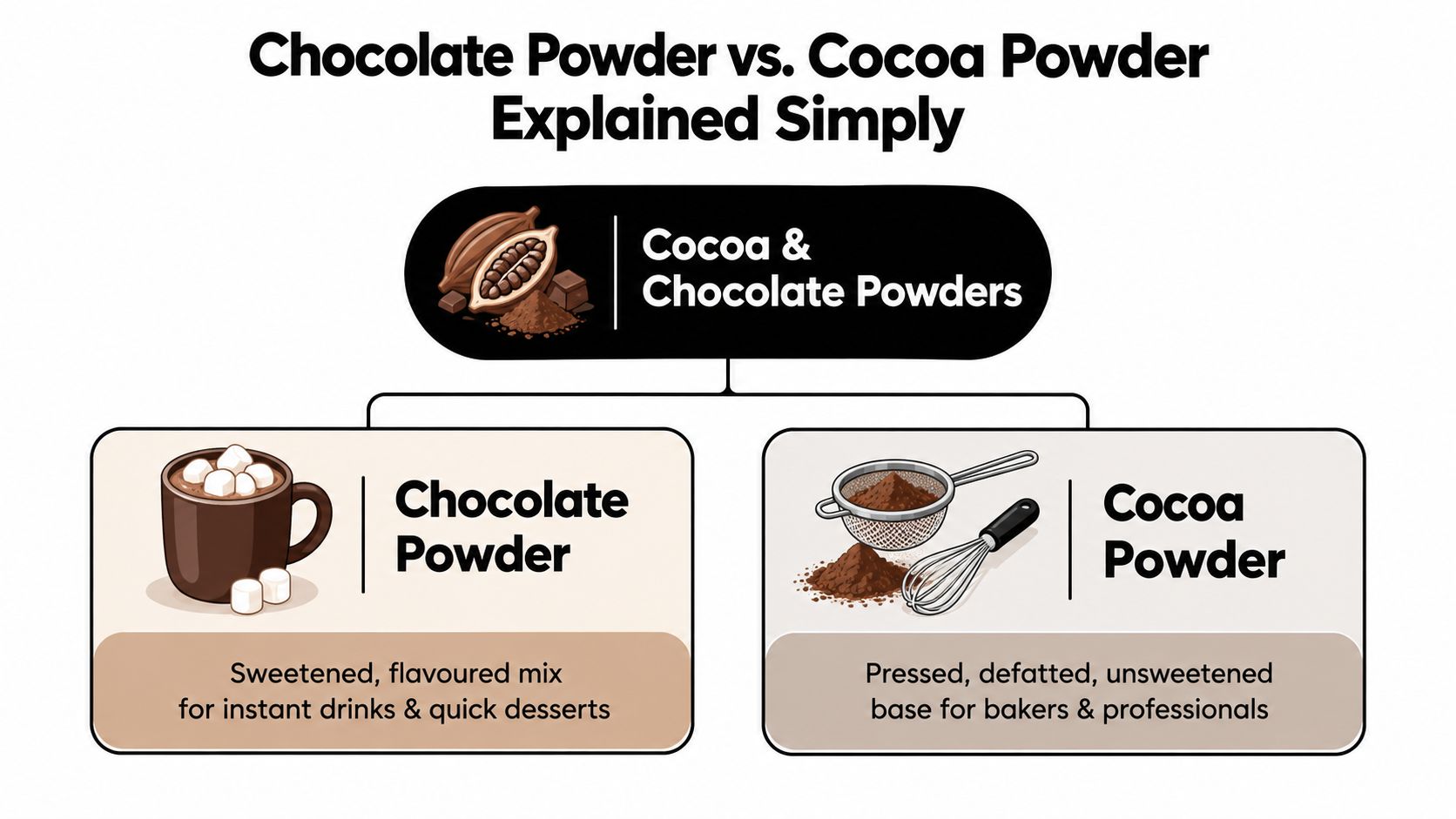
Chocolate powder usually means a sweetened, sometimes flavoured mix designed for instant drinks and quick desserts. It can include cocoa, sugar, milk ingredients, flavourings, or stabilisers. Stir it into warm milk with little preparation, and it is ready for household use or casual entertaining.
Cocoa powder is the pressed, defatted, unsweetened base used by bakers, pastry chefs, and chocolatiers. Manufacturers press much of the cocoa butter from cocoa mass, then grind the remaining solids. With little or no added sugar, it lets the cook control sweetness and use the powder as a recipe ingredient rather than a finished drink.
Natural and Dutch-process cocoa
Natural cocoa generally keeps a brighter, sharper cocoa character. Dutch-process, also called alkalised, cocoa is treated to reduce acidity, which creates a smoother flavour and often a deeper colour.
The difference works like the contrast between lively dark chocolate and softer milk chocolate. Neither option is automatically better. Your choice depends on the drink or recipe, the leavening used in baking, and the flavour you want.
Processing influences chocolate powder price because alkalisation adds a manufacturing step. Premium grades may also move through specialised import channels, where product specifications and handling affect the final shelf price. The premium can vary by product and specification, so compare the cocoa type rather than assuming every darker powder costs more.
A simple price ladder
The market works like a ladder with several rungs:
Entry rung: Sweetened drinking mixes, selected for convenience and volume.
Middle rung: Natural or alkalised baking cocoa for brownies, cakes, sauces, and drinks.
Upper rung: Single-origin, high-cocoa, carefully processed, or professional-grade powders.
Presentation rung: Gift tins, decorative packaging, and curated chocolate assortments.
The ladder does not rank quality by itself. It shows how formulation, processing, provenance, packaging, and the product's intended use shape the price a UAE buyer sees.
What Actually Drives the Price You Pay
The shelf price is built from several levers. Each one works like a setting on a recipe. Change one ingredient, and the final result changes.
Cocoa concentration
A product with more cocoa solids may deliver a stronger flavour and darker colour than a heavily sweetened mix, much like the concentration in wine. A bottle with a more pronounced character may require more of the costly base ingredient, while a lighter product may rely more on sugar, milk ingredients, or flavouring.
Read the ingredient list before judging the front label. “Chocolate flavour” doesn't tell you how much cocoa the product contains.
Bean origin
Origin works like single-origin coffee. Beans from a named region, estate, or carefully managed supply can carry a provenance premium. A blended product may combine cocoa from different origins to achieve consistency or control cost.
A named origin doesn't automatically guarantee that you'll prefer the taste. It tells you that the product is making origin part of its value proposition, so compare that claim with the actual cocoa percentage, processing details, and flavour.
Processing method
Natural and Dutch-process cocoa don't have the same production route. Alkalisation adds processing and changes colour, acidity, and flavour. Premium processing can therefore raise the cost before the powder reaches its container.
The UAE market analysis cited earlier identifies alkalised cocoa as carrying a 20–40% premium over natural cocoa, with the exact difference depending on grade and specification. That is why two unsweetened cocoas can still sit in different price brackets.
Cocoa butter content
Cocoa powder isn't defined only by its colour. The amount of cocoa butter left in the powder can affect mouthfeel, aroma, and performance in recipes. A fuller powder may taste rounder, while a more defatted product may be selected for a particular baking or beverage application.
This is similar to the difference between whole milk powder and skimmed milk powder. The products can share a name, but their fat content changes how they behave and what manufacturers charge.
Sweeteners and additives
A sweetened mix may look cheaper or more expensive depending on the formulation. Sugar, milk powder, vanilla, lecithin, flavourings, and stabilisers all affect the ingredient cost and the preparation experience.
Think of pure fruit juice compared with cordial. The cheaper option isn't necessarily worse, but you need to know whether you're paying for the main ingredient or for a ready-to-use blend.
Pack size and material
Pack economics can change the price dramatically. A small glass jar, metal tin, decorated box, or rigid gift package costs more per gram than a large foodservice bag because the packaging and handling are spread across less product.
It's like buying coffee beans by the kilo instead of in small retail pouches. The larger format often lowers the unit cost, provided you can use it before quality declines.
Brand positioning
A supermarket own-label product and a craft roaster may sell similar categories while serving different expectations. One focuses on everyday value and broad distribution. The other may invest in design, sourcing, technical information, and a more specialised retail experience.
That positioning can influence chocolate powder price even when the ingredient list looks familiar. For a daily family drink, convenience and cost may matter most. For a plated dessert or gift, provenance and presentation may have real value.
Real UAE Price Ranges You Will See on the Shelf
A shopper comparing chocolate powder in a UAE supermarket may see a small branded tin priced above a much larger bag. The checkout total alone does not explain the difference. Pack size, product type, retail channel, and the imported ingredient cost all shape what reaches the shelf.
One Waitrose UAE listing shows Cadbury cocoa powder 125g at AED 32.75, equal to AED 25.20 per 100g. Carrefour listed Cadbury Original Chocolate Flavour Cocoa Powder 125g at AED 47.33, while Hershey's Natural Unsweetened Cocoa Powder 230g cost AED 34.29, according to the Waitrose UAE Cadbury cocoa powder listing.
Larger formats change the calculation. Carrefour listed Nestle Nesquik Chocolate Milk Powder 1kg at AED 36.99, compared with AED 8.69 for a 200g pack. The smaller pack needs less cash at checkout, while the 1kg format gives the lower cost per 100g. It works like buying rice in a small pouch instead of a larger sack. The larger purchase usually spreads packaging and handling costs across more product.
A practical shelf comparison
Tier | Typical pack size | Price range (AED) | Approx. price per 100g (AED) | Best channel |
|---|---|---|---|---|
Value-oriented formats | 200g to 1kg | About AED 8 to AED 36.99 | Calculate from the exact pack | Supermarkets and hypermarkets |
Branded small packs | 125g to 230g | AED 32.75 to AED 47.33 | About AED 14.91 to AED 37.86 | Supermarkets and delivery platforms |
Foodservice cocoa | 10kg to 25kg bags | AED 40 to AED 80 per kg | AED 40 to AED 80 | Specialist and foodservice suppliers |
Premium imported grades | Varies by grade and origin | Higher, specification-led pricing | Compare delivered unit cost | Specialty retailers and importers |
The foodservice range of AED 40–80 per kg reflects differences in quality grade, alkalisation, and origin, as discussed in UAE cocoa powder solids pricing analysis. Retailers, specialty stores, and delivery platforms may apply different margins or promotions, so one product can carry several UAE prices.
Import transaction data shows why shelf prices can spread further. A UAE cocoa powder dataset recorded a 2024 low of US$1.13 per kg and a high of US$7.35 per kg. Specific 2024 shipments ranged from about US$4.89 to US$17.39 per kg. Regional import data placed the Middle East benchmark at US$4,713 per tonne in 2024, with the UAE at US$6,790 per tonne, as reported in UAE cocoa powder import transaction data.
Use one calculation for any pack:
Price per 100g = shelf price ÷ pack weight in grams × 100
The result shows whether a low checkout price is good value or reflects a smaller container.
Matching Price Tiers to Gourmet and Gifting Uses
Price should follow the job the powder needs to do. A weekday mug doesn't need the same specification as a flourless chocolate cake served at a dinner party.
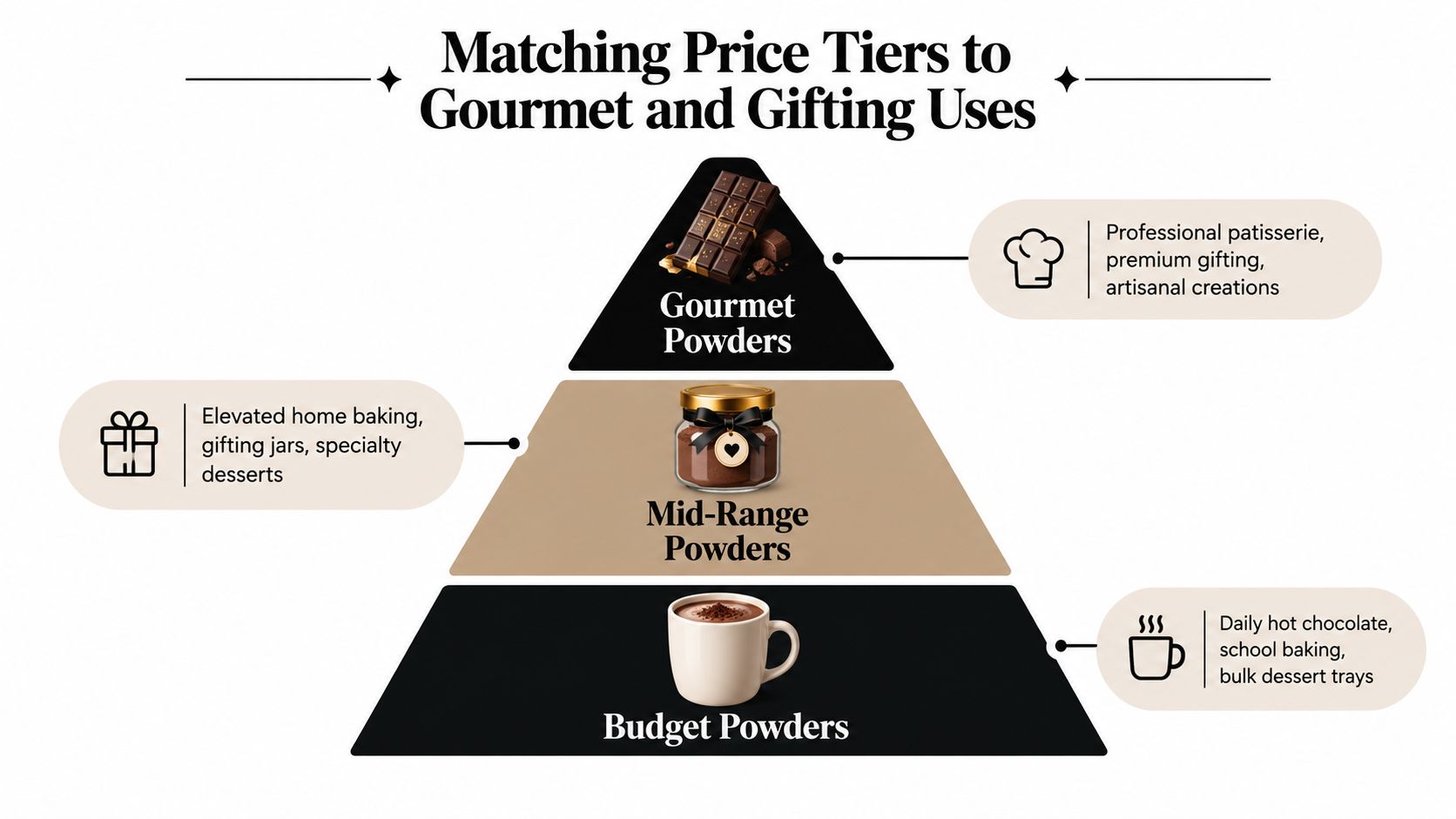
Budget powders make sense for daily hot chocolate, school baking, and bulk dessert trays. In these uses, sugar, butter, milk, flour, toppings, or other ingredients share the stage. A dependable, value-oriented product can be the sensible choice when you need volume and repeatability.
Mid-range powders suit weekend baking, brownies, mousses, family entertaining, and recipes where cocoa should taste rounded without dominating the budget. This is often the most balanced tier for home cooks. You get more room to notice aroma and colour, but you aren't paying primarily for a rare origin or presentation packaging.
When premium earns its place
Premium single-origin or high-cocoa powders can be appropriate for flourless cakes, chocolate sorbets, artisan truffles, and restaurant-style plates. These recipes give cocoa fewer places to hide. The powder's aroma, bitterness, colour, and finish become part of the dish rather than a background note.
A useful food pairing reference is this guide to find ideal coffee chocolate pairings, especially when you're planning a tasting table or dessert service. Coffee and chocolate can either support one another or create an overly bitter combination, so intensity matters more than the label alone.
For a visual reference when selecting chocolate styles for desserts or gifts, you can also review this dark and milk chocolate comparison image.
Gifting changes the calculation
Gift-grade tins, decorated boxes, and curated pairings sit in a different category from pantry ingredients. Their value includes presentation, convenience, provenance, and the experience of opening the package. They can suit Eid, Diwali, corporate hampers, and dinner-party host gifts, where appearance matters alongside flavour.
IFM Gourmet Dubai is positioned as a luxury online gourmet arm of IFM Investments LLC, part of the broader Italian Food Masters group. Its public assortment includes artisanal sweets and savouries, fine chocolates, premium teas, cakes, panettone, pandoro, nougats, coffees, oils, vinegars, pasta, spices, honeys, jams, and gift hampers, according to IFM Gourmet's company information and its gourmet assortment.
Buying rule: Spend more on powders you will taste directly. Spend less on powders buried under sugar, butter, flour, or heavy toppings.
A Simple Method to Compare Any Two Options
Two packages become much easier to judge when you ignore the photography and follow the same routine each time.
Start with the label
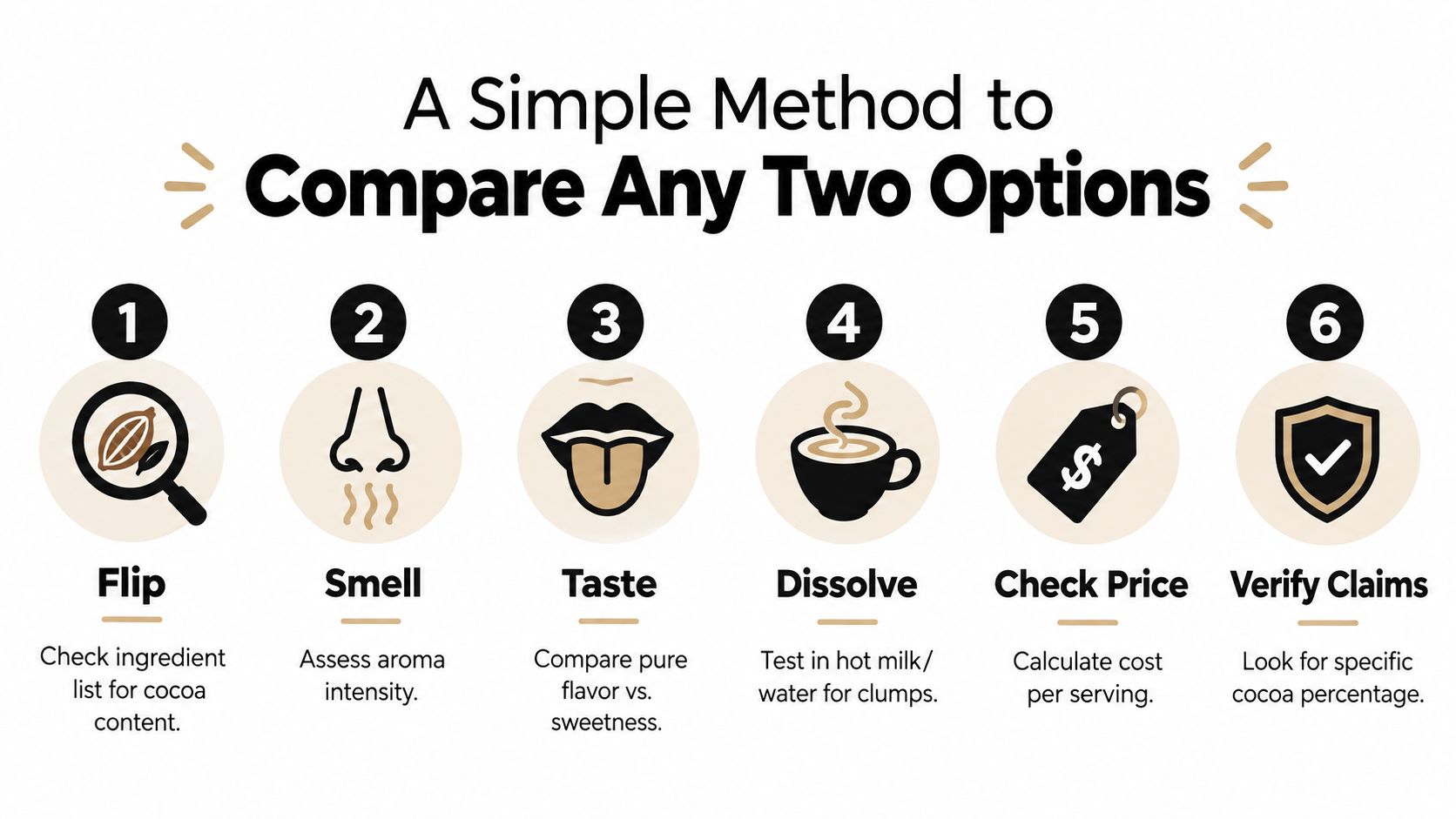
Step one, read the ingredients. Look for cocoa percentage, added sugar, lecithin, vanilla, milk ingredients, and oils. A product with a short ingredient list may suit a baker who wants control, while a prepared mix may suit someone who values speed.
Step two, identify the origin language. Terms such as single-origin, estate, or blended describe the sourcing approach. They don't tell you whether you'll like the flavour, but they help explain why one product may sit above another.
Step three, weigh the contents. Write down the net weight in grams. Then divide the price by the weight and multiply by 100. This reveals the dirham cost per 100g and prevents a small jar from appearing cheaper because its checkout total is lower.
Test the product, not just the promise
Step four, compare the unit figure with the relevant tier. A foodservice bag, a baking cocoa, and a sweetened drinking mix shouldn't share one benchmark. Compare each with products serving the same purpose.
Step five, make a small kitchen test. Smell a little dry powder first, then stir a small amount into hot milk or water. Look for aroma, colour, clumping, and dissolution. A powder that performs smoothly may save time, while a powder with a more forceful flavour may require less in the final recipe.
Step six, choose for the dish. A premium dirham-per-100g figure is worthwhile when cocoa is the star of the recipe or the centre of a gift. Otherwise, a reliable mid-tier product often offers the better balance.
Kitchen test: Warm liquid usually reveals practical differences that packaging can't show. Check whether the powder blends evenly and whether its flavour remains pleasant without relying on extra sugar.
Why Prices Have Not Dropped as Quickly as Headlines Suggest
Global cocoa headlines describe a different market from the UAE retail shelf. One market note placed global cocoa at around US$3,200 per tonne in February 2026, down 69% year on year, while UAE import proxy data for chocolate and cocoa food preparations recorded an average of US$8,488.55 per tonne in 2025, up 19.36% from 2024, according to the market note on global cocoa prices.
That apparent contradiction makes sense once you separate futures from finished products. A futures price reflects a traded commodity contract. A retail jar includes a specific bean quality, processing method, packaging format, shipping cost, importer margin, retailer margin, and brand position.
Why the shelf responds slowly
Retailers may still be selling finished powder purchased under earlier conditions. Importers and manufacturers also work with contracts and stock cycles rather than repricing every time a global chart moves. A long shelf life can slow the flow of cheaper input costs through the supply chain.
UAE buyers also encounter freight, currency movement, and seasonal demand. Gifting periods can increase interest in premium tins and curated assortments, while supermarkets and delivery platforms run different promotions.
The result is a lag between a cocoa futures correction and a visible retail change. A bulk private-label option may respond sooner than a branded or gift-ready product, but comparison shopping remains the more reliable way to find value today.
Your Short Checklist and Where to Shop Next
Use this checklist before adding cocoa powder to your basket:
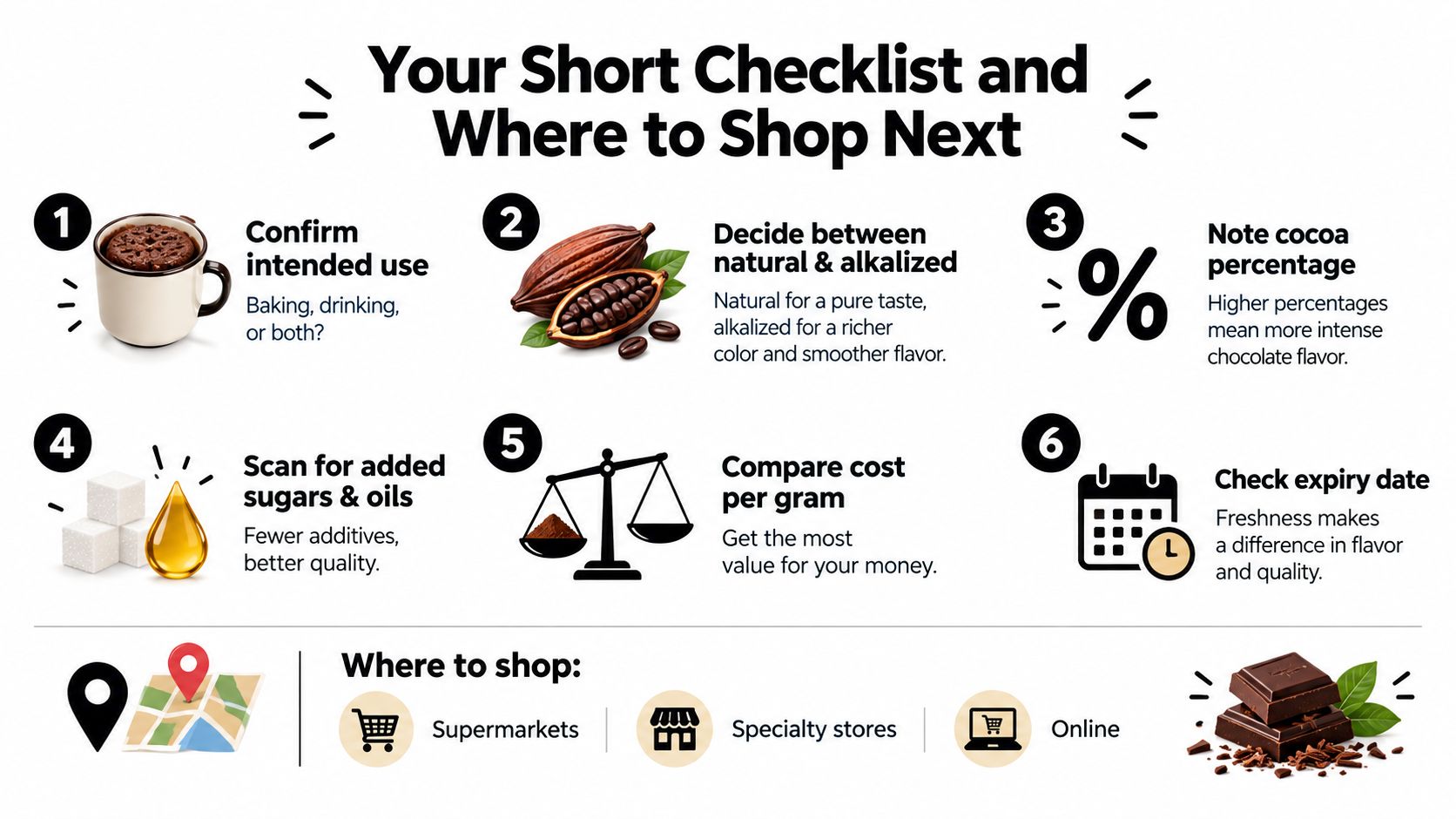
Confirm the use: Choose between a daily drink, baking, professional work, or gifting.
Choose the process: Match natural or alkalised cocoa to the flavour and recipe.
Note cocoa content: A stated percentage gives clearer information than a general chocolate description.
Calculate the unit price: Convert the pack price to dirhams per 100g.
Scan the ingredients: Check for sugar, oils, milk ingredients, and fillers if you want pure cocoa.
Assess the package: Pay for presentation when gifting, not for routine pantry use.
Keep the checklist beside this category guide for comparing cocoa and chocolate options.
For gourmet shopping, IFM Gourmet's Dubai store location is listed in Dubai Investment Park. IFM Gourmet Food Store offers Italian ingredients, chocolates, pantry staples, artisanal delicacies, and curated gift hampers. Visit IFM Gourmet Food Store for options suited to baking, entertaining, and gifting.

Comments