
Cups and Tumblers Guide for Every Italian Beverage Moment

You're standing in a Dubai kitchen or office pantry, holding two drinks and trying to decide what belongs in which vessel. One looks right in a porcelain cup, the other needs a taller, sturdier tumbler, and the difference matters more than it first seems. In gourmet retail, that choice shapes how a beverage tastes, how it's presented, and even how it fits into a gift hamper.
Understanding Cups and Tumblers in Modern Drinkware
A shopper in Dubai can walk past dozens of drinkware options and still feel unsure about the words on the shelf. Cup and tumbler sound similar, but they describe different shapes, different uses, and different serving experiences. That matters in a gourmet shop, where the label needs to match the drink, the occasion, and the gift presentation.
The basic vocabulary
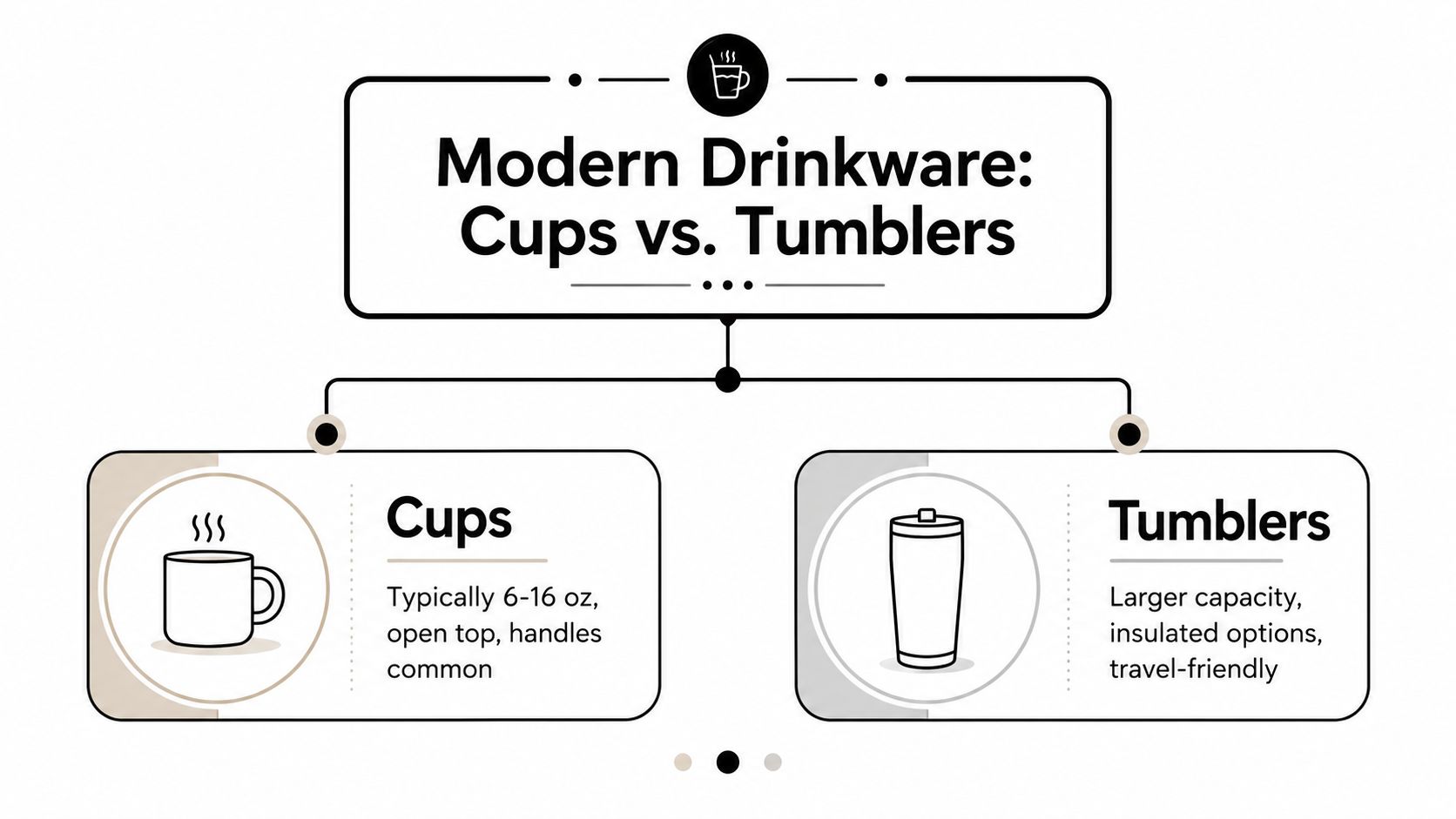
A cup is generally a small container for drinking liquids, usually around 6 to 16 US fluid ounces, or 177 to 473 millilitres, and it may be made from pottery, porcelain, glass, metal, wood, stone, polystyrene, plastic, or lacquerware, as outlined in the standard cup definition (cup reference). That wide material range explains why an espresso cup feels so different from a paper takeaway cup, even when the function is the same. For a practical size reference, the 450 ml everyday cup from Everti is a useful example of how cup sizing can sit neatly in the everyday range without feeling oversized (Everti 450 ml cup).
A tumbler is defined by its flat, stable base, which lets it sit upright without a stem. Historically, that stability mattered because older cup forms could be harder to set down, while modern tumblers are usually cylindrical or barrel-shaped with a heavy bottom, which makes them easier to use for everyday service (tumbler reference)). In a gourmet aisle, that distinction helps you separate an espresso cup, a water tumbler, and a stemmed glass at a glance.
Practical rule: if the vessel is meant to sit steady for regular use, you're probably looking at a tumbler. If it's smaller and portion-led, you're usually looking at a cup.
That simple rule helps when you're building a breakfast tray, a café order, or a corporate gift set for Dubai clients who expect the right drink in the right vessel.
Comparing Materials That Shape the Drinking Experience
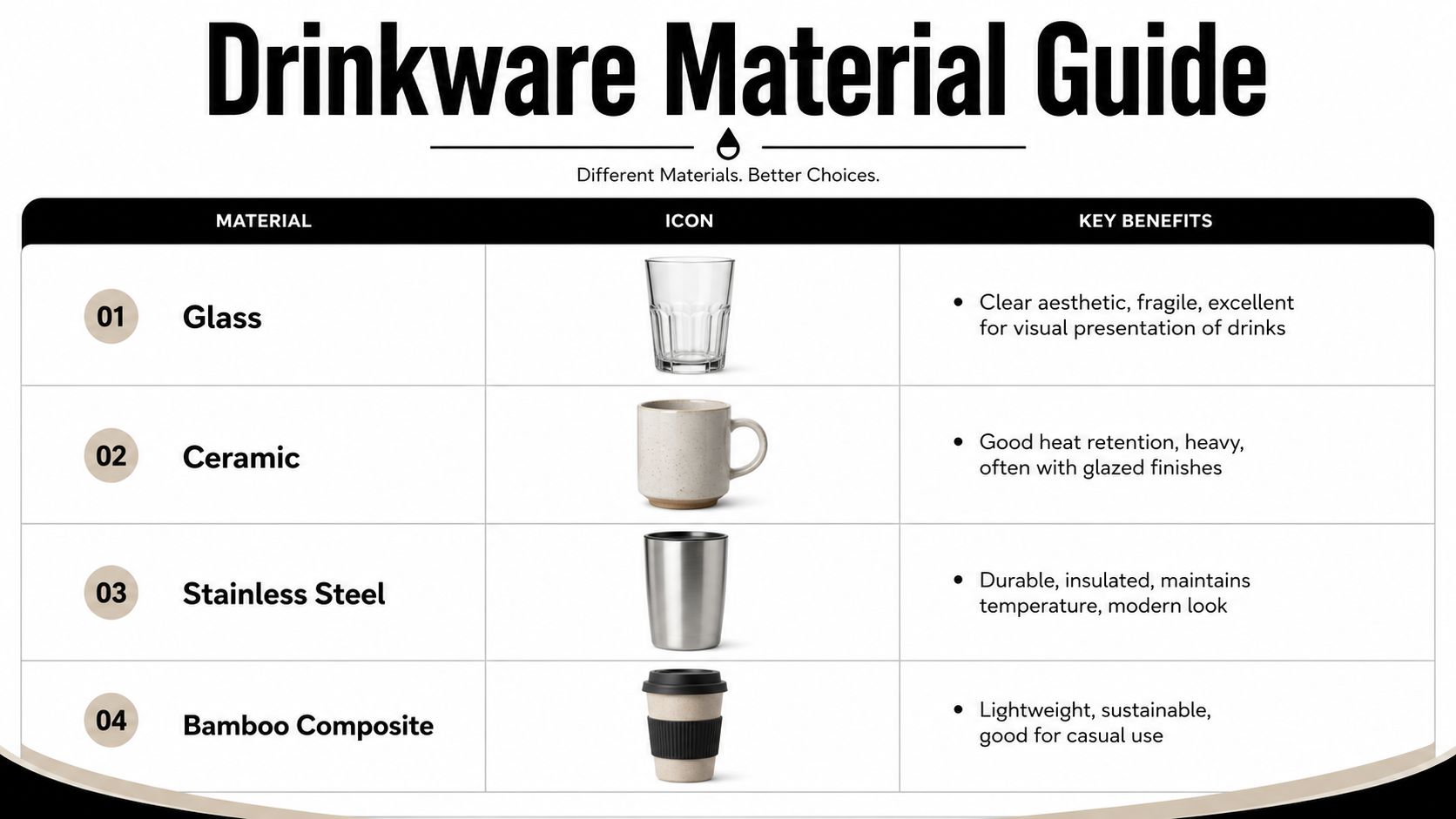
Material changes everything. It changes the feel in your hand, the way the drink looks, how long it stays hot or cold, and how suitable it is for a particular Italian beverage moment. A glass for limoncello, a ceramic cup for espresso, and an insulated stainless tumbler for an iced drink each send a different message before the first sip.
Glass, ceramic, stainless steel, and insulated builds
Glass works beautifully when the drink itself is part of the presentation. It shows colour, foam, layering, and garnish, which is why it suits sparkling water, digestifs, and clear spirits served after dinner. Ceramic feels more intimate and familiar, especially for coffee, because the heavier body and glazed finish create a warm, grounded table presence.
Stainless steel is the durable choice. It suits repeated use, travel, and busy hospitality settings where breakage is a concern. For UAE conditions, insulated stainless construction is especially valuable because it slows heat transfer through the wall and lid assembly, which helps drinks hold temperature better in warm ambient conditions (insulated stainless steel overview).
The reusable segment is also worth attention from a buying perspective. One market estimate projects reusable tumblers to grow from USD 3,392 million in 2024 to USD 7,485 million by 2032, with a CAGR of 10.4% over the forecast period (reusable tumblers market). That doesn't tell you which cup to buy, but it does show why reusable drinkware has become a serious category for premium retail and gifting.
Good buying logic: choose glass for visual elegance, ceramic for coffee comfort, stainless steel for durability, and insulated stainless steel when temperature control matters most.
For a shopper comparing product pages, a compact option such as shop 8 oz cups can be a useful size anchor, especially when the serving is small and the drink is meant to be consumed immediately (Monopack ltd).
Sizing Tumblers and Cups for the Right Beverage
Capacity should follow the drink, not the other way around. A vessel that's too small forces awkward topping up, while one that's too large can make a modest pour feel lost. In Dubai homes, cafés, and corporate pantries, the best choice is usually the smallest vessel that still gives the drink enough room for ice, foam, and comfortable handling.
Match the vessel to the serve
A 16 fl oz, or 473 mL, tumbler is a familiar commercial size for standard beverage portions, while 24 fl oz works better for iced drinks because ice takes up space and cold service benefits from extra headroom (tumbler sizing guide). That makes a practical difference in hot weather, where drinks warm quickly and refill frequency becomes part of the customer experience. A larger tumbler can also signal value in corporate gifting, especially when the recipient expects an everyday item they'll use often.
A cup, by contrast, usually suits smaller servings. Espresso sits at the compact end, juice lands higher, and water service moves up again depending on the setting. The right size also changes the visual balance of a table, because a short porcelain cup reads as precise and refined, while a tall tumbler feels relaxed and functional.
Vessel | Capacity | Best Beverage Pairing | Ideal Setting |
|---|---|---|---|
Espresso cup | Small, portion-led | Espresso, ristretto | Morning coffee tray |
Cup | Around 6 to 16 fl oz | Cappuccino, tea, juice | Breakfast table, café service |
Tumbler | Around 16 fl oz | Cold brew, water, everyday iced drinks | Office pantry, casual lunch |
Large tumbler | Around 24 fl oz | Iced tea, sparkling water, chilled soft drinks | Outdoor entertaining, event service |
The table works best as a quick buying guide. If you're serving guests outdoors in Dubai, the larger format often feels more forgiving, while a smaller cup keeps a drink controlled and elegant indoors.
Pairing Cups and Tumblers with Italian Beverage Moments
Italian beverage culture is built on timing. Morning coffee is quick and concentrated, afternoon drinks soften into refreshment, and after-dinner pours shift into slower, more conversational service. The vessel supports that rhythm, so the right cup or tumbler does part of the storytelling before the drink even reaches the table.
Morning to late evening
For a doppio ristretto, a small porcelain espresso cup gives the drink the right level of focus. The size keeps the pour visually tight, which suits a serious coffee moment rather than a casual one. For cappuccino, ceramic remains the clearest choice because it holds warmth and gives the foam a stable, comfortable resting place.
A chilled glass tumbler suits limoncello after lunch. The clarity shows the pale colour, and the straight-sided shape feels clean and bright on the table. For aperitivo spritz, a flared tumbler or a wide glass works well because the drink benefits from aroma space and visible garnish. For a post-dinner amaro, glass again makes sense because the drink is served as a quiet closing note rather than a rushed refreshment.
The same logic carries into hotter weather. An insulated stainless tumbler is the most useful choice for a granita by the pool, because it helps the drink stay cold while the setting itself is warm. That's where function and ritual meet, especially in the UAE, where outdoor entertaining often asks more from drinkware than indoor dining does.
“Choose the vessel that keeps the drink honest.”
A bottle of water also changes mood depending on what surrounds it, and the visual treatment matters. A simple pairing like the one shown in this elegant spring water presentation works because the vessel frame is part of the impression, not just the liquid inside it (Lurisia Water visual).
Styling Cups and Tumblers for Gifts and Table Settings
A cup or tumbler becomes a stronger gift when it looks intentional. In a Dubai home, that might mean one porcelain espresso cup set beside a tin of Italian coffee and a small chocolate bar. In a corporate hamper, it might mean a stainless-steel tumbler paired with gourmet sweets, syrup, and a tea selection so the recipient sees a complete use case rather than a random object.
Turning function into presentation
The easiest styling move is to let the vessel lead. A porcelain cup should sit near compact, refined items such as coffee, pralines, or a small biscuit selection. A tumbler can handle more visual weight, so it works well beside infused syrups, tea sachets, or a bright sweet treat that adds contrast. The vessel then acts like the anchor, and the rest of the hamper builds around it.
For a table setting, keep the surrounding objects in the same temperature zone. A coffee cup looks more convincing next to grounded, aromatic items, while a cold tumbler feels right near citrus, sparkling drinks, or chilled treats. That makes the whole display read as a single story instead of a loose mix of products.
If you're photographing a styled setting, use the cup or tumbler as the nearest object to the camera. It gives the image a clear focus point and helps the viewer understand scale. In gift work, scale matters because a small cup can disappear next to oversized packaging, while a tall tumbler can dominate a compact box if the proportions are off.
Corporate and festive gifting
Corporate hampers in Dubai often need to work across seasons and occasions, from Ramadan to Diwali to year-end gifting. A well-chosen drinkware piece makes that easier because it sits comfortably in many settings without feeling overly specific. It also helps buyers build a premium look without having to overfill the hamper.
Practical framing: one vessel, one drink, one mood. That's the simplest way to make a hamper feel curated instead of crowded.
A tumbler with clean lines tends to photograph well in business gifting, while a porcelain cup feels more personal and traditional. Both can be enhanced with sweets, coffee, tea, or pantry items, which is why the vessel choice should come first.
Care, Maintenance, and Sustainability in the UAE
Drinkware lasts longer when you treat it like a tool, not a disposable afterthought. That's especially true in UAE households, where hard water, frequent washing, and warm storage can shorten the life of premium pieces if you don't build simple habits around them. The good news is that most care routines are easy once you match the method to the material.
Cleaning by material
Glass and ceramic are generally the most straightforward to maintain, but they still benefit from careful handling after use. Air-drying helps reduce spotting on glazed surfaces, and a soft wash keeps fine pieces looking new for longer. Stainless steel needs a different approach, because residue and mineral build-up show up more easily on the inside and around the lid.
Hard water is a real issue in many Gulf households, so periodic descaling is sensible for stainless steel tumblers. A mild vinegar solution is a common practical approach for mineral deposits, especially when the piece is used daily and washed often. The point isn't perfect perfection, it's preventing the dull build-up that makes a good tumbler feel tired before its time.
Sustainability and end of life
The sustainability gap in drinkware is easy to miss because shoppers tend to focus on style or insulation first. In the UAE, though, waste reduction and segregation are part of the wider civic conversation, so the material question matters at the point of purchase as much as at the point of disposal (drinkware trend coverage). That's why reusable materials deserve more attention than novelty pieces that won't last.
Smart habit: buy for repeated use, clean for longevity, and replace only when the material no longer serves the drink safely.
The older historical lineage of cups and tumblers also reinforces a simple idea: useful objects survive because they keep serving a purpose. In practice, the best lower-waste choice is usually the one you'll use again and again. For many households and gift buyers, that means durable tumbler builds, reusable cups, and careful maintenance rather than constant replacement.
Choosing Cups and Tumblers from IFM Gourmet Dubai
A customer standing at the shelf in Dubai often knows the feeling they want before they know the exact vessel. A morning espresso asks for one kind of cup, an iced coffee for another, and a corporate hamper needs a piece that looks thoughtful as well as useful. That is why a curated gourmet seller is easier to shop than a generic store, especially when the choice has to work across everyday cups, reusable tumblers, and gift pieces that sit comfortably inside festive hampers.
Why a curated source helps
IFM Gourmet Dubai is the luxury online gourmet arm of IFM Investments LLC, a culinary-focused company based in the UAE, and part of the broader Italian Food Masters group, known for quality, authenticity, and culinary elegance across Dubai's gourmet scene (IFM Gourmet). That matters because drinkware does not sit alone. It sits beside coffee, tea, sweets, and gift packaging, so the right source should understand the whole table, not just one item category.
A curated retailer also helps you match the vessel to the beverage moment. A small cup suits an after-dinner espresso, a sturdy tumbler suits a workday iced drink, and a well-finished piece can be tucked into a corporate hamper without looking out of place. The logic is simple, like choosing the right pasta shape for the sauce. The shape changes how the experience feels, even when the ingredients are familiar.
For buyers in Dubai and the wider UAE, that becomes useful in gifting as well. Ramadan gifts often call for something refined and practical, Diwali hampers benefit from pieces that feel festive without being fragile, and Christmas sets work best when the drinkware feels ready for repeated use after the celebration ends. A source that already thinks in terms of presentation and kitchen use makes those decisions easier.
Start with the drink, then match the vessel, then add the surrounding gourmet items. That order keeps the purchase clear, whether you are refreshing a home shelf or putting together a client hamper for explore the full drinkware collection.


Comments