Foie Gras Terrine Serving Guide & Tips

You've bought a chilled foie gras terrine for a Dubai dinner, but now the practical questions begin. Should it be served straight from the refrigerator? Which bread will balance its richness? Is the restaurant portion worth more than a retail block, and how should you handle it in the UAE heat?
A good foie gras terrine doesn't need complicated decoration. It needs careful temperature control, a clean slice, a fresh contrast, and enough planning to protect its delicate texture. The guide below takes you from the basics of the dish to buying, serving, storing, gifting, and choosing alternatives with confidence.
What Foie Gras Terrine Actually Is
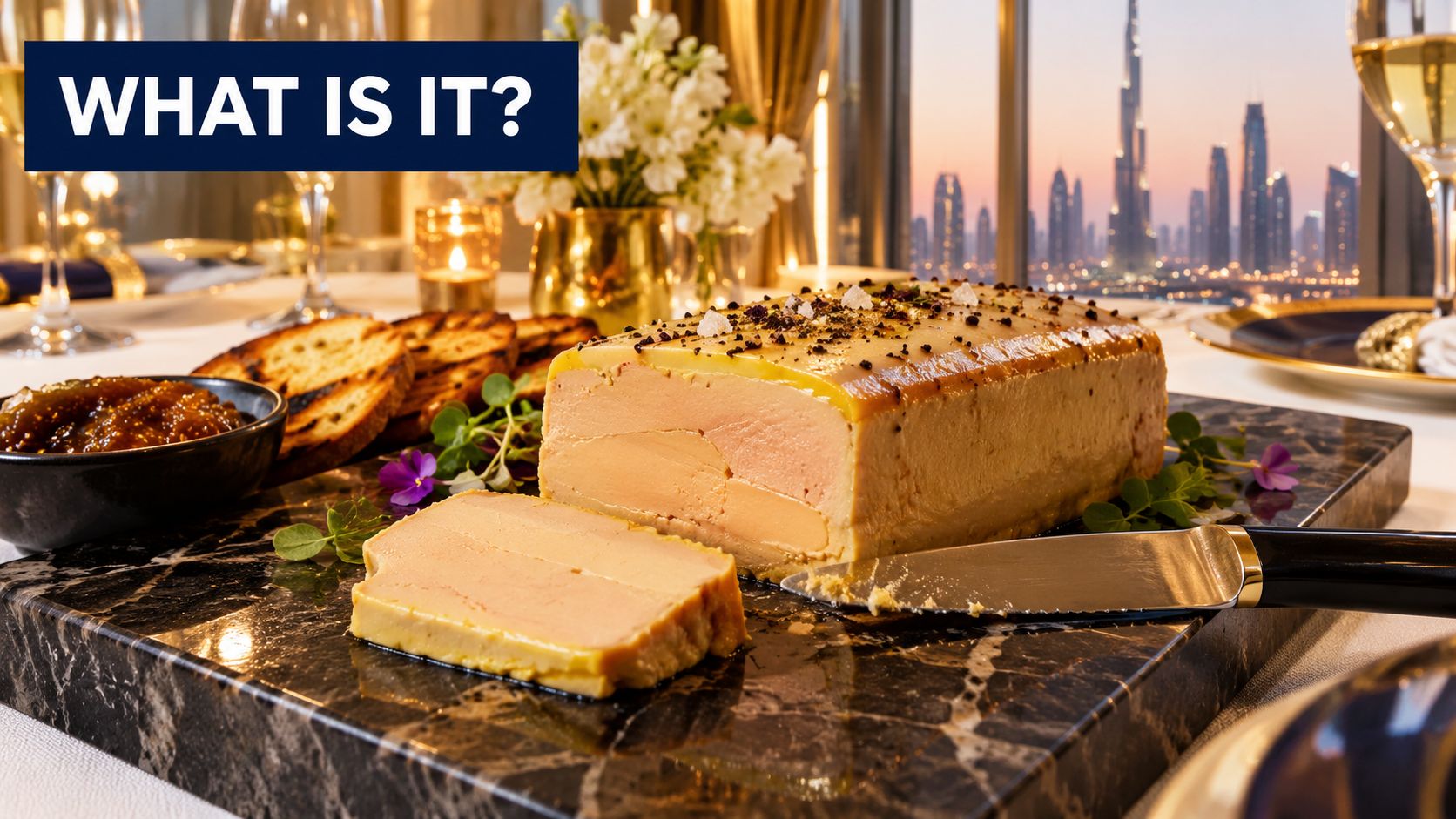
At a Dubai dinner party, the first moment is quiet. A chilled terrine rests on a marble board under warm light. A thin knife passes through the loaf, revealing pale ivory layers with a soft amber edge of rendered fat. The slice holds its shape, but it yields easily when spread over toast.
Foie gras terrine is a cooked preparation made from the liver of a fattened duck or goose. The liver is seasoned, packed into a loaf-shaped mould, cooked gently, usually in a water bath, and then cooled and pressed until it becomes firm enough to slice. The result is rich but structured, with a smooth texture that sits between a spread and a set pâté.
How it differs from other preparations
A terrine usually shows the character of the whole liver more clearly than a mousse. Mousse is blended and emulsified into a very smooth preparation, while a terrine can retain visible layers and a more substantial bite. A torchon is shaped into a cylinder, often wrapped and poached, giving it a different presentation and texture. Pâté is a broader category that may contain liver, meat, spices, herbs, and other ingredients.
Traditional foie gras terrine aims for restraint. The ingredient list can be as simple as liver, salt, and pepper, with some versions adding a small amount of port, Cognac, or Sauternes. Because there's no need to hide the main ingredient beneath a long list of additions, the quality of the liver, the seasoning, and the cooking control matter greatly.
Why it appears on UAE luxury tables
In the Emirates, foie gras terrine has moved beyond a narrowly French fine-dining setting. It appears in Dubai tasting menus, premium retail listings, festive selections, and special-order formats. A Carrefour UAE foie gras terrine listing is one example of the product reaching an upscale retail audience, while restaurant menus place it within carefully sequenced tasting experiences.
That range matters. A guest may encounter foie gras terrine as a plated course, a chilled retail product, or a gift selected for a celebration. The dish still carries French culinary heritage, but its role in the UAE is increasingly practical and occasion-led. It belongs on a festive board, a hotel menu, or a carefully assembled hamper as much as it belongs in a classic French dining room.
How a Terrine Is Made and What Gives It Character
Making a terrine is like building a delicate layered loaf. The liver forms the layers, seasoning provides the background, gentle heat sets the structure, and pressing gives the finished loaf enough firmness to slice. Each stage affects the final result.
Building the loaf
Start with whole duck or goose foie gras lobes. If the product isn't already prepared, inspect it and remove the larger veins carefully. Use a small, clean knife and handle the liver while it remains cold, because warmth makes the fat soft and difficult to manage.
Season the lobes with salt and pepper. Some recipes add Sauternes, port, or Cognac, then leave the liver to marinate under refrigeration. Marination lets the seasoning move beyond the surface, but the liver shouldn't sit exposed or warm on a kitchen counter.
Pack the seasoned pieces firmly into an earthenware terrine mould or stainless-steel loaf pan. Pressing matters because trapped air creates gaps and weak points in the finished slice. Think of it as packing layers into a sandwich. The more evenly the layers meet, the cleaner the loaf will look when cut.
Gentle cooking and pressing
Cover the mould with its lid or foil, then place it in a bain-marie, or water bath. The surrounding water cushions the terrine from direct oven heat and supports more even cooking. A traditional method uses a low oven temperature around 75°C for roughly 90 minutes, as described in the available whole foie gras terrine preparation guide.
After cooking, cool the terrine promptly and press it under a light weight in the refrigerator. This step consolidates the layers and encourages the rendered fat to form a protective top seal. The loaf then needs time to firm before slicing.
Practical rule: The terrine should be treated as a structured loaf, not as a loose pâté. Gentle heat sets it, while cooling and pressure give it shape.
The finished product should have an even colour, a silky mouthfeel, few visible veins, balanced seasoning, and a clean finish. Excessive oiliness, harsh alcohol, or a broken slice often points to uneven packing, poor temperature control, or overhandling.
The following video offers a visual reference for the assembly and service sequence:
Formats, Sizes, and Prices in the UAE Market
UAE shoppers won't find one standard foie gras terrine format. A small retail portion serves a different purpose from a large pre-order block, and a restaurant tasting course reflects labour, plating, service, and venue positioning as well as the ingredient itself.
Available UAE listings show a broad price ladder. A frozen 500g duck foie gras product is listed at about AED 75, while a 1kg artisan terrine pre-order is listed at AED 1,109, and a 250g festive listing is shown as available in Dubai. These examples come from the UAE foie gras terrine retail listing, and they illustrate why pack format and presentation matter.
Format | Typical Weight | Retail Price (AED) | Restaurant Price (AED) |
|---|---|---|---|
Individual or small retail portion | Around 200g to 250g | Varies by product and season | Not usually sold as a direct equivalent |
Frozen duck foie gras product | 500g | About AED 75 in an available listing | Not directly comparable |
Artisan pre-order terrine | 1kg | AED 1,109 in an available listing | Usually supplied through banquet or catering arrangements |
Tasting-menu serving | Individual plated portion | Not applicable | AED 175 for a duck foie gras terrine course at Pierre's TT Dubai's 2026 season menu |
The restaurant figure should be read as a dining experience, not a simple retail conversion. A plated course includes preparation, bread or garnish, kitchen labour, table service, venue costs, and menu design. Seasonal availability also affects buying decisions. Festive products may appear as pre-orders or disappear from stock once a delivery window closes.
The wider premium-food setting supports this variety. UAE premium gourmet food retail was estimated at USD 1,800 million in 2025, with a projected 8.6% CAGR from 2025 to 2032, according to Ken Research's UAE premium gourmet food retail outlook. Those figures describe the wider category, not foie gras alone, but they help explain why specialty formats, gifting packs, and imported delicacies have room in the market.
Serving Foie Gras Terrine the Right Way
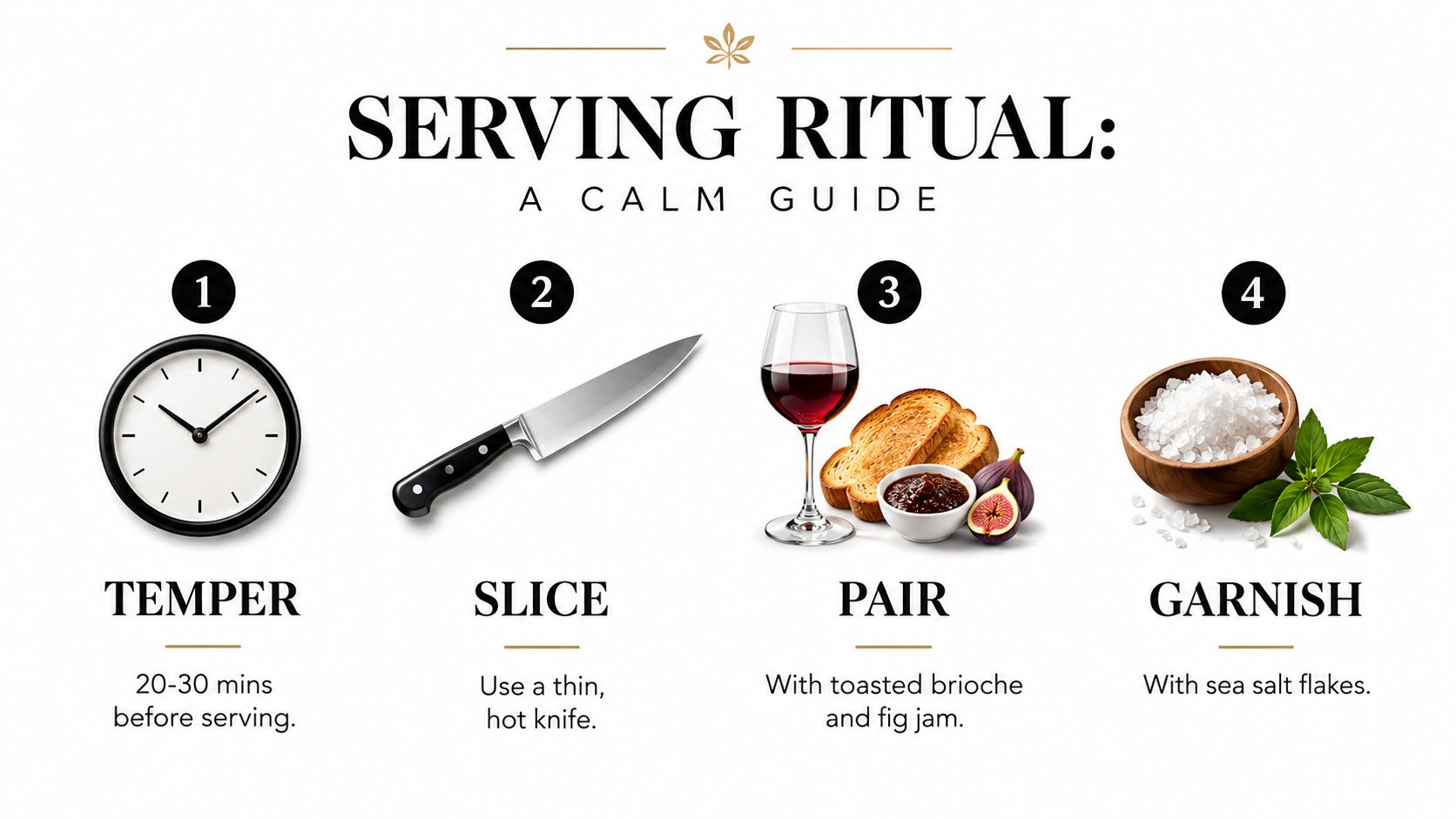
Service should feel calm, not theatrical. Take the terrine from the refrigerator 20 to 30 minutes before serving so the fat softens slightly and the texture becomes spreadable without turning loose.
Use a thin, sharp knife. Dip the blade in hot water, dry it, and make a clean cut. Warm and dry the knife between slices. Aim for even tranches around 5 to 8mm thick, thick enough to show the terrine's structure but not so thick that the richness overwhelms the rest of the plate.
Build contrast on the plate
Choose a chilled slate or porcelain plate, then add toasted brioche, a country baguette, or fig and walnut sourdough. The bread provides crispness and a mild base, while fruit brings acidity and sweetness to balance the liver's richness.
Keep condiments in small ramekins rather than covering the terrine. Fig chutney, onion confit, sea salt, cracked pepper, and a modest amount of mango chutney all work differently. Guests can create smaller bites and adjust the balance to suit their taste.
A successful bite has one rich element, one fresh or acidic element, and a simple textured base.
For wine, match sweetness and weight. Sauternes, late-harvest Riesling, and Gewürztraminer bring sweetness that can meet the richness of the terrine. Vintage Champagne or aged Pinot Gris offers brightness, while Burgundy Pinot Noir suits a more earthy presentation.
A modest portion of 60 to 80g per guest keeps the dish special and leaves room for the rest of the meal. If some guests don't drink alcohol, serve sparkling pear juice, a verjus spritzer, or lightly sweetened iced tea. The same principle applies to a wider festive table. A refreshing drink prevents the course from feeling heavy.
For a bright finish after a rich starter, a chilled fruit dessert such as wild berry sorbet can follow without competing with the terrine.
Storage, Shelf Life, and UAE Safety Rules
Foie gras terrine needs more care than an ordinary preserved spread because it's a dense, chilled, ready-to-serve food. In Dubai, the post-cook chill chain matters from the moment the terrine leaves the oven or arrives through an importer.
Dubai Municipality's Food Code requires thawed high-risk food to keep its warmest portion at or below 5°C and to be used within 48 hours from the start of thawing. For ready-to-serve high-risk food held under refrigeration, the code also requires cooling from room temperature to 5°C or less within 4 hours, as outlined in the available UAE terrine food-safety guidance.
A practical storage reference
Stage | Temperature | Shelf Life | Warning Signs |
|---|---|---|---|
Thawed high-risk product | At or below 5°C | Use within 48 hours from thawing | Warm packaging, unclear thaw date |
Ready-to-serve chilled terrine | At or below 5°C after cooling | Follow the package date and supplier guidance | Sour aroma, surface discolouration |
Sealed retail product | Follow the label, continuously chilled | Check the stated use-by date | Damaged seal, swelling, leakage |
Opened terrine | Refrigerated and sealed | Use the supplier's opened-product instruction | Ammonia-like smell, watery separation |
Transport the terrine in an insulated bag with suitable cooling support, especially during hot weather. Don't leave it in a parked car or carry it loose with warm groceries. At home, keep it covered, away from strong odours, and return it to the refrigerator promptly after serving.
Spoilage can appear as a sour or ammonia-like aroma, unusual surface colour, or watery pink liquid separating from the loaf. Don't taste a product that shows these signs. Throw it away and clean any utensils or surfaces that came into contact with it.
Importers and retailers also need more than a cold cabinet. UAE guidance requires approval before food is imported for the first time, while municipal authorities check labelling and expiry compliance. Businesses should keep traceable importer documentation and clear shelf-life records, following the UAE food import and labelling framework.
Ethical Considerations and Smart Alternatives
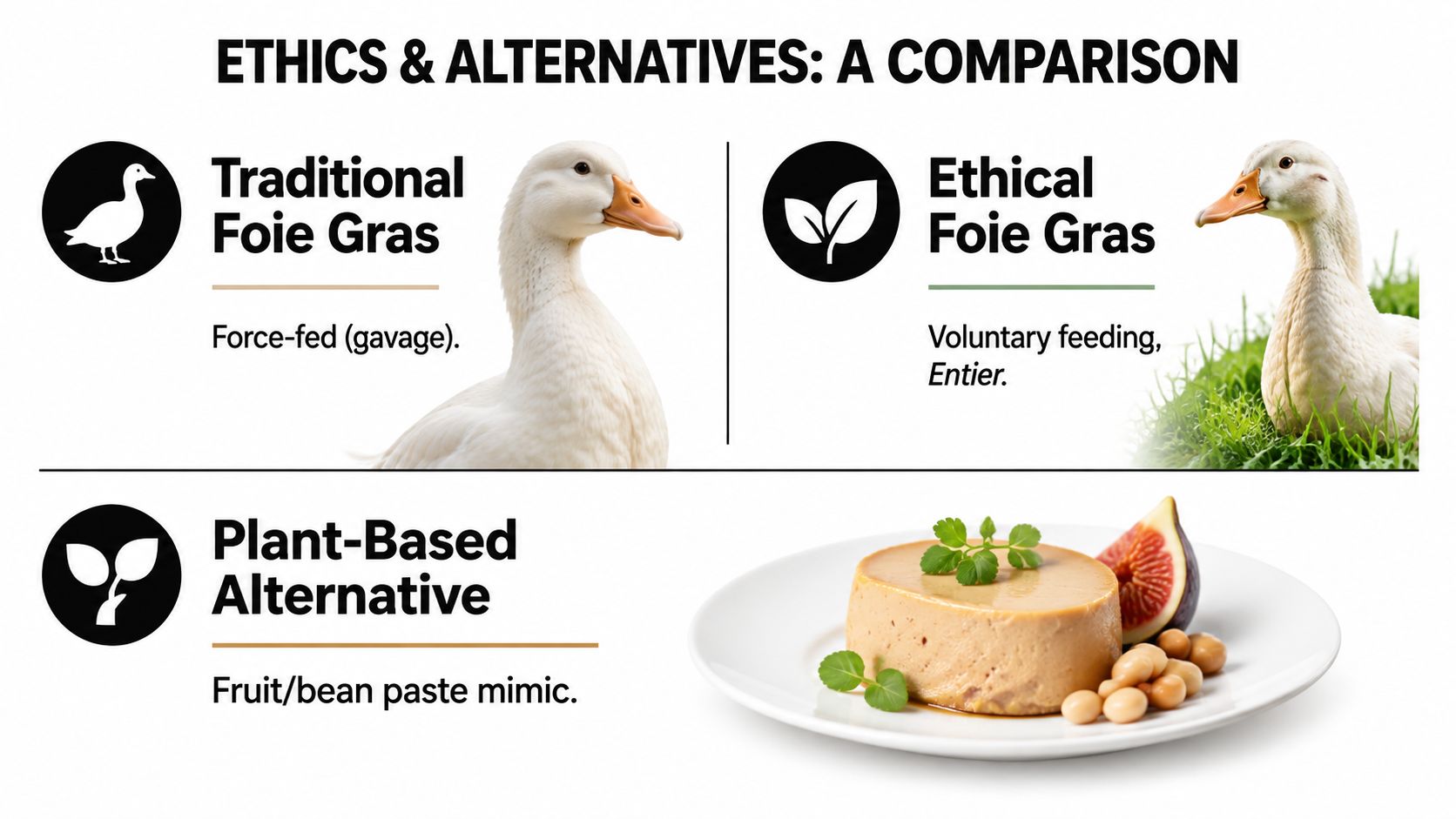
Foie gras raises a genuine welfare question. Traditional production uses gavage, a force-feeding process intended to enlarge the liver before processing. Supporters connect the dish to long culinary traditions and regulated production, while critics object to the treatment of the birds and the physical effects of the practice.
Labels can be confusing. Foie Gras de Canard Entier generally identifies whole duck foie gras, but the wording alone doesn't resolve how the birds were raised. Some producers use terms such as ethical foie gras, voluntary feeding, or low-pressure methods, yet shoppers should read the producer's explanation and certification rather than assume that a reassuring phrase has one universal meaning.
The legal position also varies by jurisdiction. Production and sale remain part of established food systems in France and the UAE, while several other jurisdictions restrict or prohibit the practice. A thoughtful buyer can recognise the dish's culinary importance without ignoring welfare concerns.
Alternatives that keep the ceremony
Hosts who want the same luxurious format have several options:
Plant-based foie gras-style mousse: Cashew, lentil, fruit, and mushroom bases can create a smooth spread with seasoning and fat, though the texture is usually lighter and less silky.
Naturally fattened duck liver pâté: This offers a recognisable poultry-liver flavour without presenting itself as traditional foie gras. It may be coarser and more savoury.
Smoked goose breast: Thin slices bring a luxury feel through aroma and presentation, with a firmer texture and less buttery richness.
Mushroom and black truffle terrine: This works well for a vegetarian board, especially with toasted bread, pickles, and a sharp fruit accompaniment.
The substitution doesn't need to be apologetic. Put the alternative on the same style of board, use the same careful knife work, and provide the same fresh contrasts. Informed choice, rather than guilt or blind tradition, is the mark of a modern gourmet shopper.
Gifting and Catering with Foie Gras Terrine in Dubai
Foie gras terrine makes a strong luxury gift because it communicates rarity, culinary knowledge, and occasion. A box of chocolates is familiar. A whole terrine, sliced log, or set of small glass jars feels more personal because the recipient needs to serve it, pair it, and share it.
That makes the format useful across the UAE calendar. A smaller jar or portion suits a personal Ramadan iftar table. A whole terrine can anchor an Eid corporate hamper. A paired selection can work for New Year gifting, Yacht Club entertaining, or a Diwali client gift. The product doesn't need to dominate the box. It can sit alongside crackers, preserves, fine tea, sparkling drinks, or other carefully chosen delicacies.
Match the format to the occasion
A corporate recipient may prefer a compact, ready-to-serve product with a clear date and simple instructions. A host planning a dinner may want a larger block for slicing at the table. A caterer may choose pre-portioned slices or canapé pieces to reduce service pressure.
For events, plan around the bite rather than the package. A starter portion can be around 30 to 40g per guest, while a canapé can use around 20g, depending on the rest of the menu. Pre-sliced pieces can hold their shape on a chilled buffet for 90 minutes, but the serving team still needs to monitor temperature and replenish in smaller batches.
Transport is part of the gift. Use cool bags, protect the package from direct heat, and confirm the delivery window before promising a same-day presentation. Corporate buyers should also ask about outer packaging, recipient notes, dietary information, and whether the supplier can combine the terrine with suitable bread or accompaniments.
A curated sparkling water pairing can help keep the hamper inclusive for recipients who don't drink alcohol.
The UAE's premium import network supports this kind of specialist gifting. World Bank trade data records UAE imports in the broader category of fresh, chilled, or frozen meat and edible offal at USD 217.88K and 127,077kg in 2023, including France at USD 43.80K and 5,556kg, according to World Bank WITS trade data. The category is broader than foie gras, but it demonstrates the regulated import pathway behind European chilled specialities.
The easiest gifting experience comes from a supplier that confirms sourcing, prepares the format, protects the cold chain, and pairs the product before delivery. That turns an intimidating luxury ingredient into a ready-made gesture.
Your Foie Gras Terrine Checklist Before You Buy
Save this checklist before visiting a supermarket, specialty deli, or online gourmet shop. It separates the decision into the moments that matter most.
Choosing
Read the origin: Check the producer, country, and product description.
Identify the style: Confirm whether it's whole terrine, bloc, pâté, or mousse.
Look for structure: Choose visible layers or a defined loaf if you want clean slices.
Check the ingredients: Look for liver, seasoning, and any added alcohol or flavourings.
Match the quantity: Buy a small portion for a tasting or a larger format for sharing.
Ask about preparation: Confirm whether the product is chilled, frozen, cooked, or ready to serve.
Buying
Inspect the date: Check the use-by or best-before information before paying.
Check the seal: Reject damaged vacuum packaging, leaks, or swelling.
Confirm the import details: Look for clear labelling and an identifiable importer.
Protect the chill chain: Collect the product last and carry it in an insulated bag.
Plan the occasion: Allow time for pre-orders, seasonal stock, and delivery windows.
Storing
Keep it cold: Store the product at the temperature stated on its label, within the safe chilled range.
Separate strong aromas: Place it away from onions, cheeses, and pungent leftovers.
Seal opened portions: Cover cut surfaces and use a clean container.
Record the opening date: Don't rely on memory once the package is open.
Discard warning signs: Sour aroma, ammonia-like smell, discolouration, or liquid separation means the product shouldn't be served.
Serving
Rest it briefly: Let the terrine soften slightly before slicing.
Warm the knife: Dip, dry, and repeat between cuts.
Toast the bread: Add crunch without overpowering the terrine.
Offer acidity: Set out fig, onion, fruit, or a sharp preserve.
Pour thoughtfully: Choose wine or a non-alcoholic drink with enough freshness.
Keep portions modest: Let the richness remain inviting rather than exhausting.
Gifting
Check the outer box: Make sure the presentation suits the occasion.
Add cooling support: Include an ice pack or insulated packaging where appropriate.
Write the serving note: Tell the recipient when to chill, temper, slice, and serve.
Confirm the recipient: Verify the delivery address and availability.
Pair the gift: Add bread, preserves, tea, sparkling water, or another compatible item.
The same checklist works on the night itself. Use it to turn a premium purchase into a composed, safe, and generous serving moment.
IFM Gourmet Food Store offers an elegant UAE selection of Italian gourmet ingredients, artisanal delicacies, fine chocolates, premium teas, and curated gift hampers suited to festive tables and corporate occasions. Visit IFM Gourmet Food Store to explore gourmet pairings and gifting options that can complement a carefully served foie gras terrine.


Comments