Food Storage Bowls with Lids: The Ultimate UAE Guide 2026

A fine tomato sauce can taste balanced and bright at dinner, then dull and slightly metallic the next day. Burrata loses its delicate texture. Fresh basil darkens. A carefully made risotto turns stodgy. In most kitchens, the problem isn't the cooking. It's what happens after the meal.
The right bowl and lid protect flavour, texture, aroma, and cleanliness. In a place like the UAE, where heat and humidity put extra pressure on ingredients the moment they leave the stove or the fridge, that choice matters even more. Good storage helps premium olive oil stay fragrant, keeps sauces from tainting other foods in the refrigerator, and makes leftovers worth eating rather than merely acceptable.
The Secret to Lasting Freshness in Your Kitchen
Late in the evening, a spoonful of saffron risotto or slow-cooked ragù can still taste precise and balanced. By the next day, the same dish can feel heavy, muted, or pick up stray fridge odours. In UAE kitchens, that drop in quality happens faster than many cooks expect because heat, humidity, and frequent fridge opening put more stress on delicate ingredients.
A food storage bowl with a lid protects more than leftovers. It protects the work already done in the kitchen.
That matters with fine ingredients. Tomato passata loses its bright edge if exposed to too much air. Fresh pesto darkens and dulls. Mascarpone desserts absorb nearby aromas easily. Handmade pasta fillings, marinated artichokes, ricotta, and truffle-based preparations all have a short window where texture and aroma still feel exactly right.
Poor storage usually shows up in four practical ways:
Air exposure dries the surface and softens aroma.
Weak seals allow moisture loss and let refrigerator smells move in.
Reactive or porous materials can alter flavour or retain odours from previous use.
Too much empty space above the food speeds up quality loss, especially for sauces and dairy-based dishes.
A good bowl does one job well. It keeps a carefully chosen ingredient closer to its original condition until the next meal.
In professional kitchens and serious home kitchens, storage is part of ingredient care. The bowl has to suit the food, not just fit it. Acidic tomato sauce needs a non-reactive home. Fragile burrata or whipped mascarpone needs a shape that protects structure rather than crushing it under a flat lid. Marinated vegetables need enough seal integrity to keep oil, vinegar, and aromatics contained without perfuming the whole refrigerator.
For daily routines, many cooks keep a mix on hand rather than forcing one material to do everything. That is why quality meal prep container options are useful to compare early. The right set helps preserve flavour, reduces waste, and makes premium leftovers worth serving again, not just using up.
Good storage is quiet insurance for good cooking.
Choosing Your Bowl Material Glass vs Plastic vs Steel
Material changes the whole experience of storage. It affects weight in the hand, how easily a bowl stains, whether it carries odour, and whether you'll reach for it every day.
Glass for purity and visibility
Glass is often the first choice for cooks who want a neutral storage environment. It doesn't hold onto tomato, garlic, curry, or onion aromas the way some plastics can. It also suits acidic foods very well, which makes it useful for San Marzano tomato sauce, lemon-dressed vegetables, and balsamic-based preparations.
Glass also has a visual advantage. You can see the contents immediately, which helps in a busy fridge. For home cooks managing leftovers from several meals, that reduces waste and guesswork.
The trade-off is obvious. Glass is heavier, easier to chip or crack if handled roughly, and less convenient for packed lunches or transport.
BPA-free plastic for light daily use
A good plastic bowl earns its place through convenience. It's lighter, easier to carry, and often more practical for weekday meal prep, school lunches, office lunches, and stacked refrigerator storage. For many homes, it's the material that gets used most often because it's simple.
If you're comparing sets or looking through quality meal prep container options, plastic works best when the lid fits securely and the bowl feels rigid enough to resist warping under normal use. It's especially useful for chopped fruit, grains, cooked vegetables, and portioned meals.
Its weaknesses show up with strongly coloured or aromatic foods. Tomato sauces, saffron-rich rice, and oily marinades can leave marks or lingering smells over time. Lower-quality pieces also tend to lose their crisp seal faster.
Stainless steel for durability and discretion
Stainless steel is a practical choice for cooks who value toughness and long service. It won't shatter, usually resists odour well, and works nicely for marinating, chilled salads, cut fruit, and mise en place. It's also elegant in a restrained way, especially in kitchens that prefer a more professional look than clear storage.
Its main limitation is visibility. You can't glance through the side and see what's inside. For some people that's a minor annoyance. In a crowded fridge, it can become a real one.
It's also not the first choice when you want to monitor sauce separation, layered desserts, or proofed dough at a glance.
Material Comparison at a Glance
Feature | Glass | BPA-Free Plastic | Stainless Steel |
|---|---|---|---|
Taste neutrality | Excellent | Good, depends on use | Very good |
Stain resistance | Excellent | Fair to good | Excellent |
Odour retention | Very low | Can retain odours over time | Low |
Weight | Heavy | Light | Medium |
Break resistance | Lower | High | High |
Visibility | Excellent | Excellent | None |
Best uses | Sauces, leftovers, desserts | Meal prep, lunches, daily storage | Marinating, chilled foods, robust use |
Practical rule: If the food is acidic, aromatic, or expensive, glass is usually the safest instinct. If the food is portable, routine, or portioned, plastic often wins. If the bowl will be used hard, steel is hard to beat.
Decoding Lid Types for a Perfect Airtight Seal
Most storage failures come from the lid, not the bowl. The bowl may be beautifully made, but if the lid flexes too easily, clips unevenly, or loses shape after repeated use, freshness disappears quickly.
Press-on lids for speed
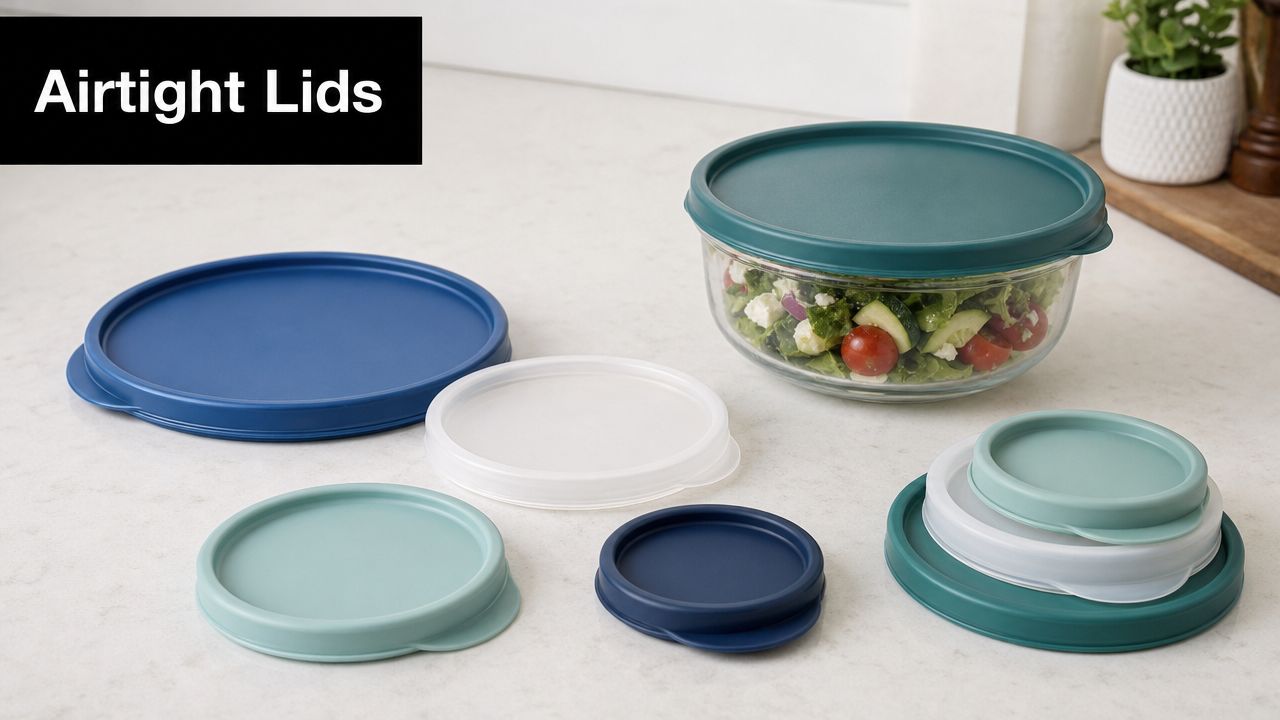
A simple press-on lid is the everyday option. It's quick, easy, and good for foods that stay level and undisturbed in the fridge. Think washed berries, grated Parmigiano, cooked lentils, or short-term leftovers from lunch.
This type is convenient, but it isn't the strongest seal. If you tip the bowl, carry it in a bag, or freeze something for longer storage, a basic press-on lid often shows its limits. It's the kitchen equivalent of closing a door firmly, not locking it.
Locking lids for transport and liquids
A four-sided locking lid creates much better pressure around the rim. When that lid includes a silicone gasket, the seal usually feels more even and secure. This is the bowl you want for soup, braised beans, broth, marinated seafood, or a saffron cream dessert you're carrying to dinner.
The advantage isn't only leak resistance. A stronger seal also helps preserve aroma and texture. That matters for foods with premium ingredients, where subtle fragrance is part of the pleasure.
Check one detail closely. The clips should close without strain. If you have to wrestle the lid into place, it often means the fit won't age well.
Vented and specialised lids
Some lids are designed with reheating in mind. Others focus on vacuum-style storage or pantry use. A vented lid can be especially useful when you move food from cold storage to the microwave, because it gives steam a controlled path to escape rather than forcing pressure against the seal.
A vacuum-style lid can help with foods that suffer from air exposure, but only if the system remains easy enough to use regularly. In home kitchens, a slightly less technical solution that gets used properly every day often performs better than a complex one left in the cupboard.
A quick visual explanation helps when you're comparing closure styles and fit:
Match the lid to the task
Use these pairings as a simple guide:
Dry pantry ingredients such as polenta or nuts: a straightforward, reliable seal is often enough.
Leftover pasta or risotto: choose a lid that closes evenly and won't pop loose in the fridge.
Soups, stocks, and sauces: use a locking lid with a gasket if possible.
Reheating workflows: choose a lid designed to vent or one that can be safely loosened.
The bowl stores the food. The lid protects the result.
Sizing for Success From Meal Prep to Leftover Risotto
You open the fridge the morning after dinner and find saffron risotto spread thinly across a bowl that is far too wide. By lunchtime, the top has dried, the edges have gone dull, and a dish that was silky the night before now needs rescuing. Size affects quality more than many home cooks realise, especially in the UAE, where frequent fridge opening, warm kitchens, and humidity put more pressure on leftovers.
A good bowl should leave enough headspace for the lid to close cleanly, but not so much that delicate food sits surrounded by stale air. This matters with high-quality ingredients. Burrata absorbs fridge odours quickly. Fresh basil pesto darkens faster in an oversized container. Cooked pasta loses texture if it is compressed into a bowl that is too small or left exposed in one that is too large.
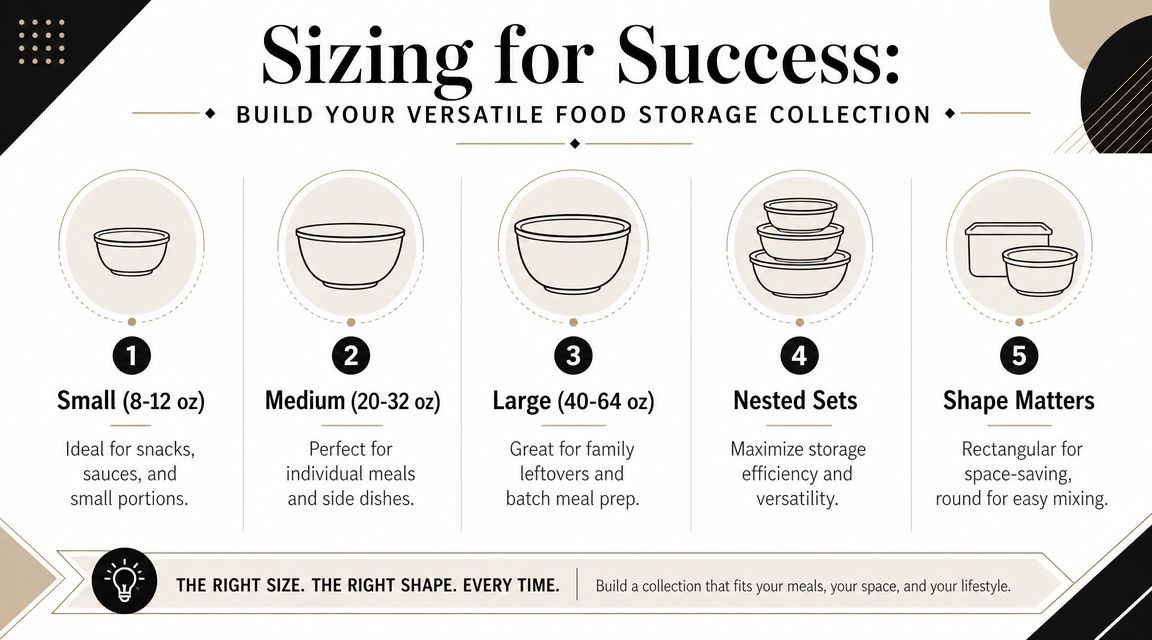
Small bowls for flavour-rich ingredients
Small bowls earn their keep with ingredients used in spoonfuls, not portions. Pesto, olive tapenade, marinated artichokes, chilli crisp, anchovy butter, chopped parsley, toasted pistachios, and leftover truffle cream all keep better in a container that matches their volume.
They are also the right choice for opened specialty items. A little nduja, grated Parmigiano Reggiano, or a few slices of pecorino should not sit under loose wrap on a plate. A fitted bowl protects aroma, texture, and shelf order.
Medium bowls for everyday cooking
Medium sizes usually do the hardest work. They suit a single portion of lasagne, roast vegetables for tomorrow, lentil soup for lunch, or leftover risotto that needs enough depth to stay moist without being packed tightly.
This is also the size I recommend most often for ingredient-led kitchens. It handles practical weekly tasks without wasting fridge space, and it keeps portions visible enough that food gets eaten. For a visual cue on portion-friendly Italian staples, this pasta illustration for kitchen inspiration captures the kind of everyday cooking these bowls support.
Large bowls for prep-ahead and family service
Large bowls are useful, but they should be deliberate purchases. They suit washed salad leaves for a gathering, marinating chicken, a batch of minestrone, or bread dough resting overnight. After a holiday meal, they also prevent the common mistake of splitting one large quantity into too many mismatched containers.
Shape changes how well a size performs.
Round bowls work well for mixed salads, sauces, and foods with more liquid.
Square or rectangular bowls make better use of shelf depth in compact fridges.
Nested sets keep cupboards manageable and make it easier to keep a sensible range of sizes on hand.
As noted earlier, analysts expect continued growth in food storage containers because home cooks are relying more on meal prep, leftovers, and waste reduction. That trend makes sense. Once you start storing cooked grains, ragu, soffritto, sliced mozzarella, or leftover risotto by portion and purpose, the kitchen runs better and the food tastes closer to how it should.
One final point. If a bowl is likely to go from fridge to reheating, size and headspace should work with safe use, not against it. A packed bowl heats unevenly, and an overfilled one invites spills. Before buying a full set, it helps to review decoding microwave safe symbols so the sizes you choose also suit how you reheat and serve.
Mastering Safety for Microwave Freezer and Sous-Vide
Safety isn't only about whether a bowl survives. It's about whether it performs cleanly and predictably after repeated use. A bowl that warps, a lid that traps pressure, or a cracked rim that's hard to clean all create problems you don't need.
Microwave use needs more than a symbol
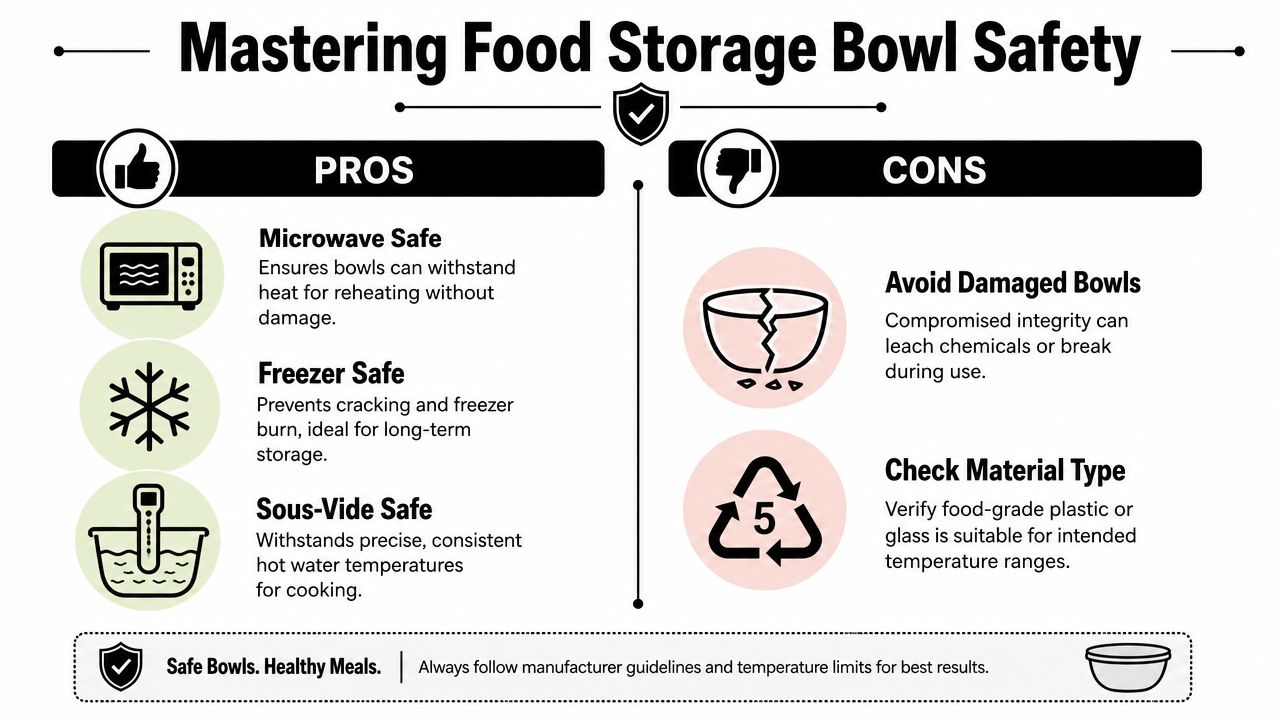
Many people see “microwave-safe” and assume the entire container can be heated with the lid tightly sealed. That's one of the most common mistakes. A common reheating issue is using a fully sealed lid, even on bowls labelled microwave-safe. Guidance in the provided material notes that lids should be vented to prevent pressure buildup, and food should reach an internal temperature of 165°F (74°C) for safe reheating, as discussed in this microwave reheating guidance video.
That matters in the UAE because meals often move quickly from chilled storage to reheating, and repeated cycles of heat can stress gaskets and lid edges. If a seal starts feeling brittle, loose, or misshapen, replace that piece rather than hoping it still performs as intended.
For anyone who wants a clearer primer on packaging icons before buying, this guide on decoding microwave safe symbols is a useful reference.
Loosen or vent the lid before reheating. Pressure is the hidden problem, not just heat.
Freezer habits that protect quality
Freezing is less forgiving than people think. Some foods suffer because the container is too large, which leaves extra air around the food. Others pick up frost and stale flavour because the lid seal isn't consistent.
Use freezer storage for foods that can tolerate the texture change. Ragù, soup, beans, stock, and many sauces do well. Delicate dairy-based fillings, dressed salads, and crisp vegetables usually don't improve in the freezer.
Watch for these signs that a bowl isn't coping well:
Fine cracks at the rim after repeated cold use
Lids that no longer sit flat
Gaskets that slip out during washing
Persistent odour that remains after cleaning
Sous-vide and high-heat caution
Not every bowl belongs in a sous-vide workflow. Unless the manufacturer specifically states that the material and lid components are suitable for that temperature range and prolonged exposure, don't assume a normal storage bowl can stand in for dedicated cooking equipment.
The safer approach is conservative. Use storage bowls for storing, chilling, transporting, and reheating only when they're clearly intended for that purpose. If you're building a premium dessert or frozen fruit routine, even a product image such as this wild berries sorbet visual is a reminder that cold storage and serving quality are closely linked.
The Art of Gifting and Storing Gourmet Delicacies
A gift hamper has a brief perfect moment. The olive tapenade is opened, the Parmigiano is cut, the cantucci come out with coffee, and then the true test begins. In a UAE kitchen, heat, humidity, and fridge odours can shorten that moment quickly if the storage is careless.
Fine ingredients deserve storage that protects flavour, texture, and aroma after opening. That matters at home, and it matters just as much when you are giving gourmet foods to someone who cooks well and expects quality to last. A good bowl is part of that promise.
Clear glass with a well-fitted lid works particularly well for items that are served and stored in the same vessel. Biscotti, nougat, sugared almonds, and savoury crackers all benefit from a container that looks polished on the table and closes properly afterward. Smaller sealed bowls are better for opened truffle condiments, marinated antipasti, pesto, or a spoonful of leftover ragù made with good tomatoes and olive oil. The right container protects the ingredient without making the kitchen feel overly precious.
What works for delicate gourmet items
Different foods fail in different ways. Some dry out. Some absorb odours. Some lose their aromatic top notes long before they become unsafe to eat.
Fine chocolates keep their aroma and finish better in a clean, neutral container kept away from onions, strong cheese, and heavily spiced leftovers.
Nougat and soft confectionery hold their texture better when the lid limits air exposure and slows drying.
Truffle oils and aromatic condiments need storage that contains their scent rather than spreading it across the fridge.
Baked specialities such as panettone slices or filled focaccia stay more enjoyable when protected from humidity, crushing, and stale fridge smell.
Careful storage is part of the luxury.
The difference shows up in the food itself. Pistachio cream keeps its fragrance. Good Sicilian biscuits stay crisp longer. A spoonful of aged balsamic or artichoke spread still tastes deliberate a few days later, rather than flat and muddled.
Thoughtful kitchen tools naturally overlap with gifting culture. Someone who receives fine ingredients also needs a sensible way to keep them at their best after the ribbon comes off and the jar is opened.
The pleasure of fine food often depends on what happens after the ribbon is untied and the jar is opened.
Your Food Storage Questions Answered
Is glass always the best choice for food storage bowls with lids
Not always. Glass is excellent for acidic, aromatic, or premium foods because it stays neutral and resists staining. But plastic can be more practical for everyday meal prep, and steel can be better when durability matters more than visibility. The right choice depends on the food and how you use it.
Which bowl is best for tomato sauce or balsamic dressings
Glass is usually the safest option for those foods. It preserves flavour cleanly and doesn't easily take on colour or odour. For richly coloured sauces, that matters over repeated use.
Why do some lids stop sealing well after a while
The usual causes are heat, repeated flexing, and wear around the gasket or rim. Microwave reheating with a tightly closed lid can stress the seal. So can forcing clips shut when the bowl is overfilled. Once the lid looks warped or the gasket won't sit correctly, performance usually declines quickly.
Can I microwave food with the lid on
Only if the lid is meant for microwave use and you vent or loosen it appropriately. A tightly sealed lid can trap steam and create pressure. Even when the bowl itself is suitable for reheating, the lid still needs careful handling.
How soon should leftovers go into the fridge in the UAE
For food safety, the NSF advises refrigerating leftovers within two hours of serving, and says most refrigerated leftovers should be eaten within three to four days, according to NSF's guidance on food storage containers. In a warm climate, that discipline matters. Don't leave rice, pasta, meat dishes, or dairy-based preparations sitting out while the evening drifts on.
Is it safe to reuse takeaway tubs for long-term storage
It's better not to rely on them for repeated long-term use. Purpose-made food storage bowls with lids are easier to clean thoroughly, usually seal more reliably, and are designed for repeated handling.
What size bowls should a home cook actually own
A balanced set works better than a giant collection of random pieces. Keep small bowls for sauces and condiments, medium bowls for leftovers and single meals, and a few large bowls for batch cooking, marinating, or entertaining. Consistency matters more than quantity.
Are round bowls better than square ones
Round bowls are often better for mixing, saucy foods, and general leftovers. Square or rectangular bowls usually use shelf space more efficiently. Many kitchens need both. Use shape as a storage tool, not a style decision.
How do I stop bowls from smelling like garlic or onion
Choose less porous materials for strong foods, wash promptly, and avoid leaving aromatic leftovers in the container longer than necessary. This is one reason many cooks reserve glass for assertive ingredients and sauces.
What's the simplest buying rule if I don't want to overthink it
Buy a small set in one material you trust, then add only where you feel friction in daily use. If your lunches are heavy and awkward, add lightweight pieces. If sauces keep staining, add glass. If lids fail before bowls do, invest in better sealing systems rather than more containers.
A carefully chosen set of bowls and lids helps every good ingredient go further. If you enjoy cooking with artisanal Italian foods, gifting fine delicacies, or keeping your kitchen more organised in the UAE climate, explore the curated selection at IFM Gourmet Food Store.


Comments