Gluten Free Puff Pastry: A Guide to Flaky Perfection

You know the feeling. You're planning a dinner, a brunch tray, or a festive spread, and the one thing missing is that crisp, buttery pastry that shatters into layers the moment you cut it. For anyone living gluten-free, puff pastry can feel like the item that always stays just out of reach, because so many versions turn out dense, pale, or stubbornly flat.
The good news is that gluten free puff pastry can absolutely be made with real lift, clean layers, and a proper bakery finish. In the UAE, that matters even more, because high heat changes how dough behaves and because the market for premium bakery items is already substantial, with pastries reaching US$176.8 million in retail sales in 2025 and the country's gluten-free products market valued at about USD 30 million in 2024 with a forecast of USD 43.28 million by 2030 in independent UAE market research, showing clear room for specialty products to grow in retail and gourmet settings. UAE bakery market analysis
What makes this style of pastry exciting is that it sits at the meeting point of craft and control. You need the right flour blend, cold fat, patient folding, and smart oven management, but once those pieces click, the result feels luxurious rather than restrictive. That's the standard home bakers want, especially when they're sourcing ingredients for a refined kitchen or looking for gourmet-quality components in Dubai's food scene.
The Dream of Flaky Gluten Free Pastry
The first successful bite of gluten free puff pastry usually surprises people. The pastry doesn't just taste good, it behaves like pastry should, with crisp edges, delicate lift, and buttery layers that separate instead of collapsing into crumbs. That's the difference between a recipe that merely avoids gluten and one that delivers the true experience people miss.
A lot of gluten-free baking leaves people bracing for compromise. Puff pastry is especially unforgiving, because it depends on structure, yet the finished result should still feel light enough for savoury canapés, filled turnovers, or a polished dessert plate. The trick is not to force the dough to act like wheat dough, but to give it another path to flakiness.
That's where high-quality ingredients and good sourcing matter. A premium gourmet retailer can make a real difference when you're looking for ingredients that fit a more exacting kitchen standard, especially if you care about presentation as much as taste. In that sense, IFM Gourmet Dubai sits naturally in the conversation as a UAE-based gourmet destination, not because pastry depends on a single store, but because serious home bakers often want reliable access to premium components, gift-worthy presentation items, and carefully chosen pantry staples.
Practical rule: If you want pastry that feels elegant, treat the dough like a cold, layered structure, not like bread dough. Puff pastry rewards precision more than force.
One useful visual reference for the finished look appears here: gluten-free puff pastry inspiration. That kind of result is the target, a pastry with visible lift, clean edges, and enough structure to hold filling without feeling heavy.
The Science of a Perfect Gluten Free Layer
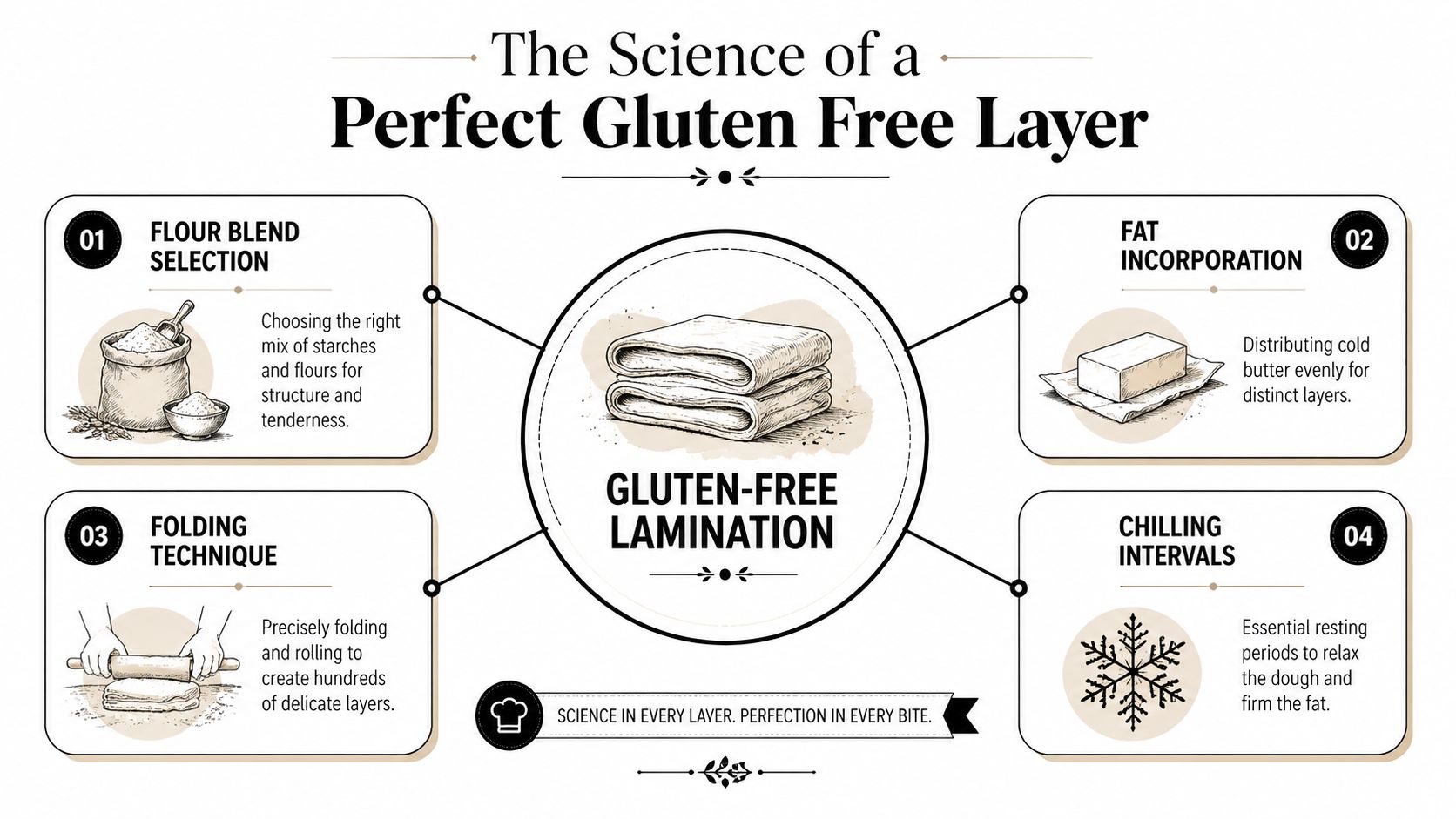
Lamination is the heart of puff pastry. You're creating many thin layers of dough and fat, then letting the oven turn that structure into height and crispness. A simple way to think about it is a book with delicate buttery pages, each page separated just enough to open and rise when heat hits it.
That book analogy matters because gluten free puff pastry doesn't have the same stretchy gluten network that wheat dough uses to trap and guide expansion. Without that elastic scaffold, the dough needs gentler handling and more disciplined chilling. In practice, that means you roll, fold, and rest with a lighter touch than you would with conventional pastry.
The process works best when the butter stays in neat, separate layers rather than smearing into the dough. If the butter softens too much, the layers blend together and the pastry loses its lift. That's why timing matters less than dough temperature. In a warm kitchen, especially in the UAE, a dough that feels fine for a minute can become fragile very quickly.
Keep the dough cool but not so cold that it cracks. If it starts tearing instead of rolling, it's too cold or too dry.
The practical method recommended by gluten-free pastry makers is to chill after each turn and allow rest periods of about 15 to 30 minutes between folds to prevent butter smearing and layer collapse, because the dough lacks the extensible gluten network that makes wheat pastry more forgiving. Gluten-free rough puff method
A UAE-facing manufacturer also reinforces the need for strong early oven lift, recommending a hot bake at 210°C fan / 220°C top-bottom with some steam, which helps the pastry rise before butter leaks out and gives the starches a chance to set. Gluten-free puff pastry baking guidance
Choosing Your Key Ingredients and Flour Blends
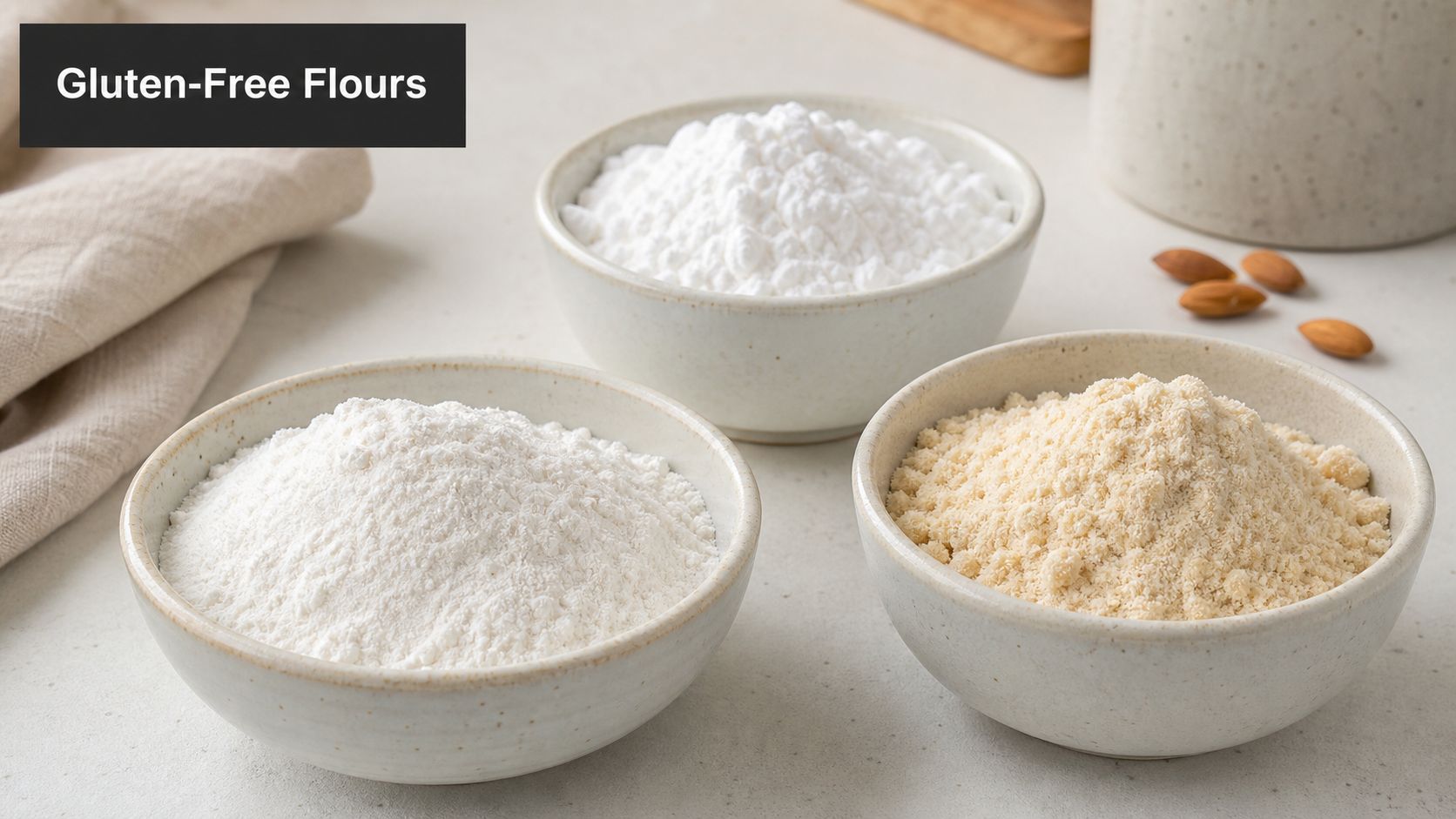
The flour blend does most of the architectural work in gluten free puff pastry. Rice flour can bring body, starches can improve tenderness, and a well-chosen binder helps the dough hold together long enough to fold without tearing. The final goal isn't just “gluten free”, it's a dough that can be rolled thin, layered cleanly, and baked with enough strength to rise.
That's why the ingredient list deserves more attention than many home bakers give it. A blend that works well for cookies may not behave well here, because puff pastry needs a finer balance between structure and tenderness. If the dough is too fragile, it cracks during rolling. If it's too soft, the layers blur.
Binders matter too. Xanthan gum or psyllium husk can help mimic some of the cohesion gluten would normally provide, which is especially important when the pastry is rolled and folded repeatedly. The exact choice depends on the blend you buy, but the larger point is simple, the dough needs enough internal support to survive lamination without becoming gummy.
Butter choice matters just as much. The pastry's flavour, aroma, and flakiness all depend on fat behaving properly in the oven. In warm climates, a butter that softens too fast can make shaping stressful, so keeping it cold from the start is part of the ingredient strategy, not just the technique.
If you're checking whether a fat or spread fits your baking goals, a neutral resource like safe gluten-free olive oil can help you separate gluten concerns from texture concerns. That distinction matters, because gluten-free baking is often less about avoiding one ingredient than about choosing the right fat and starch combination for the job.
For home bakers, the smartest shopping question is not “Is this flour gluten free?” but “Will this blend roll, fold, and bake like pastry?” That question saves time, money, and a lot of frustration.
Buying and Storing Pastry in the UAE Climate
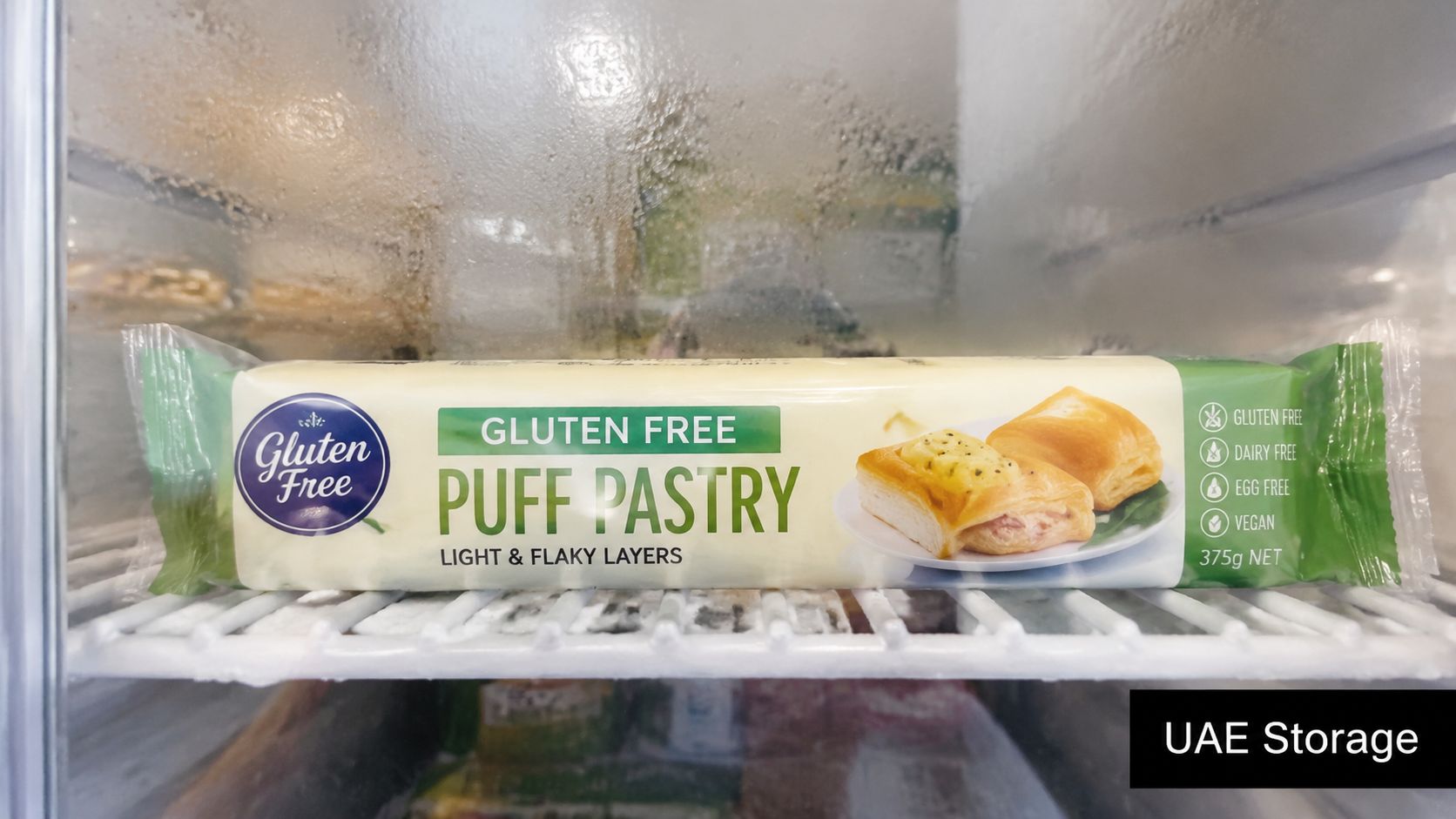
In the UAE, temperature control is not a minor detail, it's the difference between clean layers and a greasy tray. Butter-laminated dough softens quickly in warm kitchens, so a baker who can manage cold storage well has a real advantage. That's why the practical question isn't only whether to make puff pastry at home or buy it ready-made, but how to keep it viable once you have it.
The market context supports that logic. Pastry retail sales reached US$176.8 million in 2025 in the UAE, which shows a strong base for specialty products and a real commercial runway for premium gluten-free options in gourmet stores and foodservice. UAE bakery market analysis
That matters because convenience and reliability have value. A home baker may still prefer to make dough from scratch, but a well-kept pre-made dough can be the better choice when the weather is hot, the schedule is tight, or the pastry needs to survive transport before baking. The primary advantage is not “freshness” alone, it's consistency.
A useful way to think about storage is this:
Refrigerate for short control: Keep the dough cold between turns, and don't let it sit out while you prep fillings or trays.
Freeze for planning: If you're making ahead for a celebration, freezing gives you more flexibility than trying to finish everything in one rush.
Avoid temperature swings: Repeated warming and cooling can blur the layers and make the butter leak during baking.
Package tightly: Air exposure dries edges and encourages cracks before the dough even reaches the oven.
In a warm climate, the best pastry is often the one you can keep cold until the exact moment it needs heat.
Historical pricing also explains why people in the UAE often treat gluten-free pastry as a premium item. A clinical study in Abu Dhabi found that gluten-free products were on average twice as expensive as regular products, which is one reason these pastries are often reserved for special meals and polished entertaining rather than casual snacking. Abu Dhabi gluten-free pricing study
For households that host often, a freezer-friendly dough can be more valuable than an always-fresh promise, especially when the goal is to serve something elegant without a last-minute scramble.
Mastering the Bake for Perfect Rise and Color
A successful bake starts before the pastry enters the oven. The oven must be properly preheated, the tray should already be ready, and the dough needs to go in cold enough to hold its shape. If any of those steps are rushed, the butter starts to escape before the layers set.
A UAE-facing manufacturer recommends baking at 210°C fan / 220°C top-bottom with some steam, which gives the pastry the heat it needs for quick lift and crisping. Gluten-free puff pastry baking guidance That hot start matters because gluten free puff pastry needs the starch structure to set before the butter fully melts out.
A good bake looks and sounds different from a weak one. You want a deep golden surface, sharp edges, and clear separation between layers. If the centre seems pale or soft, the pastry probably needed more heat or a little more time. If butter pools heavily around the edges, the dough likely warmed too much before baking.
Conventional vs Gluten Free Puff Pastry
Characteristic | Conventional (Wheat) Pastry | Gluten Free Pastry |
|---|---|---|
Dough structure | Elastic and forgiving | More delicate and temperature-sensitive |
Rolling behaviour | Holds together more easily | Needs gentler handling |
Layer formation | Gluten supports stretch between folds | Starches and fat management do the work |
Main risk | Overworking the dough | Butter smearing or cracking |
Oven response | Can tolerate some handling delay | Needs fast transfer to a hot oven |
A few practical cues help a lot:
Watch the colour, not the clock: Ovens vary, and pastry is done when it looks browned and feels firm.
Use steam carefully: A little steam helps the initial rise, but the oven still has to stay hot enough to set the layers.
Bake from cold: Shaped pastry that goes straight from chill to oven usually performs better than pastry that sits on the counter.
If your pastry doesn't rise, the problem is usually temperature, not effort. If it browns too slowly, the fat can leak before the structure sets. And if the centre stays underdone, the oven may have looked hot but failed to deliver consistent heat to the tray.
Sweet and Savory Uses for Your Pastry
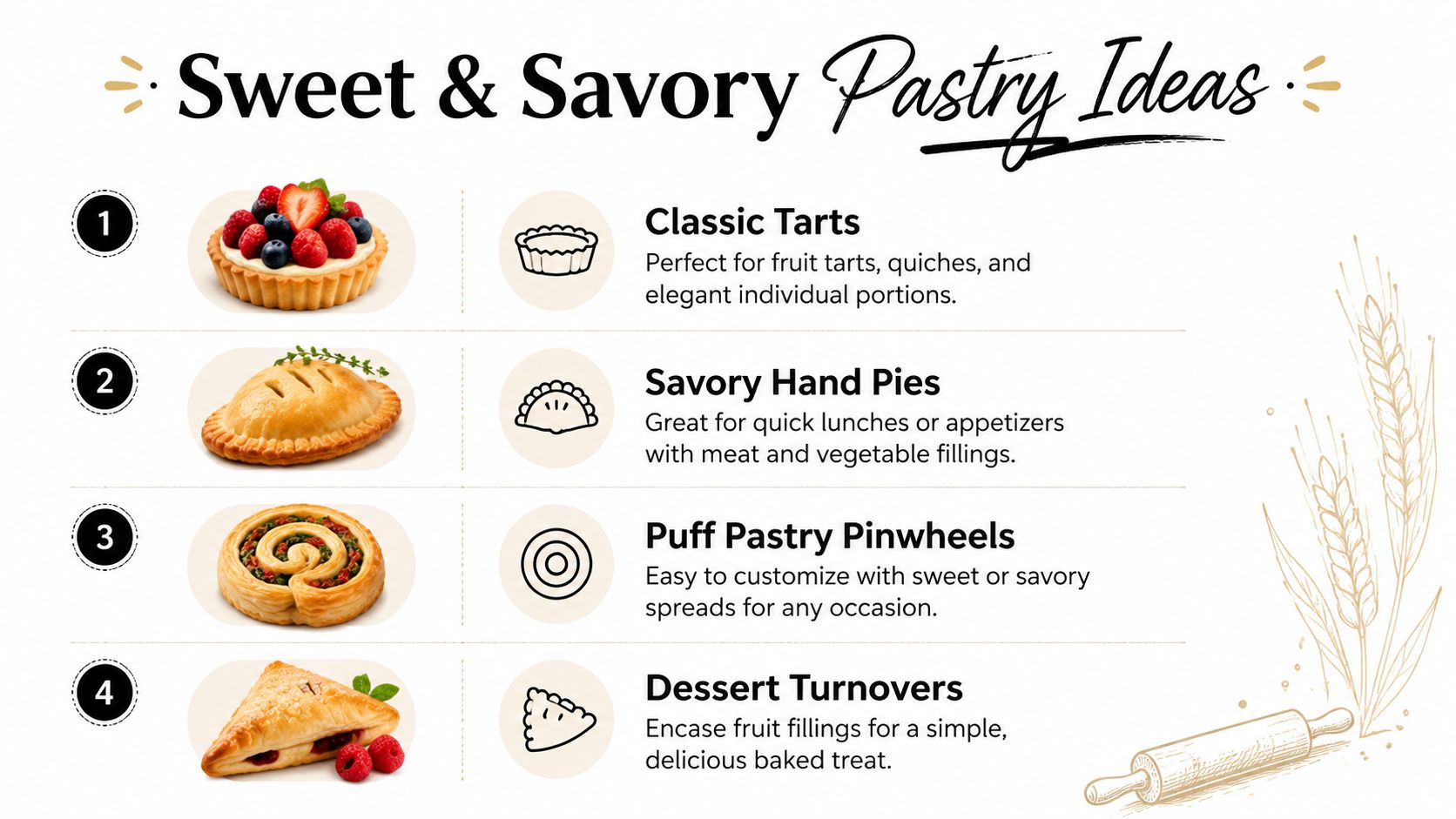
Once the pastry works, the fun starts. A batch of gluten free puff pastry can move in two very different directions, elegant savoury bites for entertaining or polished desserts for a formal table. That versatility is what makes the effort worthwhile, because one dough can cover a whole menu.
Four reliable ways to use it
Classic tarts. Fruit tarts, quiches, and individual savoury rounds all benefit from the pastry's crisp base and clean edges.
Savory hand pies. These are ideal for lunch boxes, cocktail parties, or casual entertaining with a more refined finish.
Puff pastry pinwheels. A quick format when you want something neat, decorative, and easy to customise with cheese, herbs, or sweet spreads.
Dessert turnovers. Fold in fruit, chocolate, or jam and bake until the edges turn golden and the filling settles.
The premium nature of gluten-free baking also changes how people use it. Since historical pricing in the UAE placed gluten-free products at about twice the cost of regular products, many bakers reserve this dough for special meals, gifting, and occasions where presentation matters as much as convenience. Abu Dhabi gluten-free pricing study
That's where thoughtful fillings help. A tart made with sharp cheese and herbs feels refined. A turnover filled with good jam and finished with sugar feels celebratory. A chocolate-filled spiral turns into a dessert that looks bakery-made without needing complicated shaping.
For a gourmet kitchen, pairings matter. If you're building a savoury tart, you can lean on artisanal cheese or tomato-based fillings. If you're making dessert, premium chocolate or a bright fruit preserve changes the final result more than extra decoration ever could.
A good inspiration shot for finished presentation appears here: gourmet pastry presentation. The point is simple, this pastry should feel special enough to serve when the meal itself is meant to impress.
Your Path to Gluten Free Baking Success
Gluten free puff pastry asks for care, but it doesn't ask for perfection. If you understand the layers, choose a workable flour blend, keep the dough cold in the UAE heat, and bake it in a properly hot oven, you give yourself a real chance at crisp, elegant results. The pastry rewards patience more than speed.
The strongest bakers also know when to keep learning. If you want to build confidence before tackling laminated pastry, a dependable cake recipe for beginners can help you practise weighing, mixing, and oven judgement without the pressure of layering butter. That kind of foundation translates well to more advanced bakes later.
IFM Gourmet's Dubai presence, including its warehouse in Dubai Investment Park 2 and local UAE contact number +971 50 384 8115, confirms that it operates from within the market it serves, which is useful for bakers who want locally anchored gourmet resources. IFM Gourmet Dubai business listing
Start with the basics, keep your ingredients cold, and bake with confidence. If you're ready to stock your kitchen with premium gourmet ingredients and explore more refined baking ideas, visit IFM Gourmet Food Store and choose the components that fit your next pastry project.
A CTA for IFM Gourmet Food Store.


Comments