
Italian Coffee Beans: Guide to Top Blends & Brews 2026

You're probably here because you've had that one memorable cup. A compact espresso in a smart hotel lounge, a moka-brewed coffee at a friend's home, or a velvety cappuccino that tasted deeper, darker, and more balanced than what you usually make. You buy a bag labelled Italian coffee beans, brew it at home, and the result isn't quite right.
That gap is common in the UAE. The beans matter, but so do roast style, blend structure, brew method, storage, and even how you plan to serve the coffee in our warm climate. Italian coffee culture is wonderfully precise, yet it doesn't need to feel intimidating.
I'm writing this from the perspective of someone who loves Italian food not as a trend, but as a daily craft. Coffee sits in that world naturally. It belongs beside breakfast pastries, after lunch, during conversation, and inside a thoughtful gift hamper. Done properly, it can bring a very authentic café mood into your own kitchen.
The Art of the Perfect Italian Coffee Moment
The perfect Italian coffee moment is rarely complicated. A small cup arrives. The aroma rises first. Then comes the crema, dense and golden, followed by a flavour that feels concentrated without seeming harsh. You drink it standing at a counter in Rome, seated in a piazza in Turin, or at home in Dubai before the day accelerates.
What people often miss is that this experience isn't about beans grown in Italy. It's about what Italians do with coffee after it arrives. Italy built its reputation through roasting, blending, and preparation. In that sense, it is a country of coffee interpretation rather than coffee farming.
According to CBI's overview of Italy's coffee market, Italy is not a coffee grower but a master processor, transforming approximately 600,000 tonnes of imported green coffee in 2019 and exporting over 5 million 60-kg sacks of roasted coffee. That tells you why Italian coffee has such authority. The craft sits in selection, roast decisions, and blend design.
Why the feeling matters
A true Italian coffee moment isn't only about intensity. It's about proportion. The cup is small, the flavour is focused, and the finish is clean enough to invite the next sip.
That's why many home brewers get confused. They chase strength alone. Italian coffee asks for balance instead.
Coffee in the Italian tradition should taste purposeful. Strong, yes, but also composed.
Recreating it at home in the UAE
The good news is that you don't need a café bar to get close. You need to understand three things:
Roast style: Italian coffee is usually built around a darker roast expression.
Blend logic: Arabica and Robusta often work together, each doing a different job.
Brewing fit: The bean has to match the way you brew, whether that's espresso machine, moka pot, or another method.
Once those pieces click, Italian coffee beans stop feeling mysterious. They start feeling usable.
What Makes Coffee Beans Italian
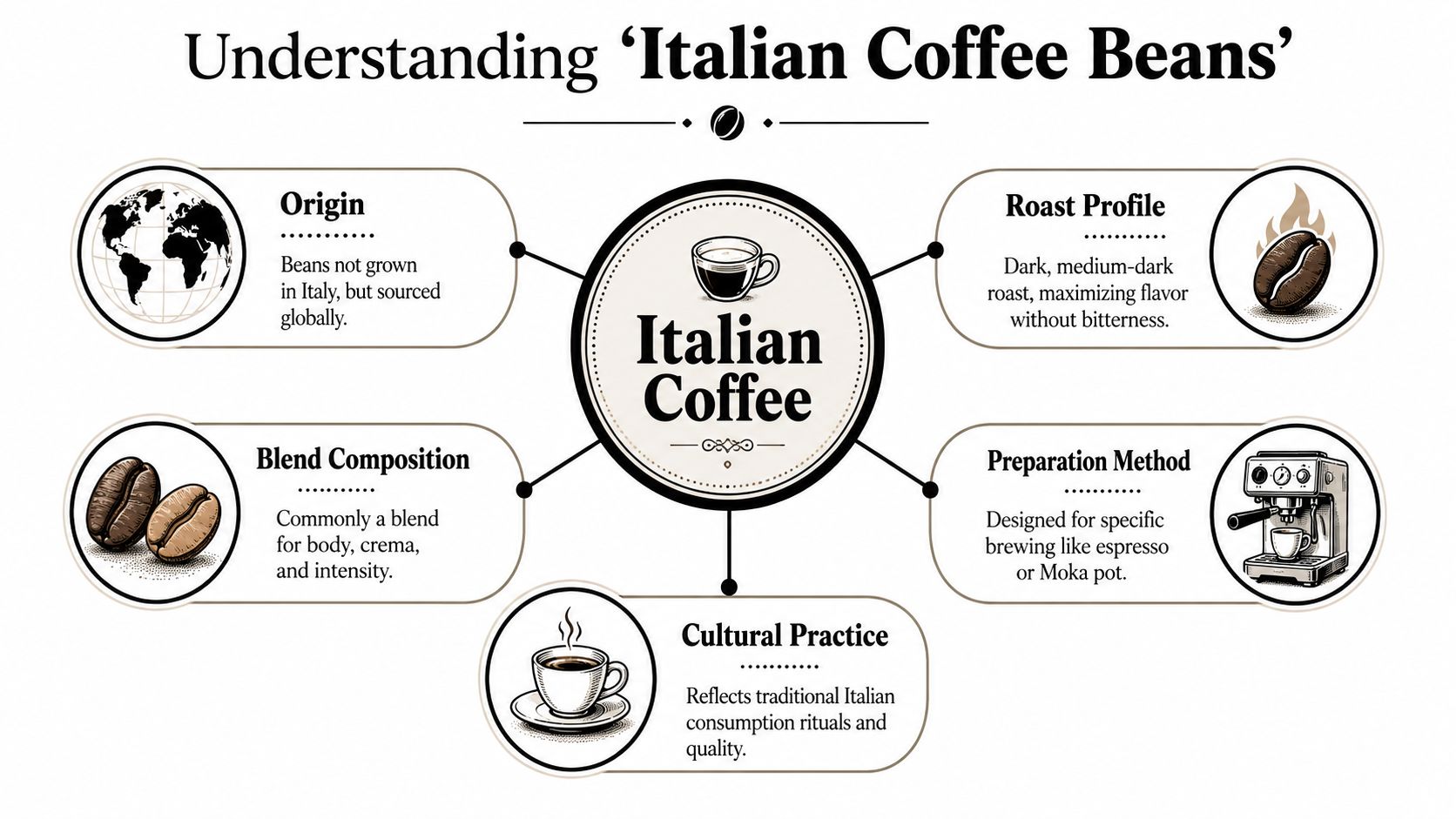
The phrase Italian coffee beans causes confusion because it sounds geographical. It is often assumed to mean the coffee was grown in Italy. It wasn't. Italy doesn't commercially grow coffee in the way producing countries in Latin America, Africa, or Asia do.
What makes the beans “Italian” is the style imposed on them after import. That style comes from roast profile, blend philosophy, and the way the coffee is meant to be brewed and served.
Roast first, origin second
A useful way to think about Italian coffee is this. In many specialty conversations, origin leads. People talk about country, farm, altitude, or processing. In classic Italian coffee, roast style leads.
As explained in this guide to Italian coffee roasting, Italian coffee is defined by its dark roast profile, where beans are heated to 225–230°C. That process creates intense caramelisation and chocolate notes and reduces moisture to below 1.5%, using beans imported from Latin America, Africa, or Asia.
That single fact clears up a lot. “Italian” describes the transformation.
What dark roasting changes in the cup
When beans are roasted this way, several flavour shifts happen:
Sweetness becomes darker: Think caramel rather than fresh fruit.
Bitterness becomes more integrated: In a good blend, it supports body instead of dominating it.
Acidity softens: That's one reason Italian-style coffee often feels smoother in milk drinks.
Aroma moves towards cocoa and toasted notes: This is the scent many people associate with espresso bars.
Here's where readers often get stuck. They hear “dark roast” and assume burnt. That isn't the goal. The goal is controlled depth.
A simple definition you can use
If you want the plain-language version, use this:
Italian coffee beans are usually imported beans that have been blended and roasted in a specifically Italian style, most often for espresso-focused brewing.
That also explains why one bag of Italian coffee works beautifully in a moka pot while another shines in an espresso machine. The label points to a tradition, not to one single bean variety.
Decoding Italian Blends and Flavor Profiles
Once you understand that “Italian” refers to style, the next question is flavour. Why do some Italian coffees taste soft and aromatic, while others feel punchy, earthy, and built for cappuccino?
The answer sits in the blend.
Arabica and Robusta as a team
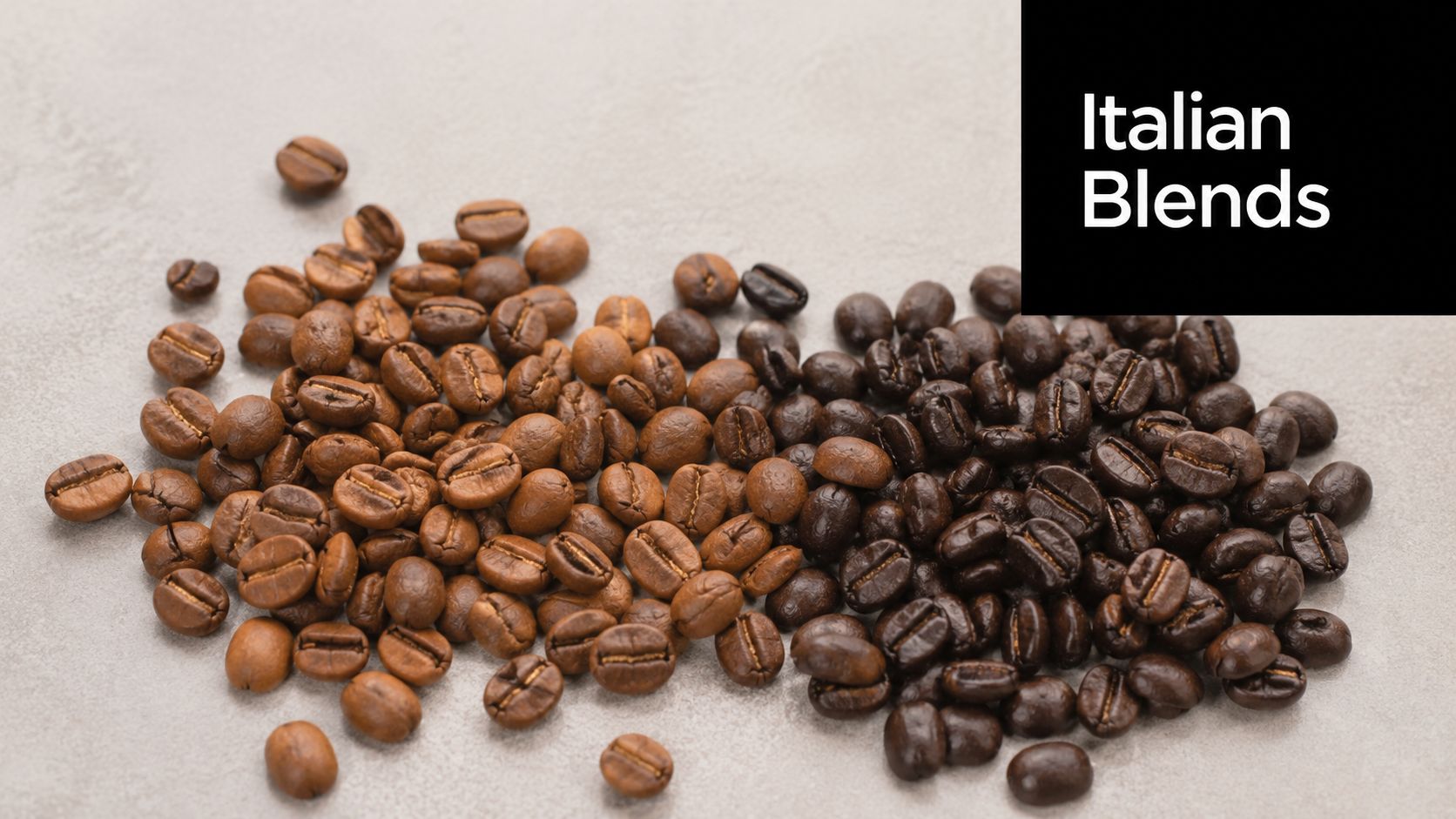
In classic Italian espresso, Arabica and Robusta often work like sections of an orchestra. Arabica carries melody. Robusta brings percussion and structure. On their own, each can be interesting. Together, they create the sound commonly associated with traditional Italian espresso.
According to Assaggia's guide to Italian coffee blends, a classic Italian espresso blend is typically composed of 70–80% Arabica beans for aromatic complexity and 20–30% premium Robusta to create the signature thick, golden crema and full-bodied strength.
That ratio tells you a lot about what you're tasting.
What each bean contributes
Arabica usually brings:
Fragrance and lift
More nuanced aroma
A gentler, more layered finish
Robusta adds:
Body
Firmness
Crema stability
A more assertive espresso character
If you've ever had an espresso that tasted lovely but looked thin, it may have lacked the Robusta contribution many Italian roasters rely on. If you've had one that hit hard but felt flat, the Arabica side may have been too weak.
Reading the cup by flavour profile
You don't need to memorise regions to understand Italian blends. Start with sensory language you can use at home.
Style in the cup | What it often suggests |
|---|---|
Floral, lighter, elegant | More Arabica influence |
Thick crema, stronger finish | More Robusta influence |
Chocolate, caramel, rounded body | Darker Italian roast style |
Better cut-through in milk | Blend built for espresso drinks |
Matching flavour to how you drink coffee
Your preference matters more than trend. If you drink espresso neat, you may prefer more aromatic lift. If you make flat whites or cappuccinos, a blend with some Robusta often performs beautifully because it stays present under milk.
Tasting clue: If the espresso disappears once milk is added, the blend may be too delicate for the drink you're making.
For many households in the UAE, that's the practical dividing line. Morning espresso calls for one kind of balance. Hospitality coffee, especially with milk and sweets on the side, often needs another.
Brewing Guide for an Authentic Taste
A beautiful bag of coffee can still give a disappointing cup if the brew method and grind don't match. In such cases, many people lose the Italian character they paid for. The coffee becomes sour, flat, or muddy.
The fix is usually simple. Adjust the brew method to suit the bean's intended style.
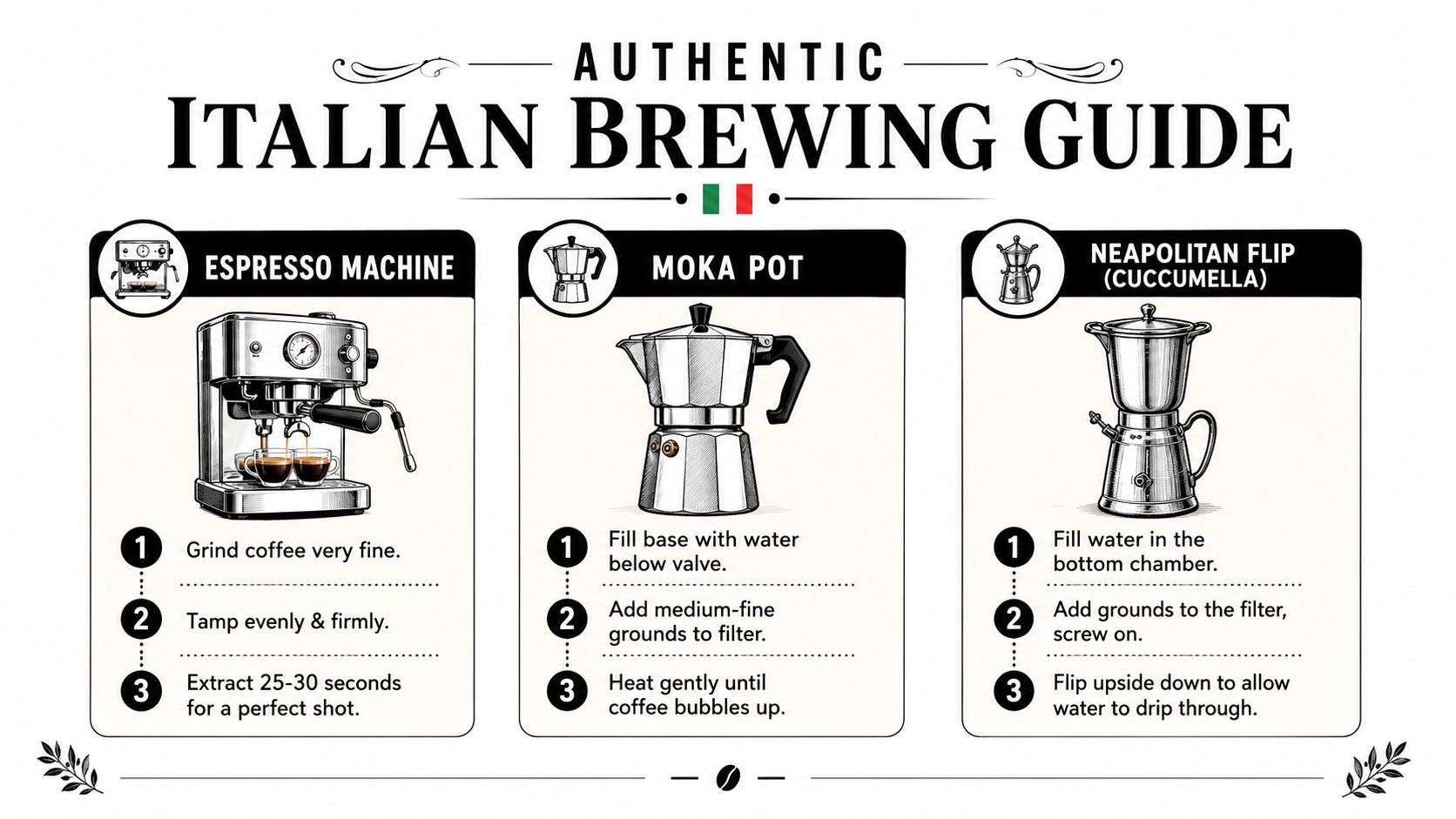
For a quick visual reference, keep this nearby while you brew:
Espresso machine
If your goal is the classic bar-style cup, the espresso machine is the most direct route. Italian-style blends are often designed with this method in mind.
Use this sequence:
Grind very fine. The texture should feel much finer than filter coffee.
Dose and tamp evenly. Keep the coffee bed level.
Extract for 25 to 30 seconds. That gives enough contact time for body and crema to develop.
Readers often ask whether harder tamping fixes weak coffee. Usually it doesn't. Grind size and dose consistency matter more than forceful tamping.
Moka pot
The moka pot produces one of the most beloved home expressions of Italian coffee. It won't taste identical to espresso, but it can be rich, dark, and satisfying.
Use a medium-fine grind, not espresso-fine powder. Fill the base with water below the valve, add coffee to the basket without pressing it down, then heat gently. If the heat is too aggressive, the brew can taste sharp and overdone.
Keep the flame or hob setting moderate. A moka pot rewards patience.
Water quality also influences flavour, especially when you're working with darker roasts. If you like adjusting the finer details, pairing your brew with a reliable water source such as Lurisia water can help keep the cup clean and consistent.
Neapolitan flip pot
The Neapolitan flip, or cuccumella, is less common in everyday UAE kitchens, but it's a beautiful traditional method. It brews by gravity rather than pressure, giving a softer, aromatic cup.
Here, the rhythm matters. Fill the water chamber, add the grounds, assemble the pot, heat it, then flip it so the hot water passes through the coffee. The result is gentler than espresso and often lovely after a meal.
A short demonstration can help if this brewer is new to you:
Common brewing mistakes
Using espresso-fine coffee in a moka pot: This can create bitterness and clogging.
Overheating dark-roasted coffee: It exaggerates harsh notes.
Letting pre-ground coffee sit open: Aroma fades quickly in warm kitchens.
Choosing the wrong bean for milk drinks: Delicate blends can vanish in cappuccino.
If you solve those four issues, your home coffee improves quickly.
How to Choose the Right Italian Beans
Many don't need more coffee information. What they need is a buying filter. The easiest way to choose Italian coffee beans is to build a personal coffee profile based on how you drink coffee, not on what sounds impressive.
Start with the drink you make most often
If your daily cup is a short espresso, look for a blend that promises body, crema, and a compact finish. If you mostly make cappuccinos or lattes, choose beans with enough roast depth and blend strength to stay present through milk. If you prefer a longer stovetop cup, a moka-friendly grind or a bean that roasts well for moka brewing will feel more balanced.
A simple self-check helps:
I like bold coffee with milk. A traditional Italian blend with some Robusta will usually suit you.
I like smoother black coffee. Lean towards Arabica-led blends.
I want convenience on busy mornings. Pods and capsules may be practical, though they give a different ritual.
Traditional habit and modern convenience
Italy still strongly favours classic formats, but convenience has a clear place in the market. In Mordor Intelligence's analysis of the Italy coffee market, ground coffee held the largest market share in Italy in 2025 at 34.10%, while coffee pods and capsules are projected to expand at a 6.31% CAGR through 2031.
That tells us something useful. People still value the familiar taste and rhythm of ground coffee, yet many households are also choosing speed where it makes sense.
Build your own coffee profile
Try using this framework when you shop:
Your preference | What to look for |
|---|---|
Strong and punchy | Darker Italian blend, often with some Robusta |
Smooth and aromatic | Arabica-forward blend |
Best for cappuccino | Full-bodied espresso blend |
Quick weekday use | Ground coffee, pods, or capsules |
Ethical sourcing matters to you | Consider options like Organic Fair Trade Italian coffee for a useful point of comparison |
Don't buy by romance alone. Buy for the cup you actually make on Tuesday morning.
That's how Italian coffee becomes practical rather than decorative.
Pairing Gifting and Festive Traditions in the UAE
You have guests arriving in Dubai after sunset during Ramadan. The table already holds dates, small pastries, and fruit. What completes the moment is not the biggest gift box. It is the right coffee, served at the right time, with the right sweetness beside it.
That instinct is very Italian.
In Italy, coffee is rarely isolated from the rest of the table. It belongs to hospitality. A short espresso after a meal, a moka pot shared during conversation, or a carefully chosen bag of beans brought as a host gift all carry the same message. You thought about the person receiving it. In the UAE, where hosting is generous and presentation matters, that tradition fits naturally.
Pairing coffee with sweets and savouries
The easiest way to pair Italian coffee is to match weight with weight. A fuller, darker espresso sits comfortably beside dark chocolate, biscotti, nut tarts, and richer cakes. A gentler, more aromatic cup works better with butter biscuits, simple sponge cake, or flaky pastries.
The logic is similar to pairing fabric by texture. Heavy wool can carry bold structure. Fine cotton suits lighter detail. Coffee behaves the same way on the palate.
For mixed-age gatherings, build the table in layers. Keep the coffee station focused for adults, then widen the spread with chocolates, simple biscuits, and playful sweets for younger guests. A selection inspired by Italian candies for kids' food party ideas can make the table feel festive without turning the coffee service into dessert chaos.
How a Dubai host can make pairings feel authentic
A Dubai-based gourmet expert at IFM Gourmet Food Store would usually advise starting with the occasion, not the bean. For an Iftar gathering, for example, a balanced Italian espresso served after the meal can work beautifully with dates filled with pistachio, a small square of dark chocolate, or a lightly sweet pastry. The coffee should cleanse the palate and finish the evening neatly, not compete with the sweetness guests have already had.
For Eid visits, gifting whole beans or ground espresso alongside fine biscuits makes more sense than giving coffee alone. It feels complete. For Diwali, an aromatic Italian blend can pair well with a sweet hamper, especially if you choose a style that stays smooth rather than aggressively bitter. For Christmas hosting, panettone and Italian coffee remain one of the simplest and most convincing pairings you can put on a table.
Why coffee works so well as a UAE gift
Coffee is practical, but it never feels plain. That is the sweet spot.
A good bag of Italian beans offers ritual, generosity, and daily use in one object. The recipient can brew it the next morning, serve it to family that evening, or save it for weekend guests. That makes it a smarter gift than many decorative food items that look impressive for a moment and then disappear from memory.
Choose the presentation with the occasion in mind:
For Ramadan and Eid: Pair coffee with dates, chocolates, or refined pastries.
For family visits: Add biscuits or cake slices that suit after-meal service.
For corporate gifting: Choose a polished coffee-and-sweets set that feels useful and easy to share.
For festive home tables: Serve smaller portions of several sweets rather than one heavy dessert, so the coffee remains part of the experience.
The best Italian coffee gift in the UAE feels considered, regional, and ready to serve. That is how you bring a true Italian coffee habit into local festive life.
Your Guide to Buying and Storing Coffee in Dubai
Buying Italian coffee beans in Dubai is easier than it used to be. Choosing well is the true skill. Warm weather, indoor humidity shifts, and the temptation to buy attractive packaging can all get in the way of freshness.
What to check before you buy
Start with the label. You want clues about style, not just branding.
Check for:
Blend composition: If Arabica and Robusta are listed, you'll have a better sense of body and crema expectations.
Format: Whole bean, ground, or capsule should match your equipment.
Roast style language: Words like dark roast, espresso blend, or moka can help you place the coffee.
Packaging quality: A well-sealed bag matters in the UAE climate.
If you buy from a specialist retailer, ask how the coffee is intended to be brewed. That one question often saves a disappointing purchase.
Where to shop carefully
Choose retailers that focus on authentic imported food products and coffee rather than general bulk assortment. One option in Dubai is IFM Gourmet Food Store, which offers Italian gourmet products in the UAE and can be part of a broader specialty-food purchase rather than a random supermarket coffee grab.
There's also a practical local footprint behind the brand. IFM Gourmet Dubai is the luxury online gourmet arm of IFM Investments LLC, operating from Dubai Investment Park 2, Street 45, according to its business presence information. A separate listing also notes a physical presence at Warehouse 2 in Dubai Investment Park Second, confirming both online and location-based access through its Dubai store listing.
How to store coffee properly at home
Dubai storage rules are simple, but they matter.
Keep it sealed: Use an airtight container once the bag is opened.
Avoid heat: Don't store coffee beside the hob or in direct sun.
Skip the fridge for daily use: Frequent in-and-out temperature changes can work against flavour.
Buy sensible quantities: Freshness is easier to maintain when you don't overstock.
Home rule: Open, seal, store cool, and finish the coffee while it still smells alive.
If you grind at home, keep beans whole until brewing time whenever possible. Ground coffee loses aromatic detail faster, and dark Italian-style profiles can flatten noticeably once exposed to air for too long.
The aim isn't perfection. It's preservation. Buy with purpose, store with care, and your coffee will taste much closer to the cup you had in mind when you first reached for Italian coffee beans.
If you'd like to explore authentic Italian gourmet products, coffee selections, festive hampers, and pantry staples in one place, browse IFM Gourmet Food Store for a Dubai-based specialty food option that brings Italian culinary tradition into everyday home use and gifting.


Comments