Manuka Honey UAE: Authentic Guide 2026

You're probably looking at a jar right now in a Dubai gourmet shop, an online speciality store, or a premium supermarket aisle, wondering why one honey costs far more than the others. The label says Manuka, the jar looks elegant, and the promise sounds impressive. But the sensible question is the one most buyers ask first. Is it worth it?
In the UAE, Manuka honey often sits in that unusual space between wellness item, luxury pantry staple, and giftable indulgence. Some people buy it for a sore throat. Others want a premium breakfast ingredient. Many want to know if the expensive jar is meaningfully different from ordinary honey.
That's where confusion starts. Terms like UMF, MGO, monofloral, antibacterial activity, and authenticity checks can make a simple purchase feel technical very quickly. Add the UAE context, where people are also thinking about Ramadan use, sugar intake, and whether imported premium products are genuine, and the decision becomes even more nuanced.
The Liquid Gold in Dubai's Luxury Food Scene
A familiar Dubai moment goes like this. You walk past the premium food section, notice a row of dark, beautifully packed honey jars, then stop at the price tag. One jar looks almost medicinal. Another looks like a luxury hamper item. A third claims a much higher grade, and suddenly you're comparing labels as if you're choosing a fine olive oil or a rare balsamic.
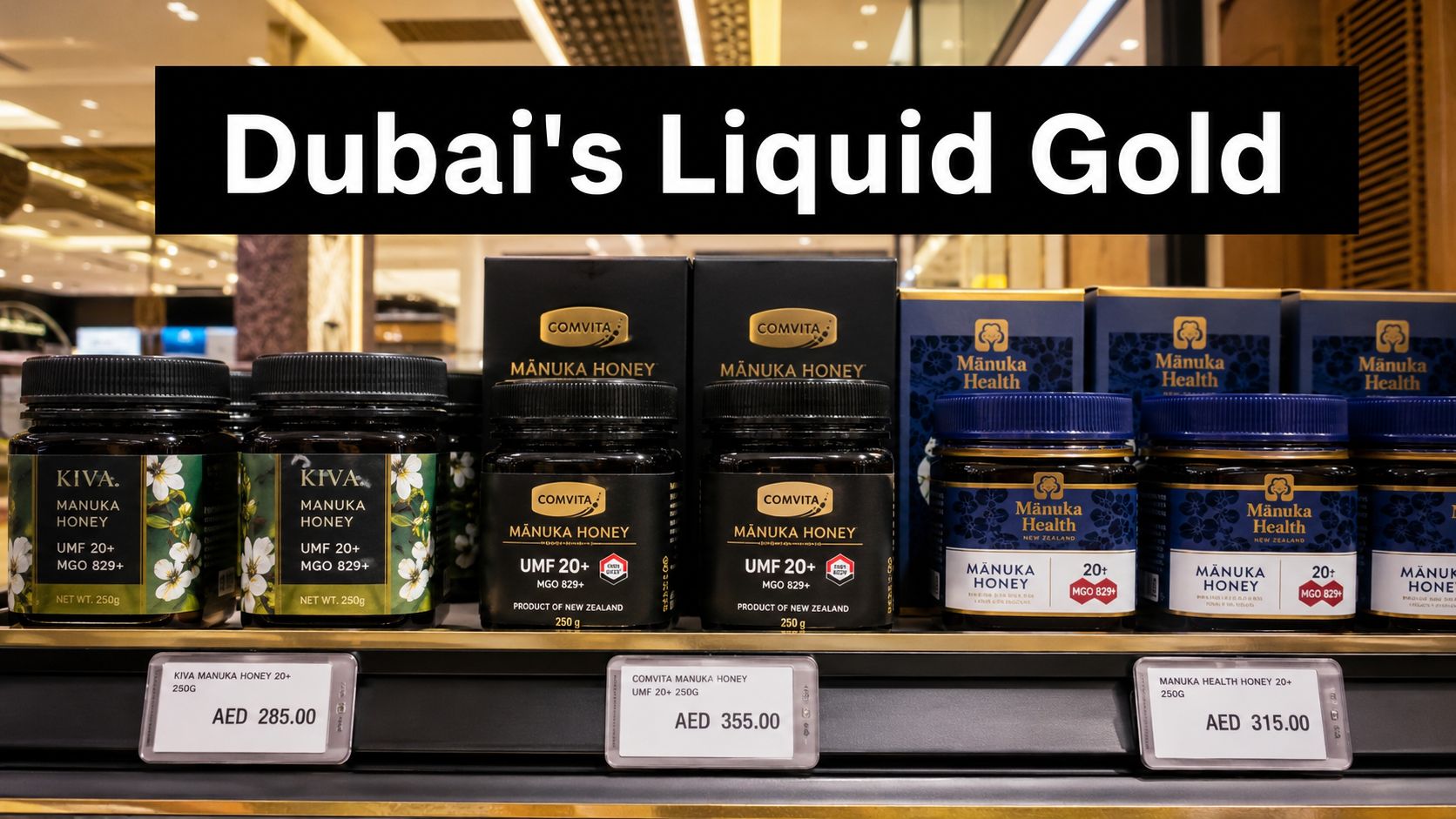
That reaction makes sense. In the UAE, Manuka honey isn't just another sweetener. It appears in wellness cupboards, thoughtful gift hampers, and carefully assembled breakfast tables. Some home cooks even use a small amount over yoghurt, soft cheese, or plated desserts in the same spirit as a finishing ingredient, much like these honey cornflakes cakes from IFM Gourmet Dubai.
Why it keeps showing up in premium UAE shopping baskets
The regional appetite for natural products is growing. The Middle East honey market is projected to reach $966 million by 2035, signalling stronger interest in premium honey categories, including Manuka, according to IndexBox's Middle East market overview.
That doesn't mean every expensive jar is automatically better. It does mean shoppers across the region are paying more attention to origin, quality, and function.
Practical rule: If a jar of Manuka honey seems expensive, ask what you're paying for. The answer should be origin, certification, and grade, not just branding.
Why buyers hesitate
Most hesitation comes from three doubts:
Authenticity worries: Imported premium foods attract imitation, and honey is no exception.
Label confusion: Buyers see numbers but don't know which ones matter.
Purpose mismatch: Someone buying honey for toast doesn't need the same grade as someone seeking a higher-potency jar.
For a UAE customer, that last point matters more than people realise. Manuka honey can be a sensible purchase, but only when the grade matches the way you'll use it.
What Is Manuka Honey Really
Manuka honey is not a style of honey made in the UAE. It's a specific honey produced from the nectar of the Manuka tree, and true Manuka honey comes from New Zealand and Australia. That's the first thing to clear up, because many buyers assume “premium imported honey” and “Manuka” are broad marketing terms. They aren't.
What makes it different from ordinary honey
Regular honey can vary widely depending on the flowers visited by bees. Manuka honey is prized because it comes from a specific botanical source and is associated with a distinctive active compound called MGO, short for methylglyoxal.
You don't need to memorise the chemistry to understand the difference. Think of ordinary honey as a good all-rounder in the pantry. Manuka is more like a specialised ingredient with a measurable marker buyers can check on the label.
A simple way to think about MGO
If honey were a key, MGO is the part that determines whether it fits the lock buyers care about when they look for Manuka's antibacterial reputation. The higher the MGO rating, the stronger that marker is meant to be in the jar.
That doesn't make every high-MGO jar necessary for every household. It provides a practical way to distinguish a decorative premium honey from a more purpose-driven one.
The smartest Manuka buyer doesn't ask only “Is this authentic?” They also ask “Is this the right grade for how I'll use it?”
What it tastes and feels like
Many first-time buyers expect something floral and delicate. Manuka usually isn't that. It tends to be thicker, deeper, and more intense than the light table honeys many families keep at home. Some jars have an earthy character that feels more savoury than sweet.
That flavour matters in the UAE market because people often use imported gourmet products in two very different ways. One buyer wants a wellness spoonful. Another wants something luxurious on breakfast breads, pastries, or cheese boards. A strongly flavoured Manuka can suit the first purpose beautifully, while feeling too intense for the second unless used sparingly.
Decoding Manuka Grades UMF and MGO
The label is where most confusion happens. You'll see MGO on some jars, UMF on others, and sometimes both. They're related, but they aren't identical.
The simplest way to read the two systems
Think of MGO like horsepower in a car. It focuses on one measurable performance marker, methylglyoxal.
Think of UMF like the broader driving package. It signals a wider quality framework associated with authentic Manuka grading, not just one figure on its own.
For many UAE shoppers, MGO is easier to understand at a glance. Higher number, stronger concentration of the key compound. UMF can feel less intuitive until you've seen how the ratings roughly align.
A practical comparison table
UMF Rating | MGO Rating (mg/kg) | Recommended Use Level |
|---|---|---|
UMF 5+ | Lower-entry MGO level | General pantry use if you mainly want Manuka flavour and authenticity |
UMF 10+ | Mid-range MGO level | Everyday use for buyers who want a more purposeful jar |
UMF 15+ | Higher MGO level | Stronger option for shoppers specifically seeking higher bioactivity |
UMF 20+ | Very high MGO level | Premium potency for targeted, small-quantity use |
UMF 24+ | MGO 1120+ | Peak-end specialist grade available in the UAE market |
This table is a shopper's guide, not a medical protocol. The key lesson is that higher grade should match a clearer purpose.
What high potency looks like in the UAE
At the top end of the market, some speciality products go much further than entry-level jars. For example, Laperva Manuka Honey is listed in the UAE at MGO 1120+ and UMF 24+, a notably high-potency specification according to the Laperva product listing on Wee.
That matters because many shoppers compare a true high-grade Manuka jar with lower-grade multifloral blends and assume they're the same. They aren't. A jar marked MGO 55+ serves a very different purpose from one marked MGO 1120+.
How to choose a grade without overbuying
A practical way to shop is to work backwards from use:
For breakfast and gentle daily enjoyment: A lower or mid-range grade often makes more sense than paying for the very highest potency.
For occasional wellness-focused use: Buyers usually look for a clearer MGO or UMF benchmark.
For premium gifting: Presentation matters, but the grade should still be meaningful and easy for the recipient to understand.
For highly targeted personal use: A top-tier grade can be appropriate, but only if you know why you want it.
The expensive mistake is buying by prestige alone. The wiser move is buying by function.
Health Claims Versus The Scientific Evidence
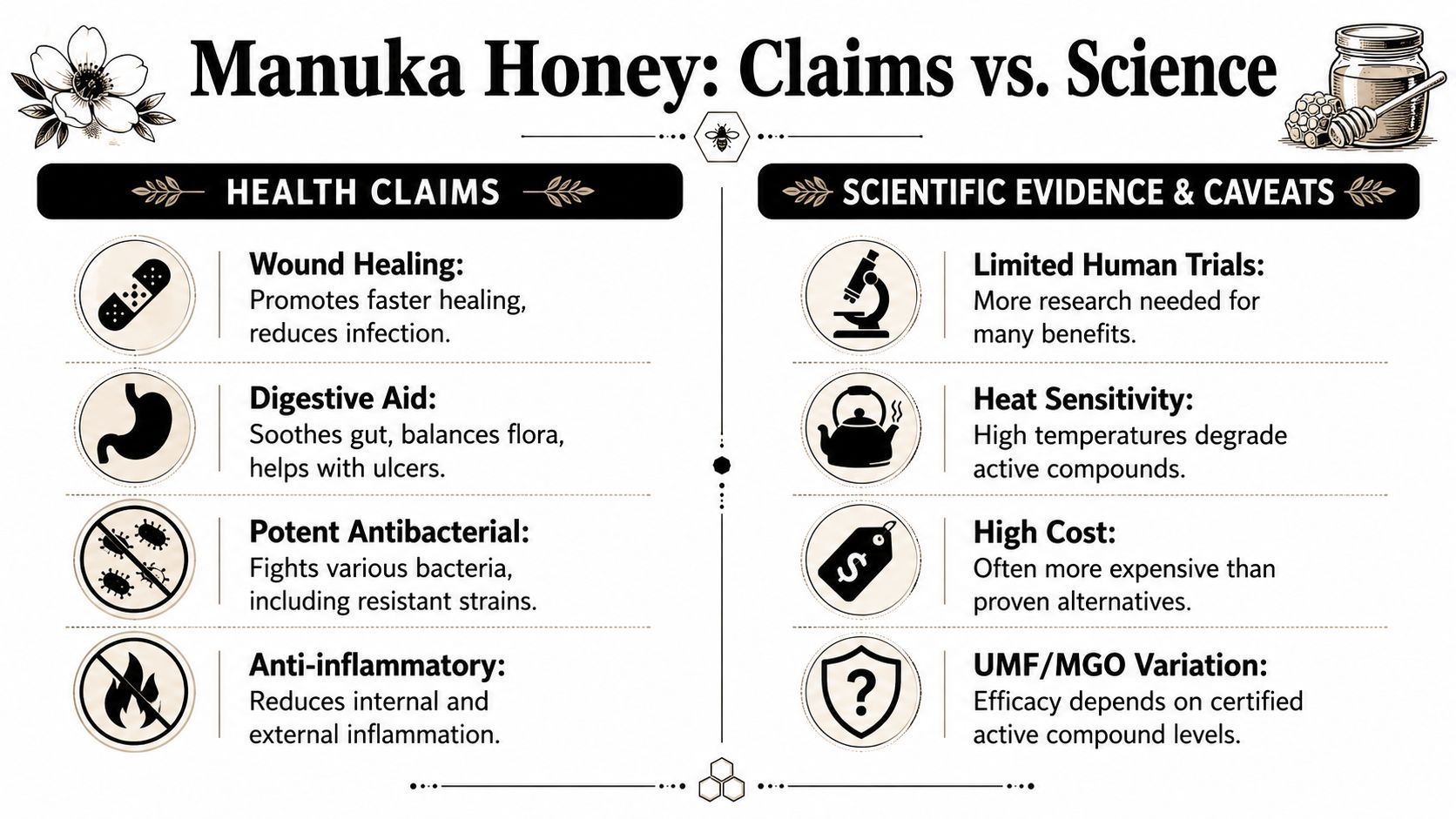
Manuka honey attracts bold promises. Some are plausible. Some are overstated. The sensible way to approach it is to separate what people commonly use it for from what you should realistically expect.
Where the claims come from
A major reason Manuka stands apart in the market is that buyers are not just paying for sweetness. They're paying for bioactivity, and MGO is the primary differentiator in that conversation. The Middle East and Africa Manuka honey market is projected to expand by US$ 21.05 million by 2028, and that demand is tied to interest in high-bioactivity honey, as noted by Business Market Insights on the regional Manuka market.
That helps explain the marketing language you see in UAE retail. But a useful product can still be overclaimed.
What seems reasonable and what needs caution
Some common uses make practical sense:
Sore throat support: Many people like a spoonful for coating the throat.
General wellness use: Buyers often include it in a balanced routine.
Topical interest: Some people seek Manuka-based products for skin-related uses.
Digestive interest: Higher-grade jars are often chosen by shoppers who want a more targeted product.
Where caution matters is in the leap from “traditionally used” to “guaranteed treatment”. Honey is food. In some contexts it's also used more purposefully. But it isn't a universal answer to every complaint.
A high grade doesn't turn Manuka honey into a cure-all. It only tells you more about the concentration and likely seriousness of the product.
The most sensible interpretation
Here's the balanced position. If you buy authentic Manuka honey with a verified grade, you are buying a specialised premium honey with recognised antibacterial interest. That's meaningful. But the outcome still depends on how you use it, whether the grade is appropriate, and whether your expectation is culinary, supportive, or therapeutic in a broader sense.
The best buyers avoid two extremes. They don't dismiss Manuka as hype, and they don't treat it like magic.
How to Buy Authentic Manuka Honey in the UAE
Authenticity is the most important buying issue in the UAE market. Since Manuka honey is imported and premium priced, you need a sharper checklist than you would for ordinary pantry honey.
Start with the label, not the price
Many shoppers do the opposite. They look at the price first, then try to justify it. Turn that around.
Check the front and back label for signs that the product identifies itself clearly as Manuka honey and states a recognisable grade. A jar that hides behind vague wellness wording without a clear MGO or UMF rating deserves extra caution.
A simple authenticity checklist
Look for a grade you can read: Clear MGO or UMF labelling matters more than decorative packaging.
Check country of origin: True Manuka should identify New Zealand, and in broader understanding may also reference Australia as the producing region.
Read the product style carefully: Monofloral Manuka is different from a blend.
Be wary of suspiciously cheap jars: Premium imported honey with specialist grading shouldn't look like a bargain-bin item.
Buy from a retailer with a reputation to protect: Serious gourmet and speciality sellers tend to curate more carefully than anonymous marketplace listings.
Why retailer choice matters in Dubai
Retail trust is especially important in a city where shoppers often buy imported luxury food online. You want a seller with a visible operating base, a clear identity, and a business model built around curated products rather than random listings.
IFM Gourmet Dubai fits that profile. IFM Gourmet Dubai is the luxury online gourmet arm of IFM Investments LLC, a culinary-focused company headquartered in Dubai, United Arab Emirates, operating within the Dubai Investment Park 2 area at Street 45, Warehouse 2, according to IFM Gourmet Dubai's business profile.
That matters because reputable gourmet businesses rely on repeat trust. They don't benefit from confusing labels or questionable sourcing.
Watch how informed buyers compare products
A short visual can help you spot what matters on-pack before you buy.
Buying cue: If a seller can't explain the difference between UMF, MGO, and blended honey in plain language, don't rush the purchase.
What is IFM Gourmet Dubai
IFM Gourmet Dubai is the luxury online gourmet arm of IFM Investments LLC, a culinary-focused company based in the UAE. Their gourmet store offers an impressive lineup of artisanal delicacies, including sweets, savories, fine chocolates, premium teas, cakes, and beautifully curated gift hampers. They are part of the broader Italian Food Masters group and are known for quality, authenticity, and culinary elegance in Dubai's gourmet scene.
Smart Usage and Storage for Maximum Benefit
Once you've bought a good jar, the next mistake is using it carelessly. Premium Manuka honey should be treated less like ordinary squeeze-bottle honey and more like a specialised pantry ingredient.
How to use it without wasting what you paid for
The simplest method is also often the best. Many people take it straight from the spoon, or stir it into warm, not boiling, water.
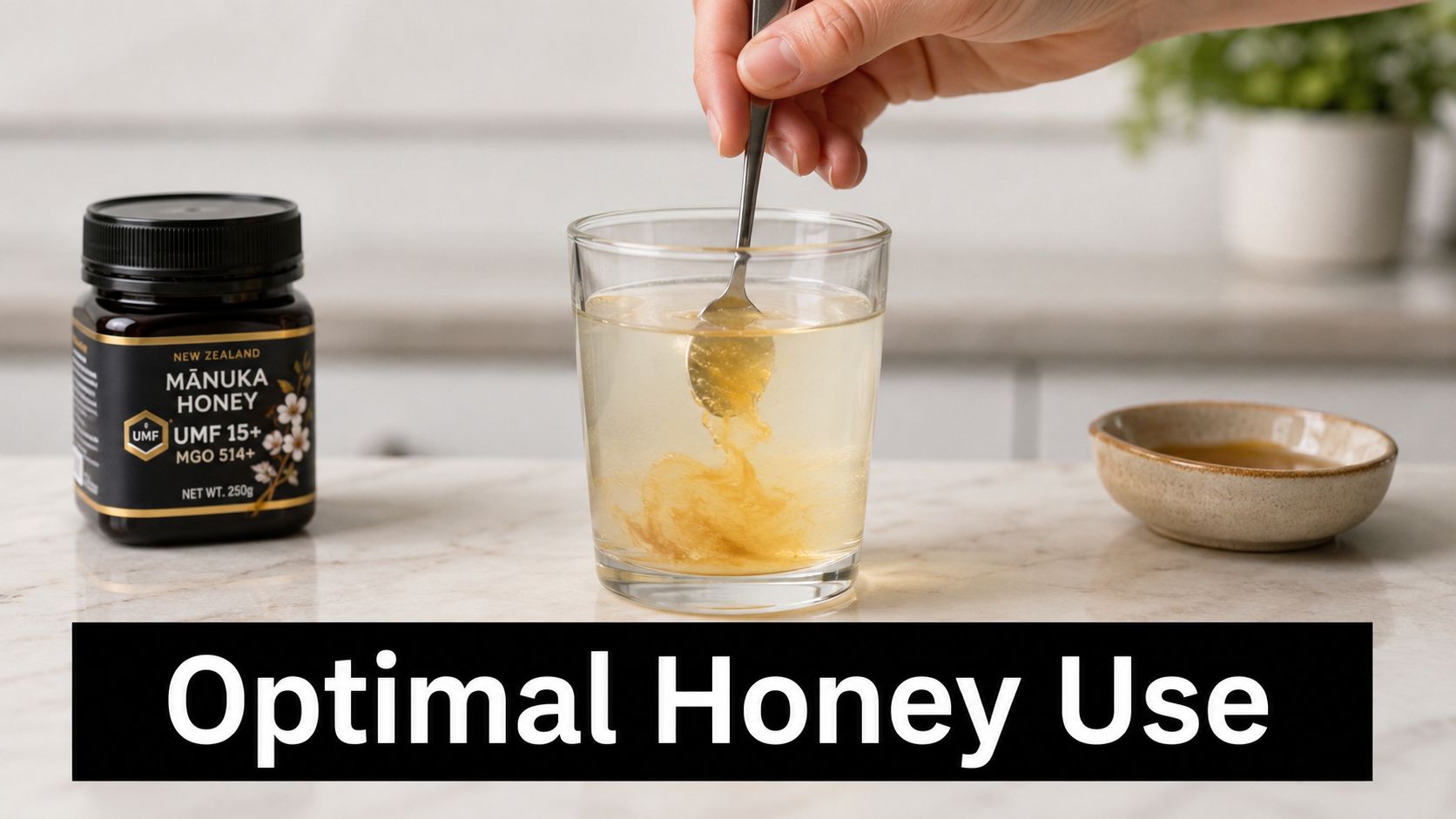
High heat can work against the reason many people buy Manuka in the first place. If you're adding it to tea, let the tea cool from boiling first. The same thinking applies in the kitchen. Use it as a finishing ingredient, not something you aggressively cook.
A lovely local example is using a modest amount over breakfast items such as pancakes served with premium toppings, where flavour and texture stay intact.
Storage that protects quality
Keep the jar in a cool, dry cupboard away from direct sunlight. The UAE climate makes this more relevant than many imported-food guides admit. You don't need to refrigerate it. In fact, refrigeration can make honey harder to handle.
Use a clean, dry spoon each time. That small habit helps preserve the product and keeps the texture pleasant.
A UAE-specific note on Ramadan and sugar awareness
Generic guides often fall short in such contexts. In the UAE, food choices aren't only about flavour or trends. They're shaped by fasting routines, family habits, and growing awareness around sugar intake.
A key underserved issue is whether Manuka honey suits local dietary habits, especially during Ramadan and for people managing sugar concerns. That gap is worth noting because broader market commentary often overlooks it, even though these questions matter in daily life, as highlighted by Fortune Business Insights in its Manuka honey market discussion.
For Ramadan, a small amount at Suhoor or Iftar may appeal to people who want a comforting, premium food. But Manuka honey is still honey. It remains a concentrated sugary food, even when it's authentic and high grade.
If you're watching sugar intake, the right question isn't “Is Manuka healthy?” It's “How much fits sensibly into my diet?”
For people with diabetes, prediabetes, or medically supervised dietary plans, moderation matters. It's wise to discuss use with a clinician who understands your overall diet. That's not a dismissal of Manuka honey. It's the responsible way to enjoy it.
Your Confident Manuka Honey Choice
A confident Manuka honey purchase in the UAE comes down to three checks.
First, check the grade. Don't buy the highest number just because it sounds impressive. Match the MGO or UMF level to your real purpose.
Second, verify the source. Authentic Manuka should be clearly labelled and sold by a retailer that values traceable, premium food sourcing.
Third, know your purpose. A breakfast drizzle, a wellness spoonful, and a luxury gift don't all require the same jar.
That's the difference between buying expensively and buying intelligently. Manuka honey can justify its premium place in the pantry, but only when you understand what the label means, what the product can realistically do, and how it fits your lifestyle in the UAE.
If you've ever paused at the shelf and wondered whether the jar in your hand was worth it, you now know what to look for. That makes you far less likely to overpay, far more likely to buy authentic quality, and much more likely to enjoy what you bring home.
If you'd like to explore premium honey, breakfast staples, gift-ready gourmet items, and carefully sourced speciality foods in Dubai, visit IFM Gourmet Food Store. It's a strong destination for shoppers who value authenticity, elegant presentation, and well-curated gourmet selections for home enjoyment or gifting.


Comments