
Maple Syrup Grades Explained for UAE Buyers

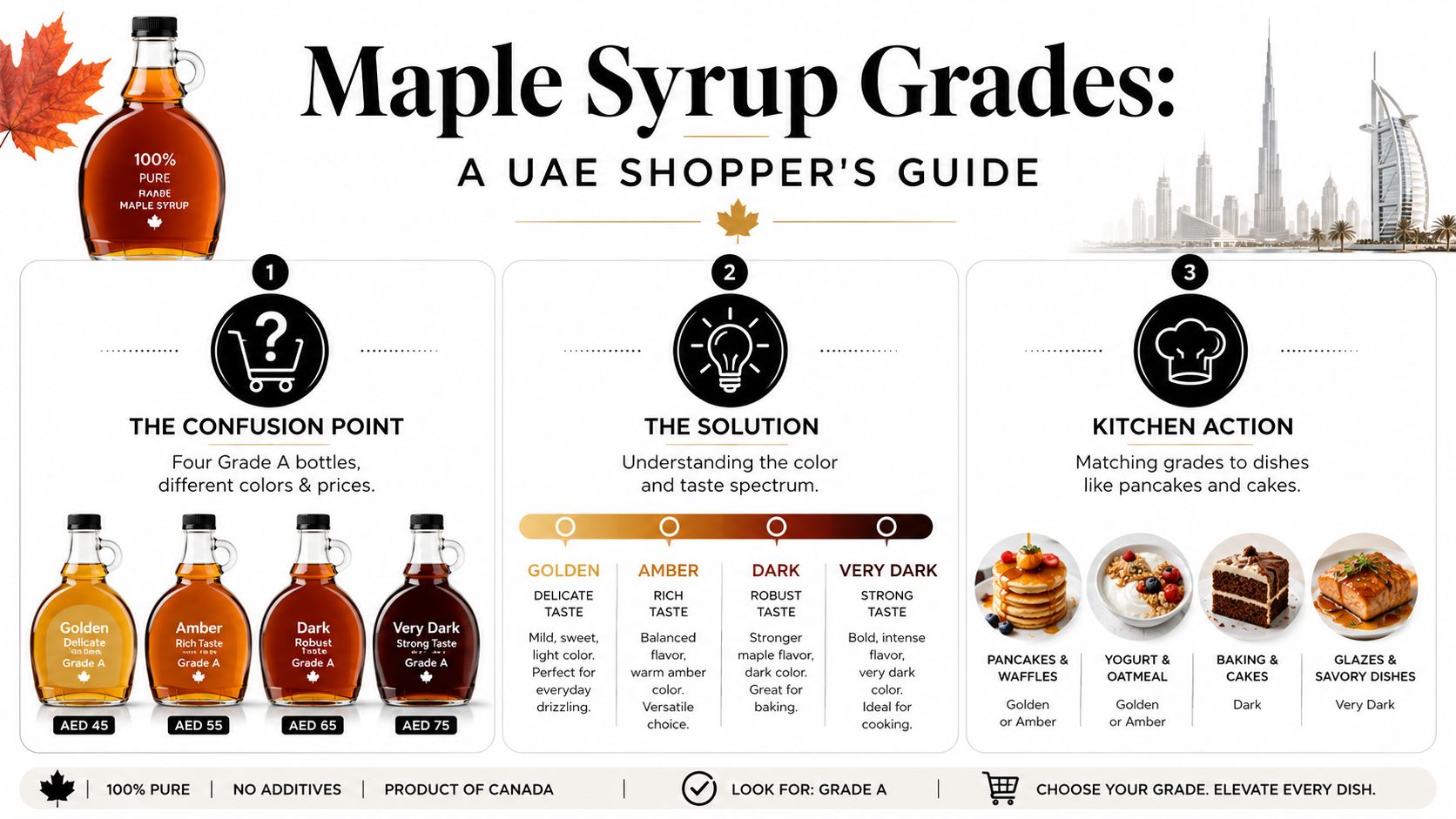
You're standing in front of a shelf in Dubai, holding two bottles that both say Grade A, both look polished, and both promise pure maple syrup. One is pale and delicate, the other is deep brown and bold, and the price tags don't make the choice any clearer. That confusion is normal, because maple syrup grades are not a simple “better or worse” score, they're a practical colour-and-flavour system that tells you how the syrup will taste in your kitchen.
For a UAE shopper, that matters more than it first appears. In premium retail, hospitality, and gift hampers, the grade helps you predict whether the syrup will vanish subtly over pancakes or stand up in baking and savoury sauces. The North American standard used across the AE region also gives you a cleaner way to compare imported bottles, especially when labels are translated loosely or old stock still sits on shelves.
Why Maple Syrup Grades Matter in Your UAE Kitchen
A bottle of syrup can look premium and still not be the right bottle for your dish. That's why the grading system exists, it gives you a way to read flavour, colour, and cooking behaviour before you open the cap. In the UAE, where imported syrups show up in gourmet shops, hotel kitchens, and gift boxes, that little grade line can save you from buying the wrong style for the wrong job.
Grades are a cooking tool, not a medal
The biggest misunderstanding is treating Grade A like a gold star. Under the U.S. standard, Grade A syrup must have not more than 68.9% solids content by weight (Brix) and must be free of off-flavours, cloudiness, sediment, and damage, while anything that misses Grade A but still fits bulk-manufacturing rules becomes Processing Grade, which is packed in containers of 5 gallons or 20 liters or larger (USDA maple syrup grades and standards). That means the grade tells you about quality requirements and use, not a simple “best bottle wins” contest.
Practical rule: if you want a syrup for the table, look for clarity and a grade name that matches the dish, not the fanciest label.
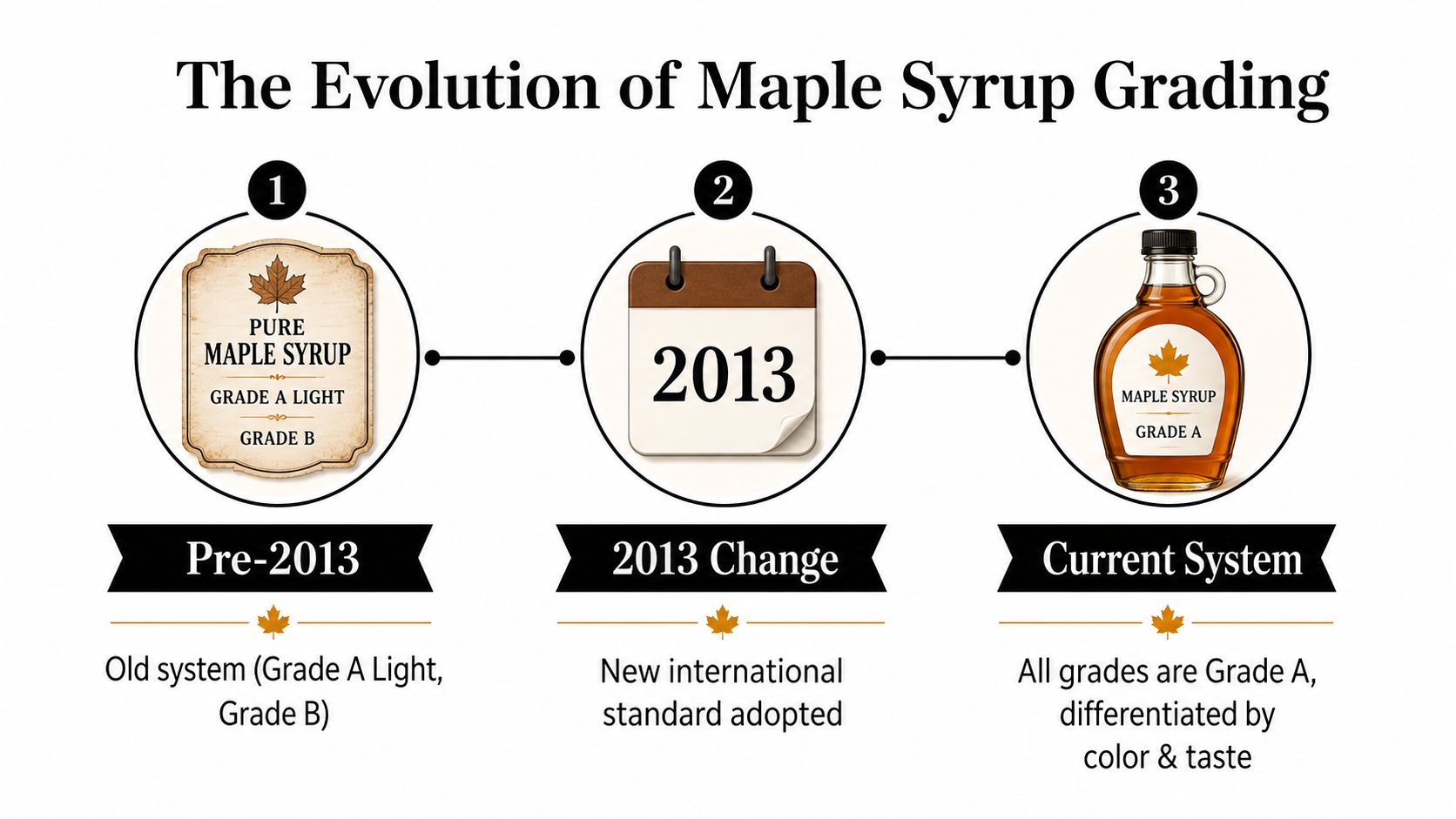
The modern system also matters because it solved a real consumer problem. Older labels such as Light, Medium, Dark, and Grade B were replaced by a colour-and-flavour framework, so chefs and shoppers could buy with more confidence. For a Dubai home cook, that means less guesswork when a recipe calls for a subtle drizzle versus a syrup that needs to hold its own in batter or glaze.
A bottle tells you more than the price tag does
Two bottles can both be Grade A and taste very different. One might be gentle and almost floral, another may be darker, deeper, and better for baking. The point of the system is not to tell you which one is “luxury” in the abstract, it's to tell you how the syrup behaves on a spoon, over hot pancakes, or inside a sauce.
That is why learning the grades pays off immediately. Once you can translate the label, you stop buying by guesswork and start buying by purpose, which is exactly how a well-run gourmet kitchen should work.
How the Modern Grading System Came to Be
Before the current names became normal, shoppers had to decode labels like Light, Medium, Dark, and Grade B. That old system was serviceable, but it left room for confusion, especially when bottles crossed borders and different suppliers used different naming habits. The shift to a harmonised framework gave buyers in the UAE a simpler way to compare products from North American sources.
2013 was the turning point
The International Maple Syrup Institute adopted the new international grading framework in the fall of 2013, and U.S. rules later became effective in March 2015 (Ohio State University consumer guide to pure maple syrup). The old consumer labels moved aside, and the new system aligned more closely with the Canadian approach. For shoppers, that meant fewer label mismatches and a cleaner path to understanding flavour.
A helpful way to think about it is this. The old names were like asking a café for “small, medium, or large” when what you really cared about was the drink's strength. The modern names tell you the strength more directly, so a bottle marked Dark Amber today sits in the same broad family of syrup that older stock once called Grade B.
Why chefs and retailers welcomed the change
For chefs, the new system made sourcing easier. A breakfast station in Dubai can order a lighter syrup for table use and a darker one for baking without having to decode vague wording. Specialty grocers also benefit because the label now signals flavour intensity in a more predictable way, which reduces confusion at the shelf and behind the counter.
The shift was about clarity, not fashion. Once the system became colour-and-flavour based, the bottle label started doing useful work for both shoppers and kitchens.
That historical change still shows up in older imported stock. If you see an older label in the UAE market, it usually reflects the previous naming era, not a completely different product philosophy. The new system gives you a better map.
The Four Grades Decoded by Colour and Flavour
A maple syrup bottle can look simple on the shelf, then taste completely different once it reaches your kitchen counter in Dubai. The reason is colour and flavour, not just sweetness. Maple syrup grades are tied to light transmittance, which measures how much light passes through the syrup. As transmittance drops, the syrup becomes darker and the flavour grows stronger. That is why two bottles can both be labelled Grade A and still belong to very different cooking moments.
Golden Delicate and Amber Rich
Golden Delicate is defined at 75% or higher transmittance (Cornell University maple syrup grading guide). It is the lightest style, with a gentle taste that works best when you want maple to stay in the background. It acts like a light hand with honey, it adds sweetness and a faint maple note without taking over fruit, yoghurt, or cream.
Amber Rich sits at 50.0% to 74.9% transmittance. This is the middle ground many kitchens reach for, because it gives sweetness with more character than Golden Delicate. It still pours smoothly and works in many settings, but the maple flavour is easier to notice, so it holds up better when the dish needs a clearer syrup presence.
For a UAE shopper, these two bottles often suit the breakfast table first. A lighter syrup can suit brunch pancakes, fresh fruit, and yoghurt, while a balanced amber bottle feels a little fuller when the plate already has butter, nuts, or cream.
Dark Strong and Very Dark Strong
Dark Strong falls at 25.0% to 49.9% transmittance (Cornell University maple syrup grading guide). It is deeper in colour and stronger in flavour, so the maple note stays noticeable when heat enters the recipe. That makes it useful for pancakes, batters, and baked desserts, where a lighter syrup can get lost after mixing or baking.
Very Dark Strong is anything below 25% transmittance (Cornell University maple syrup grading guide). It has the boldest taste and the darkest appearance, and it belongs in cooking where you want maple to stand up to heat and other strong ingredients. This is the bottle for glazes, savoury dishes, roasted vegetables, and sauces that need a deeper maple presence rather than a light finishing drizzle.
Grade | Transmittance | Colour | Flavour | Best For |
|---|---|---|---|---|
Golden Delicate | 75% or higher | Light golden | Mild | Drizzling, fruit, yoghurt |
Amber Rich | 50.0% to 74.9% | Amber | Balanced | Pancakes, desserts, everyday use |
Dark Strong | 25.0% to 49.9% | Deep brown | Strong | Baking, sauces, breakfast batter |
Very Dark Strong | Below 25% | Very dark | Bold | Glazes, savoury cooking, flavour-forward recipes |
Kitchen clue: if you want the syrup to blend quietly into the food, choose a lighter grade. If you want the maple note to stay obvious after heating, choose a darker one.
In practical terms, the grade tells you how much flavour will survive from bottle to plate. A lighter syrup can be right for a brunch spread, while a darker bottle can make more sense for baking, glazing, or a gift hamper where the buyer wants a stronger maple taste. That is what makes the grading system useful in a home kitchen, not just on a Canadian label.
Matching the Right Grade to Pancakes, Cooking and Baking
A Dubai breakfast table does not ask for the same syrup as a tray of muffins or a roasting pan of vegetables. Once you know how the flavour changes from light to dark, the choice becomes easier. The bottle should suit the job, not just the label.
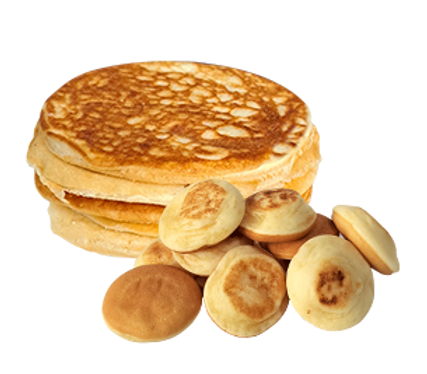
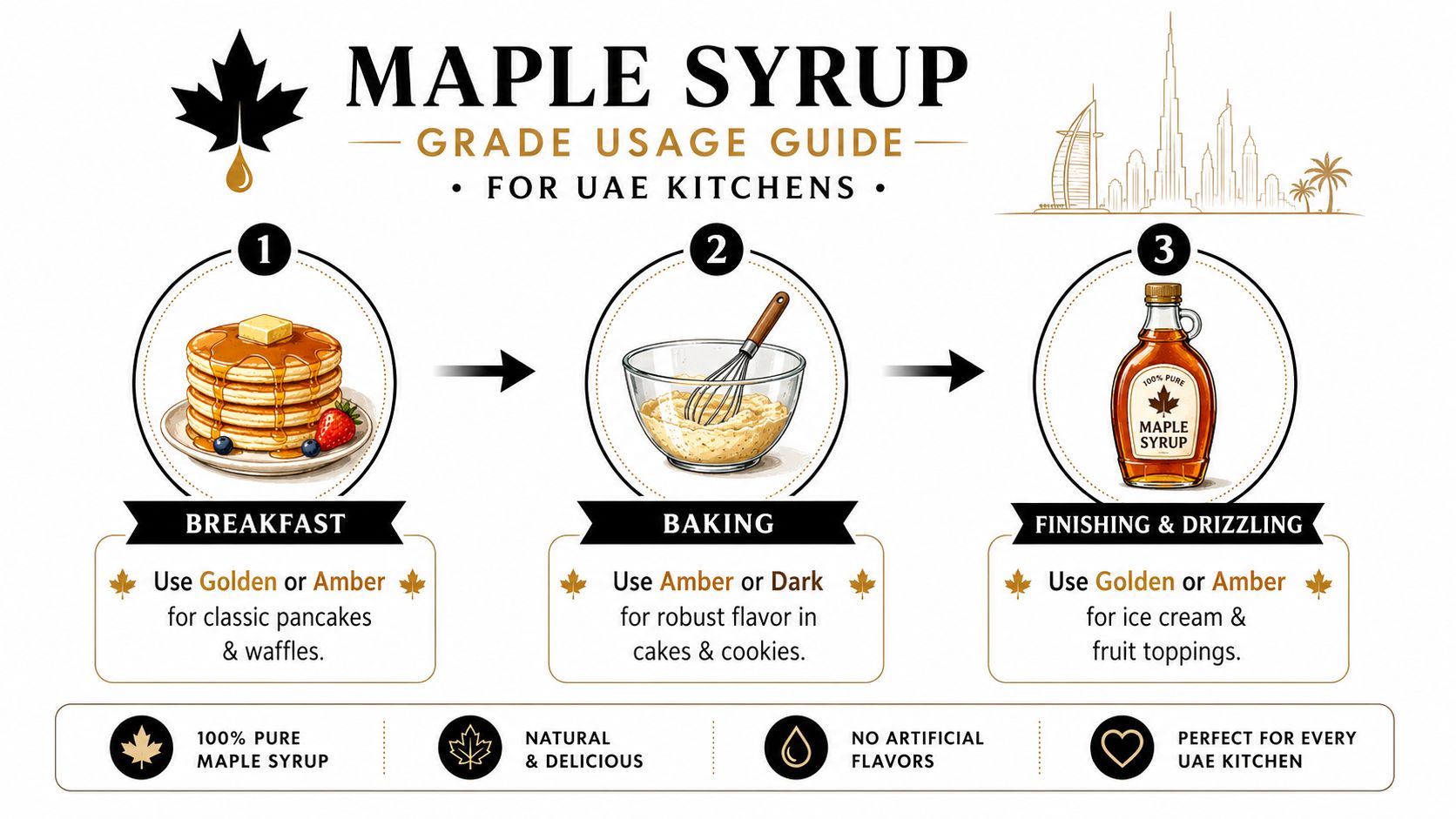
For pancakes, waffles, fruit, and yoghurt, Golden Delicate and Amber Rich usually fit best. They pour cleanly, taste bright, and stay out of the way of butter, berries, and cream. A lighter syrup works like a quiet seasoning, it adds maple without taking over the plate. For a visual reference, the Pancakes inspiration image shows the kind of breakfast spread where that balance matters.
When the rest of the dish is delicate, a softer syrup keeps everything in proportion. A thick, very dark bottle can make fresh fruit or plain yoghurt taste heavier than you want, while a gentle grade lets the topping do its job without crowding the food.
Baking and savoury cooking want more depth
Cakes, cookies, and other baked goods often benefit from Dark syrup, because it leaves a clearer maple note after heat does its work. In baking, flavour can fade the way tea does if it sits too long. A stronger syrup helps the maple character stay present in the finished crumb.
For glazes, roasted vegetables, barbecue sauces, and salmon, Very Dark Strong can be the better choice. It brings weight and a fuller maple taste, which suits foods that already have a lot going on. The syrup acts more like part of the structure than a light finish.
If you want dependable recipe structure for baked dishes, dependable baking instructions can help you see where syrup sits alongside flour, fat, and leavening. The useful part is not the sweetener on its own, it is how it behaves inside the whole recipe.
Drinks and desserts need a clean decision
Amber is often the easiest all-round choice for desserts like panna cotta or ice cream, because it brings sweetness without turning muddy. In drinks, including maple lattes or cocktail syrups, you usually want the syrup to dissolve smoothly and flavour the glass without tasting burnt or heavy. That is why many hospitality teams keep one lighter bottle and one darker bottle on hand.
The video below gives a quick visual way to connect grade and use in the kitchen.
For a home cook, the simplest rule is this. Use lighter syrup when maple is a finish, and darker syrup when maple is part of the dish itself. In a UAE kitchen, that difference helps at brunch, in the oven, and in gift hampers where the buyer wants a stronger maple taste.
How to Read the Label and Spot Genuine Maple Syrup
A bottle can tell you three things before you pour a drop. It can show whether you are holding pure maple syrup, where it was made, and which flavour style you are buying. That matters in a UAE kitchen because the word “maple” alone does not guarantee much, and a polished label does not prove the syrup inside is genuine.
What to check first
Start with the ingredient list. A genuine bottle should read like a short, honest label, usually just maple syrup. Then check the origin statement, such as Product of Canada or Product of USA, and look for the grade description, like Golden, Amber, Dark, or Very Dark.
The grade tells you more than the colour of the bottle. It gives you a first clue about flavour strength, which helps when you are deciding between a topping for brunch pancakes, a syrup for baking, or a bottle for a corporate hamper.
Why Brix matters
A finished syrup is expected to sit at the proper concentration, with 66° Brix as the technical benchmark for finished syrup and Grade A capped at 68.9% solids content by weight (Cornell University New York State confections notebook; USDA maple syrup grades and standards). In plain language, Brix is a measure of how concentrated the syrup is. If the syrup is too thin, it will not pour or taste like proper maple syrup. If it is properly concentrated, it has the texture and shelf behaviour buyers expect.
Simple reading rule: if the bottle is pure, properly labelled, and carries a real grade, you have already ruled out most of the confusion.
A darker syrup is not automatically lower quality. For table drizzling, many shoppers prefer a lighter taste, but for cooking, a darker syrup can be the better tool because its flavour stands up to heat and stronger ingredients. That is the part UAE shoppers often miss, because “premium” in everyday language does not always mean “best for this recipe.”
Room temperature helps you read the label more calmly too. If a syrup seems clear, thick enough to cling to the glass, and carries a straightforward ingredient list, you are usually looking at a bottle that belongs in the genuine maple category rather than a flavoured substitute. A label with a short ingredient list and a recognised grade is easier to trust than one that hides behind marketing language.
A quick shelf check
Before you put a bottle in your basket, ask three simple questions. Is the ingredient list clean, is the origin clear, and does the grade match the way you plan to use it? If the answer is yes, you are probably holding the right bottle for your kitchen, whether it is for pancakes at home, glazing in a hot oven, or a gift that needs to taste distinctly of maple.
Storing Maple Syrup in the UAE Climate
Heat changes how you should handle syrup once it leaves the shelf. A bottle that sits beautifully in a climate-controlled store can behave differently in a parked car, a warm office, or a pantry that gets too much afternoon sun. In the UAE, that practical detail matters as much as the grade on the label.
Before opening and after opening
Unopened maple syrup can stay stable for a long time if it is kept cool and dark, but once opened it should go in the refrigerator. That is the easiest way to slow mould and fermentation. If you are gifting a bottle, hand it over as close to the event as possible so it doesn't spend hours warming up in transport or at a lobby desk.
What spoilage looks like
Cloudiness, off-smells, or surface mould are the signs to watch for. Pure maple syrup can sometimes develop mould on the surface, and that does not automatically mean the whole bottle is ruined, but it does mean the syrup needs attention before use. If the syrup still smells and tastes normal, the mould can be skimmed away and the syrup re-boiled before storage.
Glass and plastic each have a place. Glass feels more elegant for gifting, while a well-sealed plastic bottle can be more practical for frequent kitchen use. Either way, reseal the cap tightly, keep the bottle away from direct heat, and don't leave it in a hot car boot longer than necessary.
A good storage habit is simple, keep it cool, keep it sealed, and refrigerate it once it's open.
If a bottle is going into a hamper or office gift, make sure the recipient knows it should not live on the counter forever after opening. That small note prevents wasted syrup and keeps the flavour where it should be.
Choosing Maple Syrup for Gifting and Hospitality in the UAE
A maple syrup gift only works well in the UAE when the bottle is easy to use, easy to recognise, and pleasant to serve at the table. The grade helps with all three. A smaller amber glass bottle of Dark, full-bodied often works well in a hamper because it looks polished and gives the recipient a syrup that can move from breakfast to baking without feeling too specialised.
Picking by occasion
For chef clients and tasting-style presentations, Very Dark Strong can be the more distinctive choice because it shows how bold maple can taste when it is meant to stand on its own. For dessert pairings in high-end restaurants, Golden Delicate keeps the finish light and tidy, which suits plated sweets and refined service. The better bottle is the one that matches the use, the same way you would choose a lighter honey for tea and a deeper one for glaze.
A Dubai home cook can use the same logic without any special training. If the syrup is meant for weekend pancakes, a balanced grade usually feels most flexible. If it is going into a hamper for a client, the label and bottle presentation matter just as much as the flavour, because the recipient is reading the gift before the cap is ever opened.
If you're browsing broader gift ideas, OnlineGifts.us gourmet options show how premium food items are often grouped together in curated baskets. Maple syrup belongs in that same kind of selection, where each item should feel chosen on purpose rather than added just to fill space.
Why the grading mindset helps in hospitality
Grading is a sorting tool, not a badge of prestige. In hospitality, that simple idea saves confusion. The kitchen needs consistency, while the gift buyer wants a bottle that looks clear, tastes right, and makes sense the moment it is opened.
IFM Gourmet Dubai fits naturally into that space as a curated UAE source for properly graded imported maple syrup, especially for shoppers who want premium bottles that make sense in local gifting, home cooking, and restaurant service. A bottle chosen this way can sit beside brunch items, dessert trays, or a corporate hamper without feeling out of place. It also helps the host answer the one question guests often ask first, what is this meant to taste like?
When you understand the grade, you stop buying by guesswork. You can pick the bottle that suits pancakes, baking, or a gift tray with more confidence, and that makes the whole purchase feel more intentional.


Comments