
Mitsukan Rice Vinegar: A Practical Guide for UAE Cooks

You've made a fresh Friday salad in Dubai, added olive oil, lemon and herbs, then reached for a Western white vinegar to sharpen it. Instead of lifting the flavours, the vinegar dominates the bowl. The same problem appears on sushi night, when a harsh acidity masks the rice rather than giving it a clean, balanced finish.
Mitsukan rice vinegar offers a gentler alternative. Its moderate acidity works well with sushi rice, dressings, marinades and quick pickles, while its softer profile leaves room for herbs, sumac, tahini, soy sauce and sesame. The important point is that not every Mitsukan bottle is the same, and rice vinegar isn't interchangeable with seasoned sushi vinegar or concentrated acetic-acid products.
Why Mitsukan Rice Vinegar Deserves a Place in Your UAE Kitchen
Rice vinegar starts with a rice-based fermentation tradition, then develops the rounded acidity associated with Japanese pantry cooking. Compared with a sharper distilled vinegar, the UAE-listed Mitsukan product is diluted to 4.2% acidity, which helps explain why it tastes less aggressive in a cold dressing. The declared product format and formulation are documented in the UAE product information referenced by this UAE retail listing.
That gentler character suits the way many UAE cooks already build flavour. A dressing based on olive oil, lemon, garlic, sumac or tahini can become crowded when a strong vinegar is added. Rice vinegar brings brightness without automatically covering the fragrance of mint, parsley, coriander or toasted sesame. Try it with cucumber, grilled chicken, salmon, daikon or a simple cabbage salad where you want freshness rather than a pronounced vinegar bite.
A useful pantry distinction
Plain rice vinegar and seasoned sushi vinegar serve different purposes. The UAE-listed plain product contains rice vinegar and water, while a separate seasoned Mizkan formulation includes sugar, salt and kelp stock, as documented in the UAE dry-goods reference. If you buy the seasoned version for a salad, you may add sweetness and salt without realising it.
Before checkout, ask four questions:
What is the exact product name? Look for “rice vinegar” rather than assuming that every bottle with Japanese branding is plain vinegar.
What is the declared acidity? The documented UAE product is 4.2%, not a universal standard for every imported bottle.
What are the ingredients? Check whether sugar, salt, flavourings or kelp stock have been added.
Can the importer and compliance information be verified? A missing or unclear UAE label deserves caution.
The UAE vinegar category is also gaining commercial attention. One forecast estimates that the market could reach approximately USD 150 million by 2035, with an 8.5% compound annual growth rate from 2026 to 2035, while another UAE-focused study reports 2.95% compound annual growth over its own study period. These are category forecasts, not Mitsukan sales figures, as explained in the UAE vinegar market analysis.
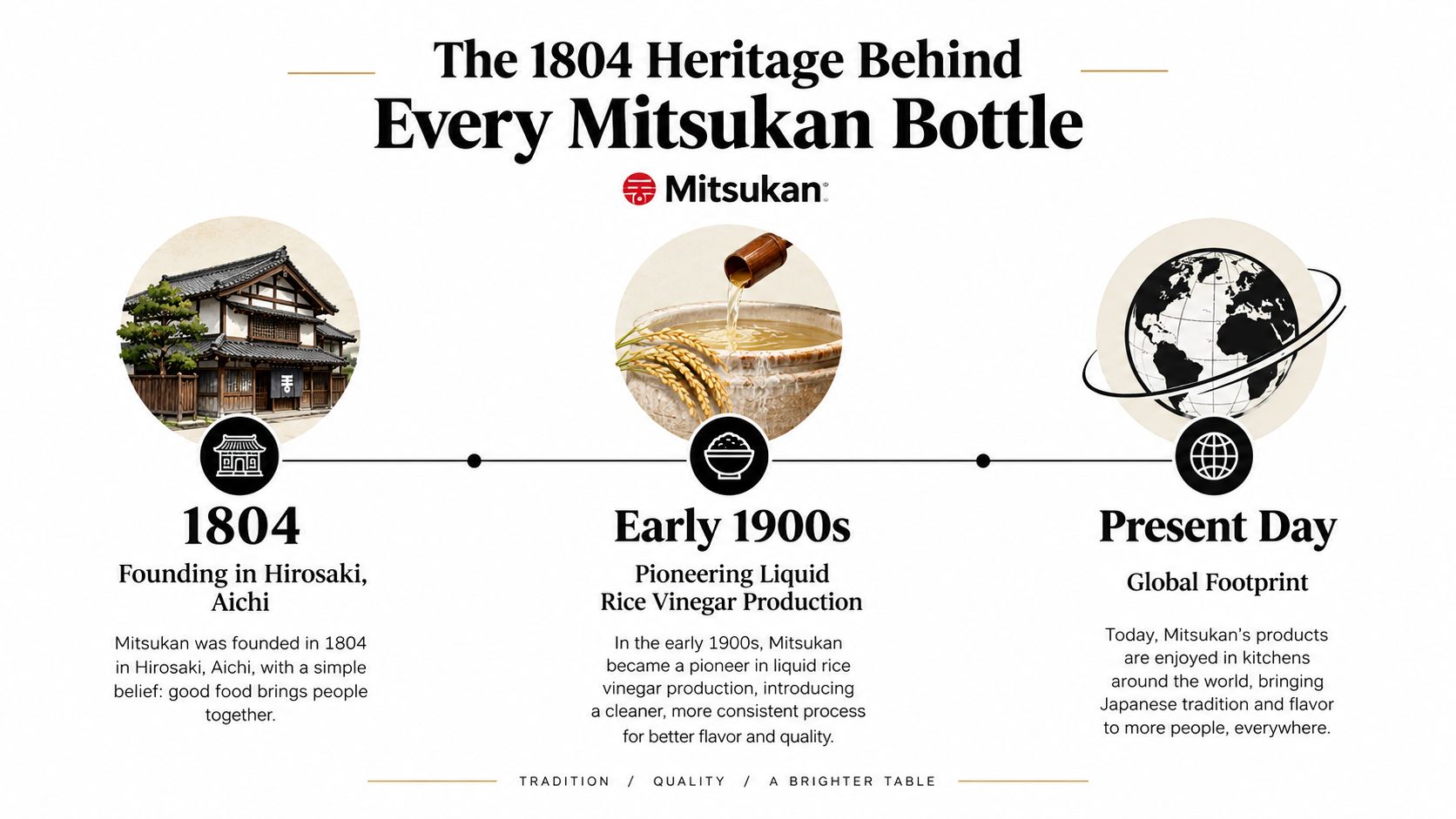
The 1804 Heritage Behind Every Mitsukan Bottle
Mitsukan's story begins in 1804, when Matazaemon Nakano started producing rice vinegar in Handa, Japan, using rice-related by-products from sake production. The business later became known as the Mitsukan Group, connecting today's pantry bottle with a documented fermentation tradition that began roughly 220 years ago, according to the Mizkan history reference.
That history matters because rice vinegar isn't just flavoured water with an Asian-looking label. Fermentation gives the product its aroma, acidity and rounded taste. A modern UAE cook may experience that quality as a faint softness on the palate, especially when comparing rice vinegar with a more forceful distilled white vinegar.
Why provenance helps in the UAE
Imported speciality foods are often judged through authenticity, provenance and established culinary practice, particularly in Dubai's hospitality and gourmet-retail environment. A long-established producer can support that kind of product storytelling, but heritage should never be confused with local sales performance.
The available UAE market research identifies Mizkan Holdings among the major companies in the country's sauces, condiments and dressings sector. It doesn't disclose Mitsukan rice vinegar's UAE revenue, import volume or market share. The defensible conclusion is narrower and more useful: Mitsukan has recognised participation in the UAE condiment category, while its product heritage reaches back to 1804.
For a shopper, that means the date is a reason to investigate the bottle, not a reason to skip the label. Different formats can vary by market, acidity and formulation. The exact UAE bottle in front of you remains the final reference.
Reading the UAE Label Acidity Ingredients and Pack Sizes
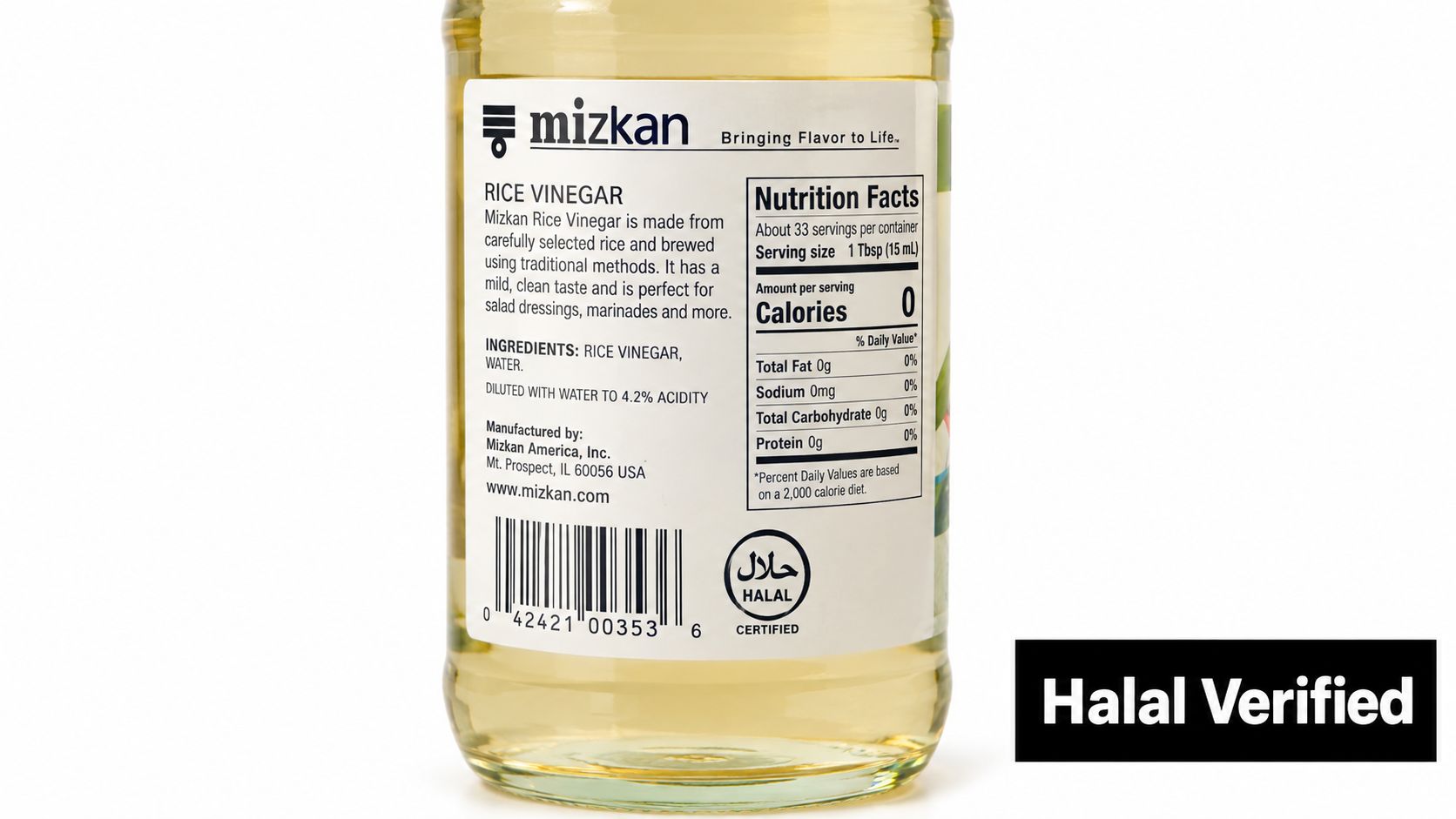
Start with the front label, then turn the bottle around. The most important technical fact on the documented UAE product is 4.2% acidity, equivalent to approximately 42 grain strength. This moderate level gives the vinegar enough force for sushi rice, dressings, marinades and quick pickles, while creating a softer impression than a stronger white vinegar.
The ingredient declaration for the UAE-listed product is rice vinegar and water. That short list tells you that you're buying a plain rice vinegar rather than a prepared sushi seasoning. It also means you control the sugar, salt and other seasonings yourself.
What the acidity changes
Acidity is a formulation variable, not just a flavour description. If you replace a 5% vinegar with a 4.2% vinegar, each millilitre contributes about 16% less acetic acid. To match the acid delivery of 1 mL of 5% vinegar, you need approximately 1.19 mL of the 4.2% product, based on the documented product calculation in the UAE listing.
That doesn't mean you should measure every salad by calculator. It means a one-to-one swap can taste milder and may behave differently in a pickle or marinade. Adjust by taste, and pay particular attention when preserving food or following a recipe designed around another vinegar strength.
Mitsukan Rice Vinegar UAE Label at a Glance
Attribute | Plain Rice Vinegar | Seasoned Sushi Vinegar |
|---|---|---|
Main formulation | Rice vinegar and water, as documented for the UAE-listed product | Rice vinegar with added sugars, salt and kelp stock, according to the UAE dry-goods reference |
Acidity | The documented UAE product is diluted to 4.2%, as shown in the UAE product information | Check the individual bottle, because the formulation isn't the same as plain vinegar |
Sweetness and salt | Controlled by the cook | Already included, so the recipe may need less added sugar or salt |
Best first uses | Dressings, marinades, sushi rice and quick pickles | Sushi rice and preparations where a ready-made seasoning is convenient |
Pack-size guidance | UAE wholesale information records 355 mL and 710 mL formats, supporting different household and hospitality uses | Confirm the exact imported format before purchase |
Don't infer ingredients from the word “sushi” alone. Read the back label.
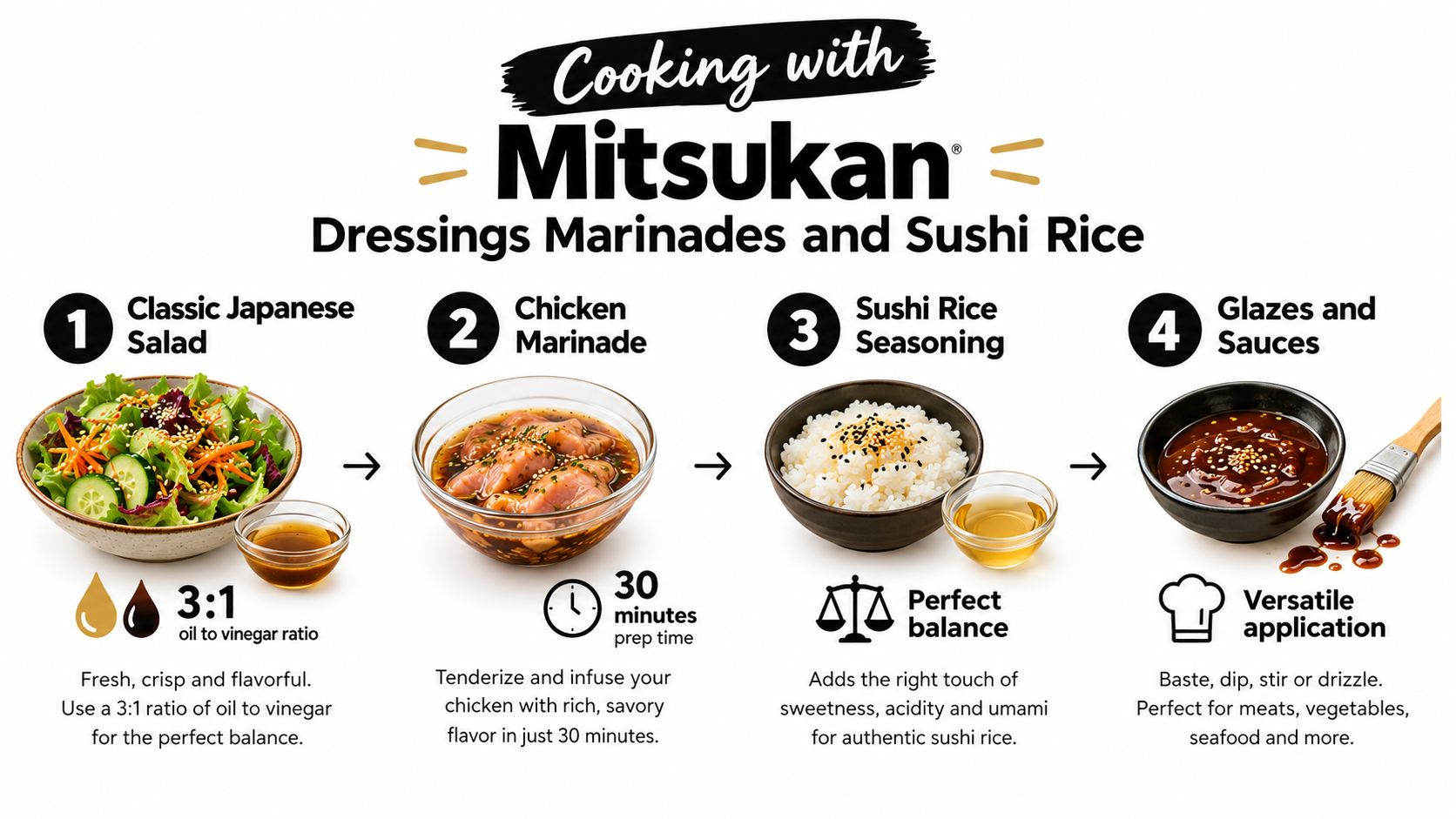
Cooking with Mitsukan Dressings Marinades and Sushi Rice
Mitsukan rice vinegar works best when you use its acidity as a supporting ingredient. It should sharpen a dish, not become the main flavour.
Dressing for a Japanese-style salad
Begin with more oil than vinegar. A useful starting structure is three parts oil to one part vinegar, then add soy sauce, toasted sesame oil, grated ginger and a little garlic. Shake in a jar and taste with cucumber, shredded cabbage or lettuce before adding more salt.
The 4.2% acidity is useful here because it brightens the vegetables without the hard edge that can overwhelm sesame and soy. For a UAE crossover, add sumac or chopped mint, but reduce other sour ingredients if the dressing becomes too sharp.
Marinade for chicken or tofu
Combine soy sauce, rice vinegar, mirin, garlic and a small amount of sugar. Coat chicken pieces or firm tofu, then refrigerate for 30 minutes before cooking. The vinegar contributes brightness and helps the other flavours sit on the surface, while its moderate acidity is less dominating than a strong white vinegar.
Don't leave delicate seafood in an acidic marinade for too long. The surface can become firm and change texture before the centre is properly seasoned.
Sushi rice
Pure rice vinegar gives you control. The documented seasoned Mizkan reference uses approximately 30 mL mixed with 320 g of warm rice, but that formula belongs to the seasoned product described in the source, not automatically to plain UAE-listed Mitsukan rice vinegar.
For plain vinegar, add it gradually to warm rice and adjust sugar and salt independently. Fold rather than crush the grains, then cool the rice while gently fanning it. This helps the surface lose excess moisture and gives the seasoning a cleaner finish.
If you're serving sushi with drinks, a practical sushi and wine pairing guide can help you think about acidity, sweetness and delicate fish without treating every roll as the same pairing challenge.
Quick cucumber or daikon pickles
Mix rice vinegar with water, then season the brine with salt and sugar. Add thin cucumber or daikon slices and taste after a short resting period. The vegetables should remain crisp, with enough acidity to refresh the palate rather than taste aggressively sour.
Use clean utensils and store prepared pickles safely. The exact shelf life depends on the recipe, handling and storage conditions, so don't treat a quick pickle as a substitute for a validated preservation process.
For a visual pantry reference, keep this Japanese pantry ingredient guide beside your recipe notes.
Smart Substitutes and When to Avoid Them
The closest substitute depends on what the vinegar must do. A dressing can tolerate a change in aroma, while sushi rice depends on a careful balance of acidity, sweetness and salt.
Mitsukan Rice Vinegar vs Common Substitutes
Vinegar | Acidity % | Flavour Profile | Substitution Ratio for Mitsukan |
|---|---|---|---|
Mitsukan rice vinegar | 4.2% for the documented UAE product | Gentle, rounded rice-based acidity | Use as the reference bottle |
Apple cider vinegar | Check the bottle | Fruity and more pronounced | Suitable for robust slaws and creamy dressings, then adjust by taste |
Distilled white vinegar | Check the bottle | Sharp and direct | Avoid an automatic one-to-one swap in delicate sushi rice |
Seasoned sushi vinegar | Check the exact bottle | Sweet, salty and seasoned | For sushi rice, equal volume can work as a starting point, but reduce added sugar and salt |
Sherry vinegar | Check the bottle | Deeper, darker and more complex | Useful in richer dressings, not ideal when you need a pale, clean pickle |
A common kitchen problem is having only 5% white vinegar available. Because the documented Mitsukan product is 4.2%, a rough dilution of four parts 5% vinegar to one part water brings the acid concentration closer to the milder product. This is an approximation, not a guarantee that the flavour will match, because distilled vinegar lacks rice vinegar's aroma and rounded character.
Practical rule: Match the vinegar to the dish, not only to the number on the label.
Apple cider vinegar can work in a creamy coleslaw-style dressing because its fruitiness has somewhere to sit. It is less convincing in delicate sushi rice, where the apple note may distract from the rice and fillings. Seasoned sushi vinegar is convenient for sushi rice, but it can make a salad too sweet or salty if you use it without reducing the other seasonings.
Sherry vinegar brings colour and depth. That can be excellent with roasted vegetables or a lentil salad, but it may stain pale cucumber, daikon or rice. Avoid using it in a light pickle just because it is the only bottle in the cupboard.
UAE Label Reading Halal Checks and Import Details
A bottle of rice vinegar can be technically suitable for cooking and still require closer label inspection before purchase. UAE guidance addresses fermentation-derived ethanol in vinegar and states a maximum limit of 0.5%, except for grape vinegar, as described in the UAE food import regulation report.
That doesn't justify assuming that every Mitsukan variant has identical halal status. Plain rice vinegar, seasoned sushi vinegar and flavoured products can have different ingredients, processing details and documentation. UAE halal claims must be supported by certification from an approved certifier, while the national halal mark is voluntary.
A sensible checkout inspection
Read the Arabic or Arabic-English label: UAE labels should provide product name, ingredients, origin and relevant storage or use information, as set out in Abu Dhabi food labelling guidance%20of%202019%20General%20Food%20Labelling%20Requirements.pdf).
Check the ingredient panel: Look for sugar, salt, flavourings and other additions before choosing between plain and seasoned vinegar.
Find the importer information: A UAE importer or distributor line makes the bottle easier to trace if you need documentation.
Inspect the batch and date details: Don't buy a bottle with an obscured batch code or unclear best-before information.
Ask for halal documentation when needed: If the bottle lacks a recognisable halal claim, contact the importer or an approved certification body rather than guessing.
Acidity also matters for safety and identification. UAE labelling guidance requires relevant vinegar products to state the raw material and declare acetic acid information, while products exceeding 11 g per 100 mL require a prominent warning not to consume them undiluted. This helps distinguish ordinary culinary vinegar from concentrated products.
Flavour Pairings Storage and Where to Buy in the UAE
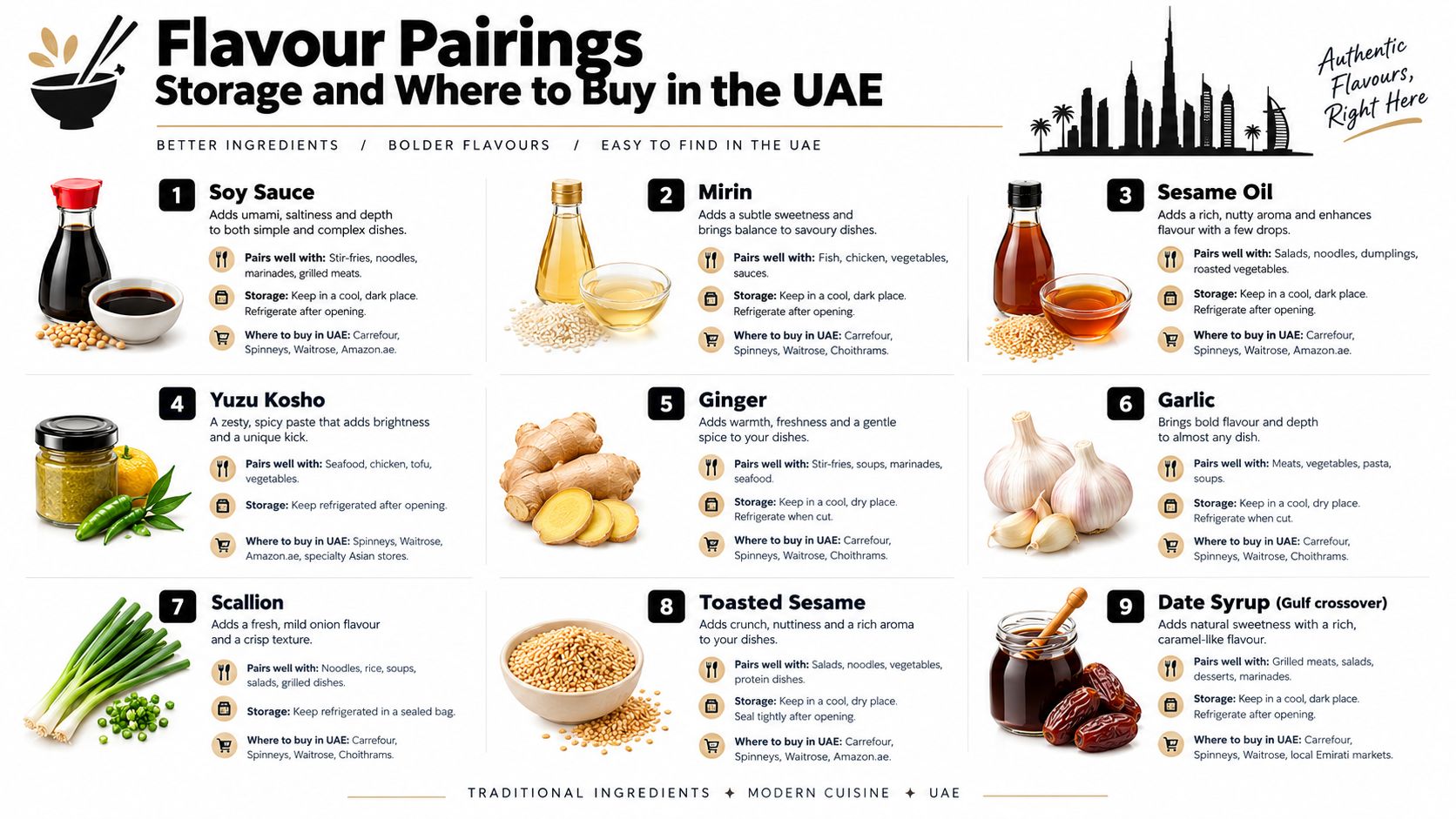
Rice vinegar's best partners are ingredients that add salt, aroma, warmth or sweetness. Soy sauce gives depth, mirin adds a rounded seasoning note, and sesame oil supplies fragrance. Ginger, garlic, scallion and toasted sesame keep a simple dressing lively without needing a long ingredient list.
For Gulf-influenced cooking, try rice vinegar with a date syrup glaze for grilled chicken, or combine it with sumac in a cabbage salad. Preserved lemon can work too, but use less of the other sour ingredients so the dressing stays balanced. Good pairings include grilled salmon, chicken skewers, tofu, cucumber, daikon and lightly steamed vegetables.
Storage that protects the flavour
Keep an unopened bottle in a cool, dark pantry. After opening, close it tightly and follow the bottle's storage instructions. Refrigeration can help preserve clarity and aroma, particularly in a warm UAE kitchen, but the label remains the controlling guidance for the specific product.
Don't pour vinegar into an unmarked container if you may later need to verify its origin, ingredients or date. Keep the original bottle until it has been used.
For availability, compare Carrefour, Lulu, Union Coop, specialist Asian grocers and online retailers in Dubai, Abu Dhabi and Sharjah. Stock changes, so check the exact product name, acidity and ingredient panel rather than buying solely by brand. Hospitality buyers should verify pack format and importer details before ordering at volume.
When comparing prices, divide the bottle price by its millilitre volume. A smaller premium-looking bottle may cost more per millilitre than a larger household or foodservice format. For shoppers outside Dubai, an online UAE retailer can be more practical, but confirm delivery coverage and the condition of the label on arrival.
Use this gourmet category reference when organising a broader Japanese and international pantry order.
Quick Reference Checklist for Mitsukan Rice Vinegar
Save this checklist in your phone before shopping:
Identity checks
Brand spelling: Confirm that the bottle says Mitsukan or Mizkan clearly and isn't a lookalike product.
Product name: Look for “rice vinegar”, not only “sushi seasoning”.
Secondary label: Japanese writing can support provenance, but it doesn't replace the UAE ingredient and importer information.
Importer address: Find a UAE importer, distributor or traceable local contact.
Product details
Acidity: The documented UAE product is 4.2%, as shown in the UAE product listing.
Ingredients: Plain product information identifies rice vinegar and water. Added sugar, salt or kelp indicates a different formulation.
Appearance: A pale tint can be consistent with a rice-based product, but colour alone can't authenticate a bottle.
Pack format: UAE wholesale information records 355 mL and 710 mL Mitsukan formats. Confirm the exact size before comparing prices.
Culinary triggers
Choose it for: Sushi rice, sunomono-style cucumber, ponzu-style dressings, light marinades and quick-pickle brines.
Use it gently with: Tahini, sumac, preserved lemon and citrus, because these ingredients already bring acidity.
Season independently: Plain rice vinegar gives you control over sugar, salt and umami.
Substitution rules
Avoid blind swaps: Distilled white vinegar can overpower delicate rice and vegetables.
Seasoned sushi vinegar: It can replace plain vinegar in sushi rice at equal volume as a starting point, but reduce added sugar and salt.
Apple cider vinegar: Use it for rich, creamy slaw-style dressings and adjust by taste.
Sherry vinegar: Choose it for deeper dressings, not pale pickling brines.
Storage habits
Before opening: Store the bottle in a cool, dark pantry.
After opening: Seal it carefully and follow the product label, with refrigeration a sensible choice in a warm kitchen.
For traceability: Keep the original label, batch information and best-before date visible.
If the bottle is clear, cheap, and lists only acetic acid, it is not Mitsukan rice vinegar.
IFM Gourmet Food Store offers a UAE-facing selection of Italian gourmet ingredients, artisanal delicacies and curated gift hampers, with delivery across the UAE. Visit the IFM Gourmet Food Store to explore its speciality range and organise your next pantry or gourmet gift order.

Comments