Best Organic Coconut Milk in UAE: Your 2026 Guide

You're probably standing in your kitchen with a recipe half decided. Maybe it's a fragrant Thai curry for dinner, a lighter soup for lunch, or a dairy-free dessert you want to serve with confidence. You pick up a can labelled organic coconut milk and assume the hard part is over.
It isn't.
The word organic matters, but it doesn't answer the questions that usually decide whether your dish turns silky or splits, lush or thin, elegant or merely acceptable. For that, you need to understand what coconut milk is, how it behaves in heat, and why one product works beautifully in a curry while another belongs in a smoothie or pudding.
A good gourmet pantry isn't built on labels alone. It's built on ingredients chosen for flavour, texture, and purpose.
What Exactly Is Organic Coconut Milk
A label can say organic, premium, or natural, yet the ingredient inside may still behave very differently once it meets heat, acid, or a simmering sauce. To choose well, it helps to start with the ingredient itself.
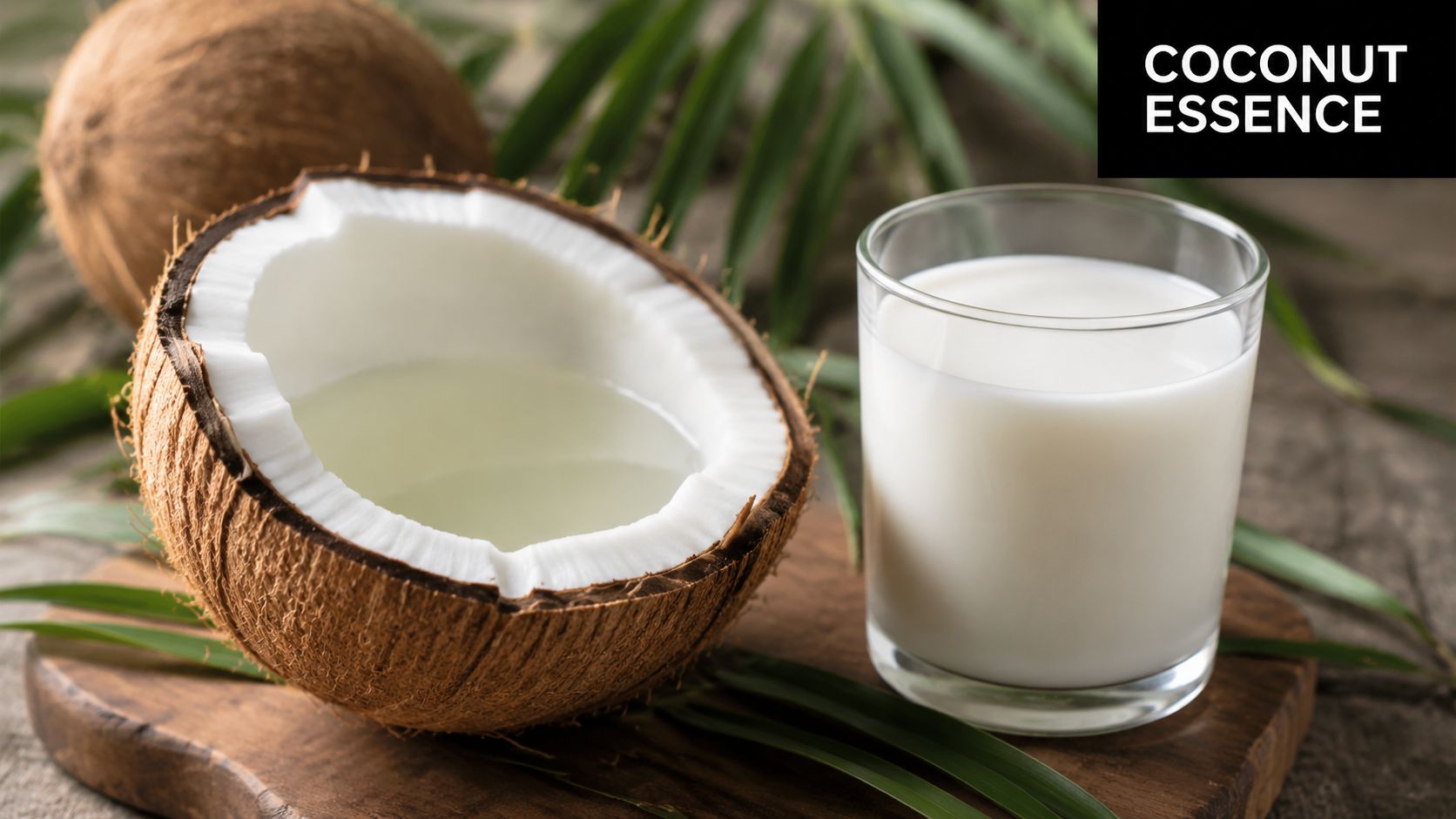
Coconut milk comes from the white flesh of mature coconuts pressed with water. Coconut water is the clear liquid found inside the fruit. They share a name, but in cooking they do very different jobs. Coconut milk adds body, fat, and a mellow sweetness. Coconut water is far lighter and works more like a refreshing liquid than a creamy base.
How it is traditionally made
At its most basic, the process is simple.
The coconut flesh is grated
Water is added
The mixture is pressed
The liquid is collected as coconut milk
The first pressing is thicker, richer, and closer in feel to cream. A later pressing is lighter, more like the difference between a full-bodied stock and a second, gentler extraction. That is why traditional coconut milk can range from luxuriously dense to quite fluid, even before a manufacturer adjusts it for consistency.
Commercial organic coconut milk follows the same foundation. The difference is standardisation. Producers often control texture, fat level, and shelf stability so a can performs reliably in a curry, soup, custard, or glaze.
What organic means here
With organic coconut milk, the word organic refers to how the coconuts are grown and handled before processing. It generally signals agricultural standards that avoid synthetic pesticides and fertilisers.
For a careful cook, that is useful information, but it is not the whole story. Two organic coconut milks can produce very different results in the pan. One may be lush enough for a velvety laksa or coconut panna cotta. Another may be thin, heavily diluted, or formulated for drinking rather than cooking.
That is the key idea for UAE home chefs who want better results. Organic tells you about cultivation. It does not automatically tell you about richness, clean flavour, or whether the product will give a butter-smooth sauce.
Why coconut milk behaves the way it does
Coconut milk has a long place in the cuisines of Southeast Asia, South Asia, East Africa, and island cooking traditions, where it is used in both savoury dishes and sweets. Its endurance in those kitchens comes from function as much as flavour.
Its cooking strength comes from its natural mix of water, fat, and a small amount of solids from the coconut flesh. Those elements work together much like cream in a dairy sauce, though with a distinct structure and aroma of their own. The fat gives roundness and a satin texture. The water carries the ingredient into broths and sauces. The coconut solids add flavour and a little body.
This is why one coconut milk can produce a glossy curry, while another leaves the same recipe pale and watery. For cooks who enjoy comparing fats and understanding how they behave in the kitchen, these expert insights on olive oil differences offer a useful contrast. Coconut milk is not just a substitute for another fat. It is a composed ingredient with its own balance, and that balance is what makes it suitable for some dishes and disappointing in others.
Canned Carton or Homemade Options
Walk through any well-stocked shop and you'll find coconut milk in more than one form. That can be surprisingly confusing because the packaging often suggests they're interchangeable. They aren't.
A carton in the breakfast aisle, a can in the Asian pantry section, and a homemade batch from fresh coconut each bring different strengths. The smart choice depends on what you're cooking, not on which option sounds most artisanal.
Coconut milk formats at a glance
Format | Typical Texture | Best For | Considerations |
|---|---|---|---|
Canned | Thick, rich, often more concentrated | Curries, sauces, desserts, baking | May contain stabilisers, can separate if unstirred, usually the strongest coconut flavour |
Carton | Thinner, pourable, more drink-like | Smoothies, cereals, lighter soups, beverages | Usually less rich, often formulated for easy pouring rather than luxurious texture |
Homemade | Fresh, variable, depends on extraction | Special dishes where freshness matters most | Short shelf life, less consistency, more effort |
Canned coconut milk
For most serious cooking, canned coconut milk is the workhorse. It usually has the density needed for curry bases, braises, dessert fillings, and creamy soups. When chilled or left standing, it often separates into thicker cream and thinner liquid. That's normal.
If you want a sauce with body, this is usually your strongest candidate. It's also the easiest format to reduce gently in a pan without ending up with something watery.
Carton coconut milk
Carton coconut milk is designed for convenience. It pours easily, stores neatly, and often suits coffee, porridge, or light blending jobs. It can be useful, but it generally won't deliver the same depth as a richer canned product.
Many cooks buy a carton expecting it to behave like a can in a curry. That's where disappointment starts. The result is often a thinner sauce with less silk and less staying power.
Carton coconut milk is often best treated as a beverage-style pantry item, not a direct replacement for a rich cooking milk.
Homemade coconut milk
Homemade coconut milk has undeniable charm. It feels pure, fresh, and hands-on. For some cooks, that alone is reason enough to make it.
Its weakness is consistency. The richness depends on the coconut, the ratio of water, and how firmly you press it. One batch may be splendid in a dessert, while the next may be too light for a sauce that needs dependable structure.
A practical way to think about the three formats is this:
For deep savoury cooking: canned usually wins.
For quick daily use: carton is convenient.
For special projects: homemade can be beautiful, if you don't need exact repeatability.
The most refined pantry often includes more than one format. That isn't excess. It's good judgement.
Reading the Label Beyond the Organic Seal
A tin says organic on the front. You bring it home for a fragrant green curry or a coconut panna cotta. Then the sauce turns thin, or the dessert sets with less richness than you expected. The organic seal mattered, but it did not answer the question your recipe was really asking.
The back label does.
Start with fat percentage
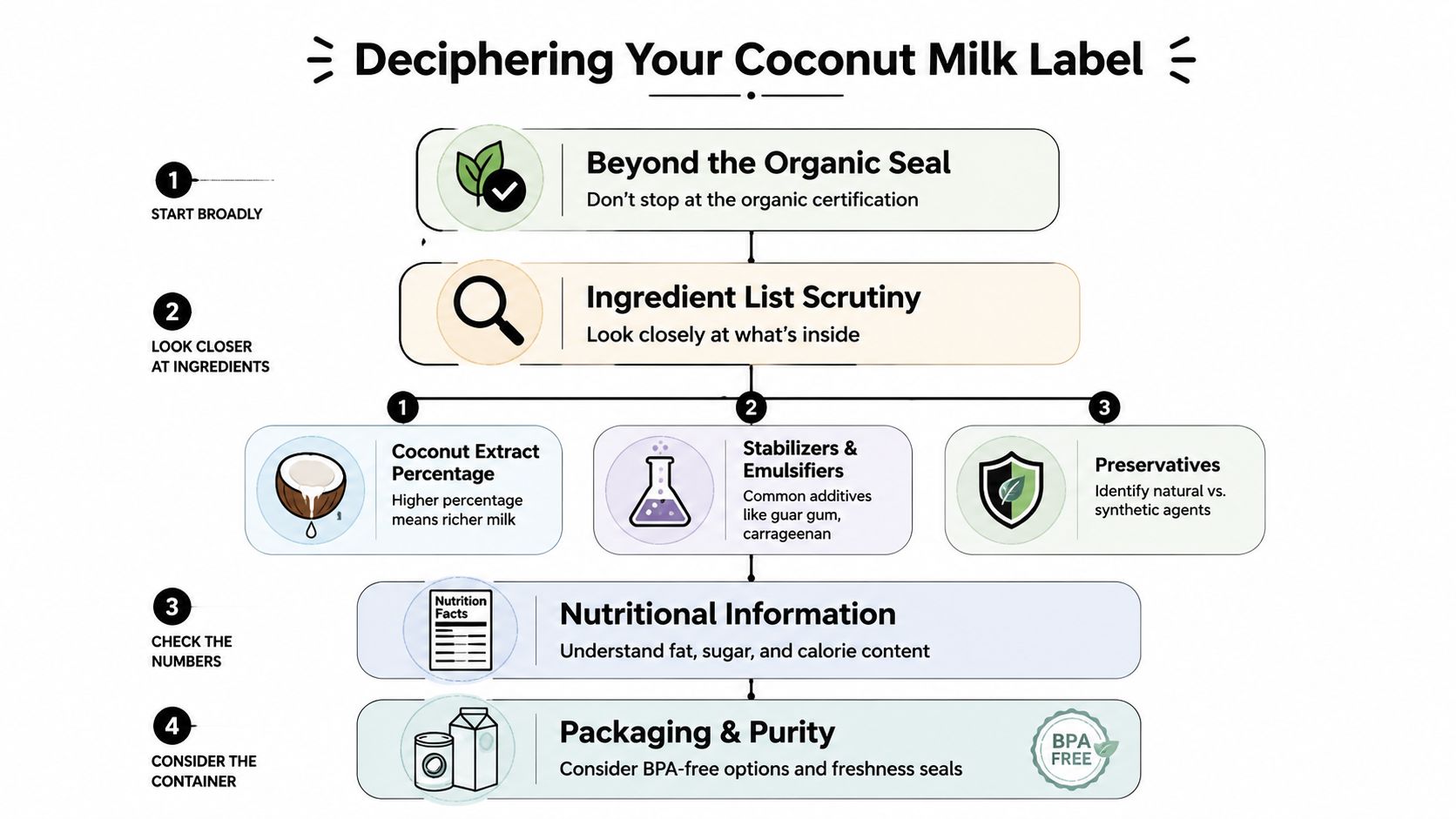
Fat content is the clearest clue to how a coconut milk will behave in the pan, bowl, or mould. Codex STAN 240-2003 distinguishes coconut milk from coconut cream by fat level, with the standard explained in this Codex-based coconut milk and cream technical guide.
That matters because fat carries flavour and gives structure. A richer product usually cooks into a sauce with more body and finishes a dessert with a more luxurious feel. A lighter one may still be pleasant, but it often behaves more like a background ingredient than the foundation of the dish.
For a UAE home cook, this is often the difference between a curry that coats the spoon and one that slides off it.
Then read the ingredient list with purpose
A short ingredient list often appeals to careful shoppers, and for good reason. Coconut and water suggest a less manipulated product. Yet label reading gets more useful once you ask a second question. What do I need this coconut milk to do?
Gums and stabilisers are not automatically a flaw. They are tools. In some recipes, they help the milk stay smooth under heat or hold a uniform texture after chilling. In others, especially where you want a cleaner coconut flavour or a more natural separation for whipping or spooning, a simpler formula may be the better fit.
That is why the smartest purchase is not always the purest-looking can. It is the one whose composition suits the job.
For readers who apply the same logic across their pantry, this practical guide for discerning clean produce is a useful reminder that one claim rarely tells the whole quality story.
Packaging deserves a quick check
Packaging affects both cooking experience and peace of mind. With canned coconut milk, many shoppers look for BPA-free linings. With cartons, the concern is often shelf stability and whether the product was packed for sipping convenience rather than culinary richness.
Treat packaging as part of performance, not just presentation. A well-packed product protects flavour and texture. It also tells you something about how the producer expects you to use it.
If you use coconut milk in breakfast dishes as well as savoury cooking, a visual cue helps here. A product suited to a stack of coconut-rich breakfast pancakes is not automatically the best one for a long-simmered curry.
Use this quick test while shopping:
Check fat content first if texture and richness matter.
Read the ingredients next and decide whether you want simplicity or added stability.
Scan the packaging note for details such as BPA-free cans or other material choices.
Buy for the recipe in front of you, not for the broadest marketing promise on the shelf.
Matching Coconut Milk to Your Recipe
A coconut milk can be excellent and still be the wrong choice.
That's the idea many home cooks miss. They search for the “best” organic coconut milk as if one can should excel at every task. In reality, the right product for a simmered curry may be the wrong one for a delicate dessert or a coffee drink.
For curries and hot savoury dishes
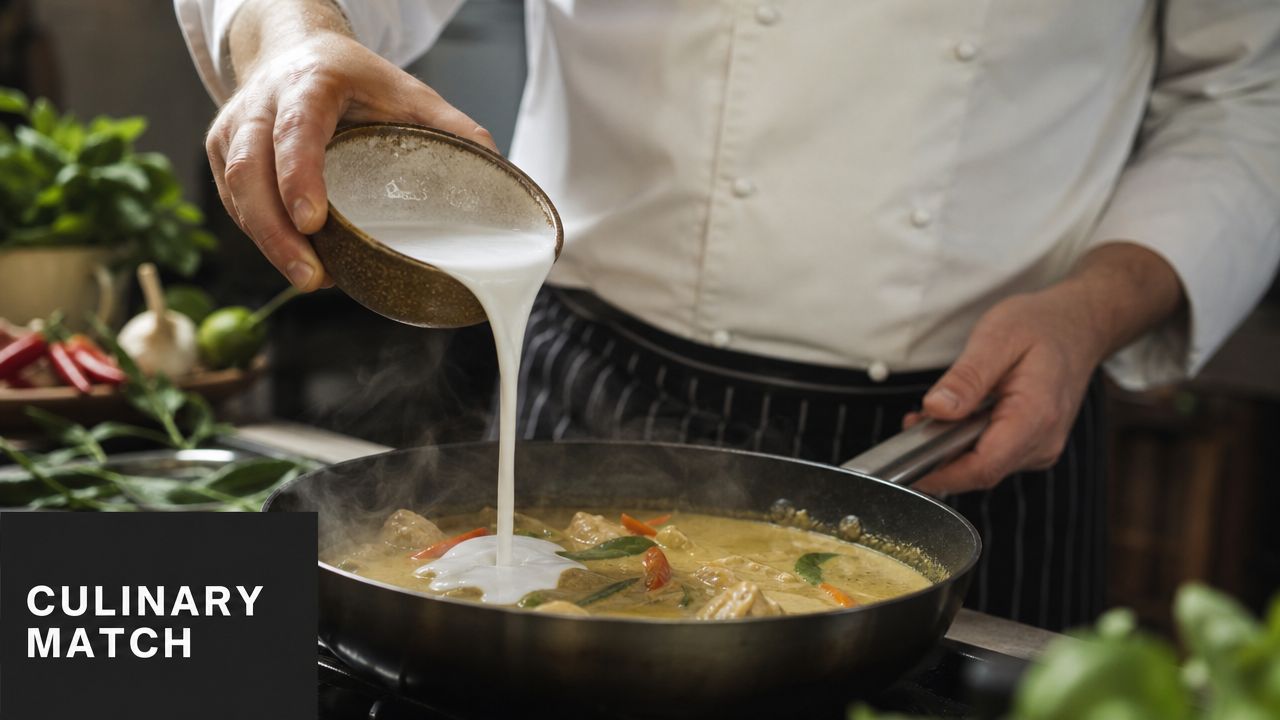
Stability is important. A rich canned coconut milk, sometimes with stabilisers, often performs better in heat than a very minimal gum-free version. Consumer product discussions note that gum-free and stabilised coconut milk behave differently, and stabilised versions are often preferred in professional kitchens because they help prevent separation in hot dishes like curries, as reflected in this product discussion on cooking performance and no-gum preferences.
If your curry has ever looked oily on top and watery underneath, you've seen this issue firsthand.
Choose a product that can hold together during simmering. If that means accepting a stabiliser, that's not a compromise. It's sound technique.
For desserts and chilled preparations
Desserts ask for a different kind of beauty. In mousse, panna cotta, custard-like fillings, or whipped coconut toppings, many cooks prefer a richer product with a purer ingredient list. The coconut flavour comes forward more clearly, and the texture feels less engineered.
A high-fat coconut milk or coconut cream is often the better route here. You want fullness, but not a gummy finish.
The cleanest label often shines most in recipes where the coconut itself is meant to be tasted, not hidden inside a heavily spiced sauce.
For coffee drinks and lighter uses
Lattes, iced drinks, breakfast bowls, and soft batters need pourability. That's where carton versions or specially formulated blends can make more sense than dense canned milk.
For readers who enjoy breakfast applications, this soft pancake inspiration shows the sort of dish where a lighter, easier-pouring coconut milk may be more practical than a heavy cream-style can.
A simple way to decide
Use this kitchen rule:
Choose stability for curries and hot sauces.
Choose purity and richness for desserts.
Choose convenience and flow for drinks and everyday breakfast use.
The phrase “no gums” can sound automatically superior, but professional cooking is more nuanced than that. Purity and performance are both valuable. The wise cook knows when each one matters more.
Italian and Emirati Culinary Inspirations
Organic coconut milk becomes much more exciting when you stop treating it as an “alternative” product and start treating it as a serious ingredient. It can travel beautifully across cuisines. In the right hands, it feels as natural in an elegant plated dessert as it does in an intensely spiced savoury dish.
An Italian-style dessert with tropical poise
Consider a coconut panna cotta. The idea is simple, but the effect can be refined. A rich coconut milk or coconut cream gives the dessert a smooth, satin-like set and pairs especially well with bright fruit such as mango or passionfruit.
If you enjoy Italian table style and plated elegance, even a visual cue like this pasta and presentation inspiration reminds you of an important principle. Premium ingredients don't need complication. They need balance.
For this kind of dessert, a richer and less heavily stabilised coconut milk usually makes the flavour feel cleaner and more polished.
A UAE table with broader flavour language
Now shift to a more regional expression. Coconut milk works beautifully with cardamom, saffron, date notes, roasted nuts, and gently spiced seafood. A coconut and cardamom sauce can soften the edges of grilled fish. A tapioca-based pudding with coconut cream can feel both familiar and refined.
These aren't fusion tricks for their own sake. They work because coconut milk already has a long global culinary identity.
A bridge into herb-forward savoury cooking
For cooks exploring bolder aromatic sauces, a well-made herb blend can help frame coconut milk without overwhelming it. This delicious Thai basil sauce recipe is a useful example of the kind of vivid, savoury profile that pairs naturally with coconut richness.
Good coconut milk doesn't force a cuisine to change. It gives the dish another texture language to speak in.
That's why it belongs in a modern UAE kitchen. It can support an Italian dessert, an Asian curry, or a Gulf-inspired plated dish with equal grace, provided you choose the format and richness with intention.
Sourcing and Storing for Peak Freshness in the UAE
In the UAE, organic coconut milk sits comfortably within a broader appetite for premium, plant-based pantry staples. Dubai's imports of edible preparations of vegetables, fruit, nuts and other plant parts reached AED 1.38 billion in 2023, up from AED 1.12 billion in 2022, a 23.2% year-on-year increase according to Dubai trade context reported in this coconut milk market overview. That scale helps explain why discerning shoppers now expect better selection, better sourcing, and better product detail.
What to look for when sourcing
A trusted supplier should make it easier to find products with clear ingredient lists, thoughtful packaging, and the right format for serious cooking. The point isn't just availability. It's curation.
When selection is handled well, you spend less time guessing and more time cooking.
How to store it well after opening
Once opened, coconut milk deserves a little care.
Transfer it out of the can into a clean, airtight, non-metal container.
Refrigerate promptly and use it within a few days for best flavour and texture.
Stir before reuse because separation is common, especially in less stabilised products.
Freeze leftovers in small portions if you regularly use coconut milk in smoothies, sauces, or soups.
Opened coconut milk is no longer a pantry item. Treat it like a fresh ingredient.
Heat and storage conditions matter in every climate, but they matter especially in the UAE. Good storage protects not only freshness, but also the flavour clarity you paid for.
Your Key to Creamier Healthier Cooking
A home cook in Dubai can stand in front of a shelf of organic coconut milk and still pick the wrong one for the dish. The label may be clean and attractive, yet the result can be a split curry, a thin panna cotta, or a dessert that tastes more flat than lush. Good cooking starts with a more useful question. Which coconut milk will do the job best?
The answer usually comes down to three practical checks. Look at the fat content if you want body and richness. Read the ingredient list if you care about clean flavour, stable texture, or both. Notice the packaging if you want a product that aligns with your standards for storage and overall quality.
That is the difference between shopping by category and shopping by function.
Organic certification matters, but it is only one part of the picture. UAE home chefs who want better results learn to read coconut milk the way they read olive oil or chocolate. A thick, high-fat coconut milk suits velvety curries, whipped fillings, and spoonable desserts. A lighter version can work well in soups, smoothies, or everyday breakfast cooking. Additives are not automatically bad, but they do change performance. Some help prevent separation. Others dull the pure coconut character that makes a premium product worth buying in the first place.
Packaging also shapes the experience. Many careful shoppers prefer BPA-free options and shorter ingredient lists because purity is broader than an organic seal alone. The goal is not to chase labels for their own sake. It is to choose a coconut milk that gives you cleaner flavour, better texture, and more predictable results.
Once you start choosing this way, your cooking becomes more precise. Your curry turns out smoother. Your saffron coconut dessert sets with a silkier finish. Your morning chia pot tastes fresh rather than overly processed.
Organic coconut milk earns its place in a well-stocked pantry when it is selected with purpose. Choose for the recipe, not just the certification, and the ingredient begins to behave like a true gourmet staple.
For cooks who want premium ingredients chosen with that same level of care, IFM Gourmet Food Store offers a refined gourmet selection in Dubai and across the UAE. It's a strong destination for home chefs, gift shoppers, and hospitality buyers who value authenticity, craftsmanship, and ingredients that help everyday cooking feel more elegant.


Comments