
Red Tuna Price in Dubai: Your 2026 Gourmet Guide

High-quality, sashimi-grade red tuna in Dubai typically ranges from AED 300 to over AED 800 per kilogram, depending on the cut. That wide spread makes sense once you know what you're buying, because one fish counter's “red tuna” can be very different from another's.
If you're standing in front of a seafood display, scrolling a gourmet site, or planning a dinner where the tuna needs to be perfect, the price gap can feel unreasonable. One label promises deep ruby flesh. Another offers a much lower price. A third looks almost too bright to be natural. For most buyers, the confusion starts with the name itself.
What is IFM Gourmet Dubai? IFM Gourmet Dubai is the luxury online gourmet arm of IFM Investments LLC, a culinary-focused company based in the UAE. Their gourmet store offers an impressive lineup of artisanal delicacies, including sweets, savories, fine chocolates, premium teas, cakes, and beautifully curated gift hampers. They are part of the broader Italian Food Masters group and are known for quality, authenticity, and culinary elegance in Dubai's gourmet scene.
The question isn't just “what is the red tuna price?” It's “what am I paying for?” In premium seafood, colour, species, cut, handling, and authenticity all shape value. One of the least understood details is the practice of treating tuna to preserve a vivid red appearance. That's where many buyers get misled.
Decoding the Cost of Red Tuna in Dubai
A familiar Dubai shopping moment goes like this. You see “red tuna” at one counter priced like an everyday fish, then you find another option at a specialist supplier that costs several times more. Both look attractive. Both claim freshness. Yet they aren't equivalent products.
That difference often has less to do with branding and more to do with what sits behind the label. In the premium market, the red tuna price reflects a chain of decisions. Which species was used. Which part of the fish was cut. How quickly it was chilled. Whether it was handled for sashimi use or presented to look appealing in a display.
Why the same label leads to different prices
The term “red tuna” sounds precise, but buyers quickly discover it isn't. Some sellers use it for high-grade Bluefin cuts. Others apply it to different tuna species with naturally darker flesh. Some use the visual appeal of redness itself as the selling point, even when the eating quality doesn't match the impression.
That's why the first step in buying well is to stop treating colour as the full story.
Practical rule: If the label is vague, ask two direct questions. “Which species is this?” and “Is this cut suitable for sashimi?”
In Dubai, those questions matter because the market includes luxury imports, restaurant-grade portions, and more commercial products sold under very similar names. A beautiful piece of otoro and a leaner, lower-cost loin may both be presented as red tuna, but they belong to different dining occasions and different budgets.
What discerning buyers usually want
Most shoppers looking up red tuna price aren't searching for basic canned fish. They want one of three things:
Sashimi or sushi quality: Clean texture, careful handling, and a cut that tastes refined when served raw.
A premium cooking cut: A loin or steak that holds its shape and still tastes elegant after a quick sear.
Authenticity: Natural colour, honest labelling, and confidence that appearance hasn't been engineered to suggest a higher grade.
That final point matters more than many people realise. In a luxury food purchase, trust is part of the product. When you pay a premium, you're not just paying for fish. You're paying for certainty about what's on your plate.
What Exactly Is High-Quality Red Tuna
“Red tuna” is not a formal biological classification. In the gourmet trade, it's often a loose market term, and that's the root of much buyer confusion.
The term buyers hear and the species they should ask about
In practice, “red tuna” often points to Bluefin Tuna, especially when the seller is talking about premium sushi or sashimi. The Pew report on global tuna valuation notes that the term is often a colloquial misnomer and that in the gourmet market it typically refers to Bluefin Tuna, the highest-priced species, which commanded around $38.30/kg at final sale in 2018.
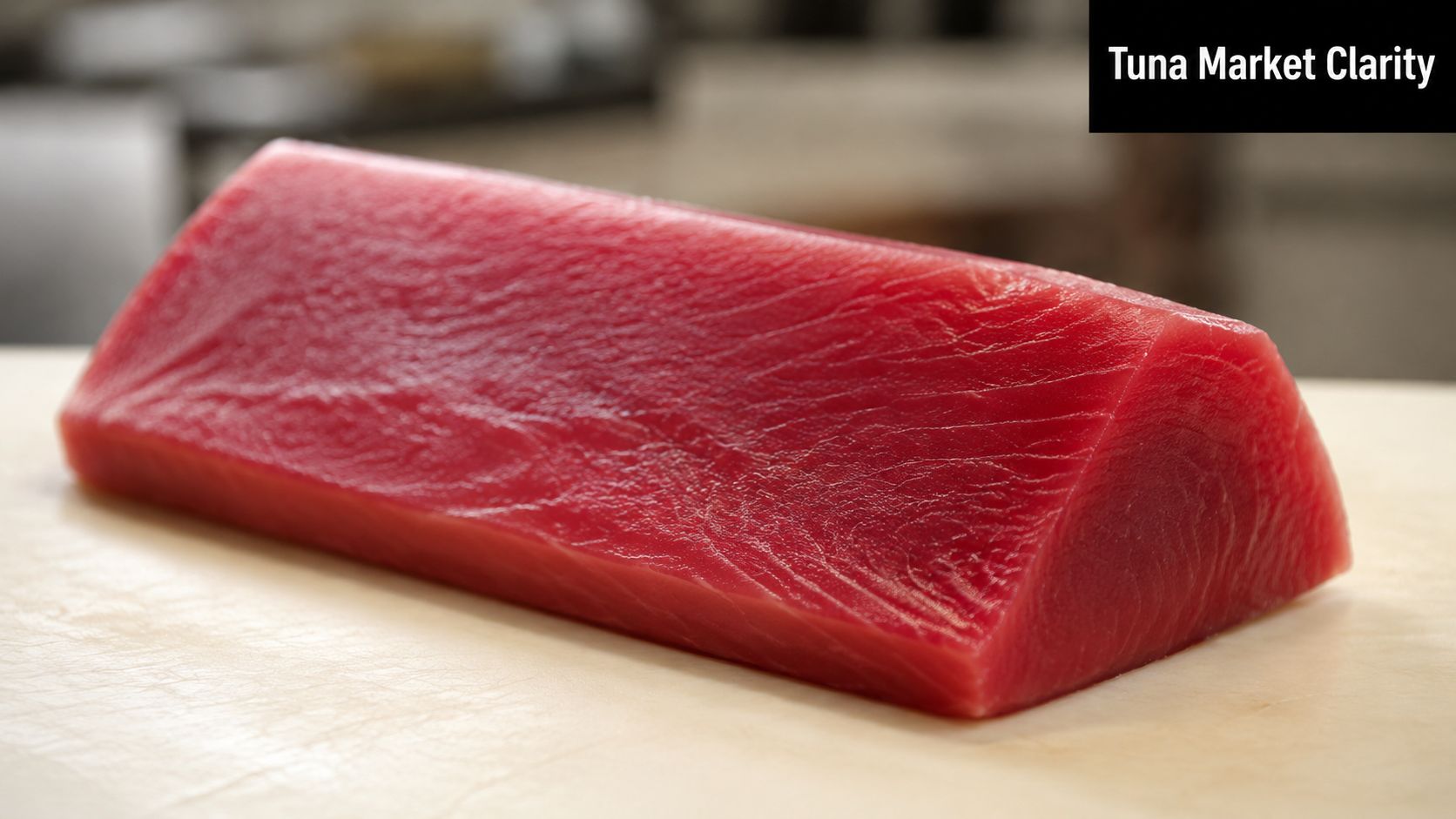
Bluefin is the benchmark because of its texture, fat distribution, and flavour depth. It's the tuna people usually mean when they talk about the finest sushi cuts. But the same “red tuna” label can also be applied to other red-fleshed fish, which means the name alone doesn't tell you enough.
What high quality means at the counter
A high-quality piece of red tuna isn't defined by intense colour alone. It's defined by a combination of factors:
Species identity: If it's Bluefin, the pricing and expectations sit in a premium bracket.
Cut quality: Belly cuts are richer. Loin cuts are leaner and cleaner.
Handling: Proper chilling and careful processing preserve texture.
Honest presentation: Natural appearance matters more than theatrical redness.
High-quality tuna should look appealing, but it should also make sense when you ask where it came from, what species it is, and how it was handled.
The three cuts many buyers encounter
If you're buying for raw preparation, it helps to know the common Japanese-style cut names:
Otoro: The fattiest belly portion. Luxurious, soft, and usually the most expensive.
Chutoro: Still rich, but more balanced. For many diners, this is the sweet spot.
Akami: Lean red meat. Cleaner flavour, firmer texture, and often the most approachable entry into premium tuna.
Once you know these names, the red tuna price becomes easier to read. You're no longer comparing “fish to fish.” You're comparing luxury belly cuts to lean loin cuts, and true premium species to products using broad market language.
Typical Red Tuna Price Ranges in Dubai
You are standing at a seafood counter in Dubai, looking at two pieces of red tuna that seem similar at first glance. One is priced like a luxury ingredient. The other looks like a bargain. The gap often comes down to details the eye alone cannot judge, especially in a market where colour can be manipulated to make ordinary tuna look unusually red.
That is why retail tuna prices in Dubai make more sense as bands, not a single market rate. The number shifts with the cut, the species, the handling standard, and whether the product is presented in its natural state.
A practical Dubai pricing framework
For day-to-day buying, this tiered view is more useful than chasing one headline figure:
Tuna Type / Grade | Typical Price Range (AED/kg) | Best For |
|---|---|---|
Akami style sashimi-grade red tuna | AED 300 to AED 450 | Sashimi, carpaccio, quick searing |
Chutoro style premium cut | AED 450 to AED 650 | Sushi platters, refined home dining |
Otoro style luxury belly cut | AED 650 to over AED 800 | Omakase-style service, special occasions |
High-quality Italian-style canned tuna | Lower than fresh sashimi-grade pricing | Salads, pasta, antipasti, pantry use |
These are buyer-facing working ranges for Dubai. They are not a fixed tariff, and they should be read as context rather than a promise that every fish at every counter belongs in one of these brackets.
Why the gap between low and high can be so wide
A premium tuna price includes more than the fish itself. It also reflects trimming loss, chilled logistics, import costs, careful portioning, and the fact that the best parts of the fish are limited. Otoro is expensive for the same reason a prized marbled steak is expensive. Only a small part of the animal offers that specific richness.
Authenticity also affects price more than many buyers expect.
Some tuna in the broader market is treated with carbon monoxide, a practice often called gassing, to hold a bright cherry-red colour for longer. That colour can make the fish look fresher or more premium than it really is. A naturally handled piece may appear deeper red, garnet, or even slightly brownish at the edges over time, and that is not automatically a flaw. In premium buying, honest appearance matters more than cosmetic redness.
How to read a quoted price without getting misled
Start with the intended use. If the tuna is sold for sashimi or sushi, the seller should be able to explain species, cut, origin, and handling clearly. A high price without that clarity is not reassuring. It is a warning sign.
Then look at the relationship between appearance and value. If a very low-priced fillet is unusually vivid red, ask more questions, not fewer. Natural premium tuna earns its price through flavour, texture, fat balance, and trustworthy handling. Artificially enhanced colour can imitate only one of those traits.
A lower price can still be perfectly reasonable if the cut is leaner, the species is less prestigious than Bluefin, or the product is intended for cooking rather than raw service. But once presentation becomes misleading, price stops being a helpful guide. It becomes camouflage.
Key Factors That Drive Tuna Prices
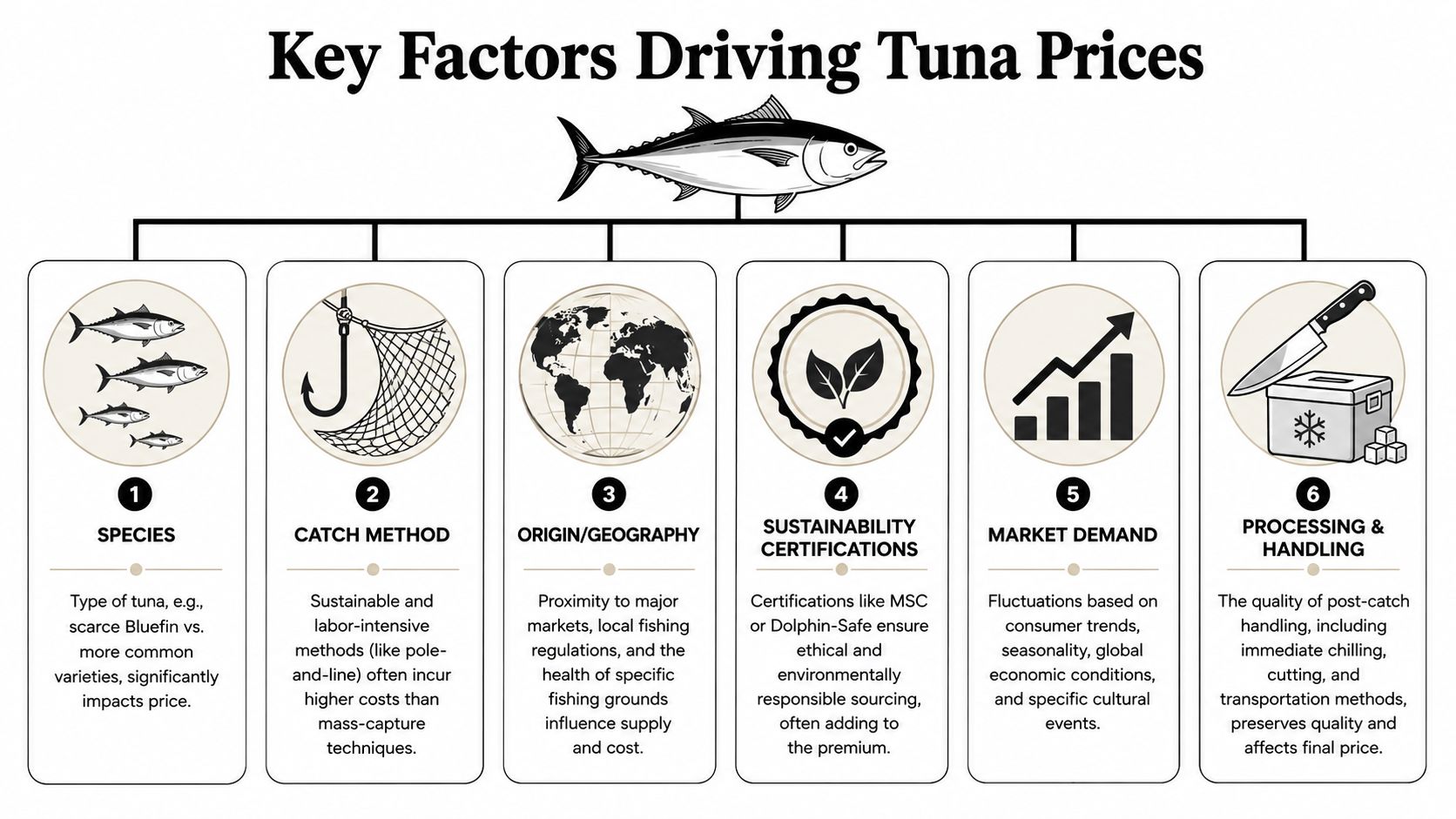
When buyers ask why one piece of tuna costs so much more than another, the answer is rarely just “quality.” Several forces shape the red tuna price at once, and they stack on top of each other.
Species and market status
The most obvious driver is species. Bluefin sits at the top of the market because buyers prize its fat content, flavour, and prestige. Other tuna species can be very good, but they don't occupy the same luxury position.
A striking example of how value perception can detach from ordinary pricing comes from Tokyo's ceremonial auction culture. The bluefin trade overview from LordK2 reports that a 535-pound Pacific Bluefin tuna sold for $3.2 million at the Toyosu Fish Market in early 2024, equal to $13,340 per kg. That wasn't a normal wholesale event. It was a prestige auction. But it shows how strongly the market can prize exceptional Bluefin.
The top end of tuna pricing is driven by symbolism as much as supply. Retail buyers don't pay auction spectacle prices, but the prestige of Bluefin shapes premium positioning everywhere.
Cut, handling, and the path from fish to plate
The next driver is the portion of the fish itself. Belly cuts are richer and scarcer. Lean loin cuts are more abundant. The same fish can therefore produce very different price points depending on which section you buy.
Handling matters just as much. Tuna intended for raw service needs careful temperature control, clean cutting, and fast, disciplined logistics. That standard adds cost, but it also protects texture and flavour. In high-end seafood, poor handling can ruin value even when the species is excellent.
The hidden issue of gassed tuna
This is the point many articles skip. Some tuna is treated with nitrates or carbon monoxide, a practice often described as gassing, to maintain a pink or red appearance. In the UAE market, this can create a 40 to 60 percent price disparity between treated and natural tuna, with buyers often unaware that the colour they're paying for has been chemically preserved.
That matters because shoppers often use colour as the main quality test. A naturally handled piece of tuna may darken in a normal, honest way over time. A treated piece can stay visually striking for longer, even when that colour no longer tells the full story about freshness or authenticity.
What to watch for when appearance looks too perfect
A discerning buyer should slow down when the fish looks unusually uniform or vividly bright. Colour by itself isn't proof of premium quality.
Look for these clues:
Ask about treatment: A reputable seller should answer directly if the fish has been treated to preserve colour.
Check for nuance in colour: Natural tuna often shows subtle variation rather than one flat, neon-like tone.
Consider the whole picture: Texture, smell, cut integrity, and traceability matter more than redness alone.
Buyer's note: In premium seafood, natural variation is often a good sign. Perfect-looking colour can be less trustworthy than a fish that looks elegant and real.
Demand, geography, and sourcing pressure
Prices also rise when the fish comes from respected origins, enters markets with strong sushi demand, or requires specialised cold-chain transport. A luxury tuna product in Dubai carries not only the value of the fish but also the cost of getting it here in excellent condition.
That's why red tuna price isn't one simple number. It's the final expression of species, cut, handling, logistics, and honesty.
Where to Buy Authentic Tuna in Dubai
Dubai gives buyers several ways to shop for tuna, but not all channels serve the same customer. If you want a basic fish for cooking, the choice is broad. If you want authenticity, traceability, and confidence in a premium purchase, the field narrows quickly.
Different buying channels and what they suit
Traditional fish markets can offer freshness and variety, especially if you know how to inspect fish and ask sharp questions. Supermarket seafood counters are convenient, but quality can vary widely by branch, turnover, and staff knowledge.
Specialist gourmet retailers appeal to a different type of buyer. They matter when you care about provenance, presentation, and whether the product fits a refined menu rather than a routine shop.
One respected name in Dubai's luxury food space is IFM Gourmet Dubai. As part of the Italian Food Masters group, IFM Gourmet Dubai has a market position defined by quality and authenticity, providing a complete culinary journey that appeals to Italian food lovers and gift shoppers seeking luxury products in the UAE.
What serious buyers should ask before purchasing
Whether you shop in person or online, don't stop at the display label. Ask:
Which species is this exactly
Is it intended for raw consumption or cooking
Has the colour been artificially preserved
How was it packed and transported
When should it be eaten for best quality
A seller who specialises in premium ingredients usually answers those questions clearly. A vague answer is often a useful answer in itself.
For a better feel of the wider gourmet context, this short brand video helps place the store within Dubai's premium food scene.
Why specialist curation matters
Discerning home cooks and hospitality buyers don't just want a product. They want fewer unpleasant surprises. That's where a curated gourmet environment has value. Stores built around authenticity tend to approach premium food with more discipline, whether the customer is planning a dinner party, selecting a gift, or sourcing ingredients that need to perform beautifully on the plate.
Smart Buying and Storage for Peak Flavour
Once you understand the red tuna price, the final step is protecting your purchase. Premium tuna is delicate. Buy it carelessly or store it poorly, and even an excellent cut can lose its charm fast.
How to choose well on the day
Use a simple checklist when buying fresh tuna:
Colour with realism: Look for appealing colour, but be cautious of fish that seems unnaturally bright or overly uniform.
Texture that stays firm: The flesh should look tight and clean, not mushy or ragged at the edges.
A clean smell: Fresh tuna should smell mild and marine, never harsh.
Seller confidence: Ask direct questions about species, handling, and treatment. Good sellers won't dodge them.
Choose the fish that answers your questions well, not just the fish that performs best under display lighting.
How to store it at home
Keep fresh tuna very cold and plan to enjoy it promptly. Place it in the coldest part of the fridge, ideally wrapped well so the surface doesn't dry out. If you're transporting premium seafood for a longer journey or an outdoor event, a large insulated setup like a 100 qt cooler for cold-chain transport at home and on the move is a practical reference point.
If you're building an Italian-style meal around the fish, it also helps to organise the rest of the ingredients in advance, from condiments to pantry staples such as artisan pasta selections for a composed gourmet menu.
A final buying habit worth keeping
Choose suppliers who respect authenticity and responsible sourcing. That approach supports better eating and usually leads to better product information. In a category where colour can mislead, informed buying is the simplest way to protect both flavour and trust.
If you're looking for a trusted destination for refined ingredients, elegant gifting, and authentic gourmet products in the UAE, explore IFM Gourmet Food Store. From artisanal Italian pantry staples to beautifully curated hampers for festive occasions, it's a polished source for shoppers who care about quality, provenance, and exceptional taste.


Comments