Stainless Steel Cookware Set: An Expert Buying Guide

You’re probably here because a familiar kitchen moment keeps repeating itself. You start a beautiful tomato sauce with good olive oil, garlic, and carefully chosen San Marzano tomatoes. Then the pan fights back. The heat gathers in one spot, the sauce catches at the base, and the flavour you wanted to keep bright and sweet turns heavy.
That’s usually the point when cooks begin looking at a stainless steel cookware set differently. It stops being “just pots and pans” and starts becoming part of the recipe itself. In a UAE kitchen, where many cooks move between quick weekday meals, generous family dinners, and festive entertaining, cookware has to handle heat, repetition, and a wide range of ingredients with calm precision.
Italian cooking rewards that kind of control. A soffritto wants gentle, even heat. A risotto needs patience. A proper ragù benefits from a pot that can sear well, then hold a steady simmer without reacting to acidity. If you love cooking this way, or you’re buying a gift for someone who does, stainless steel earns serious attention.
Your Journey to Perfect Italian Cooking Starts Here
A customer once described the difference perfectly. She had beautiful ingredients, a smart kitchen, and plenty of enthusiasm, but her pasta sauces never tasted as polished at home as they did in a good Italian restaurant. Her cookware was the missing link. She switched to stainless steel, gave herself a little time to learn the heat, and suddenly the details improved. Onions softened instead of burning. Wine reduced cleanly. Tomato sauces stayed vivid.
That story is common because stainless steel rewards attentive cooking. It gives you a more direct relationship with heat, colour, and texture. You notice when butter foams, when garlic turns fragrant, and when a fond begins to build at the base of the pan. Those cues matter in Italian food.
In practical terms, this isn’t a niche trend. The global stainless steel cookware set market is projected to grow from $629.45 million in 2024 to $1.01 billion by 2033, with over 67% residential market share, according to Strategic Revenue Insights on the stainless steel cookware set market. That growth fits what many cooks in the UAE already feel. People want cookware that looks refined, performs reliably, and lasts.
Why it resonates in the UAE
Dubai kitchens often do more than one job. They host quick breakfasts, elegant dinners, Ramadan gatherings, festive sweets, and gift-worthy food moments. A stainless steel cookware set suits that rhythm because it feels at home in both everyday cooking and occasion cooking.
It also complements the visual side of food. If you care about a table set with intention, the tools matter too. Even something as simple as serving a pizza night with a polished kitchen setup feels more complete when your cookware reflects the same standard as your ingredients, much like the visual appetite sparked by this classic pizza presentation from IFM Gourmet Dubai.
Stainless steel asks a little more of the cook at first, but it gives much more back over time.
What this tool changes
A good set helps with:
Cleaner flavour development because you can brown, deglaze, and simmer in the same vessel.
More confident hosting since polished cookware moves easily from prep to service.
Long-term value because you’re buying a professional-grade tool, not a temporary fix.
For many home cooks, that’s the moment the upgrade starts to make sense.
Why Professionals Choose Stainless Steel
Professional cooks rarely choose cookware by fashion. They choose by behaviour. They want a pan that can handle high heat, acidic ingredients, repeated washing, and long service hours without becoming unpredictable. Stainless steel fits that brief better than most alternatives.
The flavour argument
One reason matters especially for Italian cooking. Stainless steel’s non-reactive properties, stemming from 18/8 chromium-nickel alloys developed in the 1920s, help prevent chemical leaching and preserve flavour purity. Its hygienic legacy reaches back to the first stainless steel fermenting vessel in 1928, as noted in Grand View Research’s stainless steel cookware market overview. In plain kitchen language, that means tomato, wine, citrus, and vinegar taste like themselves.
If you’ve ever simmered a tomato sauce or reduced balsamic in a pan that made the flavour seem slightly muddied, you’ve already felt why this matters. Stainless steel keeps bright ingredients bright.
How it compares with common alternatives
Some cookware materials are excellent for one task and awkward for another. Stainless steel tends to be the balanced choice.
Material | Heat Conduction | Durability | Reactivity | Maintenance |
|---|---|---|---|---|
Stainless steel | Moderate on its own, strong when layered with aluminium or copper | High | Non-reactive | Straightforward routine cleaning |
Non-stick | Good for gentle cooking | Lower over long-term use | Generally non-reactive in use | Needs gentler handling |
Cast iron | Strong heat retention | Very high | Can react with acidic foods if not well seasoned | Requires seasoning and drying discipline |
Copper | Excellent | Moderate to high depending on lining | Often needs lining for food contact | Higher maintenance |
That table explains why chefs keep returning to stainless steel. It may not be the most forgiving for a first fried egg, but it’s one of the most versatile materials in a serious kitchen.
Why non-stick doesn’t replace it
Non-stick has its place. It can be pleasant for delicate eggs or very low-fat cooking. But it doesn’t brown in the same way, and it doesn’t invite fond development with the same confidence. For ragù, osso buco, mushroom sauces, and pan-roasted vegetables, stainless steel gives you the flavour-building surface you want.
It also tolerates more demanding cooking habits. You can bring it higher, deglaze it aggressively, and use it across a wider range of recipes without treating it like fragile equipment.
Why cast iron and copper don’t win for most buyers
Cast iron is wonderful for specific tasks, especially deep searing and baking. But it’s heavier, less nimble, and not the first recommendation for cooks who regularly make acidic sauces. Copper is admired for responsiveness, yet it usually asks more from the owner in care and cost.
Stainless steel sits in the middle in the best way. It’s durable, polished, neutral with food, and comfortable in a modern kitchen.
A professional kitchen needs tools that stay calm when the menu changes. Stainless steel does that.
The professional mindset
Professionals often think in terms of range rather than perfection. They want one sauté pan to handle mushrooms, seafood, tomato sauce, and a quick pan reduction. They want one stockpot to boil pasta, simmer broth, and hold a slow-cooked sauce. A stainless steel cookware set gives that range.
For a home cook, that same logic is liberating. Instead of matching every dish to a different specialist pan, you learn one material well and cook more confidently because of it.
Decoding Stainless Steel Cookware Construction
A pan can look polished on the shelf and still cook very differently once heat hits the metal. Construction is what separates a pan that scorches garlic at one edge from one that lets you build a gentle soffritto for amatriciana, risotto, or seafood stew with calm control.
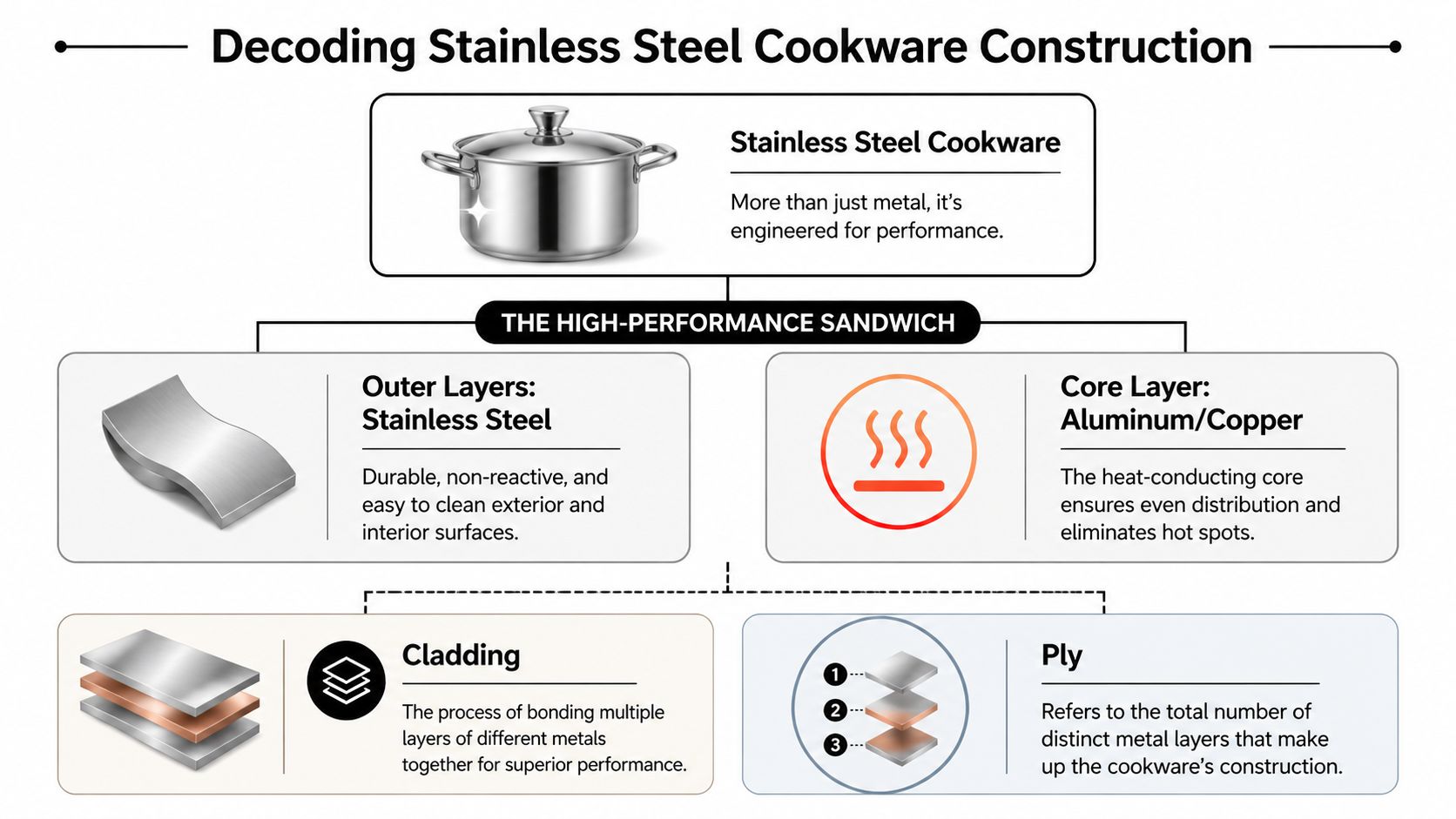
Good stainless steel cookware uses layers of metal, each chosen for a job. Stainless steel gives the pan strength, a food-safe non-reactive surface, and the clean finish many cooks want in a refined kitchen. A core metal, usually aluminium, spreads heat far more efficiently than steel on its own. The result is a pan that feels steadier and more predictable, which matters even more when you are working with premium olive oil, San Marzano tomatoes, aged Parmigiano Reggiano, or other Italian ingredients from IFM Gourmet Food Store. Better construction protects better ingredients.
What cladding and ply mean
Cladding means different metals are bonded together into one body.
Ply means the number of those bonded layers.
Tri-ply usually means three layers. In many cases, that is stainless steel inside, aluminium in the center, and magnetic stainless steel outside so the pan works on induction. If you have ever sliced into a well-made millefoglie and seen neat, purposeful layers, the idea is similar. Each layer contributes something different, and the quality comes from how well they work together.
Why those layers change the cooking experience
Single-layer stainless steel is durable, but it does not distribute heat with the same finesse. According to Misen’s stainless cookware set specifications, tri-ply cookware offers up to 30% better heat uniformity than single-ply, the aluminium core transfers heat 5x faster than steel alone, and 5-ply can be 40% better than 3-ply in even heating. Those numbers matter because heat control shapes flavour.
In practical cooking, that means:
Onions soften more evenly for soffritto instead of catching in one hot patch
Wine, butter, and cream reductions stay smoother with less risk of scorching at the center
Risotto develops with more consistency because the pan responds in a steadier way
Tomato sauces simmer with less sticking which is useful for long Sunday sauces and braised dishes
Tri-ply suits many home kitchens
For many households, tri-ply is the balanced choice. It gives strong everyday performance without adding too much weight to the wrist. If you cook several nights a week, want one set that can handle pasta sauces, pan-roasted vegetables, seafood, and a quick chicken saltimbocca, tri-ply is often enough.
That is one reason the Tramontina Signature Tri-Ply Clad line at IFM Gourmet Food Store makes sense for modern UAE kitchens. Its layered stainless steel and aluminium construction supports even heating and induction use, which fits both contemporary apartments and larger family homes. It also makes a thoughtful gift. For weddings, Ramadan hosting, Eid celebrations, or corporate gifting, tri-ply has the professional feel people appreciate without becoming intimidating to use.
Practical rule: For a first serious stainless steel cookware set, tri-ply usually gives the clearest balance of control, comfort, and value.
When 5-ply is worth the extra weight
5-ply cookware adds more layers, which often improves heat stability and retention. You may notice the difference most in slower preparations. A mushroom ragù holds a gentle simmer more calmly. Polenta is easier to keep smooth. A braise started on the hob and finished in the oven feels more composed.
The trade-off is simple. More layers often mean a heavier pan and a higher price. For cooks who regularly prepare long sauces, braises, or dinner-party dishes where timing and consistency matter, that extra mass can feel reassuring. For lighter everyday use, it may feel like more pan than you need.
Where disc-bottom cookware fits
Some cookware has a thick heat-spreading disc attached only to the base instead of full cladding up the sidewalls. This design can work well for stockpots and pasta pots because most of the heat enters from below. If your main job is boiling water, simmering broth, or cooking a large batch of soup, a disc-bottom pot can perform well.
For saucepans and sauté pans, fully clad construction is usually the better choice. Heat rises along the sides more evenly, which helps with sauces, reductions, and any dish that moves around the pan rather than sitting only at the bottom.
How to read the description without second-guessing yourself
A product page becomes much easier to judge once you know what to scan for:
Stainless grade such as 18/8 or 18/10
Construction such as tri-ply, 5-ply, or fully clad
Induction compatibility if your cooktop requires it
Oven suitability for stovetop-to-oven dishes
Weight and handle design because comfort matters during real cooking
A strong description explains how the pan is built, not only how it looks. That is the difference between buying something decorative and choosing a tool that can support years of authentic Italian cooking, whether it lives in your own kitchen or arrives as a polished luxury gift in the UAE.
Your Buying Checklist for the Perfect Cookware Set
The most expensive set isn’t automatically the right one. The right set is the one that matches how you cook, how many people you feed, and how much weight and maintenance you’re comfortable with. Buying well starts with honesty about your kitchen life.
Start with the pieces you’ll actually use
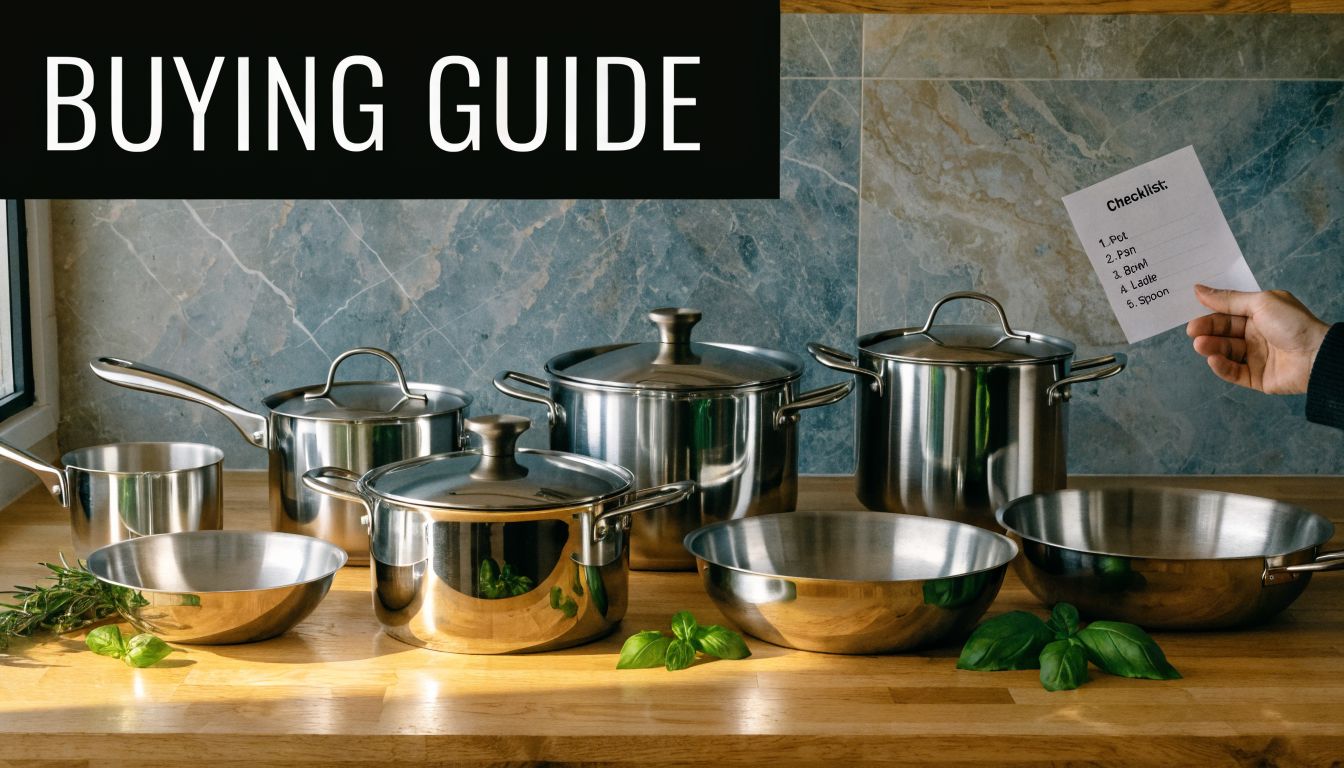
A set looks impressive when it includes many items, but duplicates can waste budget and storage. For most households, a few core pieces do most of the work.
A medium saucepan handles sauces, grains, reheating soup, and dessert work.
A sauté pan or frying pan is the daily driver for vegetables, chicken, seafood, and pan sauces.
A stockpot matters if you cook pasta properly, make broth, or prepare soups for guests.
A smaller saucepan is helpful if you often warm milk, melt butter, or make a quick reduction.
For hospitality buyers or event planners, think in terms of repetition instead of variety. You may need several pans of the same useful size rather than one large domestic set with many shapes.
Check the handle design
A handle can look elegant and still feel wrong in the hand. Lift the pan if possible. Notice the balance. A useful handle gives you control when the pan is full, not just when it’s empty on a shelf.
Look for:
Riveted handles if you prefer a traditional, sturdy construction
A comfortable shape that doesn’t cut into the hand
Enough clearance for a towel or oven mitt
A helper handle on larger pots and sauté pans
Think about your hob
Induction compatibility is no longer a niche consideration in the UAE. Many newer homes and renovated kitchens use induction, and buyers often want flexibility even if they currently cook on gas. The outer steel layer in many clad pans makes that possible.
If your kitchen may change in the next few years, buying a cookware set that works across gas, electric, and induction is a sensible hedge.
Lids matter more than people expect
A lid affects moisture, heat retention, and visibility.
Stainless steel lids feel cohesive, durable, and professional.Glass lids let you monitor a simmer without lifting them, which some home cooks love.
Neither is universally superior. It depends on your habits. If you often cook rice, soups, and braises, lid fit and weight matter more than appearance.
To see useful handling and fit details in action, this walkthrough is worth a look before you buy:
Match the set to the cook
A newly moved-in home chef in Dubai Marina may want versatility with modest storage demands. A boutique hotel buyer on Palm Jumeirah may care more about durability, replacement consistency, and repeated service use.
Here’s a simple way to separate needs:
Buyer | Priority | Best fit |
|---|---|---|
Home cook | Versatility and ease | Compact tri-ply set with key essentials |
Frequent host | Capacity and presentation | Broader set with large stockpot and sauté pan |
Hospitality buyer | Repeat performance | Standardised, durable pieces in practical sizes |
Buy the pan for your Tuesday dinner, not only for the dinner party you host twice a year.
Final checks before you commit
Use this short decision filter:
Read the construction clearly. If the listing is vague, be cautious.
Check oven and hob compatibility. Your cookware should fit your actual appliances.
Consider weight in daily use. Heavier isn’t always better if you cook often.
Think about cleaning habits. If you want easy upkeep, polished simplicity matters.
Buy for your menu. Pasta, risotto, sauces, and braises need different pieces than occasional stir-fries.
A thoughtful set feels less like shopping and more like equipping a kitchen properly.
Mastering Italian Cuisine with Your New Cookware
A stainless steel pan can seem unforgiving until you learn its rhythm. Then it becomes one of the most expressive tools in the kitchen. Italian cooking is full of moments where that rhythm matters.
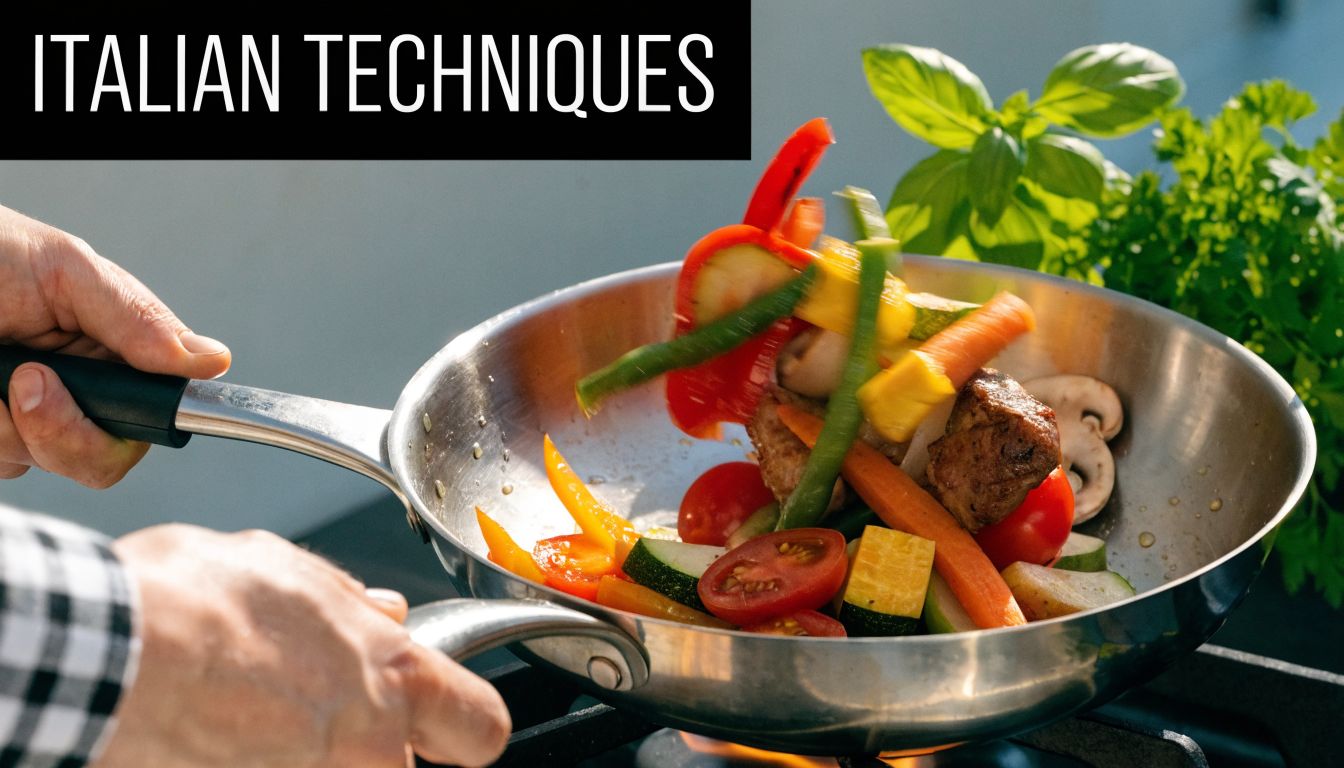
Take a classic ragù. You begin with olive oil and finely chopped onion, carrot, and celery. The pan should warm steadily, not rush. Stainless steel helps you watch the vegetables soften and sweeten through sight and sound. You hear a gentle sizzle instead of an angry crackle. That tells you the heat is right.
Learning the preheat
Many individuals are mistaken on this point: food sticks less to stainless steel when the pan is properly preheated, not when it’s timidly warmed. Add the pan first, let it heat, then add oil, and only then add the food.
If you add ingredients too early, proteins are more likely to cling. If you give the pan a moment, the surface behaves very differently. That’s why experienced cooks often say stainless steel becomes easier once you stop treating it like non-stick.
Let the pan get ready before the food arrives. Stainless steel rewards patience at the start.
Building flavour from fond
Now add minced meat or mushrooms for the ragù. As the ingredients brown, tiny caramelised bits collect on the base. Those bits are not a problem. They are flavour. Deglaze with wine or stock, scrape gently, and the pan gives that flavour back to the sauce.
This is one of stainless steel’s great pleasures. You can see flavour happening.
That same principle works in a quick pan sauce for chicken, in sautéed porcini, or in a glossy reduction for veal. It also pairs beautifully with pantry ingredients chosen for depth and purity, like the pasta-focused inspiration suggested by this IFM Gourmet pasta image.
A few Italian tasks that shine in stainless steel
Risotto making benefits from responsive heat and easy stirring around the pan’s curve.
Tomato sauces stay clean-tasting because the cooking surface doesn’t interfere with acidity.
Searing for osso buco or chicken cacciatore develops better browning before the braise begins.
Pan-fried vegetables like courgette, aubergine, and peppers gain colour without turning greasy.
One small habit that changes results
Don’t chase every second with a flame that’s too high. Stainless steel often performs best at moderate heat because layered construction spreads the energy more efficiently. If the pan is built well, you don’t need to bully it.
That’s especially important with Italian food, which often depends on control rather than aggression. A sauce should reduce with confidence. Garlic should perfume the oil, not darken instantly. Butter should foam, not burn before the shallots even hit the pan.
Once you feel those cues, your cookware stops being a technical purchase and becomes part of your cooking style.
Care and Maintenance for a Lifetime of Cooking
The nice thing about stainless steel is that maintenance is usually simpler than people expect. It doesn’t ask for seasoning rituals, and it doesn’t demand nervous handling. It just benefits from a few consistent habits.
That matters because the enduring value of this material is long-term. As Good Housekeeping’s review of stainless steel cookware sets notes, good quality stainless steel cookware can last for decades, making it more affordable and sustainable in the long run than non-stick pans that may need replacing every few years.
Everyday cleaning that works
Most of the time, warm water, mild washing-up liquid, and a soft sponge are enough. Let the pan cool slightly before washing. Sudden temperature shocks aren’t helpful for any cookware.
If food residue clings, don’t attack it immediately. Add warm water, let it sit briefly, and loosen it gently. Stainless steel responds well to patience.
Dealing with common marks
New owners often worry when the pan develops rainbow-like heat tint or pale water spots. These are usually cosmetic, not structural.
Try this simple approach:
For stuck-on food use warm soaking first, then a non-abrasive scrub.
For cloudy spots dry promptly after washing.
For heat tint use a gentle cleaner suitable for stainless steel and buff with a soft cloth.
For shine polish occasionally rather than constantly
Habits that preserve the finish
A few habits make a visible difference over time:
Use moderate heat more often than maximum heat. It’s better for control and appearance.
Add salt once water is hot. That helps avoid concentrated contact at the base.
Dry after washing if you want a polished finish. Air drying can leave marks.
Store carefully. If you stack pieces, consider a soft liner between them.
Good cookware ages well when the owner treats care as part of cooking, not as a separate burden.
What not to overthink
Perfection isn’t the goal. A working sauté pan should show that it has cooked. Minor marks don’t mean failure. In fact, some visual wear reflects a well-used kitchen.
The standard to aim for is performance, cleanliness, and structural integrity. If the base remains even, the interior remains smooth, and the pan still heats reliably, you’re doing well. That’s the mindset that makes a stainless steel cookware set feel less disposable and more permanent.
The Art of Gifting for the UAE's Gourmet Enthusiast
Some gifts are enjoyed once. Others become part of a person’s routine and memory. A stainless steel cookware set belongs in the second category. It’s generous without being frivolous, elegant without being fragile, and useful long after the ribbon is gone.
In the UAE, that makes it particularly well suited to festive and corporate gifting. Many occasions here revolve around hospitality. People gather, cook, serve sweets, share savoury dishes, and send thoughtful hampers that express care and discernment. A polished cookware piece or a compact set can anchor that gesture beautifully.
Why cookware works as a luxury gift
Unlike a decorative object, cookware invites participation. It says, “Cook something lovely. Use this often.” For newlyweds, new homeowners, dedicated hosts, and corporate recipients who appreciate food culture, that has depth.
It also pairs naturally with artisanal ingredients. A sauté pan becomes more meaningful when presented with bronze-die pasta, a bottle of premium olive oil, and a jar of carefully selected tomato passata. A saucepan can sit beside hot chocolate, fine tea, biscuits, or festive sweets in a winter hamper.
Pairing ideas for UAE occasions
Here are a few elegant directions:
Ramadan and Eid gifting could centre on a stockpot paired with premium dates, fine tea, and savoury pantry staples for generous family meals.
Christmas gifting suits a saucepan or sauté pan with panettone, chocolates, olive oil, and ingredients for a rich festive pasta dinner.
Diwali gifting can lean into warm hospitality with refined cookware, sweets, nuts, and beautifully packed gourmet accompaniments.
Corporate gifting works well when the cookware becomes the signature piece in a curated hamper designed around entertaining at home.
A more personal kind of present
Cookware also carries a subtle emotional message. It respects the recipient’s taste. It assumes they care about quality, tradition, and the pleasure of making something well. For Italian food lovers especially, that message lands.
The finest culinary gifts don’t end on the day they’re opened. They return to the table again and again.
A carefully chosen stainless steel piece feels especially right when the recipient enjoys hosting, values design, or wants to build a more serious kitchen over time.
A Timeless Investment for Your Kitchen
A stainless steel cookware set tends to reveal its value the way a fine chef’s knife does. The first impression is craftsmanship. The lasting impression is trust.
After a few months, your pans stop feeling like new purchases and start feeling like familiar partners. You know how your pot responds when a slow ragù needs patience. You know which pan you reach for when garlic meets olive oil and the kitchen begins to smell like dinner in Rome rather than a rushed meal between errands. That kind of familiarity matters, because good cooking depends as much on confidence as on ingredients.
In the UAE, that relationship has a special kind of appeal. Many home cooks want tools that are refined enough for gifting, durable enough for frequent use, and versatile enough to move from a quiet weeknight pasta to a table prepared for Eid, Christmas, Diwali, or a corporate dinner at home. Stainless steel meets all three needs with unusual grace.
It also makes more sense when paired with what goes into the pan. A well-made pot filled with San Marzano tomatoes, artisanal pasta, or carefully chosen olive oil from IFM Gourmet Food Store supports a more authentic Italian cooking experience from the first simmer to the final serving. The cookware is the stage. The ingredients are the performance.
That is why this purchase is not only about outfitting a kitchen. It is about choosing a tool you can grow into, gift with pride, and return to for years, each time with a little more skill and a little more pleasure.
If you’re ready to pair professional-grade cookware with authentic Italian ingredients, festive hampers, or thoughtful culinary gifts, explore the curated selection at IFM Gourmet Food Store.


Comments