
Stick of Vanilla: A Complete Guide to Whole Beans

You're standing in a kitchen with a dessert on the clock, maybe a custard base cooling on the counter, maybe a panettone dough waiting for its flavour note, and a single stick of vanilla in your hand. It looks simple enough, but the price makes you hesitate. That hesitation is normal, because whole vanilla beans are not a casual buy, they're a decision about flavour, yield, and presentation.
A good bean does more than perfume a recipe. It leaves visible seeds in crème anglaise, it rounds out cold gelato, and it gives a finished dessert that unmistakable sense of care. In premium kitchens, that detail matters because vanilla has a long historical arc from Mesoamerica to global commerce, and its cultivation is still intensely labour-heavy. Each pod is handled 50 to 70 times during cultivation and processing, which helps explain why vanilla remains the second most expensive spice after saffron Symrise's vanilla history and production note.
What Makes a Stick of Vanilla Worth the Investment
The value of a stick of vanilla shows up when a dessert needs more than background flavour. A bottle of extract can blend in cleanly, but a whole bean brings visible seeds, a fuller aroma, and a finish that reads as deliberate rather than convenient. In a custard, gelato, or cream-based dessert, that difference is easy to see and easy to taste.
The sensory payoff is real
Whole beans give you the full visual and aromatic experience at once. The seeds show up in custards, gelato, and silky creams, which tells diners they are tasting real vanilla rather than a flat imitation. That matters in plated desserts and gift-ready sweets, where presentation carries part of the value.
Practical rule: Use a whole bean when the dessert is meant to be seen as much as tasted, especially in chilled or lightly cooked preparations.
The investment also makes sense because vanilla has always been labour-heavy. Once hand-pollination made large-scale cultivation possible outside its native range, Edmond Albius became closely tied to the crop's spread, and BBC Travel describes how that history shaped vanilla's global rise BBC Travel on vanilla's hand-pollination history. That history still shows up in the price today, because each pod reflects careful cultivation, harvest, and curing before it reaches the kitchen.
A useful way to judge the cost is by use, not by the sticker alone. One bean can flavour a dessert where the seeds are visible and the aroma needs to stay intact through chilling, whisking, or folding into dairy. In that setting, the bean is doing two jobs at once, flavouring the dish and adding a premium visual cue that extract cannot provide.
Where extract falls short
Extract works well in recipes where vanilla is not the visual hero, or where heat and other ingredients dominate the flavour profile. A cake batter, a cookie dough, or a spiced syrup can take extract neatly. A bean, though, does something extract cannot quite match, it gives a layered aroma and the tiny speckled look that premium desserts rely on.
For a Dubai pastry counter or a home cook serving a special dinner, the decision comes down to the final use. If the dessert needs a polished finish, the stick of vanilla earns its place. If the recipe is everyday baking, extract is often the smarter buy, because the flavour still works without paying for the visible signature of whole seeds. In humid Gulf storage conditions, that choice matters even more, since a bean kept well can keep contributing across several uses, while a poorly stored bean loses value quickly.
How to Identify Premium Quality Vanilla Beans
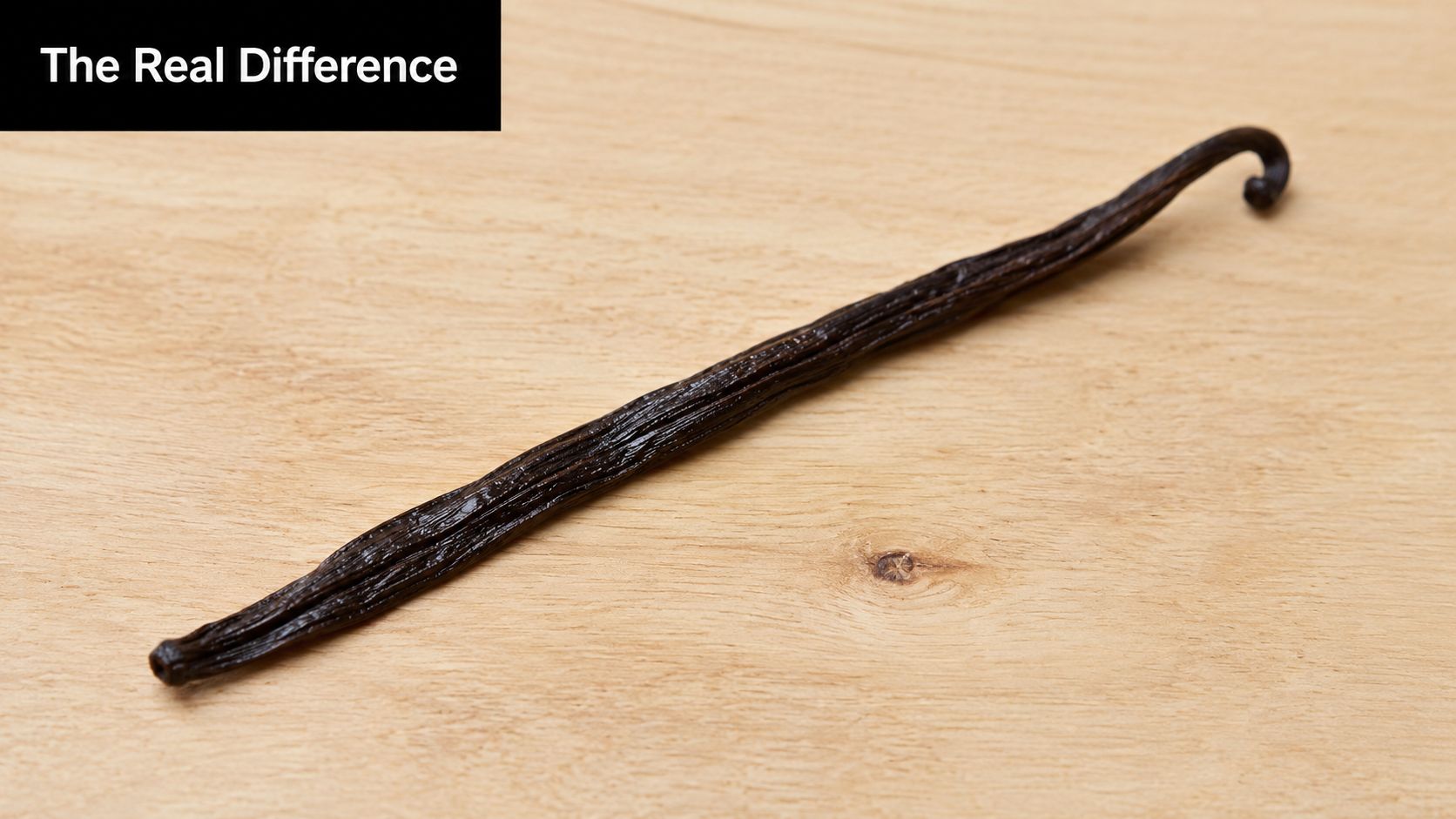
Quality starts with your hands before it ever reaches the pan. A good bean should feel flexible, smell rich, and look like it still has something to give. If it cracks like a twig, gives off a weak aroma, or looks dusty and lifeless, you're paying for age rather than flavour.
What to check first
Start with texture. A premium bean should bend without snapping, and it should feel supple rather than brittle. The jar test helps too, because a fresh bean should not rattle loosely in its container.
Then check the surface. You want a deep brown or black pod with a slight oily sheen, not a pale, dried-out stick. Aroma should come forward immediately, with a sweet, warm scent rather than a musty one. That quick sniff tells you more than packaging ever will.
A bean can look dark and still be tired. Aroma and pliability matter more than colour alone.
Choosing by origin
The best origin depends on the dessert. Madagascar Bourbon vanilla is the familiar creamy, sweet style most cooks reach for first. Tahitian vanilla leans more floral and fruity, so it suits delicate creams and fruit-led desserts. Mexican vanilla tends to read as spicier and woodier, which works nicely in richer, warmer preparations.
Supply matters here too. Global raw vanilla production in 2023 was 7,433 tonnes, with Madagascar supplying 42% and Indonesia 25%, so just two countries produced 67% of world output vanilla production and concentration overview. Around 80% of the world's vanilla is also described as Bourbon vanilla from Madagascar in that same source, which is why origin and availability can shift pricing in import-heavy markets like the UAE.
Origin | Flavour profile | Best use |
|---|---|---|
Madagascar Bourbon | Creamy, sweet | Custards, gelato, panettone |
Tahitian | Floral, fruity | Light creams, fruit desserts |
Mexican | Spicy, woody | Rich bakes, chocolate pairings |
Under ISO 5565-1:1999, vanilla beans are defined for Vanilla fragrans and the standard covers vanilla in pods, bulk vanilla, cut vanilla, and vanilla powder ISO standard overview. For importers and culinary buyers, that gives you a recognised framework for spec checks instead of relying only on sales language.
Preparing and Extracting Maximum Flavour from Vanilla Beans
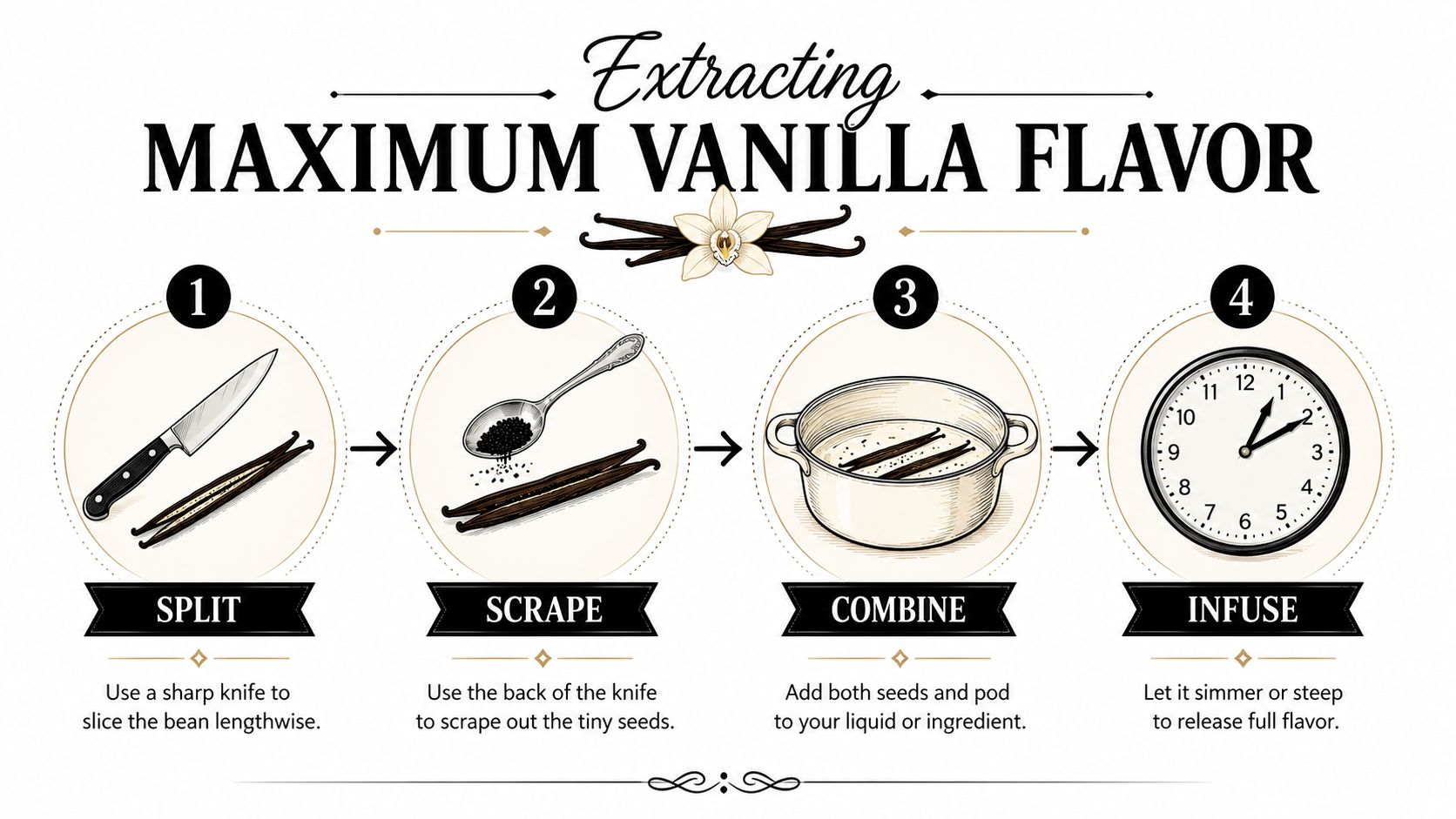
The first cut changes everything. A whole bean is dense with aroma, but the flavour stays locked up until you split the pod and expose the seeds and inner surface. Use a sharp knife, steady pressure, and a clean board, then work slowly so you don't shred the bean before it reaches the pot.
Split, scrape, and keep the pod
Lay the bean flat and slice it lengthwise without cutting all the way through. Open it like a book, then use the back of a paring knife to scrape out the seeds. Those tiny black specks are the first thing noticed in premium gelato or custard.
A typical bean weighs about 3.3 g to 4.2 g at 14 to 16 cm, which gives you a practical sense of how much one pod contributes in professional recipe planning bulk vanilla technical specification. The weight is useful because it helps chefs estimate yield instead of guessing from aroma alone.
Practical rule: Put the seeds and the scraped pod back into the recipe if the liquid will steep. The pod still has a lot to give.
Three ways to use the bean
Direct incorporation. Mix the scraped seeds into whipped cream, pastry cream, or batter when you want instant visible specks.
Warm infusion. Drop both seeds and pod into milk or cream for custards, ice cream bases, and crème anglaise. Warm liquid pulls flavour from the pod more efficiently than cold liquid.
Alcohol infusion. Soak the pod in vodka or another neutral spirit for homemade extract. The bean can continue to flavour future batches after the first use, as long as it's still aromatic.
The scraped pod doesn't belong in the bin. Dry it into vanilla sugar, steep it in syrup, or save it for a second infusion. That habit stretches the value of a single premium bean and makes the purchase easier to justify in both home kitchens and hospitality service.
A simple visual guide can help when you're teaching staff or family members.
Whole Vanilla Beans Versus Extract and Powder
The right format depends on the job, not on the romance of the ingredient. A whole bean is not always the answer, and that is fine. Professional pastry chefs compare flavour, appearance, shelf life, and how many portions one purchase can realistically support.
Format comparison for real dessert work
Format | Best Applications | Flavour Complexity | Visual Appeal | Cost per Use |
|---|---|---|---|---|
Whole vanilla bean | Gelato, custards, panna cotta, premium gift desserts | Highest, layered and aromatic | Strong, visible seeds | Higher upfront, lower waste when repurposed |
Extract | Cakes, cookies, syrups, everyday baking | Solid, but less textured | None | Usually easier for frequent use |
Powder | Dry mixes, finishing dusts, shelf-stable blends | Moderate, depending on quality | Speckled but subtle | Useful when moisture is a problem |
A stick of vanilla behaves like a whole ingredient with two jobs at once. It seasons the base, then adds visual cues that tell the diner something special is inside. That matters in plated desserts, where the specks in a custard or panna cotta help signal that the flavour comes from a real bean, not a shortcut.
For gelato and custards, whole beans usually outperform extract because the flavour reads cleanly in cold or gently cooked bases. For panettone, extract can be the more practical choice when the recipe already carries butter, citrus, and dried fruit. Powder sits in the middle, useful when you want vanilla without extra liquid.
The market context explains why so many products skip actual vanilla bean. Bean-derived vanilla is said to make up under 1% of the total flavour-market volume Smithsonian magazine on vanilla flavouring, which is why commercial items often rely on cheaper alternatives. That does not make those products wrong, it means they are built for scale, not for the kind of finish a chef wants on a plated dessert.
In a UAE setting, the decision often comes down to presentation and storage, especially for luxury hampers or special-order desserts. A box of panettone, a tray of custards, or a gelato base for a celebration deserves a different standard from a weeknight cake. For shoppers sourcing within a curated gourmet range, IFM Gourmet Food Store is one place that carries ingredients and gift-oriented items under the same roof, which can make premium buying simpler.
Storing Vanilla Beans in the UAE Climate
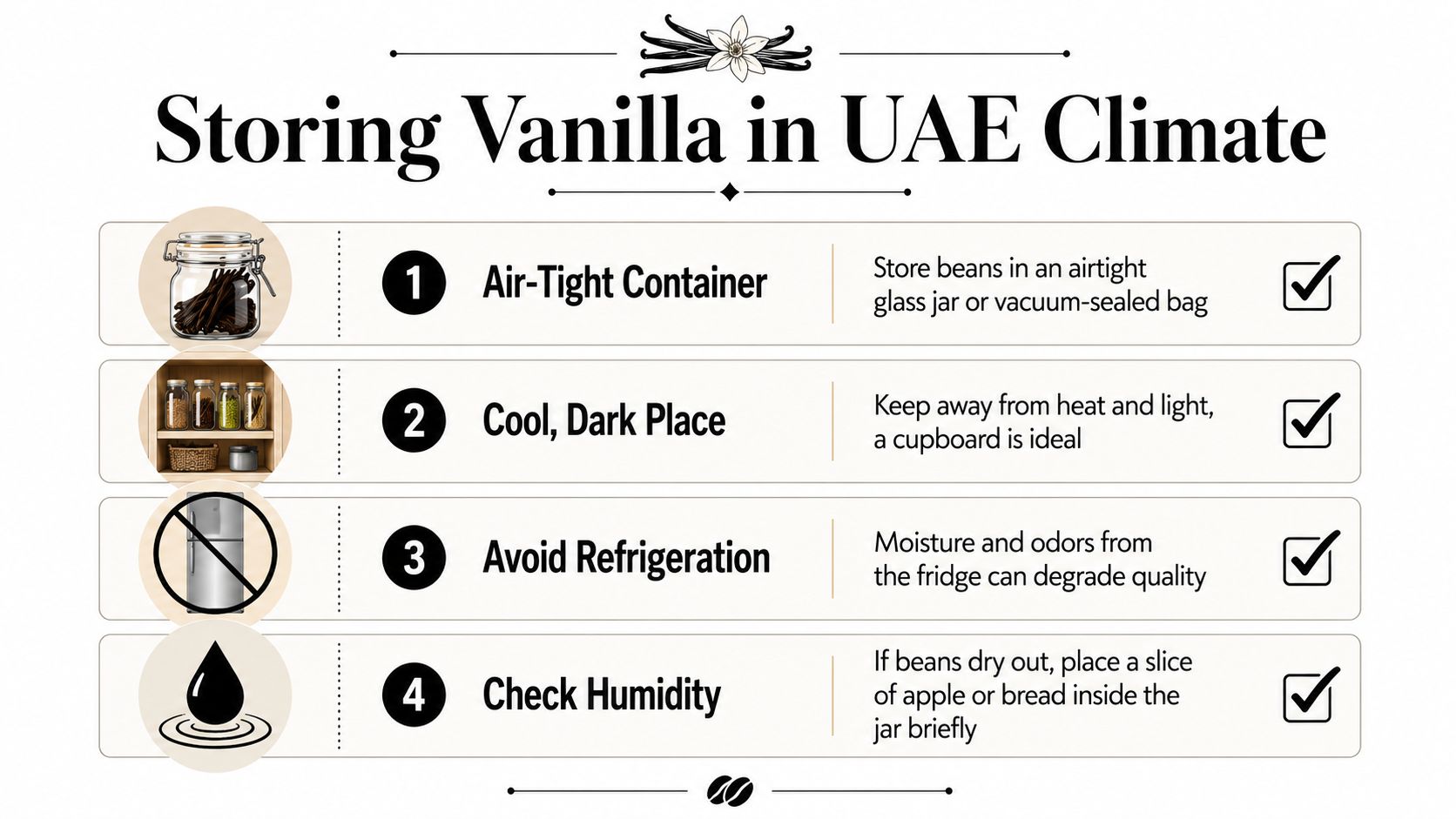
Heat and humidity are hard on vanilla. A bean can lose suppleness quickly if it sits in the wrong place, and a storage mistake can turn a premium ingredient into something brittle and hard to judge. In the UAE, the challenge is not just keeping flavour in, it's keeping the bean from drying out or picking up moisture.
What works best
Use an airtight glass container or a vacuum-sealed bag, then keep it in a cool, dark cupboard. That setup protects aroma better than an open packet on the counter and avoids the moisture problems that can come with refrigeration. A pantry shelf away from the oven is usually a safer home than the fridge.
Fresh beans should be supple and should not rattle in the jar, while brittle beans signal age. Brittle doesn't automatically mean useless, though. Older pods can still be put to work in milk, cream, syrup, vodka, or ground into powder for later use.
Good storage rule: If you can bend it cleanly and smell it without opening the jar fully, the bean is still useful.
When to revive rather than replace
A dry bean is not always a bad bean. If the aroma is still there, revive it through infusion instead of treating it as a loss. Milk or cream will pull it back into custards and sauces, while alcohol gives you a path to extract.
The jar test is useful in hot-weather homes and for caterers who buy beans for festive baking, then don't use them straight away. If the bean still smells lively and feels flexible, keep it. If it's dry but aromatic, repurpose it. If it has gone flat and brittle with little scent, move on.
Italian Dessert Applications Where Whole Vanilla Shines
A proper vanilla bean earns its keep in desserts that depend on clean dairy flavour and a polished finish. In Italian patisserie, that often means cold creams, enriched doughs, and delicate custards where the vanilla has room to speak without being buried. The seed flecks matter, but so does the aroma when the spoon hits the first bite.
Panna cotta, gelato, and panettone
Panna cotta is the obvious showcase. The suspended seeds give the dessert a refined look, and the flavour stays soft and rounded instead of sharp. Gelato benefits even more because cold preparation preserves aromatic detail that can fade in other methods.
Panettone is a different kind of test. It carries butter, yeast, and candied fruit, so vanilla has to weave through the structure instead of dominating it. A good bean adds warmth and depth without making the loaf taste like dessert syrup.
The same logic works in many Italian sweets. Vanilla lifts citrus in Sicilian cream fillings, softens chocolate in flourless cakes, and helps spiced layered desserts feel complete rather than crowded. A baker doesn't need to overuse it, just place it where the recipe can keep the aroma intact.
For readers building festive menus or gift boxes, a visual reference can help with product ideas and presentation. Italian candies and party food inspiration is a useful companion when vanilla is part of a larger dessert spread.
Where to place the bean in the process
Use the seeds early in custard bases so they disperse evenly. Add the pod during steeping, then remove it before the final set if the recipe needs a smooth texture. In baked doughs, the seeds usually matter more than the pod, because the oven does the rest of the work.
Making the Right Choice for Your Culinary Needs
The simplest rule is this. If the dessert is meant to impress, a whole bean usually earns its place. If the recipe is built for speed, volume, or everyday baking, extract often makes more sense. Powder becomes useful when you want flavour in a dry format or need a shelf-stable option.
For home chefs, that means using a stick of vanilla for custards, gelato, panna cotta, and gifting, then saving extract for cookies, cakes, and quick sauces. For hospitality buyers, it means matching the format to service style, because visual appeal and cost per use matter together. The bean is strongest when diners can see or taste the difference.
If you're trying to decide between a bean and an extract, start with the final plate, not the ingredient list.
A practical next step is to check aroma, flexibility, and origin before buying, then store the beans in a dark airtight container once you get them home. If you also make chai-based drinks or dessert drinks, the guide on Allied Drinks Systems chai methods gives a useful flavour reference for how vanilla behaves alongside spice and milk.
For premium sourcing in the UAE, look for retailers that treat vanilla as a culinary ingredient rather than a novelty. IFM Gourmet Food Store is one such option for shoppers who want to pair vanilla with other dessert and gifting items in one order. If you're planning festive baking, a corporate hamper, or a dessert menu refresh, start with a bean, taste the result, and let the recipe tell you whether the premium was worth it.
A CTA for IFM Gourmet Food Store.


Comments