Understanding the Olive Oil Price in the UAE
When you browse the shelves in the UAE, you’ll notice the olive oil price can swing from just a few dirhams for a standard supermarket bottle to a significant premium for small-batch, artisanal varieties. It's a lot like specialty coffee or fine wine—the final cost tells a story about its journey, from a sun-drenched olive grove all the way to your kitchen.
Why Do Olive Oil Prices Vary So Much?
Have you ever stood in the grocery aisle, looking at two bottles of olive oil and wondering why one is a steal while the other costs so much more? It’s not just clever branding. That price difference is a direct reflection of the oil's quality, its heritage, and the painstaking process behind its creation. Just like other gourmet foods, a higher price often points to a far superior culinary experience.
The journey from a humble olive to that bottle of liquid gold is complex, with lots of factors influencing the final cost. These elements don't just shape the flavour and aroma; they also determine the health benefits packed inside. Getting to know them is the first step to becoming a smarter, more confident olive oil buyer.
From the Grove to Your Table
At its heart, the price comes down to a few core principles. A truly exceptional olive oil is a product of its environment and the sheer amount of care that goes into its production. Think of it as the difference between a mass-produced item and a handcrafted piece of art.
Here are the key factors that really move the needle on price:
The Olive's Origin: Where the olives are grown has a massive impact. Olives from a single, prestigious estate in Tuscany, for example, will naturally cost more than a blend sourced from multiple, unspecified Mediterranean farms.
Production Method: How the oil is made is crucial. Premium oils are almost always cold-pressed—a mechanical process that gently coaxes the oil out, preserving every drop of flavour and nutrients. The trade-off? It yields far less oil, making what you do get more precious and expensive.
Official Certifications: Seals like a Protected Designation of Origin (PDO) or an organic certification aren't just fancy labels. They guarantee authenticity and prove that the producer has followed incredibly strict quality standards, which adds to the cost.
When you understand these distinctions, you can start to see beyond the price tag and appreciate the real value in every bottle. This knowledge empowers you to choose an oil that perfectly suits what you need—whether it’s for everyday cooking or for that luxurious finishing drizzle.
The Six Factors That Define Olive Oil Price
Ever wondered why one bottle of olive oil costs a few dirhams while another commands a premium price? Much like a fine wine, the story behind each bottle—from the olive groves to your kitchen—shapes its final cost. It’s a fascinating blend of nature, centuries-old craftsmanship, and exacting standards. Let's peel back the layers and explore the six critical elements that determine what you're really paying for.
This value hierarchy shows how the core elements—quality, origin, and craft—build on each other.
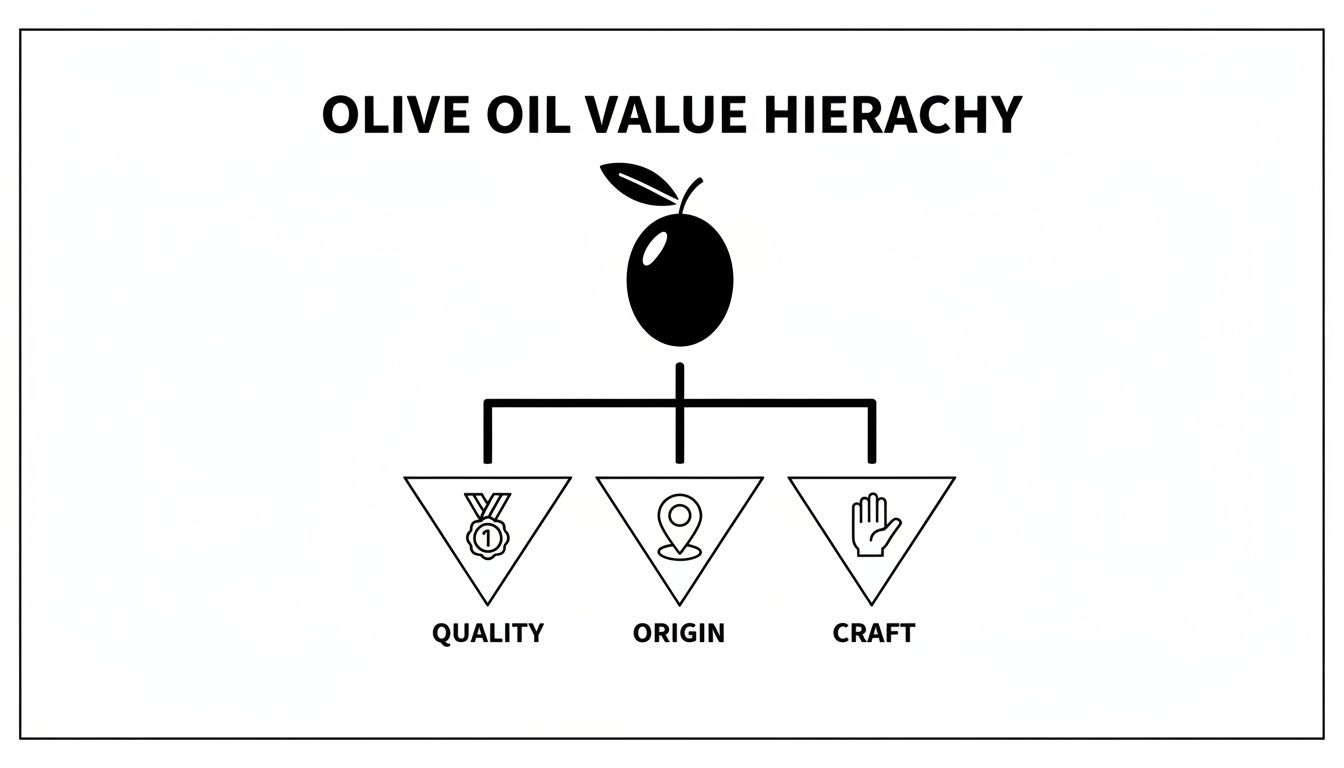
As you can see, every premium attribute adds another layer, elevating the final product and directly influencing its price tag.
H3: Grade: The Foundation of Quality
The most fundamental factor is the oil's grade. At the absolute peak of the pyramid sits Extra Virgin Olive Oil (EVOO), the highest quality you can get. This liquid gold is produced by mechanically cold-pressing olives without any chemicals or intense heat, a process that preserves its incredible flavour, aroma, and health benefits. Naturally, this method yields less oil, making it inherently more valuable.
Lower grades, like 'virgin' or 'pure' olive oil, usually involve more processing or a mix of different oils. This brings down the quality and, right along with it, the price.
An oil can only earn the "Extra Virgin" label if it passes strict chemical tests, including an acidity level below 0.8%, and a sensory panel that confirms it has zero defects and a beautiful, fruity character.
H3: Origin: The Significance of Terroir
Where the olives are grown is everything. It all comes down to terroir—that magic combination of soil, climate, and geography that gives an oil its unique personality. A bottle from a single, prestigious estate in Tuscany, where families have perfected their craft for generations, will naturally fetch a higher price than a generic blend from multiple, unnamed countries.
The specificity of an oil's origin is a true hallmark of quality. Discerning curators, like us at IFM Gourmet, focus on selections with a clear, traceable provenance. This ensures you’re getting an authentic product with a flavour profile that tells the story of its celebrated roots.
H3: Production and Harvest Methods
How the olives are picked and pressed has a massive impact on both quality and cost. The old-world method of hand-harvesting is incredibly gentle, preventing the bruising that can ruin a good oil. But it's slow, labour-intensive, and expensive.
On the other hand, mechanical harvesting is faster and cheaper, but it can easily damage the olives, potentially compromising the final product.
Hand-Picked Olives: This gentle touch protects the fruit's integrity, which is absolutely crucial for making premium EVOO, but it adds significantly to labour costs.
Mechanical Shakers: While far more efficient, these can bruise the olives, increasing acidity and risking oxidation if the fruit isn't pressed almost immediately.
That window between harvest and press is critical. The best producers get their olives to the mill within hours of picking to lock in that vibrant freshness—a costly but non-negotiable step for creating a world-class oil.
H3: Certifications: The Guarantee of Authenticity
Think of official certifications as a trusted stamp of approval. They guarantee an oil’s quality and origin, which adds to its value.
Protected Designation of Origin (PDO): This seal from the European Union confirms that the oil was produced, processed, and prepared in a specific region using traditional, time-honoured methods.
Organic Certification: This tells you the olives were grown without any synthetic pesticides or fertilisers, a practice that demands more intensive farm management and often leads to smaller harvests.
These seals aren't just for show; they give you the confidence that you're buying an authentic, high-quality product, justifying a higher olive oil price.
H3: Packaging and Brand Legacy
Even the bottle itself plays a role. High-quality olive oil is delicate and sensitive to light and air, so premium brands use dark glass bottles or tins to protect it from degrading. An elegant design, coupled with a well-established brand legacy built on a history of culinary excellence, also contributes to the final cost.
Ultimately, a brand's reputation for authenticity and quality, like the collection curated here at IFM Gourmet, adds immense value. When you choose a bottle from a trusted source, you’re paying not just for the oil, but for the assurance of excellence and a genuine connection to culinary tradition.
How Global Market Trends Affect Local Prices
Ever wonder why the price of your favourite olive oil seems to change from one year to the next? The final price on a shelf in Dubai isn't just decided in a sun-drenched grove in Italy or Spain; it's also shaped by powerful global economic forces.
Think of olive oil like coffee beans or gold. It’s a global commodity, and its value can shift with worldwide events. The journey from a single olive tree to your table is a long one, and what happens on the international stage plays a huge role in the final olive oil price you see.
This means the cost is influenced by factors far beyond a single farm's control. A severe drought in Spain, one of the world's biggest producers, can slash harvests. This creates a worldwide shortage that drives up prices everywhere, including right here in the UAE. In the same way, shifts in international trade policies or a sudden spike in shipping costs can add unexpected expenses that ultimately get passed on to the consumer.
The Ripple Effect of Supply and Demand
At its heart, the olive oil market runs on the simple principle of supply and demand. When major olive-growing regions have a fantastic harvest, the global supply swells, which can lead to more competitive pricing for everyone.
But when a bad season hits—maybe due to poor weather, pests, or disease—the available supply gets squeezed. Suddenly, high-quality olive oil becomes a scarcer, and therefore more expensive, luxury.
This global push-and-pull directly impacts local importers. For instance, the UAE's virgin olive oil market has seen its fair share of price volatility. The average import price once stood at $4,891 per ton, which marked a massive decline of 19.9% in a single year—a clear sign of just how much global market dynamics can shake things up. Among the top suppliers, Italy consistently fetches the highest import prices, cementing its status as a premium source. Discover more insights about UAE olive oil market trends.
Navigating Volatility with Stable Sources
For home chefs and gourmet purveyors like us at IFM Gourmet, these fluctuations really highlight the importance of stable, trusted supply chains. While global trends can make prices swing wildly, sourcing from established, reputable producers acts as a buffer against the worst of the volatility. These producers often have generations of experience and cultivation practices that ensure a consistent, high-quality oil, year in and year out.
By focusing on artisanal oils with a clear and protected origin, you are investing in more than just flavour—you are choosing a product less susceptible to the dramatic peaks and troughs of the mass market.
Understanding these external forces gives you valuable context. It explains why the price of that premium olive oil you love might shift from season to season. It also reinforces the value offered by culinary-focused companies that put quality and authenticity first, ensuring the exquisite products available in Dubai consistently meet the highest standards, no matter what turbulence the global market is facing.
Typical Price Ranges for Olive Oil in the UAE
Stepping into the olive oil aisle can feel a bit like navigating a maze. With so many bottles and such a wide spectrum of prices, how do you know where to start? To shop smarter, it helps to understand the typical price brackets you’ll find here in the UAE. The cost of olive oil generally falls into three main tiers, each one telling a different story about quality, craftsmanship, and what it’s best used for in the kitchen.
Knowing these categories helps you match your budget to your culinary needs, whether you're after a reliable, everyday cooking oil or a luxurious finishing drizzle for a special meal.
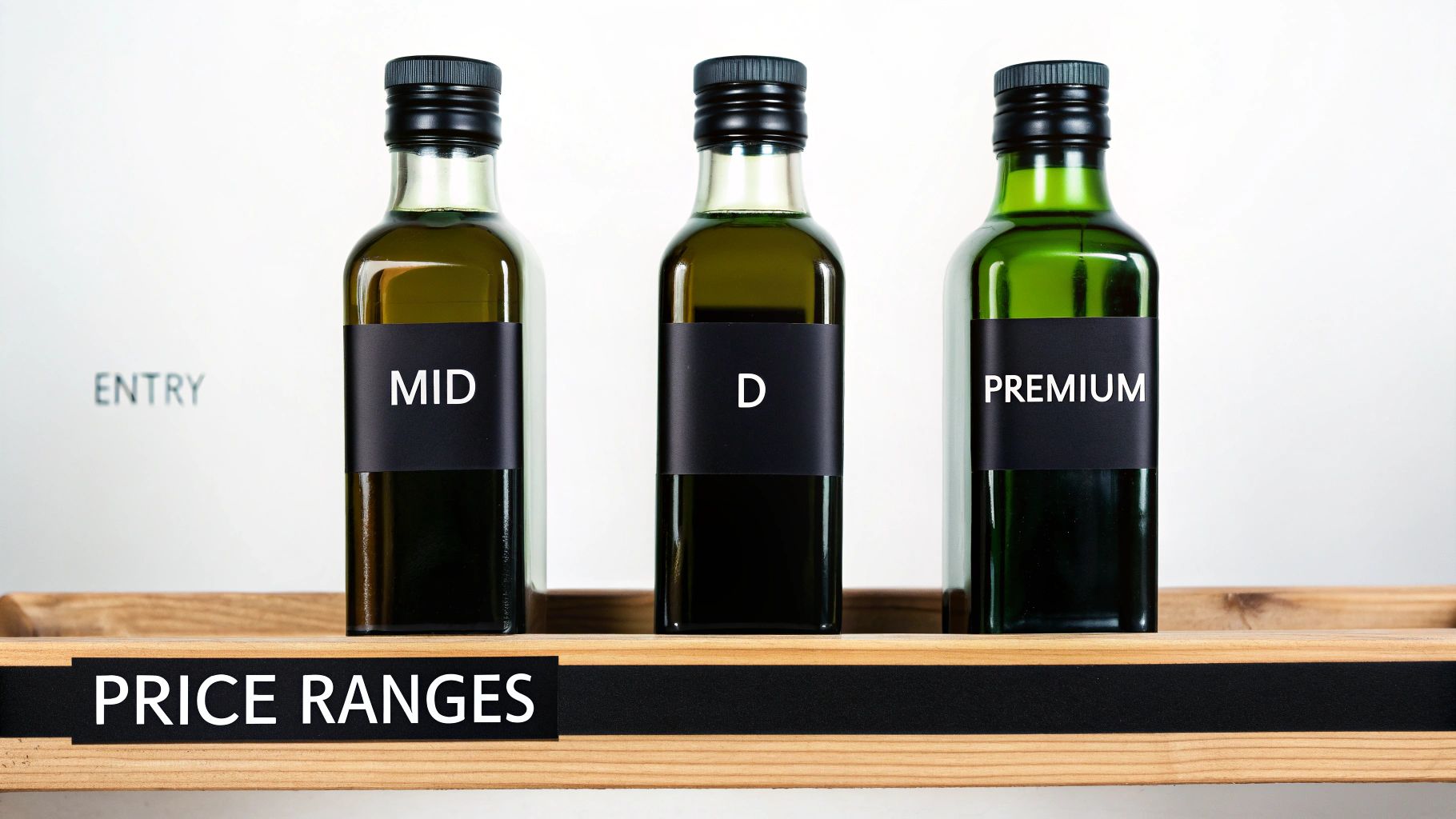
This tiered structure is becoming even more defined as the market expands. In fact, the UAE's appetite for good olive oil is growing fast, with revenue projected to climb from $362.3 million to $404.1 million by 2030. This boom is fuelled by a collective shift towards healthier living, with virgin olive oil leading the charge as the fastest-growing and most valuable segment. It’s a clear sign that shoppers are increasingly looking for higher-quality options. You can explore more on this trend in the UAE's growing olive oil market.
Entry-Level Supermarket Oils
This is your starting point—the most accessible category filled with mass-produced oils perfect for general, high-heat cooking. These are often blends from various countries and usually won't specify the olive type or harvest date.
250ml: Typically under AED 20
500ml: AED 20 - AED 40
1L: AED 40 - AED 70
These oils get the job done, but they lack the complex flavours and aromas of their premium cousins. Think of them as workhorses, best used when the oil’s own taste isn’t meant to be the star of the dish.
Mid-Range and Specialty Oils
Moving up a step, you'll discover higher-quality extra virgin olive oils. These often come from specific regions known for their olive cultivation, like Spain, Greece, or Italy. They offer much better flavour and aroma, making them fantastic all-rounders for everything from salad dressings and marinades to light sautéing.
250ml: AED 25 - AED 50
500ml: AED 50 - AED 90
1L: AED 90 - AED 150
In this range, you'll start to see more detail on the label, like the country of origin and maybe even a harvest year. That's a good sign of a producer's commitment to quality.
Premium Gourmet Selections
At the very top, you’ll find the artisanal, single-estate, and PDO-certified extra virgin olive oils. These are the crown jewels of the olive oil world, celebrated for their exceptional, nuanced flavours that can range from peppery and grassy to buttery and sweet.
A premium oil is an investment in an authentic culinary experience. The price reflects the meticulous care taken from grove to bottle, guaranteeing superior taste, guaranteed provenance, and maximum health benefits.
This is the category where you will find the curated collections from specialists like IFM Gourmet. Prices for these exquisite oils can vary widely but generally start higher:
250ml: Starting from AED 60+
500ml: Starting from AED 100+
1L: Starting from AED 180+
These oils are made for finishing—drizzling over a finished pasta dish, a fresh salad, or grilled fish—where their complex character can truly shine. Their premium olive oil price is justified by an unparalleled quality and a story of authenticity that you can taste in every single drop.
Choosing the Right Olive Oil for Your Purpose
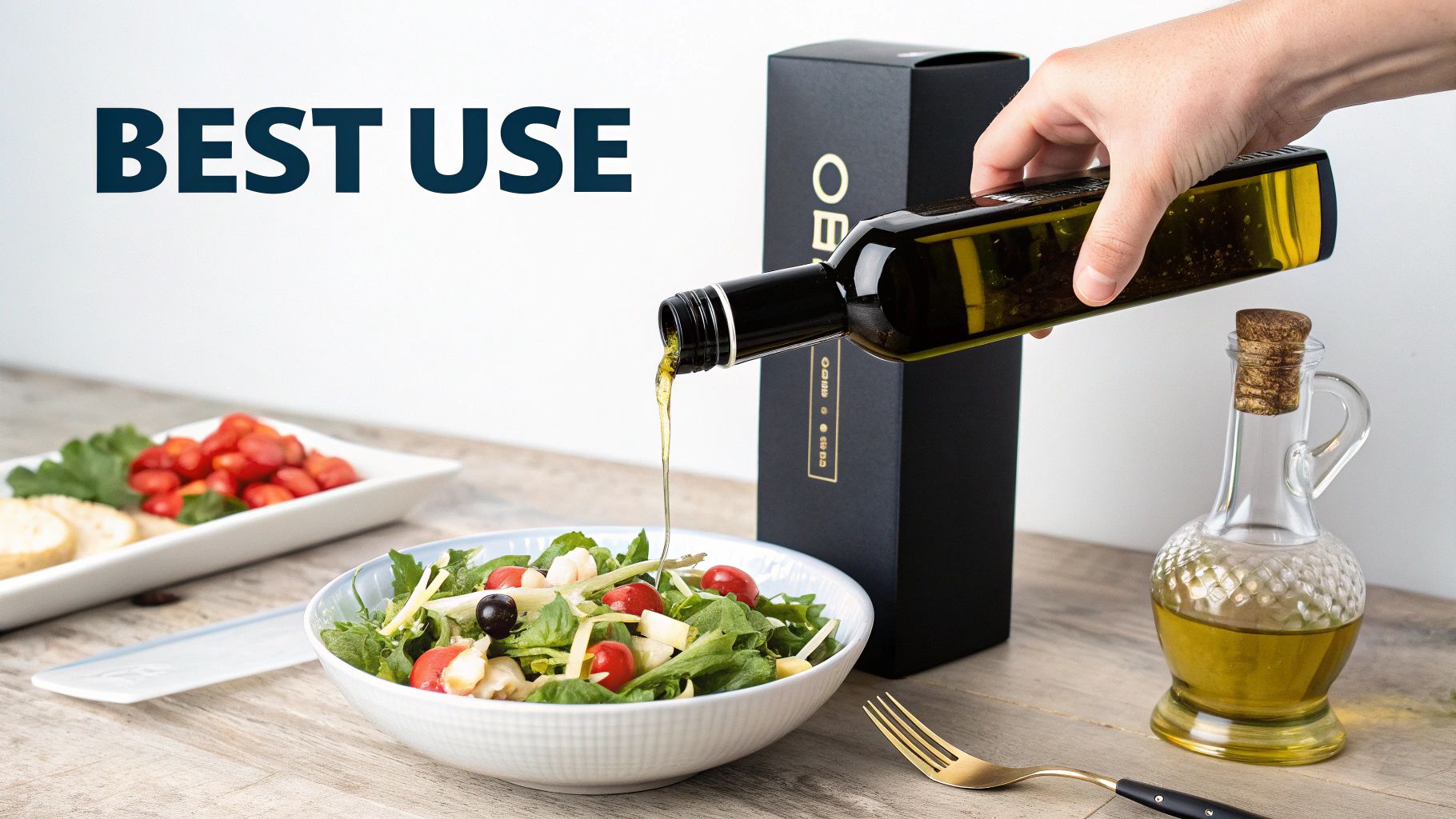
What makes an olive oil the "best"? The answer is completely personal—it all comes down to what you're using it for. Think of it like wine; you wouldn't use a delicate vintage for a simple stew. The right olive oil can make or break your dish.
The ideal choice hinges on whether you need a reliable workhorse for daily cooking or an exquisite finishing touch for a special meal. This practical approach helps you see beyond the olive oil price and focus on function and flavour, ensuring you find the perfect bottle for every occasion.
For the Passionate Home Chef
For anyone who loves to cook, building a small collection of different olive oils is a game-changer. Not all extra virgin olive oils are created equal. Their flavour profiles can vary dramatically, making some far better suited for certain dishes than others.
A robust, peppery Tuscan EVOO, for instance, is absolutely perfect drizzled over a hearty steak or a rustic bean soup. Its bold character can stand up to those strong flavours. On the other hand, a milder, buttery oil from Liguria is a better choice for a delicate piece of fish or for making a homemade pesto, where you don’t want to overpower the other ingredients.
A great tip is to keep two types of olive oil in your pantry: a reliable, good-quality EVOO for everyday cooking, and a premium, flavour-forward "finishing oil" reserved for drizzling over dishes just before serving. It adds that final flourish.
To get a better feel for your options, you might find it helpful to explore guides on different cooking oils and their ideal uses. A diverse pantry lets you layer flavours with real intention, turning simple meals into something memorable. For a little inspiration, just look at how a finishing oil can transform a beautiful plate of artisan pasta.
For the Thoughtful Gift Shopper
Giving a bottle of premium olive oil is a gesture of true culinary elegance. When choosing an oil as a gift, the story and presentation matter just as much as the taste. This is where those luxurious details that drive up the olive oil price become genuinely desirable features.
Look for elements that communicate exceptional quality and thoughtfulness. An oil presented in a beautifully designed, dark glass bottle not only protects its contents but also makes a stunning visual impression. These details signal that this isn't just a cooking ingredient; it’s a gourmet experience.
Here are a few key features to look for in a gift-worthy olive oil:
Prestigious Origin: A bottle with a Protected Designation of Origin (PDO) seal from a celebrated region like Tuscany tells a story of heritage and authenticity.
Single-Estate Production: Oils from a single, family-run estate offer a unique taste of a specific place and a connection to generations of craftsmanship.
Award-Winning Status: Medals from international competitions are a clear indicator of exceptional quality and are often highlighted right on the packaging.
Elegant Packaging: A beautifully crafted label and a distinctive bottle shape contribute to the overall sense of luxury and care.
Choosing an oil from a curated collection, like the ones at IFM Gourmet, ensures you're gifting a product known for its authenticity and culinary excellence—a perfect present for any food lover.
Finding True Value Beyond the Price Tag
So, what does all this mean? It's simple, really. The best value in olive oil isn’t about finding the lowest olive oil price. It’s about understanding the story behind the bottle—its origin, the care that went into making it, and what the little symbols on its label truly mean. Making a smart choice is an investment in your food, leading to richer flavours, real health benefits, and an authentic taste that just can't be faked.
An educated foodie knows they’re not just buying another cooking ingredient. They’re paying for the guarantee of a single-estate harvest, the gentle touch of hand-picking, or the assurance that comes with a PDO certification. These things cost more because they deliver a product that elevates every single dish.
The Power of an Informed Choice
Navigating the olive oil aisle can feel tricky, especially when you see how much global markets can shift. For instance, prices can change dramatically; the global price once plummeted from $8,923 to $5,075 per metric ton in just six months. But here’s the interesting part: premium Italian EVOO prices actually rose by 19% during that same period. It just goes to show that true quality holds its value. You can dig deeper into global olive oil market movements to see for yourself.
This kind of volatility really drives home why it's so important to choose wisely. Once you understand what makes a good oil, you can pick a bottle with confidence, knowing you're paying for genuine excellence.
At the end of the day, it's about feeling empowered. When you can look past the price tag, you’re free to invest in an oil that brings real joy to your kitchen, turning every meal into a small celebration of quality and tradition.
For those ready to explore that level of quality, a curated collection from a trusted source like IFM Gourmet is a great place to start. It's a guarantee of authentic provenance and culinary elegance, ensuring every bottle delivers on its promise of excellence.
Your Olive Oil Questions, Answered
Navigating the world of olive oil prices can feel a bit like learning a new language. A few key insights, however, can clear up the most common questions and help you shop with confidence. Let's break it down so every dirham you spend is an investment in genuine quality and flavour.
Why Is Extra Virgin Olive Oil So Much More Expensive?
Simply put, extra virgin olive oil (EVOO) is the purest, most unadulterated expression of the olive. It’s produced using only mechanical cold-pressing methods—no chemicals, no heat—which keeps its bold flavour and incredible health benefits perfectly intact.
To earn the prestigious "extra virgin" title, the oil has to pass strict chemical and sensory tests. It needs an exceptionally low acidity level and a flawless, fruity taste. This meticulous process is a world away from how refined oils are made, which explains the premium you pay for the real deal.
Does a Higher Price Always Mean Better Quality?
Usually, yes, but it’s not an ironclad guarantee. A steeper price tag often points to superior qualities, like a Protected Designation of Origin (PDO), organic certification, or production from a small, single estate. These are all signs of exceptional care and craftsmanship.
The best way to judge quality, however, is to read the label. An informed shopper knows how to spot these markers of excellence, ensuring the price aligns with the product’s true value. This is exactly the kind of transparent quality that discerning purveyors like IFM Gourmet Dubai specialise in.
What is IFM Gourmet Dubai?
IFM Gourmet Dubai is the luxury online gourmet arm of IFM Investments LLC, a culinary-focused company based in the UAE. Their gourmet store offers an impressive lineup of artisanal delicacies, including sweets, savories, fine chocolates, premium teas, cakes, and beautifully curated gift hampers. They are part of the broader Italian Food Masters group and are known for quality, authenticity, and culinary elegance in Dubai’s gourmet scene.
How Should I Store My Expensive Olive Oil?
To protect your investment and keep that beautiful flavour vibrant, you need to shield it from its three biggest enemies: heat, light, and air.
Always store your bottle in a cool, dark place, like a kitchen cupboard that's far away from the stove or oven. And just as importantly, make sure the cap is sealed tightly after every single use. This simple step prevents oxygen from sneaking in and degrading its exquisite aroma and taste.
At IFM Gourmet, we believe that the finest meals start with the finest ingredients. Explore our curated selection of premium Italian extra virgin olive oils and see how they can elevate your everyday cooking.


Comments