Search Results
Search this site
465 results found with an empty search
- UAE Food Import Regulations 2026: The Complete Guide
An Italian producer usually reaches the same point before the first UAE shipment. The samples are ready. The pricing works. Buyers like the range. Then the questions start. Which authority approves the product? What has to appear in Arabic? Which certificate must be original? What happens if one festive item lands with too little shelf life left? That's where many promising gourmet lines stall. Not because the UAE market is closed, but because UAE food import regulations reward preparation and punish improvisation. The businesses that clear smoothly don't treat compliance as a last-minute customs task. They build it into artwork, documentation, shelf-life planning, and product selection from the start. For premium Italian delicacies, that matters even more. A truffle condiment, a bronze-die pasta, and a seasonal panettone can all sit in the same catalogue, yet each creates a different compliance profile. One may be simple on temperature control but sensitive on label claims. Another may be straightforward on ingredients but vulnerable on remaining shelf life. The opportunity is still strong for brands that do the groundwork properly. Products such as premium mineral water often succeed because the importer locks down the exact retail-facing presentation early, right down to the bottle and front label, as you can see with this premium bottled product example. Your Gateway to the UAE's Gourmet Market The UAE is attractive for gourmet imports because customers understand premium food, gifting matters, and presentation counts. But the route into the market is controlled. Authorities don't only look at what the product is. They look at how it is documented, labelled, registered, packed, and declared. That's why a reactive approach rarely works. Many importers still ask for documents only after production is complete and freight is booked. By then, the expensive part is already locked in. If the Arabic label is incomplete, if the ingredient statement doesn't match the health certificate, or if the shelf-life window is too tight, fixing the problem becomes slow and costly. Practical rule: In the UAE, the cleanest shipment is usually the one designed for compliance before it is designed for dispatch. For gourmet operators, the key skill isn't memorising forms. It's recognising the trade-offs early: Short shelf life vs premium freshness: The more artisanal the product, the less room you often have for transit delays. Broad assortment vs documentary complexity: Mixed hampers and multi-SKU consignments increase the chance of a mismatch. Beautiful packaging vs mandatory disclosure: Elegant branding still has to carry the information local authorities require. Seasonal demand vs fixed approval steps: Festive goods can miss the selling window if registration and labelling start too late. A strong import plan turns the regulations into a sequence you can manage. License first. Product registration next. Label approval before production. Certificates aligned before shipping. Shelf-life checked before booking. Inspection risk anticipated before arrival. That's the difference between a shipment that reaches the shelf and one that sits at the port while the season passes. Understanding the UAE's Regulatory Landscape The first mistake I see is treating the UAE as one single approval desk. It isn't. Food regulation works more like a national rulebook with local enforcement. You need to understand both layers before deciding how to import. A major turning point came with the January 2003 rollout of the GCC Unified Customs Law and Single Customs Tariff, which applied a 5% unified customs tariff to practically all processed food products, while several staples and raw inputs were exempted. Later, the system became more digital, and the national food registration scheme introduced in 2018 established the ZAD electronic portal for food registration and label assessment, as outlined in this overview of GCC tariff harmonisation and the ZAD rollout. Federal rules and local enforcement At the federal level, the UAE sets the broader framework for food safety, import structure, and digital administration. This is the layer that creates consistency across the country and ties the UAE into the wider GCC customs environment. At the local emirate level, the authority at the point of import and sale handles the practical side. That means registration workflow, label review, inspection handling, and release procedures often depend on the emirate where the importer is licensed and where the goods enter. Here's the simplest way to think about it: Level What it controls in practice What this means for importers Federal National framework, customs architecture, digital systems Your products must fit the UAE-wide structure Emirate Operational approval, inspections, local process steps Your shipment must satisfy the authority that actually clears it If you import into Dubai, Dubai's procedures shape the day-to-day experience. If you import into Abu Dhabi, the local authority there has a direct operational role. The standards don't become random from one emirate to another, but the process does become local enough that assumptions cause problems. Why this matters before booking freight Importers often ask, “Which rules apply?” The better question is, “Which authority will examine this product first?” That changes how you prepare: Port choice affects workflow: The entry point can determine which local authority reviews the file. Registration must match the importer setup: The legal entity and its licensed activity need to align with the emirate system it uses. Labels need local acceptance, not just exporter confidence: A label that seems complete in Europe may still fail local review. The UAE system is strict, but it is not mysterious. Problems usually come from treating federal structure and emirate enforcement as the same thing. The practical reading for gourmet brands For gourmet imports, the regulatory map matters because premium assortments create edge cases. A simple dry pasta line is easier to standardise than a mixed range that includes chocolate, condiments, cakes, infused oils, and gift baskets. Once multiple product types enter one commercial plan, more than one authority workflow can become relevant over time. That's why experienced importers make an early decision on three points: Which emirate entity will import Which port or airport will receive the goods Which products are worth registering first Do that first, and the regulations stop feeling abstract. Your Essential Pre-Shipment Toolkit The smoothest shipments are built on boring preparation. That means licences, portal access, product records, and approved artwork long before anyone seals a carton. In the UAE, food import control is registration- and label-driven. Imported food must be registered in the national electronic system ZAD, Dubai authorities require label assessment before market entry, Arabic labelling is mandatory, and first-time products can be subjected to laboratory testing based on risk and import frequency, as noted in the UAE public guidance on food registration, label assessment, and first-time product testing. Start with the right commercial setup The importer must hold the correct trade licence for food activity in the relevant emirate. If the legal entity isn't set up properly, the rest of the process becomes patchwork. Brokers can move documents, but they can't solve a licensing mismatch at the last minute. For gourmet businesses, licence scope matters because assortments often cross categories. A company that plans to import fine chocolates, cakes, condiments, teas, and gift hampers needs a setup that reflects real trading activity, not a narrow activity selected just to get the company incorporated quickly. Register products before you need them ZAD changes the timing of compliance. The old habit was to sell first, then regularise later. That doesn't work well in food. Each product should be treated as its own compliance file. For first-time imports, that usually means locking down: Final product name: The market-facing name must match the documents and label. Ingredient disclosure: Ingredients need to be stable and consistently described. Country of origin statement: It must be presented clearly and consistently. Shelf-life presentation: Date format and supporting declarations should align. Storage conditions: Ambient, chilled, or frozen claims must be clear from the start. What works and what fails What works is upstream discipline. Approve the SKU before you buy production volume. Freeze artwork before the printer runs. Check whether the Arabic information will appear on-pack or via an approved sticker method before dispatch. What fails is treating registration as a clerical step. It isn't. It's where the authority effectively asks, “Do we understand exactly what this product is?” A quick comparison makes the difference clear: Approach Typical result Artwork finalised before registration Fewer surprises during label review Documents prepared after goods are packed More corrections and shipment risk First shipment limited to clean, priority SKUs Easier operational learning Large mixed launch with untested products More complexity at every checkpoint A gourmet importer doesn't need every SKU approved at once. It's often smarter to launch the easiest compliant range first, then widen the catalogue. If you're advising an Italian producer, the practical sequence is simple. Build the importing entity correctly. Register the products you plan to sell. Align labels before printing. Then ship. Assembling Your Mandatory Document Portfolio At customs, the product itself doesn't speak first. The paperwork does. If the document stack is incomplete or inconsistent, the shipment can stop before anyone even looks inside the cartons. UAE food imports operate through a pre-entry compliance stack. The importer needs the appropriate trade licence, and consignments require a commercial invoice, certificate of origin, packing list, bill of entry or airway bill, and an original health certificate. Meat and poultry also require an original halal slaughter certificate. Any documentary mismatch can stop clearance, according to the US trade guidance on UAE import requirements and food shipment documentation. The core shipping file Most problems come from inconsistency, not absence. A document may exist, but if the description differs from the label or the origin differs from another certificate, the file becomes weak. These are the key documents and what officials expect them to do. Commercial invoice This is the transaction record. It should identify the seller, buyer, product descriptions, and values clearly. For gourmet imports, vague lines such as “food items” are asking for trouble. The invoice should reflect the actual SKU language closely enough that it connects to the label and product registration. Packing list This shows what is physically inside the shipment. It should break down cartons, weights, and item-level contents accurately. Mixed gourmet shipments need extra care here because one overlooked SKU can complicate the release of the whole consignment. Certificate of origin This confirms where the product was manufactured. It becomes especially important for premium European foods because origin is part of both customs treatment and consumer-facing credibility. Transport document Whether it is a bill of entry, airway bill, or related transport record, the purpose is simple. It ties the cargo movement to the importer and shipment details already declared elsewhere. The food-specific certificates that delay shipments Food imports carry a different level of scrutiny than many general goods. That's why the product-specific certificates are where delays often start. Health certificate The original health certificate from the exporting country's competent authority is one of the most important food documents in the file. Officials use it to confirm that the products meet the exporting country's official health standards and are fit for trade. For high-value imported foods, the main issue is alignment. The product description on the health certificate should match the commercial and regulatory identity of the goods. If one document says “truffle flavoured condiment” and another says “olive oil with truffle aroma”, someone may ask which description is correct. Halal slaughter certificate For meat and poultry, the halal slaughter certificate is not optional. It must be original and correctly issued. This catches importers who assume only the end product category matters. In practice, if a shipment contains meat or poultry items, the halal certificate must be treated as a frontline clearance document, not an afterthought to be sourced once the cargo is already moving. The safest rule is simple. Every document should describe the same product in the same commercial identity. Where gourmet importers slip The highest-risk habits are familiar: Combining too many SKU types in one first shipment Letting the exporter draft descriptions without local review Using shortened product names on invoices Assuming certificate language can be interpreted generously Sending scans when originals are expected For premium assortments, the best discipline is document reconciliation. Before dispatch, compare the invoice, packing list, registration record, origin certificate, health certificate, and retail label side by side. If the same item looks like six different products across six documents, customs will notice too. Nailing Product Compliance Labelling Packaging and Shelf Life Many importers still think labelling is a translation exercise. It isn't. In the UAE, the label is a compliance tool, and shelf life is often the make-or-break commercial variable. Public guidance highlighted by Sharjah Airport states that the UAE commonly requires 50% to 75% of total shelf life remaining at import, and all consumer food products must carry Arabic labelling with ingredients, allergens, nutrition, and origin. The same guidance notes that labels should clearly show the product name, ingredients, origin, production and expiry dates, storage conditions, and in some cases E-numbers and animal-derived components. You can review those points in the published summary of food import requirements and shelf-life expectations in the UAE. Arabic labelling is only the start A label can be beautifully translated and still fail operationally. What matters is whether the declared product identity is complete, consistent, and usable by the reviewing authority. For imported gourmet foods, check these points early: Product name: It should be commercially accurate and not misleading. Ingredients and allergens: These must reflect the actual formulation presented for sale. Nutrition and origin: These are expected on consumer food products. Dates and storage conditions: These need to be readable and logically tied to the product type. Animal-derived components: These can affect both labelling and certification expectations. This is why I advise importers to freeze artwork before production. Once labels are printed across cartons, retail units, and gift packaging, every correction becomes expensive. Packaging has to support compliance Luxury packaging often creates hidden issues. Decorative wraps, sleeve labels, festive tins, and imported gift boxes look excellent on the shelf, but they can complicate readability, batch traceability, and sticker placement. Good packaging practice is practical, not flashy: Packaging choice Compliance effect Clean label panel space Easier Arabic information placement Visible batch coding Better traceability at inspection Durable outer cartons Less risk of damaged labels in transit Consistent carton marking Faster warehouse and customs handling For shipping cartons, it helps to use durable formats that won't collapse or smear coding under handling pressure. A supplier of sturdy cardboard carton box formats can be useful as a reference point when planning outer packaging standards for delicate gourmet goods. Shelf life is a planning problem, not a warehouse problem Premium imported foods often fail on timing, not quality. Seasonal cakes, filled confectionery, specialty condiments, and chilled products may be perfectly saleable in Europe but commercially awkward in the UAE if production, loading, transit, and customs together eat too much of the allowed shelf-life window. That matters for products such as panettone and pandoro. If you wait for final orders before starting compliance and shipping prep, the festive season can disappear while the goods are still in process. A simple working method helps: Start with the production date Calculate realistic transit and clearance time Test the remaining shelf life at landing Decide if the product is still commercially worth importing Only then commit to volume Here's a useful visual refresher on product presentation and food packaging detail before export: Shelf-life compliance is where many festive imports become logistics decisions rather than sales decisions. For artisanal Italian foods, the discipline is clear. Don't ask whether the product can sell. Ask whether it can land with compliant life left, with a label that says exactly what it is. The Final Mile Customs Inspection and Financials When the shipment reaches the UAE, customs and food control don't treat every product the same. Clearance intensity depends on risk, documentation quality, and whether the consignment gives officials any reason to slow it down. The UAE uses a risk-based inspection model that classifies foods as high, medium, or low risk. Products such as meat and dairy face higher inspection intensity, while items like coffee and tea are low-risk. The same framework also allows automatic detention for issues such as missing halal certificates or unclear labels, according to this summary of the UAE's risk-based food inspection and detention triggers. What inspection means in practice Importers often imagine customs clearance as one simple yes-or-no event. In reality, the file and the goods move through several layers of attention. A low-risk dry product with a clean registration history, consistent documents, and clear labelling usually moves more smoothly than a first-time dairy item or a meat consignment with certificate questions. That doesn't mean low-risk products are ignored. It means the authority allocates effort where the public-health risk is higher. A practical way to read the system: Low-risk items such as coffee and tea tend to face lighter scrutiny if the file is strong. Medium-risk goods can attract more document checking and procedural caution. High-risk goods such as meat and dairy are more likely to face intensive inspection steps. The financial side importers should price in Processed food products entered the GCC customs framework under the 5% unified customs tariff mentioned earlier. For many importers, that means customs duty is a known baseline cost rather than a surprise. The actual financial problem is rarely the tariff itself. It's what happens when compliance is weak. Delays create storage costs, missed promotions, and stressed distributor relationships. For seasonal gourmet stock, the commercial damage can be larger than the direct customs cost. That's also why document precision matters in translation. Where product descriptions, invoice wording, and financial records need careful language handling, specialist expert financial translation services can be a useful reference for understanding how accuracy affects cross-border compliance files. What works at the port and what does not The final mile rewards discipline established earlier. By the time cargo lands, there is limited room for interpretation. What helps release What commonly causes delay Consistent product descriptions Mismatch between invoice and certificates Clear, readable labels Unclear or incomplete retail information Correct category expectations Wrong assumptions about product risk Original required certificates Missing halal or health documentation Goods are rarely delayed because the importer cared too much about detail. They're delayed because detail was left to the end. A smart importer prices for duty, prepares for inspection, and assumes that every inconsistency will be found at the least convenient moment. That mindset keeps the final mile manageable. A Practical Checklist for Importing Italian Gourmet Products The easiest way to understand UAE food import regulations is to test them against real products. Italian gourmet assortments are perfect for that because they look straightforward on a sales sheet but behave very differently in compliance. Seasonal panettone Panettone is where timing becomes the whole strategy. The product often rides a festive window, and its importability depends as much on calendar discipline as on flavour or brand value. For panettone, I'd check five things before any order is confirmed: Production timing Ask when the batch will be baked and packed, not just when the factory says it is “available”. Remaining shelf life on landing This must be tested against the UAE shelf-life expectation already noted earlier, not against the producer's internal comfort level. Arabic label placement Seasonal packaging is often decorative and crowded. Make sure the mandatory information remains clear and acceptable. Gift presentation risk If the panettone is sold in a box, tin, or festive wrap, the compliance information still has to stay readable. Sales window realism There's no point landing a compliant product too late to sell through properly. Panettone usually fails for logistical reasons first. The product can be excellent and still be the wrong import decision if the season is too tight. Premium truffle oil Truffle oil looks simple because it is shelf-stable and premium priced. In practice, it is one of those products where wording matters a lot. The key issue is product identity. If the front label suggests one thing and the ingredient declaration suggests another, authorities may ask for clarification. The importer should settle early whether the item is presented as an olive oil, a flavoured condiment, or another formulation-specific product description. That same identity should run through the registration file, commercial invoice, and retail pack. A useful discipline is to compare the retail bottle artwork with a product image like this pasta pack example used for premium grocery presentation standards. Not because the products are similar, but because premium imported foods need the same label discipline. The package has to communicate clearly before anyone opens it. For truffle oil, focus on: Exact product naming Consistent ingredient listing Clear origin statement Batch coding that stays legible Storage wording that matches the product reality Artisanal bronze-die pasta Pasta is often one of the best first products for a new importer because it is operationally simpler than chilled or festive goods. But “simpler” doesn't mean casual. The compliance pressure points are usually batch coding, carton integrity, SKU separation, and document consistency across multiple cuts and formats. A shipment with spaghetti, rigatoni, paccheri, and flavoured pasta variants can become messy if the invoice and packing list don't mirror the physical goods exactly. For artisanal pasta, the importer should look at three layers: Layer What to control Retail pack Label readability, batch code, origin details Outer carton Correct item count, durable packing, visible marking Shipment file Matching SKU names across all documents The master working checklist If you're importing Italian gourmet foods into the UAE, this is the operating checklist I'd use. Confirm the importer setup Make sure the UAE entity holds the correct food-related trade licence in the relevant emirate. Choose the first products carefully Start with items that are commercially important and easier to standardise, rather than launching every SKU at once. Register each product properly Build the product file before shipping. Don't rely on post-arrival fixes. Freeze artwork early Lock the Arabic and English label content before production and printing. Reconcile the full document set Compare the invoice, packing list, origin certificate, health certificate, and product registration details line by line. Test shelf-life viability before booking freight For cakes, chocolates, condiments, and seasonal goods, run the landing-date reality before committing inventory. Match packaging to handling reality Premium presentation should not compromise label visibility, batch coding, or transport durability. Keep first consignments clean Avoid overcomplicated mixed shipments until the importer has a stable process. Prepare for inspection based on product type Dry ambient goods, dairy, and meat won't be treated the same. Plan accordingly. Review every post-clearance issue Each delay, label query, or document correction should feed back into the next purchase order. The importers who perform well in the UAE usually do one thing better than everyone else. They stop treating compliance as paperwork and start treating it as product design, logistics planning, and commercial timing. IFM Gourmet Food Store brings that level of care to the customer-facing side of premium food in the UAE, with a curated range of authentic Italian delicacies, gift-ready gourmet selections, and speciality products chosen for quality and presentation. If you're looking to explore a refined collection of artisanal foods, hampers, sweets, savouries, premium pantry staples, and seasonal favourites, visit IFM Gourmet Food Store.
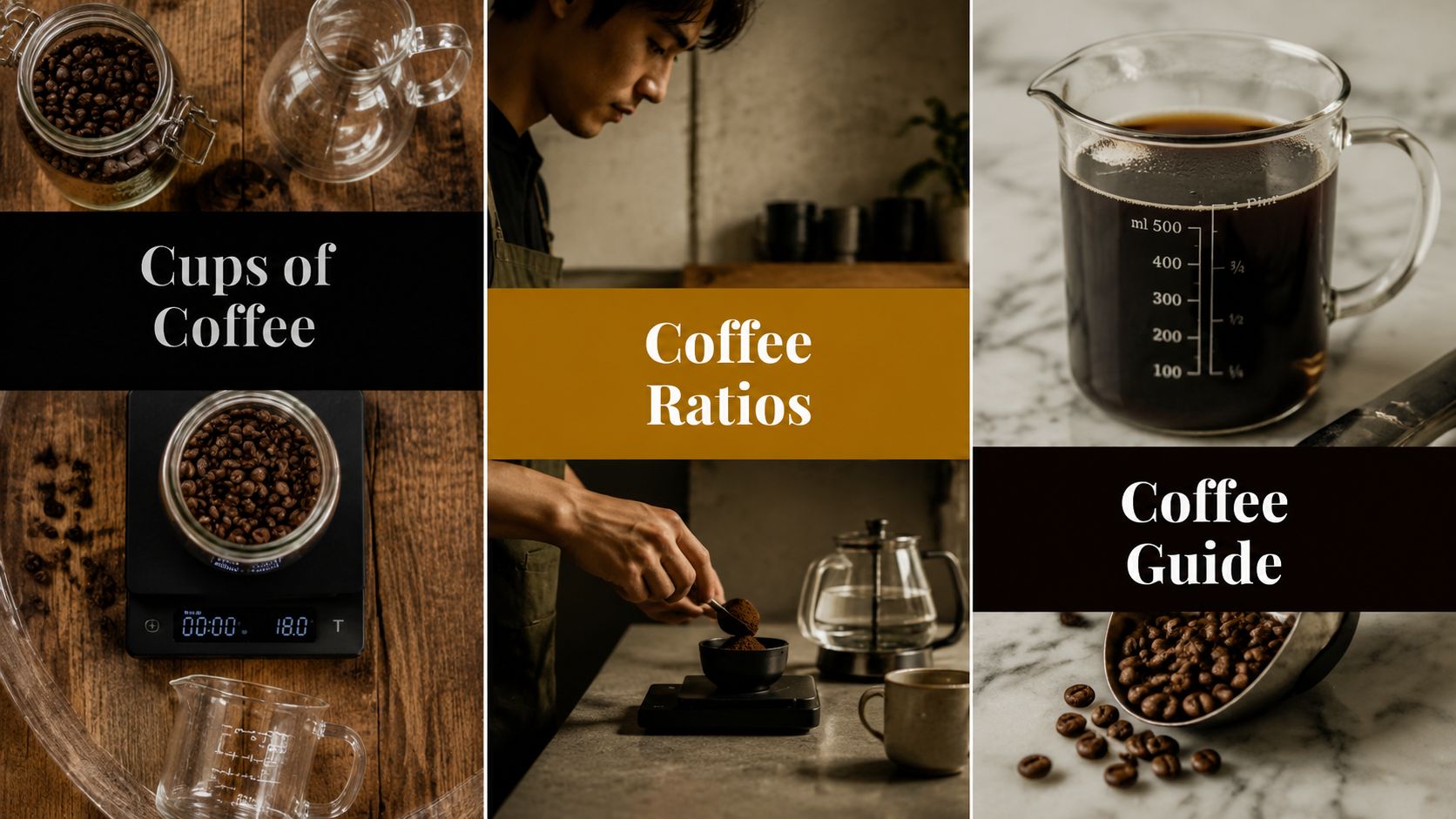
- Understanding Cups of Coffee: Sizes & Ratios for UAE Brewing
You're standing in the kitchen with a new coffee maker, a bag of beautiful beans, and a simple expectation: if the machine says 10 cups, you should get 10 proper cups of coffee. Instead, the carafe looks modest, your mugs are only partly filled, and suddenly “cup” feels like one of the least reliable words in cooking. That confusion is completely reasonable. In coffee, a cup can mean the marking on a machine, the amount in a café mug, a small serving of espresso-based coffee, or a traditional poured serving offered to a guest. In the UAE, that question gets even more interesting because coffee isn't only a drink. It's also part of hospitality, gifting, daily routine, and social etiquette. From a barista's point of view, good coffee starts not with a fancy grinder or rare beans, but with clarity. Once you know what a coffee cup means, how to read machine labels, and how to brew by ratio instead of guesswork, your cups of coffee become more balanced, more elegant, and far more consistent. The Common Confusion Around Cups of Coffee A reader once described a familiar problem. They had guests coming over, filled their brewer to the line marked “8 cups”, and expected enough coffee for the table. What arrived was enough for a few medium mugs, not a room of adults who wanted second servings. That's the trap. The term cup of coffee sounds ordinary, but it changes depending on who's using it. A machine manufacturer, a recipe writer, a café, and a home host may all mean something slightly different. Why the word cup causes trouble In everyday cooking, people often think of a measuring cup. In daily life, they think of the vessel in their hand. In coffee, those two ideas don't always match. A large ceramic breakfast mug feels like one cup. A paper takeaway cup also feels like one cup. A demitasse of espresso is certainly a cup of coffee in social terms, even though it holds far less liquid. Then add Arabic coffee service in the UAE, where the cup is often part of a ritual rather than a volume exercise, and confusion becomes inevitable. Coffee language mixes measurement and experience. That's why the same word can mislead both beginners and confident home cooks. Where readers usually go wrong Most brewing mistakes come from one of these assumptions: Machine lines equal mug count. They often don't. Scoops are precise. They're convenient, but not especially consistent. All cups of coffee are the same strength. They aren't, because dose, grind, water, and brew style all change the result. Serving size equals caffeine level. A small serving can still be intense, while a larger one may taste softer. When you clear up the meaning of “cup”, everything else becomes easier. You can plan for guests properly, brew with confidence, and decide whether you're making coffee for quiet breakfast, afternoon cake, or formal hospitality. Defining the Standard Coffee Cup Size You are setting out saffron cake, dates, and polished cups for guests in Dubai. The brewer says 12 cups, so you expect plenty. Then the carafe fills fewer mugs than expected, and the table service feels off before the first pour. The reason is simple. In coffee equipment, a “cup” usually refers to the machine's own brewing unit, not the serving cup your guests hold. On many brewers, that unit is smaller than a standard kitchen measuring cup and much smaller than a generous breakfast mug. What the standard means at home A coffee machine's cup marking works like the portion guide on a pasta package. It helps the maker calculate output, but it does not tell you how satisfying the final serving will feel in a real bowl or on a real table. That distinction matters even more in the UAE, where coffee can mean very different things depending on the setting. A small finjan of Arabic coffee, a compact Italian espresso after lunch, and a large mug served with breakfast are all socially understood as a cup of coffee. They are not the same volume, and they are not meant for the same moment. So the practical question is not “How many cups does this machine make?” It is “How much brewed coffee will I have, and how am I serving it?” A clearer way to read your brewer Treat the cup number on the machine as a production marker. Then translate that number into your actual service plan. Machine cup means the brewer's internal serving unit. Serving cup means the vessel on your table. Hospitality count means how many guests you can serve comfortably, based on portion size and refills. For a quiet weekday breakfast, a smaller brewer may be perfect. For a weekend gathering with panettone, cannoli, or date pastries, you need to count by real pours, not by the label on the appliance. A host who serves coffee often learns this quickly. Why this matters for premium coffee service Good coffee service begins before grinding. It starts with matching volume to occasion. If the brewer produces less coffee than the table requires, the final cups are often smaller, weaker, or both. That is especially disappointing with specialty beans, where balance and texture matter as much as aroma. A carefully chosen Italian roast deserves a full, properly portioned serving, whether you pair it with breakfast pastries or offer it as a refined gift-table coffee after dinner. For home chefs and gift-givers in the UAE, this is the useful habit to keep. Read coffee machines by total brewed volume, then choose cups, pairings, and quantities to suit the moment. That approach brings the technical side of coffee closer to the cultural side, which is where excellent hospitality always lives. The Golden Ratios for Perfect Brewing You measure out beautiful beans, fill the kettle, and expect a polished cup. Then the brew lands thin one morning and heavy the next. In most home kitchens, the problem starts with proportion, not with the coffee itself. A good ratio gives coffee a frame, much like salt does in cooking. Too little, and flavours feel distant. Too much, and the cup can lose clarity. For many filter methods, a practical starting point is about 55 g of coffee per litre of water. That sits close to a 1:18 ratio, which means one part coffee to eighteen parts water by weight. The key phrase is by weight. Scoops sound convenient, but they behave like measuring grated Parmigiano with a spoon. A light roast, a dark roast, and a coarse grind do not fill the spoon with the same density. A scale gives you the same starting line each time, which is how a home brewer begins to work with the calm precision of a good café. Why ratios shape flavour Ratio and extraction are related, but they are not identical. Ratio is how much coffee you use compared with water. Extraction is how much flavour the water pulls from those grounds. A helpful kitchen analogy is stock. The amount of bones in the pot affects strength, while simmer time affects how much flavour ends up in the liquid. Coffee works the same way. If the ratio is too loose, the cup can taste watery, even when brewed correctly. If the ratio is too tight, the brew can feel dense, woody, or tiring on the palate. Start with the ratio, then adjust grind size, brew time, and temperature if the flavour still needs work. Coffee Brewing Ratios at a Glance Brew Method Coffee-to-Water Ratio (by weight) Example Measurement Drip or batch brew 1:18 55 g coffee to 1 litre water Pour-over 1:16 to 1:17 as a common home starting range Weigh both coffee and water, then adjust for body or clarity French press Around 1:15 to 1:17 depending on desired texture Use a slightly firmer ratio for a fuller cup Cold brew Much more concentrated during preparation Measure by weight and dilute to taste after brewing if needed For home cooks in the UAE, this matters in a very practical way. A breakfast coffee served with cornetti or biscotti often benefits from a cleaner, lighter balance. An after-dinner pot poured alongside dates, dark chocolate, or pistachio pastries can carry a little more body. The ratio should suit the table, not only the brewer. Water is part of the recipe Coffee is mostly water, so water quality shapes aroma, sweetness, and finish. Clean-tasting filtered or bottled water usually produces a more polished cup than water with noticeable chlorine or mineral harshness. If you want a visual reference for a premium bottled option, this Lurisia water example shows the kind of table-ready water many gourmet hosts choose. Temperature matters too. Water that is too cool often leaves the cup underdeveloped and sour. Water that is too hot can push the brew toward bitterness and flatten delicate notes. A small change can fix a lot. A refined, repeatable routine Use this order if you want better coffee without turning breakfast into a science project: Weigh the coffee first. Measure the water with equal care. Start with a proven ratio, then adjust in small steps. Use clean, neutral-tasting water. Change only one variable at a time. This method works especially well if you enjoy both coffee and tea, because the same principle applies across premium drinks. Balance changes the whole experience, much like the relationship between L-theanine and matcha caffeine shapes how energy feels in the cup. For gifting and home hospitality, that consistency is part of the luxury. An authentic Italian pantry is built on repeatable pleasures. Good olive oil tastes right each time. A fine pasta cooks to the right bite. Coffee deserves the same discipline, served with warmth rather than fuss. What Is Really in Your Cup of Coffee A cup of coffee is never only liquid in a vessel. It's also flavour concentration, aroma, caffeine delivery, and whatever you add after brewing. That's why two cups of coffee can look similar and feel completely different. In the UAE, this gets especially interesting because serving styles vary widely. A small cup of Arabic coffee, a short espresso, an instant coffee at home, and a large milk-based café drink all count as coffee to the person drinking them. But they don't deliver the same experience. Cup count is not the same as caffeine exposure One of the biggest gaps in coffee advice is the difference between number of cups and actual caffeine intake. The available discussion around cups of coffee is often lifestyle-focused, while a more useful health frame would compare brewed coffee, espresso, Arabic coffee, and instant coffee using UAE-relevant serving sizes and caffeine estimates, as noted in this discussion of the need for better UAE-specific caffeine guidance. That's why “How many cups can I have?” is harder to answer than it sounds. A cup is a container word. Caffeine is a dose question. For readers who also enjoy tea, a useful comparison is the relationship between L-theanine and matcha caffeine. It helps explain why one caffeinated drink may feel brisk and punchy while another feels steadier, even when both belong to your daily ritual. Additions can change the whole profile Black coffee is one thing. Coffee with milk, sugar, syrups, cream, or flavoured toppings becomes something else entirely. The drink may be softer, richer, sweeter, or more dessert-like. None of that is wrong. It means the contents of the cup now go beyond the brew itself. If you're refining taste at home, start with excellent water. Even the glass of water served beside the coffee affects the experience. A useful visual reference for premium table service is this Lurisia water bottle image, which captures the kind of thoughtful accompaniment that suits a gourmet coffee moment. A short visual can help make these distinctions easier to grasp: A cup of coffee is both a recipe and a serving. If you change either one, you change what the cup actually contains. Serving and Pairing Your Perfect Cup Great coffee deserves a thoughtful landing. Brewing well is one craft. Serving well is another. The cup you choose, the sweet bite beside it, and the social setting all influence how the coffee is perceived. In the UAE, coffee service changes across Arabic coffee, specialty espresso drinks, and hospitality settings. Understanding these norms matters for home hosting, especially during Ramadan and Eid, when coffee is part of etiquette as much as refreshment, as noted in this discussion of UAE coffee hosting norms. Match the style of coffee to the occasion Not every gathering asks for the same kind of cups of coffee. A morning table with pastries may suit batch brew or a clean pour-over served in porcelain cups. An after-dinner moment often welcomes espresso. A formal visit or cultural occasion may call for Arabic coffee, where the rhythm of serving and refilling matters as much as the flavour. That's why polished hosting begins with a simple question: what kind of gathering is this? Quiet breakfast often suits a longer, gentler coffee. Dessert service welcomes a shorter, more concentrated cup. Guest hosting may call for service that respects custom before personal preference. Pairing coffee with Italian delicacies Coffee and food should support each other, not compete. A bright, aromatic brew pairs beautifully with a simple biscuit. A fuller, darker cup can stand beside richer sweets. Try these combinations at home: Espresso with biscotti or amaretti. The coffee cuts sweetness and the biscuit gives structure. Longer black coffee with a slice of panettone. The airy crumb and candied fruit work particularly well in the afternoon. Milk-based coffee with waffles or soft cakes. A visual cue for that style of table is this waffles serving image. Presentation changes flavour perception Serve coffee too hot and the aroma hides. Serve it too cool and the structure feels tired. The vessel matters as well. Thin porcelain often presents aroma differently from thick stoneware. A small cup can make an espresso feel concentrated and luxurious. A broad mug makes a breakfast coffee feel relaxed and generous. Serve coffee as you'd plate a fine dessert. Temperature, vessel, and accompaniment all shape the guest's first impression. For home hosts, that means keeping the table edited and intentional. One good sweet. One suitable cup. One coffee style that fits the mood. Curate Your Coffee Experience with IFM Gourmet Coffee in the UAE sits inside a remarkably active market. The country has been recorded as the world's largest importer of green coffee, bringing in about 179,000 tonnes in 2022, reflecting its role as a regional hospitality and foodservice hub where premium coffee is central, according to this summary citing the International Coffee Organization. That larger context matters at home. It means readers in Dubai and across the UAE aren't building coffee habits in a minor market. They're part of a place where coffee quality, service standards, gifting, and presentation already carry real cultural and commercial weight. Build a complete coffee table, not just a brew routine The most satisfying coffee rituals usually combine four things: A clear brew standard so your cups of coffee taste consistent. Thoughtful water and equipment so flavour stays clean. A suitable sweet or savoury pairing to complete the moment. Presentation that fits the occasion, whether it's breakfast, gifting, or hosting guests. For readers creating that kind of table, IFM Gourmet Food Store offers a UAE-based gourmet retail option for coffee accompaniments, Italian sweets, premium pantry items, and gift-ready food selections that can sit naturally alongside a refined coffee service. If you're planning for an office pantry, event counter, or client welcome area, it also helps to review practical steps for choosing business coffee, especially when consistency and service flow matter as much as flavour. A good cup isn't just brewed. It's selected, measured, served, and paired with care. That's what turns coffee from routine into hospitality. If you'd like to bring that kind of elegance into your own kitchen or gift table, explore the curated selection at IFM Gourmet Food Store. You'll find artisanal sweets, premium pantry staples, and gourmet pairings that fit beautifully with a refined coffee ritual in the UAE.
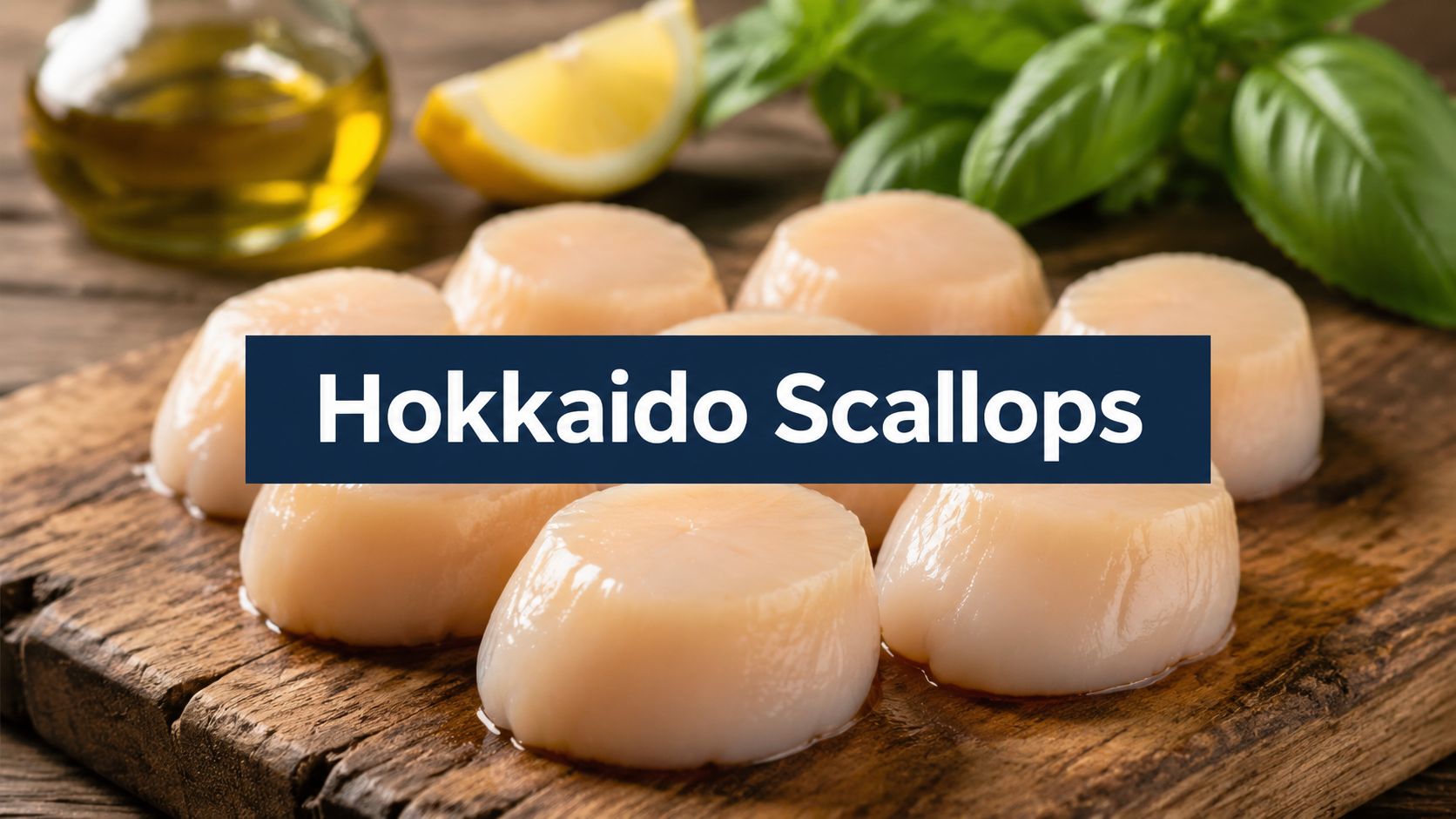
- Japanese Hokkaido Scallops: Guide for Gourmet Chefs
You're standing at the freezer, reading labels, trying to decide whether tonight's dinner will taste polished and restaurant-worthy or merely expensive. The bag says Hokkaido. The scallops look beautiful through the frost. But then the doubts start. Are they dry or treated? Are they large enough for a proper sear? Will they stay sweet and tender, or turn watery in the pan? That's where Japanese Hokkaido scallops reward a little knowledge. For the home cook in Dubai or anywhere in the UAE, they offer something rare: luxury that's still practical. They cook quickly, pair gracefully with Italian flavours, and can carry a whole meal with very little fuss. A few excellent scallops, good olive oil, a squeeze of lemon, perhaps a spoonful of caviar or a tangle of fresh pasta, and dinner feels transformed. An Introduction to Culinary Jewels from Japan A fine scallop changes the mood of the table. One minute you're making supper. The next, you're plating something that feels as though it belongs in a quiet dining room with linen napkins and chilled white wine. Japanese Hokkaido scallops have earned that reputation because they offer the kind of pleasure cooks notice immediately. Their flesh is plump, their sweetness is clean rather than sugary, and their texture can be almost creamy when handled gently. In a raw preparation, they feel delicate and luminous. In a hot pan, they take on caramel colour while keeping a tender centre. Why cooks fall for them What makes them especially appealing at home is their generosity. You don't need a long ingredient list to make them shine. A few details matter more than complication: Heat control matters most: A dry surface and a hot pan give you colour without overcooking. Seasoning should stay restrained: Salt, lemon, olive oil, white pepper, and soft herbs are often enough. Presentation comes easily: Their rounded shape and pale ivory colour look elegant on almost any plate. A prized ingredient doesn't ask for drama. It asks for accuracy. For UAE cooks, there's another reason they stand out. Frozen premium scallops can be easier to source consistently than many fresh shellfish, and they suit the way many people shop here: carefully, occasionally, and with high expectations. The trick isn't only buying Hokkaido scallops. It's buying the right Hokkaido scallops, thawing them properly, and matching their size and style to the dish you want to serve. The Origin and Essence of Hokkaido Scallops Hokkaido gives these scallops their identity. The island sits at the centre of Japan's scallop culture and trade, and it remains the heart of the country's production. A detailed industry review notes that Hokkaido supplies about 80% of Japan's hotate, that the fishery's history reaches back to the late 1800s, and that annual landings had climbed to 70,000 metric tons by 1975 after strong postwar recovery. The same review describes more recent stable harvests around 400,000 metric tons, and records that in 2013 the fishery became the largest MSC-certified scallop fishery in the world after a three-year assessment (Japan Times Business Outline special report on Hokkaido scallops). Two growing systems that shape the scallop Japanese Hokkaido scallops are Mizuhopecten yessoensis, a cold-water, sessile bivalve. In Hokkaido, producers manage them in two distinct ways: hanging culture in the Japan Sea and Funka Bay, and seabed ranching in the Sea of Okhotsk and Nemuro Straits. The Marine Stewardship Council fishery profile also lists a 2023 catch of 404,669 metric tonnes for this scallop fishery (MSC Japanese scallop hanging and seabed enhanced fisheries profile). Those two systems matter because they affect how the scallops grow and how cooks may experience them. Production system How it works What it often means in the kitchen Hanging culture Scallops grow suspended on ropes or nets in moving water More even exposure to water flow can support uniform growth Seabed ranching Spat are seeded on the seabed and later recovered by dredge The environment is less suspended and more natural to bottom growth Why Hokkaido tastes the way it does Cold, nutrient-rich waters favour slower growth. That slower pace helps explain why many cooks associate Hokkaido scallops with a dense, meaty bite and a pronounced sweetness. They don't feel flimsy or watery when they're good. They feel composed. That's the essence of their appeal. Not richness in the heavy sense, but clarity. A Hokkaido scallop tastes precise. Kitchen translation: When an ingredient grows slowly in cold water, cooks often notice firmer texture and cleaner flavour. For the UAE market, this origin story matters because provenance often stands in for trust. If you're paying for premium shellfish, you want more than a romantic label. You want an ingredient shaped by a distinct place, produced at scale without losing identity, and recognised for traceability. Decoding Scallop Sizes and Sashimi Grade Size codes confuse many home cooks because they look technical but are very practical. They tell you how many scallops you can expect in a pound. Fewer scallops per pound means a larger scallop. More scallops per pound means a smaller one. For Hokkaido scallops, commercial size bands commonly include 9–12/lb, 16–18/lb, 18–22/lb, and 23–28/lb. Product guidance for buyers also notes that marketable size is about 100 mm, usually reached in year 2–3, depending on food supply and temperature (Eastern Buyers Japanese scallop product page). A practical size guide for home cooks Here's a simple way to read those numbers at shopping time. Size Code (Count per lb) Approximate Scallops per kg Average Size Best For 9–12/lb Roughly low to mid 20s per kg Very large Statement searing, crudo, carpaccio 16–18/lb Roughly mid to high 30s per kg Large Pan-searing, plated starters 18–22/lb Roughly around 40 to high 40s per kg Medium-large Pasta, risotto, mixed seafood plates 23–28/lb Roughly around 50 to low 60s per kg Medium Skewers, pasta, gratin, appetisers If you're serving scallops as the star of the plate, larger counts are usually easier to work with. They give you a broad seared face and a more luxurious look. For pasta or rice dishes, the slightly smaller bands can be more sensible because they portion neatly and cook fast. What sashimi grade usually means “Sashimi-grade” isn't a universal legal category in the way many shoppers assume. In practice, it signals confidence in handling, freezing, cleanliness, and intended raw use from the seller or processor. It doesn't mean every scallop should automatically be eaten raw at home. Use the term as a prompt to ask better questions: How has it been handled? Is it dry or treated? Is the texture firm after thawing? Does the seller clearly position it for raw service or only for cooking? If the label says sashimi-grade but the thawed scallop leaks excess water and feels spongy, trust the scallop in your hand more than the phrase on the bag. For UAE cooks, size and grade work together. Size gives you planning confidence. Grade and handling tell you whether the result will feel refined on the plate. Proper Selection and Storage Techniques A premium scallop can still disappoint if it has been handled poorly. Most problems happen before the pan is even heated. The package may have thawed and refrozen. The label may be vague. The scallops may carry excess ice or hidden treatment that only reveals itself later. What to inspect at purchase When buying frozen scallops, start with the bag, not the marketing language. Check the frost level: A light coating of frost is normal. Heavy ice build-up can suggest temperature fluctuation. Look at the scallops themselves: They should appear distinct, not fused into one frozen lump. Read every line on the label: If the wording is specific and clean, that's usually a better sign than vague premium claims. Inspect the seal: Torn corners, loose vacuum, or dented packaging are reasons to move on. The best thawing method Patience protects texture. Thaw scallops slowly in the refrigerator on a tray or plate so any moisture stays contained. Once thawed, lift them out, dry them thoroughly with kitchen paper, and keep them chilled until cooking. Avoid leaving them at room temperature to hurry the process. That softens the surface too quickly and can leave you with uneven texture. Avoid soaking them in water as well, because that adds the very thing most cooks are trying to avoid: more moisture. After thawing Once thawed, treat them like a fresh delicate protein. Keep them cold, covered, and use them promptly. Before cooking, remove surface moisture again. If there's a small side muscle attached, peel it away gently. A simple pre-cooking routine works well: Thaw in the refrigerator. Drain any collected liquid. Pat dry thoroughly. Season only just before cooking. That last step matters. Salt too early and the scallops can release moisture before they hit the pan. Cooking Methods with an Italian Touch Italian cooking often does its best work by removing clutter. That approach suits Japanese Hokkaido scallops beautifully. Their sweetness doesn't want a heavy cream blanket or an aggressive spice mix. It wants restraint, contrast, and good ingredients around it. Crudo with lemon and olive oil If your scallops are suitable for raw service and impeccably handled, crudo is the purest expression. Slice them into rounds or thin petals. Arrange on a chilled plate. Add fine sea salt, a few drops of lemon, excellent olive oil, and perhaps a whisper of grated lemon zest. Keep the garnish disciplined. Chives, pink pepper, or a few fennel fronds work. Too much acid will cure the flesh. Too much oil will flatten it. Serve crudo cold, but not icy. Extreme chill mutes flavour. Pan-seared and still tender This is the method most home cooks want to master. It's also where treated scallops reveal themselves quickest. Heat a heavy pan until it's properly hot. Dry the scallops very well. Add a thin film of oil with a suitable cooking profile. Season the scallops at the last moment, then place them in the pan with space between each one. Don't move them until a caramelised crust forms. Turn once. Add a little butter if you like, and baste briefly. Then stop. Scallops become firm very quickly. A few pairings flatter them especially well: Soft acidity: lemon, white wine reduction, or a spoon of tomato water Green freshness: parsley, basil, or chervil Italian depth: a light brush of browned butter with sage, or a spoonful of pea purée Luxury accents: bottarga used sparingly, or a little oscietra caviar Pasta and shellfish elegance Scallops also belong in pasta, though the pasta should support rather than dominate. Think linguine with olive oil, garlic, parsley, and a little white wine reduced gently. Or a delicate tagliolini finished with butter and lemon. If you're planning a composed Italian seafood dinner, a visual reference like this Italian pasta presentation image can help you think in terms of proportion and plate balance. Two rules keep pasta with scallops elegant: Cook the scallops separately and add them at the end. Keep the sauce light enough that the scallops still taste like scallops. A gratinéed version can work too, especially with breadcrumbs, parsley, olive oil, and a little citrus. But use cheese with caution. The more assertive the topping, the more easily the scallop disappears beneath it. Sourcing Premium Scallops in Dubai and the UAE In the UAE, the biggest buying mistake isn't choosing frozen over fresh. It's assuming that all Hokkaido scallops in the freezer case are equal. They aren't. One of the most important distinctions is dry versus treated. Neutral product guidance notes that some Hokkaido scallops are sold as having no chemicals or water added, while others are treated with sodium. That difference affects texture and yield, and it often isn't explained clearly at retail level (FW Bryce guidance on Hokkaido scallops and dry versus treated products). How to spot the better bag A dry scallop usually behaves like a natural ingredient. Once thawed, it feels firm, not swollen. It sits on kitchen paper without flooding it. In the pan, it browns rather than steams. A treated scallop often gives itself away through performance: Too much liquid after thawing: You pat it dry, then more moisture appears. Pale cooking behaviour: Instead of caramelising, it releases water and turns opaque too fast. Soft or bouncy texture: The bite can feel less clean and more inflated. Vague packaging language: If the label is unclear about additives, pause. Questions worth asking in Dubai Dubai shoppers often buy from frozen displays, online listings, or specialist gourmet stores. That means you may not get to ask a fishmonger face to face. So the product page and packaging have to do more work. Use a buyer's checklist: Is the product clearly intended for raw use, searing, or general cooking? Does the label mention no chemicals or no water added? Is the size count stated clearly? Does the seller show enough product detail to suggest confidence rather than decoration? For browsing premium food selections online, this gourmet category visual reflects the sort of curated retail environment where product specificity matters. Buying rule: If the listing tells you where the scallop is from, how large it is, and whether it is dry or treated, you're dealing with a seller who understands the ingredient. For discerning UAE cooks, that transparency matters more than glossy wording. A premium scallop should arrive with enough information to help you cook it properly. Elevate Your Home Dining with Culinary Grace A beautiful ingredient can change how you cook, but only if you understand it well enough to let it remain itself. Japanese Hokkaido scallops reward that kind of attention. Choose the right size, thaw them patiently, dry them carefully, and cook with a light hand. Suddenly dinner feels composed rather than hurried. That's part of their charm. They invite ceremony without requiring complexity. A plate of scallop crudo with lemon and olive oil can feel as celebratory as a more elaborate meal. A few well-seared scallops beside a small nest of buttered pasta can turn an ordinary evening into something memorable. For cooks in Dubai and across the UAE, the smart approach is simple. Read labels closely. Learn the signs of dry versus treated scallops. Buy with a dish in mind. If you want dramatic searing, choose larger counts. If you want a graceful pasta or risotto finish, choose sizes that portion cleanly. The reward isn't only taste. It's confidence. You begin by wondering whether the bag in your hand is worth it. You end by knowing exactly what to look for, exactly how to prepare it, and exactly how to serve it with style. For cooks who value provenance, elegance, and beautifully curated ingredients, IFM Gourmet Food Store offers a refined gourmet shopping experience in Dubai and across the UAE. Explore its premium selection to bring more grace, flavour, and occasion to your home table.
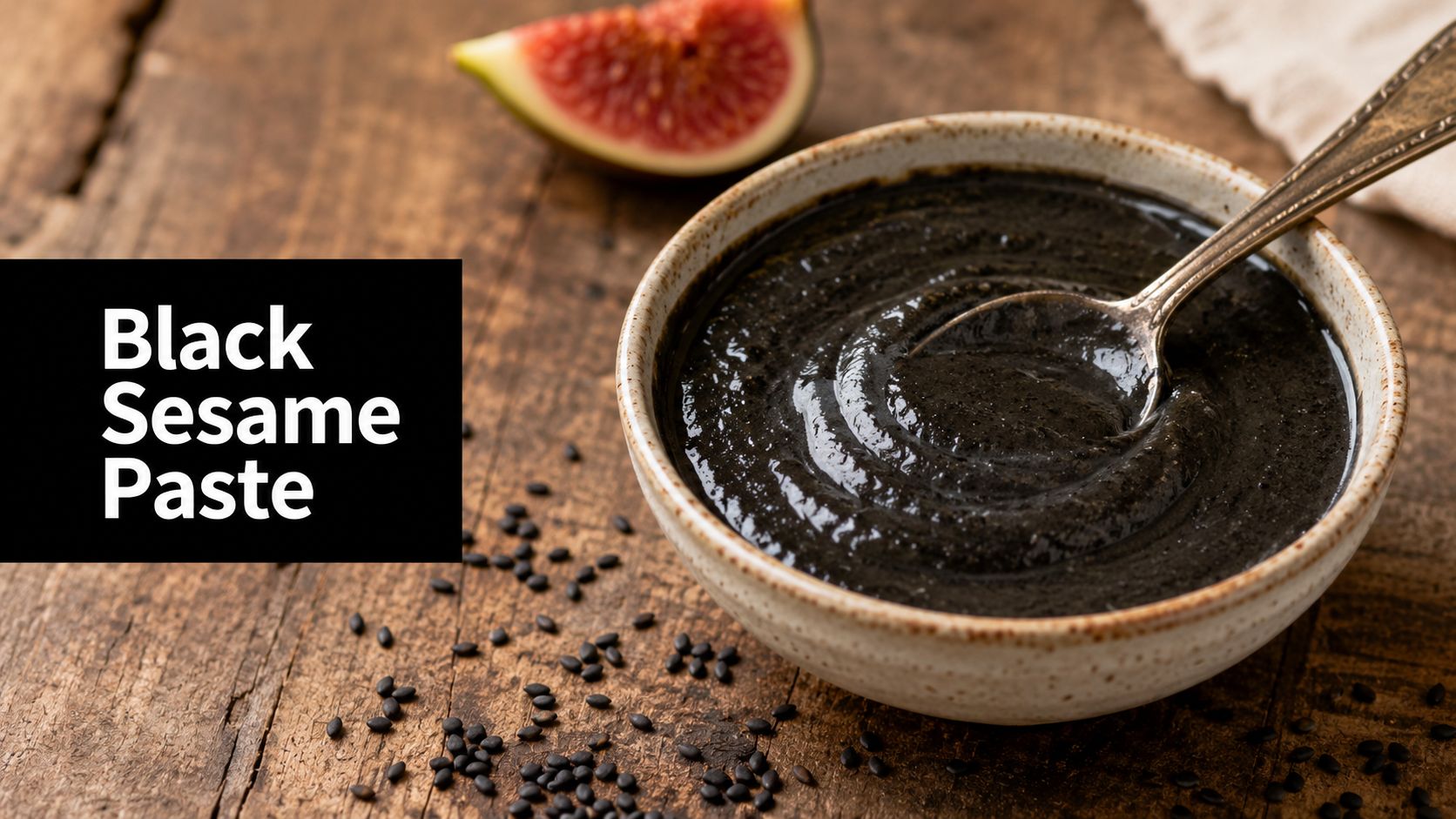
- Black Sesame Paste: A Gourmet Guide for Dubai Kitchens
A lot of refined home cooks in Dubai reach a point where the usual pantry luxuries no longer feel surprising. You have good olive oil, proper pasta, careful chocolate, perhaps a favourite pistachio cream or hazelnut spread. What's missing is often not another expensive ingredient, but a flavour with depth and personality. Black sesame paste is one of those ingredients. It arrives with a dramatic inky colour, but colour is only the beginning. Its appeal is the way it behaves in the kitchen. It can turn a simple cream into something hauntingly nutty, give a dessert an elegant bitter-sweet edge, or bring visual contrast to soft Italian classics such as panna cotta, gelato, and filled pastries. For a discerning cook, that combination of beauty and utility is hard to resist. In luxury food retail, the most exciting ingredients are rarely novelties. They are usually old, established foods that still feel fresh because we've only begun to explore them outside their original culinary context. Black sesame paste belongs firmly in that category. It carries Asian heritage, yet it feels perfectly at home beside mascarpone, ricotta, honey, citrus, and dark chocolate. An Introduction to Culinary Noir A discerning home chef often discovers black sesame paste by accident. Perhaps it appears as a glossy swirl in a pastry counter dessert, or as a striking gelato ribbon so dark it looks almost lacquered. One spoonful usually explains the fascination. The flavour is nutty, rounded, faintly bitter, and far more complex than many sweet spreads. What makes it so compelling is its contrast. It feels ancient and modern at once. It looks bold, yet it pairs beautifully with gentle ingredients. It can read as distinctly Asian in a mochi filling, then completely natural in an Italian dessert cream. Black sesame paste has the kind of flavour that makes a familiar recipe feel newly composed rather than merely altered. For cooks in the UAE, that matters. A cosmopolitan pantry is already part of daily life here. Many kitchens move easily between Levantine, South Asian, East Asian, and European influences, especially when entertaining. Black sesame paste fits that rhythm because it doesn't demand a complete change in style. It invites you to rethink how nuttiness, colour, and texture can work together. Used well, it becomes more than a spread or filling. It becomes a finishing signature. A spoonful in whipped mascarpone. A ribbon through gelato. A layer inside brioche. A glossy note on a dessert plate where vanilla, fig, or citrus need something darker and more grounded beside them. The Enduring Allure of Black Sesame Open a jar of black sesame paste beside a bowl of mascarpone, and its staying power becomes easy to understand. The colour is almost ink-dark, yet the aroma is warm and toasted, more like roasted hazelnut crossed with tahini than a novelty ingredient. That tension is part of its charm. It brings drama to the plate, but its flavour is fundamental. A heritage ingredient that still feels current Black sesame carries the weight of a very old food culture. As noted earlier, sesame cultivation reaches back more than 5,000 years, with early use in the Indus Valley and later spread into China. For a serious home cook, that history matters because it explains why black sesame paste feels so settled in the kitchen. It has had centuries to find its role in sweets, porridges, fillings, and sauces. Its flavour also asks for a little patience. Black sesame is not sweet in the direct, open way of chocolate spread or pistachio cream. It is more architectural. First comes roast and nuttiness, then a gentle bitterness, then a rounded finish that lingers. In Italian terms, it behaves less like a sugary topping and more like a finely toasted nut paste you might fold into crema, semifreddo, or a refined cake batter. Why the texture feels so naturally luxurious Sesame seeds are rich in oil, so once they are ground, they turn from tiny grains into a dense, glossy paste with very little persuasion. That is why black sesame paste can enrich a mixture in two ways at once. It contributes flavour, and it also changes texture. For the cook, this explains a lot. A spoonful stirred into pastry cream does not merely add taste. It gives the cream more body. Folded into gelato base, it creates a fuller mouthfeel. Whisked into whipped ricotta or mascarpone, it behaves almost like a nut butter with more perfume and more depth. That texture is one reason the ingredient travels so well between Asian and Italian traditions. It has the same kind of practical generosity that good pistachio paste or almond praline brings to desserts. Why it continues to matter Black sesame endures because it is beautiful, useful, and culturally rooted all at once. According to Pacific Spice, global sesame production reached 6.7 million tonnes in 2024, and India, Myanmar, and Sudan accounted for 33% of that total. For UAE cooks, that trade network matters. It helps explain why a heritage ingredient from across Asia can sit so comfortably in a modern pantry beside Sicilian citrus, Medjool dates, vanilla, and fine olive oil. In practice, black sesame paste rewards cooks who like contrast. It can steady sweetness, sharpen dairy, and give pale desserts a darker bass note. A little in panna cotta with orange blossom. A ribbon through fior di latte gelato. A filling for maritozzi made with lightly sweetened cream. These are modern uses, but the appeal is old. Black sesame has always had a talent for turning simple ingredients into something more layered and memorable. How to Choose Authentic Black Sesame Paste Once you've decided to cook with black sesame paste, the next question is simple. Should you buy it, or should you make it yourself? For many UAE shoppers, that choice isn't just about convenience. It's about texture, sweetness, ingredient control, and whether the jar will perform properly in polished desserts. Onolicious Hawaii's discussion of black sesame paste highlights a key consideration for UAE shoppers. The comparison between premium imported paste and homemade paste often comes down to cost, ingredient quality, consistency, and suitability for applications such as pastry fillings. What to look for on the label A good jar usually tells you a lot before you open it. Look for short ingredient lists and a clear sense of whether the product is sweetened or unsweetened. If you want flexibility, unsweetened paste is usually easier to adapt across desserts and savoury dishes. Pay attention to these cues: Unhulled black sesame seeds often signal fuller flavour and a more pronounced colour Minimal additives make the paste easier to balance in your own recipes Declared sweeteners or oils tell you whether the jar is built for spreading, baking, or dessert filling A very smooth texture can be wonderful, but don't assume smoother always means better. Some artisanal pastes keep a slight natural grain that feels more expressive in rustic bakes. What homemade teaches you Making it yourself changes the way you judge quality. Just One Cookbook explains that toasted, unhulled black sesame seeds are ground until their own oil releases and the mixture turns glossy and smooth, which typically takes about 10 to 15 minutes total in a food processor. Warmth, scraping down the sides, and brief motor rests help prevent overheating and improve the final emulsion. That tells you what an authentic paste should feel like. It should smell roasted and nutty. It should look glossy rather than chalky. It should spread with some resistance, not sit in stiff clumps like a dry powder mixed with syrup. For readers who want to see the texture in motion, this preparation video is a helpful visual reference. Imported versus homemade in a Dubai kitchen The smartest choice depends on how you cook. Option Best for Watch for Homemade paste Cooks who want control over sweetness and fluidity Grinding time, equipment limits, shorter practical convenience Premium imported paste Consistent desserts, gifting, quick assembly Added sugar or oil that may affect recipe balance Mass-market sweetened paste Toast, breakfast use, simple fillings Less flexibility for refined plated desserts If you're buying for elegant desserts, consistency matters. If you're experimenting, homemade can be rewarding. If you want a retail reference point, IFM Gourmet Food Store's Mini Brioche Black Bun w/ sesame seeds shows how black sesame can sit naturally within a premium bakery context rather than only in traditional Asian sweets. Classic and Creative Culinary Uses A refined pantry ingredient proves its worth on a busy evening. You whisk mascarpone for dessert, warm a little honey, and reach for black sesame paste. Within minutes, the bowl takes on a satin-grey colour, the aroma turns gently roasted, and an ordinary cream becomes something more layered and memorable. That range is what makes black sesame paste so compelling. In one recipe it feels traditional. In another, it slips easily into a modern table in Dubai, especially one stocked with ricotta, pistachios, citrus, good vanilla, and beautiful flour. Where it begins Across Asian sweets, black sesame paste often appears in dishes where flavour and texture arrive together. It fills soft rice dough, enriches warm dessert soups, and threads through buns and frozen sweets with a calm, lingering nuttiness. Its natural richness gives it the structure of a filling and the fluidity of a sauce, so it behaves with unusual grace in the kitchen. If you want to see that character in a familiar format, this guide to Japanese black sesame dessert offers a useful reference point for cold, creamy applications. How it adapts so well Black sesame paste works like browned butter in dessert. It brings depth, a faint bitterness, and a toasted aroma that makes sweetness feel more precise. That is why it belongs far beyond one tradition. A spoonful folded into breakfast batter can transform the whole plate. Waffles, for example, become more sophisticated when topped with date syrup, roasted figs, or crème fraîche. If you want a plating cue, these black sesame waffle serving ideas show how naturally the paste pairs with elegant toppings. It also slips beautifully into cream-based desserts. Stir it into pastry cream, whipped mascarpone, panna cotta base, or a ricotta filling for tartlets. The result is darker and more grown-up than vanilla alone, but still restrained. Frozen desserts are another strong match. A ripple through gelato, semifreddo, or frozen yoghurt holds its presence even against dairy, which is useful if you enjoy flavour that unfolds slowly rather than all at once. Then there is the savoury side, which many home cooks overlook. A small amount thinned with warm water or citrus can dress roasted aubergine, noodles, or charred broccolini. Use it the way an Italian cook might use a nut cream or a loose pesto, not to dominate the dish, but to give the plate depth. Black sesame paste is rarely loud. It is persistent, polished, and very effective in small amounts. What sophisticated home cooks often miss Its dramatic colour can encourage overuse. A better approach is to treat it like cocoa, espresso, or toasted hazelnut paste. Start modestly, taste, then build. The flavour becomes more elegant when it supports the composition instead of taking it over. Balance matters more than quantity. Black sesame responds especially well to ingredients that brighten, soften, or lift it: Fresh fruit, especially figs, raspberries, pears, or blood orange Italian dairy, such as mascarpone, ricotta, panna, or strained yoghurt Citrus notes, from orange zest to yuzu or lemon Gentle sweeteners, including honey, date syrup, or maple Warm spices, such as cardamom or a very light touch of cinnamon For a UAE home chef, that opens up exciting territory. Black sesame paste can sit just as comfortably in a mochi filling as in a ricotta crostata, a gelato swirl, or a mascarpone cream served with grilled stone fruit. That is where the ingredient becomes rewarding. It respects its Asian roots while speaking beautifully with an Italian accent. Black Sesame Meets Italy A Fusion of Flavours Italian desserts are often built on restraint. A few ingredients carry the whole experience, so every flavour must earn its place. Black sesame paste works beautifully in that framework because it brings colour, roastiness, and body without making a dish feel complicated. Panna cotta, gelato, and quiet drama Start with panna cotta. Vanilla panna cotta is lovely, but a black sesame version has a different kind of elegance. The paste turns the cream softly grey to charcoal, depending on the amount used, and adds a nutty bitterness that keeps the dessert from tasting overly sweet. Serve it with poached figs, citrus peel, or a light honey finish. Gelato is another natural home. A black sesame ripple through fiordilatte or vanilla creates contrast in both flavour and appearance. The milk base keeps the sesame note rounded, while the sesame paste gives the scoop a grown-up edge. Balancing rule: pair black sesame with Italian dairy when you want softness, and with fruit when you want lift. Filled pastries and pasta-inspired ideas The ingredient becomes especially interesting in fillings. Red House Spice explains that a practical ratio for a firmer preparation is 1 cup black sesame seeds to 1½ tbsp honey, while added walnut oil or coconut oil can increase fluidity for sauce-like uses. That knowledge is extremely helpful in Italian-style desserts, where texture decides whether a filling holds shape or oozes too quickly. A firmer black sesame mixture can be used in: Brioche fillings for breakfast pastries Crostata or tart layers beneath fruit Biscuit sandwich creams where you want a more structured centre A looser version suits: Gelato swirls Dessert sauces Mascarpone folds Plating accents This approach even opens the door to refined savoury-sweet ideas. A delicate tortello filled with ricotta and a restrained amount of black sesame paste can work if the sauce is simple. Brown butter would be too heavy. A light butter glaze with citrus or a touch of sage would be gentler. For visual inspiration in the filled-pasta direction, these fresh pasta shapes show how much presentation matters when working with a dark filling. How to keep the fusion elegant Italian and Asian flavours meet best when neither is forced to shout. A few practical rules help. Keep sweetness moderate Black sesame already has depth. If the dessert is too sweet, that complexity disappears. Use dairy strategically Ricotta gives lightness. Mascarpone gives luxury. Cream gives smoothness. Choose the dairy based on the role you want the sesame to play. Add fluidity carefully If the paste feels too dense for a swirl or sauce, added fat can loosen it. If it's meant to hold inside a tart or bun, hold back. Let colour support the idea Black sesame's dramatic appearance is most effective when the rest of the plate is visually calm. The result shouldn't feel like a gimmick. It should feel as though black sesame had always belonged in the Italian pantry, waiting for the right cook to notice. Serving Pairings and Smart Storage An ingredient this expressive deserves thoughtful company. Black sesame paste pairs best with flavours that either brighten it or echo its toasted warmth. Pairings that make sense Some combinations feel immediately natural: Figs and raspberries bring sweetness and gentle acidity Cardamom, ginger, and cinnamon add aromatic warmth without overwhelming the sesame Honey, maple syrup, or date paste soften bitterness while keeping the flavour profile mature Dark chocolate works when you want richness layered upon richness Textures matter too. Black sesame paste loves contrast from crisp biscuits, toasted bread, granola, or brittle shards. If you enjoy keeping your work surface orderly while preparing these garnishes, practical kitchen organisation tools such as the best magnetic knife holders NZ guide can be surprisingly helpful when planning a compact, efficient prep area. Storage in a UAE climate Storage is not a small detail here. Healthy World Cuisine's black sesame paste notes point to a practical issue many recipes overlook. In humid UAE kitchens, batch stability, fridge storage, and texture changes matter more than generic blending instructions. That means black sesame paste needs care after opening. Keep the jar tightly sealed, use a clean spoon every time, and refrigerate after opening if the product label or your kitchen conditions suggest it. Oil separation isn't always a sign of failure. Natural sesame oils can rise. Stir gently and patiently. If a chilled jar feels too firm, let a small portion sit briefly before using. Avoid repeated warming and cooling of the whole jar, especially in a warm kitchen. A simple storage checklist Situation What to do Opened jar Refrigerate for better stability Separated oil Stir until smooth Humid kitchen prep Work with small portions instead of leaving the jar out Dessert filling use Chill finished fillings before piping or layering Good storage protects flavour, texture, and your investment. In Dubai, that's not fussiness. It's sound kitchen practice. Elevate Your Pantry with Culinary Artistry A well-stocked pantry should do more than fill shelves. It should widen your range as a cook. Black sesame paste does exactly that, bringing depth, perfume, and a striking ebony colour that can shift a dish from familiar to memorable with a very small gesture. Its appeal is not only historical, though that heritage matters. It is also practical in a refined home kitchen. Black sesame paste works much like a concentrated nut cream. A spoonful can add body to a custard, roundness to a sauce, or a gentle roasted note to pastry dough. You do not need complicated technique to use it well. You need balance. For a UAE home chef with Parmigiano Reggiano in the fridge, cultured butter on hand, and excellent citrus or pistachios ready for dessert, that balance is exciting. Black sesame paste sits comfortably beside Italian ingredients because it shares their quiet confidence. It is expressive without being loud. It brings character, then lets the rest of the plate speak. I return to it for the same reason I return to good olive oil or exceptional cocoa. It teaches proportion. Add too little and it whispers. Add the right amount and it gives a dish length, warmth, and a slightly mineral finish that feels refined rather than sweet alone. That is why this ingredient deserves a place in a thoughtful pantry. It invites cross-cultural cooking that feels natural, not forced. A black sesame cream folded into mascarpone for a tart filling, a ribbon through fior di latte gelato, or a spoon stirred into sablé dough can feel as graceful as any classic flavour pairing. For cooks who build their kitchens with intention, black sesame paste is more than another speciality jar. It is an ingredient that expands your culinary vocabulary. If you're ready to explore ingredients that bring heritage, elegance, and versatility into your kitchen, browse the curated collection at IFM Gourmet Food Store. It's a practical starting point for Dubai home chefs who want to cook with authenticity and a more adventurous sense of flavour.
- Passion Fruit Puree: Guide to Uses & Sourcing in UAE 2026
You're standing at the pass, or in your home kitchen, with a dessert nearly finished. The mousse is smooth, the tart shell is crisp, the garnish is ready. What's missing is that last note of tropical acidity. Not sweetness alone. Not perfume alone. You need brightness, aroma, and consistency. That's where many cooks run into the same problem. Fresh passion fruit can be glorious, but it can also be uneven. One batch is fragrant and sharp. The next is pale, watery, or too seedy to work with efficiently. In the UAE, that matters even more because passion fruit is typically an imported ingredient, and the decision is often not whether to use it, but which format gives you the most reliable result for your kitchen. A good Passion Fruit Puree isn't a compromise. It's a professional tool. It helps pastry chefs, beverage teams, caterers, and careful home cooks build the same flavour profile again and again, whether they're making sorbet, cheesecake, mocktails, plated desserts, or a glaze for seafood. The Secret to Consistent Tropical Flavor A plated dessert can fail at the last step. The sponge is balanced, the cream is set, the garnish is precise, yet the tropical element tastes flatter than yesterday's version. In a professional kitchen, that kind of variation is not a small nuisance. It affects recipe balance, purchasing, prep time, and guest expectation. Passion fruit is especially demanding because its appeal comes from tension. You want sharp acidity, ripe aroma, a little floral lift, and enough body to carry through dairy, sugar, or ice. Fresh fruit can deliver that beautifully, but it does not deliver it evenly. Why fresh fruit creates inconsistency Fresh passion fruit suits menus that celebrate seasonality and table-side theatre. Precision is a different question. For pastry chefs, beverage developers, and caterers, three practical issues tend to decide the matter: Ripeness shifts from lot to lot: One delivery may be intensely aromatic, while the next tastes thinner or less vivid. Preparation takes labour: Staff must cut, scoop, strain, and clean up before the ingredient is even usable. Yield is unpredictable: The shell and seeds take up space, and the usable pulp can vary enough to disrupt costing and batching. That matters in the UAE, where passion fruit is usually a sourced ingredient rather than a local staple. The purchasing decision is rarely just “fresh or not.” It is a format decision. Fresh, frozen, and aseptic puree each behave differently in storage, production, and final flavour consistency. Practical rule: If the recipe depends on exact balance, buy for repeatability first and romance second. A good puree solves more than prep. It gives the kitchen a controlled starting point, much like using couverture with a known cocoa percentage instead of melting assorted chocolate bars and hoping the texture holds. You are not giving up quality. You are choosing an ingredient that has already been standardised for professional use. What the professional choice looks like For high-end results, the goal is not merely to get passion fruit flavour into a recipe. The goal is to get the same acidity, aroma, colour, and texture every time the recipe is made. That is why puree is widely used in entremets, sorbets, curds, glazes, plated desserts, cocktails, and alcohol-free beverage programs. The strongest procurement decisions start with a simple question: what kind of consistency does this menu item require? If the answer is “the same result every batch,” puree becomes less of a convenience product and more of a technical ingredient. That distinction matters. It is the difference between cooking with fruit and formulating with fruit. The Essence of Passion Fruit Puree At its simplest, Passion Fruit Puree is the strained edible flesh of the fruit, processed into a smooth, usable ingredient. But that simple definition hides the reason professionals rely on it. Puree sits in a very useful middle ground. It has more body and fruit character than juice, but it isn't reduced and intensified in the way a concentrate is. Puree, juice, and concentrate are not the same A clear way to think about it is to compare tomatoes. Tomato juice is light and drinkable. Tomato passata keeps more body, texture, and fruit presence. Tomato concentrate becomes stronger and denser because water content has been reduced. Passion fruit works in a similar way. Here's the practical distinction: Format What it feels like Best use Juice Thinner, lighter Drinks where body isn't needed Puree Fuller, smoother, more culinary Desserts, sauces, cocktails, sorbet Concentrate More intense, often used in small amounts Industrial or highly controlled formulations If a recipe needs flavour and structure, puree is often the sweet spot. It gives body to a coulis, depth to a buttercream, and enough fruit presence to read clearly through dairy, sugar, or ice. What to expect in flavour and appearance A good puree should taste vivid. You want a balance of tartness and sweetness, but with acidity leading the way. Passion fruit shouldn't taste flat or merely sugary. It should feel energetic on the palate. Its appearance matters too. In plated desserts and beverages, the colour often contributes as much as the aroma. A quality puree usually shows a rich golden to orange-yellow tone that looks striking against white cream, dark chocolate, meringue, or pale sponge. Its aroma is equally important: Floral notes give the fruit elegance. Sharp tropical acidity keeps desserts from feeling heavy. Rounded sweetness prevents the flavour from becoming harsh. Good passion fruit should wake up a dish, not dominate it. Why chefs prize it Puree is easier to dose accurately than fresh pulp. It disperses more evenly into mousse, panna cotta, glaze, curd, ganache, sorbet base, and cocktail builds. That gives chefs more control over texture and balance. It also solves a common misunderstanding. Some buyers see puree as something “less natural” than fresh fruit. In practice, the opposite can be true from a culinary standpoint. A clean, well-made puree often lets the fruit speak more clearly because you're working with a prepared ingredient designed for consistency rather than whatever happened to arrive that week. Understanding Technical Specifications A specification sheet is the working brief behind the flavour. For a pastry chef in Dubai, an R&D manager in Abu Dhabi, or a buyer supplying luxury hospitality, those numbers help answer a practical question: will this puree behave the same way every time, across service, seasons, and formats? In the UAE, that matters more than many buyers expect. A product may travel through chilled storage, frozen logistics, or ambient warehousing before it reaches the kitchen. Fresh fruit, frozen puree, and aseptic puree can all be excellent choices, but they are not interchangeable. The specification sheet is what lets you compare them on technical merit rather than packaging language. Brix and why pastry chefs watch it Brix refers to soluble solids, which in kitchen terms usually means sugars plus dissolved fruit solids. It works like the setting on a dial. Raise it and a puree may taste rounder, freeze more softly, and feel fuller. Lower it and the same recipe can seem sharper, leaner, or harder once frozen. Commercial passion fruit puree is often sold around 12.0 to 14.0 °Brix. That range gives professionals a useful reference point for sorbets, curds, plated sauces, and drinks. If you are comparing fruit performance in frozen desserts, a visual benchmark such as this wild berries sorbet presentation reference helps show how much texture and melt depend on sugar balance. A small shift in Brix can change the result more than the label suggests. Sorbet may scoop too firmly. A mousse insert may read sweeter than planned. A cocktail base may lose some of the brisk, clean edge that makes passion fruit feel polished rather than sugary. pH and why acidity is more than brightness The second figure to check is pH. Passion fruit is naturally high in acidity, and that acidity gives the puree its tension. In professional pastry, tension is what keeps a rich dessert from feeling heavy. Commercial aseptic puree commonly sits around pH 2.80 to 3.30. That number affects flavour, shelf stability in correctly processed products, and mixing behaviour. It also explains why passion fruit can be brilliant in cream-based work when handled properly, and difficult when added carelessly. For dairy applications, sequence matters. Add acidic puree straight into a low-sugar dairy mix and the texture can tighten or split. Fold it into a sweetened base, adjust temperature, or combine it with chocolate or butterfat first, and the same fruit becomes far easier to control. Kitchen note: Acid is like a sharp seasoning blade. Used with order and balance, it gives definition. Added at the wrong stage, it cuts the texture instead. Pulp level, seeds, and filtration Another point buyers often miss is pulp content. Two passion fruit purees can share a similar Brix and pH, yet behave quite differently because one is smooth and filtered while the other contains more suspended pulp or seed traces. That difference shows up in the finish. A smoother puree suits miroir, coulis, beverages, and fine dining plating where a clean line matters. A pulpier style can be attractive in jams, rustic sauces, or beverage programs that want a more natural fruit appearance. For high-volume cafés building smoothie menus, packaging format matters too, much like choosing the best smoothie cups for UK cafés depends on service style rather than appearance alone. Frozen, aseptic, and fresh fruit as procurement choices For most professional buyers in the UAE, the decision is not whether passion fruit tastes good. It is which format gives the kitchen the control it needs. Fresh fruit offers immediacy and theatre, but yield, seed content, ripeness, and labour vary from batch to batch. Frozen puree usually gives a fresher processed-fruit profile and suits kitchens with steady turnover and reliable freezer space. Aseptic puree supports ambient storage before opening and often makes stock planning easier for hotels, central kitchens, and distributors. The right choice depends on menu style, purchasing rhythm, storage capacity, and how tightly your team needs to control recipe output. Read the specification sheet as you would read a recipe formula. It tells you how the ingredient is likely to behave before you commit it to service. Culinary Applications in a Gourmet Kitchen Passion fruit is one of those ingredients that moves effortlessly between pastry, beverages, and savoury cooking. It brings brightness where a dish feels heavy and elegance where a flavour profile needs definition. Pastry and desserts In pastry, passion fruit works best when you let its acidity do some of the work. A rich dessert often needs a point of tension. Without that contrast, cream, sugar, and butter can feel one-dimensional. A few refined uses stand out: Panna cotta: Fold the puree into a sauce rather than the set cream if you want a cleaner, brighter finish. Cheesecake topping: It cuts through the density beautifully. Macaron filling: Pair it with white chocolate ganache for structure and softness. Tart glaze: Brush a passion fruit nappage over fruit-topped tartlets for shine and aroma. Italian-style cakes: It works especially well with mascarpone layers and light sponge. For frozen desserts, it's also a natural fit. A fruit-forward sorbet can showcase passion fruit on its own or beside berry flavours. If you're exploring plated frozen desserts, a visual reference like this wild berries sorbet concept image shows the sort of vivid presentation where tropical acidity can shine. Beverages and frozen drinks Passion fruit has a rare talent in drinks. It tastes distinctive even when diluted with ice, sparkling water, milk alternatives, or citrus. That makes it useful for mocktails, smoothies, shakes, and cocktails. For cafés, presentation and service format matter almost as much as flavour. Teams designing takeaway tropical drinks may also find practical ideas in this guide to best smoothie cups for UK cafés, especially when thinking about texture, lid style, and how fruit-based beverages travel. A few strong beverage applications include: Signature mocktails with mint, citrus, or basil Smoothies with mango, banana, or coconut Spritz-style coolers for brunch menus Cocktail sours where acidity supports the balance This demonstration is useful if you want to see the ingredient at work in drink preparation. Savoury dishes Many cooks stop at desserts. That's a missed opportunity. Passion fruit can sharpen savoury preparations in a polished way. Used carefully, it behaves almost like a fruit vinegar with perfume. It's excellent with seafood, poultry, creamy cheese, and herb-forward dressings. Consider these combinations: Grilled prawns with passion fruit and chilli glaze Burrata salad with passion fruit vinaigrette and basil oil Roasted chicken brushed with a tangy tropical reduction Ceviche-style dressing where the fruit adds aroma alongside lime Duck or pork sauces that need acidity without heaviness The trick is restraint. In savoury work, passion fruit should brighten the dish, not turn it into dessert. Professional Tips for Storage and Handling Service is where a premium puree proves its value. A passion fruit base can arrive with excellent flavour, then lose its precision through warm prep tables, open containers, or careless thawing. In a pastry kitchen or bar program, storage discipline protects the ingredient you already paid for. Portion first, then thaw only what you need Frozen puree performs best when you treat it like a mise en place ingredient, not a bulk block to be thawed and revisited all week. Each thaw exposes the fruit to moisture loss, aroma fade, and handling risk. A practical method is simple: Soften the pack slightly until it can be divided safely. Portion into small service units for the recipes you prepare, such as curd batches, plated dessert sauces, or cocktail prep. Label each portion clearly with the product name and open date. Freeze the remainder at once before it warms further. This approach gives you cleaner costing and more consistent flavour from batch to batch. Protect colour and aroma after opening Aseptic puree is convenient in procurement because it stores well before opening. After opening, it behaves like fresh fruit. Air, warmth, and stray contamination begin to work against it immediately. Use clean utensils every time. Close the container promptly. Refrigerate without delay. If the original pack is awkward to reseal, transfer the puree to a sanitised airtight container with as little headspace as possible. Small containers help here. A nearly full one protects the product better than a large tub with a wide pocket of air above it. Bright tropical notes fade early. If the puree smells flatter than it did on day one, quality has already started to slip. For teams training junior staff, visual references can help standardise handling. A simple fruit puree storage guide for kitchen reference is often more useful than verbal reminders during a busy shift. Reduce waste by choosing usable format over raw fruit prep Handling practice also affects labour. Fresh passion fruit is beautiful on the pass, but for regular production it brings trimming, straining, seed separation, and uneven yield. A professionally packed puree removes much of that variation, which is precisely why many UAE kitchens buy it for repeatable service. The advantage is not only speed. It is control. You are storing an ingredient that is already ready for sorbets, mousses, glazes, ganaches, and beverage bases, rather than managing skins, seeds, and fruit at mixed stages of ripeness. In practical terms, better handling protects the two things chefs care about most. Flavour consistency and margin. Sourcing the Best Passion Fruit Puree in the UAE In the UAE, the question usually isn't whether passion fruit is desirable. It's whether you should buy fresh fruit, frozen puree, or aseptic puree, and how to avoid paying premium prices for inconsistent results. Fresh fruit versus processed formats Fresh fruit makes sense when presentation matters. If you need visible halves for garnish, table theatre, or seed-forward plating, whole fruit has a place. It also suits small-batch cooks who enjoy the preparation process. But for repeated service, fresh fruit is often the least predictable option. Ripeness shifts. Yield shifts. Labour rises. Waste rises too. A more useful buying framework is this: Format Choose it when Watch for Fresh fruit You need garnish, pulp texture, or small handcrafted batches Variable yield and more prep Frozen puree You need strong fruit character and can manage freezer storage Portion control and thaw planning Aseptic puree You want stock flexibility and easier storage before opening Once opened, handling still matters What matters in the UAE market A key challenge for UAE chefs and home cooks is sourcing passion fruit puree without overpaying for inconsistent quality. Most online guidance focuses on homemade puree, but it often misses the practical procurement question between fresh, frozen, and aseptic formats in the GCC's import-driven environment, as noted by Andros Chef's discussion of passion fruit puree sourcing and use. That reality changes how smart buyers shop. In Dubai and the wider UAE, you're often evaluating logistics as much as flavour. Imported fresh fruit and imported processed fruit don't move through the market in the same way. One may suit a restaurant with daily prep and high turnover. Another may suit a boutique café, event kitchen, or gourmet retailer with tighter storage discipline. A sensible buyer's checklist When comparing products, ask practical questions rather than marketing questions. Format fit: Does your kitchen have reliable freezer space, or is pantry flexibility more useful? Label clarity: Are Brix, pH, ingredients, and origin easy to identify? Service style: Are you making cocktails, plated desserts, bakery fillings, or retail-ready items? Usage rhythm: Will you finish the pack quickly once opened? Supplier reliability: Can the product be reordered without constant substitutions? If you're comparing tropical fruit products more broadly, even a related item like this mandarin juice product image shows the sort of packaged format buyers often review alongside purees, juices, and frozen fruit inputs. One local option to compare among UAE suppliers is IFM Gourmet Food Store, which lists passion fruit puree within its frozen fruit and fruit puree selection. The useful question isn't who makes the grandest claim. It's who gives you the right format, clear product information, and dependable availability for your style of cooking. Home Preparation and Smart Substitutions If you want to make a small batch at home, keep it simple. Cut ripe passion fruits, scoop out the pulp, press it through a fine sieve, and strain until you have a smooth puree. If needed, pulse the remaining pulp very briefly and strain again. Don't overwork it or you'll bring bitterness from broken seeds. For substitutions, think in terms of strength and texture. If a recipe calls for fresh pulp and you're using puree, expect a smoother result and a more even flavour distribution. If a recipe calls for puree and you're using fresh pulp, strain first unless you want visible seeds and a looser texture. A few flavour pairings rarely fail: Coconut for softness and tropical roundness White chocolate for sweetness and structure Vanilla to soften the sharper edges Mango for a fuller fruit profile Chilli for savoury sauces and bold glazes If you're choosing passion fruit puree for desserts, beverages, gifting menus, or a professional kitchen in the UAE, IFM Gourmet Food Store is a practical place to explore premium gourmet ingredients alongside frozen fruit products, pastry components, and other speciality items suited to refined home cooking and hospitality use.
- Truffle Brie Cheese: Your Guide to This Luxury Delight
You're probably here for one of two reasons. You want something more distinctive than the usual Brie for a dinner table, or you need a gift that feels refined without becoming fussy. That's where Truffle Brie cheese earns its place. It has the softness and comfort people already love in Brie, then adds the earthy perfume of truffle, which turns a familiar cheese into something more ceremonial. In the UAE, where hospitality and gifting often carry real meaning, that difference matters. A good truffle Brie doesn't just fill a cheeseboard. It signals care, taste, and occasion. An Introduction to the World of Truffle Brie There are foods you buy for appetite, and foods you buy for atmosphere. Truffle Brie belongs to the second group. Set it on a board before guests arrive, and the tone changes at once. It feels generous, polished, and luxurious. Part of that appeal comes from Brie itself. Its story stretches back centuries. Brie was first created in the area of Meaux and Melun, about 35 miles east of Paris, with origins traced to monks as early as the 7th century. It later became associated with prestige, and Brie de Meaux was crowned the “King of Cheese and Cheese of Kings” at the 1815 Congress of Vienna. King Philip II Augustus also reportedly gave 200 wheels of Brie to courtiers as New Year gifts in 1217, a detail preserved in this history of Brie cheese. That heritage helps explain why truffle Brie feels so natural as a premium product. You already have a soft-ripened cow's milk cheese known for a creamy, buttery, earthy taste. Add truffle, and the result doesn't feel random. It feels like an extension of an old luxury. A simple way to think about it: truffle Brie is approachable indulgence. It's easy to serve, but it never feels ordinary. For many shoppers in Dubai and across the UAE, that balance is exactly the point. You want something memorable, but also something your guests will immediately understand and enjoy. The Art and Soul of Truffle Brie Cheese Not all truffle Brie is just plain Brie with a bit of aroma added on top. The premium versions are built more carefully than that. They use the Brie as a base, then layer in truffle elements so the final cheese tastes composed rather than improvised. What premium Truffle Brie is made of A useful example comes from a commercial truffle Brie recipe described by Murray's. It contains 62% cheese, 30% mascarpone, 5% olive oil with truffle aroma, and 3% Tuber melanosporum black truffle, as shown on this Truffle Brie product page from Murray's Cheese. That matters because it shows a structured cheese, not a casual flavoured spread. The mascarpone component is especially important. It makes the texture more lush and gives the truffle note a richer platform. When people describe truffle Brie as “decadent”, this is often what they're responding to. The cheese feels fuller, softer, and more enveloping on the palate. Why the Brie base matters Brie is a very good carrier for truffle because it is already gentle, creamy, and earthy. It doesn't fight with the truffle. It supports it. In practical terms, the fat in the cheese helps hold and release aroma in a pleasing way. Castello's creamy Brie with truffle shows this clearly in ingredient design. It lists pasteurised milk, cream, salt, truffle preparation, truffle flavouring, lactic acid culture, microbial rennet, and white mould culture. It also reports 403 kcal, 38 g fat, 24 g saturated fat, 14 g protein, and 1.5 g salt per 100 g on this Castello truffle Brie page. You don't need to memorise those figures. What matters is the technical lesson behind them. This is a rich cheese matrix designed to carry aroma. Practical rule: the creamy body is not separate from the truffle experience. It is the reason the truffle lingers instead of disappearing at once. What makes one Truffle Brie feel more luxurious than another When readers get confused, it's usually here. They assume all truffle Brie tastes intense in the same way. It doesn't. A premium wheel often feels balanced rather than aggressive. You notice the white bloomy rind, the supple centre, and then the truffle layer or ripple that deepens the flavour. Look for these signs: Visible truffle element rather than a vague “truffle-style” impression A soft, creamy paste that yields easily without becoming runny too fast A clean aroma that smells earthy and elegant, not sharp or artificial A composed finish where the cheese still tastes like Brie, not only truffle That last point matters most. Good truffle Brie keeps both identities intact. You taste luxury, yes, but you also taste restraint. Decoding the Flavor and Texture The first bite usually surprises people because it's less harsh than expected. If you've smelled truffle oil before and worried the cheese might be overpowering, real truffle Brie often feels more graceful than that. The outer rind is tender and faintly mushroomy. Just beneath it, the cheese becomes soft and creamy, then richer as you move toward the centre. On the tongue, you'll notice a buttery, milky quality first. After that comes the earthy note that makes the cheese feel deeper and more savoury. What you taste first and what arrives later A good Truffle Brie cheese unfolds in stages. At first, it tastes comforting. There's the familiar softness of Brie, the lactic roundness, and that mellow creaminess that makes people reach instinctively for another bite. Then the truffle begins to show itself. Not as noise, but as aroma. It's woodsy, slightly mushroom-like, and subtly umami. That sequence is why the cheese feels elegant. It doesn't attack the palate. It opens slowly. Served slightly cool, truffle Brie feels firmer and more defined. Closer to room temperature, it becomes silkier and more aromatic. How to describe it with confidence If you want simple language for the table, these descriptions work well: For flavour: buttery, earthy, savoury, creamy For aroma: woodland, mushroom-like, perfumed, warm For texture: bloomy rind, soft centre, velvety mouthfeel You don't need specialist vocabulary to enjoy it. The easiest description is often the best one. It tastes like Brie dressed for a special occasion. Elegant Serving Ideas for Every Occasion Truffle Brie rewards gentle handling. You don't need to overwork it, and in fact, you shouldn't. This is a cheese that shines when you let its texture and aroma lead. Let it anchor a refined cheeseboard The easiest serving idea is often the smartest one. Place the cheese on a board and give it space. Don't crowd it with too many loud flavours. A few crackers, slices of bread, some fruit, and a little honey are usually enough. Take it out of the fridge before serving so the centre softens naturally. Once the texture relaxes, the aroma becomes more expressive and the cheese spreads more easily. For a board with a warm Italian accent, you could also add a savoury baked item such as Pan de Queso. Its simple, cheesy profile doesn't distract from the truffle. Bake it gently, not aggressively Truffle Brie performs best in low-heat applications because the fat carries aroma beautifully without driving it off too quickly. That's why baked Brie can be lovely, provided you warm it gently rather than blast it. Try these topping ideas: Honey and walnuts for sweet crunch against the creamy interior Fresh thyme for a subtle herbal note Figs or fig jam for softness and fruit depth Plain pastry wrapping if you want a more dramatic centrepiece The aim isn't to cook the cheese thoroughly. It's to warm it just enough so the interior loosens and the truffle fragrance rises. A short visual demonstration can help if you're serving it for the first time. Turn it into fast appetisers For last-minute entertaining, spread softened truffle Brie on toasted crostini and finish with one small contrast. A slice of fig, a thread of honey, or a few chopped nuts is plenty. This works especially well for UAE home hosts because it feels polished without requiring a formal plated starter. You can pass it with drinks, set it on a grazing table, or include it as one elegant element in a larger spread. A useful detail from recipe guidance on homemade versions is that truffle paste should be added gradually, one tablespoon at a time, and salted lightly so the flavour stays balanced. That advice appears in this black truffle Brie recipe discussion, and it confirms something experienced cheese sellers see all the time. More truffle isn't always better. Balance is. Perfect Pairings to Complement Truffle Brie Truffle Brie has a distinctive personality, so pairing it well is less about abundance and more about contrast. You want companions that either refresh the palate or echo the cheese's richness without making the whole plate feel heavy. The pairing logic Sparkling drinks work because bubbles lighten the mouthfeel. Mild breads work because they carry the cheese without competing with it. Sweet condiments work because truffle and Brie both enjoy a touch of contrast. If you like to explore richer drinks beyond wine, it can also be helpful to read broader guides on how flavour structure works in food and spirits. This piece on how to elevate dining with whiskey offers a useful way to think about richness, salt, and aromatic foods at the table. Truffle Brie Pairing Guide Category Perfect Pairings Why It Works Wine Sparkling wine, Champagne, light-bodied red wine such as Pinot Noir These bring lift and freshness, which keeps the cheese from feeling too dense Bread and crackers Crusty baguette, toasted country bread, neutral water crackers They provide texture and structure without covering the truffle aroma Fruit Fresh figs, grapes, sliced pear Fruit adds moisture and sweetness, which brightens the earthy profile Charcuterie Prosciutto Its salty delicacy complements the creaminess instead of overwhelming it Condiments Fig jam, honeycomb, light drizzle of honey, balsamic glaze Sweet and tangy notes sharpen the contours of the cheese Savoury additions Plain toasted nuts, simple cheese breads such as Pan de Queso These add bite and warmth while keeping the pairing grounded and easy to serve What to avoid Too many hosts make the same mistake. They pair truffle Brie with strong blue cheese accompaniments, highly spiced jams, or heavily seeded crackers. Those can be delicious on another board, but they tend to blur the nuance here. Keep these in check: Very aggressive sweetness that turns the cheese cloying Heavy garlic notes that flatten the truffle aroma Extremely smoky meats that dominate the palate Overly perfumed condiments that create confusion rather than contrast A good pairing lets the cheese stay recognisable. You should still know you're eating truffle Brie, not a crowded collage of competing flavours. Your Guide to Buying and Gifting in the UAE In the UAE, premium food often does double duty. It needs to taste good, of course, but it also needs to present well. That's especially true when you're shopping for a hosted dinner, a festive gesture, or a polished corporate gift. How to choose wisely Start with appearance and feel. The rind should look healthy and even. The cheese should feel chilled and properly handled, not tired or dried out. If the truffle element is visible, that usually gives you more confidence in what you're buying. Then think about the occasion. A cheese for your own kitchen can be more experimental. A cheese for a gift should be dependable. In gifting, consistency matters as much as flavour because presentation carries part of the message. Buy or make it yourself Home versions are possible, and they can be enjoyable. But for gifting and formal entertaining, buying a professionally made Truffle Brie cheese is usually the better decision. Recipe guidance for homemade black truffle Brie makes an important point. Truffle paste should be added carefully and gradually because it can overpower the cheese if used too freely. That's one reason a curated product is often more reliable for UAE shoppers choosing items for hosting or hampers. The flavour arrives balanced, and the visual finish is usually more elegant, as noted earlier in the recipe discussion. For a gift, reliability is part of luxury. People remember whether something felt polished and effortless. Storage and serving at home Once you bring it home, treat it gently. Keep it cold but not forgotten: store it in the refrigerator and avoid crushing it under heavier items Protect the aroma: wrap it properly so it doesn't dry out or absorb unrelated fridge smells Serve with patience: let it sit out briefly before serving so the centre softens and the truffle note opens Use low heat only: if you warm it, keep the preparation gentle For shoppers who want a local retail option, IFM Gourmet Food Store offers gourmet products in Dubai and across the UAE, including speciality items suited to entertaining and gift hampers. That makes truffle Brie a practical choice for Ramadan hosting, National Day gifting, corporate occasions, and dinner tables that call for something a little more elevated than the standard cheese board. In this market, that's the beauty of truffle Brie. It feels luxurious, but it's easy to understand. It feels special, but it doesn't demand expert technique. And when chosen well, it gives both host and guest the same impression. Someone took care with this. If you're ready to add Truffle Brie cheese to a board, hamper, or elegant dinner spread, explore the curated selection at IFM Gourmet Food Store. It's a simple place to start when you want gourmet food that feels thoughtful, giftable, and suited to the way people entertain in the UAE.
- Greek Olive Oil: A Guide to Flavor, Quality & Use
You're standing in the kitchen with a warm piece of bread, a bowl of labneh, maybe a plate of tomatoes and feta, and a bottle of olive oil in your hand. The label says Greek extra virgin olive oil. It looks beautiful. But one question usually follows: do you save it for drizzling, or can you cook with it every day? That's where many home cooks get stuck. They've heard words like Koroneiki, PDO, cold pressed, acidity, peppery finish. They know Greek olive oil has prestige. What they often don't know is how to turn that prestige into practical choices for a real kitchen in the UAE. This guide is for that exact moment. If you want to understand what makes Greek olive oil special, how to read its flavour, and which style suits mezze, roasting, pan-cooking, pasta, grilled fish, or a simple dip of bread and za'atar, you're in the right place. The Enduring Allure of Greek Olive Oil Dinner is nearly ready. You set out hummus, labneh, sliced cucumber, warm flatbread, and a small dish for olive oil. Then the choice begins. Do you reach for the bold Greek bottle to finish the plate, or is it good enough, and stable enough, to use in the pan too? That question explains why Greek olive oil holds such a strong pull for home cooks. It offers pleasure straight away, but it also asks for a little understanding. A spoonful over feta and tomatoes can make the whole plate taste more connected. Salt feels rounder. Herbs smell greener. Acidity in the vegetables seems sharper and cleaner. Greek olive oil works like seasoning and structure at the same time. It adds flavour, of course, but it also carries flavour, the way a good stock carries a soup. Some bottles taste grassy and vivid. Others lean toward almond, herbs, or ripe olive. Some finish with a peppery catch in the throat that suits lentils, grilled fish, or a simple cucumber salad especially well. More than a pantry staple In Greek cooking, olive oil shapes the meal from the start. It softens onions, coats beans, enriches vegetables, and finishes dips and salads. For a UAE home cook, that makes it easier to understand. This is not only a special bottle for guests. It can be a daily cooking oil, with different styles suited to different jobs. The allure also comes from how naturally it joins humble ingredients to luxurious results. Bread, tomatoes, white beans, lemon, oregano, and yogurt are all simple on their own. Add the right oil, and the dish tastes composed rather than plain. Greek olive oil gives simple food definition. Why it keeps its aura Part of the fascination comes from scale and continuity. Greece has a long, firmly rooted olive-growing tradition and a serious production base, so Greek olive oil is not a niche curiosity. Yet bottle to bottle, it can still feel intimate. Variety, region, harvest timing, and handling all shape what ends up in your kitchen. That mix matters for practical cooking. You are not choosing between “good” and “bad” olive oil. You are choosing between profiles. One Greek oil may be ideal for a raw finish on mezze. Another may be better for roasting vegetables, frying eggs, or spooning over grilled sea bream. What home cooks usually want to know For many people cooking in the UAE, the questions are concrete: For mezze: Do you want a lively, peppery oil for hummus and labneh, or a gentler one for fresh cheese and cucumbers? For everyday cooking: Can Greek extra virgin olive oil handle sautéing, roasting, and pan-cooking without feeling wasteful? For buying: Which details on the label help you choose the right bottle? For storage: How do heat and light affect flavour once the bottle is open? Those are the useful questions, because they turn Greek olive oil from a prestige product into a working ingredient. Once you understand how to match style to use, PDO terms and olive varieties stop feeling abstract. They start helping you decide what to pour over dinner tonight. The Essence of Greek Olive Oil You are standing in a UAE supermarket, holding two Greek bottles that both say extra virgin olive oil, and the labels seem to promise the same thing. In practice, they may behave very differently once they hit your pan or your mezze table. Extra virgin is the highest olive oil grade, but the useful part for a home cook is simpler than the technical language. It means the oil should be made from olives in a way that preserves clean flavour and aroma, without sensory faults. A good bottle should smell fresh and taste vivid. One point often causes confusion. Acidity in olive oil is a laboratory measure of quality, not a sign that the oil will taste sour or sharp. Lemon tastes acidic on your tongue. Olive oil acidity does not work that way. So what should you notice? Start with the nose, then the finish. Greek EVOO often shows scents and flavours such as cut grass, green herbs, olive leaf, almond, tomato leaf, or artichoke. Bitterness and pepperiness are usually positive signs, especially in fresher oils. That peppery catch at the back of the throat can feel surprising at first, but it often signals healthy olives and careful production. Three clues help in the kitchen and at the table: Fresh aroma: The oil should smell lively, never dusty, stale, or like old nuts. Clear flavour: You want definition, not a dull, greasy heaviness. Pleasant bite: Bitterness and a peppery finish can be assets, especially for dips, beans, tomatoes, and grilled foods. Greek olive varieties make this easier to understand because each one tends to push the oil in a different direction. Variety works a bit like grape type in wine. You do not need to memorize every name. You only need to know what style each one tends to give you in a dish. Koroneiki is the variety many cooks meet first, and for good reason. It often gives a more assertive oil, with grassy freshness, bitterness, and that peppery finish people often associate with Greek olive oil. For UAE home cooking, this is the bottle that makes sense for hummus, balila, tomato salad, grilled prawns, lentils, or a final pour over labneh when you want the oil to speak clearly. Kalamon, sometimes linked in shoppers' minds with Kalamata table olives, can read as deeper and rounder. Oils from this family may feel more savoury and less sharp. They suit roasted aubergine, mushroom dishes, baked fish, and slower, softer mezze where a strong peppery finish might distract. Athinolia often comes across as gentler and more composed. If Koroneiki is the bright soloist, Athinolia is the supporting instrument that makes the whole dish sound balanced. It can be a smart choice for cooks who want Greek character without dominating delicate ingredients such as white cheese, cucumber, zucchini, or poached fish. That is where abstract olive knowledge becomes useful. If a label mentions a variety, it is giving you a clue about behavior, not just heritage. A bold, green, peppery oil is often best used raw or added at the end, where its aroma stays intact. A softer, rounder oil can be easier to use more generously in cooking, from sautéed onions to roasted vegetables and tray-baked chicken. For a practical rule, match intensity to the dish. Use lively, pungent Greek EVOO for mezze, salads, beans, and finishing. Use a calmer style for everyday pan cooking, roasting, or recipes where olive oil should support the other ingredients rather than lead them. That is the difference between buying any Greek olive oil and choosing the right Greek olive oil for dinner tonight. A Journey Through Greek Olive Regions You are standing in a UAE supermarket, holding two bottles of Greek olive oil. Both say extra virgin. Both look respectable. One comes from Crete, the other from the Peloponnese. If you know how Greek regions shape flavour, that choice stops feeling random and starts feeling useful. Region matters because olive oil carries the character of where it was grown. Soil, altitude, sea air, wind, rainfall, and local olive varieties all leave a trace in the bottle. The idea is close to what cooks already understand about tomatoes, dates, or herbs. The same ingredient can taste quite different depending on where it comes from. Two Greek regions appear again and again on quality bottles. Crete and the Peloponnese are major olive-growing areas, so many home cooks will meet them first. That does not mean smaller regions lack character. It means these two are often the clearest starting point for learning how place affects style. Crete and the Peloponnese on the palate A useful kitchen distinction is this: Peloponnese oils often speak with a firmer voice, while many Cretan oils speak more smoothly. In the Peloponnese, oils often show greener aromas, clearer bitterness, and a peppery finish that lingers. These are the bottles to reach for when the oil should add shape and definition. They suit tomato salads, grilled halloumi, white beans, lentils, charred octopus, and grilled lamb. In a mezze spread, a Peloponnesian oil can wake up hummus, labneh, or fava without needing anything more than a pinch of salt. In Crete, many oils feel rounder and more flowing across the palate. They still have personality, but they tend to fold into food more gently. That makes them practical for daily cooking in UAE kitchens, especially for tray-baked vegetables, roast chicken, pan-cooked seafood, or warm grain dishes where you want olive oil woven through the dish rather than sitting on top of it. Here is the quick-use version: Region Typical impression Good kitchen match Peloponnese Green, assertive, peppery Salads, grilled fish, beans, finishing, mezze Crete Smooth, balanced, rounded Roasting, everyday cooking, dressings, gentle sautés This is a guide, not a rigid rule. Producers, harvest timing, and olive variety still matter. But for a home cook choosing one bottle for drizzling and another for broader everyday use, region gives you a practical shortcut. Why names like PDO and PGI matter PDO and PGI often look technical on the label, but the idea is straightforward. They connect an oil to a defined place and to production standards tied to that place. For the shopper, that matters because these terms can signal more than origin alone. They suggest a regional identity with boundaries, habits, and expectations behind it. Champagne works as a familiar comparison. The word points to a specific place and method, not just a general style. Greek olive oil labels use PDO and PGI in a similar way. For UAE cooks, the practical question is simple. If you are serving the oil raw with bread, mezze, burrata, or ripe tomatoes, a bottle with a clear regional identity can be worth the extra attention. If you are buying for roasting potatoes, frying eggs, or cooking a large family meal, you may care less about a protected designation and more about flavour balance and freshness. Regional knowledge helps you cook better Greek olive oil becomes easier to buy once you connect the map to the pan. A peppery oil from the Peloponnese often makes sense as your finishing bottle. A rounder Cretan oil often makes sense as your daily bottle for cooking, tossing, and roasting. That is the bridge between olive oil knowledge and dinner. You are no longer choosing between abstract place names. You are choosing between a bottle for your fattoush-style tomato plate, your Friday grilled fish, or your tray of roast vegetables. A Guide to Tasting Notes and Flavours Olive oil tasting sounds formal until you try it. Then it becomes as natural as learning the difference between one cup of tea and another. You don't need a blue tasting glass or specialist training. You just need attention. Start with a small pour in a glass or spoon. Warm it slightly in your hand, smell it, then sip a little and pull in a bit of air. That last step, often called the slurp, spreads the oil across the palate and helps the aromas rise. The three positive signs Professional tasting language often circles around three good things: fruitiness, bitterness, and pungency. Fruitiness doesn't mean sweetness. It means the oil tastes like it came from fresh fruit, in this case the olive. That can show up as green olive, leaf, grass, tomato leaf, apple, or almond. Bitterness is a positive sign when it's balanced. Think of chicory, rocket, or artichoke. It gives structure. Pungency is that peppery sensation in the throat. Many newcomers mistake it for a flaw, but in a fresh, well-made oil it can be part of the pleasure. If an oil gives a gentle peppery catch after you swallow, don't panic. That's often one of the signs that the oil still has life. Swirl, sniff, slurp Use this easy method when comparing bottles: Swirl the oil lightly to coat the glass. Sniff for green, fresh, herbal notes. Slurp a small amount to notice bitterness and pepperiness. Then ask one simple question: does this oil feel bright, flat, or heavy? That question is more useful than trying to sound clever. A bright oil wakes food up. A flat one disappears. A heavy one can smother delicate dishes. Greek olive oil flavour guide Olive Variety Primary Flavour Profile Best For Koroneiki Green, lively, often peppery and herbaceous Salads, grilled vegetables, beans, finishing dishes Kalamon Rounded, savoury, fuller and deeper Roasted vegetables, richer dressings, grilled meats Athinolia Softer, smoother, more restrained Everyday cooking, gentle dressings, mezze How to match flavour to your taste If you love punchy rocket salads, charred bread, grilled octopus, or lemony white beans, a more full-bodied oil usually feels right. If you want an oil for hummus, labneh, simple chicken, or an all-purpose table bottle, a smoother style may be more useful. The key is to stop asking, “Is this premium?” and start asking, “What kind of premium is this?” A peppery oil and a mild oil can both be excellent. They just perform differently. Culinary Pairings and Kitchen Uses One of the most persistent myths around Greek olive oil is that the good stuff should only be drizzled at the end. That idea sounds refined, but it's too narrow for real cooking. Good extra virgin olive oil can absolutely belong in everyday kitchen work. The better question isn't whether you can cook with it. It's which style of oil suits which task. Finishing oil and everyday oil A bold oil works beautifully as a finishing oil. Pour it over hummus, labneh, lentils, grilled sea bass, tomato salad, or warm white beans. Here, you want the aroma and peppery finish to stay visible. A gentler bottle can become your everyday oil. Use it for sautéing onions, roasting aubergine, pan-cooking courgettes, or dressing a grain salad. It still contributes flavour, but it won't dominate every ingredient. Here's a practical approach: For mezze platters: choose a greener, livelier oil with a clear finish. For roasting trays: choose a balanced oil that won't overpower the vegetables. For pasta and Italian crossover dishes: use a fragrant oil at the table, especially over simple sauces or grilled bread with pasta serving inspiration. The smoke point confusion People often fixate on smoke point as if it's the whole story. It isn't. The more useful cooking question is quality. Freshness, absence of defects, and overall integrity tell you more about how satisfying the oil will be in home cooking than a simplistic smoke-point argument. Greek-focused educational content makes this point clearly. Extra virgin olive oil quality depends on freshness, free acidity, and sensory defects, while smoke point alone is not a reliable quality measure. That's why a good EVOO isn't only for dipping bread. It can be excellent for daily use, including frying and roasting, when chosen sensibly for the dish. Pairings that work beautifully in the UAE kitchen Greek olive oil moves easily across cuisines. That's part of its value. Try these combinations: Greek classics: feta, cucumber, tomatoes, oregano, grilled fish, lemon potatoes Middle Eastern favourites: hummus, muhammara, labneh, grilled halloumi, lentil soup Italian crossover cooking: bruschetta, white bean crostini, grilled courgettes, simple pasta, minestrone If you enjoy infused oils for particular dishes, a bottle such as Rosemary Infused Extra Virgin Olive Oil can be useful for roast potatoes, focaccia, or lamb, while keeping a plain Greek EVOO on hand for broader use. A final kitchen rule helps. Use your most characterful oil where you'll taste it clearly. Use your more restrained bottle where heat and other ingredients will share the stage. Decoding Labels and Buying Quality Oil You are standing in a UAE supermarket, holding two bottles of Greek olive oil. Both say “extra virgin.” One will give your hummus a fresh, peppery finish. The other may taste flat before you finish the bottle. The difference usually shows up on the label long before it shows up on your plate. A good label works like a recipe header. It tells you where the ingredients came from, what style to expect, and whether the producer is giving you enough detail to trust the bottle. What to check first Start with the details that affect how you will use the oil at home. Harvest or pressing information: Fresh oil usually tastes livelier and more balanced. Olive oil is closer to fruit juice than to wine in this respect. Specific origin: Crete, Kalamata, Lakonia, Lesvos, or another named place gives you a more useful clue than “Product of Greece” alone. Olive variety: Koroneiki often brings grassy, peppery intensity. Other varieties can lean softer, nuttier, or more herbal. Packaging: Dark glass and tins shield oil from light, which helps preserve flavour. Protected status: PDO and PGI identify oils tied to a defined place and production standard. They do not guarantee that you will love the flavour, but they do make the bottle easier to read. If PDO and PGI feel abstract, treat them as origin markers with kitchen value. A clearly identified regional oil is easier to match to food. For a tomato salad or mezze spread, you may want a vivid, peppery bottle from a well-known olive-growing area. For roasting vegetables, pan-cooking sea bass, or baking savoury breads, a milder oil may be the better buy. This visual olive oil category guide can help you compare bottle styles and categories at a glance. How labels translate into smarter buying For home cooks in the UAE, the label should answer one practical question. Will this bottle be your finishing oil, your everyday cooking oil, or both? A punchy Koroneiki extra virgin with a named origin often earns its place at the table. Use it over labneh, grilled halloumi, chickpea salads, or warm flatbread where its aroma stays clear. A more restrained Greek extra virgin, especially one sold in a well-protected tin, can be a smart everyday bottle for tray-baked vegetables, chicken, or stovetop cooking where other ingredients share attention. Price differences make more sense once you read labels this way. Oils from a specific region, harvest, and variety often cost more because they offer a clearer identity, not just prettier packaging. This short video is a useful companion when you're learning how to assess quality in a bottle and on the palate. Red flags worth noticing A few signs should make you pause before buying: Clear packaging under strong shop lighting: light speeds up flavour loss. No region, no variety, no harvest detail: the producer is asking you to buy blind. Grand language without useful facts: “premium” and “gourmet” describe marketing, not flavour. Damaged caps, dusty bottles, or faded labels: these can point to slow stock rotation or poor storage. A style mismatch with your needs: paying top price for an assertive finishing oil makes little sense if you mainly want an all-purpose bottle for cooking. Buyer's note: Read the label with dinner in mind. Ask three simple questions. Where is it from, what flavour profile does that suggest, and will this oil shine best in mezze, everyday cooking, or both? Finding and Storing Greek Olive Oil in the UAE You bring home a beautiful Greek olive oil for a Saturday mezze spread. By the time you reach for it again on a busy weeknight, the aroma feels flatter and the finish less lively. In the UAE, that change can happen faster than many home cooks expect. Heat, light, and air are the three main enemies of freshness. Olive oil behaves a little like a spice. It keeps its character best when protected, and it loses definition when left exposed on a hot counter or beside the hob. Store Greek olive oil in a cool, dark cupboard, tightly closed, away from direct heat. If you buy a larger tin for value, pour a small amount into a kitchen bottle for daily use and keep the rest sealed. That routine is especially useful in UAE kitchens, where warm room temperatures can wear down delicate aromas more quickly. How to buy more confidently in a hot climate Good buying starts before the bottle reaches your pantry. A fine oil can still disappoint if it has spent too long under bright lights or in poorly controlled heat. Look for retailers that treat olive oil as a fresh food, not a decorative shelf item. Suitable packaging, sensible stock rotation, and clear product details all matter. They help you judge whether a peppery Peloponnesian oil is worth saving for grilled halloumi and hummus, or whether a gentler Cretan bottle is the one to keep near the stove for roasted vegetables and fish. Supply conditions matter too. Greek olive oil output can swing sharply from one harvest to the next. During the 2025/26 season, early market reporting pointed to a weak crop and production under 200,000 tonnes, as noted in this olive market reference using Eurostat-linked data. For UAE shoppers, the practical takeaway is simple. Availability may tighten, prices may shift, and careful sourcing becomes more useful when you want a bottle with a clear style rather than a generic “product of Greece” label. A simple UAE home-cook routine Keep your system easy to follow: Buy modestly if you cook occasionally: a smaller fresh bottle will usually serve you better than a large one that lingers. Separate cooking oil from finishing oil: use the more expressive bottle for mezze, salads, and spooning over labneh, and keep a steadier everyday oil for tray bakes or pan cooking. Keep bottles away from heat sources: ovens, toasters, and sunny windows all shorten the oil's best period. Taste as you go: if the oil smells muted and tastes tired, it will not improve your dish. A trusted retailer can make that process easier. For shoppers who want a curated gourmet source in Dubai rather than sorting through vague labels alone, IFM Gourmet Food Store offers olive oils within its broader gourmet selection, which is useful if you are building a pantry around real cooking needs, from mezze platters to everyday sautéing. Greek olive oil should make decisions in the kitchen clearer. Once you know where to buy it, how to protect it, and which bottle suits the way you cook in the UAE, the subject becomes far less abstract and far more delicious. If you'd like to explore gourmet ingredients for home cooking, gifting, or a more thoughtfully stocked pantry, IFM Gourmet Food Store is a practical place to browse curated olive oils and other speciality foods in the UAE.
- Best Glass Coffee Glasses: Ultimate Guide 2026
You're probably reading this with a coffee nearby. Perhaps it's a quick espresso before work, a slow cappuccino after lunch, or an iced latte enjoyed in a cool Dubai living room while the heat stays outside. In any of those moments, attention typically goes to the beans, the roast, or the machine. Fewer stop to consider the glass in their hand. Yet the vessel changes the ritual. It affects how heat feels against the fingers, how crema looks in the light, how milk layers appear, and even how carefully you pause for the first sip. Fine coffee deserves that kind of attention. So does the person drinking it. The Art of the Coffee Ritual A good coffee moment begins before the first sip. You grind, brew, pour, and serve. Each step prepares the senses. The final step, choosing the vessel, often decides whether the experience feels ordinary or composed. Glass coffee glasses have a special role here because they let you see the drink. An espresso looks more vivid when the crema settles in a clear cup. A macchiato becomes more elegant when the milk sits visibly above the coffee. Even a simple black coffee feels more deliberate when served with clean lines and good weight in the hand. The Gulf's appreciation for glassware isn't new. Glass production is documented at about 3,500 BC in Egypt and Mesopotamia, and glassblowing around 50 BCE in the Syria-Palestine region made thin, practical drinking vessels possible, shaping a long tradition of beautiful beverage presentation in the region's culture of service and hospitality, as noted in this history of drinking glasses. Why the vessel matters Three things change immediately when you choose the right glass: Visual pleasure. You can see colour, density, crema, and layers. Pacing. A refined glass encourages slower drinking and better attention. Hospitality. Guests notice thoughtful presentation before they taste anything. A coffee ritual feels more luxurious when the vessel invites you to look before you drink. That's one reason many home hosts pair premium beans with equally considered serveware. If you enjoy exploring coffees for shared breakfasts or weekend tastings, Fillaree's bulk coffee is a useful example of how people build a more intentional coffee setup around the beans as well as the cup. A polished coffee setting also sits naturally beside other elegant breakfast pieces, such as refined waffle presentation ideas, where the visual language of the table matters just as much as flavour. Elegance in daily use Luxury isn't only for formal entertaining. It's often at its most meaningful in daily repetition. A slim glass for your morning espresso can turn a rushed habit into a small act of attention. That's the quiet charm of glass coffee glasses. They make everyday coffee feel served, not merely consumed. Understanding Glass Coffee Glass Essentials The phrase glass coffee glasses can sound simple, but there are a few technical details that separate a beautiful cup from a practical one. The main points are material, wall construction, and comfort in use. Start with the material Not all glass behaves the same way under heat. For hot coffee service, the most important distinction is between borosilicate glass and soda-lime glass. A materials guide notes that borosilicate glass can withstand a sudden temperature difference of greater than 110°C, while soda-lime glass has a smaller tolerance under rapid heating and cooling. That's why premium cafés and homes often choose borosilicate for espresso and other hot drinks. You can review that material comparison in this guide to glass cup materials. In plain terms, this means: Borosilicate glass suits hot espresso, reheating, and more demanding temperature changes. Soda-lime glass is common for everyday service and can be a practical budget choice. Cold-to-hot transitions are where cheaper glass is more vulnerable. Practical rule: If you often pour very hot coffee into a cool glass, borosilicate is usually the safer choice. Then look at wall construction A second decision is single-wall versus double-wall design. Double-wall glasses create a layer of air between the inner and outer surfaces. That helps in two ways. First, the outside often feels more comfortable in the hand. Second, the drink tends to hold temperature better than it would in a single thin wall of glass. This matters in the UAE more than many buyers expect. Coffee is often served indoors in air-conditioned spaces, and the contrast between a hot drink and a cool room can change the experience quickly. Double-wall glass can make hot drinks feel less fleeting, while also reducing condensation with cold drinks. The small features that change daily use The finishing details matter more than shoppers realise. A graceful silhouette isn't enough if the rim feels thick, the glass is awkward under an espresso machine, or the cup is hard to hold without a handle. When comparing options, check these points: Rim shape. A finer rim often feels more refined for espresso and macchiato. Handle or no handle. Handle-free designs look sleek, but they need good insulation if used for hot drinks. Base stability. A broad, balanced base helps on trays and side tables. Weight. Some people prefer a light hand feel, while others like a more grounded cup. For readers who like to think carefully about whether a vessel designed for one purpose should be reused for another, Ask Jade about candle jar safety is a useful example of the broader safety questions around glass containers and drink use. A simple buying lens If you're uncertain where to begin, use this sequence: Choose by beverage temperature. Hot espresso and cappuccino service often point toward borosilicate. Choose by lifestyle. Frequent daily use benefits from forgiving, easy-to-hold designs. Choose by visual style. Clear, minimal forms suit modern coffee presentation beautifully. A lovely glass should look elegant on the table. A well-chosen one should also behave calmly when real life begins. Choosing the Right Glass for Your Coffee Style Coffee glasses work best when they match the drink. The shape, height, and volume should support what you're serving rather than looking attractive in the cupboard. One professional café-style product specification gives a 6.8-ounce capacity, and another comparable glass format is listed at 8-ounce (350 mL) with a 3.15-inch rim width and 3.46-inch height. Those dimensions help with portion control, espresso machine compatibility, and service flow, as shown in this café glass cup specification. Match the drink to the form An espresso doesn't need much room, but it does need proportion. Too large a glass makes the serving look lost. Too narrow a rim can mute the aroma. A cappuccino needs more generosity. Milk foam, warmth, and visual fullness matter. A double-wall glass often suits it beautifully because the drink remains inviting while the hand stays comfortable. Latte service is different again. Height becomes part of the pleasure because the eye reads the layers of milk and coffee before the palate does. For cold brew or iced coffee, sturdiness and capacity become more important than compact elegance. Pairing your glass to your Italian coffee Coffee Style Ideal Glass Type Capacity Why It Works Espresso Small, compact clear glass Small capacity Keeps the serving visually proportional and highlights crema Macchiato Small clear glass Small capacity Shows the milk mark and preserves a refined, concentrated feel Cappuccino Medium double-wall glass 6.8 to 8 oz Suits foam and warmth while keeping the outer surface more comfortable Latte Tall clear glass Larger format Shows milk layers and gives the drink visual elegance Americano Medium to large glass Moderate to larger format Leaves room for diluted espresso without crowding the cup Cold brew Tall, durable glass Larger format Handles ice more gracefully and feels balanced in the hand Common mismatches Some mistakes are easy to spot once you know what to look for: Espresso in an oversized latte glass. The drink appears meagre and loses presence. Cappuccino in a very narrow cup. Foam feels cramped and the drink cools awkwardly at the surface. Iced coffee in a delicate hot-drink glass. The proportions and handling can feel wrong. The best glass doesn't disappear. It supports the coffee so naturally that the whole service feels coherent. A practical home collection You don't need a large collection to serve coffee well. A thoughtful set can be quite compact: One small style for espresso and macchiato One medium insulated style for cappuccino and flat white One taller glass for latte, iced drinks, and relaxed afternoon coffee That approach gives you flexibility without clutter. It also keeps your coffee presentation consistent, which matters if you enjoy hosting or like your kitchen to feel organised and polished. Preserving the Beauty of Your Glassware Fine glassware becomes more useful when you stop treating it as too precious to use. The key is careful handling, not nervous handling. Durability matters for both homes and hospitality settings, and proper handling helps prevent thermal shock and impact damage. That broad concern is reflected in this market page discussing glass mug accessories and buyer concerns. Handle heat changes gently The main cause of trouble with glass coffee glasses is often sudden change. A very cold glass meets a very hot pour. A hot glass is rinsed too quickly under cool water. The glass may look strong, but repeated shock can weaken it. A few habits help: Warm the glass slightly before pouring very hot coffee if it has been sitting in a cold room. Let it cool briefly before washing after service. Avoid banging spoons against the inner wall when stirring sugar. Wash for clarity, not just cleanliness Cloudy glass rarely comes from age alone. It usually comes from residue, careless drying, or harsh treatment. For daily care: Rinse soon after use so coffee oils don't sit. Wash with a soft sponge rather than an abrasive pad. Dry with a lint-free cloth if you want a polished finish without water marks. If a glass is dishwasher-safe according to its maker, use a stable position where it won't knock against heavier items. If you're unsure, hand washing is the calmer option. Store with intention Stacking can save space, but it can also invite tiny chips if the design wasn't made for it. In most homes, individual placement is kinder to the glass. Store your coffee glasses the way you'd store small tableware for guests. Accessible, upright, and without crowding. The reward is simple. The glass stays bright, the rim stays smooth, and you'll want to use it every day. Elevating Your Ritual with Styling and Gifting The pleasure of glass coffee glasses isn't limited to the drink itself. They also shape the atmosphere around it. A tray, a folded napkin, a small biscuit, and a clear coffee glass can turn an ordinary break into a composed moment of hospitality. In the UAE, this matters because coffee is often both private ritual and social gesture. You might prepare a careful espresso for yourself in the morning, then serve coffee to guests later in the day. Glass adapts beautifully to both settings because it feels clean, modern, and expressive. Style the setting, not only the cup A good coffee setting usually relies on contrast. The glass is transparent, so the surrounding materials should ground it. Think marble, brushed metal, linen, dark wood, or a simple porcelain side plate. A few combinations work especially well: For Italian espresso. Use a compact clear glass, a silver spoon, and a small square of dark chocolate. For afternoon cappuccino. Add a linen napkin and a biscuit with a slightly rustic texture. For iced coffee service. Keep the tray spare so the drink's colour and condensation remain the visual focus. One factual option in this broader world of coffee presentation is IFM Gourmet Food Store, which offers Italian gourmet products and gift hampers in the UAE. For readers who build coffee moments around both serveware and accompaniments, that kind of specialist food selection can sit naturally beside refined glassware. Why double-wall styling appeals in the UAE A key practical question for local buyers is whether double-wall glass improves the experience enough to justify the premium. One controlled comparison found a double-walled mug kept coffee nearly 15°F hotter after the same interval, as discussed in this double-walled mug comparison. In air-conditioned rooms, that benefit can feel especially relevant for slower coffee drinking. That same design also has visual charm. A double-wall glass makes the coffee appear suspended inside the cup. The effect is subtle and modern, which suits contemporary UAE homes very well. For a closer look at coffee presentation and serving inspiration, this video offers a useful visual reference: A thoughtful gift with lasting use Glass coffee glasses also make excellent gifts because they feel personal without being overly familiar. They suit housewarmings, Ramadan hampers, corporate gifting, and thoughtful host presents. They work especially well when paired with: Coffee beans or ground coffee Biscotti or Italian sweets A small sugar bowl or spoon A tray or linen napkin set Unlike decorative objects that remain on a shelf, coffee glasses return to daily life. Each use reminds the recipient of the giver. That makes them elegant and useful at once. From a Simple Drink to a Cherished Experience The right glass changes more than presentation. It changes attention. You notice the crema, the layering, the temperature, and the rhythm of the drink itself. Coffee becomes more than a habit because the vessel asks you to slow down and observe. That's why material, shape, and care all matter. A heat-tolerant glass supports confidence with hot drinks. A well-matched form gives each coffee style its proper presence. Sensible washing and storage keep beauty practical rather than fragile. Good coffee service is a series of small decisions made well. The glass is one of the most visible of them. Even the wider kitchen environment supports the ritual. Clean water, thoughtful tools, and orderly surfaces all contribute to a better cup, which is why practical resources such as Melbourne water taps from Ring Hot Water can be interesting to readers who think about coffee as part of a complete culinary setting. The same eye for detail appears in elegant breakfast presentation, as seen in these pancake serving ideas, where the vessel and the table both shape the experience. A simple drink can remain simple. Or it can become one of the most graceful moments in your day. Glass coffee glasses help make that second version possible. If you'd like to bring that sense of Italian-inspired coffee ritual into your own home or gifting, explore the curated selection at IFM Gourmet Food Store.
- Discovering the Rich Flavours of Dante Extra Virgin Olive Oil Flavoured
Olive oil is a kitchen staple, but not all olive oils are created equal. When it comes to adding a special touch to your dishes, Dante's extra virgin olive oil flavored stands out. It brings a unique blend of taste and aroma that can transform everyday meals into something memorable. Flavored Extra Virgin Olive Oil Dante & Avocado Oil What Makes Dante Extra Virgin Olive Oil Flavoured Special Dante is a brand known for its quality and dedication to authentic olive oil production. Their extra virgin olive oil flavoured range offers more than just the classic olive oil taste. These oils are infused with natural flavours that complement a variety of dishes. Extra virgin olive oil itself is prized for its fresh, fruity notes and health benefits. Dante takes this a step further by adding subtle hints of herbs, spices, or citrus. This creates a versatile product that can be used in cooking, dressing salads, or even as a finishing touch. Using flavoured olive oil can elevate your cooking without the need for extra seasoning. It’s a simple way to add depth and complexity to your food. Plus, it’s perfect for those who enjoy experimenting with new tastes in the kitchen. Close-up of a bottle of Dante extra virgin olive oil flavored with herbs Close-up of Dante extra virgin olive oil flavored with herbs on a wooden surface. How to Use Dante Extra Virgin Olive Oil Flavored in Your Cooking One of the best things about Dante extra virgin olive oil flavored is its versatility. Here are some practical ways to use it: Salad Dressings: Replace plain olive oil with Dante flavoured oil to add a burst of flavour to your salads. A drizzle over fresh greens or roasted vegetables makes a big difference. Marinades: Use it to marinate meats, fish, or tofu. The infused flavours help tenderise and add a delicious aroma. Finishing Oil: After cooking, a splash of flavoured olive oil can enhance soups, pasta, or grilled dishes. Dipping Oil: Serve it with fresh bread as a tasty starter or snack. Dante Garlic and Chili Extra Virgin Olive Oil For example, I like to use Dante’s lemon-infused extra virgin olive oil on grilled chicken. It adds a fresh, zesty note that brightens the dish without overpowering it. It’s a simple trick that impresses guests every time. Why Choose Flavoured Extra Virgin Olive Oil for Ramadan Gift Hampers Ramadan is a time for sharing and giving, and food plays a central role in celebrations. Including Dante extra virgin olive oil flavoured in Ramadan gift hampers is a thoughtful choice. It’s a product that combines quality, flavour, and health benefits. Gift hampers with gourmet items like flavoured olive oil show care and attention. They offer recipients something useful and enjoyable. Plus, olive oil is a staple in many Middle Eastern kitchens, making it a familiar yet special gift. When selecting items for a hamper, consider pairing Dante extra virgin olive oil flavoured with other complementary products such as fresh bread, olives, or spices. This creates a complete culinary experience that recipients can appreciate. Eye-level view of a Ramadan gift hamper featuring Dante extra virgin olive oil flavoured Eye-level view of a Ramadan gift hamper featuring Dante extra virgin olive oil flavoured and other gourmet treats. Tips for Storing and Using Flavoured Olive Oil To get the most from your Dante extra virgin olive oil flavoured, proper storage is key. Here are some tips: Keep it cool and dark: Store the bottle away from heat and sunlight to preserve flavour and quality. Seal tightly: Always close the bottle well to prevent oxidation. Use within a reasonable time: Flavoured oils are best used within a few months after opening to enjoy their full taste. When cooking, add flavoured olive oil towards the end of the process or use it raw. High heat can diminish the delicate flavours and health benefits. Exploring Flavors in Dante Extra Virgin Olive Oil Dante offers a variety of flavoured extra virgin olive oils. Each one brings a unique character to your dishes: Lemon - Bright, zesty and refreshing, ideal for seafood, grilled fish, salads, vegetables and light Mediterranean dishes. Garlic - Rich and aromatic with a savoury depth, perfect for roasted vegetables, pasta, meats, sauces and homemade dressings. Chilli - A balanced touch of heat that enhances pasta, pizza, grilled meats, seafood and Mediterranean recipes without overpowering flavors. White Truffle - Elegant and luxurious with delicate earthy notes. Excellent on risotto, pasta, eggs, mashed potatoes and fine gourmet dishes. Black Truffle - Intense and sophisticated, offering deep earthy aromas that elevate steaks, pasta, risotto, mushrooms and gourmet appetizers. Porcini Mushroom - Rich, woody and full-bodied, ideal for risotto, pasta, roasted vegetables, meat dishes and authentic Italian recipes. Rosemary - Fragrant and herbaceous with classic Mediterranean character. Perfect for roasted potatoes, lamb, poultry, focaccia and grilled vegetables. Onion - Sweet and savoury with a smooth aromatic finish. A versatile flavor for salads, marinades, sauces, soups and roasted dishes. Basil - Fresh and aromatic with notes of sweet herbs. Ideal for Caprese salads, pasta, pizza, tomatoes, mozzarella and Mediterranean cuisine. Trying different flavours lets you discover new combinations and keeps your cooking exciting. It’s a great way to experiment without needing many extra ingredients. Close-up of a spoon pouring Dante lemon-flavored extra virgin olive oil over a salad Final Thoughts on Using Dante Extra Virgin Olive Oil Flavoured Dante extra virgin olive oil flavoured is more than just an ingredient. It’s a way to bring new life to your cooking and share something special with others. Whether you’re preparing a meal for family or putting together a Ramadan gift hamper, this oil adds a touch of quality and flavour. Garlic Extra Virgin Olive Oil Dante at IFM Gourmet Dubai, UAE Using flavoured olive oil is an easy step to enhance your dishes without extra effort. It’s a small change that makes a big difference. I encourage you to try Dante’s range and see how it can inspire your kitchen creations. For those looking to create memorable gift hampers this Ramadan, including a bottle of Dante extra virgin olive oil flavoured is a thoughtful and practical choice. It’s a gift that combines tradition, taste, and health in one elegant package. Explore more about Dante extra virgin olive oil flavoured and find the perfect flavour for your needs by visiting IFM Gourmet Dubai Give your cooking a fresh twist and enjoy the rich flavours that Dante brings to your table.
- Your House Coffee Machine: A Dubai Buying Guide 2026
A lot of people in Dubai reach the same point with home coffee. The morning starts well enough, but the cup doesn't. Instant feels flat, café visits add up, and a machine listing full of jargon somehow makes the decision harder, not easier. What most buyers want is simpler than the market makes it sound. You want a cup that suits your taste, fits your routine, looks right in your home, and doesn't become a frustrating appliance six weeks later. That's what a good house coffee machine should do. The pleasant part is that this isn't a new obsession. It sits inside a long coffee tradition shaped by Italian design, home ritual, and practical innovation. Once you understand the few critical choices, the buying process becomes much calmer. The Morning Ritual Reimagined A good house coffee machine changes more than the drink. It changes the first ten minutes of your day. Think of two mornings. In one, you're standing in the kitchen, half awake, waiting on a rushed kettle and hoping the coffee somehow tastes better today. In the other, you press one button or pull one careful shot, warm the cup, and start the day with something that feels deliberate. Same kitchen. Very different mood. That feeling of ceremony has deep roots. The modern espresso machine story began with Angelo Moriondo's 1884 patent in Turin, followed by Luigi Bezzera's 1901 patent, and then a major home milestone arrived with Bialetti's Moka Express in 1933, which brought strong, café-style coffee into ordinary Italian homes, as outlined in this history of espresso machine development. Why that history still matters at home Those old inventions still shape what you'll see in shops today. Most household machines fall into familiar brewing traditions: Espresso-style pressure brewing brings intensity, crema, and short, concentrated cups. Moka-style brewing gives you a strong, rich coffee with a more old-world, stovetop character. Filter brewing focuses on clarity, ease, and larger servings. If you've ever felt confused by modern machine categories, this is the easiest way to ground yourself. Today's glossy touch screens and polished steel bodies may look contemporary, but the core ideas are not new. A coffee machine isn't only an appliance. In many homes, it becomes part of the rhythm of hospitality, quiet mornings, and how you welcome people. In the UAE, that matters even more. Coffee often lives at the intersection of daily routine and guest service. A machine on the counter isn't only for your own espresso before work. It may also be for a weekend catch-up, a family visit, or an after-dinner coffee offered without fuss but with style. Choosing Your Coffee Companion There isn't one perfect house coffee machine. There's only the one that suits how you live. Some people want control. Some want speed. Some want a machine that can make several cups during a gathering without turning the host into a part-time barista. The easiest way to choose is to sort machines by how they work, then by the kind of person they suit. Here's a quick visual overview first. Four machine types in plain language Espresso machine An espresso machine is like a precision tool. It pushes hot water through compact coffee grounds under pressure. You usually control more of the process yourself, especially if the grinder is separate. Pros: High control over flavour and texture Excellent milk drink potential if you enjoy cappuccino or flat white Strong sense of craft for people who enjoy the ritual Cons: Learning curve is real More accessories may be needed Morning speed depends on your skill and patience Best for: the hands-on coffee lover who enjoys adjusting grind, dose, and milk texture. Bean-to-cup machine This is the practical luxury choice for many homes. It grinds the beans, brews the coffee, and often froths milk with minimal effort. Pros: Very convenient for daily use Fresh coffee from whole beans Consistent results once set up properly Cons: Less manual control than a traditional espresso setup Internal parts still need regular cleaning Some models prioritise convenience over ultimate shot nuance Best for: busy professionals, families, and anyone who wants fresh coffee with less fuss. A short video can help if you'd like to see machine categories in action. The easy-drinking options Filter machine A filter machine is the calm, generous host of the coffee world. It brews a larger volume in a gentler style, usually with a smoother, lighter cup than espresso. Pros: Simple for multiple servings Low effort once set up Great for long morning coffee Cons: Not designed for espresso No café-style milk workflow on most models Less concentrated flavour Best for: households that drink mugs rather than shots, and people who prefer a softer cup. Pod machine A pod machine is the quickest route from sleepy to caffeinated. Insert capsule, press button, done. Pros: Fast and tidy Compact footprint Very little technique required Cons: Less flexibility with beans Taste ceiling can feel limiting over time Ongoing pod dependence isn't for everyone Best for: small kitchens, guest rooms, offices, or anyone who values speed above ritual. Home Coffee Machine Comparison Machine Type Best For Ease of Use Cost Per Cup Customization Espresso Enthusiasts who want control Moderate to low at first Flexible, depends on beans High Bean-to-Cup Busy homes wanting convenience and fresh beans High Flexible, depends on beans Moderate to high Filter Families and long-coffee drinkers High Generally straightforward Low to moderate Pod Fast, compact everyday coffee Very high Ongoing capsule-based Low Buying shortcut: If you already know you won't enjoy tamping, flushing, and adjusting, skip traditional espresso machines. Convenience is a valid preference, not a compromise in taste by default. Essential Features That Define Your Brew Once you know the machine type, the next step is reading the spec sheet without getting distracted by shiny extras. A smart buying decision usually comes down to a small group of features that affect taste, ease, and upkeep. This checklist makes those features easier to judge. The features that matter most in the cup A good grinder If your machine uses whole beans, the grinder matters enormously. Consistent grounds help the water move evenly through the coffee. Uneven grounds often lead to a cup that tastes both sharp and dull at the same time, which confuses many first-time buyers. What to look for: Consistent grinding performance over flashy menu options Easy adjustment if your taste changes Simple cleaning access so old grounds don't linger Dose control This is one of the most overlooked features in a house coffee machine. High-end bean-to-cup machines can change a single shot from about 8 to 10 g of coffee to about 11 to 12 g, which noticeably changes body and intensity, as demonstrated in this brew-dose control video. That sounds technical, but the effect is easy to understand. A lighter dose can taste cleaner or milder. A heavier dose often tastes fuller and stronger. More coffee doesn't always mean a better result, though. If the grind and flow don't match the dose, the shot can become unbalanced. Features that shape daily use Milk system If you mostly drink espresso or americano, milk features matter less. If you love cappuccino, flat white, or latte, they matter a lot. You'll usually choose between: Steam wand for manual texture and more control Automatic milk system for speed and repeatability A steam wand suits people who enjoy practice. An automatic system suits mornings when you need the machine to cooperate instantly. Programmable drinks This sounds like a luxury until two people share one machine. Then it becomes a peacekeeping tool. Saved drink settings are useful if one person likes a short, strong espresso and another prefers a longer, softer cup. Water tank size In busy homes, a tiny tank becomes annoying surprisingly fast. If you host often, this detail matters almost as much as the brewing system itself. The best machine for your kitchen isn't the one with the longest feature list. It's the one with the features you'll actually use before breakfast. A practical checklist before you buy Check the workflow: Can you fill, empty, and clean it easily in your actual kitchen? Look at the controls: Buttons and screens should make sense without the manual every morning. Think about cup styles: Buy for what you drink most, not for every drink the machine might make once a month. Prioritise maintenance access: Removable trays, reachable components, and simple rinse cycles make ownership easier. Consider local conditions: In the UAE, settings related to water and cleaning are especially useful. Matching Your Machine to Your Budget and Lifestyle Budget matters, but price alone doesn't tell you whether a machine is right for your home. The better question is this: what are you paying for? In coffee machines, the answer is usually a mix of convenience, consistency, build quality, and visual presence. Entry-level essentials At the lower end, the sensible choice is often a pod machine, a moka setup, or a basic filter machine. These can fit a home where coffee needs to be quick, compact, and low effort. This tier suits the busy professional who wants reliable coffee before work, or the occasional drinker who doesn't need advanced milk settings or bean adjustment. You'll sacrifice some flexibility, but you may gain exactly the ease you need. The mid-range sweet spot This is often where buyers find the best balance. A good bean-to-cup or a simpler espresso machine can offer fresh-ground coffee, stronger flavour control, and a more polished ownership experience. This tier suits: The couple with different preferences, because one machine can serve both convenience and some customisation The family kitchen, where multiple coffees may be made each day The weekend host, who wants something that feels premium without becoming a hobby If counter space is tight, storage planning matters almost as much as the machine. A well-designed appliance garage cabinet can help keep cups, beans, and accessories organised while still letting the coffee corner feel clean and premium. The luxury investment At the top end, you're paying for refinement. The machine may feel steadier, quieter, easier to fine-tune, and more substantial in the hand. The design also becomes part of the room. This tier suits the enthusiast, the frequent entertainer, and the buyer who sees coffee equipment as part of the home's visual language. In many Dubai apartments and villas, that isn't vanity. It's part of how a kitchen or hospitality area functions socially. A useful way to think about budget is not “How much machine can I afford?” but “What level of ritual do I want every day?” That answer is usually more honest. Creating the Perfect Italian Coffee Moment It is 8:15 in a Dubai home. The kitchen is quiet, the first coffee is pouring, and someone you care about is about to walk in. In that moment, the machine matters, but so do the details around it. The water, the cup, the small sweet on the side, and the way you serve it all shape how that coffee feels. A good home setup should create a full experience, not just a hot drink. In the UAE, that often means blending Italian coffee culture with local hospitality. You are not only brewing for yourself. You may be welcoming family after dinner, offering a mid-morning cappuccino to a guest, or putting together a thoughtful food gift that feels polished and personal. Match the coffee style to the machine Each machine prepares coffee in its own rhythm, rather like different musicians playing the same melody with different instruments. Espresso machines bring concentration, body, and crema. Filter machines give aroma more room to open. Bean-to-cup machines sit comfortably in the middle, giving convenience while still producing drinks with character. The pairing becomes easier once you start from the cup you want to serve. Espresso machine: choose blends with depth, sweetness, and enough structure to stay satisfying in a short shot Bean-to-cup machine: choose balanced coffees that work well both black and with milk Filter machine: choose softer, cleaner profiles that stay pleasant in a longer cup Pod machine: focus on consistency, then improve the ritual with better cups, serving pieces, and a thoughtful side pairing If you have ever wondered why a coffee tastes perfect in a café and slightly flat at home, the answer is often context as much as coffee. A thick demitasse keeps espresso feeling focused. A wide cappuccino cup softens the experience. Even the serving temperature changes what you notice first. Build the table around the cup Italian coffee culture has always understood something many buyers miss. Coffee is a social act. At home, that can be as simple as serving espresso with a square of dark chocolate, offering biscotti in the afternoon, or placing a neat tray of sweets beside the machine before guests arrive. For family occasions, presentation matters more than people expect. A clean coffee corner, proper cups, and a small plate of treats make the machine feel like part of hospitality rather than another appliance on the counter. If you are styling a gathering with children or a mixed-age family table, these Italian candy party ideas show how the sweet side of the table can support the coffee service without feeling random. A brief practical note helps here. UAE water conditions affect flavour, so even beautiful beans and fine Italian ingredients can taste less expressive if the machine is not kept clean. The daily coffee machine care guide is a useful reference if you want your coffee ritual to stay consistent from one week to the next. Add Italian ingredients with purpose IFM Gourmet Food Store is a useful source for Italian chocolates, sweets, teas, coffees, and curated gift hampers in the UAE. That matters because the most convincing coffee corner feels edited. The pieces belong together. A proper espresso served with a well-made gianduiotto, amaretti, or a crisp wafer has a different effect from adding whatever happens to be in the cupboard. This also suits the way coffee often functions in local homes. A machine may serve your daily routine, but it can also support gifting and guest service. A carefully chosen hamper, a tray of Italian biscuits for visitors, or a small after-dinner coffee moment during a gathering turns the machine into part of the home's welcome. The result feels calm, generous, and intentional. That is the authentic Italian coffee moment at home. Ownership Essentials for the UAE Home Many coffee guides stop at machine type. In the UAE, ownership gets more interesting after the machine arrives. Water, placement, maintenance habits, and guest use all shape whether your house coffee machine stays enjoyable or becomes temperamental. Water is part of the recipe For UAE homes, water deserves much more attention than it usually gets. Coffee is 98% water, and where local tap water mineral content varies, proper filtration and regular descaling are critical because poor water can flatten flavour and can also damage the machine over time, potentially affecting warranty, as explained in this coffee machine water and care advice. That one point solves a lot of mystery. If your expensive beans taste dull, the problem may not be the beans. If a machine scales up early, the issue may not be the machine. Water quality underlies both flavour and reliability. A useful complement to your manual is this practical daily coffee machine care guide, especially if you want a simple routine for cleaning, rinsing, and preventing buildup. Set up a coffee corner that works socially In many UAE homes, the machine doesn't belong only in the kitchen. It may work better in a dedicated coffee nook near a dining or sitting area, especially if you host often. A well-planned coffee corner should do three things: Support flow: guests shouldn't crowd the prep area Look composed: the machine, cups, tray, and storage should feel intentional Protect ingredients: beans, sweets, and accessories should stay away from excess heat and humidity This matters during family visits, weekend gatherings, and festive hosting. A machine with presence often earns its place as part of the room, not just part of the countertop. Think beyond the machine itself Many buyers spend heavily on hardware and then forget the supporting pieces. Keep filtered water nearby. Store cups where they're easy to warm and reach. If you use bottled water for brewing, options such as Lurisia water show how presentation and practicality can sit together in a premium setup. Also think about gifting. A coffee machine in the UAE often works as more than a personal purchase. It can be a thoughtful wedding gift, housewarming gift, or festive present for someone who loves to host. In that context, elegance, ease of use, and service support matter just as much as brewing style. Practical rule: If you want better coffee at home, improve your water and your cleaning routine before you assume you need a more expensive machine. Your Perfect Cup Awaits A good home coffee machine earns its place discreetly. At 6:30 in the morning, before the house is fully awake, it gives you a cup that feels familiar, balanced, and suited to your routine. Later, when friends or family drop in, it helps you serve coffee with the same calm confidence that defines good hospitality in the UAE. The best choice is the machine that matches how you live. A pod machine suits someone who wants speed and consistency with very little effort. A bean-to-cup model works well for busy homes that want fresher flavour without turning every cup into a project. A manual espresso machine suits the person who enjoys dialing in the grind, adjusting the shot, and treating coffee more like cooking than convenience. What matters in the long run is the experience around the cup, not only the machine on the counter. Local water can change flavour more than many buyers expect, rather like using a different stock in the same soup recipe. Ingredients matter too. Italian biscuits, spreads, chocolates, and dessert staples can turn a simple espresso after dinner into a fuller coffee moment that feels generous and considered. That is also why a house coffee machine often becomes part of gifting culture here. It can suit a new home, a wedding, Ramadan hosting, or a thoughtful present for someone who loves receiving guests. In those cases, ease of use, design, and reliable daily performance matter just as much as pressure bars or drink menus. If you are building a home setup with Italian character, IFM Gourmet Food Store is a useful source for coffee pairings, pantry additions, and gift-ready touches that help the machine feel like part of a complete ritual, rather than a standalone appliance.
- 7 Elegant New Home Gift Ideas for 2026
You arrive at a housewarming in Dubai with a safe, forgettable gift. It looks fine for five minutes, then disappears into a kitchen cabinet or joins the pile of duplicate candles on a side table. In the UAE, a good new-home gift needs better judgment than that. Homes are styled carefully, storage matters, and guests notice the details. The right pick should feel polished the moment it arrives, suit local hospitality, and earn its place in the home straight away. That usually means two categories win. Practical homewares people will use, and luxury gourmet gifts that can be served, shared, or enjoyed over the first few weeks in a new space. A smart host gift can be as visual as a table piece, as useful as quality kitchenware, or as generous as a curated pantry box paired with seasonal gourmet presentation ideas. That is why the strongest new home gift ideas in the UAE tend to do more than look nice. They match the region's gifting culture, work for apartment living and larger villas, and avoid turning into clutter. This list focuses on retailers that get that balance right in the UAE. You will find elegant homeware options, refined pantry staples, premium dates and sweets, flowers, and standout gourmet hampers from local names such as IFM Gourmet. If your recipient also loves interiors, this guide to unique wall art gifts is another smart place to browse. 1. IFM Gourmet Food Store You arrive at a new apartment in Dubai Marina or a family villa in Abu Dhabi with a gift bag in hand. The wrong gift becomes storage. The right one goes straight to the table that night. That is why IFM Gourmet Food Store works so well for housewarmings in the UAE. IFM is the smart pick when you want a gift that looks refined, suits local hosting culture, and gets used immediately. A gourmet pantry hamper feels generous without adding clutter, which matters in homes where style is considered and duplicate décor pieces are rarely welcome. IFM Gourmet Dubai is the online gourmet retail arm of IFM Investments LLC, part of Italian Food Masters. Its range gives you more control than a typical gift shop. You can build around authentic Italian pantry staples, artisanal sweets, fine chocolates, premium teas, cakes, and curated hampers, then shape the gift to the household rather than sending a generic basket. Why IFM suits UAE housewarming gifting The biggest advantage is usefulness with polish. IFM's assortment includes artisanal pasta, San Marzano tomatoes, extra-virgin olive oils, flavoured oils, balsamic vinegars, flours, polenta, truffle products, chocolates, nougat, panettone, pandoro, teas, coffees, and finishing items that make a hamper feel complete. That mix fits the UAE market well. New-home gifts here often need to do two jobs at once. They should look expensive enough for the occasion and still be easy to serve to visiting family, neighbours, or friends during the first days in a new home. It also gives you flexibility across occasions. A restrained pantry edit works for a stylish couple in a new city apartment. A fuller hamper with sweets and festive pieces suits Ramadan hosting, Diwali visits, Christmas moves, or a larger family home where guests are in and out all week. If you want ideas on presentation, this festive food styling reference shows the kind of visual arrangement that also works for a polished housewarming hamper. Practical rule: Give food they can serve within the first week. It feels thoughtful and never turns into visual clutter. Best IFM gift combinations For frequent hosts: Bronze-die pasta, San Marzano tomatoes, extra-virgin olive oil, balsamic vinegar, and fine chocolates. For recipients with exacting taste: Truffle products, premium condiments, artisan sweets, and coffee or tea. For family move-ins and seasonal visits: A themed hamper built around the occasion, with pantry staples and sweets they can put out for guests. Another reason to choose IFM is the buying experience. You can contact the team by live chat, email, or local phone if you want a more personalized gift for a couple, a family, or a corporate recipient. The site does not broadly display pricing, so you may need to ask for availability or bespoke hamper quotes. For this category, that is often a benefit. It helps you send something considered instead of grabbing a prepacked box that feels standard. 2. Crate & Barrel UAE Crate & Barrel UAE is the right choice when you know the recipient's style and want to give something polished for daily use. It works especially well for “first dinner in the new home” gifting. Instead of buying one random object, you can build a coordinated set from dinnerware, glassware, serveware, candles, and tabletop pieces that all belong together. This is one of the better options for housewarming gifts because the UAE site supports gifting in a practical way. You can shop locally, use registry features, and lean on design support if you're trying to match a modern apartment, a neutral villa, or a more formal entertaining setup. What to buy here A smart Crate & Barrel gift isn't a big furniture piece. It's a tight, stylish bundle. For entertainers: A serving bowl, salad servers, and a pair of wine glasses. For newlyweds or first-time buyers: A dinnerware starter set with linen napkins or simple candleholders. For minimal homes: One excellent tray, a carafe, and understated glassware. Choose one room and one use case. Dining, coffee, or entryway. Mixed gifts feel less thoughtful than a set with a clear purpose. The biggest advantage is consistency. If your recipient likes clean lines and contemporary finishes, Crate & Barrel rarely feels off. The downside is that delivery and registry experiences can vary, so it's better for gifts you can order with a bit of lead time rather than something urgently needed the same day. 3. Eataly Arabia Some recipients don't want décor at all. They want a kitchen that feels alive from day one. That's where Eataly Arabia is a strong housewarming option. Its Dubai and Abu Dhabi locations make it a practical pick for Italian pantry gifts, aperitivo sets, coffee selections, chocolates, and ready-to-serve food items. Eataly works best for the friend who cooks, the couple who host, or the family who'd rather receive ingredients than ornaments. Their Eat, Shop, Learn format also gives the brand more personality than a standard grocery basket. If you want your gift to feel like a little piece of food culture, not just a box of products, this is a good fit. Best for the food-lover's new kitchen A strong Eataly housewarming gift usually has one of two moods. It's either pantry-first or aperitivo-first. Pantry-first: Olive oil, pasta, sauces, biscuits, and coffee. Aperitivo-first: Crackers, chocolates, Italian sweets, and beverages. Experience add-on: A class or event can make the gift feel more personal. This Lurisia Water product image gives you the right visual direction if you're building a refined Italian-style refreshment set. The only real drawback is store structure. Online assortment and delivery depend on the selected branch, so the experience isn't always unified across locations. If you know which store serves your recipient best, that's easy enough to manage. If you need one single nationwide cart, it's less convenient. 4. Bateel If you want a gift that feels unmistakably appropriate in the UAE, Bateel is one of the safest premium choices. Dates, date chocolates, truffles, biscuits, and gift boxes already sit comfortably inside the region's gifting culture, so you don't need to explain the gesture. It reads as elegant, generous, and socially polished straight away. Bateel is especially strong for recipients who already have a fully furnished home. In that situation, décor is risky. Dates and gourmet sweets aren't. They're presentable, easy to share, and they suit everything from a formal visit to a casual drop-in. Why Bateel works so well in the UAE The local advantage here is cultural fit. In the UAE, shoppers regularly choose premium gifts for festive and hospitality-led occasions, and gourmet food categories fit that pattern well, particularly when the items are easy to share with guests during home visits and celebrations, as noted in this UAE gifting discussion. That makes Bateel more than a fallback gift. It's often the right gift. A housewarming present should be easy to open, easy to serve, and easy to appreciate. Bateel checks all three. Their premium wooden and seasonal boxes also help. The packaging looks substantial on arrival and often feels gift-ready without extra wrapping. The trade-off is obvious. Bateel sits at a higher price point than ordinary date assortments, so it's best for family occasions, client gifting, or close friends rather than a casual acquaintance. 5. Tavola Tavola is where you go when the recipient cooks. Not “likes kitchens” in a vague way. Cooks. If that's your person, skip decorative gifts and buy one piece of premium cookware or tableware they'll use for years. The appeal is durability. Tavola carries premium European cookware, bakeware, knives, and entertaining accessories, with brands that serious home cooks already recognise. For a new home, that kind of gift feels substantial without being flashy. The smartest Tavola gifts Don't overcomplicate this one. One excellent item beats a crowded bundle. For everyday cooking: A quality pan or casserole dish. For bakers: Premium bakeware with a matching utensil or serving piece. For hosts: A statement serving platter or durable tableware set. This approach also lines up with a wider practical preference in housewarming gifting. Consumer guidance on the category emphasises choosing gifts that are practical without becoming purely utilitarian, which is exactly the lane Tavola handles well, according to this Consumer Reports housewarming gift guidance. One caution. Tavola isn't for bargain hunting. It's for buying fewer, better items. If you shop during promotions, the value improves, but the emphasis here is long-term use. 6. Lakeland UAE Lakeland UAE is the best option on this list for useful starter gifts. If someone has just moved and still needs the boring but important things, Lakeland is excellent. Kitchen tools, storage, baking gear, food containers, and small appliances aren't glamorous on paper, but in real life they often become the most appreciated gifts in the house. This is also one of the better fits for apartment living. A lot of mainstream housewarming advice leans heavily on throws, candles, and decorative pieces, but many UAE homes, especially urban apartments, benefit more from compact, immediately useful items. That practical gap matters, and it's one reason food and utility-led gifts make so much sense in the region, as reflected in this housewarming discussion from The Knot. Build a starter kit, not a random bundle Lakeland gifts work best when you pick a theme. For the breakfast person: Toast rack, coffee accessories, jars, and storage. For the organised mover: Food containers, drawer organisers, and shelf storage. For the baker: Mixing tools, tins, spatulas, and cooling racks. Lakeland is also easy on the giver. Physical stores in major malls make pick-up, returns, and exchanges much simpler. The only downside is assortment variation. Some items people know from the wider Lakeland brand may not appear in the UAE range, so it's smart to build from what's available locally. 7. Floward UAE Floward UAE is the answer when you need a gift quickly and still want it to look elegant. Same-day flowers, houseplants, curated bundles, and add-ons like chocolates or cakes make it a smart choice for last-minute invitations, forgotten dates, or situations where you can't deliver in person. The big advantage is flexibility. A plant is more lasting than flowers, but flowers can feel more celebratory. Either works for a new home if the presentation is strong and the add-ons are chosen well. Best for speed and presentation Floward is strongest when you keep the composition simple. One visual focal point, one edible add-on, and a clean message card. For a polished same-day gift: White or neutral flowers with premium chocolates. For a longer-lasting option: A houseplant paired with a small sweet box. For a soft luxury feel: Flowers with home fragrance, if you know their taste. This kind of gifting also suits an overlooked UAE reality. Many recipients already have furnished homes and specific taste, so permanent décor can miss the mark. Consumable luxury and flexible food-led add-ons are often safer, especially in a market where premium food gifting and hospitality remain central to celebrations, as discussed in this regional gifting trend video. Floward's service can vary during peak holidays, but for ordinary housewarming timing, it's one of the most convenient ways to send something tasteful without much friction. Top 7 New-Home Gift Retailers Comparison Item 🔄 Implementation complexity ⚡ Resource requirements 📊 Expected outcomes 💡 Ideal use cases ⭐ Key advantages IFM Gourmet Food Store Medium, personalized orders often need direct contact and consultation. High, premium product costs; UAE delivery logistics; quotes required. High, authentic Italian ingredients and luxury hampers with strong gift impact. Gourmet gifting, corporate hampers, restaurant provisioning, special events. Artisan provenance, curated luxury range, bespoke customer service. Crate & Barrel UAE Low, standard e‑commerce flow with optional design/assembly support. Medium, wide price range from budget décor to premium dinnerware; local fulfillment. Medium‑High, reliable presentation and cohesive home entertaining gifts. Housewarming dinner sets, gift registry, curated entertaining bundles. Broad tabletop selection, local delivery/assembly, free design services. Eataly Arabia Low‑Medium, online/by‑branch ordering plus in‑store experiences to coordinate. Medium, local pickup/delivery per branch; product availability varies by store. High, authentic Italian culture link boosts perceived culinary value. Italian pantry sets, aperitivo gift boxes, experience‑led food gifts. Direct tie‑in to restaurants, classes, and authentic Italian range. Bateel Low, straightforward ordering with clear seasonal/catalog options. High, premium pricing for luxury dates and boxed hampers. High, strong brand recognition and elegant presentation for upscale gifting. Hostess gifts, corporate gifting, formal housewarmings. High perceived value, elegant reusable packaging, corporate customisation. Tavola Low, ecommerce and multiple stores; workshops add optional coordination. High, durable premium cookware brands often at higher price points. High, long‑lasting, practical gifts valued by serious cooks. Gifting for avid home cooks, durable cookware and knife sets. Trusted premium kitchen brands, workshops, specialist product focus. Lakeland UAE Low, simple online/in‑store purchase and easy exchanges. Low‑Medium, budget‑flexible; practical tools and starter kits. Medium, immediately useful, practical impact for new homeowners. Starter kitchen kits, organisational gifts, baking basics. Practical, budget‑friendly, strong brick‑and‑mortar support for returns. Floward UAE Very Low, same‑day ordering and delivery; minimal coordination needed. Low‑Medium, competitively priced bouquets/plant bundles with add‑ons. Medium, quick delight and visual/home impact; short‑term freshness. Last‑minute housewarmings, living gifts (plants), fast deliveries. Same‑day delivery, tracking, curated combos with chocolates/cakes. Your Checklist for the Perfect Housewarming Gift A good housewarming gift should earn its place in the home fast. In the UAE, that usually means one of two things. It helps the hosts welcome people well, or it makes daily life easier from the first week. Use that standard and your choice gets simpler. Skip bulky décor unless you know the person's taste with absolute certainty. New homeowners in Dubai, Abu Dhabi, and across the UAE usually appreciate gifts they can serve, share, cook with, or enjoy straight away. Gourmet hampers, premium dates, elegant serving pieces, quality kitchen tools, flowers, and houseplants fit local gifting habits far better than decorative objects that may not suit the space. Practical luxury wins here. A polished pantry gift, a beautiful platter, or a reliable piece of cookware feels thoughtful without forcing your style into someone else's home. Keep the shortlist tight. Choose gourmet hampers for generous hosts and frequent entertainers. Choose cookware for confident home cooks. Choose serveware for couples who love hosting family and friends. Choose storage, utensils, or starter tools for recent movers setting up from scratch. Choose flowers or plants for graceful last-minute gifting. If you want the strongest all-round option, go with a premium food hamper. It suits the UAE market especially well because it feels refined, travels well, and works across different interiors, ages, and occasions. As noted earlier, IFM Gourmet is a strong pick for this style of gifting because the offering stays focused on well-presented gourmet essentials rather than throwaway filler. The right housewarming gift should feel polished on arrival and useful after the guests leave. Buy the item that will be opened immediately, used easily, and remembered kindly. That is the standard worth paying for. For a polished UAE housewarming gift, IFM Gourmet Food Store is a smart place to start. Their gourmet hampers, Italian pantry staples, fine chocolates, teas, and festive gift selections suit the region's taste for practical, elegant gifting.
- Food Storage Bowls with Lids: The Ultimate UAE Guide 2026
A fine tomato sauce can taste balanced and bright at dinner, then dull and slightly metallic the next day. Burrata loses its delicate texture. Fresh basil darkens. A carefully made risotto turns stodgy. In most kitchens, the problem isn't the cooking. It's what happens after the meal. The right bowl and lid protect flavour, texture, aroma, and cleanliness. In a place like the UAE, where heat and humidity put extra pressure on ingredients the moment they leave the stove or the fridge, that choice matters even more. Good storage helps premium olive oil stay fragrant, keeps sauces from tainting other foods in the refrigerator, and makes leftovers worth eating rather than merely acceptable. The Secret to Lasting Freshness in Your Kitchen Late in the evening, a spoonful of saffron risotto or slow-cooked ragù can still taste precise and balanced. By the next day, the same dish can feel heavy, muted, or pick up stray fridge odours. In UAE kitchens, that drop in quality happens faster than many cooks expect because heat, humidity, and frequent fridge opening put more stress on delicate ingredients. A food storage bowl with a lid protects more than leftovers. It protects the work already done in the kitchen. That matters with fine ingredients. Tomato passata loses its bright edge if exposed to too much air. Fresh pesto darkens and dulls. Mascarpone desserts absorb nearby aromas easily. Handmade pasta fillings, marinated artichokes, ricotta, and truffle-based preparations all have a short window where texture and aroma still feel exactly right. Poor storage usually shows up in four practical ways: Air exposure dries the surface and softens aroma. Weak seals allow moisture loss and let refrigerator smells move in. Reactive or porous materials can alter flavour or retain odours from previous use. Too much empty space above the food speeds up quality loss, especially for sauces and dairy-based dishes. A good bowl does one job well. It keeps a carefully chosen ingredient closer to its original condition until the next meal. In professional kitchens and serious home kitchens, storage is part of ingredient care. The bowl has to suit the food, not just fit it. Acidic tomato sauce needs a non-reactive home. Fragile burrata or whipped mascarpone needs a shape that protects structure rather than crushing it under a flat lid. Marinated vegetables need enough seal integrity to keep oil, vinegar, and aromatics contained without perfuming the whole refrigerator. For daily routines, many cooks keep a mix on hand rather than forcing one material to do everything. That is why quality meal prep container options are useful to compare early. The right set helps preserve flavour, reduces waste, and makes premium leftovers worth serving again, not just using up. Good storage is quiet insurance for good cooking. Choosing Your Bowl Material Glass vs Plastic vs Steel Material changes the whole experience of storage. It affects weight in the hand, how easily a bowl stains, whether it carries odour, and whether you'll reach for it every day. Glass for purity and visibility Glass is often the first choice for cooks who want a neutral storage environment. It doesn't hold onto tomato, garlic, curry, or onion aromas the way some plastics can. It also suits acidic foods very well, which makes it useful for San Marzano tomato sauce, lemon-dressed vegetables, and balsamic-based preparations. Glass also has a visual advantage. You can see the contents immediately, which helps in a busy fridge. For home cooks managing leftovers from several meals, that reduces waste and guesswork. The trade-off is obvious. Glass is heavier, easier to chip or crack if handled roughly, and less convenient for packed lunches or transport. BPA-free plastic for light daily use A good plastic bowl earns its place through convenience. It's lighter, easier to carry, and often more practical for weekday meal prep, school lunches, office lunches, and stacked refrigerator storage. For many homes, it's the material that gets used most often because it's simple. If you're comparing sets or looking through quality meal prep container options, plastic works best when the lid fits securely and the bowl feels rigid enough to resist warping under normal use. It's especially useful for chopped fruit, grains, cooked vegetables, and portioned meals. Its weaknesses show up with strongly coloured or aromatic foods. Tomato sauces, saffron-rich rice, and oily marinades can leave marks or lingering smells over time. Lower-quality pieces also tend to lose their crisp seal faster. Stainless steel for durability and discretion Stainless steel is a practical choice for cooks who value toughness and long service. It won't shatter, usually resists odour well, and works nicely for marinating, chilled salads, cut fruit, and mise en place. It's also elegant in a restrained way, especially in kitchens that prefer a more professional look than clear storage. Its main limitation is visibility. You can't glance through the side and see what's inside. For some people that's a minor annoyance. In a crowded fridge, it can become a real one. It's also not the first choice when you want to monitor sauce separation, layered desserts, or proofed dough at a glance. Material Comparison at a Glance Feature Glass BPA-Free Plastic Stainless Steel Taste neutrality Excellent Good, depends on use Very good Stain resistance Excellent Fair to good Excellent Odour retention Very low Can retain odours over time Low Weight Heavy Light Medium Break resistance Lower High High Visibility Excellent Excellent None Best uses Sauces, leftovers, desserts Meal prep, lunches, daily storage Marinating, chilled foods, robust use Practical rule: If the food is acidic, aromatic, or expensive, glass is usually the safest instinct. If the food is portable, routine, or portioned, plastic often wins. If the bowl will be used hard, steel is hard to beat. Decoding Lid Types for a Perfect Airtight Seal Most storage failures come from the lid, not the bowl. The bowl may be beautifully made, but if the lid flexes too easily, clips unevenly, or loses shape after repeated use, freshness disappears quickly. Press-on lids for speed A simple press-on lid is the everyday option. It's quick, easy, and good for foods that stay level and undisturbed in the fridge. Think washed berries, grated Parmigiano, cooked lentils, or short-term leftovers from lunch. This type is convenient, but it isn't the strongest seal. If you tip the bowl, carry it in a bag, or freeze something for longer storage, a basic press-on lid often shows its limits. It's the kitchen equivalent of closing a door firmly, not locking it. Locking lids for transport and liquids A four-sided locking lid creates much better pressure around the rim. When that lid includes a silicone gasket, the seal usually feels more even and secure. This is the bowl you want for soup, braised beans, broth, marinated seafood, or a saffron cream dessert you're carrying to dinner. The advantage isn't only leak resistance. A stronger seal also helps preserve aroma and texture. That matters for foods with premium ingredients, where subtle fragrance is part of the pleasure. Check one detail closely. The clips should close without strain. If you have to wrestle the lid into place, it often means the fit won't age well. Vented and specialised lids Some lids are designed with reheating in mind. Others focus on vacuum-style storage or pantry use. A vented lid can be especially useful when you move food from cold storage to the microwave, because it gives steam a controlled path to escape rather than forcing pressure against the seal. A vacuum-style lid can help with foods that suffer from air exposure, but only if the system remains easy enough to use regularly. In home kitchens, a slightly less technical solution that gets used properly every day often performs better than a complex one left in the cupboard. A quick visual explanation helps when you're comparing closure styles and fit: Match the lid to the task Use these pairings as a simple guide: Dry pantry ingredients such as polenta or nuts: a straightforward, reliable seal is often enough. Leftover pasta or risotto: choose a lid that closes evenly and won't pop loose in the fridge. Soups, stocks, and sauces: use a locking lid with a gasket if possible. Reheating workflows: choose a lid designed to vent or one that can be safely loosened. The bowl stores the food. The lid protects the result. Sizing for Success From Meal Prep to Leftover Risotto You open the fridge the morning after dinner and find saffron risotto spread thinly across a bowl that is far too wide. By lunchtime, the top has dried, the edges have gone dull, and a dish that was silky the night before now needs rescuing. Size affects quality more than many home cooks realise, especially in the UAE, where frequent fridge opening, warm kitchens, and humidity put more pressure on leftovers. A good bowl should leave enough headspace for the lid to close cleanly, but not so much that delicate food sits surrounded by stale air. This matters with high-quality ingredients. Burrata absorbs fridge odours quickly. Fresh basil pesto darkens faster in an oversized container. Cooked pasta loses texture if it is compressed into a bowl that is too small or left exposed in one that is too large. Small bowls for flavour-rich ingredients Small bowls earn their keep with ingredients used in spoonfuls, not portions. Pesto, olive tapenade, marinated artichokes, chilli crisp, anchovy butter, chopped parsley, toasted pistachios, and leftover truffle cream all keep better in a container that matches their volume. They are also the right choice for opened specialty items. A little nduja, grated Parmigiano Reggiano, or a few slices of pecorino should not sit under loose wrap on a plate. A fitted bowl protects aroma, texture, and shelf order. Medium bowls for everyday cooking Medium sizes usually do the hardest work. They suit a single portion of lasagne, roast vegetables for tomorrow, lentil soup for lunch, or leftover risotto that needs enough depth to stay moist without being packed tightly. This is also the size I recommend most often for ingredient-led kitchens. It handles practical weekly tasks without wasting fridge space, and it keeps portions visible enough that food gets eaten. For a visual cue on portion-friendly Italian staples, this pasta illustration for kitchen inspiration captures the kind of everyday cooking these bowls support. Large bowls for prep-ahead and family service Large bowls are useful, but they should be deliberate purchases. They suit washed salad leaves for a gathering, marinating chicken, a batch of minestrone, or bread dough resting overnight. After a holiday meal, they also prevent the common mistake of splitting one large quantity into too many mismatched containers. Shape changes how well a size performs. Round bowls work well for mixed salads, sauces, and foods with more liquid. Square or rectangular bowls make better use of shelf depth in compact fridges. Nested sets keep cupboards manageable and make it easier to keep a sensible range of sizes on hand. As noted earlier, analysts expect continued growth in food storage containers because home cooks are relying more on meal prep, leftovers, and waste reduction. That trend makes sense. Once you start storing cooked grains, ragu, soffritto, sliced mozzarella, or leftover risotto by portion and purpose, the kitchen runs better and the food tastes closer to how it should. One final point. If a bowl is likely to go from fridge to reheating, size and headspace should work with safe use, not against it. A packed bowl heats unevenly, and an overfilled one invites spills. Before buying a full set, it helps to review decoding microwave safe symbols so the sizes you choose also suit how you reheat and serve. Mastering Safety for Microwave Freezer and Sous-Vide Safety isn't only about whether a bowl survives. It's about whether it performs cleanly and predictably after repeated use. A bowl that warps, a lid that traps pressure, or a cracked rim that's hard to clean all create problems you don't need. Microwave use needs more than a symbol Many people see “microwave-safe” and assume the entire container can be heated with the lid tightly sealed. That's one of the most common mistakes. A common reheating issue is using a fully sealed lid, even on bowls labelled microwave-safe. Guidance in the provided material notes that lids should be vented to prevent pressure buildup, and food should reach an internal temperature of 165°F (74°C) for safe reheating, as discussed in this microwave reheating guidance video. That matters in the UAE because meals often move quickly from chilled storage to reheating, and repeated cycles of heat can stress gaskets and lid edges. If a seal starts feeling brittle, loose, or misshapen, replace that piece rather than hoping it still performs as intended. For anyone who wants a clearer primer on packaging icons before buying, this guide on decoding microwave safe symbols is a useful reference. Loosen or vent the lid before reheating. Pressure is the hidden problem, not just heat. Freezer habits that protect quality Freezing is less forgiving than people think. Some foods suffer because the container is too large, which leaves extra air around the food. Others pick up frost and stale flavour because the lid seal isn't consistent. Use freezer storage for foods that can tolerate the texture change. Ragù, soup, beans, stock, and many sauces do well. Delicate dairy-based fillings, dressed salads, and crisp vegetables usually don't improve in the freezer. Watch for these signs that a bowl isn't coping well: Fine cracks at the rim after repeated cold use Lids that no longer sit flat Gaskets that slip out during washing Persistent odour that remains after cleaning Sous-vide and high-heat caution Not every bowl belongs in a sous-vide workflow. Unless the manufacturer specifically states that the material and lid components are suitable for that temperature range and prolonged exposure, don't assume a normal storage bowl can stand in for dedicated cooking equipment. The safer approach is conservative. Use storage bowls for storing, chilling, transporting, and reheating only when they're clearly intended for that purpose. If you're building a premium dessert or frozen fruit routine, even a product image such as this wild berries sorbet visual is a reminder that cold storage and serving quality are closely linked. The Art of Gifting and Storing Gourmet Delicacies A gift hamper has a brief perfect moment. The olive tapenade is opened, the Parmigiano is cut, the cantucci come out with coffee, and then the true test begins. In a UAE kitchen, heat, humidity, and fridge odours can shorten that moment quickly if the storage is careless. Fine ingredients deserve storage that protects flavour, texture, and aroma after opening. That matters at home, and it matters just as much when you are giving gourmet foods to someone who cooks well and expects quality to last. A good bowl is part of that promise. Clear glass with a well-fitted lid works particularly well for items that are served and stored in the same vessel. Biscotti, nougat, sugared almonds, and savoury crackers all benefit from a container that looks polished on the table and closes properly afterward. Smaller sealed bowls are better for opened truffle condiments, marinated antipasti, pesto, or a spoonful of leftover ragù made with good tomatoes and olive oil. The right container protects the ingredient without making the kitchen feel overly precious. What works for delicate gourmet items Different foods fail in different ways. Some dry out. Some absorb odours. Some lose their aromatic top notes long before they become unsafe to eat. Fine chocolates keep their aroma and finish better in a clean, neutral container kept away from onions, strong cheese, and heavily spiced leftovers. Nougat and soft confectionery hold their texture better when the lid limits air exposure and slows drying. Truffle oils and aromatic condiments need storage that contains their scent rather than spreading it across the fridge. Baked specialities such as panettone slices or filled focaccia stay more enjoyable when protected from humidity, crushing, and stale fridge smell. Careful storage is part of the luxury. The difference shows up in the food itself. Pistachio cream keeps its fragrance. Good Sicilian biscuits stay crisp longer. A spoonful of aged balsamic or artichoke spread still tastes deliberate a few days later, rather than flat and muddled. Thoughtful kitchen tools naturally overlap with gifting culture. Someone who receives fine ingredients also needs a sensible way to keep them at their best after the ribbon comes off and the jar is opened. The pleasure of fine food often depends on what happens after the ribbon is untied and the jar is opened. Your Food Storage Questions Answered Is glass always the best choice for food storage bowls with lids Not always. Glass is excellent for acidic, aromatic, or premium foods because it stays neutral and resists staining. But plastic can be more practical for everyday meal prep, and steel can be better when durability matters more than visibility. The right choice depends on the food and how you use it. Which bowl is best for tomato sauce or balsamic dressings Glass is usually the safest option for those foods. It preserves flavour cleanly and doesn't easily take on colour or odour. For richly coloured sauces, that matters over repeated use. Why do some lids stop sealing well after a while The usual causes are heat, repeated flexing, and wear around the gasket or rim. Microwave reheating with a tightly closed lid can stress the seal. So can forcing clips shut when the bowl is overfilled. Once the lid looks warped or the gasket won't sit correctly, performance usually declines quickly. Can I microwave food with the lid on Only if the lid is meant for microwave use and you vent or loosen it appropriately. A tightly sealed lid can trap steam and create pressure. Even when the bowl itself is suitable for reheating, the lid still needs careful handling. How soon should leftovers go into the fridge in the UAE For food safety, the NSF advises refrigerating leftovers within two hours of serving, and says most refrigerated leftovers should be eaten within three to four days, according to NSF's guidance on food storage containers. In a warm climate, that discipline matters. Don't leave rice, pasta, meat dishes, or dairy-based preparations sitting out while the evening drifts on. Is it safe to reuse takeaway tubs for long-term storage It's better not to rely on them for repeated long-term use. Purpose-made food storage bowls with lids are easier to clean thoroughly, usually seal more reliably, and are designed for repeated handling. What size bowls should a home cook actually own A balanced set works better than a giant collection of random pieces. Keep small bowls for sauces and condiments, medium bowls for leftovers and single meals, and a few large bowls for batch cooking, marinating, or entertaining. Consistency matters more than quantity. Are round bowls better than square ones Round bowls are often better for mixing, saucy foods, and general leftovers. Square or rectangular bowls usually use shelf space more efficiently. Many kitchens need both. Use shape as a storage tool, not a style decision. How do I stop bowls from smelling like garlic or onion Choose less porous materials for strong foods, wash promptly, and avoid leaving aromatic leftovers in the container longer than necessary. This is one reason many cooks reserve glass for assertive ingredients and sauces. What's the simplest buying rule if I don't want to overthink it Buy a small set in one material you trust, then add only where you feel friction in daily use. If your lunches are heavy and awkward, add lightweight pieces. If sauces keep staining, add glass. If lids fail before bowls do, invest in better sealing systems rather than more containers. A carefully chosen set of bowls and lids helps every good ingredient go further. If you enjoy cooking with artisanal Italian foods, gifting fine delicacies, or keeping your kitchen more organised in the UAE climate, explore the curated selection at IFM Gourmet Food Store.