
Authentic Greek Yogurt: How to Spot the Real Thing in Dubai

If a tub says Greek in large letters, does that tell you how it was made, or only how the maker wants you to picture it? That gap matters in Dubai, where the chilled aisle holds authentic Greek yogurt, Greek style tubs thickened in other ways, regular yogurt and laban sitting side by side. The front of the pack is marketing. The back is where you'll find the method.
Think of authenticity as a process you can check, not a promise you have to trust. Authentic Greek yogurt is strained after fermentation, so thickness comes from removing liquid whey rather than adding thickeners. Once you know that, you can choose the right yogurt for the job instead of assuming Greek is always best.
How to Check a Greek Yogurt Label for Authenticity
Start with the ingredients, because they answer the main question fastest. A genuine product needs milk and live bacterial cultures, sometimes with cream for a richer style. If straining did the work, the yogurt shouldn't need modified starch or gelatin to stand up on a spoon.
The front label alone proves very little. A tub can look Mediterranean, use Greek colours and still be a thickened imitation. Turn it over in the shop and read the ingredient list and nutrition panel before you read any claims about protein or tradition.
Read the back in order
The Abu Dhabi Agriculture and Food Safety Authority general food labelling code%20of%202019%20General%20Food%20Labelling%20Requirements.pdf) sits within UAE controls referencing yogurt standards GSO 992 and GSO 1338, and UAE labelling guidance classifies full-fat yogurt as more than 3 g milk fat per 100 g, low-fat as 0.5 to 3 g per 100 g and fat-free as below 0.5 g per 100 g. That same guidance context supports checking composition and process, since Greek yogurt is distinguished by post-fermentation straining to remove whey, which raises total solids, protein density and viscosity without starch-based thickening. Milk and cultures should be the core ingredients, while modified starches, gelatin or large quantities of added milk proteins point to a Greek style thickened product.
Use the table as a quick scan. You don't need to memorise every row. Pick the checks you can do in under a minute, starting with ingredients and protein.
Greek yogurt label checks for authenticity
Check | Authentic sign | Red flag |
|---|---|---|
Ingredient list | Milk and live cultures, sometimes cream | Modified starch, gelatin or added milk proteins |
Milk fat class | Full-fat above 3 g, low-fat 0.5-3 g or fat-free below 0.5 g per 100 g | No fat class stated |
Protein per 100 g | Around 9-10 g for nonfat Greek style | Values close to plain yogurt, around 3-4 g |
Texture | Thick and spoonable with little whey pooling | Stiff, gel-like or rubbery |
Labelling | Arabic and English details with batch information | Missing Arabic labelling or batch details |
Sourcing | Named importer or producer and clear storage advice | No producer details or storage guidance |
What the protein figure tells you
Protein won't prove straining on its own, because a maker can add milk protein to lift the number. That's why it works best beside a short ingredient list. High protein plus only milk and cultures is a strong sign. High protein plus added proteins and starch tells a different story.
Texture helps after you open the tub. Strained yogurt should feel dense and creamy, holding soft peaks when you spoon it. A stiff, bouncy set that cuts like jelly often suggests gelatin or heavy thickening rather than drained curd.
In the aisle: If you only do three checks, read the ingredients, confirm the fat class, and compare protein per 100 g between two tubs.
Don't skip the small print that supports traceability. Look for Arabic and English labelling, batch information, a named producer or importer and clear storage advice. Missing details don't automatically mean the yogurt tastes bad, but they give you less evidence and less recourse if quality is poor.
Choose two or three rows from the table on your next shop and apply them before the tub goes in your basket. You'll get faster each time, and you'll stop paying a premium for thickness that came from a powder instead of a strainer.
What Straining Changes in Greek Yogurt
Regular yogurt is a soft set made of milk solids held in liquid whey. Straining is like gently squeezing a wet sponge through cloth. The watery part drains away, and what stays behind is smaller in volume but much denser.
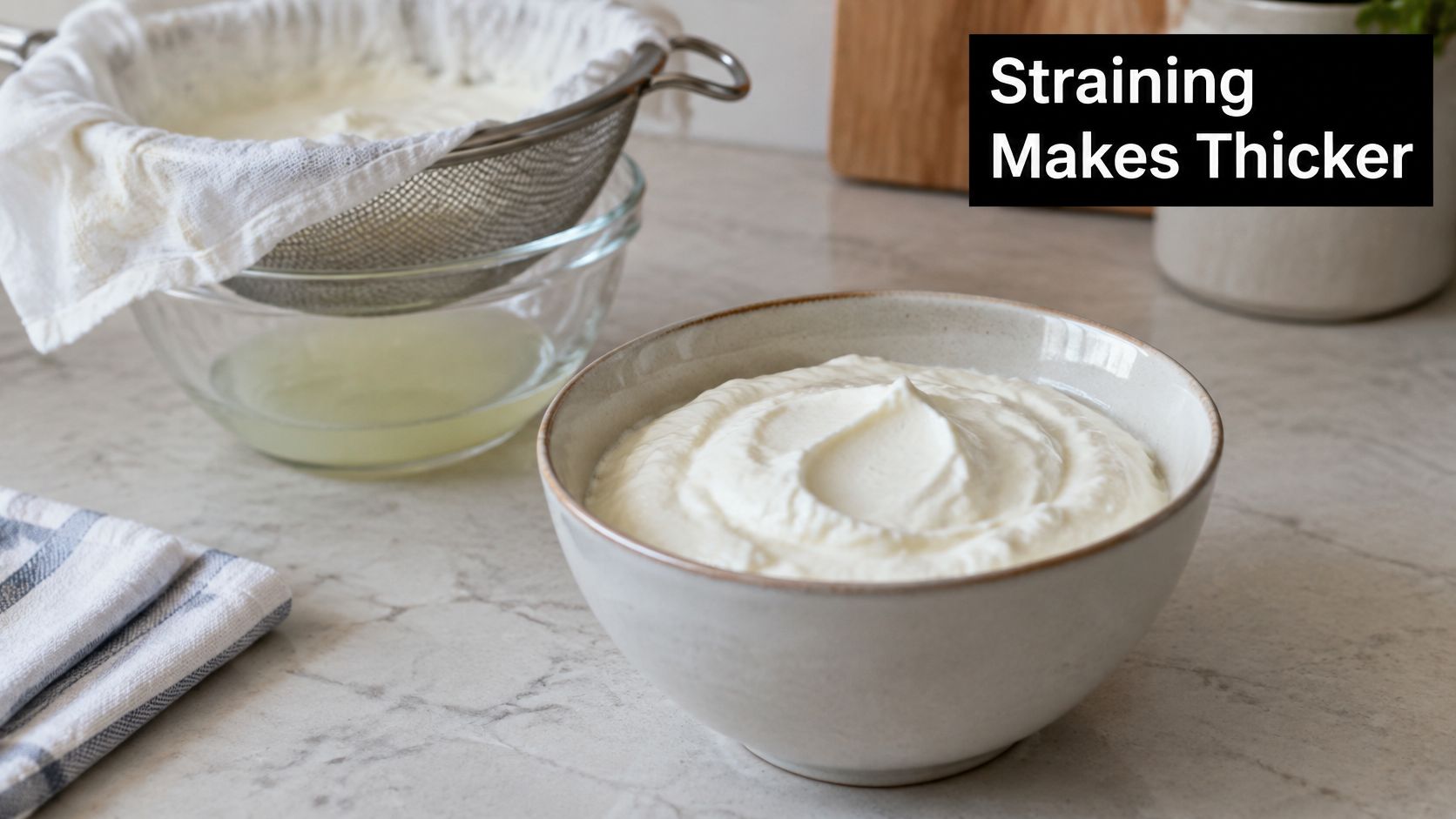
The bowl below shows the end point you're aiming to recognise, thick yogurt beside whey that's been allowed to drain.
What changes in each spoonful
First, protein per spoonful rises because you've removed water, not because new protein appeared. The same solids now sit in less liquid. That's also why a small serving can feel filling.
Second, texture changes from soft and loose to thick, smooth and spoonable. It holds its shape on flatbread, stays in a dip and doesn't run across the plate. Flavour becomes more concentrated too, usually a clean tang with a creamy finish rather than a thin, sharp sourness.
Third, some lactose leaves with the whey, so the taste is often less sweet than regular yogurt. Don't treat that as lactose free. It means the balance has shifted toward solids and away from the watery fraction.
Yogurt | How it is made | Protein per 100 g | Texture | Taste |
|---|---|---|---|---|
Strained Greek yogurt | Whey strained out after fermentation | About 9-10 g (nonfat) | Thick, dense, spoonable | Tangy, mild, creamy |
Regular plain yogurt | Set in the pot, not strained | About 3-4 g | Soft, loose, spoonable | Lighter, sharper tang |
Laban | Thinned yogurt, drunk or stirred into dishes | Not reliably published | Thin, pourable | Sour, refreshing |
Why laban belongs in the comparison
Laban is the thinner, pourable fermented milk drink that's common across the Arab world. It isn't failed Greek yogurt. It's made for a different job, drinking and refreshing rather than scooping and spreading.
Reliable common reference figures for laban protein aren't published in the way they are for standardised tubs, so the table marks that cell as not reliably published instead of guessing. Judge laban by texture and use, not by forcing it into a protein contest.
Watch the straining step in motion if the sponge picture still feels abstract, especially how much clear whey leaves a batch that started as ordinary yogurt.
The practical rule is simple. Thicker yogurt behaves like a base that can carry garlic, herbs, cucumber or honey without going runny. Thinner yogurt behaves like a drink or a light sauce ingredient. Neither is better in the abstract.
When Laban or Regular Yogurt Works Better
UAE kitchens didn't wait for Greek yogurt to arrive before using fermented dairy well. Laban with bread, rice and grilled meats, yogurt stirred into everyday dishes and labneh on mezze plates are familiar habits. Authentic Greek yogurt fits into that culture, but it doesn't replace every part of it.
Mordor Intelligence reporting on the UAE dairy market describes yogurt as one of the faster-growing dairy categories, linked to health awareness and demand from the country's diverse expatriate population, while dairy-based fermented products remain a major part of UAE fermented food consumption. That background explains why the useful question isn't which yogurt wins overall. It's which texture, acidity and cost suit the meal in front of you.
Choose by the job
Laban wins when you want to drink something cold and sour on a hot afternoon. It's thin, refreshing and easy to pour, and it blends into some soups and traditional dishes without making them heavy. Trying to drink strained yogurt in the same way feels like eating a meal through a straw.
Regular plain yogurt wins for much everyday cooking. It's usually cheaper, looser and easier to stir through rice dishes, batters and simple sauces where extreme thickness adds nothing. If you're feeding a family often, that cost difference matters more than a dense texture nobody asked for.
Use | Better choice | Reason |
|---|---|---|
Cold drink on a hot afternoon | Laban | Thinner and easier to drink |
Dip, marinade or thick sauce | Strained Greek yogurt | Dense body clings to food |
Cooked sauce | Either, stirred in off the heat | Both can split if boiled |
Everyday cooking on a budget | Regular plain yogurt | Lower cost and works in most recipes |
Breakfast with honey and nuts | Strained Greek yogurt | Thick, protein-rich base |
Heat is the shared weakness. Boiling can split both Greek and regular yogurt, leaving grainy curds in a sauce that looked smooth a minute earlier. Take the pan off the heat, stir a spoonful of hot liquid into the yogurt first, then fold it back in gently.
If you're comparing fermented options for drinks as well as tubs, Pep Tea's kombucha and yogurt overview is a useful side read on how different fermented products fit different habits. The lesson transfers well to the UAE fridge. A drink, a dip base and a cooking yogurt don't need to be the same product.
A thinner yogurt isn't a downgrade when the recipe needs pourable and light. Match the tub to the task.
There's also the whey question. Straining always leaves liquid behind, so ask what happens to it instead of treating authenticity as waste free. At home, you can use whey in bread dough, pancakes or smoothies, which turns a by-product into an ingredient rather than tipping nutrition down the sink.
How to Strain Greek Yogurt at Home
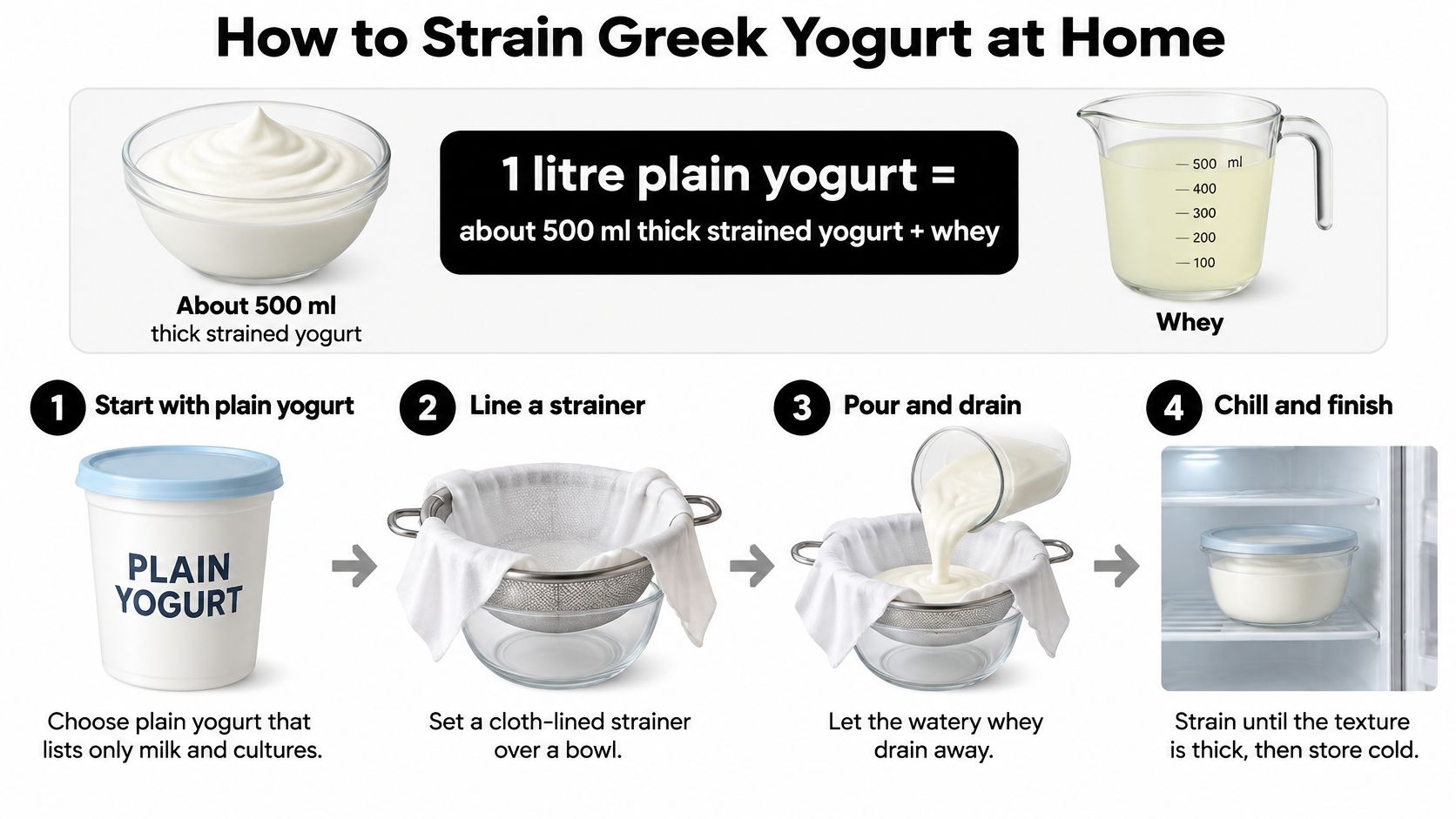
Start with the result so the quantities make sense. From 1 litre of plain yogurt, expect roughly 500 ml of thick strained yogurt, with the rest as whey. That halving surprises people the first time. It isn't loss through mistakes, it's the method working.
This visual summary puts the yield and the basic setup in one place before you work through the details.
Set up before you spoon anything
Start with plain yogurt that lists only milk and cultures. Full-fat gives a richer, less chalky result, especially for a first batch. Flavoured or sweetened yogurt strains unevenly and locks you into one use, so skip it.
Line a fine sieve with two layers of muslin or cheesecloth. Set it over a deep bowl with clear space below, so drained whey doesn't touch the cloth and slow the process. A coarse sieve without cloth is the common slip here, because soft curd slips straight through the holes.
Spoon the yogurt into the cloth. Spread it gently rather than pressing it down hard. Heavy pressing can force fine curd through the cloth and make the whey cloudy.
Drain it cold and check early
Cover loosely and refrigerate. Cold draining slows further souring while the whey leaves, so texture improves without the flavour running too sharp. Leaving it on a warm Dubai counter is where beginners often get an overly acidic batch.
Strain for 4 to 8 hours for a Greek texture. Check at 4 hours first. For a spreadable result close to labneh, leave it overnight, but know that longer isn't automatically better if you wanted a softer bowl for breakfast.
Stop when the texture matches the job. For dips, you want it to hold a spoon trail. For breakfast, a slightly looser finish eats better with fruit and honey.
Texture test: A clean spoon should stand upright briefly in the strained yogurt, and a spoonful should hold its shape instead of slumping flat.
Scrape it into a clean container. Lift the cloth and use a spatula to collect every bit from the edges, where it gets thickest. Keep the whey in a separate jar for baking, smoothies or soups rather than stirring it back in by habit.
Refrigerate and use within about a week. Keep the lid on and use a clean spoon each time. A little whey pooling on top after a day or two is normal. You can stir it in or pour it off for a firmer bite.
If your first batch is thinner than expected, don't add anything to fix it. Return it to the cloth for another hour and check again. Time and drainage are the authentic tools here, and they're easier to control than powders.
Good results look plain in the best way. The surface is matte and smooth, the spoon leaves a clean mark, and the flavour is tangy without biting. Once you've felt that texture at home, shop bought imitations become much easier to spot.
Recipes and Everyday Uses for Greek Yogurt
Build your uses around what strained yogurt does well, holding shape, clinging to food and adding tang without flooding the plate. In Dubai, that means it sits naturally beside mezze, flatbread, grilled meats and rice. You don't need a separate Greek night to use a tub well.
Dips and marinades that show the texture
Tzatziki is the clearest test. Stir strained yogurt with grated cucumber, crushed garlic, chopped dill, lemon juice, salt and a little olive oil. Squeeze the cucumber dry in a clean cloth first, because its water will undo your straining in minutes if you skip that step.
For a marinade, mix strained yogurt with lemon juice, garlic, salt and spices such as paprika, cumin or oregano, then coat chicken or lamb and refrigerate for 4 to 12 hours. The gentle acid tenderises the surface while the thick yogurt stays in place. Wipe off excess before grilling so it browns instead of steaming.
Thin a spoonful with water, lemon and herbs for a quick sauce over grilled meats, roasted vegetables or falafel wraps. Keep it cold or add it at the table. If a warm sauce needs yogurt, stir it in off the heat at the end so it stays smooth.
Breakfast and simple desserts
A breakfast bowl needs little more than strained yogurt, honey, walnuts or pistachios and fresh fruit. The thick base carries crunchy toppings without turning soupy. If you're comparing crunchy toppers and sugar levels, choosing granola in Australia offers a helpful checklist mindset you can apply to labels in UAE shops too, even though brands differ.
For dessert, spoon strained yogurt with date syrup and chopped pistachios, or fold it into lightly whipped cream with a pinch of cardamom for berries. Keep portions small at first. The density that makes it satisfying at breakfast can feel heavy after a large meal.
Cucumber rule: Salt grated cucumber lightly, wait ten minutes, then squeeze it hard before it meets the yogurt.
Marinade limit: Don't leave delicate fish in yogurt and lemon for hours, because the acid will turn the surface mushy.
These ideas also connect with wider Mediterranean dairy cooking, from soft cheeses to strained curds. Our guide to Italian dairy products and how they are used is a good companion if you enjoy comparing how neighbouring food cultures handle milk, whey and freshness.
Start with tzatziki if you want one quick test of a new tub. It shows thickness, tang and salt balance in a single bowl. If the dip stays firm after thirty minutes in the fridge, your yogurt is doing its job.
Buying and Storing Greek Yogurt Safely in the UAE
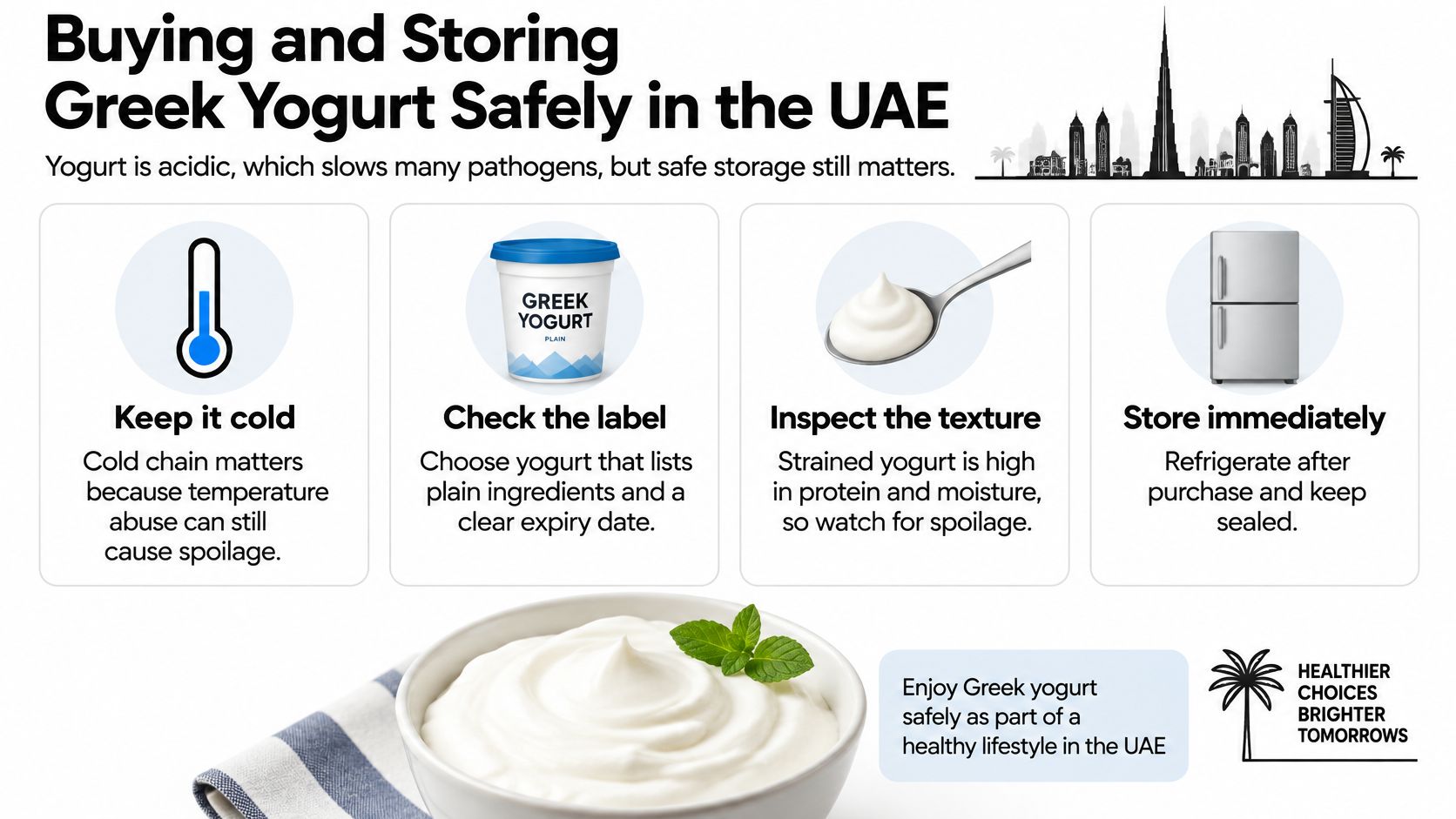
How can you tell whether a tub of Greek yogurt will stay safe from shop chiller to home fridge? Its acidity helps limit some microbes, but it does not make warm storage harmless. In the UAE heat, the trip from chiller to car to fridge can put the cold chain at risk.
Why the cold chain still matters
The United States Code of Federal Regulations yogurt standard describes standard yogurt cultures, including Lactobacillus delbrueckii subsp. bulgaricus and Streptococcus thermophilus, and sets a benchmark of pH 4.6 or lower within 24 hours after filling. Low pH can suppress many competing microbes, but yeast, mould and contamination after processing can still affect safety and quality. UAE food safety rules and local municipal inspections govern labelling, expiry dates and whether products are suitable for retail sale.
For businesses receiving stock, check that refrigerated transport has been maintained, seals are intact and each lot can be traced. Confirm the product is cold and has enough shelf life for sale. Reject tubs that are swollen or leaking, and check for unusual whey separation. Once opened, date-mark containers and use clean utensils to reduce contamination from handling.
A simple shop to fridge checklist
In store: Choose packs with intact seals, check the expiry date and take a tub from the back of the chiller.
On the way home: Use an insulated bag and keep the trip short. A parked car in Dubai heat can warm a tub quickly.
At home: Keep the tub covered in the fridge and use a clean spoon each time you serve it.
Good cold handling matters for other fresh dairy, too. The guidance in this article on burrata cheese in Dubai applies to another delicate cheese that can lose quality if left warm.
After opening, use strained yogurt within about a week. A thin layer of whey is normal and can be stirred back in. Discard the yogurt if it develops an unusual sharp smell, pink or dark mould, a swollen lid or a fizzy taste.
If the tub has been warm or its seal is damaged, discard it even if the date has not passed.
Pick Your Authentic Greek Yogurt Before Your Next Batch
Which tub will suit your next batch best? Start with the label, then judge the yogurt by how it behaves in your recipe. A front-label claim such as “Greek-style” does not tell you the full story.
Check the ingredient list first. Milk and cultures are a simple starting point; cream may also appear. Then compare the stated fat class and protein content across plain yogurts. A thicker, strained yogurt is often a better fit for dips and breakfast bowls, while laban suits cold drinks and regular yogurt can be the more practical choice for everyday cooking.
Match, carry and test
Choose for the job, not just the name. For a repeatable texture check, make tzatziki or strain plain yogurt at home. If straining, use 1 litre and check the result after 4 to 8 hours. A spoon that stands upright suggests a thicker result, which may suit a dip better than a pourable sauce.
Keep a note of the brand and the texture you got. That gives you a useful comparison next time you shop, without relying on front-label promises.
IFM Gourmet Food Store sells premium Italian gourmet food online in Dubai and the UAE. Its range includes artisanal Italian ingredients and delicacies, such as gelato, fine chocolates, teas and curated gift hampers.
Choose one yogurt for your next batch, check its label, and see whether its texture suits the dish. The best choice is the one that works for your recipe, whether that is Greek yogurt, laban or regular yogurt.
For a breakfast or mezze spread, browse IFM Gourmet Food Store for Italian gourmet ingredients, fine chocolates, premium teas and curated gift hampers.


Comments