
Cacio E Pepe Recipe: How to Get a Silky, Clump-Free Sauce

The pasta's ready, the cheese is grated, and dinner should be simple. Then the Pecorino catches on the hot pan, turns into strings, and leaves you with watery spaghetti. A good cacio e pepe recipe prevents that moment by controlling the water, starch and heat before the cheese goes in.
You don't need cream or butter to make the sauce silky. You need finely grated cheese, enough starch to keep it dispersed, and a pan that's warm rather than scorching. In a warm UAE kitchen, having everything measured and the bowls ready makes the finish much easier.
Choosing Cheese, Pasta and Pepper for Best Results
Pecorino Romano gives cacio e pepe its sharp, salty flavour. Parmigiano-Reggiano is milder and nuttier; use it for a gentler sauce or blend it with Pecorino. The cheese you choose affects how much salt the pasta water needs, so taste a small piece first.
Grate the cheese finely for easier mixing. This guide to grated Parmesan cheese explains the alternative to Pecorino.
Cheese and pasta options compared
Option | Flavour and texture | Salt level | Sauce behaviour | Best use |
|---|---|---|---|---|
Pecorino Romano | Sharp, salty, sheep's milk | High | Gives the sauce its characteristic flavour | Traditional choice |
Parmigiano-Reggiano | Mild, nutty, cow's milk | Lower | Milder flavour; may need more water when tossed | Gentler version or blend |
Bronze-die spaghetti | Rough surface, grips sauce | Not applicable | Holds the sauce well | First choice |
Smooth extruded spaghetti | Slick surface, less grip | Not applicable | Sauce may cling less readily | When bronze-die isn't available |
Choose ingredients that make the finish easier
Bronze-die spaghetti gives the sauce more surface to cling to. Smooth spaghetti can still work, but its cooking water may behave differently depending on the brand, cooking time and amount of water.
Choose freshly cracked black pepper in coarse fragments rather than powder. Toast it briefly in a dry pan, just until fragrant. Scorched pepper turns bitter. For equipment ideas, see this grinder advice for UK catering kitchens.
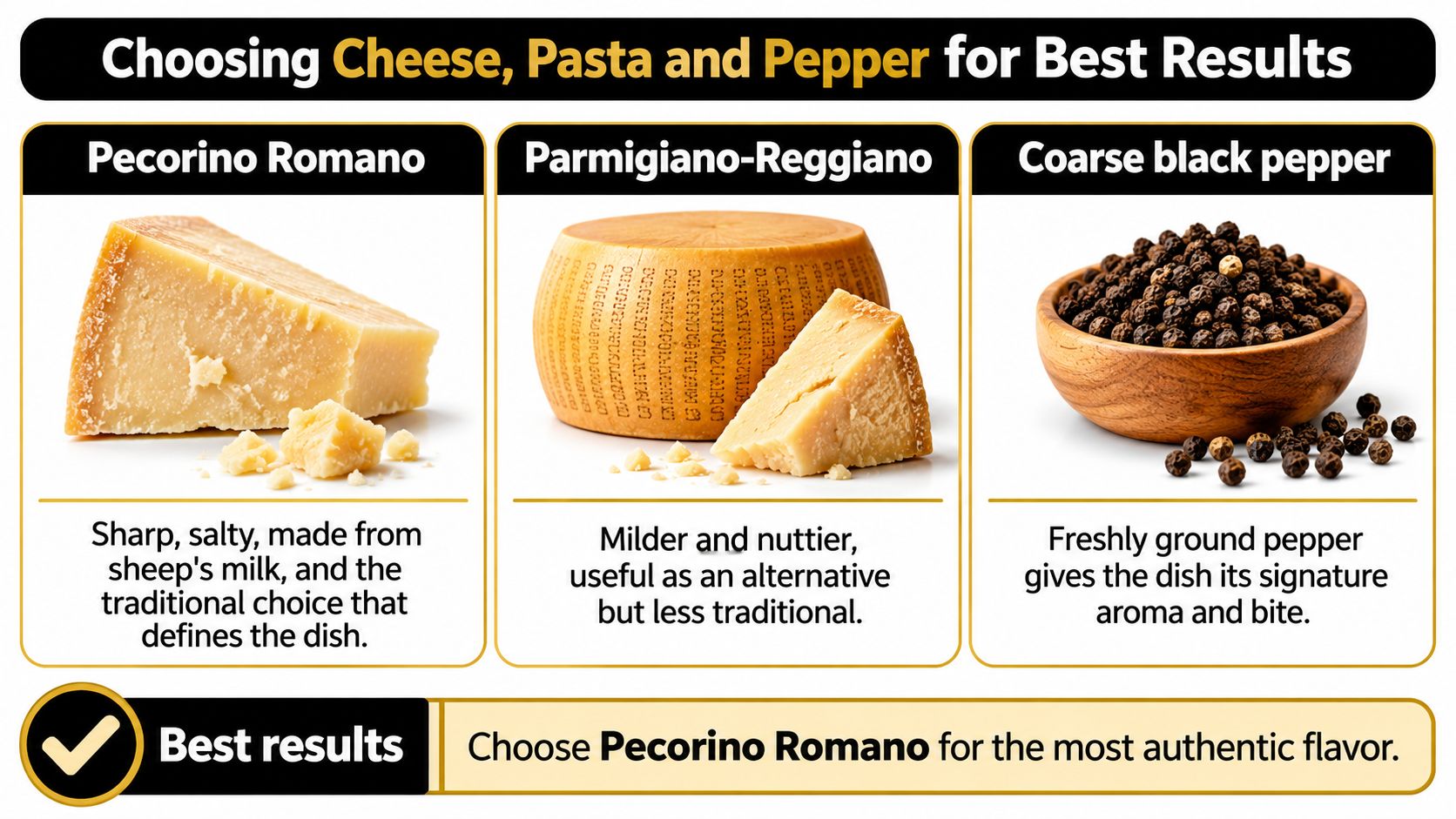
For a traditional flavour, pair Pecorino Romano with bronze-die spaghetti and freshly cracked pepper. If the cheese tastes especially salty, keep the pasta water lightly seasoned.
Ingredients and Quantities for Two Servings
Set out the pasta, cheese, pepper and a jug for reserved cooking water before you switch on the hob. The following is a practical batch for two, with extra reserved water available for adjustments rather than an instruction to pour it all into the pan.
Ingredients for two servings
Ingredient | Amount for two | Note |
|---|---|---|
Dried spaghetti or tonnarelli | 200 g | Bronze-die pasta holds the sauce well |
Pecorino Romano, finely grated | 100 g | Grate fresh into a fine, fluffy pile |
Black pepper, coarsely cracked | 2 teaspoons | Toast briefly in a dry pan |
Salt for cooking water | Light pinch | Pecorino is already salty |
Cooking water | About 2 litres | Use a wide pot |
Reserved pasta water | 200–300 mL | Start with about 100 mL for the sauce and add gradually |
Weigh the cheese, rather than judging a mound by eye. A fluffy pile and a tightly packed cup can look similar but behave differently once mixed with water. Use the cooking-water jug to control additions instead of pouring directly from the pot.
A wide pot lets you move the spaghetti without snapping it. Stir as the strands soften, and keep enough water around them to cook evenly; concentrated starch is useful, but pasta stuck to the bottom isn't.
Preparation rule: Have the cheese grated and the water jug beside the hob before draining. The finishing stage isn't the time to search for equipment.
Use verified potable water. The UAE Water Quality Regulations specify total dissolved solids of 100–600 mg/L; Dubai guidance separately sets a 4 NTU turbidity limit. Avoid heavily mineralised or poor-tasting water, and consider its taste before adding salt.
Starch, Ratio and Temperature Targets for a Stable Sauce
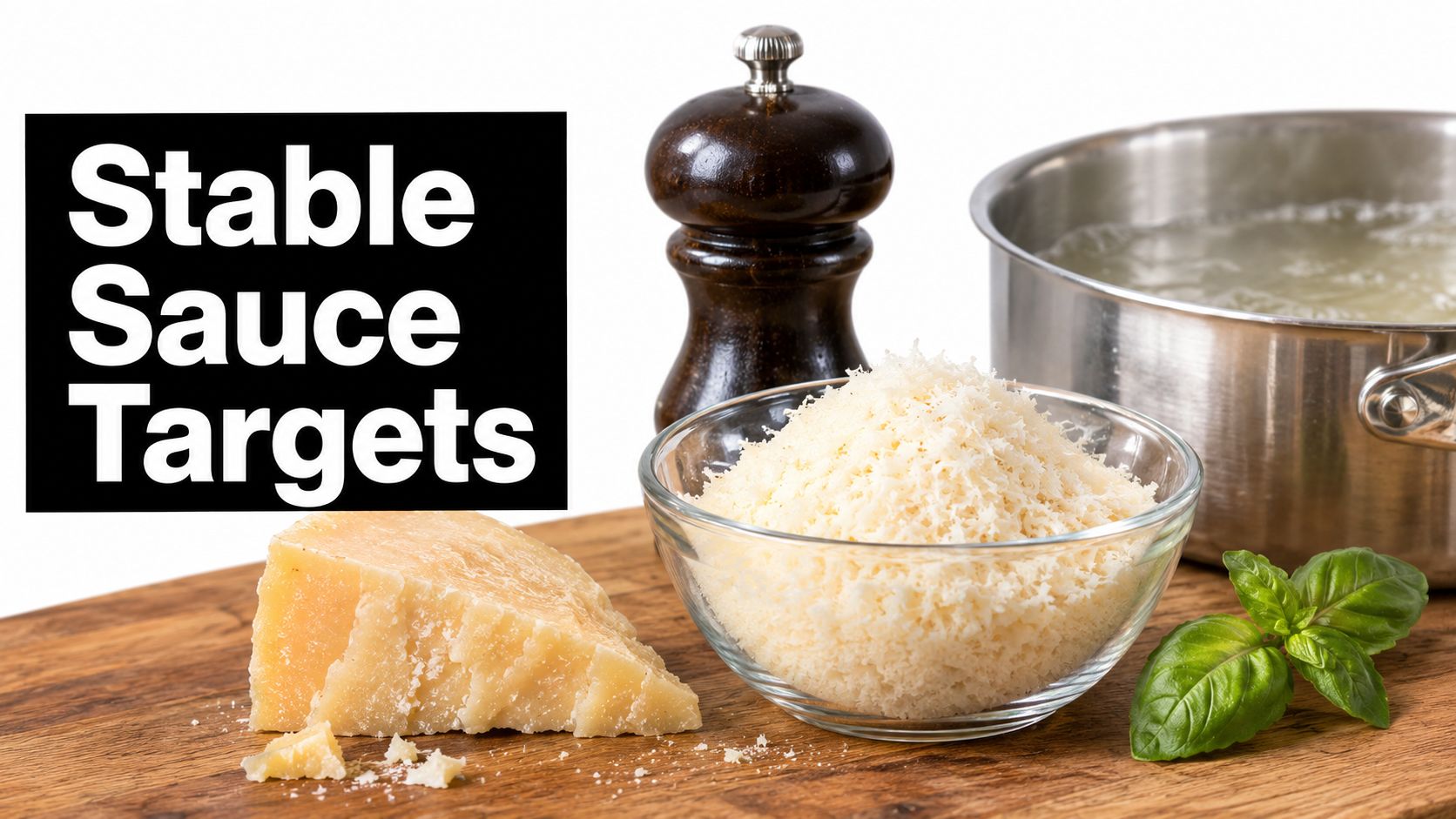
The useful targets are measurable, but they aren't a promise that every pasta brand will behave identically. CNN's account of cacio e pepe food-science findings identifies approximately 2–3% starch relative to cheese weight, a near 1:1 cheese-to-water mass ratio, and water cooled to about 55–60°C before incorporating the cheese.
Stability targets for the sauce
Target | Value | Off-target result |
|---|---|---|
Starch | 2–3% of cheese weight | Below 1% can be unstable; above 4% can become stiff and gelatinous |
Cheese to water | Near 1:1 by mass | Excess water thins the sauce |
Water temperature | About 55–60°C before meeting the cheese | Excess heat encourages clumping |
Serving timing | Plate at once | The sauce changes consistency as it sits |
These are working targets, not a reason to add every drop of reserved water. Water clinging to the pasta also enters the pan, so judge the sauce as you toss.
Use a measured gel when pasta water is unreliable
In this recipe's example batch, the starch target translates to 2–3 g starch for the weighed cheese. If you want a controlled method, whisk that measured cornstarch into cold water taken from the sauce-water allowance, then heat while stirring until it forms a smooth gel. Let it cool before combining it with cheese.
Use this instead of relying on unknown pasta-water starch, not as an automatic addition to already concentrated cooking water. Otherwise, you can overshoot and make the sauce gummy.
Pasta-water starch changes with the pasta-to-water ratio and cooking time. Reserving a larger jug doesn't make the water more concentrated. If the water is weak, repeatedly adding it may dilute the cheese.
Check the pan as well as the water
A probe thermometer is the clearest check. Without one, take the pan off the hob and allow vigorous steaming and sizzling to stop before adding cheese. Don't test hot water with your fingers; touch isn't a reliable temperature measurement.
The finished sauce should fall from a spoon in a glossy ribbon, then settle rather than stand like paste. In a warm UAE dining room, plate promptly rather than leaving the pan waiting while you prepare the table.
How to Make Cacio e Pepe Step by Step
Keep tongs, a ladle and your grated cheese within reach. Use a wide finishing pan so you can turn the strands through the sauce without packing them tightly together.
Cook and prepare the finishing pan
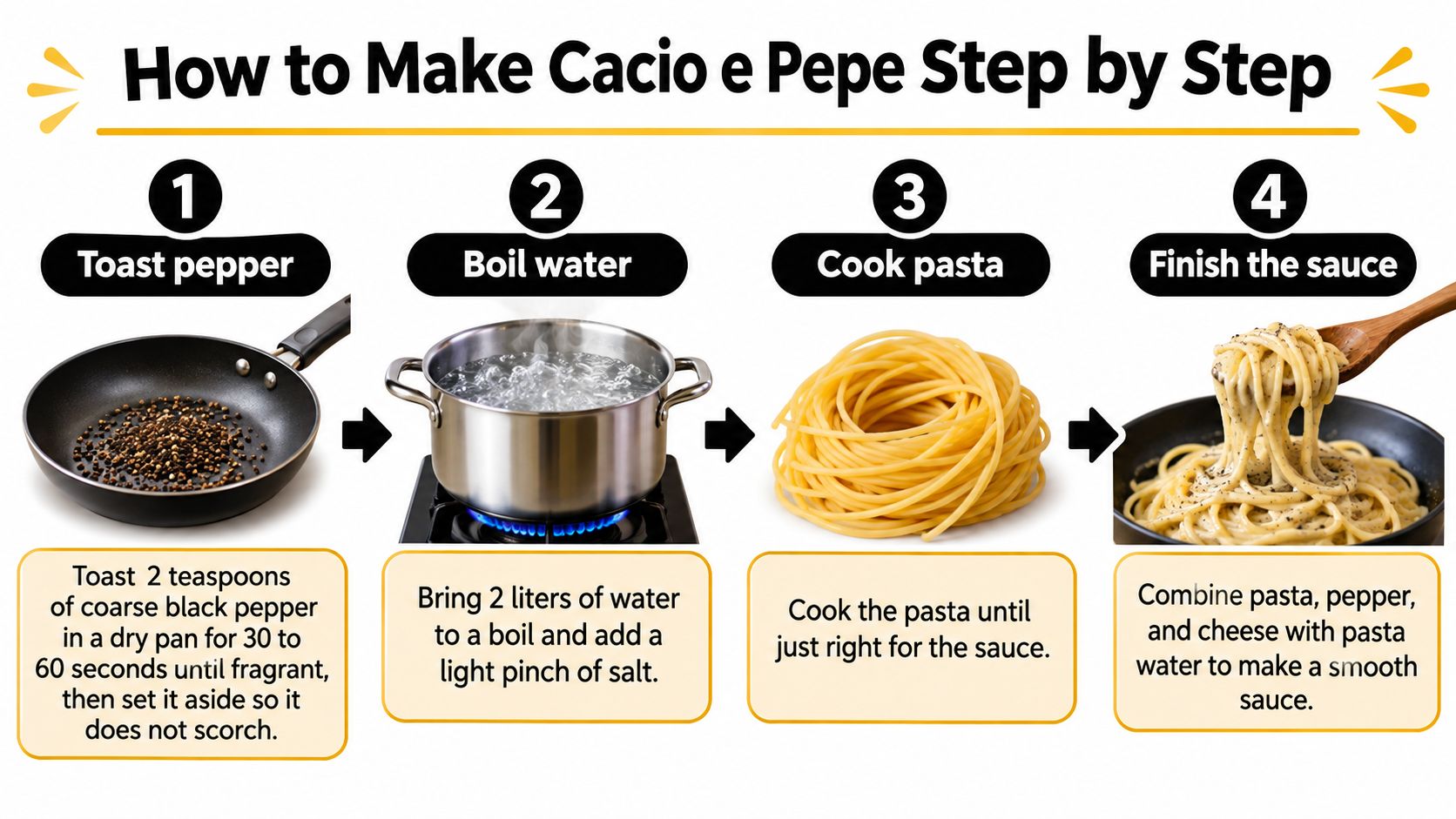
Toast the pepper. Put the measured pepper in a dry pan over gentle heat for about 30–60 seconds, stopping when it smells fragrant. Tip it out so residual heat doesn't scorch it.
Bring the cooking water to a boil and add a light pinch of salt. Cook the spaghetti until just short of al dente, checking before the packet time finishes; it should bend easily but retain a firm centre.
Reserve the cooking water before draining. Ladle the recipe's reserved amount into a jug and let the portion intended for cheese cool toward the working temperature. Don't replace it with cold tap water, which supplies no pasta starch and cools the mixture abruptly.
Build the sauce off the heat
Transfer the drained pasta into the finishing pan with a splash of reserved water. The pan must be off direct heat and no longer scorching; if the water spits fiercely, let the vessel cool further.
Add the finely grated Pecorino in three or four small handfuls, tossing continuously between additions. Dumping it in at once leaves a dense mass that's difficult to disperse.
Add the toasted pepper, then adjust with warm reserved water a tablespoon at a time. Turn and lift the strands until the cheese-water mixture coats them; stop adding water when the sauce clings without collecting underneath.
Serve in warm bowls immediately. Finish with a little extra pepper if wanted, but don't leave the pasta on the hob while arranging garnishes. Success looks like glossy strands with no strings of cheese or watery pool.
Cheese forming strings is a signal to stop heating, not to turn the burner up.
Food-safety fact box
The Dubai Municipality Food Code identifies mishandled pasta and cereal foods as a Bacillus cereus risk: hold hot food at 60°C or above, or cool from 60°C to 20°C within 2 hours, then to 5°C within a further 4 hours, with a 72-hour maximum refrigerated-use window.
Those holding limits protect food safety, not sauce quality. Immediate service still gives the best texture; keep a cooking-time note if any portion will become leftovers.
Common Mistakes and How to Fix Them
Clumping usually means excessive heat or poorly dispersed cheese. Stop adding ingredients until you've taken the pan away from the burner. More heat won't melt stubborn curds back into a smooth sauce.
Look at the liquid around the pasta before choosing a fix. Clear oily patches suggest separation, while cloudy water beneath otherwise smooth strands suggests dilution.
Sauce problems, causes and fixes
Symptom | Likely cause | Fix |
|---|---|---|
Clumps or stringy cheese | Pan too hot or cheese added all at once | Remove from heat and add warm water a tablespoon at a time |
Oily, broken sauce | Overheating separated the cheese fat | Add a splash of warm pasta water and toss |
Thin, watery sauce | Too much water or too little cheese | Add finely grated cheese in small amounts while tossing off heat |
Gummy, stiff sauce | Too much starch or the sauce has cooled | Loosen with warm water and serve promptly |
Flat, dull flavour | Stale or pre-ground pepper | Add freshly cracked pepper, briefly toasted |
Try a brief recovery before making bigger changes
Take the pan off the heat, add a small spoonful of warm reserved water and toss firmly. Pause to inspect the coating before adding more. Vigorous mixing can bring a slightly separated sauce together, but severely overheated cheese may remain grainy.
For a thin sauce, add cheese cautiously rather than tipping in a large handful. Check the taste as well as the thickness, because every addition also increases the saltiness. Don't boil away excess water once the cheese is incorporated.
Rescue check: If the sauce improves with tossing, keep mixing. If it gets stringier with heat, stop heating.
Say you're serving friends in Dubai and the first bowl tightens while you finish plating the others. A small splash of warm water and a gentle turn with tongs can loosen that portion. Send it out promptly rather than putting the whole batch through another heating cycle.
Stale pepper is a different problem: extra water won't restore its aroma. Crack a fresh portion, toast it gently and add it sparingly so the pepper supports the cheese instead of overwhelming it.
Holding, Reheating and Leftover Safety
Plate cacio e pepe straight from the pan whenever possible. Hot holding can satisfy food-safety requirements while still giving disappointing pasta, because the strands continue absorbing moisture and the emulsion becomes harder to manage.
If you're keeping leftovers, start cooling promptly using shallow containers rather than leaving a deep pan on the counter. Record when the pasta was cooked, refrigerate within the cooling limits, and don't treat a warm UAE kitchen as temporary storage.
Rebuild the sauce carefully
Put the chilled pasta in a wide pan with a splash of water.
Heat gently while turning the strands so the centre warms evenly.
Add warm water in small spoonfuls as the sauce loosens.
Once the pasta is thoroughly hot throughout, plate and serve promptly.
Low heat is a texture technique, not permission to serve lukewarm leftovers. Follow applicable reheating requirements and avoid repeatedly cooling and reheating the same batch.
Expect a softer pasta texture than the freshly cooked version. You're rebuilding a chilled sauce, not recreating the original finish, so add liquid patiently rather than chasing it with a hot burner.
Authentic Variations and Serving Notes
A little cornstarch can preserve the flavour of cacio e pepe, but it is a modern technique aid. It doesn't turn the dish into a cream sauce, and it doesn't replace Pecorino or pepper. Calling the technique strictly traditional would still blur a useful distinction.
The Columbia Science Review's discussion of cheese-sauce science explains starch's stabilising role and why naturally released pasta starch may be insufficient. That makes a measured gel a reasonable consistency tool, especially when repeatability matters more than keeping the method minimal.
Choose the method that suits the meal
Classic pasta-water emulsion: The simplest ingredient list and the traditional approach, but the cook must judge starch concentration and heat carefully.
Concentrated pasta water: Cooking with less excess water can strengthen the starch contribution, although you need to stir and watch for sticking.
Measured starch gel: More reproducible for beginners or busy service, but it introduces weighing, a separate preparation step and a risk of gumminess if overused.
Flavour authenticity and technique authenticity aren't identical. You can retain the defining Pecorino-and-pepper character while acknowledging that a stabilised method is an adaptation.
Keep variations deliberate
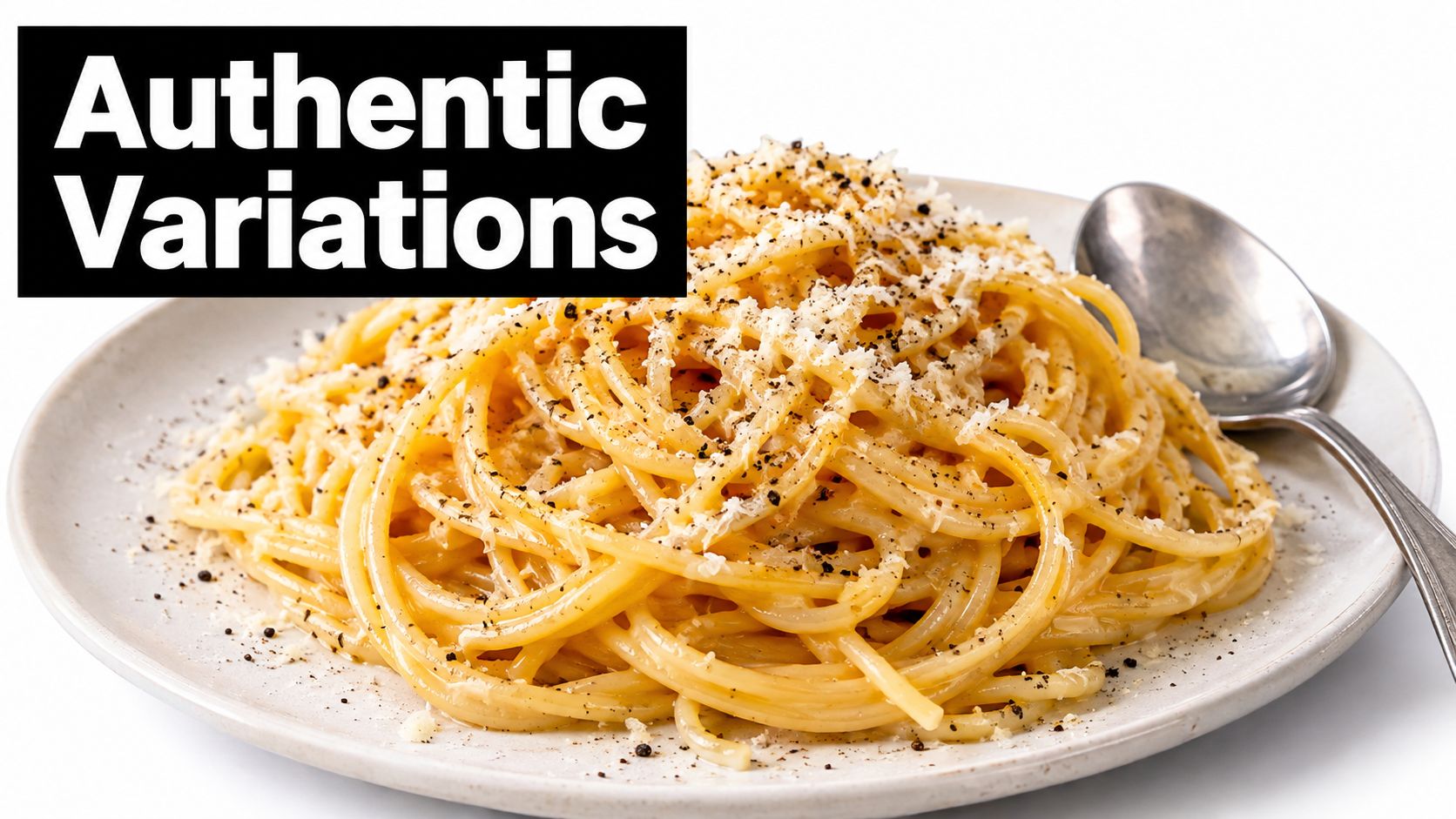
Use a Parmigiano blend if you prefer less bite, or add a little lemon zest at the table for freshness. Rigatoni offers a different eating experience, with sauce collecting inside the tubes. These are variations rather than reasons to change everything at once.
For broader pantry planning, our guide to essential ingredients in Italian cooking provides useful context. Keep this dish restrained, though: extra ingredients can quickly obscure the cheese and pepper you chose carefully.
Serve in warm, not scorching, bowls with optional Pecorino and pepper on top. A light first course, crisp green salad or grilled chicken keeps the meal balanced; a dry white wine is another option where appropriate.
Make Your Cacio e Pepe Tonight
A successful first batch comes down to preparation and controlled heat. Put the bronze-die pasta, Pecorino Romano and whole black pepper beside the hob, along with a kitchen scale. A probe thermometer can help you check the sauce temperature before adding the cheese.
IFM Gourmet Food Store in Dubai stocks bronze-die pasta, cheeses, artisanal sweets, fine chocolates, teas, cakes and curated gift hampers.
Make the next attempt easier
Measure before cooking: Set out the cheese, pepper and water jug before turning on the hob.
Record useful details: Note the pasta brand, water additions, any measured starch and the temperature when you add the cheese.
Adjust one thing: Change the pepper for flavour, the water for consistency or the cheese blend for sharpness. Changing one variable at a time makes the result easier to assess.
The store's team can help you select food products, offer cooking advice and suggest presentation tips. Ask for help choosing cheese or pasta if you're unsure.
Cook the measured batch, note the finishing temperature and plate as soon as the sauce turns glossy. A brief record gives you a concrete starting point for your next attempt.
Visit IFM Gourmet Food Store for bronze-die pasta, cheeses and Italian pantry ingredients for cacio e pepe. The team can offer product-selection advice and presentation tips. Prepare your ingredients before heating the pan.


Comments