

Italian Dairy Products: A Complete Guide for UAE Shoppers

You've brought home a beautiful burrata for a Dubai dinner, only to find that it has lost its shape before the guests arrive. Or perhaps you're choosing between Parmigiano Reggiano, mozzarella, ricotta, and mascarpone online, and the labels tell you what each product is called, but not what its purpose is. Italian dairy products make more sense when you choose them by moisture, texture, temperature, and function, rather than treating them as one long list of premium foods.
For a UAE home cook, that approach matters. Fresh dairy needs careful handling in a hot climate, while aged cheese rewards a different storage method and a different style of cooking. This guide builds the category step by step, from the five functional families to practical choices for weeknight meals, entertaining, gifting, and everyday refrigeration.
Understanding Italian Dairy as Five Functional Families
A Dubai shopper standing in front of a chilled gourmet cabinet may see mozzarella balls beside mascarpone, burrata, butter, and a wedge of hard cheese. They're all dairy, but they don't behave alike. A fresh mozzarella is moisture-rich and best served soon, while an aged cheese is concentrated, firm, and designed to be grated, shaved, or nibbled slowly.
The UAE has developed a significant and expanding market for Italian cheese. Italy exported 2,754 tonnes of cheese to the UAE in 2023, compared with 2,471 tonnes in 2022 and 2,209 tonnes in 2021, an annual increase of approximately 11% between 2022 and 2023 (Confcooperative market data). Those figures include both fresh and matured cheeses, reflecting demand from restaurants, hotels, gourmet retailers, caterers, and home kitchens.
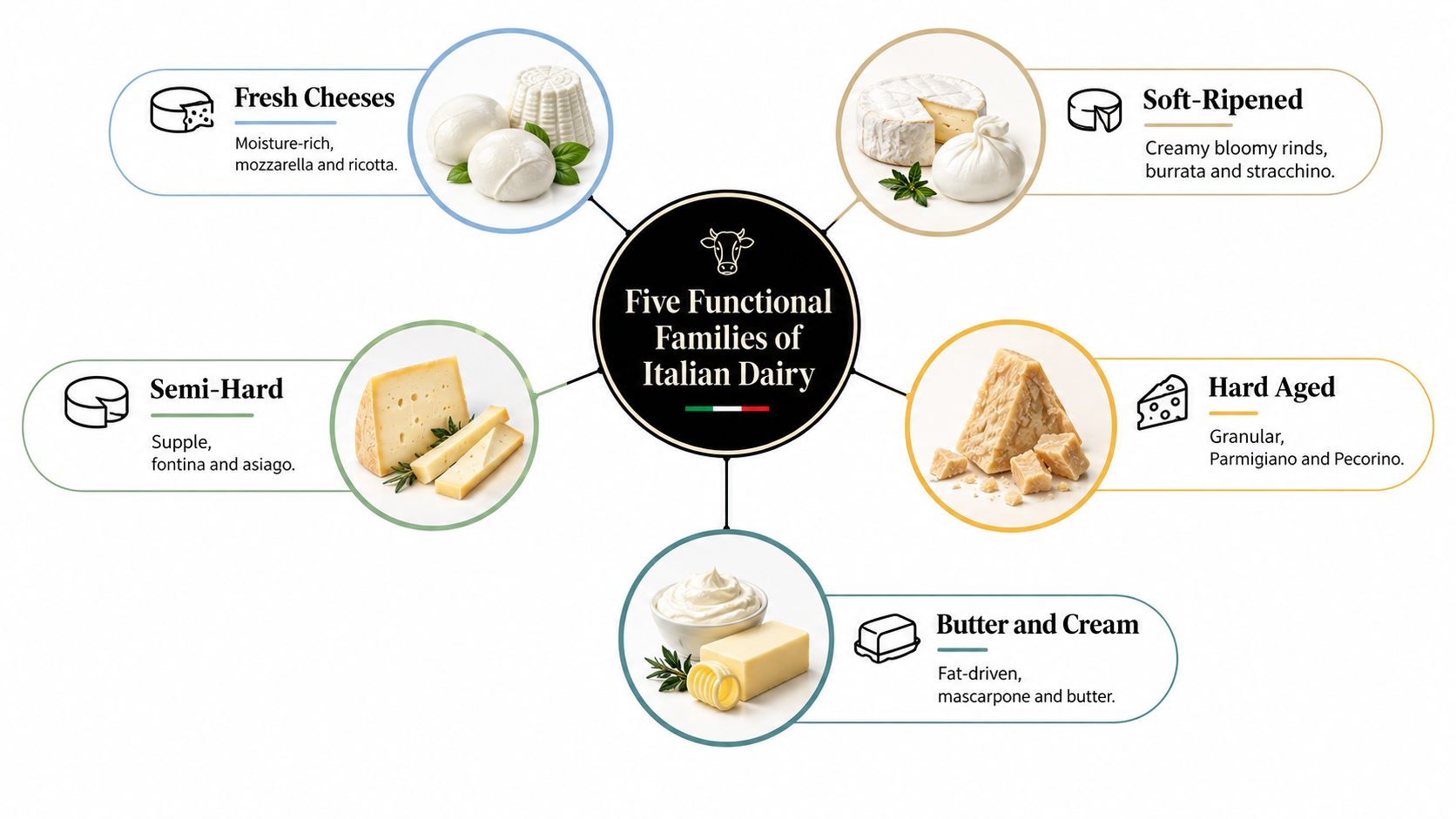
The five families at a glance
Aged hard cheeses are firm and granular. Parmigiano Reggiano and Pecorino add salt, savoury depth, and texture to pasta, soups, salads, and cheese boards.
Fresh stretched-curd cheeses include mozzarella and burrata. Their curd is stretched for an elastic, moist texture, making them ideal for quick serving.
Soft whey cheeses are represented by ricotta. It's lighter in texture and useful in fillings, baking, savoury spreads, and desserts.
Cultured creams include mascarpone and cooking creams. They bring richness and a smooth mouthfeel to both sweet and savoury recipes.
Cultured butters are fat-driven ingredients for spreading, baking, sauces, and finishing. Their flavour can be more pronounced than that of a neutral everyday butter.
This system gives you a simple shopping question: Do I need intensity, freshness, softness, creaminess, or cooking fat? Once you answer that, the product name becomes easier to interpret. A family pasta meal may need grated aged cheese, a weekend starter may call for burrata, and a dessert may need mascarpone rather than cream cheese.
Aged Italian Cheeses from Parmigiano to Pecorino
Aged cheese is the concentrated side of Italian dairy. As a cheese matures, it generally loses moisture and develops a firmer, more brittle structure. Flavour becomes deeper and more savoury, which means a small amount can have a strong effect in a dish.
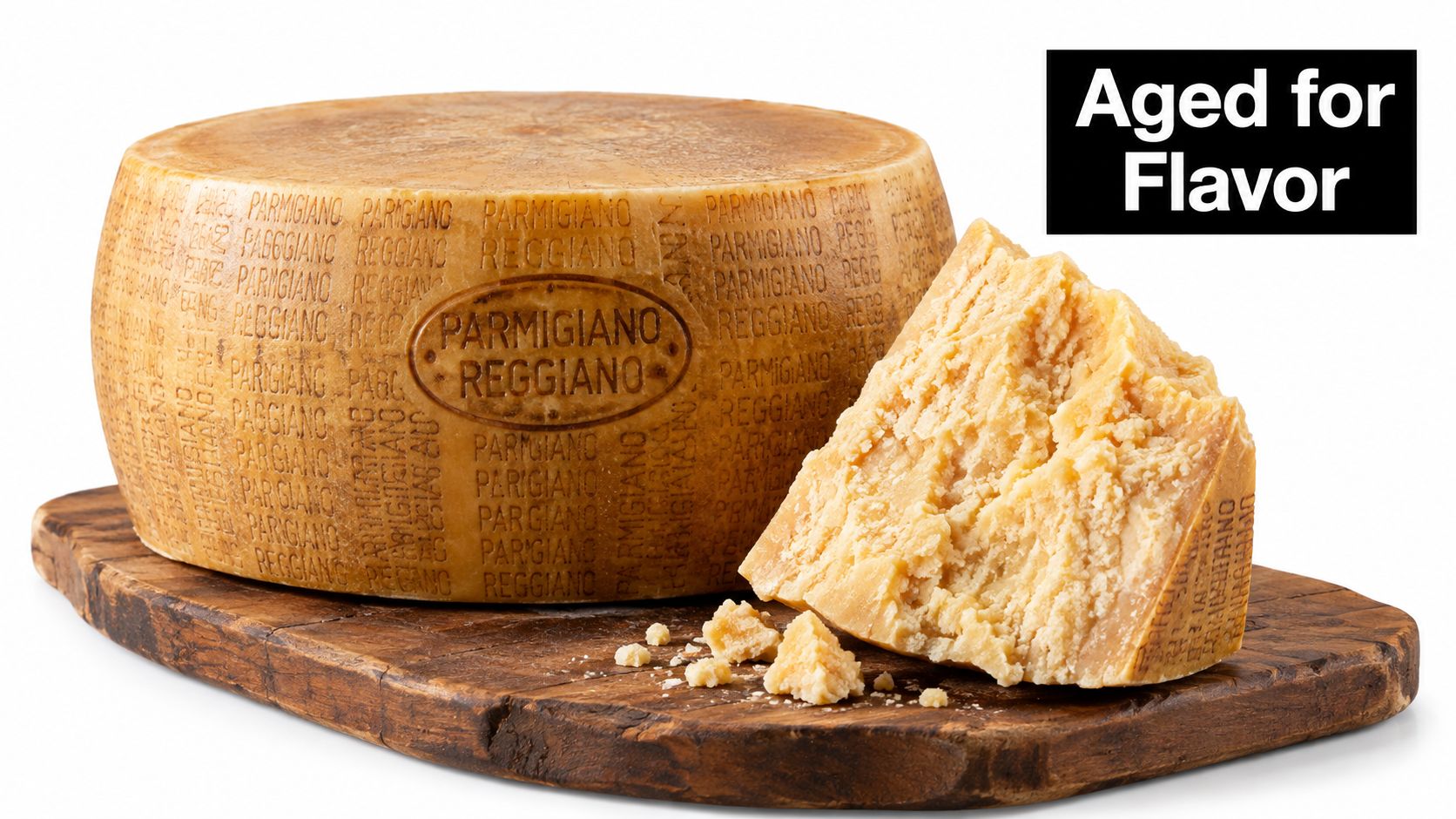
Parmigiano Reggiano is the essential reference point for UAE shoppers. A cited market assessment recorded 394 tonnes of Parmigiano Reggiano shipped from Italy to the UAE, identifying the country as one of the Middle East's largest and fastest-growing importers of hard Italian cheese (USDEC market assessment). That figure is a market benchmark rather than a current annual total, but it shows why this cheese deserves more attention than a generic “parmesan” label.
What maturation changes
You don't need to memorise every maturation category to shop intelligently. Instead, observe the relationship between age, texture, and use.
Younger aged Parmigiano Reggiano tends to be easier to cut and may work well in thin slices or balanced cheese boards. More mature cheese is drier, more granular, and more forceful, making it particularly effective when grated over pasta or shaved across vegetables. Longer maturation can also make the cheese more brittle, so it may produce smaller irregular pieces when cut.
DOP status matters because provenance is part of the product. Parmigiano Reggiano is not interchangeable with every cheese sold as parmesan-style. Check the name, protected-origin marking, maturation information, lot details, and country of production when the price reflects an authentic regional cheese.
Practical rule: Buy the maturation style for the task. Choose a supple wedge for eating, and a more intensely flavoured piece when you want the cheese to season a whole dish.
Use the rind in soups, broths, and sauces if it's clean and suitable for cooking. Remove the outer surface before using it, and keep the rind refrigerated in a sealed container until needed. Pecorino offers a different direction, with sheep's milk character and a more assertive savoury profile that can work beautifully with hearty pasta dishes and Mediterranean-style boards.
For tasting, let the cheese warm slightly in the mouth rather than judging it straight from a cold refrigerator. Notice whether it breaks cleanly, feels crystalline or crumbly, and leaves a long savoury finish. Those details tell you more about its kitchen role than the word “premium” alone.
Fresh Italian Cheeses from Mozzarella to Burrata and Ricotta
Fresh cheeses are defined by what they retain. Their higher moisture gives them a soft, juicy, delicate character, but it also makes them less forgiving during transport and storage. In the UAE, freshness is not only a matter of flavour. It's a temperature and timing issue.
Mozzarella is a stretched-curd cheese. The curd is worked until it becomes elastic, which creates the springy texture familiar in mozzarella balls, blocks, and fiordilatte. It works best when you let excess liquid drain briefly, then serve it with tomatoes, olive oil, basil, bread, or warm vegetables.
Burrata begins with a mozzarella shell, but its centre contains creamy stracciatella. That contrast explains its luxurious texture. Cut it open shortly before serving, spoon it over grilled bread or tomatoes, and avoid burying it under strongly flavoured ingredients that conceal its delicate centre.
Ricotta follows a different logic. It's a whey cheese, with a soft, slightly grainy texture rather than the elastic bite of mozzarella. Use it in pasta fillings, savoury tarts, pancakes, cheesecakes, or as a spread with herbs and olive oil. It can be the better choice when you want a gentle dairy layer rather than a dramatic centrepiece.
A quick fresh-cheese check
Mozzarella: Look for clear or clean-looking liquid, intact packaging, and a texture that isn't collapsing.
Burrata: Choose sealed packs without leaks, and plan to serve them promptly after opening.
Ricotta: Check that the surface looks fresh and the container hasn't swollen or released excessive liquid.
The food culture of southern Italy offers especially useful inspiration for fresh cheese. If you'd like regional context for tomatoes, bread, olive oil, and dairy combinations, take time to discover the flavors of Puglia from Princess Apulia®.
For a pizza-focused visual reference, this mozzarella product image shows how fresh mozzarella fits into a familiar Italian meal.
Serve fresh cheeses soon after taking them from the refrigerator, particularly if they'll sit on a table in a warm room. Keep them chilled until the last practical moment, and return leftovers to refrigeration promptly. For a simple UAE-friendly starter, combine burrata or mozzarella with ripe tomatoes, olive oil, black pepper, and toasted bread. The ingredients stay recognisable, and the cheese remains the focus.
Mascarpone Butter and Italian Cream Culture
Mascarpone belongs to the cream family rather than the stretched-curd family. Its texture is smooth, dense, and rich, so it behaves differently from cream cheese even when both appear in dessert recipes. Cream cheese generally brings more tang and structure, while mascarpone offers a softer, rounder richness.
That difference makes mascarpone a natural partner for tiramisu, but its use isn't limited to desserts. Stir it into a finished pasta sauce for body, fold it into a savoury filling, or combine it with herbs and seasoning for a spread. Add it gradually over gentle heat, because aggressive heating can change the texture of rich dairy.
Matching the ingredient to the job
Mascarpone is best when you want a smooth, creamy finish without a pronounced acidic note. It can soften bitter coffee, roasted vegetables, tomato sauces, and strong seasonings.
Italian butter works as a spreading, baking, and finishing ingredient. Cultured butter may contribute a more noticeable dairy flavour, which can be useful in pastry, browned-butter preparations, or simple dishes where the butter is easy to taste.
Panna da cucina, or Italian cooking cream, is designed for savoury preparation. It can provide a stable creamy base for pasta, mushrooms, chicken, or vegetables, but it still needs sensible heat control. No cream is indestructible, and overheating can cause separation.
For a smoother sauce: Reduce the other ingredients first, lower the heat, then add mascarpone or cream and stir until combined.
Keep unopened products according to their label instructions and refrigerate opened containers promptly. Use clean utensils, reseal the packaging, and judge the product by its declared use-by guidance rather than relying only on smell or appearance. In a Dubai kitchen, a small container may be more practical than a large one if you're cooking for a small household.
Think of these products as finishing tools. Butter carries flavour, cream rounds out a sauce, and mascarpone adds a rich, almost velvety texture. Choosing the right one prevents a common mistake, using every creamy dairy product as if it were interchangeable.
Choosing Authentic Italian Dairy in the UAE Market
Authenticity and food safety answer different questions. A protected-origin cheese may be genuine, but it still needs correct handling. Conversely, a well-chilled product may be safe to use, but it may not be the specific Italian cheese its label suggests.
Start with provenance. Look for the product's full name, origin, producer details, maturation information where relevant, and any applicable protected-origin designation such as DOP. With Parmigiano Reggiano, this distinction helps you separate a defined regional product from a generic parmesan-style alternative.
Next, evaluate the seller or importer. A credible listing should make the product identity clear and show practical information such as pack size, storage requirements, use-by date, and delivery conditions. This is particularly important for mozzarella, burrata, ricotta, and mascarpone, because high moisture leaves less room for poor temperature control.
The cold-chain questions that matter
Dubai's food-safety guidance says cold food should be stored below 5°C. The food code also requires high-risk foods to be cooled to 5°C or less within four hours, and thawed high-risk foods should be used within 48 hours from the start of thawing (Dubai food-safety guidance).
Translate those rules into actions at home:
Inspect delivery: Make sure chilled packs arrive cold, sealed, and free from leaks.
Check the label: Confirm the use-by date, storage instruction, origin, and lot information.
Organise quickly: Put fresh dairy into the refrigerator as soon as possible instead of leaving it beside the front door.
Separate damaged packs: Don't place leaking or swollen packages beside other foods.
Respect thawing: If a frozen product has begun thawing, keep it refrigerated and follow the applicable use guidance.
Temperature control also protects quality. Warm conditions can encourage microbial growth, separate whey, soften curds, and damage the texture that made you choose the product. A good buying decision therefore combines origin, documentation, packaging, and temperature.
For home delivery, ask practical questions before checkout. Does the seller identify the product clearly? Does the delivery process protect chilled foods? Will the item arrive with enough time for your planned meal? Those questions are more useful than choosing based on packaging alone.
Pairing Italian Dairy with Recipes and Occasions
The easiest way to remember Italian dairy products is to connect each family with a moment in the kitchen. Aged cheese supports cooking that needs depth, fresh cheese suits food served soon after preparation, and creamy products help create a smooth finish.
For weekday family cooking, Parmigiano Reggiano is the dependable seasoning cheese. Grate it over pasta, risotto, soup, roasted vegetables, or eggs. Ricotta works well in stuffed pasta and baked dishes, while mozzarella can finish pizza, pasta bakes, and simple salads.
Weekend entertaining calls for contrast. Burrata gives guests a soft centre to discover, especially when served with tomatoes, grilled bread, olive oil, or roasted peppers. Aged Pecorino or Parmigiano can sit beside fruit, nuts, bread, and preserves on a board, giving guests a firmer, more intense option.
Mascarpone serves both sides of the menu. Use it in tiramisu or a simple dessert cream, then use the remainder in a savoury sauce or spread. For recipe and food-culture ideas beyond dairy, you can read the TopFoodApp blog for additional inspiration.
Dairy Family | Best For | Ideal Occasion |
|---|---|---|
Aged hard cheeses | Grating, shaving, pasta, boards | Weeknight meals and formal entertaining |
Fresh stretched-curd cheeses | Salads, pizza, bread, quick starters | Weekend lunches and dinner parties |
Soft whey cheeses | Fillings, baking, spreads | Family cooking and light desserts |
Cultured creams | Tiramisu, sauces, desserts | Festive meals and pastry projects |
Cultured butters | Baking, spreading, finishing | Breakfast, baking, and host gifts |
For a pasta-oriented serving idea, this Italian pasta visual helps connect hard cheese and creamy dairy with everyday cooking.
Gifting requires a little more thought than assembling the most expensive products. Pair an aged cheese with pasta or balsamic vinegar for a cooking-led hamper, or combine mascarpone-friendly dessert ingredients with chocolates and premium tea for a sweeter presentation. Fresh cheeses need stricter timing and handling, so they suit planned delivery and immediate use better than a hamper that may sit unopened.
For Ramadan, Diwali, Christmas, or corporate occasions, a curated selection can balance everyday ingredients with presentation pieces. The best hamper reflects how the recipient eats, not just how much packaging it contains.
Buying and Storing Italian Dairy in the UAE
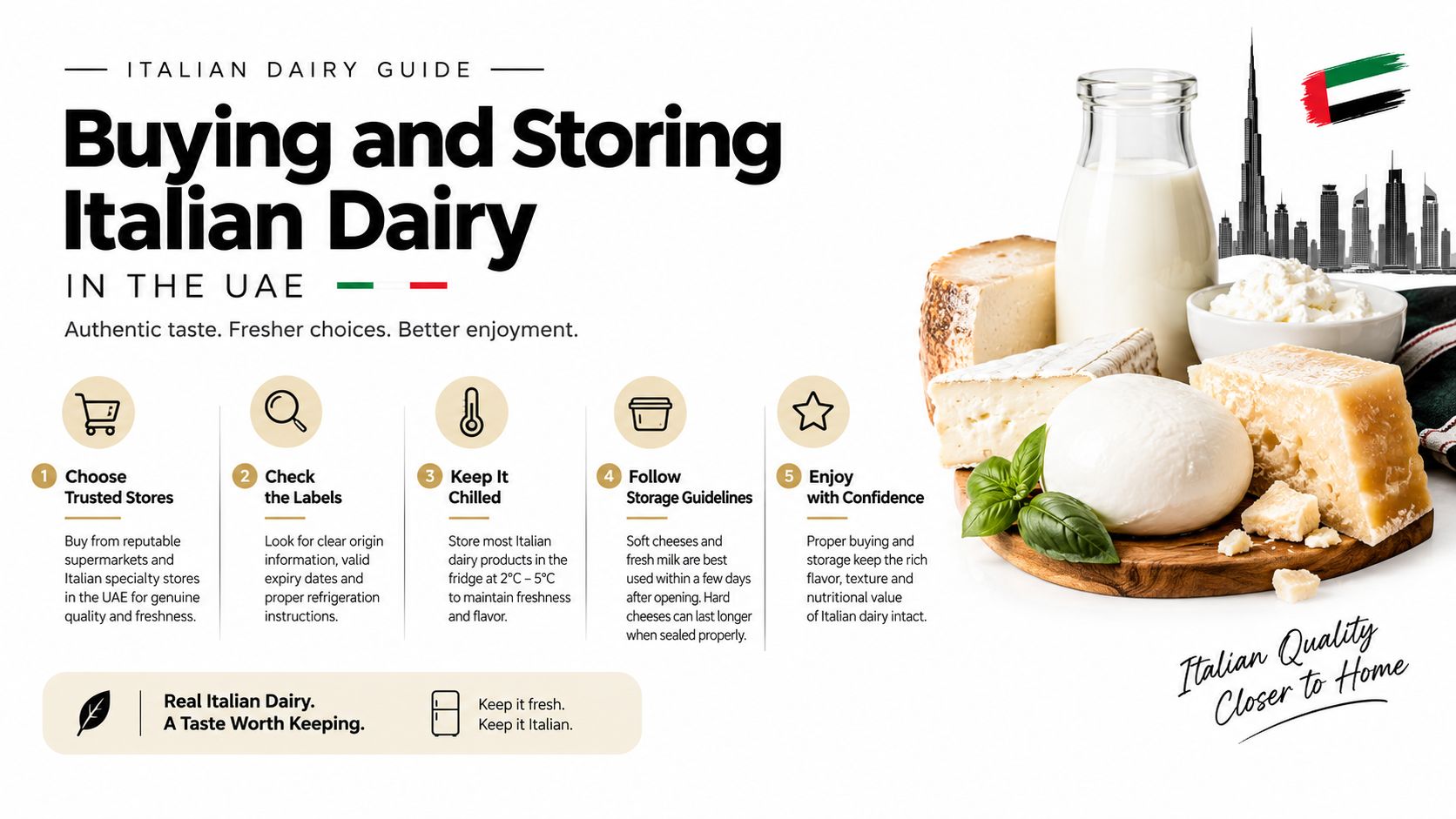
Build your home collection by function rather than by impulse. Start with one aged cheese for grating and serving, one fresh cheese for quick meals, and one cream-based product for sauces or desserts. Add ricotta, butter, or a more specialised cheese when you already know how you'll use it.
IFM Investments LLC was founded in 2011 by Corrado Chiarentin and Ottavia Molinari and operates several food-related divisions in the UAE. Its Italian Food Masters division serves hotels, restaurants, and retailers, while IFM Gourmet Dubai is described as the group's luxury online gourmet store (IFM Gourmet company information).
A practical UAE buying routine
Plan the meal first. Choose burrata for an immediate starter, Parmigiano for repeated cooking, or mascarpone for a dessert and sauce.
Read the product details. Check origin, format, maturation, storage instructions, use-by date, and lot information.
Order chilled products close to use. Fresh mozzarella, burrata, ricotta, and mascarpone are better suited to a planned meal than uncertain long-term storage.
Inspect on arrival. Confirm that packaging is intact and the product is properly chilled.
Refrigerate without delay. Keep fresh dairy in its required cold environment and use clean utensils after opening.
Rotate by purpose. Place the products you'll use soon where they're easy to see, and keep aged cheese sealed to protect its texture and aroma.
IFM Gourmet Dubai's named gourmet categories include artisanal sweets, savoury foods, cakes, premium teas, fine chocolates, and curated gift hampers (IFM Investments overview). That makes the store relevant when you want to combine Italian dairy with ingredients for a meal or a presentation-focused gift, while still checking each dairy product's individual storage requirements.
Your five-family model is now simple: aged cheese for intensity, fresh cheese for immediacy, ricotta for softness, cream for richness, and butter for cooking fat. Match that function to the occasion, confirm the product's provenance, and protect the cold chain from delivery to refrigerator.
IFM Gourmet Food Store offers Italian dairy alongside artisanal sweets, savoury gourmet foods, fine chocolates, premium teas, cakes, and curated gift hampers for occasions across the UAE. Visit IFM Gourmet Food Store to choose products that suit your next home-cooked meal, dinner gathering, or carefully assembled gift.

Comments