
Camembert Cheese Bites: How to Make, Serve and Host

You've got guests arriving in two hours, a wheel of Camembert in the fridge, and no clear idea how many bites it'll make or whether they'll leak all over the tray. That's the usual position with Camembert cheese bites. They look simple, yet warm cheese, a thin coating and a crowded pan will ruin them fast.
The fix isn't a secret ingredient. It's firm, cold cheese, a double coating, a method that suits your service style, and a quantity worked out before you start breading. Get those four decisions right and the bites stay crisp, molten and easy to serve.
Three Camembert Bite Styles at a Glance
Every style starts the same way. Cut chilled Camembert into 20 to 25 g pieces, which gives about nine bites from a 200 g wheel and about twelve from a 250 g wheel. That size is big enough to melt properly and small enough to eat in two bites without cheese running down your hand.
Style | Portion and coating | Best for |
|---|---|---|
Baked | 20 to 25 g pieces, flour, egg and crumb | Warm buffets and cocktail hours |
Fried | 20 to 25 g pieces, flour, egg and crumb | Serving straight away with a crisp shell |
Frozen-then-baked | 20 to 25 g pieces, double-coated and frozen 2 hours | Make-ahead trays for larger parties |
Baked bites go into a 200°C oven for 8 to 10 minutes. You get a golden crust and a softened centre rather than a full liquid melt, and a tray holds its texture better on a buffet that needs to stay warm for an hour. The trade-off is a slightly softer shell.
Fried bites need oil at 180°C for 60 to 90 seconds per batch. They're crisper and the melt is stronger, but you need a fryer or deep pan, you must watch the temperature, and they should be served within minutes. Let them sit and they go greasy.
Frozen-then-baked bites are coated, frozen for two hours, then baked from frozen for 12 to 14 minutes. I'd choose these for a larger party because you can prepare a full tray the day before and cook straight from the freezer. Pick baked for a cocktail hour, fried for a sit-down starter, and frozen-then-baked for a relaxed home snack where you don't want last-minute breading.
Sourcing and Portioning Artisan Camembert
Start with the label, not the price. A protected name such as Camembert de Normandie signals a soft, bloomy-rind cheese made from raw milk, predominantly from Normande cows that graze for more than six months each year, according to the history of Camembert. That same account notes the designation received AOC recognition in 1983, and the poplar-wood box developed in 1890 helped the cheese travel well. It's useful context, but the label matters most because it tells you what you're buying.
Generic camembert can be mild, rubbery or oddly sweet. A protected cheese gives you the savoury, mushroomy flavour that survives breading and heat.
Three Checks Before You Buy
Ripeness and shape: Choose a wheel that's ripe but still holds its shape. You want pale cream paste that's firm near the rind, not a wheel that slumps when a knife touches it. Very runny cheese leaks through the coating and empties into the fryer.
Whole wheel, not slices: Buy a whole 250 g wheel from a cheesemonger rather than pre-cut slices. Slices are often thin, dry at the edges and hard to coat evenly.
Cold chain: Confirm the cheese has been kept chilled and get it home cold. Warm Camembert is already halfway to leaking before you cut it.
If you're building a broader board around the bites, our guide to Italian dairy products helps with choosing complementary cheeses and accompaniments.
Cutting Clean Portions
Chill the wheel until firm to the touch. Cut with a thin, wet knife, wiping and rewetting the blade between cuts so the paste doesn't drag and tear the rind.
Work to 20 to 25 g pieces. A 200 g wheel yields about nine bites and a 250 g wheel about twelve, allowing for trim. Keep the rind on where you can, as it helps each piece hold together during coating.
Practical rule: If a cut piece bends or bulges on the board, it's too warm. Put it back in the fridge.
Return the cut pieces to the fridge straight away and keep them there until coating. Cold, firm pieces take flour evenly and give the crumb something solid to cling to.
Party Quantities and Holding Times That Avoid Waste
Don't make a huge platter just because Camembert cheese bites look premium. Overproduction is where most hosts waste money, and baked bites don't reward you the next day. Dubai reporting puts daily prepared-food waste at 38%, rising to 60% during Ramadan, according to Arab News reporting on UAE food waste. A conservative count and small, replenished trays fit that reality far better.
Use six per guest when bites are the only canapé, three per guest for a dinner with other starters, and four per guest for a buffet with other food. Add a spare margin of about ten percent, then reduce the count for children and guests who don't eat cheese.
Guests | Setting | Bites per guest | Total to prepare |
|---|---|---|---|
10 guests | Cocktail hour only | 6 | about 70 with a spare margin |
25 guests | Cocktail hour only | 6 | about 165 with a spare margin |
25 guests | Dinner with other starters | 3 | about 80 with a spare margin |
50 guests | Buffet with other food | 4 | about 220 with a spare margin |
Cook in Waves, Not in One Batch
Bake two trays every 30 minutes and keep the next wave of assembled, unbaked bites at 5°C or below until needed. Unbaked bites refrigerate well and cook cleanly in batches. Fully baked leftovers lose texture, the crumb softens, and they're far less appealing reheated.
Hold finished bites at 60°C or above until service. In Dubai heat, use shallow batches, insulated carriers and a time-stamped label on every tray. Never leave a tray at room temperature because the air-conditioning is running, and discard cooked bites that have dropped below 60°C without being returned to hot holding.
For Ramadan iftar tables, use small replenished trays rather than one oversized display. As guests settle in and start taking photos, you can also capture party moments with EventUploader so the hosting doesn't depend on chasing everyone for pictures later.
How to Make Camembert Cheese Bites Step by Step
Keep Camembert cold while you portion and coat it. Dubai's Food Code identifies 5 to 60°C as the rapid-growth range for many pathogenic bacteria and specifies cold storage at ≤5°C, hot holding at ≥60°C, and frozen storage at −18°C when applicable. Work in small batches, return uncoated cheese to the fridge, and cook only what you can serve promptly.
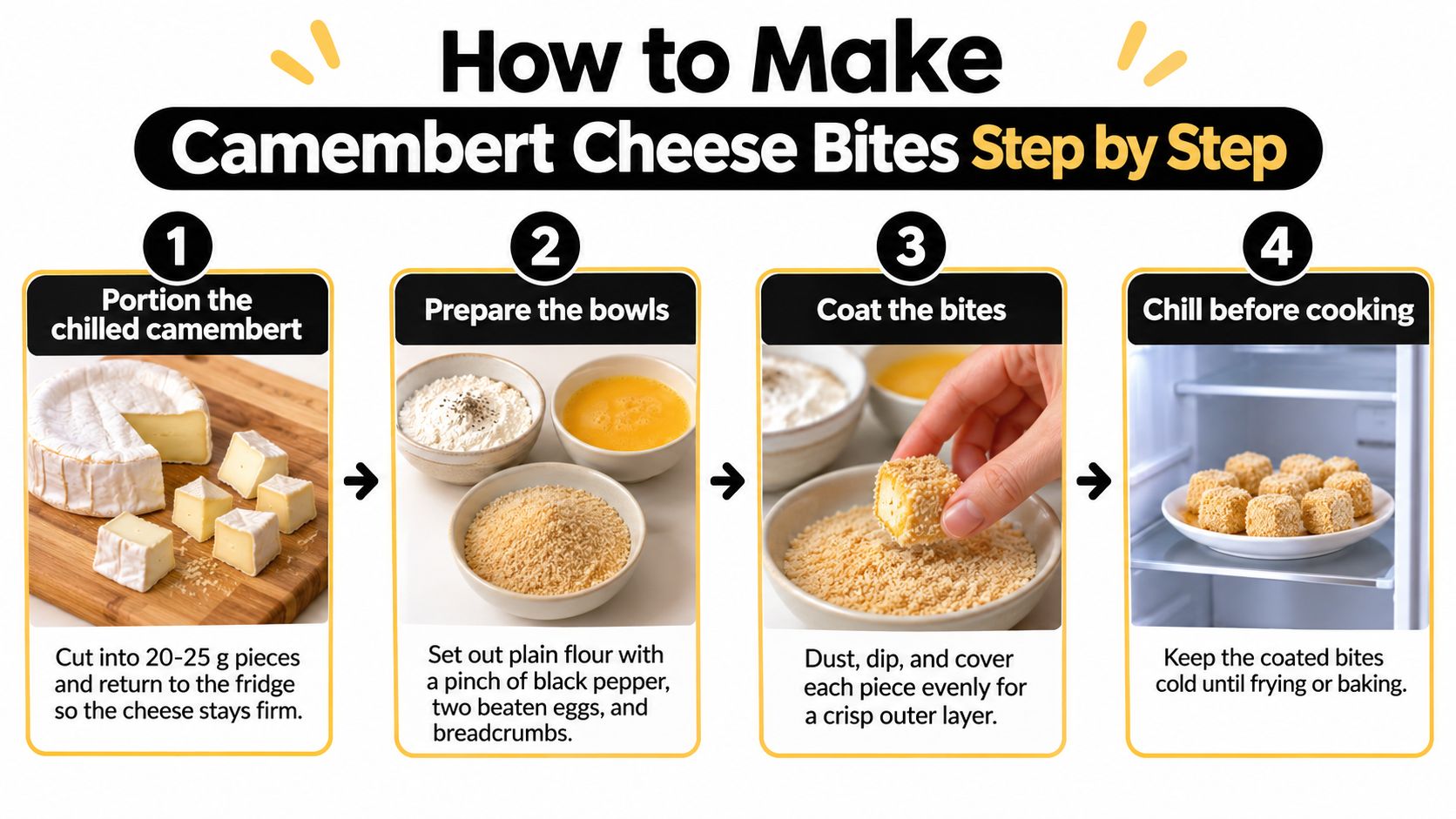
The overview shows the coating sequence for either cooking method.
The Coating Sequence
Portion and chill: Cut chilled Camembert into 20 to 25 g pieces, then return them to the fridge. Firm cheese is easier to coat and less likely to leak before the crumb browns.
Set out three bowls: Put plain flour with a pinch of black pepper in one, two eggs beaten with a splash of milk in another, and fine dry breadcrumbs or panko in the third. Fine crumbs seal closely; panko gives a rougher, crisper coating.
Coat twice: Dredge each piece in flour, dip it in egg, then cover it with crumbs. Repeat the egg and crumb layers once to seal the cheese.
Chill again: Refrigerate the coated pieces for 20 to 30 minutes. This firms the coating and helps it stay in place during cooking.
Cooking and Checking the Centre
Bake or fry in small batches: For baking, arrange the bites on a lined tray and bake at 200°C for 8 to 10 minutes, until golden. For frying, heat the oil to 180°C and fry six to eight bites at a time until the coating is deep golden. Don't crowd the fryer: the oil temperature drops, leaving the coating pale and greasy.
Check the centre: Test one bite with a calibrated probe. The centre must reach at least 74°C. Insert the probe into the cheese, and use the temperature reading rather than the crumb colour to judge doneness.
Hold hot and serve promptly: Keep cooked bites at 60°C or above until serving. For make-ahead preparation, freeze the coated pieces for two hours, then bake from frozen for 12 to 14 minutes and check the centre temperature.
Leaking usually starts with warm cheese or a coating that hasn't had time to set. A crowded fryer creates a different problem: the bites brown slowly while the cheese softens.
For outdoor catering or delivery in Dubai's heat, keep unbaked trays refrigerated until transport or cooking. Use shallow batches, insulated carriers and time-stamped labels. If a batch has sat warm while you handled other food, don't serve it.
Plating and Pairing Camembert Bites
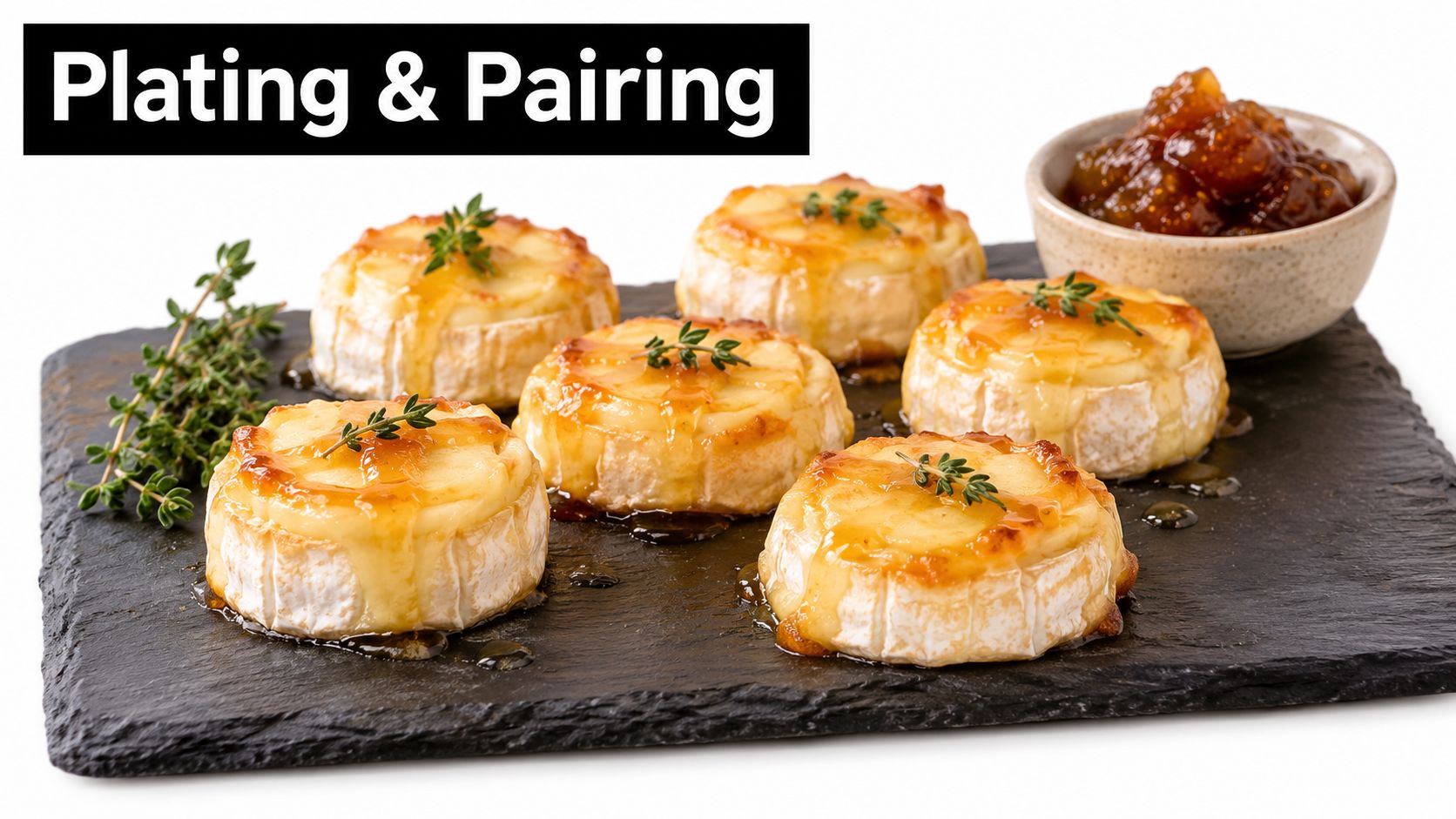
Plate the bites hot, in a single layer, with space between them. A slate board or warm white platter works well because it doesn't trap steam under the crumb the way a deep bowl does. Add a sprig of thyme and a small pot of fig or quince paste, then serve before the centres firm up.
The plated bites below show the spacing and garnish that keep the coating crisp.
Drizzle baked bites with a thin line of honey just before they go out. Finish fried bites with a pinch of flaky salt while the surface is still hot, so it sticks. Don't sauce the whole tray heavily, as sweet preserves soften the crumb if they sit on it.
What to Pour With Them
Acidity and bubbles cut through the richness of cheese and crumb, so dry sparkling wine or crisp cider works better than a heavy red. If you want red, a light Pinot Noir is the sensible choice because its low tannin doesn't clash with soft cheese. Our selection of snacks and savouries gives you easy additions for the same board.
Pairing | Why it works | Example to buy |
|---|---|---|
Brut sparkling wine | Bubbles and acidity cut the richness | Any dry brut from Champagne or a sparkling wine from Crémant |
Dry Normandy cider | Apple notes brighten the cheese and echo the region | Dry or brut cider from Normandy |
Unoaked Chardonnay | Clean acidity balances the creamy paste | Chablis or unoaked Chardonnay |
Light Pinot Noir | Red fruit and low tannin suit soft cheese | Burgundy Pinot Noir served lightly chilled |
Sparkling apple juice | Sweet and crisp, an easy alcohol-free match | Any dry sparkling apple juice |
Pour the drink before the bites come out. That way they reach the table together while the cheese is still hot.
The short video below is useful for checking colour and consistency before your first tray goes out.
Confirm Your Cheese, Method and Quantity Before You Start
For a gathering, the right batch size depends on the serving method and how long the bites can wait. Check the recipe's yield, temperatures and timings before scaling it with Recipe One's guide to reading recipes.
The wheel: Choose Camembert that is ripe but still firm. A protected name such as Camembert de Normandie can help you identify its style.
The method: Bake for a warm buffet, fry for immediate service, or freeze before baking if you need to prepare trays ahead.
The quantity: Use the guest table, allow its spare margin, then subtract guests who will not eat cheese.
The equipment: Set out a calibrated probe thermometer and lined tray. For frying, use a fryer or deep pan with a thermometer.
Keep the bites chilled until cooking. Have the probe ready, and label each tray with its production time so you can track what is ready to serve.
For ingredients or a food party, IFM Gourmet Food Store in Dubai offers artisanal delicacies, sweets, savouries, fine chocolates, premium teas, cakes and curated gift hampers. Hamper Santa 25 is curated with luxurious food items from Italy and beyond. The store's team can help you select food products and offer cooking advice and presentation tips.
Cook one small test batch first. Check the coating, melt and centre temperature, then adjust the timing for your oven or pan. Cook the remaining bites in waves, rather than making more than you can serve while they are at their best.


Comments