

Snacks and Savouries Guide: Italian Picks for Dubai

You're standing in Dubai with a guest list, a half-empty pantry, and one of those questions that sounds simple until you try to answer it: should you buy crackers, olives, nuts, or something more elegant for the table? Snacks and savouries can fill that gap beautifully, but only if you know how to choose them, pair them, store them, and serve them with the right rhythm. This guide walks through those choices in a plain, practical way, with an Italian and Mediterranean lens that fits real Dubai hosting, gifting, and everyday eating.
What This Guide Will Help You Discover
A good savoury shelf should do more than look attractive. It should help you solve small but important decisions, like what to put out with coffee, what belongs in a Ramadan spread, and what can travel well in Dubai heat without losing its texture.
That is where snacks and savouries become useful as a category rather than just a loose mix of packaged foods. In Italian and Mediterranean cooking, these foods often sit between meals, or alongside drinks and conversation, so they behave more like a social toolkit than a random grocery aisle. A plate of taralli, olives, cheese, roasted chickpeas, grissini, marinated vegetables, or hummus is not trying to be a full meal. It's meant to be flexible, shareable, and easy to place into different moments.
This article gives you a simple way to read that shelf. You'll learn what belongs in a savoury spread, how to think about aperitivo, tea-time, parties, and gifting, and why imported products need extra care in Dubai's climate. You'll also see how a gourmet retailer such as IFM Gourmet Dubai fits into that world, especially when you want Italian-style items that feel polished enough for a hamper but practical enough for the home table.
If you often host family, welcome colleagues, or send food gifts, the aim is straightforward. Choose items that taste good, hold up well, and make sense for the occasion.
Understanding Snacks and Savouries in the Italian and Mediterranean Tradition
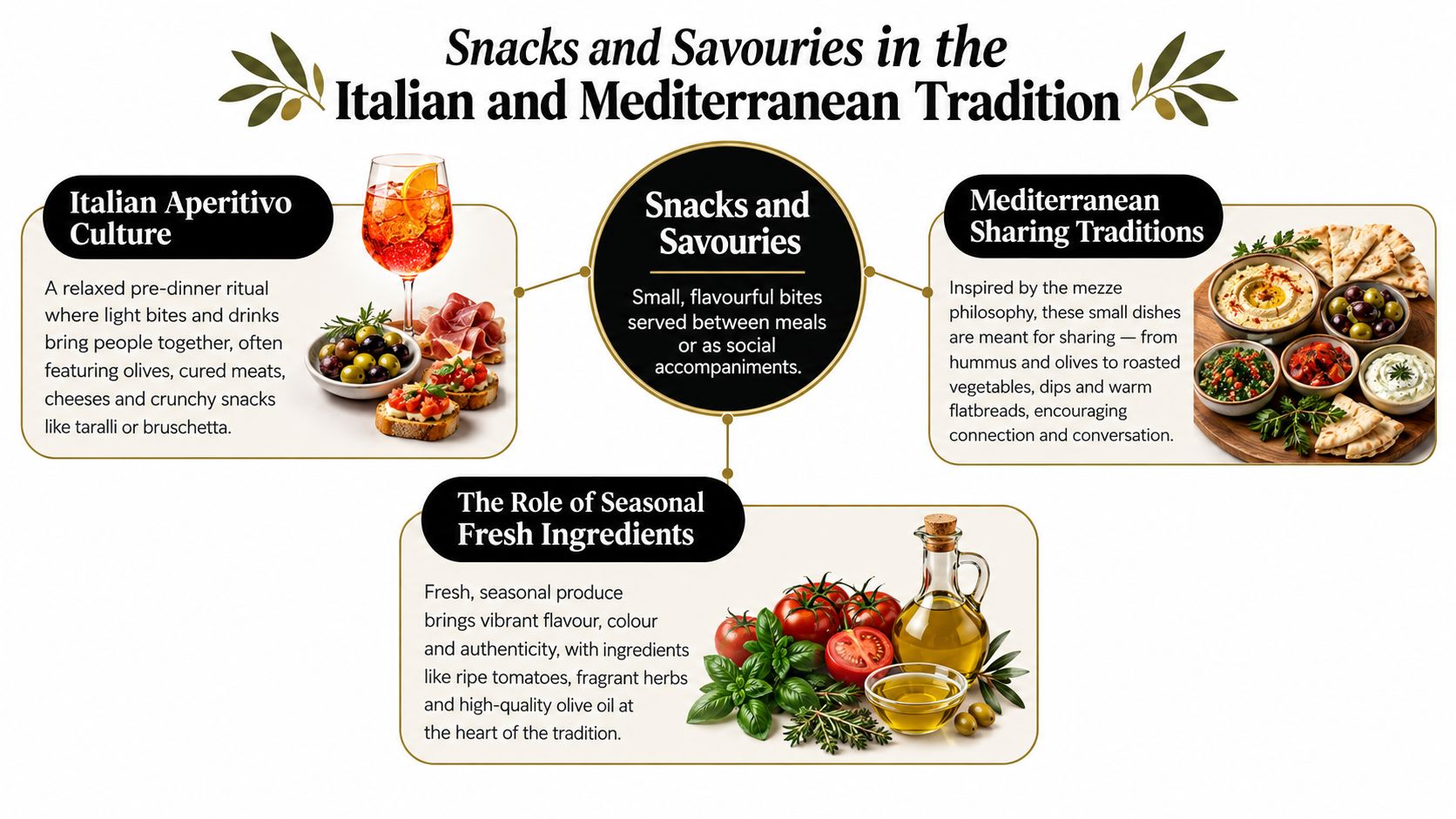
A guest arrives in Dubai as the afternoon cools, and the host needs food that can sit beside drinks, welcome conversation, and suit different appetites. Snacks and savouries answer that need with small, flavourful bites served between meals or alongside drinks, tea, and social occasions. Italian and Mediterranean traditions give these foods a clear purpose: sharing, steady pacing, and balance.
What makes them different from ordinary snack foods
A supermarket snack may be chosen for speed. A Mediterranean savoury is often selected for company, so its flavour, texture, and presentation matter together. Taralli and grissini provide crunch, while focaccine add a soft bread element. Olive and cheese pairings bring salt, richness, and fat in a compact format. Marinated artichokes, sun-dried tomatoes, stuffed peppers, cured meats, and olives broaden the plate without making it feel heavy.
The same principle appears in hummus, labneh, roasted chickpeas, and za'atar-topped breads. Each item contributes a different note: creamy, crisp, tangy, or herb-led. Combined, they create a small range of experiences rather than a plate of identical bites. In Dubai, that variety also makes a spread easier to adapt for family visits, informal hosting, or a more polished gathering.
Practical rule: If a savoury board offers one texture, it becomes boring quickly. Combine crisp, soft, creamy, salty, and bright elements.
For specialty-food shoppers, the Eataly North America cheesemonger opening illustrates the care associated with artisan cheese and savoury service. Product choice is part of the experience, alongside flavour, freshness, and the way food is presented.
How the tradition approaches eating
Mediterranean savouries favour pausing over rushing. They may appear before dinner, after work, or during an extended family conversation, so they should be easy to reach, simple to share, and satisfying in modest portions. Fresh seasonal ingredients help maintain vivid flavour without requiring complicated preparation.
The category works like a small hospitality table: the food supports the occasion instead of taking it over. That makes these products useful across UAE routines. During Ramadan, they can join an iftar table or a majlis selection. At other times, the same olives, breads, cheeses, and marinated vegetables can serve an aperitivo or a casual tea gathering.
Dubai's heat adds a practical consideration. Products with delicate textures or fresh components need sensible handling, while dry baked snacks, roasted chickpeas, sealed nuts, and unopened preserved items may be easier to store and serve. A gourmet retailer such as IFM Gourmet Dubai can also help shoppers assemble Italian-style selections suited to a home table or a thoughtful gift hamper.
A composed layout supports this sharing mindset. The gourmet pizza presentation inspiration shows how spacing, colour, and arrangement can make food inviting before anyone takes the first bite.
The UAE snack shelf already spans baked goods, chips, nuts, savoury spreads, and preserved specialities. That breadth gives imported premium products a natural role in Dubai, where shoppers may want everyday convenience, entertaining pieces, or ingredients with enough character for a hamper.
Serving and Pairing Snacks and Savouries for Aperitivo, Tea-Time and Parties
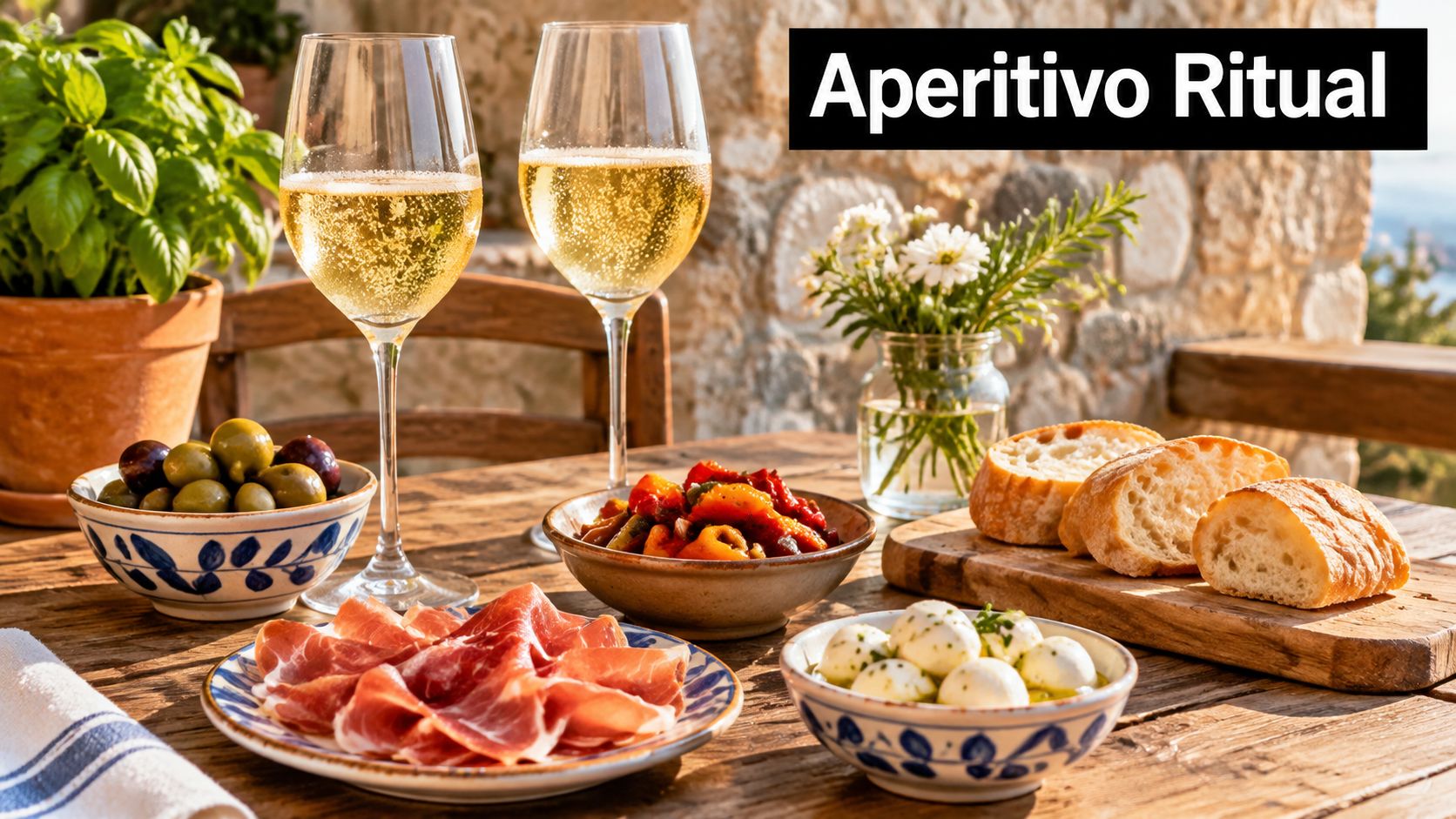
The same ingredient can suit very different occasions. Prosciutto and grissini may feel light and elegant before dinner, while tea, coffee, or a dessert buffet calls for milder pairings and smaller, neater bites. Serving context shapes the experience as much as the ingredients themselves.
Aperitivo needs structure, not excess
Italian aperitivo works best as a bridge between the day and the meal that follows. Keep the selection focused: a little salt, some crunch, and an aromatic note should create appetite without making dinner feel unnecessary. Grissini with prosciutto, olives alongside sparkling drinks, and cheese with truffle balsamic glaze each offer a clear combination of texture and flavour.
A simple four-part formula helps. Choose one crisp item, one creamy item, one salty item, and one bright or acidic item. Breadsticks, fresh mozzarella, stuffed olives, and a balsamic condiment provide an easy example. A sweet note can add contrast, but use it lightly so the savoury elements remain the centre of the plate.
Keep aperitivo portions small enough that guests still want dinner.
Dubai's heat also affects service. Put temperature-sensitive ingredients out in modest quantities and refresh them as needed, while sealed, dry items can remain available longer. This practical rhythm keeps the table inviting without asking delicate foods to sit out unnecessarily.
Tea-time and parties need flexibility
Tea-time suits baked items, light savouries, and gentle flavours that work beside tea or coffee. Mini sandwiches, savoury biscuits, cheese pastries, and small canapé-style bites are easy to handle and comfortable in a more relaxed setting. For a party, the menu can be broader, with savouries sharing space with sweets, fruit, cheeses, and drinks.
Plan around the occasion rather than a rigid guest-count formula. An aperitivo may need only a few concentrated bites, while a larger party benefits from one or two savoury anchors supported by complementary foods. Repeating the same flavour or texture across the table can make a spread feel crowded, so vary crisp, creamy, salty, and fresh elements instead.
A useful menu layout assigns each item a role:
Crisp base: grissini, breadsticks, crackers, or thin baked pastries.
Rich element: cheese, prosciutto, labneh, or a spread.
Bright counterpoint: olives, pickles, marinated vegetables, or balsamic glaze.
Drink-friendly accent: sparkling water, wine, tea, or coffee.
A Dubai-based gourmet retailer that gathers Italian ingredients, savouries, and gift items in one place can save time when you are assembling a mixed spread or a thoughtful present. This approach also makes it easier to adapt an Italian-style selection for a home gathering, a Ramadan table, or a party where guests will be moving between food and conversation.
Choosing Balanced Savouries Without Falling for Marketing Claims
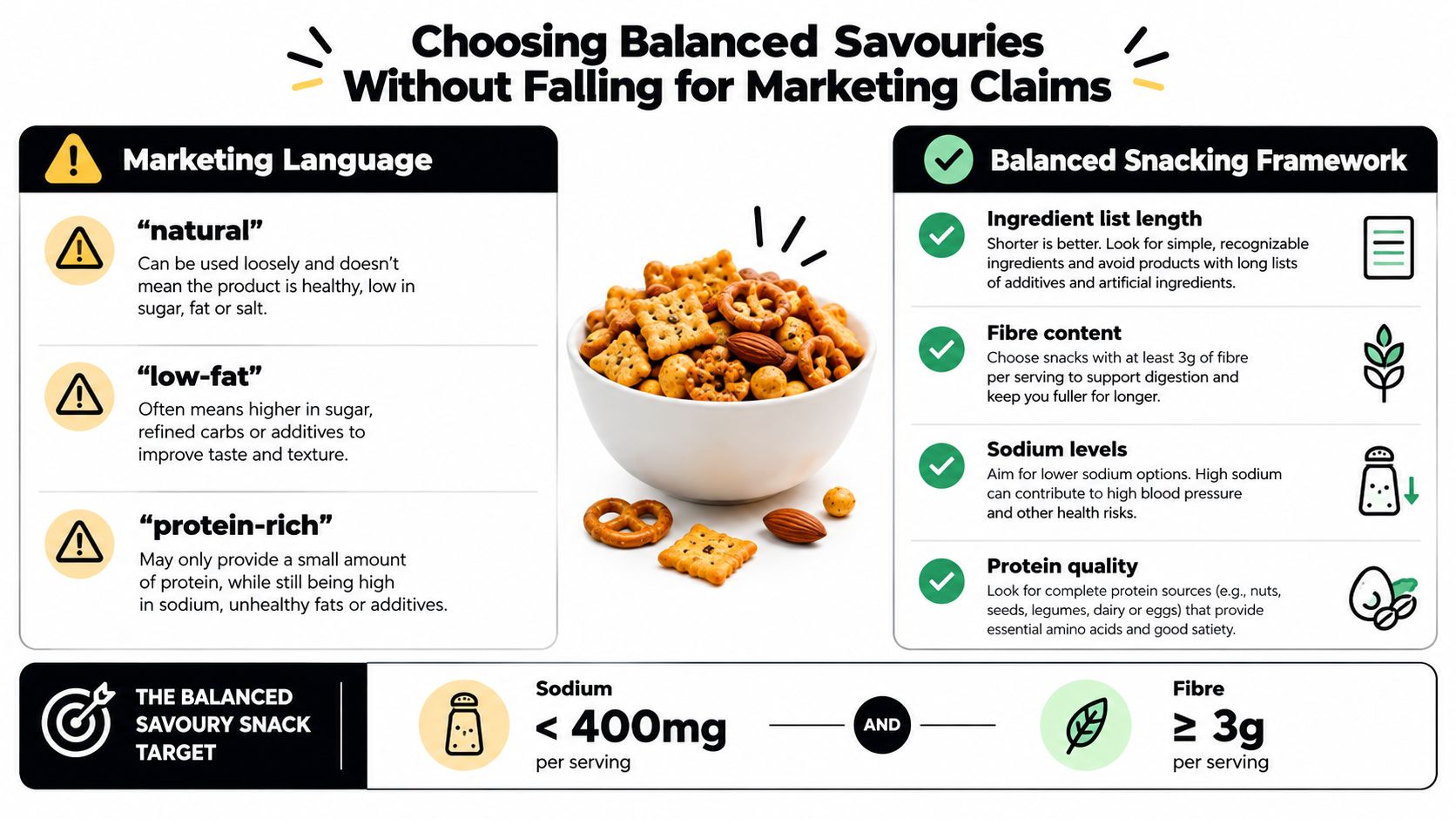
The word healthy can hide a lot. A baked cracker may sound lighter than a fried snack, but if it's loaded with salt and offers very little fibre, it still may not be a strong everyday choice. The trick is to compare savouries by what they give you per bite, not by the label language on the front of the pack.
The label front can mislead you
Words like “natural”, “low-fat”, and “protein-rich” can be useful, but only if you read the rest of the pack. A low-fat snack might still be high in salt. A protein-rich snack might still be tiny in serving size. A natural product can still be dense, highly seasoned, and not especially balanced for regular eating.
A better habit is to compare a few standard choices side by side. Portion-controlled nuts, roasted legumes, whole-grain crackers, olives, hummus, and cheese all bring something different to the table. Nuts give you fat and texture. Roasted legumes bring crunch and plant protein. Whole-grain crackers contribute structure. Olives and hummus offer salt, acidity, and creaminess. Cheese adds richness and makes the platter feel complete.
Balanced snacking works better as a mix than as a single “perfect” food.
Use the snack as a role, not a verdict
An aperitivo item and a meal-replacement snack are not the same thing. A few savoury bites before dinner can be part of a social pattern, while a midday snack needs more staying power. That difference matters when you're choosing portions for family, guests, or a work break.
A practical label routine is easy to remember:
Check sodium first if the snack is very crisp, baked, or seasoned.
Look for fibre if you want the snack to feel more satisfying.
Compare protein quality instead of just chasing a high number on the front.
Watch serving size so one “small” packet doesn't turn into three servings.
The UAE's food rules support this careful reading, because labels have to be clear and truthful in Arabic, with useful information visible before the product reaches the table. That makes the shopper's job easier, but only if you slow down long enough to compare what's inside the pack.
Ramadan Savoury Snacking for Iftar, Suhoor and Majlis Gatherings
Ramadan changes the logic of snacking. A savoury bite that feels right at 8 p.m. can feel too heavy at iftar, and a pretty pastry that looks perfect on a majlis tray may not hold up through a long evening. Timing, satiety, and hospitality all matter at once.
Start light, then build gently
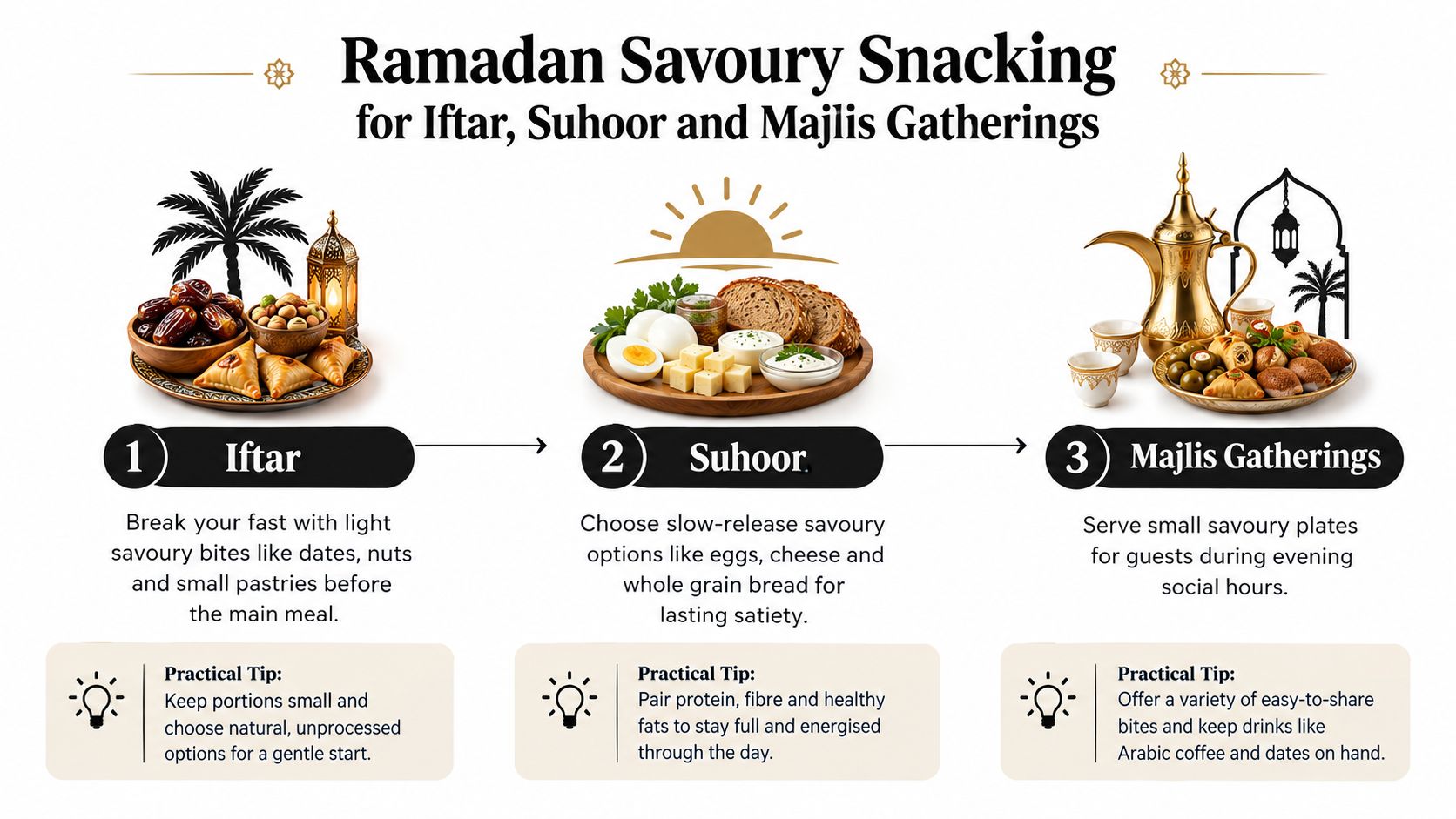
The best opening for iftar is usually simple. Dates and water set the tone, then a small savoury bite can follow before the larger meal. That first savoury layer should not feel like a buffet. It should help people settle in, not fill them up too quickly.
Protein and fibre work well here because they steady hunger without making the table feel too dense. Small cheese portions, egg-based bites, nuts, or modest savoury pastries can all fit. Later in the evening, shared platters can become a little broader, but the texture still needs to stay manageable. In Dubai humidity, that often means avoiding foods that collapse or sweat too quickly.
Suhoor needs slower-release choices
Suhoor is the opposite of a party tray. It should help people stay comfortable for longer, so the food needs a more deliberate shape. Eggs, cheese, and whole grain bread are straightforward examples because they're easy to pair and not too fussy to prepare. Cooler items can work well too, as long as they don't dry out or lose structure before dawn.
For majlis gatherings, the best savouries are usually small and polite. Guests may stay for a while, drink coffee, and move between sweet and savoury items. That makes portioning important, especially when soup, mains, desserts, and drinks are already on the table.
A few sensible planning habits help:
Prepare ahead when possible, but choose items that keep their texture.
Use freezer-friendly canapé formats for last-minute hosting.
Keep a savoury-to-sweet balance, so the table doesn't lean too far in one direction.
Serve modest portions per guest, then refill if needed.
The UAE pattern is clear, people often want food that feels healthier during Ramadan, but they also want hospitality that feels generous. The sweet spot is a spread that respects both.
Buying, Storing and Reading Labels on Imported Snacks in the UAE
A box of Italian taralli or a tin of nuts may look ready for the pantry, yet its journey through Dubai heat, transport, and handling affects how well it arrives. In the UAE, registration and label control form part of normal food-market entry. For shoppers, that system provides useful information before an imported savoury reaches the kitchen.
What to check before the product reaches your pantry
Packaged and non-packaged food labels must present nutrition information clearly and truthfully in Arabic. Before buying, check the ingredients, allergens, net quantity, country of origin, storage conditions, and expiry information. These details work like a product passport, showing what the food contains, where it came from, and how it should be kept.
Recipes and pack formats can change, so a product dossier records the formulation, nutrition calculation, approved artwork, batch code, and importer registration. That same attention helps shoppers compare Italian crackers, taralli, breadsticks, nuts, and chocolates. A clear label lets you judge whether the item suits your table, dietary needs, and available storage.
Packaging matters more in Dubai than many shoppers realise
Crisp foods and nut-based savouries react quickly to moisture and oxygen. A weak pack can soften a cracker, dull the flavour, or allow oils to develop stale notes. High-barrier packaging and a reliable seal protect texture through the journey, so the wrapper supports the recipe much like a well-sealed jar protects a preserve.
In Dubai, packaging is part of the recipe because the climate never takes a day off.
At home, keep crunchy savouries in a cool, dry place and seal them tightly after opening. Chocolates and panettone-style baked goods also need care, since heat and humidity can alter their texture quickly. For gifts or event supplies, inspect the pack for enough strength to handle transport while keeping its appearance presentable.
Readers considering food retail or side-business logistics in Dubai may find these Dubai freelance permit tips useful when planning how and where they operate. The resource does not replace food requirements, but it can add context to the practical business side of working in the city.
Building Gourmet Hampers and Event Menus Around Savouries
A good hamper feels curated because the parts speak to each other. Savouries can do that beautifully, especially when you mix one centrepiece item with a few supporting flavours and a strong presentation.
How a hamper comes together
A gift box doesn't need to be overloaded to feel generous. The strongest versions usually include one baked centrepiece, one or two savoury anchors, something sweet, a beverage, and a detail that makes the packaging feel thoughtful. That's exactly why the IFM Gourmet Dubai Santa hamper works as a reference point. It includes a traditional Italian Flamigni panettone, a mini panettone Milano cake, specialty tea, Italian pasta, truffle balsamic vinegar glaze, flavoured Italian rock salt or spices, a small jar of spread, honey or jam, Italian candies, coffee, and seasonal reusable packaging.
That mix is useful because it crosses categories without feeling random. You get sweetness, savoury depth, and a ready-made sense of occasion. It also shows how a gourmet shop can turn pantry items into a gift that feels festive rather than purely practical.
Turning the same logic into menus
The same curation style works for events. A canapé station can use the savoury ingredients from a hamper, but scaled for guests. Antipasti tables can use olives, cheeses, vegetables, and breads in a composed way. Corporate gifts can lean toward polished packaging and shelf-stable items, while private celebrations can use more seasonal variety.
IFM Gourmet Dubai is the luxury online gourmet arm of IFM Investments LLC, based at Dubai Investments Park 2, Street 45, Community 597-212, EBC Warehouse 2, with the UAE telephone number +971 4 882 9791; the catalogue includes artisanal Italian pasta, extra-virgin olive oil, balsamic vinegar, coffee, sauces, condiments, panettone, chocolates, nougats, sweets, cakes and gift hampers.
That gives you a helpful benchmark. When you're choosing a pre-made hamper, look for a mix of savoury and sweet, a clear sense of presentation, and packaging that suits the journey from shelf to home to table.
Putting It Together and Putting It on Your Shelf
Snacks and savouries work best as flexible social food. Choose contrasting textures, read labels carefully, and store products with Dubai's heat and humidity in mind. Crisp bites suit aperitivo, sustaining options serve Ramadan, and polished combinations support gifts or hosted gatherings.
A practical shelf starts with three roles: crisp texture, creamy balance, and bright ingredients for lift. Keep fragile products sealed and cool. At serving time, arrange them on a platter, tray, or in a hamper according to the occasion.
If you want Italian-style savouries, gift-ready sweets, and pantry pieces together, visit IFM Gourmet Food Store. The range suits aperitivo, Ramadan hosting, hampers, and everyday Dubai entertaining, giving shoppers a convenient place to build a considered selection.

Comments