
Genmaicha Green Tea: How to Brew It Right

You've opened a bag of genmaicha, caught that warm roasted-rice smell, and put the kettle on. Then comes the uncertainty: should you brew it like black tea, treat it like delicate green tea, or leave it longer to bring out the toastiness? Genmaicha green tea rewards a measured brew, but hotter or longer isn't automatically better. The useful starting point is a cup you can repeat, then adjust to your household's taste.
What Genmaicha Is, Its Origin and Flavor
The first aroma is often closer to toasted cereal than fresh grass. Pour the tea, let the steam rise, and the green leaf becomes clearer underneath: light vegetal freshness, toasted grain, and a soft sweetness rather than black-tea malt.
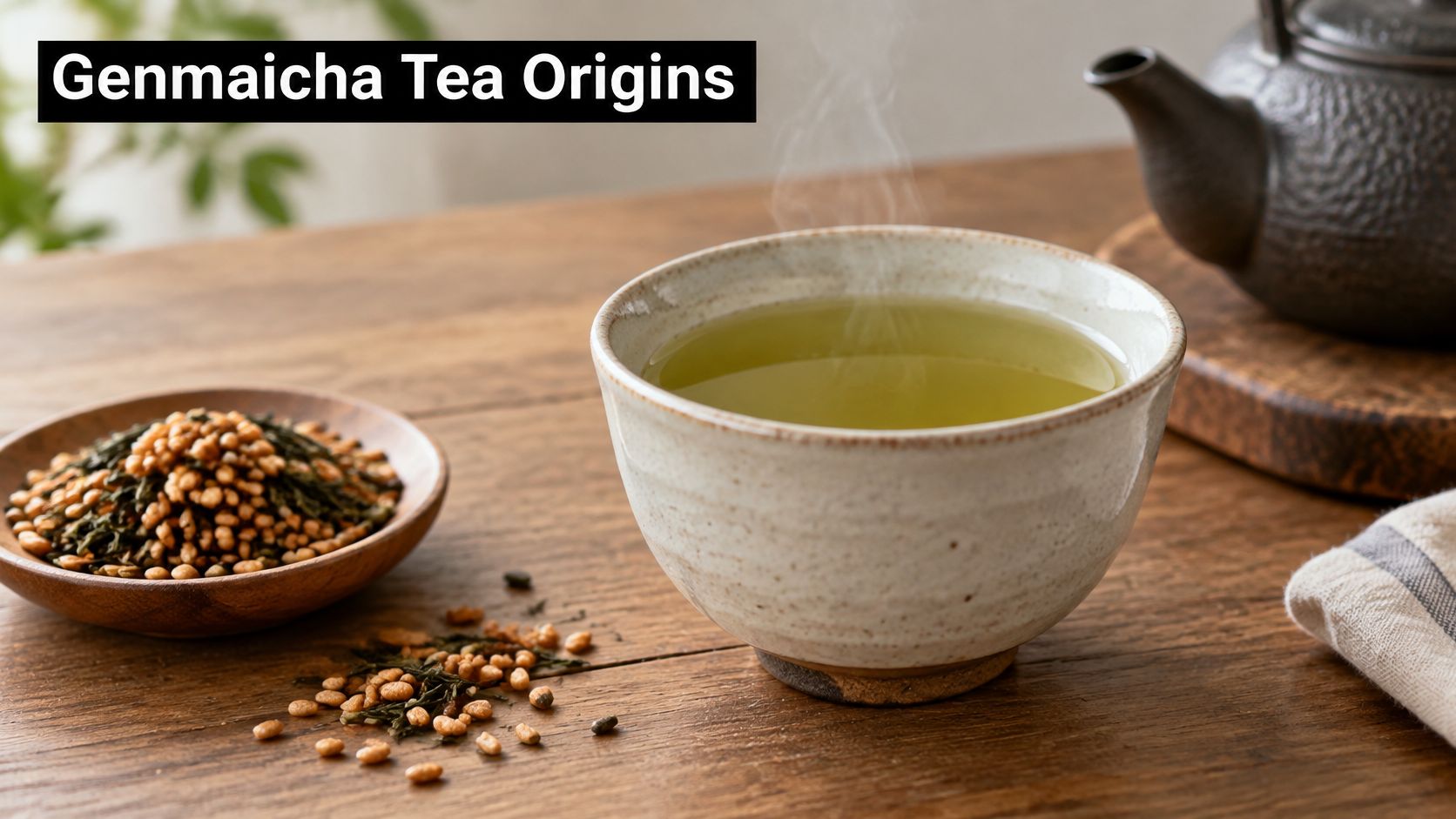
Genmaicha is a Japanese green tea blended with roasted brown rice, usually with sencha or bancha as its base. Some grains pop during roasting, which explains the familiar nickname popcorn tea. The rice isn't just decoration. It gives the infusion a nutty aroma and a rounder impression on the palate.
The dry blend makes that combination easy to recognize.
Genmaicha flavor by base and rice share
Style | Flavor | Best for |
|---|---|---|
Sencha base | Brighter, grassier, light vegetal | Readers who want fresh green notes |
Bancha base | Mellower, softer, less grassy | Everyday drinking |
Higher rice share | Rounder, toastier, less grassy edge | Readers who want a toasty cup |
Say you enjoy green tea's freshness but dislike its grassy edge. I'd start with a bancha-based blend rather than assume the most expensive sencha version will suit you better. If you want the leaf to remain distinct beneath the rice, choose sencha.
In the UAE, this is a distinctive alternative to the dominant tea style. A JETRO UAE tea-distribution report, drawing on Euromonitor estimates, put black tea at approximately 94–95% of consumption and projected 2.4% annual green-tea growth over the following five years. Those are historical market estimates, not a measure of current genmaicha demand.
Taste the blend, not the category
If your Japanese-tea reference is matcha, our guide to green tea powder offers a useful contrast with a strained leaf infusion. For another everyday tea context, The Matcha Bike's a matcha stop between classes is a reference for readers exploring Japanese tea outside formal tea service, though matcha and genmaicha aren't interchangeable.
Before brewing, smell the dry leaf. Smell the finished cup again and note which leads: toasted rice or green leaf. That simple observation helps you choose your next blend.
Brewing Genmaicha at the Right Temperature and Time
Start with 5 g of genmaicha per 250 mL of filtered water, at 75–80°C, for 2–3 minutes. Treat that as a working recipe, not a guarantee that every blend will taste identical. The rice share, leaf size, and base tea all affect the result.
Green-tea extraction work discussed in Cogent Food & Agriculture supports controlled brewing around 70–80°C rather than automatically using boiling water. Strong chemical extraction isn't the same as an enjoyable cup, so don't chase maximum extraction at the expense of aroma and finish.
Brewing settings for genmaicha
These are practical starting settings for comparing cup styles, not laboratory-tested caffeine recipes.
Method | Leaf per 250 mL | Water temperature | Steep time |
|---|---|---|---|
Everyday hot cup | 5 g | 75–80°C | 2–3 minutes |
Gentler cup | 5 g | 70°C | 2 minutes |
Sharper cup | 5 g | 85°C | 2–3 minutes |
Long steep, test only | 5 g | 75–80°C | 5 minutes |
Cold brew | 5 g | Refrigerated water | 6–8 hours |
The everyday row should be your default. Move to the gentler setting if the leaf tastes too assertive, or try the sharper setting if the cup seems muted. Keep the long steep as a comparison, not a habit: extra time can add drying astringency without improving the balance.
Cold brew is a different drink. Use a covered container in the refrigerator, then strain completely for a mellow glass with little roasted bitterness. Don't treat a smooth taste as proof that it contains no caffeine.
Practical rule: Change temperature, time, or dose, but not all of them together.
Near-boiling water may suit your usual black tea, but it can pull harshness and cloudiness from genmaicha's green-tea base. In a shared kitchen or catering setup, Ring Hot Water's guide to ideal temperature settings for hot water urns is useful equipment context, but measure the brewing water rather than trusting a dispenser's general hot-water setting.
A temperature-controlled kettle is convenient. A simple kitchen thermometer is enough to make an ordinary kettle workable.
How to Brew a Cup Step by Step
Set out a kitchen scale, thermometer or adjustable kettle, timer, and a pot with a removable strainer. A roomy basket lets water circulate through the leaf and rice more freely than a tightly packed tea ball.
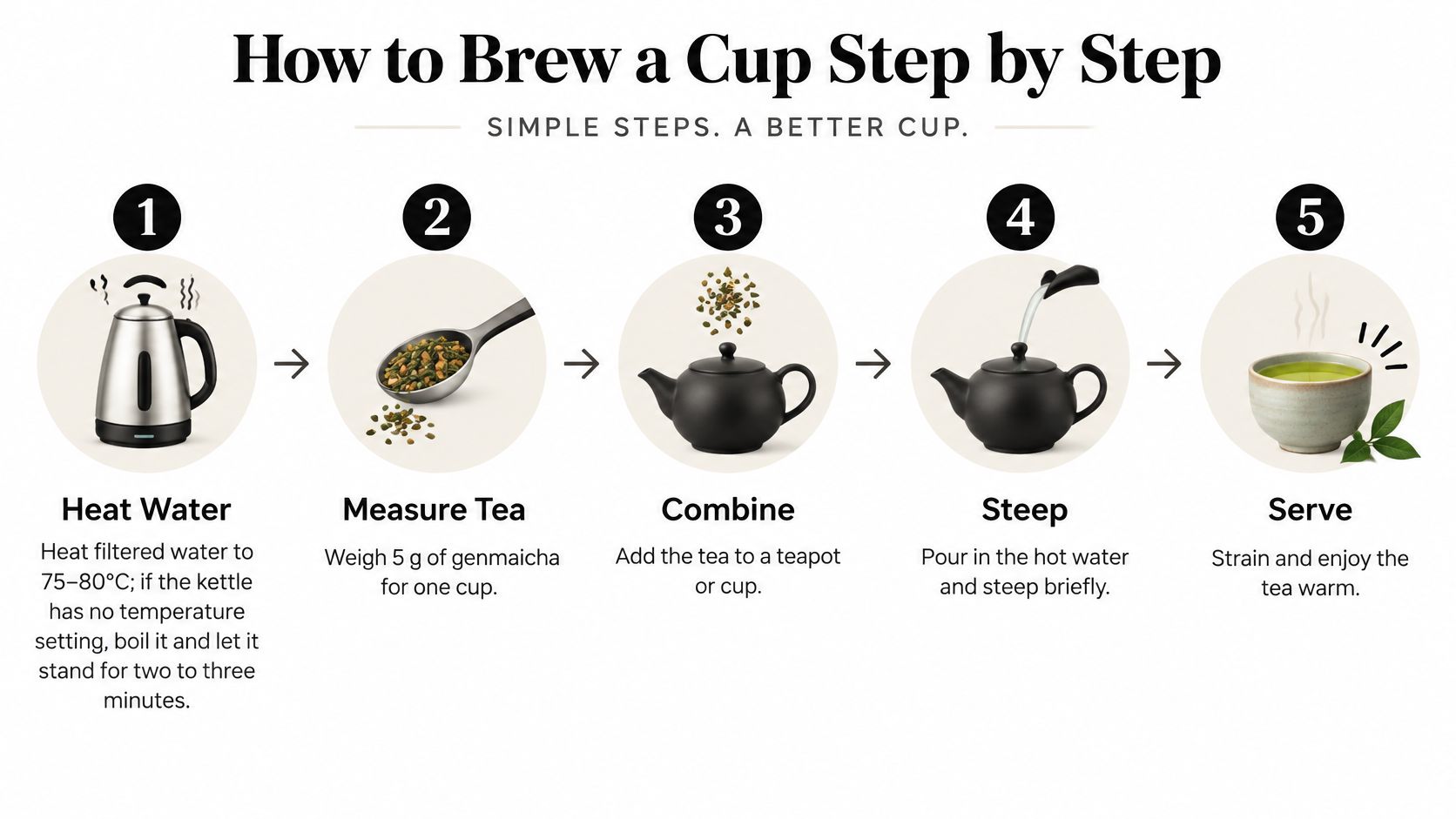
This visual summarizes the main preparation stages.
A measured brewing routine
Heat filtered water to 75–80°C. Without a temperature setting, boil it and let it stand for two to three minutes, then check with a thermometer because cooling varies with the kettle and volume. Pouring straight from a boiling kettle is the common slip.
Weigh 5 g for each 250 mL cup. Rice and leaf pieces differ in size, so a spoonful isn't a consistent dose. Don't compensate for a weak cup with a heaped spoon before checking the weight.
Warm the pot or cup. Swirl in a splash of hot water, then discard it so the vessel doesn't cool the infusion abruptly. Leaving that warming water behind dilutes your measured recipe.
Add the blend, pour, and cover. A lid helps retain the toasted aroma while the tea infuses. Avoid cramming the blend into a small infuser that leaves little room for circulation.
Set a timer for 2–3 minutes. Start timing when the water meets the tea. Forgetting the timer while preparing food can turn a gentle brew into a drying one.
Strain the whole infusion. Pour into your cup or a separate serving jug so the remaining tea doesn't sit on wet leaves. Leaving the basket in the pot makes later servings stronger than the first.
Taste before changing the next brew. Adjust time in 15–30-second steps while keeping dose and temperature steady. Changing several settings at once makes the result difficult to reproduce.
For a visual demonstration alongside the routine, use the video below.
For travel, HYDAWAY's guide to find a portable single-cup coffee maker offers compact-equipment ideas. For genmaicha, prioritize a clean, removable filter rather than equipment carrying residual coffee oils.
A well-brewed standard blend should look pale golden-green, smell cleanly of toasted rice, and finish gently. Color alone isn't a quality score, especially when a blend contains added matcha.
Caffeine Levels and Health Claims to Check
Genmaicha is not caffeine-free. A cup can land anywhere from a faint lift to a noticeable buzz depending on the leaf-to-rice ratio, water temperature, and how long you leave the leaves in. Food in Japan's genmaicha guide gives three useful reference points: roughly 6–12 mg per cup, about 24 mg per 237 mL for a stronger preparation, and approximately 10 mg per 100 mL in another reference. They are not measurements of one standardized recipe, so treat them as a range to compare, not a label on every tin.
Approximate caffeine in genmaicha
Preparation | Approximate caffeine | Note |
|---|---|---|
Genmaicha cup, brewing reference | 6–12 mg | Changes with ratio, temperature, and steep time |
Stronger genmaicha preparation, 237 mL | About 24 mg | Composition-based estimate |
Genmaicha per 100 mL | About 10 mg | Prolonged steeping or large quantities raise intake |
More leaf means more caffeine available for extraction. Hotter water and longer contact usually pull more out, but you cannot read the milligram count from color or from how toasty the aroma seems. A mild, sweet-smelling blend can still add to your daily total.
For an evening cup, I would shorten the steep and use cooler water rather than assume the tea is weak. For a morning cup, a longer steep may give the stronger drink you want. Neither approach produces a precise milligram figure without testing that specific product.
Smooth flavor is a sensory judgment, not a caffeine measurement.
Healthy adults can use these estimates to compare choices. They are not universal safety limits. During pregnancy, for adolescents, or if you take medication or are caffeine-sensitive, ask a clinician about suitable intake. Swapping coffee for genmaicha may lower caffeine, but it does not cancel the caffeine in other drinks. Caffeine sensitivity varies more than the caffeine in a single cup. Sleep, medication, and body weight all change how a given dose feels.
Keep wellness promises separate
The evidence available does not justify selling genmaicha as a detox, weight-loss, blood-sugar, or blood-pressure remedy. Check the claim on the pack before you check the price. Immunity promises belong in the same category. DMCC's Global Dubai Tea Forum report emphasizes traceability and responsible functional-tea claims. The defensible appeal is simpler: toasted flavor, a green-tea base, and caffeine that deserves consideration rather than dismissal.
Food Pairings That Suit Genmaicha
Pair genmaicha with salt, fat, and gentle char. The roasted rice fits browned and toasted foods, while the green-tea edge keeps the combination from feeling heavy. Strong chili heat and very sweet toppings tend to obscure those quieter flavors.
Serve it with food that leaves room for the tea. You don't need an entirely Japanese menu, and you don't need to force a pairing just because both items sound premium.
Pairings worth trying
Sushi and sashimi: A clean, lightly brewed cup refreshes the palate between bites without adding another strong seasoning. Keep assertive sauces on the side.
Tempura: The toasted note complements the fried coating. A sharper brew can feel drying here, so choose balance over intensity.
Grilled fish with lemon: The rice aroma echoes browned skin, while the light green character sits comfortably beside citrus.
Roasted chicken with herbs: Try restrained rosemary, thyme, or parsley seasoning. A heavy glaze can cover both the herb detail and the tea.
Almond shortbread, mochi, and butter cookies: Nutty or gently sweet desserts leave more room for genmaicha than rich icing does. With mochi, choose a mild filling.
Simple biscuits: An uncomplicated afternoon pairing lets you notice the tea instead of searching for it beneath sugar and cream.
For a light lunch, buckwheat soba noodles are another sensible match. Keep the dressing restrained, particularly if it contains chili oil or a strongly sweet sauce.
Serve it without disguising it
Warm small cups before serving and offer the tea hot, but not too hot to taste comfortably. Start without sugar or milk. Milk softens the roasted aroma, and sugar can make it harder to judge the blend's natural balance.
I'd avoid heavily spiced curries and very sweet cream cakes when the tea is meant to be part of the tasting. They're enjoyable foods, but poor tools for appreciating a delicate infusion.
For dinner in Dubai, pour genmaicha between courses and offer plain green tea alongside it. Let guests compare how each tastes after grilled fish or a butter cookie, rather than telling them which pairing they should prefer.
Storing Genmaicha to Protect the Roasted Aroma
Protect the toasted aroma first. It can fade before the remaining leaf flavor seems obviously stale, leaving a cup that still tastes like tea but no longer has genmaicha's distinctive character. Storage matters even when the package's best-before date hasn't passed.
Use an airtight, opaque tin in a cool, dry cupboard. Keep it away from the oven, sink, and direct sunlight, rather than displaying it beside the kettle where steam repeatedly reaches the lid.
Keep moisture out
Use a dry spoon: Don't dip a utensil into the tin after stirring a drink or rinsing it.
Close the inner bag: If the tea comes in a resealable barrier bag, press out excess air and close it before replacing the tin lid.
Avoid daily refrigeration: Repeated opening can expose cool tea to moisture and refrigerator odors.
Freeze only sealed reserves: For longer storage, a well-sealed bag can work, but let it return to room temperature before opening to prevent condensation on the tea.
Buying a smaller tin is usually more useful than devising elaborate storage for a large supply. As a practical buying target, choose an amount you expect to finish within about six months of opening, rather than treating that period as a guaranteed shelf life.
A tight lid can protect fresh tea. It can't restore an aroma that has already faded.
Check the tea before brewing
Look for a dull appearance, a flat dry-leaf smell, or a stale cardboard note in the cup. Those are signs that the blend has lost character, not reasons to brew it hotter and hope the toastiness returns.
Keep the original label so you retain the ingredient list and best-before information. Write the opening date on the tin, then judge freshness by both the label and the tea itself.
Choose Your First Tin and Brew This Week
Choose your first tin by its description and packaging, ignoring the wellness slogans. Look for a stated sencha or bancha base, visible toasted rice, a secure seal, and a clear best-before date. Once opened, the blend should carry a recognizable roasted-rice aroma rather than a faint, dusty smell.
Don't buy a large quantity before you know whether your household prefers a leaf-led or rice-led cup. A clear ingredient list also separates standard genmaicha from a blend with added matcha. Start with a small tin, brew it twice, and let the second cup tell you whether the first was luck.
Run a household tasting
For an afternoon comparison, brew three cups at 70°C, 75–80°C, and 85°C, using 5 g per 250 mL and the same steep time within 2–3 minutes. Label the cups and taste small samples rather than drinking every full serving. The goal is a preference result you can repeat, so keep the leaf, the water and the vessel constant and change only the temperature.
Write down toasted aroma, green freshness, bitterness, and aftertaste. Published sensory and chemical evaluation of tea brews supports the same conclusion: extracting more compounds does not automatically produce the most acceptable cup.
What is IFM Gourmet Dubai?
IFM Gourmet Food Store is a Dubai specialty emporium that has been bringing together a carefully selected range of gourmet products since 2012. The shelves run from artisanal bronze-die pasta, extra virgin olive oil including flavored oils, and balsamic vinegar and glaze through to San Marzano tomatoes, polenta, truffle, mustards and spices. Breakfast and drinks are covered too: cereals and muesli, honey, premium jams, maple syrup, fine spring water, Ceylon tea, herbal tea infusions, coffee and fresh frozen juices, plus gourmet bio jams whose only sugar comes from the fruit itself. Sweets, fine chocolates, handcrafted gelato and gift hampers handle the occasions.
If someone in the household wants the roasted taste without any caffeine, the 100% Italian toasted barley is a direct substitute. It is sourced from Italy, caffeine-free, and sold as 10 individual 8 g bags.
For range questions, email contact@ifmgourmet.com. The store is a place to compare options; your household's measured brewing test should decide which tea earns a regular place in the cupboard.
IFM Gourmet Food Store offers premium teas, artisanal foods, and curated gift hampers for home dining and gifting. Visit IFM Gourmet Food Store to explore the tea range and choose a simple biscuit or savory accompaniment, then use your home tasting to settle on the genmaicha brew you enjoy.


Comments