

High Tea Catering in Dubai: A Planning Guide

You've got a date, a guest list, and a picture in mind: a polished tea table where colleagues or family can help themselves while you enjoy the event. The tricky part is making that spread feel generous without ordering more food, staff or styling than the occasion needs.
Good high tea catering in Dubai starts with a few clear decisions: the service package, a balanced menu, sensible portions and a timeline the team can follow. Staged refills and a labelled Italian and UAE seasonal menu can feel just as special as a full tiered stand, while making the experience easier to manage.
Dubai High Tea Packages and 2026 Prices
A Dubai team is booking afternoon tea for 20 colleagues. The cake list may be tempting, but the package sets the budget first: does the food arrive ready for the host to serve, or will staff manage the table and replenish it during the event?
Package | What you get | Starting price | Best for |
|---|---|---|---|
Drop-off high tea | Food delivered, host serves | AED 90 per person, 10 guests and AED 900 minimum | Home or small office |
Staffed buffet | On-site replenishment of stands | AED 120 per person | Corporate afternoon tea |
Simple package | Short menu, limited service | From about AED 45 per person | Casual gatherings |
Luxury service | Fuller tea service, premium items, higher staff ratio | AED 250–350 or more per person | Client entertaining and celebrations |
For the first two bands, a Dubai afternoon-tea provider lists 2026 starting prices of AED 90 per person for drop-off, with a 10-guest and AED 900 minimum, and AED 120 per person for staffed buffet service, according to its Dubai afternoon-tea catering prices. A separate 2025 Dubai catering-cost guide places simple packages at AED 45 per person and luxury service at AED 250–350 or more. These are different kinds of service, so compare what the package includes, not just the number beside it.
What changes between bands
Drop-off means the food is delivered and the host takes responsibility for setting it out, pouring tea and clearing used plates. It suits a home gathering or a small office team with someone available to look after the table. Confirm whether the order includes serving pieces, cups and tea-making equipment, or whether those need to come from the venue.
Staffed buffet adds a service team to manage the display and replenish stands. That support is useful when the host needs to welcome guests, lead a meeting or stay present instead of watching the food table. The service is more active, but it still needs a clear menu, layout and schedule.
A simple package keeps the food and service straightforward, usually with a shorter selection and fewer presentation extras. A luxury service may include a more complete tea experience, premium leaves, more formal presentation and a higher staff ratio. Those extras make most sense when guests are being hosted as clients or the occasion calls for a more elaborate setting.
Set the ceiling before choosing cakes
The package price isn't the whole event budget. Venue hire, flowers, linen upgrades and peak-date fees are extra, so ask which elements are included before you approve a menu. A stand can look different with flowers and upgraded table linen, but those choices shouldn't turn a manageable booking into a larger one.
For 20 colleagues, decide whether someone in your team can serve and replenish. If not, compare the staffed option against the value of having that task covered. Then choose one package band as your spending ceiling before you design the menu. It's easier to make a short, thoughtful selection fit a chosen service level than to build a long cake list and cut it back later.
How to Plan a Sweet and Savoury Menu
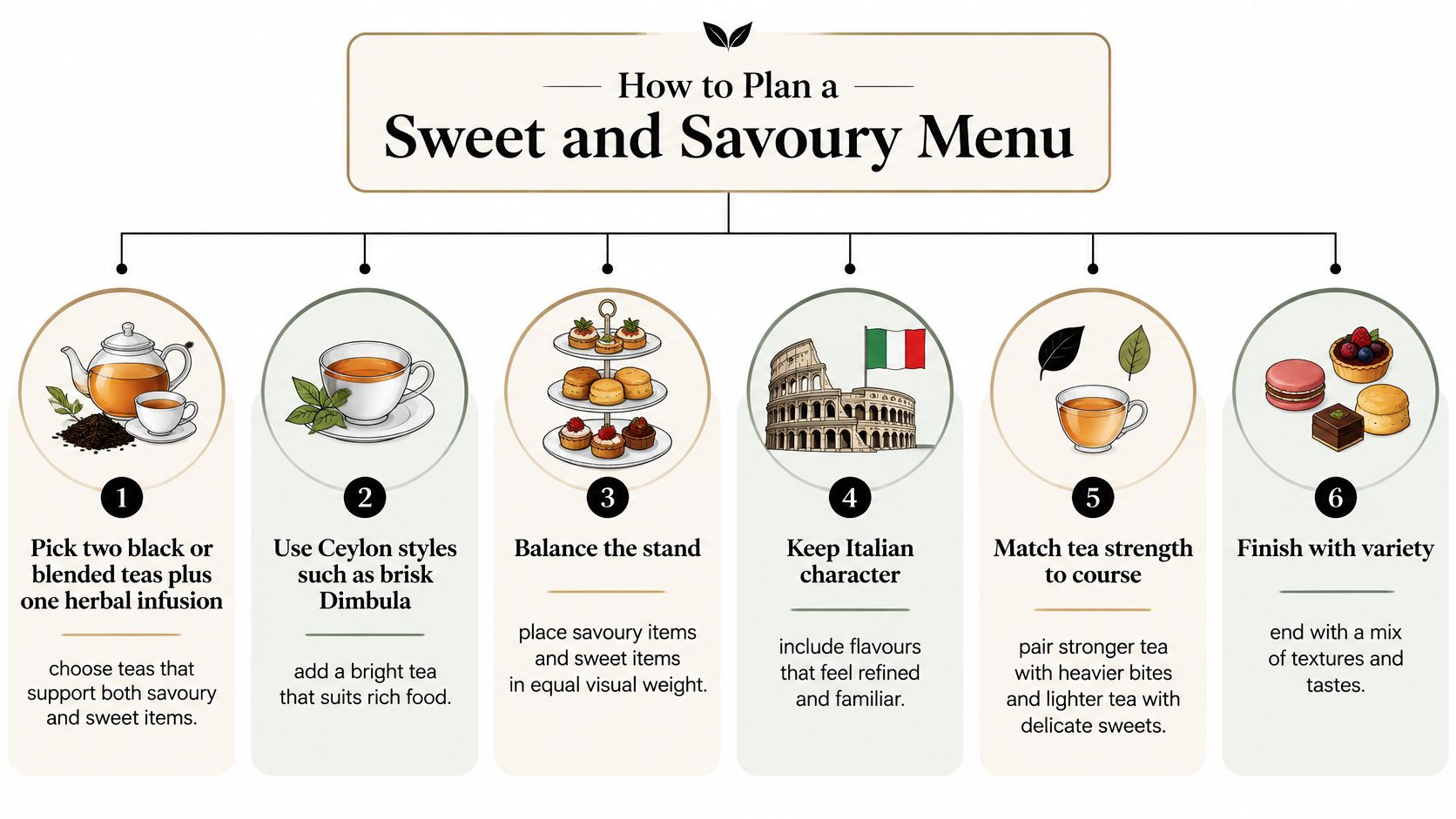
A strong tea menu has enough contrast to keep the table interesting, but not so many choices that guests can't tell what's in each item. Build it in six moves, and keep the Italian character alongside flavours that suit a mixed Dubai gathering.
Choose the teas first. Offer two black or blended teas and one herbal infusion, so guests can find a familiar cup as well as a caffeine-free option. Ceylon styles such as brisk Dimbula and floral Nuwara Eliya give you different profiles; Earl Grey is an approachable choice for guests who prefer a recognisable blend. Keep hot water available, particularly if tea is served over a relaxed arrival period.
Give savouries a clear Italian base. Mini brioche or focaccia makes a neat base for tomato and mozzarella, herbed chicken, or a vegetarian olive-oil option. These flavours feel familiar without making every bite identical. For a menu of Italian snacks and savouries, decide which items can be served at room temperature and which need to stay chilled until service.
Serve the scone or small bun with its accompaniments on the side. Jam and cream are easier to portion at the table, and the bun stays tidy rather than turning soft before guests arrive. In Dubai's warmth, avoid pre-loading pieces that will sit out while people take photographs or settle in.
Choose two or three petite sweets. A chocolate bite, a citrus tartlet and a seasonal accent such as date, pistachio or saffron offer different textures and flavours without adding another full-sized dessert. Keep the sweet course small enough that guests can sample it after the savouries.
Label the food plainly. Mark items as halal, vegetarian, vegan, allergen-aware or nut-containing, and give nut items a separate stand with their own tongs. Clear labels help guests make choices without having to guess or ask in front of the group.
Brief the service team. Explain which dishes contain allergens, how to avoid cross-contact and which items contain no alcohol. Separate serving utensils and a short staff briefing make those labels useful in practice, not just decorative.
A menu can be inclusive without becoming generic. Keep a recognisable Italian core, then add a seasonal UAE note that fits the occasion.
Replacing every classic with a substitute can flatten the menu. A deliberate mix of Italian savouries and UAE-inspired seasonal flavours gives a host room to suit Ramadan, Diwali and mixed corporate tables while keeping each dish's identity clear. The UAE Ministry of Economy's sustainability guidance reports that 65% of consumers look for products that help them live more sustainably and socially responsibly. Thoughtful ingredient choices and honest labels can therefore matter alongside flavour.
Finish with a one-page menu the host can approve. List each tea and food item, its dietary or allergen label, and how it will be served. That single page gives the kitchen, service team and host a shared version of the plan.
Portions per Guest That Limit Waste
Start with a portion card, then multiply it by the guaranteed headcount. The figures below are practical planning allowances, not a reason to put every item out at once.
Item | Per guest | How to count it | Watch-out |
|---|---|---|---|
Savoury bites | 3–4 pieces | One of each flavour on mini bread | Filled sandwiches dry out if plated too early |
Scone or mini bun | 1 | Jam and cream on the side | Pre-loaded scones slump in heat |
Sweet bites | 2–3 pieces | Chocolate, citrus and one seasonal bite | A second full dessert doubles waste |
Tea | 2–3 cups | 1 bag or 2–3 g leaf per cup | Unlimited top-ups need a spare urn, not extra food |
Contingency | About 10% of headcount | Written allowance, cooked only if guests arrive | Don't bake the spare in advance |
A full tiered stand looks abundant, but filling every level before guests arrive can leave delicate sandwiches drying and sweets untouched. The better luxury signal is timed replenishment: display a composed first selection, keep the reserve back, and bring it out only when the first tray is visibly low. That gives guests a cared-for table without assuming every possible item needs to be on display from the start.
Measure what comes back
Write the contingency into the order, but don't prepare that extra food before you know guests have arrived. At close, weigh unserved food separately by category, including sandwiches, scones, pastries, fruit and premium imported items. A single combined waste figure won't show whether the issue was too many sandwiches or a sweet that guests consistently skipped.
The Khaleej Times report on UAE event food-loss guidance says pre-planning menus, controlling portions, training teams and adjusting repeatedly uneaten items were linked to potential food-loss reductions of up to 60%; it also gives a local food-waste estimate of 30–40%. Treat those figures as context for careful planning, not a guaranteed result for a particular event.
Track kilograms of unserved food per guest, sell-through by item and the share of food safely redistributed. Set a ceiling for unserved kilograms per guest and review it after each booking. If the same pastry returns untouched, replace it or reduce its quantity next time. If an item is still safe and eligible for redistribution, record that separately from food that must be discarded.
A very wide menu, pre-plating every piece and treating a full stand as proof of luxury all make it harder to order accurately. For venues aiming to reduce disposable serviceware too, choosing compostable alternatives for foodservice can help with material choices, but it doesn't replace portion control or safe handling.
Use this formula to close the order: confirmed guests × the portion card, plus the written contingency, minus anything the host already knows guests will skip.
Staff, Table Setup and Service Timeline
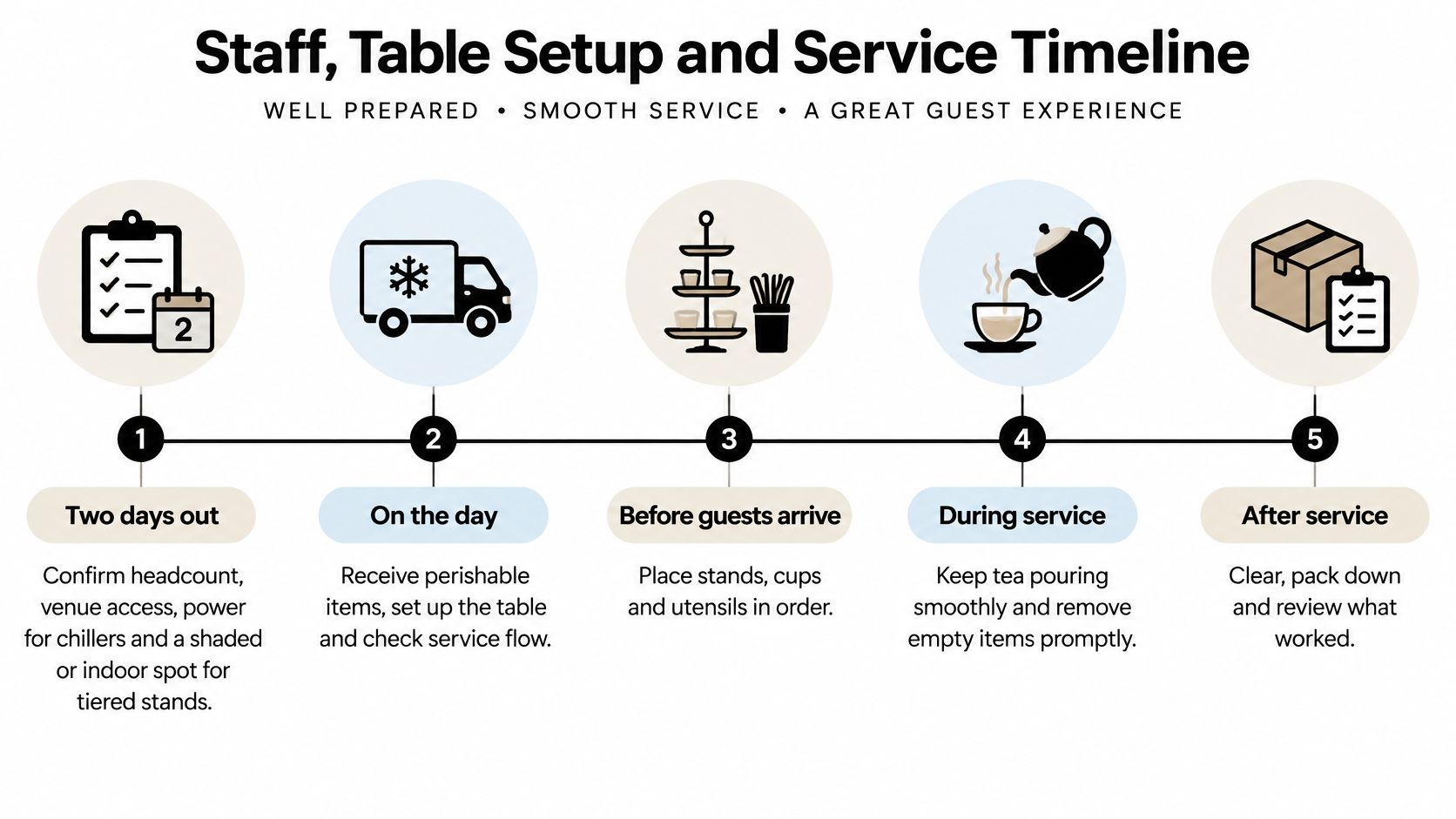
For a Dubai high tea, a fully loaded tiered stand can look generous and still leave good food untouched. Treat the stand like a display window, not a storage shelf: stage replenishment in small batches, and label an Italian and UAE seasonal menu so guests can see what each sweet and savoury item is.
Two days out, confirm the practical details. Check the guaranteed headcount, venue access, power for chillers, and whether stands can sit indoors or in shade. Direct sun or a warm window can put chilled food at risk before the first cup is poured.
On the day, receive perishable ingredients chilled. Prepare high-risk items in controlled batches and keep cold sandwiches, cream-based desserts and cut fruit separate from ambient pastries. Use monitored refrigeration during transport and display. A decorative stand cannot keep food cool.
Check the temperature rules while preparing and holding food. Dubai's Food Code requires cooked food served hot to be held at a minimum of 60°C. It also requires high-risk food being cooled to reach 5°C or below within four hours of room temperature. Use these thresholds to plan preparation and service, and remove food that exceeds the approved holding time.
Log actual product temperatures. Record readings at dispatch, arrival and each replenishment with a calibrated probe thermometer. A display-case setting does not show the food's temperature, so keep the readings with the delivery and service notes.
Set the table for a simple flow. Place the tea station where guests can reach cups and hot water without crowding the food. Separate savoury and sweet stands, label allergens, and provide spare tongs. Keep cream, cut fruit and filled sandwiches off the stand during photographs. Replenish with fresh trays rather than stacking new food on older items.
Serve in a sequence. Start with arrival tea, follow with a savoury pass, then bring out the sweets. For a group of 20, one server can manage a drop-off top-up if the host is also involved. A staffed buffet needs a clear split between tea service and food replenishment.
Before service begins, name the person responsible for removing food that has sat out too long. At pack-down, count returns, record waste by category and separate safe-to-keep items from food that must be discarded. Keep dishwashing and sanitising checks written into the team's routine rather than relying on a quick visual inspection.
Finish the table with a considered dessert display, not extra pieces added just to fill the stand. These ideas for presenting luxury dessert plates can help the sweets look polished while keeping replenishment measured.
The embedded video offers a visual reference for the feel of afternoon-tea service.
Tips for Corporate and Festive Bookings
The same tea table can suit a boardroom, a family celebration or a festive gathering, but the occasion should determine what changes. Dubai's hotel tradition shows why the format works for both formal and social events: The Pro Chef Middle East's account of afternoon tea in Dubai notes that The Ritz-Carlton, Dubai began serving it when the resort opened in 1998, and the service was described as an established tradition by 2014. Keep the familiar structure, then adjust one main lever for the event.
Occasion | Lever to change | Menu adjustment | Gift option |
|---|---|---|---|
Corporate afternoon | Menu length | Core stands, under 90 minutes | Optional place-card favour |
Ramadan | Timing | Shift toward iftar, dates beside the tea | Hamper after service |
Diwali | Colour and seasonal sweet | One seasonal sweet, take-home box | Chocolate and nougat hamper |
Christmas or UAE National Day | Seasonal sweet | One festive sweet on the same savoury base | Panettone or pandoro hamper |
Wedding | Menu length and gift | Full tea plus one seasonal sweet | Take-home box per guest |
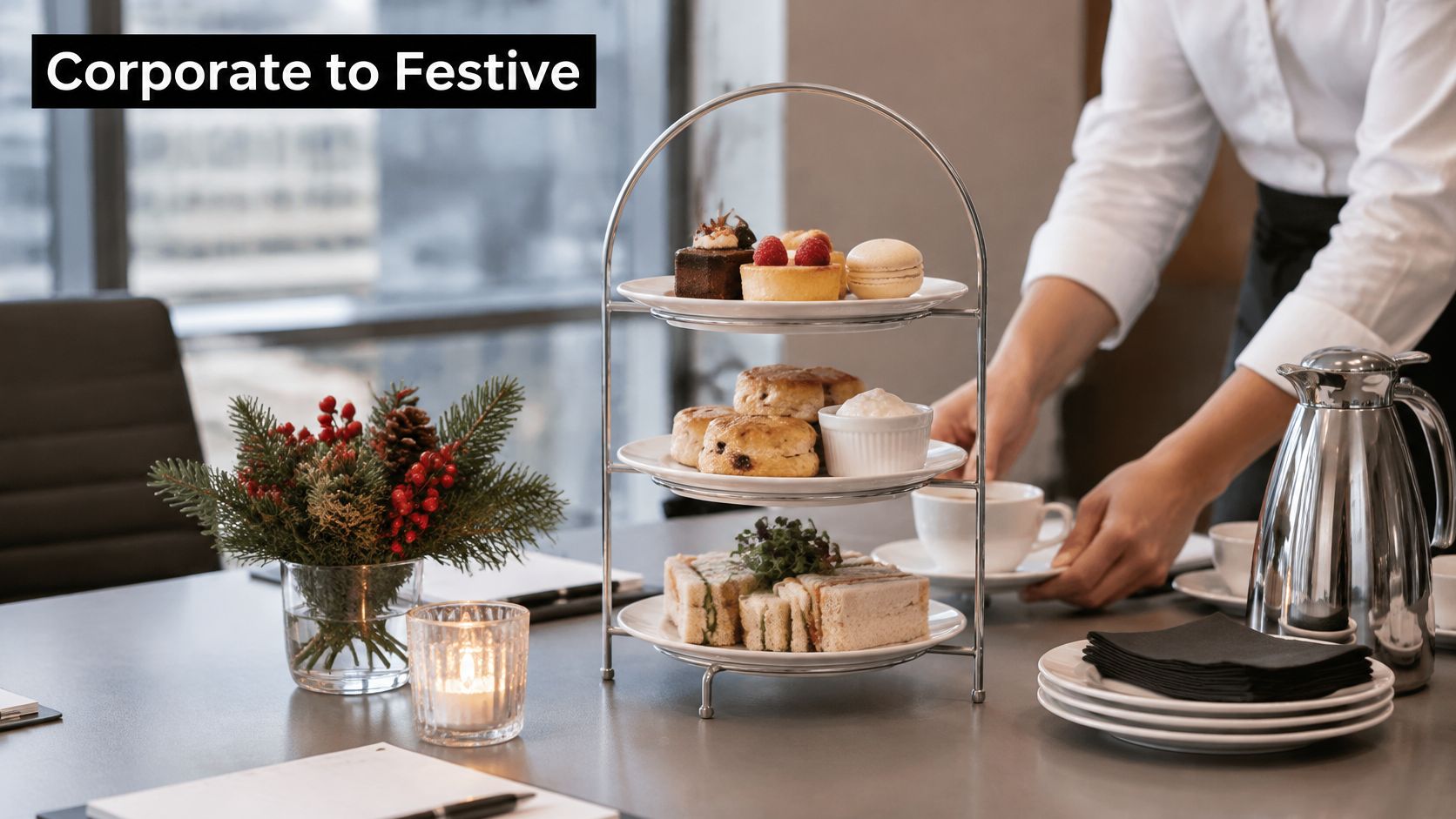
For a corporate afternoon, keep the service focused and use place cards rather than a large dessert finale. For Ramadan, shift the timing towards iftar and serve dates beside the tea, while retaining a savoury course. Guests who are fasting need a suitable service time, not a heavy late-afternoon spread.
Diwali, Christmas and UAE National Day can share the same savoury foundation. Change the colour palette and add one seasonal sweet, then offer a take-home box instead of building a second full menu. For weddings, a more complete tea service and a guest gift can make the table feel considered without adding another course.
A hamper with chocolates, panettone or pandoro, nougat and tea gives guests something to take away. If children are invited, keep a mini-bun board apart from adult allergen stands. Ask for dietary lists seven days ahead and set the guest count at the guarantee, so the kitchen isn't chasing last-minute changes. Let abundance come from timed refills, not a doubled order. Before you confirm, decide which single lever matters most: timing, gift or menu length.
Confirm Your High Tea Order in the UAE
A host choosing a high tea package from a caterer can add Italian sweets, tea or chocolates from IFM Gourmet Food Store, then decide whether a hamper suits the occasion. IFM Gourmet Dubai is a luxury online gourmet store and a division of IFM Investments LLC. Its range includes artisanal delicacies, sweets, tea and coffee, and gifts and hampers.
Keep the booking brief clear: event date, venue city, guaranteed guest count, the caterer's chosen package and menu adjustments, plus any allergen, halal or fasting notes. For a more considered table, pair the caterer's savouries with tea and Italian sweets, and label the Italian and UAE seasonal selections. Ask for staged replenishment rather than filling every tiered stand at once; guests can enjoy fresh servings as needed, with less risk of untouched food.
IFM Gourmet delivers within the UAE, including Dubai, Abu Dhabi, Sharjah, Ajman, Al Ain, Ras Al Khaimah and Fujairah. Its team can help customers select products and offer presentation tips. Reach the store by mobile at +971 (0)50 3848115, office phone at +971 (0)4 8829791, or email at contact@ifmgourmet.com. Browse the IFM Gourmet online store.
IFM Gourmet's sweets, teas and hampers can complement a high tea arranged with your caterer, from table treats to take-home gifts. Explore the IFM Gourmet Food Store when choosing what to serve or gift.

Comments