

Neck of Lamb: How to Choose, Braise and Serve It

A bone-in neck of lamb is sitting in your braising pan, looking tougher than a rack but already smelling richer as it browns. You bought it to make dinner cost less, and now you're wondering how much of that weight is bone, how long it needs, and whether it will become tender.
It can make an excellent everyday meal, provided you buy it for the right job. The useful comparison isn't neck versus rack by the kilo. It's the cost of the cooked meat you can serve, balanced against the time and fuel needed to get it there.
What Neck of Lamb Is and Why It Costs Less
Neck comes from between the head and shoulder, at the top of the carcass. It contains hardworking muscle, cervical bones and plenty of connective tissue. That structure makes it awkward to carve raw but rewarding to cook slowly.
A butcher may offer neck chops, cut across the bone into pieces around 4-5 cm thick, or boneless neck fillet, sometimes rolled and tied. Check what you're buying rather than relying on the label alone. A compact, tied fillet and a tray of bone-in chops won't give you the same serving weight.
What you're paying for
Loin and rack command higher prices because they're convenient: cook them quickly, rest them and serve. Neck asks you to supply the time instead. Its collagen-rich connective tissue needs prolonged moist cooking before the meat feels supple rather than rubbery.
The lower counter price isn't automatically a saving. Bone, thick outer fat and trimming all reduce the amount you'll put on a plate, while a long cook adds another cost. Neck makes most sense when you use the sauce as well as the meat and cook enough to justify heating the oven.
UAE sourcing also matters. A Glasgow Insights UAE sheep-meat market assessment reported that imports supplied 58% of domestic sheep-meat demand in 2020. Imported chilled and frozen neck therefore deserves consideration alongside locally sourced meat; ask about origin and whether the product has previously been frozen.
When another cut is better
Neck isn't a substitute for every lamb recipe. Thin slices won't turn it into a tender stir-fry cut, and an acidic marinade won't make raw neck behave like loin.
Buying rule: If dinner can cook for two hours or more, neck is a sensible candidate. If you need lamb ready in twenty minutes, choose another cut.
That's a buying filter, not a promise that every neck portion will be tender on schedule.
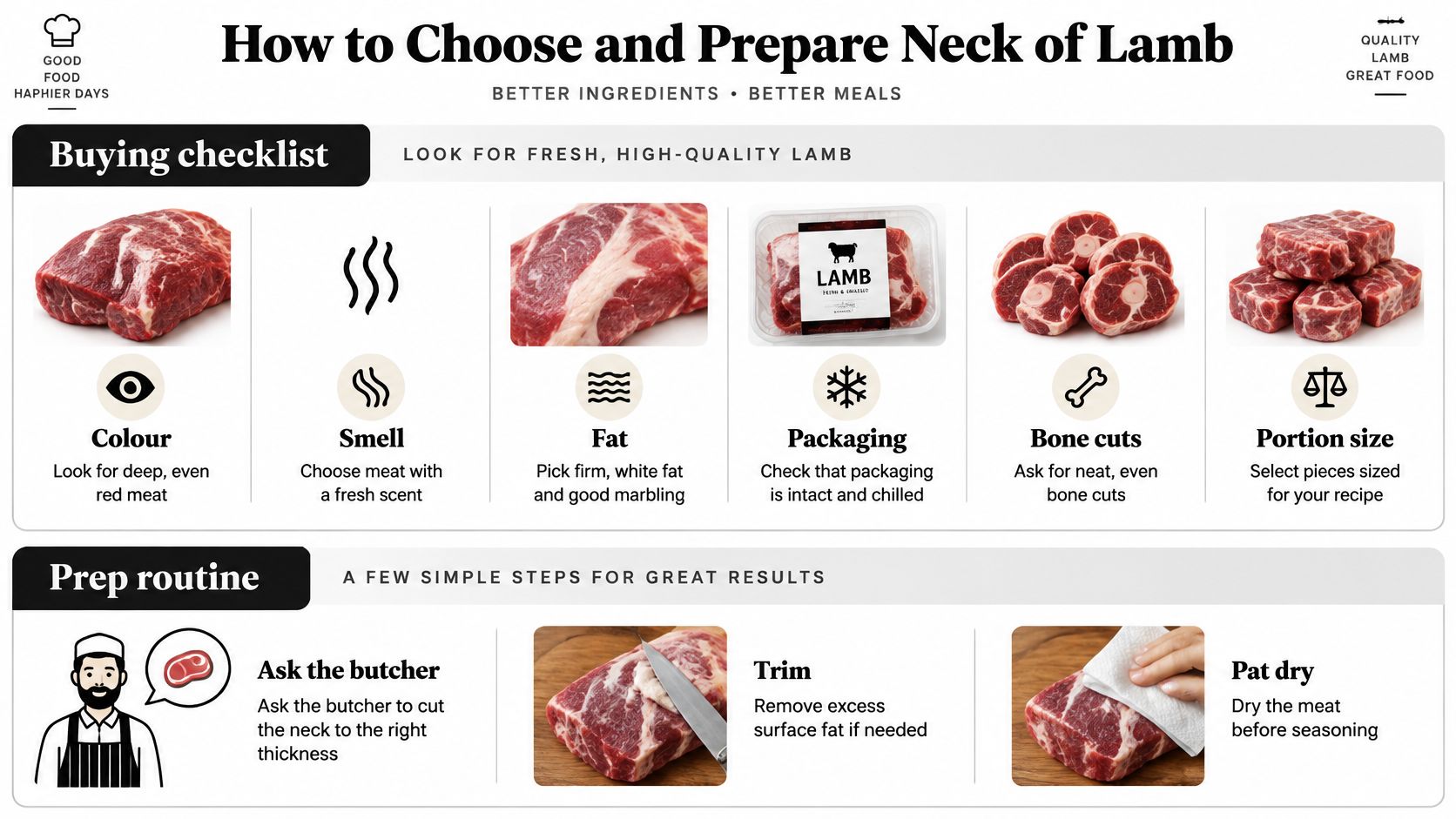
How to Choose and Prepare Neck of Lamb
Buying checklist for neck of lamb
Check | Good sign | Warning sign |
|---|---|---|
Colour | Bright pink-red, moist surface | Grey or brown edges, dull patches |
Smell | Clean, faintly sweet | Sour, sharp or ammonia-like |
Fat | Firm and creamy white | Yellow, soft or greasy |
Packaging | Sealed, cold to touch, date in range | Torn, leaking or warm |
Bone cut | Clean, even cut through the joints | Splintered or loose bone fragments |
Use these checks together. Colour alone doesn't establish freshness, particularly in vacuum packaging, but leaking packs, an unpleasant smell or warm meat are reasons to reject the purchase.
The wider supply chain supports buying neck in the UAE, although availability differs between counters. IndexBox puts UAE lamb and sheep-meat consumption at approximately 47,000 tonnes in 2024, a broad category rather than a neck-specific figure.
Neck is also familiar to consumers: the NZTE UAE red-meat report says 49% of surveyed UAE consumers selected lamb neck as a cut they usually eat. Even so, confirm stock before planning a meal around it.
Get the butcher to do the difficult cutting
Ask for evenly sized portions around 4-5 cm thick, separated through the cervical joints where practical. Cross-cut chops may require a butcher's saw; don't try to force a kitchen knife through bone. Ask the butcher to remove loose fragments.
For a main course, allow about 350-400 g of bone-in neck per adult as a starting portion. Choose similarly thick pieces so smaller chops don't collapse while larger ones remain firm.
This preparation guide gives you a counter-to-kitchen checklist.
Prepare without stripping away the flavour
Keep it cold: Take an insulated bag for the journey home, particularly if you have other shopping to finish.
Trim selectively: Remove thick outer deposits of fat, leaving a thin layer. Don't dig through the meat trying to remove every connective seam.
Dry the surface: Pat with kitchen paper rather than washing under the tap. A wet surface delays browning and washing can spread raw-meat splashes.
Season ahead: Salt at least an hour before cooking, or overnight in the fridge, then blot away surface moisture before browning.
Keep fresh neck at or below 4°C and cook within two days, respecting an earlier use-by date. For longer storage, wrap tightly and freeze; thaw in the fridge in a tray that catches drips.
Choosing the Right Method for Neck of Lamb
Cooking methods for neck of lamb
Method | Heat and setting | Time | Texture | Best for |
|---|---|---|---|---|
Braise | Covered casserole at 150-160°C, with liquid | 2.5-3.5 hours | Fork-tender, saucy | Pasta sauce, polenta, weekend dinners |
Slow-roast | Uncovered at 140-150°C, with attentive basting | 3-4 hours | Crisp edges, pulls from bone | Sunday platter for a crowd |
Grill, pre-cooked cubes | Medium-high charcoal or gas | 8-10 minutes in total | Charred outside, tender inside | Skewers after braising |
Grill, raw neck | Direct high heat | Not recommended | Chewy and tough | Avoid for this cut |
These are working cooking windows, not guaranteed finishing times. Portion thickness, the shape of the joint and your actual oven temperature affect the result.
Braise by default
A covered braise is the most forgiving route, especially for a first purchase. You can check the liquid, turn the pieces and continue cooking without sacrificing the whole dish.
Use a heavy casserole wide enough to hold the chops without a deep pile. A tight lid matters more than chasing an exact oven setting: escaping steam can leave the pan dry even when the thermostat looks correct.
The usual mistake is treating a braise like soup. The meat needs a controlled, moist environment, not fierce bubbling that tosses the pieces around and reduces the sauce too quickly.
Roast for presentation, grill for finishing
Slow-roasting suits a substantial, fatty piece that can be basted. Small, lean portions are less forgiving when exposed to dry heat. If the outside dries before the center softens, protect the meat with a cover rather than continuing purely for appearance.
Grilling is a finishing method for neck, not the main tenderizing stage. Start with meat already cooked until tender, then use the grill to add smoke and browned edges. The mistake is expecting direct heat to fix toughness; it usually darkens the outside while leaving the inside resistant.
A fork should enter easily, and a gentle twist should separate the meat. If it fights back, the clock hasn't decided dinner is ready.
Don't keep cooking once every piece has reached the texture you want. Lift out finished portions if neighboring pieces still need time, and keep them moist with cooking liquid.
How to Braise Neck of Lamb in Tomato and Rosemary
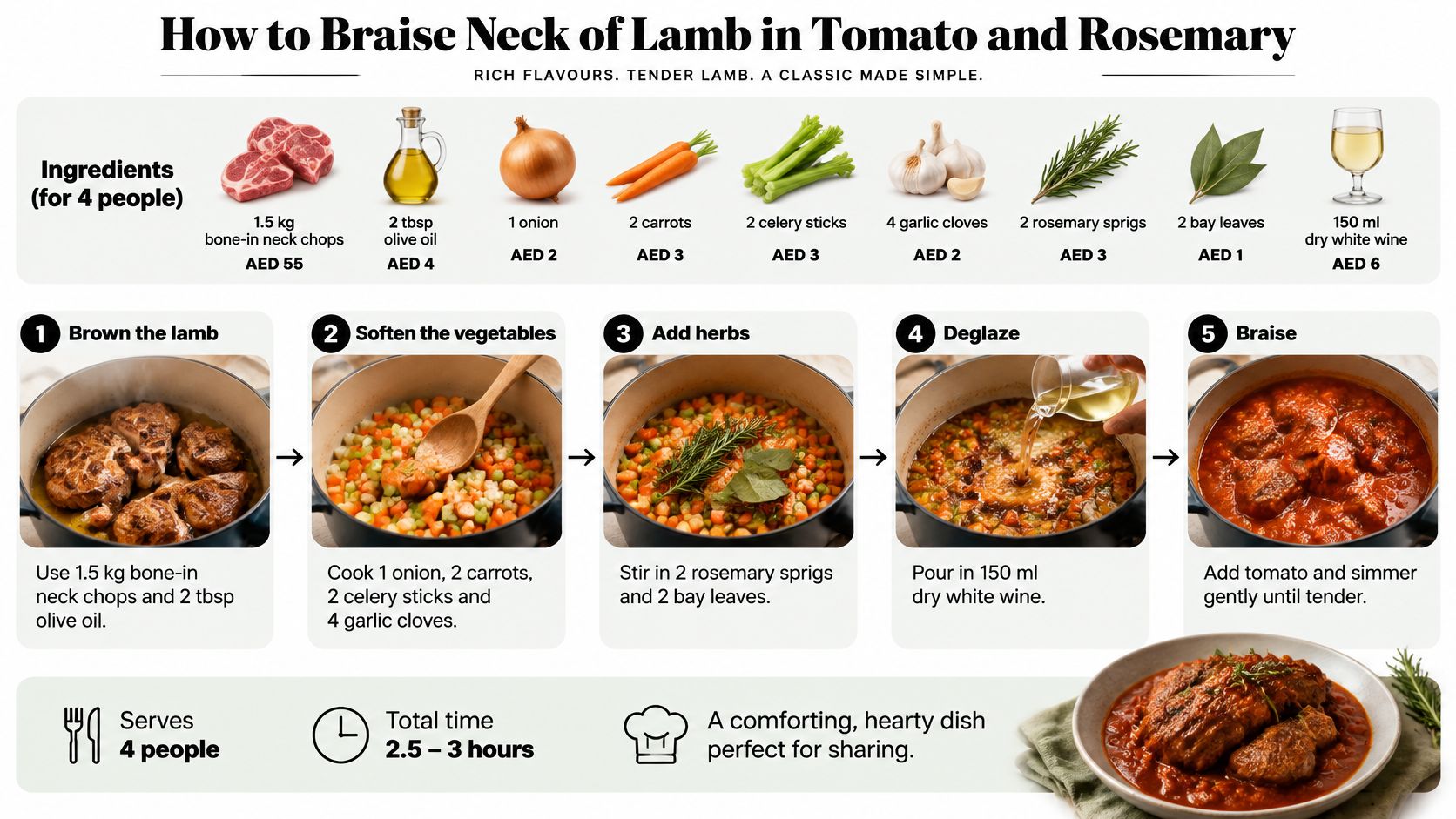
This braise serves four, with enough tomato and rosemary sauce to spoon over polenta or pasta. Use a heavy casserole with a tight-fitting lid, long tongs, a wooden spoon and a fork. Keep a calibrated probe thermometer ready to check the meat safely.
Ingredients
Lamb and oil: 1.5 kg bone-in neck chops and 2 tbsp olive oil.
Vegetables: 1 onion, 2 carrots and 2 celery sticks, finely diced.
Garlic and herbs: 4 garlic cloves, chopped; 2 rosemary sprigs; 2 bay leaves.
Liquids: 150 ml dry white wine, one 400 g tin of tomatoes and 400 ml stock.
Seasoning: 1 tsp salt to start, plus black pepper and additional salt only after tasting.
Use lightly salted stock because the sauce will reduce and concentrate. If using a cube, check its strength before adding it; the guide to cooking with a chicken stock cube can help you judge how much seasoning the stock contributes.
If wine doesn't suit your household, use stock in its place and adjust the finished sauce with lemon. Cooking doesn't necessarily make a wine-based dish appropriate for everyone who avoids alcohol.
The infographic below shows the main preparation stages.
Cooking steps
Season for at least an hour. Coat the chops with salt and black pepper, then refrigerate while you prepare the vegetables and preheat the oven to 160°C.
Brown for about 4 minutes per side. Heat the oil and brown the chops in three batches. Leave space between pieces so they fry rather than steam.
Soften the vegetables for 8 minutes. Remove the lamb, lower the heat and cook the onion, carrots and celery. Add the garlic and cook for one minute.
Deglaze and reduce by half. Pour in the wine and scrape the browned deposits from the casserole with a wooden spoon. Stop if any patches are black and bitter, since they can spoil the sauce.
Set the liquid level at roughly two-thirds of the meat. Add the tomatoes, stock, rosemary and bay, then return the chops. Add a little water or stock if needed to reach the right level.
Cover and braise at 160°C for 2.5-3 hours. On the hob, keep the liquid at a gentle simmer. Check that the base isn't catching and the liquid isn't disappearing.
Start the fork test at 2.5 hours. If the meat resists, cover the casserole and return it to the oven for another 30 minutes before testing again.
Check the thickest, slowest-heating part. The Dubai Municipality Food Code requires raw animal-origin foods to reach a core temperature of at least 75°C, checked with a calibrated thermometer.
Rest for 15 minutes, then finish the sauce for 5-10 minutes. Lift out the lamb and skim the surface fat. Simmer the sauce uncovered until it coats a spoon, then return the meat.
Fix the sauce without damaging the meat
Keep the probe away from bone when checking temperature. The temperature check establishes food safety, not tenderness, so use the fork as well.
A rolling boil can make the meat stringy and break up its surface before the center softens. Lower the heat if the liquid churns instead of bubbling gently.
If the sauce tastes greasy, skim it rather than adding tomato to mask the fat. If it's thin, reduce it with the meat removed. If it's too salty, add unsalted liquid and accept a looser sauce rather than concentrating it further.
Slow-Roast, Grilled and Marinated Variations
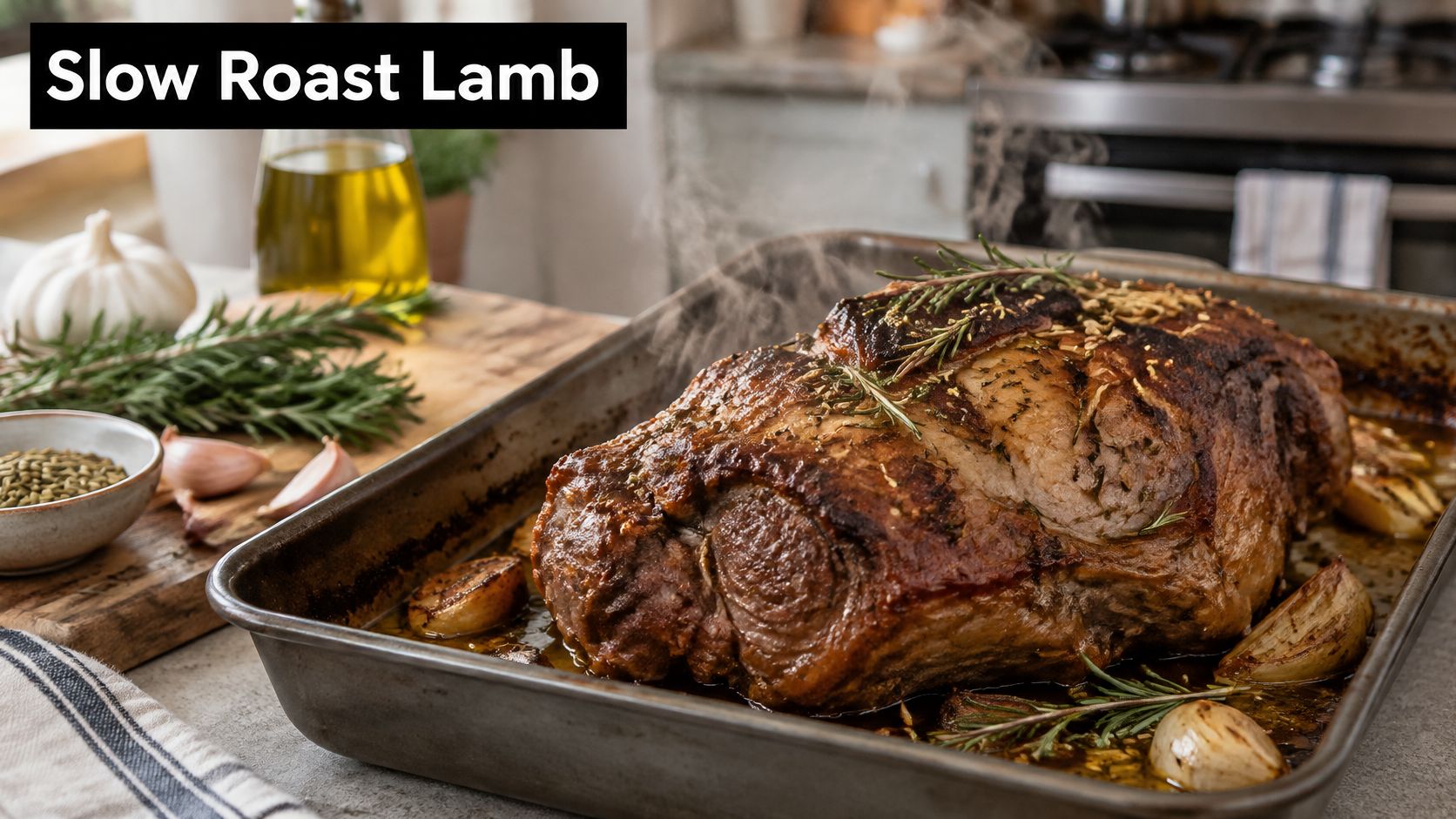
For a slow roast, rub 1.5 kg of neck with salt, crushed garlic, rosemary, fennel seed and olive oil. Choose a substantial piece with some protective fat rather than a tray of small, lean chops.
A roasting pan lets you collect the juices for basting and serving.
Keep the roast from drying out
Roast uncovered at 140°C for 3-4 hours, basting with pan juices every 45 minutes. Add a splash of water if the pan starts drying, and cover the meat if its surface is darkening before it becomes tender.
Rest for 15 minutes before carving or pulling. Don't chase neat slices if the joint naturally separates into soft chunks; arrange those on a warm platter and spoon over the strained juices.
For skewers, braise or gently boil the neck until tender, cool it promptly and chill until firm enough to handle. Remove the bones, cut the meat into roughly 3 cm pieces and marinate under refrigeration.
Choose flavour to suit the finish
Marinades and rubs for neck of lamb
Flavour | Main ingredients | Marinate time | Best method |
|---|---|---|---|
Lemon and oregano | Lemon zest and juice, oregano, garlic, olive oil | 4-12 hours | Grilled cubes |
Rosemary and fennel rub | Rosemary, fennel seed, garlic, salt, olive oil | 2-24 hours | Slow-roast |
Balsamic and thyme | Balsamic vinegar, thyme, honey, black pepper | 2-6 hours | Grilled cubes or slow-roast |
Yoghurt and za'atar | Plain yoghurt, za'atar, lemon, garlic | 12-24 hours | Grilled cubes |
Chilli, cumin and coriander | Ground cumin, coriander, chilli flakes, garlic, oil | 6-12 hours | Grilled cubes |
Keep strongly acidic marinades under 24 hours, using the shorter end of the range when the meat is already cooked. Long exposure to lemon or vinegar can leave the surface mealy rather than improve the center.
Shake off excess marinade before grilling. Honey scorches and thick yoghurt coatings stick, so leave a thin film rather than a dripping layer.
For a visual accompaniment to the cooking variations, use this video.
Grill the pre-cooked cubes over medium-high heat for 8-10 minutes in total, turning for even browning and checking that they're hot through. Handle them gently with tongs, since tender meat can split if repeatedly pierced.
Keep all marinating meat chilled. Discard marinade that touched raw meat unless you boil it before using it as a sauce, and keep cooked-meat utensils separate from raw-meat equipment.
Italian-Accented Sides and Drinks That Pair Well
Match the side to the amount of sauce and the texture of the lamb. A glossy tomato braise wants something absorbent; a roasted platter benefits from acidity and crunch.
Choose the starch around the sauce
Soft polenta finished with butter and Parmesan is the simplest partner for the tomato-and-rosemary braise. Keep it loose enough to spread under the meat, rather than setting it into a stiff mound. The cornmeal carries the sauce, while the cheese adds savoriness without another competing herb mixture.
Saffron risotto, in the Milanese style, works especially well with lamb served in smaller pieces. Its gentle sweetness suits the rich meat, but keep the tomato sauce restrained so it doesn't overwhelm the saffron. Spoon the lamb beside the risotto rather than burying it.
For slow-roast neck, choose a cannellini bean salad with mint, lemon and olive oil. Drain the beans well and fold them gently so they stay intact. The fresh dressing cuts through the roast's fatty edges.
Add freshness, not more richness
For grilled skewers: Serve charred courgette and gremolata made with parsley, lemon zest and garlic. Add the gremolata after grilling so its fresh flavor stays distinct.
For a leafy side: Use a sharp dressing sparingly; the guide to balsamic vinegar salad dressing offers another direction when you want a sweeter acidic note.
For a family platter: Keep the accompaniments easy to pass and let people add sauce themselves.
For wine drinkers, Chianti Classico or Montepulciano d'Abruzzo suits the tomato braise. Sicilian Nero d'Avola works with grilled cubes and their darker, charred flavors.
Alcohol availability depends on the venue and its licence, so make the non-alcoholic choice equally deliberate. A pomegranate and mint spritz gives tartness and a little fruit; sparkling water with lemon and rosemary is cleaner beside strongly seasoned skewers.
One rich side and one fresh side are enough for a family meal. More dishes don't necessarily make the lamb better.
Confirm Your Cut and Cook It This Week
Neck can make an economical everyday meal, but the value depends on how much meat remains after cooking. AHDB's UAE consumer insight reports total UAE meat volume rising from 201.2 thousand tonnes in 2020 to 273.5 thousand tonnes in 2025. That broad increase says nothing about the usable yield of an individual pack, so weigh your own cut.
Measure what reaches the plate
Yield worksheet for neck of lamb
Measure | How to record |
|---|---|
Raw neck weight | Weigh before cooking |
Cooked meat pulled from bone | Weigh after resting and pulling |
Bone | Weigh separately after pulling |
Fat and liquid removed | Weigh after skimming |
Usable yield | Cooked meat divided by raw weight |
Weigh the pulled meat without sauce. Record saved cooking liquid separately: it can enrich a broth or risotto, but counting it as meat makes the yield comparison misleading. Evaporation also means the weights will not balance exactly.
Use braised meat for pasta or polenta, and reserve shredded leftovers for sandwiches or arancini. Neck suits a long braise or a substantial slow-roast centerpiece; it is a poor choice for raw grilling, where its connective tissue will not have time to soften.
Build a practical pantry around it
IFM Gourmet Food Store in Dubai is a specialty emporium offering Italian pantry staples such as premium olive oil, San Marzano tomatoes and polenta, alongside artisanal sweets, fine chocolates and teas. It also offers curated gift hampers.
Buy the neck from your butcher and plan the braise for this weekend. Chill leftovers promptly in shallow containers, store at or below 4°C, and reheat shredded meat to 75°C before serving in sandwiches or using for arancini.
IFM Gourmet Food Store offers Italian pantry ingredients and artisanal delicacies for home cooking and gifting. Choose olive oil, tomatoes and polenta at IFM Gourmet Food Store to round out a slow-braised neck-of-lamb dinner and make use of the leftovers.

Comments