

Italian Pasta Salad: Recipes, Variations, and Serving Tips

The bowl is ready for a Friday lunch in Dubai. The pasta is tender, the tomatoes are bright, and the mozzarella looks inviting, but the true test comes when guests return for a second helping. A good Italian pasta salad stays lively after chilling, travels well, and gives everyone something familiar to enjoy.
The best versions aren't just pasta mixed with bottled dressing. They balance firm pasta, sharp acidity, good olive oil, fresh vegetables, herbs, and ingredients that remain appealing when cold. In the UAE, that balance also needs to account for heat, transport, buffet timing, and sensible portions.
Why Italian Pasta Salad Works for Dubai Tables
By the time a Dubai brunch table fills with grilled meats, rice, dips and bread, one cold dish usually earns repeat visits. Italian pasta salad does that job well. It cools the plate down, sits comfortably beside richer food, and looks at home at both a family lunch and a polished office buffet.
It also solves real hosting problems. Dried pasta is shelf-stable, and the rest of the bowl can be built from ingredients that are easy to buy through local supermarkets and hospitality suppliers, including tomatoes, herbs, olive oil, cheese and preserved vegetables. That matters when you are feeding a crowd and need a dish that is reliable, easy to scale, and still recognisably Italian.
A good version is structured, not random. Short pasta gives the salad shape, olive oil and acid keep it lively, tomatoes and herbs bring freshness, and mozzarella, pecorino or another firm cheese add weight without making the bowl heavy. The pasta should stay separate rather than clump together. Each bite should taste seasoned all the way through, especially after chilling.
The useful test: If the salad looks attractive but tastes flat after chilling, it needed more seasoning before it reached the table.
A natural fit for imported ingredients
In the UAE, imported food is part of everyday cooking, not a special exception. The country imports about 90% of its agro-food products because of its hot, dry climate, according to trade reporting on Italian food in the UAE. That helps explain why Italian pasta, tomatoes, olive oil, cheeses and preserved vegetables are such practical choices for home cooks, caterers and restaurants here.
The trade pattern also helps make the dish feel natural on local tables. Italian agro-food and beverage exports to the UAE reached €252.5 million in 2015, with restaurants identified as a preferred distribution channel because they need regular supplies of products such as pasta and tomatoes. In practice, that means an Italian pasta salad in Dubai can be authentic without being hard to source or awkward to serve.
For entertaining, it has another advantage. It can be plated neatly in a shallow dish, portioned modestly, and served cold without losing its appeal in an air-conditioned room. For more polished gatherings, presentation cues from private wine estate events suit this style well, especially restrained garnishes and smaller bowls that stay fresh-looking longer than one large, overloaded platter.
Choosing Ingredients Worth Buying
Start with the pasta. Fusilli, penne, orecchiette and farfalle all work because their curves, ridges or folds catch dressing. Very smooth pasta can leave the oil and vinegar at the bottom of the bowl, while delicate shapes can become soft after several hours.
Bronze-die pasta has a rougher surface than highly polished pasta, so it holds olive oil, herbs and emulsified dressing more effectively. That texture is particularly useful when you're preparing the salad ahead. IFM Gourmet's artisanal range is one place to look for that style of imported Italian pasta, alongside the store's wider selection of Italian pantry products.
Build the shopping basket around contrast
Choose extra-virgin olive oil with a clean, fruity taste for the dressing. A more pronounced finishing oil can be saved for the final drizzle, where its aroma is easier to notice. You don't need the most expensive bottle for every stage, but poor-quality oil can make a cold salad taste heavy or stale.
Traditional balsamic vinegar brings sweetness and depth, though it can dominate a delicate tomato and basil salad. Use it with salami, artichokes, roasted peppers or pecorino. Lemon juice gives a fresher, sharper profile for cucumber, mozzarella and leafy herbs.
For cheese, mozzarella, fior di latte, pecorino and aged hard cheeses each serve a different purpose. Fresh mozzarella gives softness and moisture, while pecorino and other hard cheeses provide salt and savoury intensity without disappearing into the dressing. Cured meats such as salami can make a bowl feel more substantial, but they also bring salt, so season gradually.
San Marzano tomatoes, premium olive oils, traditional balsamic and fine cheeses form a useful premium pantry. You'll find those categories alongside other gourmet provisions at IFM Gourmet's Italian pantry selection. For fresh ingredients, choose tomatoes that hold their shape, cucumbers that aren't watery, and herbs that look crisp rather than tired.
A practical basket might include:
Pasta: Fusilli or farfalle for a dressing-friendly base.
Fresh produce: Cherry tomatoes, cucumber, red onion, basil, parsley or baby spinach.
Texture: Roasted peppers, artichokes, olives or beans.
Protein: Salami, tuna, grilled chicken or another ingredient suited to the occasion.
Dressing: Olive oil, lemon or vinegar, oregano, black pepper and a little mustard if desired.
Finish: Mozzarella pearls, fior di latte, pecorino or grated hard cheese.
The video below is useful for observing the broad mixing rhythm, especially how gently the ingredients should be combined once the pasta has cooled.
Cooking, Cooling and Assembling the Salad
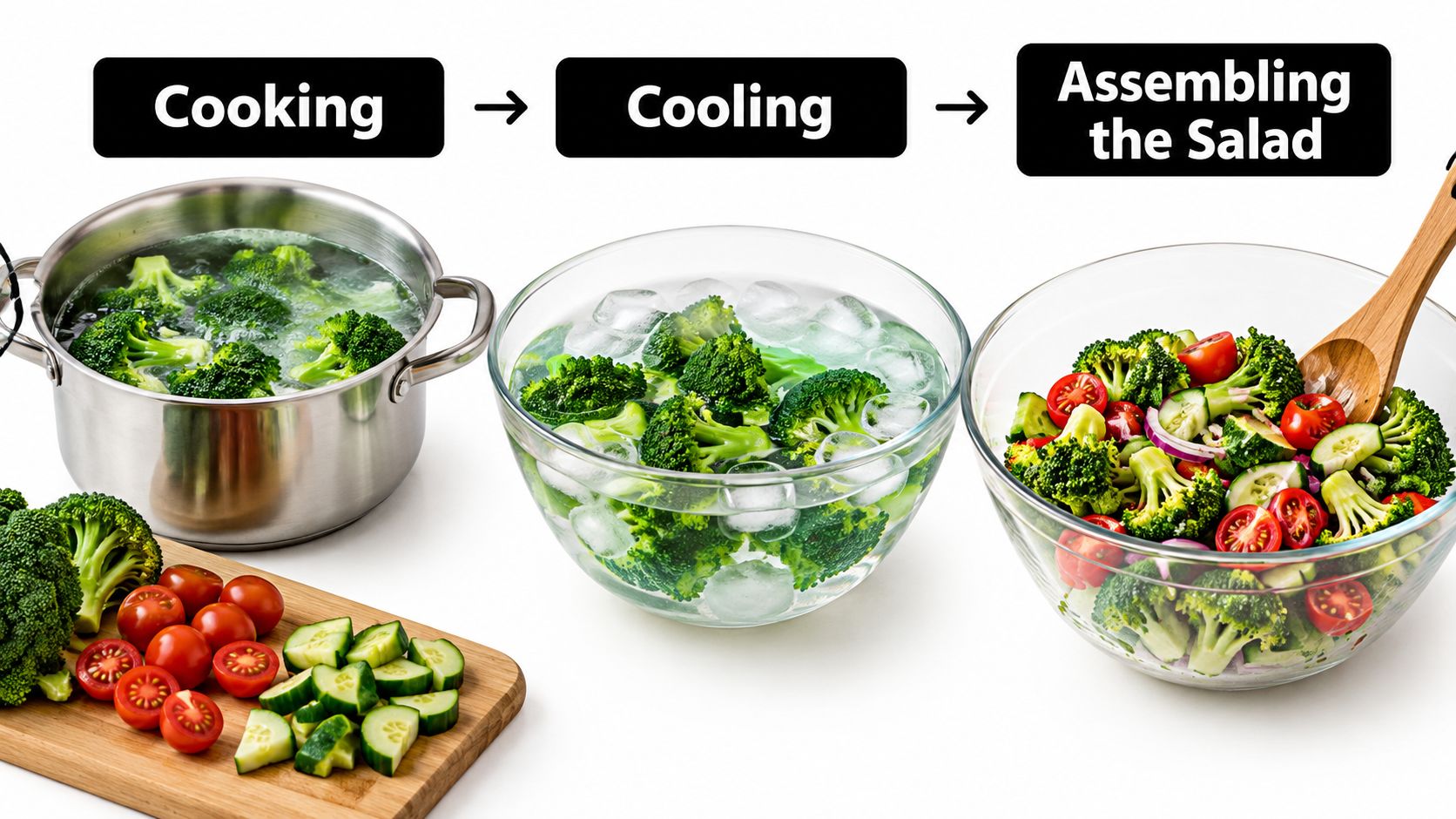
Cold pasta salad needs more seasoning than a hot pasta dish because chilling dulls aroma and firms the texture. Begin with generously salted water. It should taste pleasantly seasoned before the pasta goes in, not merely warm and salty.
Cook the pasta until it is just past al dente, following the package timing as a guide rather than treating it as an absolute. The centre should retain a slight bite because the pasta will absorb dressing as it rests. Overcooked pasta has nowhere to go, and it turns soft once tomatoes, oil and vinegar have had time to work through the bowl.
Drain promptly. If the pasta is already at the texture you want and you need to stop the cooking immediately, cool it briefly under cool running water. Don't leave it submerged, and don't let it sit in a deep, hot pot. Toss it with a light coating of olive oil so the pieces separate while you prepare the other ingredients.
Season in layers
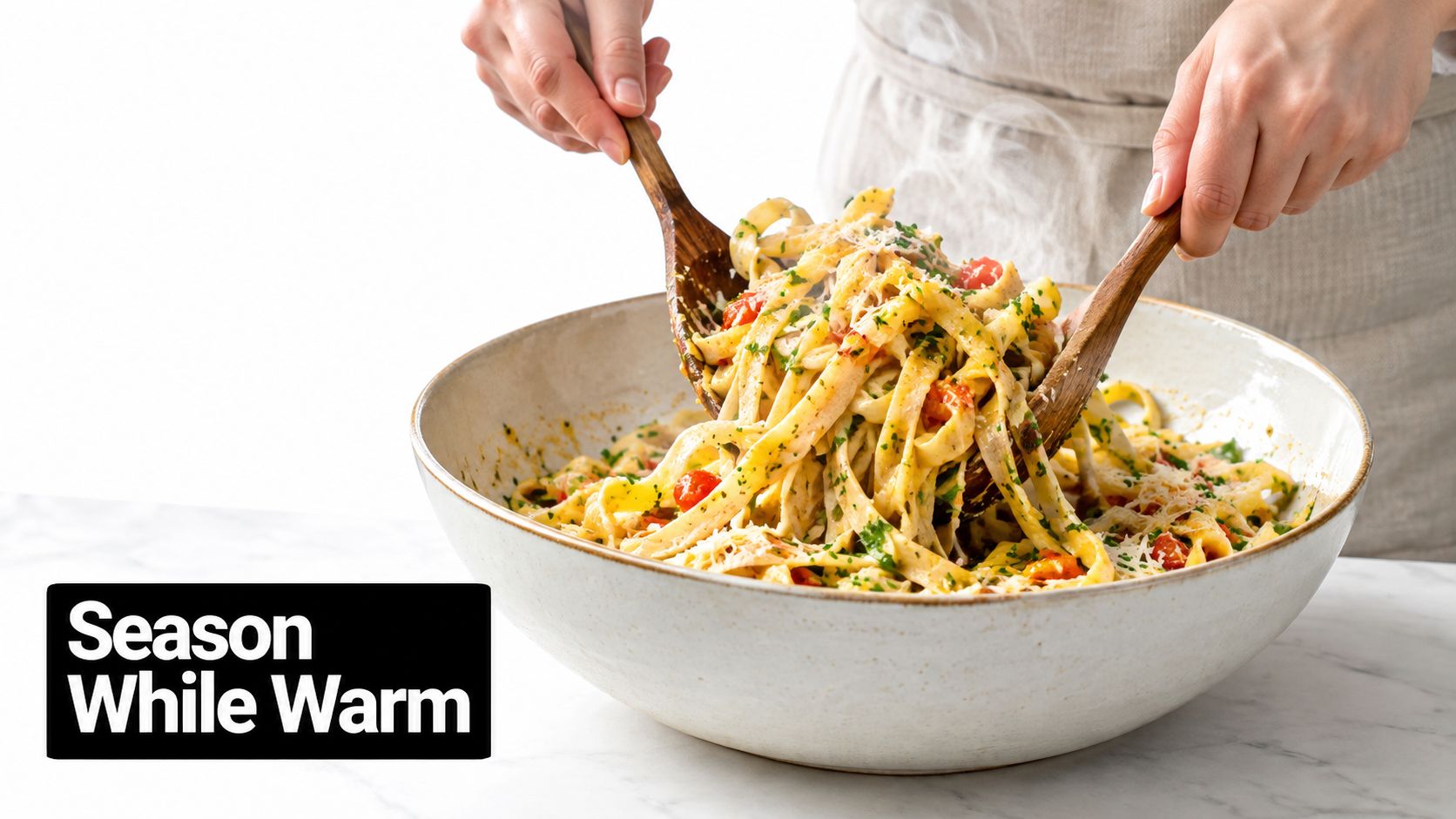
Add the first part of the dressing while the pasta is still warm or just cooled. Warm pasta absorbs flavour more readily, so this first coating should contain olive oil and acidity, but not so much that the bowl becomes wet.
Let the pasta lose its heat before adding mozzarella, leafy herbs or delicate vegetables. Warm pasta can wilt basil and soften spinach, while hot ingredients can make fresh cheese lose its clean texture.
Fold in the remaining ingredients with a wide spoon or flexible spatula. Tomatoes should remain intact, mozzarella should keep its shape, and herbs should distribute rather than collapse into a dark paste. Add cured meat and olives gradually because their salt can change the balance quickly.
Taste after the salad has rested briefly. You're looking for three things at once:
Acidity: Lemon juice or vinegar should lift the bowl without making it sour.
Salt: Cheese, olives and cured meat may already provide much of it.
Richness: Olive oil should coat the pasta and carry the herbs, not pool beneath it.
Practical rule: A properly dressed salad looks glossy, not greasy. The pasta should shine lightly, and the bottom of the bowl shouldn't hold a separate layer of oil.
Transfer the salad into a shallow container for faster cooling. The final visual cue is simple: every piece of pasta should have colour and seasoning, but the vegetables should still look fresh. If the bowl seems dry before chilling, add a little dressing now. If it looks wet, don't add more liquid until the pasta has had time to absorb the first layer.
Three Flavour Directions to Try
A useful pasta salad formula starts with the pasta and then chooses a clear flavour direction. Mixing every appealing ingredient into one bowl often creates a salty, confused result. These three versions have different personalities and suit different gatherings.
Classic Mediterranean
Use cherry tomatoes, cucumber, red onion, basil, mozzarella pearls, olive oil and lemon. This is the lightest and most broadly appealing option, with fresh crunch and a clean finish. It suits family lunches, warm-weather gatherings and tables where the salad needs to accompany several other dishes.
Keep the onion finely sliced and use lemon with restraint. The mozzarella should be drained well, and the cucumber should be cut shortly before assembly so it doesn't release excess water into the dressing.
Tuscan antipasto
Build a heartier bowl with salami, artichokes, sun-dried tomatoes, pecorino and a balsamic-forward dressing. The preserved ingredients bring intensity, while the cheese gives the pasta enough savoury depth to stand beside grilled food or become part of an antipasto-style spread.
This is the variation to choose for an adult dinner or a more substantial buffet. Taste before adding salt. Salami, artichokes, sun-dried tomatoes and pecorino can all contribute a strong savoury edge.
Creamy mozzarella
For a softer family-style version, combine fior di latte, baby spinach and roasted peppers with a light yoghurt- or ricotta-based dressing. It feels generous without relying on heavy mayonnaise, and the peppers give enough sweetness to balance the dairy.
Keep this version especially cold and assemble it close to service. The leafy greens and fresh cheese are at their best when they haven't been sitting in dressing for hours.
Variation | Hero Ingredients | Best For | Dressing Style |
|---|---|---|---|
Classic Mediterranean | Cherry tomatoes, cucumber, basil, mozzarella | Family lunches and mixed tables | Olive oil and lemon |
Tuscan antipasto | Salami, artichokes, sun-dried tomatoes, pecorino | Dinner spreads and substantial buffets | Olive oil and balsamic |
Creamy mozzarella | Fior di latte, baby spinach, roasted peppers | Family meals and gentle flavours | Light yoghurt or ricotta dressing |
Serving Safably in the Dubai Heat
Cooked pasta salad with mozzarella, tuna, meat, eggs, seafood or cut vegetables should be treated as temperature-controlled, ready-to-eat food. The issue isn't whether the dressing contains mayonnaise. The entire mixture becomes vulnerable when cooked pasta and perishable additions sit warm for too long.
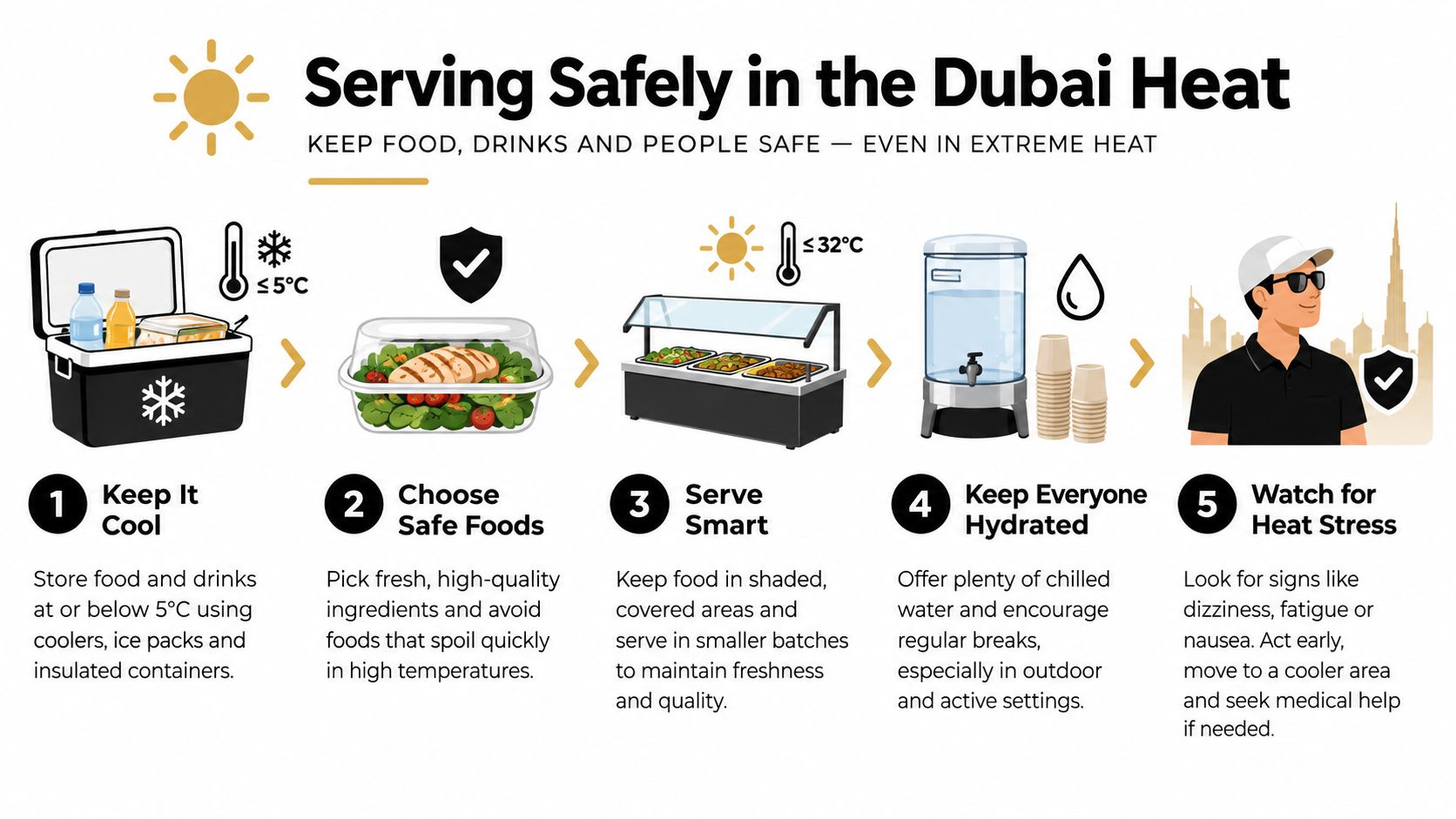
Dubai food-safety guidance requires cooked food to cool from 60°C to 20°C within a maximum of 2 hours, then from 20°C to 5°C within a further maximum of 4 hours (Dubai food-safety guidance). Once chilled, the salad should be stored at 5°C or colder and consumed within 3 days.
Spread the pasta into shallow pans after cooking rather than leaving it in a deep pot. Portioning also helps the centre cool more effectively. A calibrated probe thermometer should check the centre of the thickest container, not just the surface.
Transport and buffet control
When ambient temperatures exceed 32°C, UAE guidance says perishables shouldn't remain unrefrigerated for more than one hour (heat and food safety advice). That matters during outdoor brunches, beach gatherings, long car journeys and event setup.
Use an insulated carrier with frozen ice packs, and chill the ingredients before assembly. Serve in small bowls, keeping the rest refrigerated and replenishing gradually. For a broader explanation of temperature control, this temperature danger zone guide offers useful background, but the UAE timings above should guide Dubai service.
Keep the salad below 5°C until it reaches the table. Don't trust smell, appearance or a quick stir to judge safety. If the cooling record is uncertain or the dish has spent too long in the heat, discard it.
For a corporate reception, small portions can work especially well. A published IFM Gourmet food-party menu example uses mini cups of chilled pasta salad, a format that supports controlled service and reduces repeated handling.
Make-Ahead Strategy and Leftover Refresh
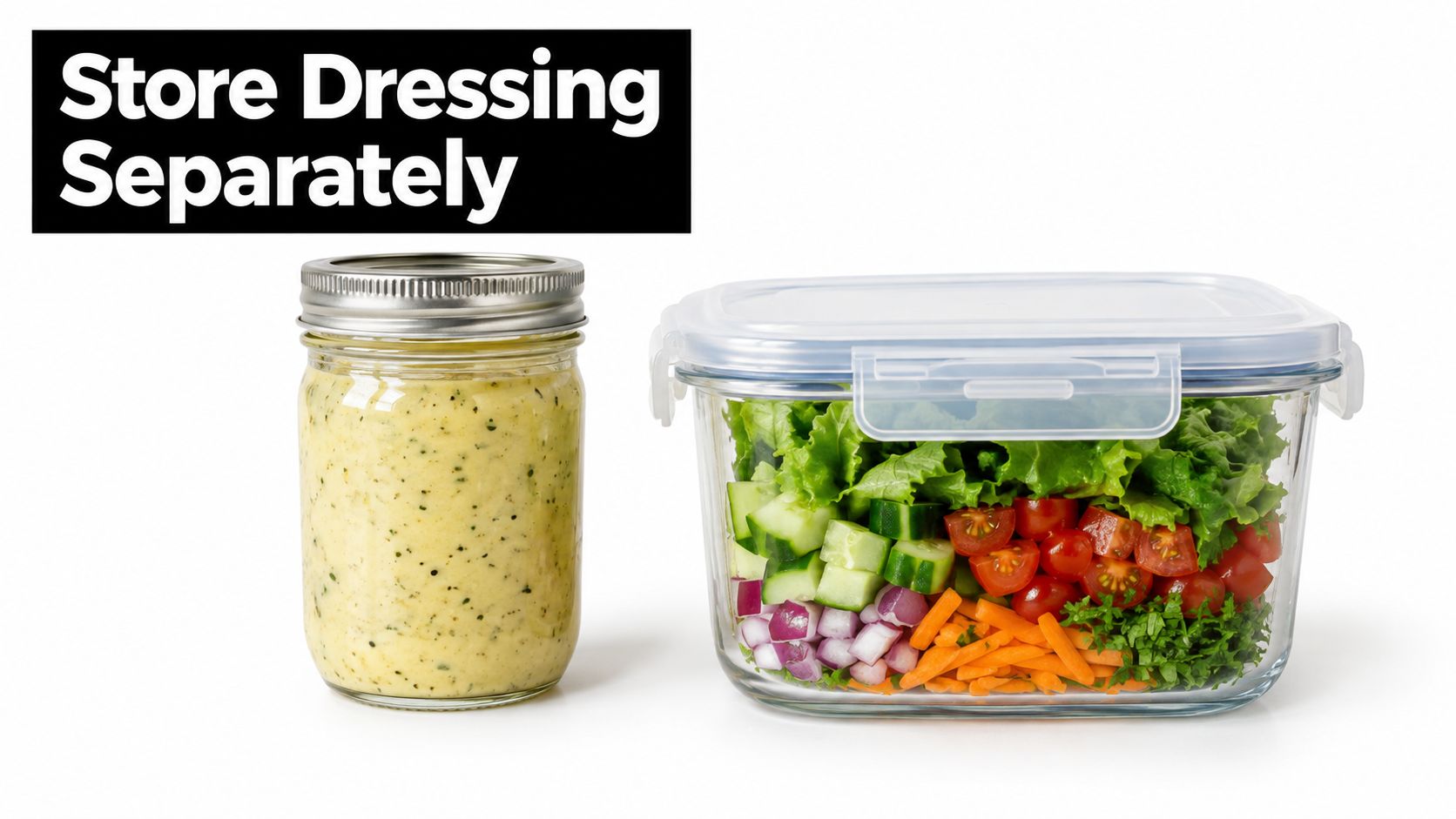
The most reliable make-ahead method keeps the components separate. Cook and cool the pasta, chop the vegetables, wash and dry the herbs, and mix the dressing in a jar. Store each part properly chilled, then combine the salad a couple of hours before service.
Pasta absorbs dressing as it sits. That improves flavour at first, but it can leave the bowl dry later. Reserve part of the dressing from the beginning rather than trying to correct the texture with a large pour just before serving.
For a safe chilled portion, loosen the texture with a small splash of olive oil, a squeeze of lemon and a pinch of salt. Add fresh herbs at the end if they've lost their colour. Don't add more dressing automatically. Taste first, because cheese, olives and cured meat may have intensified during storage.
Cook for the gathering you actually have
Large bowls look generous, but they can leave food exposed for too long and create unnecessary leftovers. Dubai generates an estimated 3.27 million tonnes of food waste annually, while Dubai reports that 38% of prepared food is wasted daily and as much as 60% during Ramadan (UAE food-waste reporting).
Use smaller serving bowls and replenish them from the refrigerator. Keep a portion plain if you expect different preferences, then add salami, cheese or herbs to the rest. This approach gives you better texture, safer service and more control over leftovers.
Your Italian Pasta Salad Checklist
Buy: Bronze-die short pasta, good olive oil, tomatoes, herbs, cheese and one clear flavour direction.
Cook: Stop at a firm texture, drain promptly and cool in shallow containers.
Dress: Season in layers, reserving some dressing for the final refresh.
Assemble: Add delicate cheese and herbs after the pasta has cooled.
Serve: Keep the salad chilled, use small bowls and replenish gradually.
Plan: Store components separately when preparing ahead.
IFM Gourmet Dubai is the luxury online gourmet arm of IFM Investments LLC, a culinary-focused UAE company. Its store offers artisanal sweets and savories, fine chocolates, premium teas, cakes and curated gift hampers, making it relevant for both ingredient shopping and composed food gifts.
For your next Italian pasta salad, visit IFM Gourmet Food Store to browse imported Italian pantry ingredients, artisanal pasta, olive oils, balsamic vinegars, cheeses and curated hampers. Choose the ingredients for your gathering, keep the salad chilled, and turn a simple bowl into a polished Dubai table centrepiece.

Comments