

Luxury Dessert Plates for Elegant UAE Entertaining

Your guests are finishing dinner, the panettone is sliced, and the gelato is waiting in the freezer. You've chosen beautiful plates, but the trial serving still looks crowded, and the chocolate sauce hides the cake. The ingredients are good. The presentation needs editing.
Luxury dessert plates work best when you plan the whole service, not just the garnish. For UAE home entertaining and hospitality events, that means choosing a clear focal point, protecting delicate components, and building a dessert that reaches guests as intended.
What Makes a Luxury Dessert Plate Work
At an Eid dinner in Dubai, a plate of panettone, gelato, chocolate, and fruit can look generous but feel confused. If every component has equal visual weight, guests don't know where to begin. If the gelato melts while you arrange the garnish, even expensive ingredients can look unfinished.
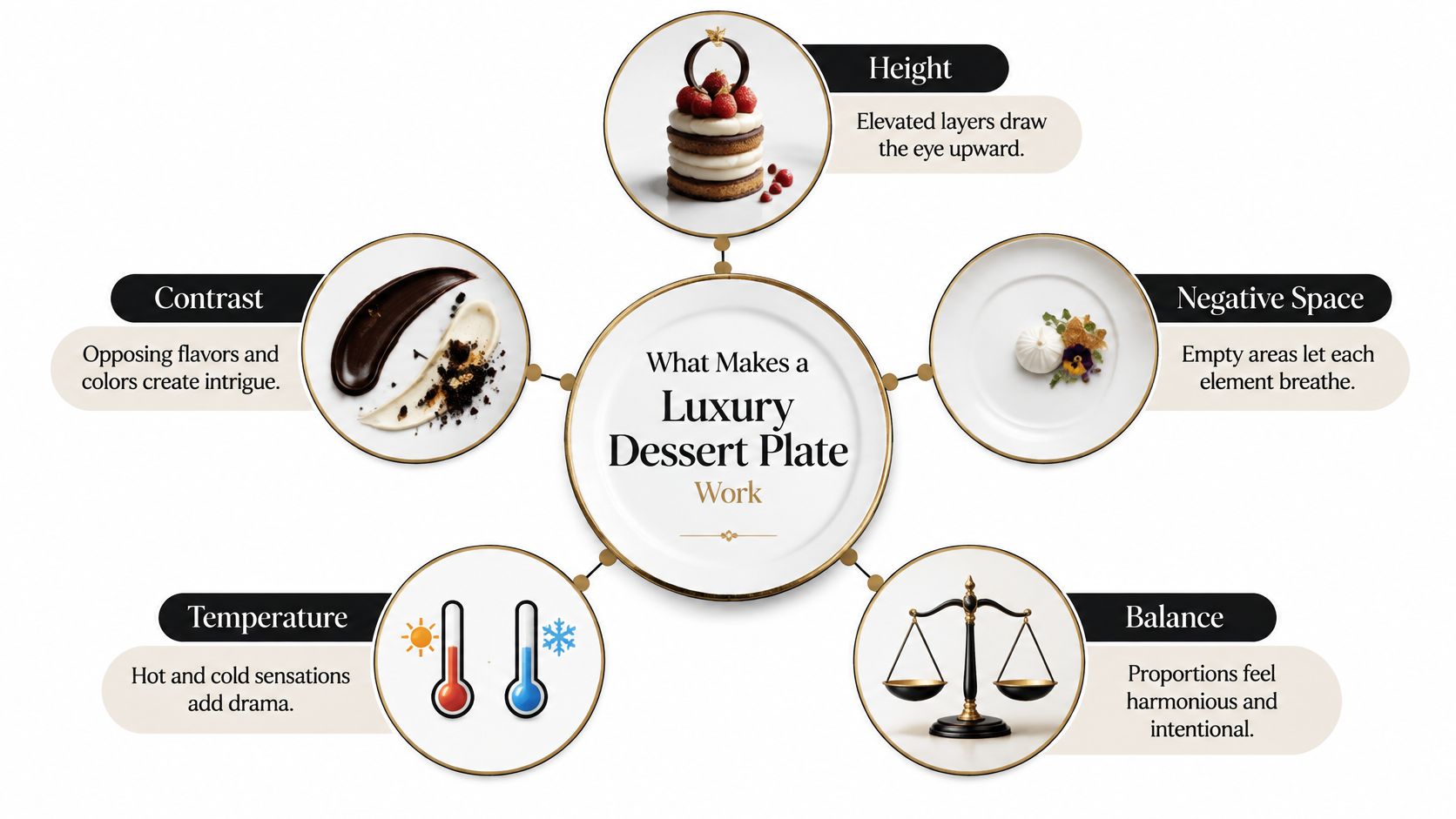
Start with a lead component. Position the panettone so its cut surface is visible, place the cold accompaniment beside rather than over it, and use fruit to introduce a deliberate color contrast. Height should come from something guests can comfortably cut and eat, not a fragile tower.
Give every component a purpose
Negative space separates ingredients so guests can see their shapes. Texture supplies another distinction: soft cake needs something different beside it, not another similarly soft, sweet component. Temperature adds interest only when the kitchen can preserve it through service.
The Visual Language of a Premium Plate
Design choice | What it contributes | Common risk |
|---|---|---|
Modest height | A distinct silhouette | Unstable stacking |
Light and dark contrast | A readable focal point | Too many competing accents |
Negative space | Separation and clarity | Food scattered without connection |
Warm and cold elements | Sensory variation | Melting before service |
Balanced proportions | A coherent serving | Garnishes overwhelming dessert |
The emphasis on presentation fits a wider tableware context. Bonafide Research projects UAE ceramic tableware growth at more than 5.67% annually from 2025 through 2030, identifying luxury-dining preferences and hotel expansion as growth drivers. That's a tableware projection, not a dessert-specific forecast.
For broader fine-dining inspiration, consult Haute Black's insider restaurant guide, then adapt your ideas to your kitchen's capacity rather than copying restaurant complexity.
Practical rule: If removing a garnish makes the dessert easier to understand and no less enjoyable, leave it off.
A heavy-looking plate usually needs subtraction. An unfinished one may need a clearer relationship between its components, not more decoration.
Choosing the Right Plate and Palette
Choose the plate with a trial portion on it, not from an empty stack. A broad surface gives you room to separate sauce and cake, but it can make a modest dessert look stranded. A narrower plate frames a compact serving, although it leaves less room for a spoon to move comfortably.
Pale ceramics offer a quiet background for chocolate, berries, and golden cake. Dark ceramics can make pale creams and lighter fruit more visible, but dark chocolate may disappear against them. Neither is automatically more luxurious.
Plate and Palette Decisions
Choice | Best visual effect | Planning cue |
|---|---|---|
Broad, flat plate | Open composition | Keep components visually connected |
Compact plate | Focused, generous-looking portion | Leave room for cutlery |
Pale porcelain | Clear ingredient colors | Check pale sauces remain visible |
Dark ceramic | Strong contrast with light desserts | Test chocolate visibility |
Decorative rim | A formal frame | Keep food inside the central area |
Textured glaze | An expressive background | Test sauce placement first |
Match the finish to the food
Bonafide's market description also identifies porcelain as a preferred UAE ceramic material and highlights interest in gold-trimmed plates, embossed motifs, and textured glazes. Treat those preferences as options, not a requirement to combine every decorative finish.
A gold rim can provide enough ornament by itself. An embossed surface may suit a clean slice of cake better than an intricate sauce pattern. On textured glaze, test your intended spoon stroke before committing to the full service.
Check the manufacturer's care and temperature guidance for your actual plates. Don't assume a decorative piece can move between refrigeration, heating, and washing processes because another ceramic plate can.
Choose the palette from the dessert outward. Start with the main ingredient's color, select an accompaniment that remains distinct beside it, and let the table setting supply any additional decoration. If the linen, flowers, and crockery are already elaborate, a restrained dessert usually looks more considered.
Build the Plate in the Right Order
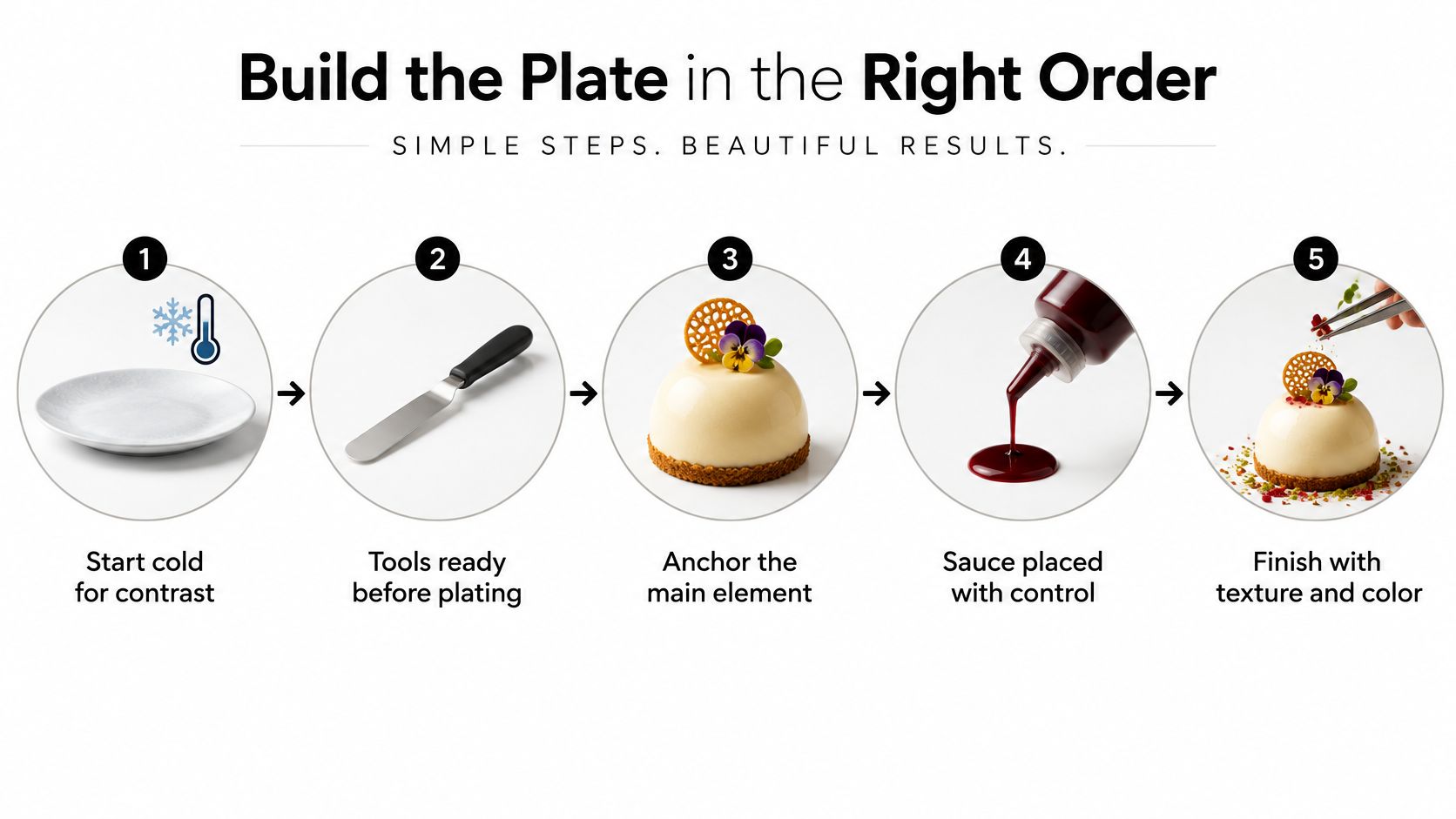
Set up the pass before bringing out sensitive ingredients. Arrange clean teaspoons, an offset spatula, a sauce bottle or small ladle, plating tweezers, and a clean rim cloth within reach. Keep backup utensils available so allergen-specific servings don't depend on hurried cleaning.
Use the following sequence as a rehearsal map, but choose the plate temperature to suit the dessert. A cold plate isn't automatically right for a warm cake.
Prepare for temperature before appearance
For UAE service, use a documented cold-chain workflow. Keep cream-, egg-, mousse-, custard-, and dairy-based components at or below 5°C until plating, maintain frozen desserts including gelato at or below -18°C in frozen storage, and discard ready-to-eat high-risk food held between 5°C and 63°C for two hours or longer, following the UAE food-safety guidance and temperature-control requirements.
Those storage controls don't mean gelato should be tempered on the counter while the rest of the plate is assembled. Follow the product's handling instructions and bring it into the sequence only when service is ready.
Establish the dessert, then finish around it
Position the main dessert first when it provides the composition's anchor. Support a panettone slice securely and expose its crumb rather than hiding it under cream. For a dessert designed to sit on sauce, place the measured sauce first, then lower the dessert carefully into position.
Add sauce with a spoon or bottle you can control. Test its consistency separately: it should hold the intended shape without requiring repeated repairs. Avoid dragging a spoon through a failed pool until it becomes a larger smear.
Plating Sequence at the Pass
Moment | Action | Quality check |
|---|---|---|
Preparation | Arrange tools and protected components | Work area is clean and ready |
Main placement | Position cake or focal dessert | Portion sits securely |
Sauce | Apply a controlled amount | No unintended pooling |
Texture | Add crisp elements and prepared fruit | Surfaces remain distinct |
Dispatch | Add gelato and delicate garnish | Plate is ready to leave |
Keep dry crumbs and chopped nuts away from wet components until the finish. Drain prepared fruit when excess liquid would spread across the plate, and cut chocolate accents so guests can eat them comfortably.
Finish with gelato, then inspect from the guest's seated viewpoint. Wipe the rim with a clean cloth and send the plate out. If you're still searching for a garnish after adding the frozen component, the setup wasn't ready.
Create Contrast with Italian Ingredients
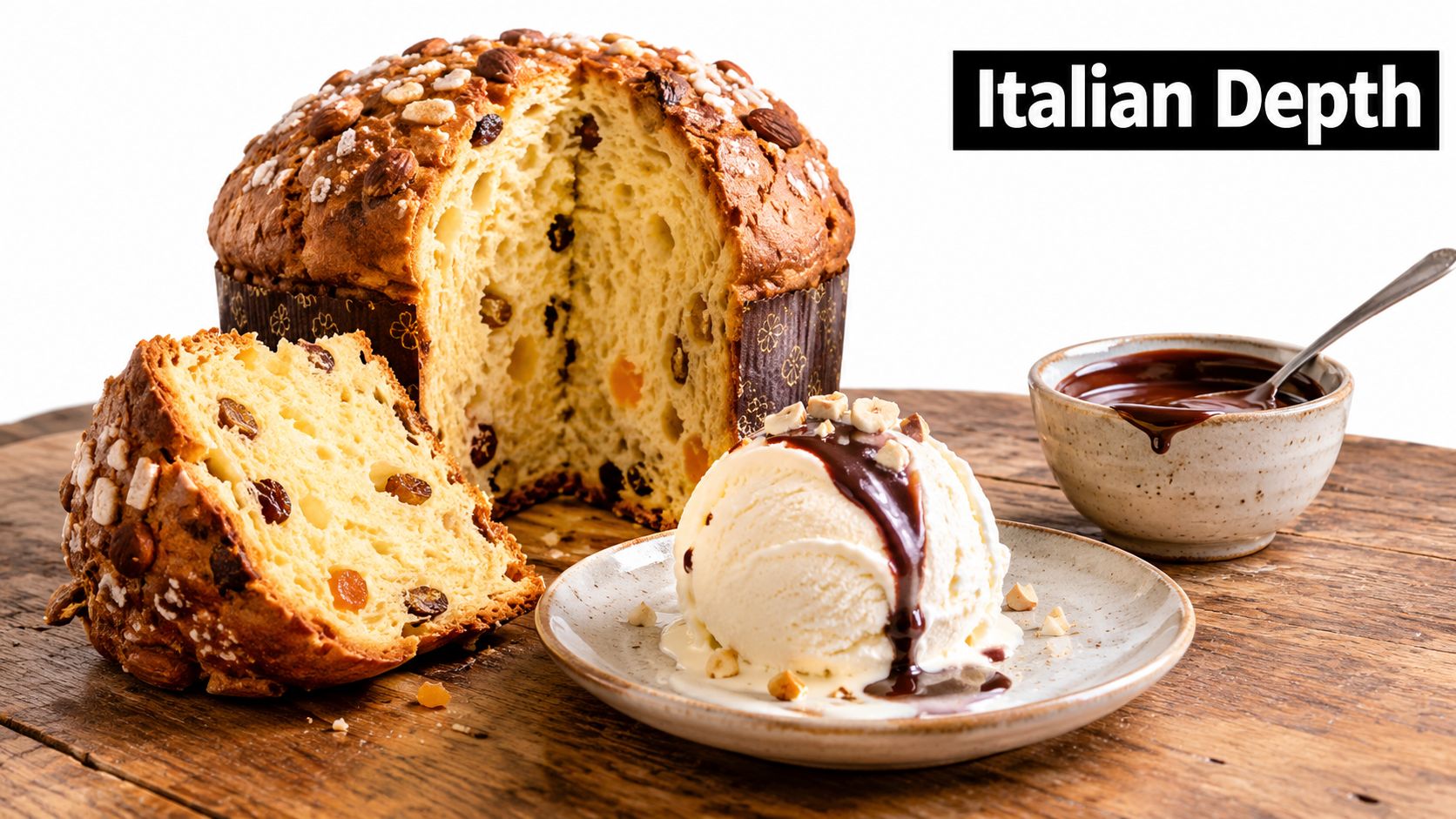
Panettone can supply the aromatic, textured center of an Italian-inspired dessert without becoming a platform for every sweet accompaniment available. Taste the actual product first. Its fruit, chocolate, citrus, or other inclusions should influence what you add.
Gelato contributes a cold, smooth contrast, while fine chocolate can introduce a distinct cocoa accent. Fresh or preserved fruit offers another direction, but don't assume fruit automatically makes the dessert less sweet. Taste it alongside the sauce and cake.
Build combinations around contrast
For a citrus-led panettone, test a restrained chocolate accent rather than automatically adding citrus sauce. For a chocolate-rich cake, try fruit with a sharper flavor before adding another chocolate preparation. A plain-looking accompaniment can be the better choice if it makes the main ingredient more enjoyable.
IFM Gourmet's published gourmet assortment includes artisanal sweets, cakes, fine chocolates, premium teas, Italian pasta and sauces, panettone, pandoro, and nougats. Treat that breadth as a selection to edit, not a reason to crowd the dessert course.
Ingredient Roles on the Plate
Component | Primary role | Contrast to add |
|---|---|---|
Panettone | Aromatic cake anchor | Smooth cream or gelato |
Pandoro | A focused cake element | Fruit or a cocoa accent |
Gelato | Cold, smooth accompaniment | Cake or a dry crisp element |
Fine chocolate | Concentrated flavor accent | Fruit or a lighter component |
Fresh fruit | Color and fresh texture | A richer central dessert |
Nougat | Chewy or crisp detail | A softer accompaniment |
For dairy-based ideas, use the guide to Italian dairy products as a starting point, then check each product's label and suitability for your recipe.
Taste the intended mouthful together. Ingredients that taste excellent separately can still make an overly sweet combination.
If you want toasted panettone, rehearse that preparation rather than assuming every variety behaves alike. Keep dairy accompaniments under the established cold controls, and don't soften gelato through repeated warming and refreezing.
Nuts should earn their place through flavor or texture. If cocoa, citrus, coffee, fruit, and pistachio all compete for attention, remove accents until the dessert has a recognizable direction.
Style Plates for UAE Premium Occasions
Adapt the serving style before changing the dessert itself. The same cake-and-fruit composition can suit a relaxed family gathering or formal hospitality when you change the crockery, garnish placement, and delivery method. Keep the flavor identity stable so the team isn't learning a new dish for every occasion.
For Ramadan and Eid, consider a composed plate that follows the wider meal comfortably, with any date or coffee accents chosen for flavor rather than symbolism alone. For Diwali, introduce color through purposeful ingredients instead of unrelated decorations.
Occasion Styling Matrix
Occasion | Presentation priority | Service cue |
|---|---|---|
Ramadan and Eid | A composed finish to the meal | Coordinate with the host's schedule |
Diwali | Deliberate, food-led color | Confirm dietary requirements |
Weddings | Consistency across settings | Approve a reference plate |
Corporate hospitality | Tidy, approachable portions | Favor easy-to-eat components |
Hotel buffets | Clear choices and protected food | Replenish from controlled storage |
Tasting flights | Distinct, complementary tastes | Explain the eating sequence |
Match the format to the setting
A tasting flight works when the tastes differ meaningfully, not when it repeats the same sweetness in smaller vessels. For plated weddings, photograph an approved rehearsal plate so the team can reproduce placement. Take that photograph during preparation, rather than delaying live service.
For a buffet, don't build an entire display around exposed frozen desserts. Consider a staffed finishing point, with suitable components held under their required controls.
When comparing group-event formats, winery event planning for groups from Girard Winery offers a separate venue-planning reference. Keep that distinct from your UAE menu decisions, including alcohol-free requirements.
IFM Gourmet Dubai is the luxury online gourmet arm of IFM Investments LLC, a UAE-based culinary-focused company offering curated gift hampers and bespoke corporate and event services, as described in its company profile.
For hamper pairings, select packaged items for recipients to enjoy later rather than treating a gift box as storage for a finished chilled dessert. Match the gift's flavors to the event without duplicating the entire dessert course.
Control Portion Size and Service Timing
An oversized serving doesn't become more refined because it contains premium ingredients. After a substantial menu, a smaller, complete dessert can be more considerate than a large cake portion surrounded by unnecessary extras. Choose portions by tasting the whole meal's finish, not by filling the available plate.
The UAE reportedly wastes about 3.2 million tonnes of food annually, around 38% of food prepared, while the national ne'ma initiative targets a 50% reduction in food loss and waste by 2030, according to The Ethicalist's coverage of UAE hospitality food loss. Those figures aren't dessert-specific, but they provide a reason to plan portions carefully.
Service discipline: Prepare against confirmed demand, keep reserve components protected, and finish plates when guests are ready.
Service Timing and Portion Controls
Control point | What to do | What to avoid |
|---|---|---|
Guest forecast | Confirm attendance and dietary selections | Preparing every possible option equally |
Receiving | Record product temperatures and condition | Accepting without checking |
Preparation | Check temperature after handling | Relying on touch |
Dispatch | Finish small batches for ready tables | Building a queue of finished desserts |
Service point | Verify condition and temperature | Assuming dispatch checks are enough |
Delays | Return suitable plates to refrigeration promptly | Leaving them out for photography |
Measure what comes back
Distinguish kitchen waste from plate waste. Record unused prepared components separately from food guests leave behind; the corrective decisions are different. Excess preparation calls for better forecasting, while recurring uneaten cake may suggest a smaller portion or a less filling accompaniment.
Made-to-order plating protects flexibility but requires an organized pass. Pre-plating reduces finishing work, yet demands suitable refrigerated space and a dessert that tolerates holding. Choose the trade-off deliberately.
Returning a plate to refrigeration doesn't erase its earlier exposure. Follow the discard rules already established, and assess any suitable surplus for safe redistribution through an approved process rather than improvising after the event.
Finish with a Premium Plate Check
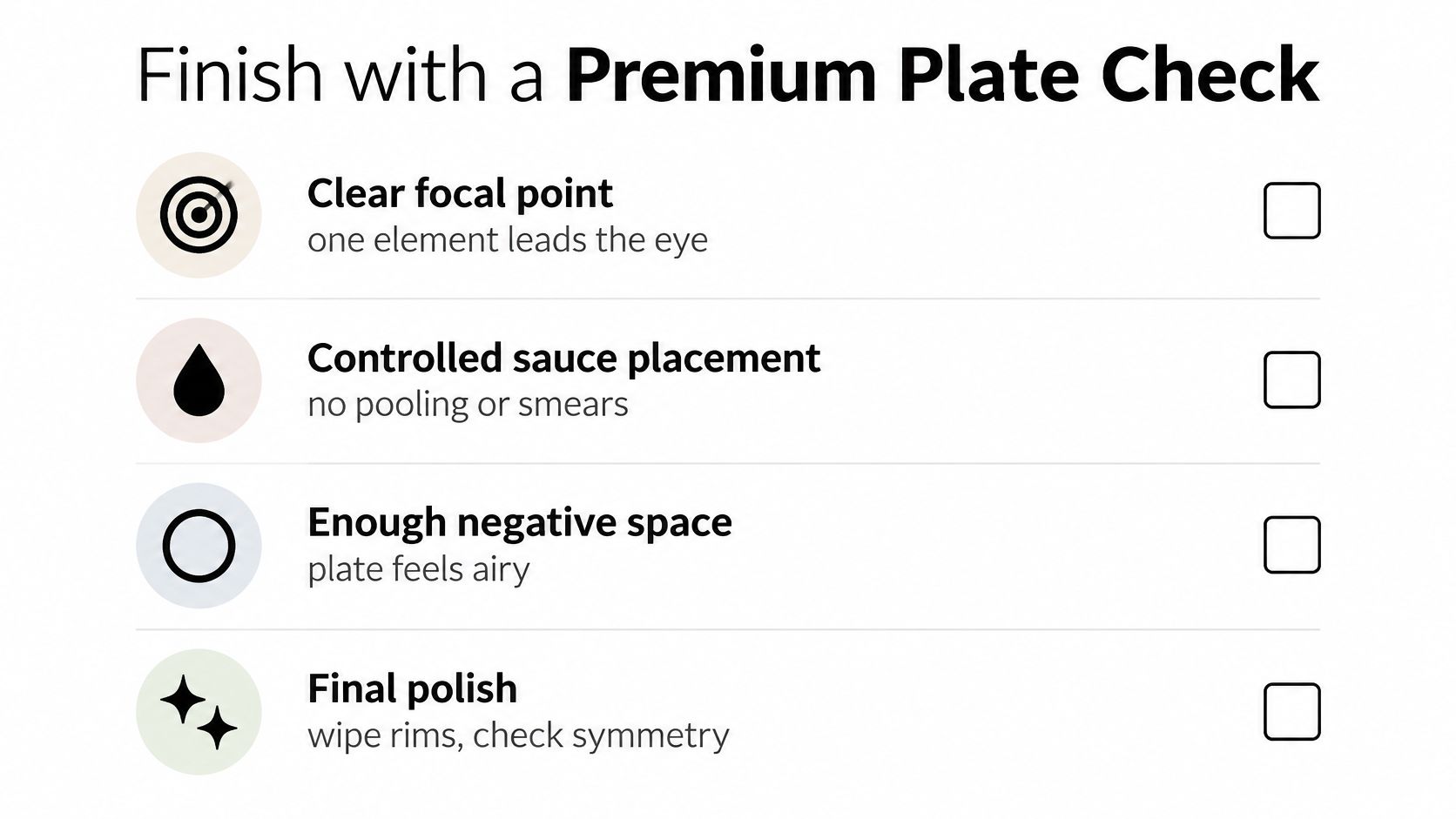
Decoration can't rescue a dessert that guests can't comfortably eat. Before approving luxury dessert plates, ask whether each serving is clear, manageable, and appropriate for the person receiving it.
Design gluten-free, vegan, lower-sugar, nut-aware, and alcohol-free options deliberately. Confirm ingredients, communicate allergens, and control cross-contact through tools, storage, and preparation practices. Don't describe a dessert as suitable based only on removing its visible garnish.
Final Luxury Dessert Plate Check
Check | Pass condition | Corrective action |
|---|---|---|
Focus | Main dessert is immediately clear | Remove a competing accent |
Sauce | Placement is controlled | Replate an untidy serving |
Texture | Contrasting elements remain intact | Add dry details at dispatch |
Dietary suitability | Ingredients and handling are confirmed | Verify before serving |
Temperature | Storage and service checks pass | Hold or discard as appropriate |
Finish | Rim and eating area are clean | Wipe and inspect |
Make the final detail optional
Consider edible gold foil only after the dessert passes these checks. A metallic accent isn't a substitute for balance or careful service.
Part of the broader Italian Food Masters group, IFM Gourmet Dubai brings Italian roots to Dubai's gourmet scene through artisanal delicacies, sweets, savories, fine chocolates, premium teas, cakes, and beautifully curated gift hampers. Its emphasis on quality, authenticity, and culinary elegance fits this approach: choose ingredients carefully, then give them room to be appreciated.
Before guests arrive, confirm the reference plate, dietary list, clean tools, protected components, and dispatch plan. That's a more useful finishing ritual than adding another garnish.
IFM Gourmet Food Store offers Italian gourmet ingredients, artisanal sweets, panettone, pandoro, fine chocolates, and curated gift hampers for thoughtful entertaining. Visit IFM Gourmet Food Store to choose the centerpiece for your dessert plates and explore options for festive gifting, corporate hospitality, or your next gathering.

Comments