Search Results
Search this site
465 results found with an empty search
- Balsamic Vinegar Alternative Guide for Every Dish
You're halfway through a tomato, rocket, and burrata salad when the balsamic bottle gives you one last drop. The dressing needs more than sharpness. It needs sweetness, colour, body, and enough acidity to keep the leaves lively. That's why choosing a balsamic vinegar alternative isn't as simple as grabbing any vinegar from the cupboard. Red wine vinegar can bring brightness, date syrup can bring richness, and pomegranate molasses can provide both fruitiness and thickness, but each one behaves differently in a dressing, glaze, marinade, or finishing drizzle. For UAE home cooks, the good news is that useful substitutes are widely available through supermarkets, delivery apps, and speciality food retailers. The right choice depends on the dish, the flavour you want to preserve, and whether you need acidity, sweetness, viscosity, or a polished presentation. Alternative Main strength Main limitation Best use Red wine vinegar with honey or sugar Bright acidity with adjustable sweetness Can taste sharper and thinner Vinaigrettes and marinades Sherry vinegar Nutty, rounded acidity Usually less sweet and less syrupy Salads and savoury finishing Apple cider vinegar reduction Fruity acidity and adaptable sweetness Needs cooking to gain body Glazes and roasted vegetables Pomegranate molasses Dense texture and fruit-led sweetness Can dominate delicate dishes Grain salads, meats, and drizzles Aged wine reduction Concentrated flavour and glaze-like body Requires time and careful heat Plated dishes and special meals Introduction to Balsamic Vinegar Alternatives The fastest way to choose a substitute is to ask what the balsamic is doing in the recipe. In a leafy salad, it may be supplying a clean sour note that helps oil and mustard come together. Over roasted vegetables, it may be adding sweetness and a glossy finish. On burrata or strawberries, its thick texture and deep fruit character may matter more than its acidity. A random swap can upset that balance. A full measure of white vinegar may make a dressing harsh, while a spoonful of date syrup may make it sweet and heavy without enough lift. The best replacement matches the function, not just the name of the ingredient. Start with the dish For a quick vinaigrette, use a sharper vinegar and add sweetness gradually. For a glaze, begin with a syrupy ingredient or reduce a thinner vinegar so it coats the food. For a finishing drizzle, look for a substitute that has enough body to sit on the surface rather than disappear into the plate. UAE shoppers already have several practical options. Retail listings include apple cider vinegar, white vinegar, balsamic-style products, and imported Italian balsamic products, creating a broad price and flavour ladder for home cooks (UAE vinegar listings at Waitrose). This means you don't need to build a complicated speciality pantry before making a good alternative. Kitchen rule: Match acidity first for dressings, sweetness and body first for glazes, and flavour depth first for finishing. The guide below uses that decision rather than a generic list of pantry swaps. You'll see how red wine vinegar, sherry vinegar, apple cider vinegar, pomegranate molasses, date syrup, and wine reductions perform in real dishes, plus how to correct the balance when a substitute tastes too tart, too sweet, too thin, or too flat. By the time you reach the stove or salad bowl, you'll have a practical ratio to start with and a clear way to adjust it. You won't need an exact clone of balsamic for every recipe. You'll need the right combination of acid, sweetness, texture, and depth for the food in front of you. What Makes Balsamic Vinegar Unique A spoonful of balsamic can shift a dish in several directions at once. It brings tartness, fruitiness, sweetness, dark flavour, and a rounded finish. That combination explains why it behaves differently in a salad dressing, a cooked reduction, and a final drizzle. Four qualities to replace Layered sweetness comes from grapes and concentration. It softens vinegar's sharp edge, which is why balsamic pairs comfortably with tomatoes, roasted vegetables, berries, and creamy cheeses. Mellow acidity keeps the flavour bright without dominating it. One UAE retail reference describes balsamic vinegar with 6% acidity and positions it for finishing and glazing (Lorena Balsamic Vinegar of Modena listing). A substitute can match that sharpness and still taste too harsh if it lacks sweetness and body. Syrupy body determines whether the flavour clings or disappears. A thick glaze sits on roasted aubergine, grilled peaches, or burrata. A thinner vinegar disperses easily through a dressing, yet may run off a finished plate. Aged complexity supplies depth beyond sourness. Wood-aged notes can suggest dried fruit, caramel, and gentle warmth. A younger vinegar or fruit syrup may cover one of these qualities without matching the complete profile. Taste a possible balsamic vinegar alternative before adding it to the recipe, then test it in the finished dish. A vinegar that seems too sharp alone may balance with olive oil and sweet vegetables. A rich syrup may taste excellent from the spoon but overwhelm a delicate salad. Acidity and syrup are not interchangeable Date syrup makes the difference clear. Regional specifications describe it as a thick, sweet product, with pH 4.0 to 5.0 and 74 to 77° Brix (regional date syrup and vinegar analysis). It can supply balsamic-like viscosity and sweetness, but its acid load is different. Build the missing quality deliberately. Add lemon juice or vinegar to date syrup for a dressing. For a glaze, simmer an acidic vinegar with a sweetener until it coats the food. UAE cooks can use date syrup for local availability and sweetness, then add acidity according to the dish rather than expecting one ingredient to reproduce every part of balsamic. Comparing the Best Balsamic Vinegar Alternatives No single replacement wins every test. Red wine vinegar is often the most useful starting point for a salad, while pomegranate molasses comes closer to balsamic's concentrated texture. Apple cider vinegar offers a fruitier middle ground, and sherry vinegar brings savoury depth without making the dish sweet. Alternative Acidity level Sweetness and body Flavour profile Best for Red wine vinegar plus sweetener Bright and pronounced Light body, sweetness added separately Fruity, wine-like, direct Vinaigrettes, beans, grilled meats Sherry vinegar Rounded, noticeable acidity Usually light sweetness and medium body Nutty, savoury, mature Salads, mushrooms, lentils Apple cider vinegar reduction Fresh acidity that softens during cooking Medium body after reduction Apple-like, lightly fruity Glazes, pork, root vegetables Pomegranate molasses Tangy but fruit-led Thick, dense, naturally sweet-tart Dark fruit, sharp sweetness Lamb, grain salads, cheese plates Aged wine reduction Concentrated acidity Thickens as liquid reduces Deep, wine-rich, caramelised Finishing, plated vegetables, sauces Red wine vinegar plus a sweetener This is the most flexible everyday option. Honey gives a rounded finish, while sugar keeps the flavour cleaner. The mixture won't reproduce aged balsamic, but it can make a balanced dressing that cuts through oily ingredients and roasted vegetables. Sherry vinegar Sherry vinegar is a strong choice when you want complexity without obvious sweetness. It works particularly well with lentils, mushrooms, chickpeas, and bitter greens. Add a small amount of honey only if the dish contains little natural sweetness. Apple cider vinegar reduction Apple cider vinegar has a clear fruit note and can become more substantial when gently reduced with brown sugar. It suits pork, chicken, carrots, squash, and roasted aubergine. Keep the heat controlled, because an over-reduced mixture can taste harsh or sticky. Pomegranate molasses Pomegranate molasses is closer to a glaze than a plain vinegar. Its bold fruitiness suits Middle Eastern and Levantine flavours, especially lamb, walnuts, mint, bulgur, and roasted vegetables. Use it sparingly over delicate leaves or mild cheeses. Aged wine reductions A wine reduction is useful when presentation matters. Simmer wine with a measured amount of vinegar and sweetener until the liquid lightly coats a spoon. It offers depth and body, but it needs attention because the flavour intensifies as water evaporates. Best quick decision: Choose red wine vinegar for brightness, pomegranate molasses for body, and a reduction when the finished plate needs a glossy, chef-style finish. How to Adjust Sweetness and Acidity When Substituting A substitute can taste balanced in the bowl yet become harsh, flat, or overly sweet on food. Adjust it in stages: taste the acid first, add sweetness gradually, then check the texture. This order keeps each flavour change easy to identify. Red wine vinegar dressing For a sharp salad dressing, begin with one tablespoon of red wine vinegar and whisk in one teaspoon of honey or sugar. Add olive oil slowly, tasting as you go. Increase the sweetener only when the vinegar remains aggressively sharp after dilution. Honey gives the dressing a softer texture and rounder flavour. Sugar dissolves more cleanly, especially when stirred into the vinegar before the oil is added. In Dubai kitchens, both are easy pantry options, so choose honey for body and sugar for a cleaner finish. Apple cider vinegar reduction For a simple glaze, combine four tablespoons of apple cider vinegar with one tablespoon of brown sugar in a small saucepan. Warm the mixture gently until it thickens slightly, then let it cool before brushing it over roasted vegetables or cooked meat. Stop while the liquid still looks looser than the finished glaze. Cooling makes it denser, while excessive reduction can turn fruity acidity into a bitter, sticky coating. If the glaze tastes sweet but lacks lift, add a little vinegar after cooling rather than cooking it longer. Pomegranate molasses and date syrup Pomegranate molasses usually needs thinning, not extra sweetness. Stir one tablespoon of pomegranate molasses with a little lemon juice or water, then taste before adding oil. If it feels too sharp, use a small drop of honey instead of another large spoonful of syrup. Date syrup brings colour and regional character, but it needs acid added deliberately because it is much less acidic than balsamic. Add lemon juice or vinegar in small amounts until the mixture tastes fresh rather than merely sweet. The date syrup acidity reference helps explain why this adjustment matters. Correct the texture after balancing A dressing that tastes right but separates quickly may need mustard, stronger whisking, or slower oil addition. A glaze that tastes balanced but runs off the food needs gentle reduction, not more sugar. For a fruit-led dessert direction, this berry sorbet example can inspire a sweet and tangy pairing. Keep that sweetness separate from savoury dressings unless the dish includes fruit, soft cheese, or a clear flavour contrast. Tasting sequence: Check sharpness first, sweetness second, and thickness last. Each adjustment solves a different problem. Best Swap by Use Dressings Glazes Marinades and Finishing The same substitute can be excellent in one dish and disappointing in another. A thin, lively vinegar belongs in a dressing, while a dense syrup belongs on the surface of food. Choosing by use case prevents most substitution mistakes. Dressings Use red wine vinegar with honey when the salad needs clear acidity. It works with rocket, tomatoes, cucumber, roasted peppers, and hearty greens. Sherry vinegar is better for lentils, mushrooms, and salads containing nuts because its savoury depth supports earthy ingredients. Apple cider vinegar suits slaws and salads with apple, carrot, cabbage, or roasted squash. Add the oil slowly so the dressing emulsifies instead of pooling at the bottom of the bowl. Glazes For a glaze, choose apple cider vinegar with brown sugar, pomegranate molasses, or date syrup with added lemon juice. Pomegranate molasses is particularly effective over roasted aubergine, cauliflower, chicken, and lamb because it clings without needing long cooking. Date syrup offers a distinctly regional flavour and a rich colour. Since it contributes little acidity compared with balsamic, combine it with lemon juice or vinegar before brushing it over food. Marinades Marinades need enough liquid acidity to distribute through the mixture, plus seasoning and oil. Red wine vinegar works well with beef, lamb, and vegetables, while apple cider vinegar suits chicken and pork-style flavour combinations. Don't rely on pomegranate molasses alone for a marinade. Blend it with lemon juice, olive oil, garlic, and herbs so the coating has fruitiness, brightness, and enough fluidity to spread evenly. Finishing Finishing is where texture and visual polish matter most. A reduced wine mixture or pomegranate molasses can complement burrata, roasted vegetables, strawberries, and grilled fruit, but apply a light hand so the topping doesn't cover the main ingredient. For a premium platter, authentic balsamic or a Modena-made glaze will usually deliver a more integrated result than a quick vinegar-and-sugar mix. For an ordinary weeknight salad, the simpler alternative may taste fresher and more balanced. A pasta dish with roasted vegetables may benefit from a bright vinegar in the sauce and a thicker drizzle added at the end. Keep those roles separate, and the dish will have both lift and finish. A Pasta presentation reference can help when planning that final plating contrast. When to Choose Authentic Balsamic From IFM Gourmet A UAE home cook may use a substitute in a busy salad dressing, then choose authentic balsamic for burrata, strawberries, roasted figs, or a cheese board. The difference matters most when balsamic sits at the front of the dish rather than supporting several stronger flavours. Imported Italian products give shoppers a useful premium reference. UAE retail listings show balsamic vinegar at AED 29.79 for 250 ml and AED 32.29 for 500 ml, both imported from Italy (Italian balsamic retail reference). These bottles serve a different purpose from inexpensive cooking vinegar. Origin, thickness, sweetness, acidity, and table presentation all become part of the choice. What IFM Gourmet Dubai offers IFM Gourmet Dubai is the luxury online gourmet arm of IFM Investments LLC, a UAE-based culinary company. Its selection covers artisanal sweets, savoury foods, fine chocolates, premium teas, cakes, and curated gift hampers. The store belongs to the wider Italian Food Masters group and reflects Dubai's interest in Italian food and premium pantry products. For a dressing mixed with sharp greens, an everyday balsamic can provide enough acidity and fruitiness. For a finishing drizzle, choose a vinegar or Modena grape must glaze with enough body to stay visible on the plate. If the product tastes especially sweet, use less of it and add acidity elsewhere, such as lemon juice in the dressing. A helpful comparison for organic Italian choices is organic Modena balsamic vinegar. IFM Gourmet Food Store also offers Italian balsamic vinegars, Modena-style glazes, gourmet pantry ingredients, and curated products. Its festive range includes a Mini Holiday Snacks Gift Basket with a Festive Metal Hamper (IFM Gourmet Christmas hampers). A carefully selected bottle can therefore suit a corporate hamper, festive table, or Italian-themed gift where authenticity and presentation matter. Tips to Store Balance and Avoid Common Mistakes Keep opened vinegar tightly closed in a cool, dark cupboard. Store date syrup and pomegranate molasses according to the product label, and use clean, dry spoons so water and food particles don't change the texture or flavour. Reductions need more care. Cool them before judging their final thickness, because they become denser as they stand. If a glaze turns sticky or bitter, dilute it with a little water or unsweetened vinegar rather than adding more oil. Quick troubleshooting Too sharp: Add a small amount of honey or sugar, then retaste. Too sweet: Add lemon juice or vinegar in small increments. Too thin: Reduce an acidic mixture gently, or blend in a small amount of a thicker ingredient. Too heavy: Add acid and water, then whisk with oil gradually. Flat flavour: Add salt first, then consider mustard, herbs, garlic, or a fruit element. Separated dressing: Whisk the acid and sweetener together before adding oil slowly. Scale recipes by tasting as you go rather than multiplying the sweetener blindly. A large batch can become overly sweet or acidic more quickly than expected, especially after resting. Label homemade reductions with the preparation date, refrigerate fruit-based mixtures, and discard anything that develops an unusual smell, mould, or fermentation. IFM Gourmet Food Store offers Italian balsamic vinegars, Modena-style glazes, gourmet pantry ingredients, and curated hampers for everyday cooking and special occasions. Visit IFM Gourmet Food Store to choose an authentic finishing condiment or build a thoughtful gourmet gift for delivery across the UAE.
- Sparkling Rose Wine: Your 2026 UAE & Dubai Guide
You're hosting friends in Dubai, the table is set with Italian delicacies, and the only decision left is which bottle will feel celebratory without overwhelming the food. Sparkling rosé wine answers that need beautifully. It brings colour, freshness, gentle fizz, and enough versatility for a beach-club afternoon, a Downtown Dubai dinner, or an elegant hamper prepared for Ramadan, Eid, Diwali, a wedding, or a corporate occasion. An Introduction to Elegant Celebrations Sparkling rosé sits between two familiar worlds. It has the energy of sparkling wine, yet its red-fruit character gives it more personality than a simple aperitif. The best bottles can move from salty antipasti to creamy burrata, light pasta, seafood, fruit-led desserts, and relaxed conversation after dinner. That versatility matters in the UAE, where wine buying is closely connected to the occasion. The country is the dominant wine-consuming market in the GCC, with 26 million litres consumed in 2024, while local retail listings show sparkling rosé selections priced from AED 35 to AED 98, confirming an established premium shelf presence. UAE retail listings for rosé wine show that shoppers can choose between accessible bottles and more polished options without treating the category as a novelty. Why it suits Dubai entertaining A pale, chilled rosé can look refined at a sunset gathering, but it doesn't need to remain a summer-only drink. Its colour works for gifting, its bubbles create a sense of occasion, and its acidity helps it stay lively beside rich Italian foods. For wedding planning, ideas such as Viansa's wedding offerings can also help inspire a wider celebration concept built around food, wine, and a polished guest experience. IFM Gourmet Dubai is the luxury online gourmet arm of IFM Investments LLC, a culinary-focused company based in the UAE. Its gourmet store offers artisanal sweets, savouries, fine chocolates, premium teas, cakes, and beautifully curated gift hampers. As part of the broader Italian Food Masters group, it reflects a focus on quality, authenticity, and culinary elegance in Dubai's gourmet scene. Choose sparkling rosé by occasion first, then by style. A bright, fruit-forward bottle suits a social gathering. A more layered traditional-method rosé feels appropriate for a formal dinner or a significant gift. The colour may attract attention, but the balance between fruit, acidity, bubbles, and sweetness determines whether the bottle earns its place at the table. How Sparkling Rosé Gets Its Color and Fizz At a Dubai dinner, two sparkling rosé bottles can share a similar blush yet offer very different experiences. Their colour comes from the treatment of red grapes, while their bubbles come from a separate fermentation process. Understanding both helps you choose a bottle that suits delicate seafood, savoury Italian bites, or a formal celebration. Where the pink colour comes from Red grape skins hold the pigments responsible for rosé's blush. With the Saignée method, freshly crushed red grapes stay briefly in contact with their skins. The winemaker then drains the coloured juice and ferments it separately. The process works like steeping tea: brief contact gives a paler result, while longer contact can create a deeper shade. Grape variety and cellar decisions also influence the final colour. Saignée may produce anything from delicate salmon to pronounced ruby. Skin contact can bring fuller red-fruit flavours and a firmer sense of structure, allowing the wine to remain present beside rich antipasti, cured meats, or savoury pastries from an Italian gourmet table. It can suit a host who wants the bottle to contribute to the meal, not only welcome guests. Blending follows a different route. The winemaker adds a measured quantity of finished red wine to a white sparkling wine, allowing precise control of the colour and a consistent style. The red portion may contribute berry aromas, while the white base usually shapes much of the acidity, texture, and freshness. Colour therefore offers a useful first impression, not a complete prediction of taste. How winemakers create the fizz The traditional method creates a second fermentation inside the bottle. This can produce a fine, persistent texture and more layered flavours, including brioche, pastry, or toast when the wine rests on its lees. Franciacorta Rosé is an Italian example associated with this detailed approach, making it a natural consideration for a more formal Dubai dinner or an elegant gift. The Charmat method, used for Prosecco Rosé, carries out the second fermentation in a pressurised tank before bottling. This helps preserve fresh primary fruit aromas, giving the wine a bright, floral, refreshing character that works well with aperitivo and light canapés. Imported UAE listings commonly show sparkling rosé at around 11% to 11.5% ABV, with Rocca dei Forti Prosecco DOC Rosé listed at about 11.5% ABV and made using the Charmat method. Local sparkling rosé serving and production details also note service at 4–6 °C, a practical temperature range for Dubai's warm climate. Chilling preserves the wine's freshness and helps the bubbles feel precise rather than loose. Practical rule: Pale colour does not automatically mean delicate flavour, and deeper colour does not guarantee sweetness. Read the label, then use the production method as a guide to the wine's likely texture, aroma, and role at the table. A Tour of Italy's Finest Sparkling Rosé At an Italian dinner in Dubai, the right sparkling rosé can change the entire rhythm of the table. A bright Prosecco DOC Rosé suits an early aperitivo, while a more structured Franciacorta Rosé can carry a formal meal. Italy offers no single style. Its regions, grapes, and cellar practices create wines that range from immediate and fruit-driven to layered and contemplative. Veneto and Prosecco DOC Rosé Begin in Veneto with Prosecco DOC Rosé, a style shaped around freshness and sociability. Its profile commonly brings crisp red berries, citrus, white flowers, and a light, clean finish. The Charmat method preserves youthful fruit character, so this is a natural choice for aperitivo, brunch, canapés, or the first glass before dinner. Rocca dei Forti Prosecco DOC Rosé is described as 90% Glera and 10% Pinot Noir. That blend shows the role each grape can play: Glera provides lift and freshness, while Pinot Noir contributes colour and red-fruit expression. The UAE listing for this Prosecco-style rosé also gives a practical reference for reading a bottle's grape composition and production details. The UAE listing for this Prosecco-style rosé For a Dubai gathering, serve this style with Italian antipasti from IFM Gourmet, especially delicate cured meats, crisp pastries, or small seafood bites. Its lively fruit keeps the opening course feeling relaxed rather than heavy. Lombardy and Franciacorta Rosé Travel east to Lombardy and the character becomes more refined. Franciacorta Rosé is associated with the traditional method, which can create a persistent mousse, finer texture, and greater savoury complexity. It can stand beside a formal meal, including dishes built around delicate seafood, cured meats, or creamy textures. The practical distinction is texture and emphasis. Traditional-method sparkling wine often develops more layered, savoury detail, while tank-method wine places fresh fruit and floral aromas at the centre. Neither approach is automatically superior. Choose brightness for an informal reception, or depth for a long dinner and a more considered gift. Choosing by personality Prosecco DOC Rosé is often the intuitive choice for a relaxed Dubai celebration because it feels expressive from the first pour. A traditional-method rosé can reveal more detail as it warms slightly in the glass, making it suitable for an intimate dinner or polished corporate gift. Read the complete label rather than relying only on the region. Brut indicates a dry style, while the producer, grape information, alcohol level, and appellation help clarify the bottle's intended character. Depending on the occasion and budget, a retailer may suggest Voga Prosecco Rosé, Rosé d'Or Crémant de Bordeaux, Jean-Baptiste Adam Crémant d'Alsace Brut Rosé, Albert Bichot Crémant de Bourgogne Brut Rosé, Krug Brut Rosé, or Dom Pérignon Rosé. Your Guide to Tasting Notes and Aromas Tasting sparkling rosé doesn't require complicated language. Begin with the colour, then move to the aroma, taste, texture, and finish. The aim isn't to identify every scent. It's to notice what you enjoy and use those observations to choose your next bottle with confidence. Start with the visual impression Hold the glass against a light background. A pale salmon colour often suggests a restrained style, while a brighter pink or ruby tone may point towards more visible red-fruit influence. Watch the perlage, the stream of bubbles rising through the wine. Fine, persistent bubbles usually make the texture feel more polished, while a more energetic mousse can create an immediate, lively impression. Swirl gently only after the first look. Sparkling wine contains pressure, so a small movement is enough to release aromas without flattening the wine. Sort aromas into familiar families Red fruit is the most recognisable category. Look for strawberry, raspberry, red cherry, or watermelon. These aromas can make the wine feel generous and approachable, especially in a fresh Prosecco DOC Rosé. Citrus notes, including grapefruit and orange zest, add lift. Floral impressions such as rose petal or honeysuckle can make the wine feel delicate, while traditional-method bottles may develop hints of brioche, pastry, spice, or toasted bread. A useful tasting habit: Take one sip for freshness, a second for texture, and a third for the finish. The wine may reveal more after the bubbles have moved across your palate. Acidity is the wine's balancing line. It makes your mouth water and prevents fruitiness from feeling heavy. The bubbles add movement, but acidity determines whether the finish feels crisp, soft, broad, or energetic. If you're organising a larger wine experience, resources that help you plan your large group Napa winery visit offer useful inspiration for coordinating tastings, group flow, and guest preferences. For a Dubai dessert pairing, a tart berry sorbet can also provide a clean, refreshing contrast. Wild berries sorbet is especially appealing beside a fruit-forward rosé, provided the dessert isn't sweeter than the wine. Perfect Pairings with Italian Gourmet Delicacies Sparkling rosé works because it combines fruit, acidity, and texture. Acidity refreshes the palate after rich food, while bubbles lift salty or creamy flavours. That makes the wine particularly effective with Italian gourmet ingredients, where cured meats, fresh dairy, olive oil, herbs, and delicate sweets often share the same table. Italian food and beverage exports to the UAE rose 6% in the first ten months of 2024, reaching about €344 million. Within that mix, beverages, spirits, and vinegar grew 32% to about €29 million, bakery goods rose 23% to about €55 million, and dairy increased 36% to about €30 million. UAE Italian food and beverage export context reflects the strong local appetite for authentic Italian flavours. Sparkling Rosé Style Tasting Profile Perfect IFM Gourmet Pairing Why It Works Fresh Prosecco DOC Rosé Red berries, citrus, floral lift, lively finish Prosciutto di Parma, melon, and mild olives Acidity refreshes the palate after the cured meat, while fruit echoes the melon and berry notes Dry traditional-method rosé Fine mousse, red fruit, pastry, savoury depth Burrata with olive oil, sea salt, and basil Creamy burrata softens the bubbles, while acidity keeps the combination precise Structured Franciacorta Rosé Layered fruit, mineral character, toasted complexity Aged Parmigiano-Reggiano and truffle-infused savouries The wine has enough texture for the cheese, while its freshness prevents truffle flavours from becoming too heavy Crisp, citrus-led rosé Grapefruit, orange zest, bright red fruit Seafood antipasti and Italian pasta selections with herbs or light sauces Citrus and acidity complement seafood and keep the pasta course feeling fresh Fruit-forward rosé Strawberry, raspberry, floral sweetness of fruit Panettone, pandoro, berry tarts, or light chocolate pralines The wine's fruit character meets the dessert without requiring a heavy finish Build a Dubai-friendly Italian board Begin with prosciutto, burrata, Parmigiano-Reggiano, olives, breadsticks, and a few truffle-led savouries. Serve the wine chilled, then add a fresh fruit element, such as berries or melon, to connect the savoury and sweet courses. Avoid putting the most assertive ingredients beside the most delicate bottle. Strong chilli, very smoky foods, heavily sweet desserts, and intensely pungent cheeses can mask the rosé's freshness. If your menu includes these flavours, choose a wine with more structure and keep the food portion balanced rather than allowing one ingredient to dominate. For a formal dinner, pour the brighter rosé with the welcome course and reserve the layered bottle for the main savoury spread. For a hamper, include the wine with premium Italian sweets, fine chocolate, panettone, or carefully chosen savouries so the recipient can enjoy a complete tasting moment rather than an isolated bottle. Serving and Storing for the Best Experience Temperature is the first service decision, especially in the UAE. A warm bottle loses its sense of precision, foams aggressively when opened, and can taste softer than intended. Local guidance for a Charmat-style imported rosé recommends 4–6 °C, while serving advice for sparkling rosé commonly places the ideal range at 6–8 °C. Follow the bottle's specific recommendation where available, and avoid leaving it exposed to Dubai heat. Chill, open, and pour carefully A refrigerator works well when you have time. For faster service, place the bottle in an ice bucket with ice and water, making sure the bottle cools evenly rather than sitting in warm air-conditioning for too long. Don't freeze it. Sudden over-chilling can dull the aromas, and a frozen bottle creates a safety risk. Remove the foil and keep your thumb over the cork. Hold the cork firmly while you loosen the wire cage, then turn the bottle, not the cork, slowly. A quiet release is more elegant and safer than a loud pop. Tilt the glass slightly and pour in two stages to protect the mousse and avoid excessive foam. Choose the right glass A narrow flute preserves the visual stream of bubbles and directs the wine towards the tongue. A tulip-shaped sparkling glass offers more room for aromas while retaining enough shape to protect the fizz. Wide coupes look beautiful for a celebration, but they allow aromas and carbonation to disappear more quickly. Protect the bottle after purchase Store unopened wine away from direct light, heat, and vibration. In a warm climate, a cool, dark cupboard may be suitable for short-term holding, but a controlled wine refrigerator is safer for valuable bottles or longer storage. Keep the bottle undisturbed and serve it soon after opening, using a sparkling-wine stopper if you need to preserve it until later. UAE climate reminder: Refrigerated delivery, prompt chilling, and quick turnover protect the wine's aromas and bubble quality from the moment it leaves the shop to the first pour. How to Choose the Right Bottle in the UAE Start with the recipient or occasion, not the label's visual appeal. A sparkling rosé for a beach-club gathering should be bright, refreshing, and easy to enjoy with light foods. A bottle for a formal dinner should have enough texture to accompany several courses. A gift for a client, family member, or host deserves a presentation that reflects the occasion as carefully as the wine itself. Match the bottle to the moment UAE purchasing is occasion-driven. Rosé sales rise during summer, while sparkling wines reach a peak during festive periods, so the right choice for beach-club season may differ from the bottle you select for year-round home entertaining or holiday gifting. UAE sparkling-wine seasonality coverage supports an occasion-led approach rather than treating every sparkling rosé as interchangeable. For a social gathering, choose an approachable fruit-forward style and serve it with antipasti, burrata, and light savouries. For Ramadan-adjacent gifting, Eid, Diwali, or a corporate hamper, presentation matters as much as the wine. Curated UAE hampers are offered for these occasions, with premium examples priced from AED 100 to AED 1,500 and same-day or next-day delivery available across the UAE. Dubai luxury hamper examples show how wine can sit within a broader, carefully arranged gift. Read the label with purpose Look for the appellation, producer, grape information where provided, production method, alcohol level, and sweetness term. Brut generally signals a dry style, while a rosé labelled Prosecco DOC Rosé suggests a fresh, fruit-led direction. A traditional-method bottle may suit a more formal meal because its texture and development can offer greater complexity. Consider origin as part of the value equation. UAE demand reflects both France's prestige across wine categories and Italy's strong supply position in sparkling wine, creating an interesting choice between established luxury recognition and Italian prestige-to-price appeal. If you're curating a carefully crafted Dubai itinerary or entertaining visiting guests, guidance on insider access for luxury Dubai travel can complement the same attention to detail you bring to the wine selection. The most reliable purchase is the bottle that fits the food, the setting, and the recipient. A polished Prosecco DOC Rosé can be more successful at a lively gathering than a prestige bottle that demands quiet attention, while a layered traditional-method rosé can make a smaller anniversary dinner feel particularly considered. IFM Gourmet Food Store offers authentic Italian ingredients, artisanal sweets, fine chocolates, premium teas, savouries, and curated gift hampers across Dubai and the UAE. Pair your next sparkling rosé with carefully chosen Italian delicacies, then visit IFM Gourmet Food Store to prepare an elegant celebration, dinner, or gourmet gift.
- Roasted Sesame Dressing How to Make It Perfectly at Home
You've bought a bottle of sesame dressing, tossed it through a crisp salad, and ended up with something overly sweet, flat, or strangely oily. Homemade roasted sesame dressing fixes that problem at the source. You control the toast, the acidity, the salt, and the texture, so the finished sauce tastes nutty, creamy, lightly sweet, and properly savoury rather than merely thick. The method also suits a UAE pantry. Japanese-style dressings already have a visible place in modern retail. In 2025, Carrefour UAE listed Yamamori Roasted Sesame Dressing 220 ml at AED 13.79 and Kewpie Roasted Sesame Dressing 210 g at AED 19.99, while Spinneys UAE listed the Yamamori product at AED 14.00. Carrefour's UAE listing shows how familiar this style has become for home cooks and foodservice buyers. Why Homemade Roasted Sesame Dressing Tastes Better The difference begins with the sesame seeds. Raw seeds can taste mild and slightly grassy, but gentle dry-toasting brings out a deeper, rounder aroma. As the seeds warm, their natural oils become more expressive, giving the dressing the toasted character that bottled versions often soften with sweetness, stabilisers, or heavy seasoning. A good homemade version has several notes working together: Nutty sesame: Toasted white sesame seeds provide the main flavour and a faintly grainy texture when crushed. Creamy body: Tahini, Japanese mayonnaise, or finely ground seeds can give the dressing weight. Bright acidity: Rice vinegar keeps the sauce from tasting heavy. Gentle sweetness: Honey or sugar rounds off vinegar and soy sauce. Umami depth: Light soy sauce adds savoury complexity without overpowering the sesame. Fresh control matters Commercial dressing is convenient, and it can be useful for a quick lunch or a busy service. The trade-off is that the flavour is fixed before it reaches your kitchen. If your cabbage is sweet, your grilled aubergine is smoky, or your salad needs more sharpness, a homemade dressing lets you respond immediately. I prefer to make the dressing slightly sharper than I think I need at the bowl stage. Lettuce, cucumber, and chilled noodles dilute flavour, while warm vegetables absorb it. A dressing that tastes perfectly balanced from the spoon can seem muted once it meets the food. The UAE also has the ingredient base to support this style of cooking. The country imported US$37.84 million of sesame seeds, totalling 23.89 million kg, in 2023, with Sudan and India the largest suppliers according to World Integrated Trade Solution sesame import data. That import-driven supply matters because sesame seed and sesame oil are the foundation of this dressing. IFM Gourmet Dubai fits naturally into this premium pantry conversation. It's the luxury online gourmet arm of IFM Investments LLC, a UAE culinary-focused company associated with artisanal delicacies, fine chocolates, premium teas, cakes, savouries, and curated gift hampers. Its wider group includes Italian Food Masters, connecting Japanese-style sesame technique with carefully chosen Italian oils, vinegars, and pantry ingredients. Practical rule: If the sesame smells flat before you start, no amount of whisking will create a lively dressing. What You Need Before You Start Prepare the ingredients before heating the pan. Sesame seeds can move from fragrant to bitter quickly, and having the vinegar, soy sauce, sweetener, and oils ready means you can cool them at the right moment instead of rushing. Build the flavour base Use white sesame seeds for a clean, classic roasted aroma. Choose seeds that look dry and pale, without a stale or oily smell. They'll become lightly golden in the pan, but they shouldn't turn dark brown. For the liquid ingredients, gather: Toasted sesame oil: This supplies concentrated roasted depth. Use it as a flavouring oil, not the entire liquid base. Neutral oil: Avocado, grapeseed, or another mild oil softens the intensity and helps create a smoother emulsion. Rice vinegar: Its gentle acidity suits sesame and soy. Italian white balsamic can work too, especially if you want a softer, slightly rounded finish. Light soy sauce: It contributes salt and umami. Dark soy sauce can make the dressing heavier and more assertive. Honey or sugar: Honey blends quickly and adds body. Sugar works, but give it time to dissolve. Optional tahini or mayonnaise: Tahini reinforces the sesame profile, while Japanese mayonnaise produces a richer, more restaurant-style texture. Optional garlic or ginger: Add a small amount when you want extra savoury warmth, but don't let either hide the toasted seed aroma. IFM Gourmet Dubai is presented as a luxury online gourmet arm of IFM Investments LLC, with a selection spanning artisanal foods, premium pantry products, teas, chocolates, cakes, and gifting. Its own materials describe a UAE operation that includes Italian, Mediterranean, and KM Zero ingredients, making it a practical sourcing option for cooks pairing sesame dressing with Italian vinegars, oils, and pasta. The company also says its wider group includes distribution, luxury retail, and manufacturing divisions in Dubai Investments Park 2. See IFM Gourmet's company information for that wider context. Keep the equipment simple A dry skillet, spice grinder or mortar, whisk, mixing bowl, and lidded jar are enough. A mortar gives you more control over texture. Stop when the seeds become coarse and fragrant, or continue until they form a rough paste if you want a thicker dressing. If you're comparing sesame oils for cooking and finishing, this guide to types and uses of sesame oil is useful because it distinguishes intensely aromatic toasted oil from milder versions. That distinction matters here. A small amount of toasted oil should lift the dressing, not make it taste harsh. Before you begin, taste the oils on their own. Fresh oil should smell clean and nutty. If it smells paint-like, dusty, or bitter, replace it. Premium ingredients help, but freshness and proportion matter more than price. How to Toast and Emulsify for Perfect Flavor and Texture Start with a dry skillet over low to medium-low heat. Add the sesame seeds in a single layer and stir or shake the pan regularly. You're looking for a light golden colour, a puffed appearance, and a clear roasted fragrance. The moment the aroma becomes warm and nutty, remove the pan from the heat. The pan stays hot after you switch it off, so tip the seeds onto a cool plate. Leaving them in the skillet can push them past fragrant into bitter. This is the most common mistake in the entire recipe. Crush the seeds while they're aromatic Once the seeds have cooled slightly, grind them in a mortar or spice grinder. A coarse grind gives the dressing texture and small bursts of sesame. A finer grind releases more oil and creates a silkier sauce. Don't grind hot seeds into a paste immediately. Heat can make the mixture oily and difficult to judge. Cooling them briefly keeps the aroma cleaner and makes it easier to decide how much texture you want. Emulsify in the right order Whisk the crushed sesame with rice vinegar, soy sauce, and honey or sugar first. This dissolves the sweetener and distributes the salt before the oils enter the bowl. Add toasted sesame oil and neutral oil gradually while whisking continuously. Pouring both oils in too quickly can leave a slick layer on top. A slow stream gives the vinegar and sesame particles time to suspend the oil, producing a glossy dressing that clings to leaves. Use a spoonful of water if the mixture becomes too thick. Water loosens the dressing without adding more oil, which is especially helpful when tahini or mayonnaise is involved. Add it gradually because a dressing that looks thick in the bowl can spread well once tossed. Taste with the food you plan to serve. Dip in a cabbage strand or a piece of grilled courgette rather than tasting only from the spoon. Then adjust in small steps: More vinegar makes the sauce brighter. More honey softens sharpness. More soy sauce increases salt and umami. More neutral oil rounds out aggressive acidity. More water creates a lighter pour. The best texture is not the thickest one. It should coat the food lightly, then leave enough acidity behind to keep each bite fresh. For a useful perspective on choosing and using packaged nuts and seeds in everyday snacks, browse this healthy snack aisle help. The same practical principle applies here: aroma and freshness determine whether a seed adds flavour or merely texture. A short visual demonstration can help you recognise the correct consistency: Tasty Variations to Suit Every Taste Keep the roasted sesame base intact, then change one accent at a time. That approach preserves the dressing's identity while letting you match it to a diet, a dish, or the people at the table. Variation Key Swap Flavor Profile Best For Vegan Replace mayonnaise with tahini and use maple syrup or sugar Nutty, smooth, savoury Plant-based salads and grain bowls Spicy Add chilli crisp or a pinch of togarashi Warm, smoky, gently hot Noodles, grilled vegetables, barbecue sides Citrus Replace part of the vinegar with yuzu or lemon juice Bright, fragrant, lively Cucumber, prawns, cold noodles Extra-creamy Add tahini or Japanese mayonnaise Dense, rounded, rich Slaws, dipping, iceberg or romaine Choose by texture first For a vegan dressing, use tahini as the creamy element and loosen it with water before adding oil. Tahini can seize when it meets acid, so whisk steadily and add liquid gradually. The result has more sesame character and less of the soft, eggy richness associated with mayonnaise. Spicy versions need restraint. Chilli crisp contributes heat and oil, so reduce the neutral oil slightly rather than adding it on top of the original balance. Togarashi gives a drier, more aromatic heat and works particularly well with shredded cabbage. Citrus is the cleanest choice for warm-weather lunches. Yuzu gives a floral Japanese note, while lemon is more direct and easier to pair with Italian ingredients. If the citrus tastes sharp, add a little extra honey rather than more oil. For an indulgent texture, Japanese mayonnaise makes the dressing cling to slaw and cooked vegetables. Tahini gives a more roasted, earthy finish. Don't use both heavily at once, or the sauce can become dense and mask the vinegar. A product image from IFM Gourmet Dubai's culinary selection reflects the kind of Italian pantry setting where these cross-cultural combinations make sense. Sesame dressing over pasta is not traditional Italian cuisine, but carefully chosen oil, vinegar, and pasta can make the pairing feel deliberate rather than random. Serving Ideas for Salads Grilled Vegetables and Pasta A jar of roasted sesame dressing earns its place when it can move beyond one salad. Its strongest pairings have either crisp texture, smoky edges, or a neutral starch that can carry the toasted flavour. Start with crisp vegetables Shred cabbage and carrot finely, then toss only when you're ready to eat. The dressing brings richness to the cabbage and makes a simple slaw feel complete, while carrot adds sweetness and colour. Cucumber, radish, and spring onion also work, but dry them well so the sauce doesn't become watery. For leafy salads, use less dressing than you think you need. Add a small amount, toss from the bottom, and inspect the leaves before adding more. Heavy pouring makes greens collapse quickly, especially in warm UAE kitchens. Use heat to create contrast Grilled courgette, aubergine, peppers, and mushrooms pair beautifully with sesame because their browned surfaces need a bright, savoury finish. Brush or spoon the dressing over vegetables after grilling rather than before. Sugar and honey can catch on the grill, while the vinegar loses its lift under prolonged heat. Warm grain bowls are another easy route. Spoon the dressing over rice, quinoa, roasted vegetables, and chickpeas just before serving. Add toasted seeds or fresh herbs for contrast, but keep the garnish restrained so the sauce remains the central flavour. Make the Italian Japanese fusion intentional Cold soba is an obvious match, but bronze-die Italian pasta also works when you treat the dish like a chilled noodle salad. Choose a shape that holds dressing, cool it thoroughly, and add shredded cabbage, sliced courgette, basil, or spring onion. The pasta's rough surface catches the emulsion, while sesame oil and vinegar provide a bridge between the two traditions. You can explore a related pasta presentation through this IFM Gourmet pasta selection image. The wider IFM Investments ecosystem includes Italian Food Masters, which says it serves hotels, restaurants, caterers, specialty stores, gourmet retailers, bakeries, airlines, cafés, theme parks, schools, and hospitals across the UAE, Saudi Arabia, and Oman. That makes the Italian pantry connection relevant to both home entertaining and professional food settings. Use the dressing as a dip for tempura, drizzle it over a grain bowl, or pack it separately for lunchboxes. Keeping the sauce apart from delicate greens preserves texture until the meal begins. Storage Troubleshooting and Gifting Tips to Finish Strong Fresh dressing doesn't inherit the storage life of a commercial bottle. A UAE retail listing for a branded roasted sesame dressing shows a 12-month shelf life, but that operational detail applies to the packaged product, not a homemade mixture. Commercial processing, packaging, and labelled handling conditions are different from a jar whisked together in your kitchen. Refrigerate homemade dressing in a clean, sealed jar and use it within 7 to 10 days. The shorter window protects flavour and freshness. Shake before serving because sesame particles and oil can separate as the mixture rests. Fix the common problems Bitter flavour: The seeds were over-toasted. Start again with lower heat and remove them as soon as they smell fragrant. Oil on the surface: The oils entered too quickly. Whisk in a little water, then slowly incorporate the mixture again. Too thick: Add water a teaspoon at a time until it pours smoothly. Too salty: Add vinegar, neutral oil, and a little sweetener rather than adding more water. Too sharp: Increase honey or sugar gradually, then taste with the intended salad. Flat flavour: Add a small amount of toasted sesame oil or freshly ground seeds, not a large amount of soy sauce. Don't gift homemade dressing as though it were a shelf-stable commercial condiment. Use a clean bottle, write the preparation date and storage instruction clearly, and tell the recipient to refrigerate it. For a festive presentation, place it alongside sesame crackers, pasta, vinegar, or other pantry items in a curated gourmet hamper. IFM Gourmet Dubai is described as serving retail and corporate clients with curated gourmet selections, luxury hampers, and bespoke gifting services. Its 2025 press release also describes a focus on Italian, Mediterranean, and KM Zero ingredients in the UAE, which suits a hamper built around this Japanese-inspired dressing and Italian pantry pairings. For the ingredients around this recipe, visit IFM Gourmet Food Store, which offers Italian gourmet products, artisanal pastas, premium oils, vinegars, condiments, sweets, and curated gift hampers across Dubai and the wider UAE. Choose a sesame dressing pairing for your next salad, pasta lunch, or festive food gift, and build the rest of the table from the same pantry.
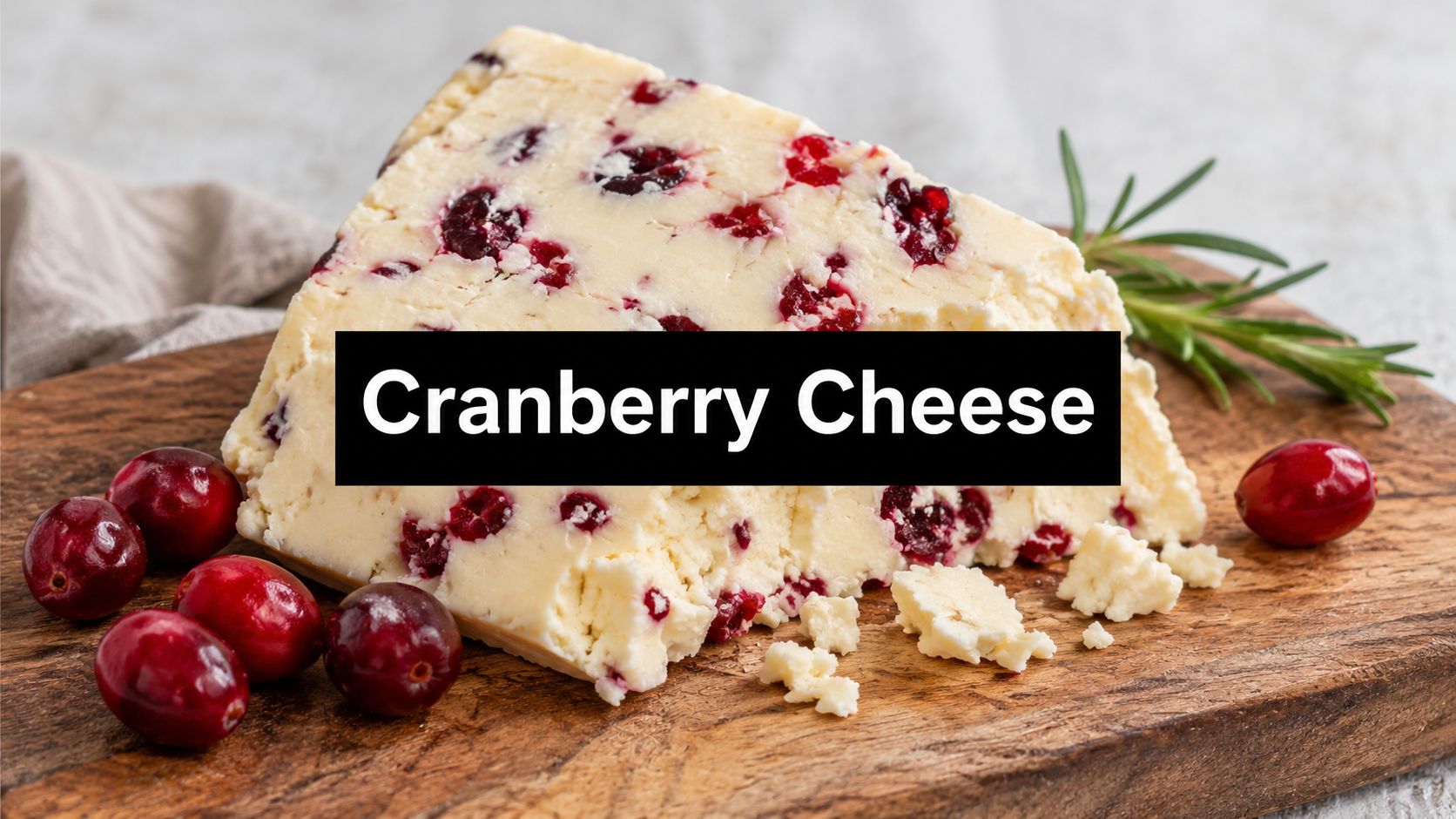
- Wensleydale Cranberry Cheese Taste Pairings and Uses
You've set out a beautiful cheese board in Dubai, the grapes are chilled, the walnuts are ready, and someone reaches for a white wedge flecked with ruby-red fruit. One bite brings a gentle dairy tang, a crumbly texture, and a bright cranberry sweetness that feels more familiar from a dessert plate than a traditional cheese course. The conversation usually follows: is it a cheese, a fruit cheese, or something in between? That delicious uncertainty is exactly what makes Wensleydale cranberry cheese so useful for UAE entertaining. It gives a board a sweet-savoury centre, looks festive in a hamper, and pairs comfortably with both savoury crackers and fruit-led accompaniments. It also offers enough texture to hold its shape when portioned, while remaining approachable for guests who usually prefer milder cheeses. Introduction to Wensleydale Cranberry Cheese Charm At a gathering, this cheese often works as a gentle introduction to more expressive cheeseboard flavours. A guest can start with a plain cracker and notice the crumbly white cheese first, then discover the cranberry pieces as small bursts of tart sweetness. That sequence makes it easier to serve alongside familiar items such as grapes, walnuts, mild crackers, honey, or a soft tea cake. Its visual appeal helps, too. The pale cheese and red fruit create a jewel-like contrast without needing elaborate decoration. On a Dubai buffet, where chilled presentation and neat portioning matter, the cheese can be cut into small pieces before guests arrive and placed beside items that echo either its savoury or sweet side. A modern British idea Wensleydale cranberry isn't an ancient regional recipe passed down unchanged through centuries. The Wensleydale Creamery says the product was created in 1996, after an idea began during a pub conversation with a dried-fruit supplier, followed by experimentation and development before launch. That origin makes it a relatively modern branded cheese innovation, rather than an old farmhouse formula. The Wensleydale Creamery describes how cranberries entered Yorkshire Wensleydale. The same creamery says the cranberry version has become one of its most successful products, accounting for around 25% of its sales and ranking among its strongest export items, according to the same creamery account of the cheese's development and success. That helps explain why similar fruit-studded cheeses now appear well beyond Yorkshire. This guide will help you understand the cheese before serving it, describe its flavour with confidence, select balanced pairings, protect its texture in UAE conditions, and use it in simple dishes or carefully organised gifts. It also has a useful relationship with other sweet and delicate treats. If you enjoy learning how a soft, airy dessert can carry a distinctive flavour, Japanese cheesecake with matcha offers an interesting comparison in texture-led tasting. What Wensleydale Cranberry Cheese Really Is At a UAE gathering, one cheese may need to please guests who prefer savoury snacks and others who reach for something sweet. Yorkshire Wensleydale helps explain why the cranberry version works so well in that setting. It is a white cow's-milk cheese with a moist, crumbly body and fresh dairy character. Its texture falls between mature Cheddar's firm bite and cream cheese's spreadable softness, breaking into tender flakes rather than forming a smooth paste. The cranberry version keeps that structure while folding sweetened dried cranberries through the cheese. UAE retail information identifies it as a pasteurised cow's-milk cheese, with sweetened dried cranberries making up about 13% of the mix, plus potassium sorbate as a preservative and milk or lactose allergen labelling. Waitrose UAE's product listing provides the composition and allergen details. The transformation in simple terms Plain Wensleydale behaves like a lightly tangy, buttery shortbread base. It has enough moisture to feel tender, while its structure allows a clean crumble. The cranberries add colour, chew, acidity, and sweetness, giving one cheese two contrasting sides. The fruit keeps the cheese in the savoury category. Its role is closer to a built-in chutney: the dairy supplies a gentle savoury foundation, and the cranberry adds a sharper, fruitier lift. That combination suits cured meats and olives, while also fitting biscuits, grapes, and sweet preserves. For UAE entertaining, it can bridge a mixed platter without requiring several separate cheeses. A member of the fruit-cheese family Fruit cheeses combine a cheese base with dried or preserved fruit. The method adds sweetness and acidity in small points, making a mild cheese feel more layered without giving it an aggressively strong flavour. For a first tasting, cut a piece containing both white cheese and visible cranberry. A dairy-heavy edge can seem plain, while a cranberry-heavy piece may taste fruit-dominant. The balanced bite shows its identity most clearly: a crumbly British cheese with a built-in sweet-tart accent. That clear sweet-savoury balance also makes it practical for a UAE gift hamper, where one item may need to complement crackers, fruit, and delicate sweets. For a texture-focused comparison, Japanese cheesecake with matcha offers another way to notice how a soft structure carries a distinctive flavour. Taste Texture and How It Feels on the Palate The best way to taste Wensleydale cranberry is in layers. Start with a small piece at a cool, comfortable serving temperature. Let it sit briefly on the tongue rather than chewing immediately, then notice how the base and fruit arrive at different moments. First comes the cheese The opening flavour is mild, milky, and lightly tangy. Young Wensleydale can suggest fresh cream, butter, and a faint honeyed quality, although it doesn't taste like a sweet cheese on its own. The body breaks apart easily, but it still feels moist enough to avoid the dry, powdery sensation associated with some crumbly hard cheeses. That texture is central to the experience. A creamy Brie coats the mouth, while a mature hard cheese can feel dense and compact. Wensleydale sits between those extremes. It crumbles like a delicate aged cheese, yet its moisture gives the bite a softer landing. Then the cranberry appears The dried cranberry pieces bring a brighter note. They're tart, sweetened, and slightly chewy, creating a small resistance against the yielding cheese. This contrast keeps the flavour active rather than flat. The key idea: the cheese supplies the savoury, milky foundation, while the cranberry behaves like a bright fruit accent inside the bite. The final impression combines both elements. The cheese leaves a clean, gently tangy finish, and the cranberry adds lingering fruitiness. Some bites will feel more dairy-led, while others will be more vivid if they contain larger pieces of fruit. How to describe it to guests Try a simple description: “It's a fresh, crumbly Wensleydale with tart dried cranberries running through it.” That tells guests what to expect without suggesting that the cheese is sugary or intensely mature. For a more detailed tasting note, use milky, crumbly, tangy, tart, fruity, and lightly chewy. Those words are more useful than calling it merely “sweet”, because they explain the balance that makes it suitable for both savoury boards and dessert-leaning plates. Here's a short visual guide that traces the same progression from dairy to fruit and finish: Perfect Pairings for Wine Bread and Fruit Pairing works best when you decide which side of the cheese you want to emphasise. To highlight the savoury base, choose crisp drinks, lightly salted breads, and fresh fruit. To amplify the cranberry, choose gentle sweetness, nutty flavours, or a dessert-style accompaniment. A quick decision matrix Pairing Category Best Matches Why It Works Wine Dry white wine, sparkling wine, or a light rosé Fresh acidity cleans the palate and prevents the cranberry sweetness from feeling heavy Sweeter drinks Light dessert wine or fruit-forward non-alcoholic drink Echoes the cranberry and creates a softer, more indulgent finish Bread Plain sourdough, water crackers, oat biscuits, or lightly toasted baguette Supports the crumble without adding a competing flavour Fruit Grapes, apple, pear, strawberries, or pomegranate seeds Adds freshness and extends the cheese's fruit character Nuts Walnuts, pecans, almonds, or pistachios Brings savoury crunch and balances the soft fruit notes Preserves Fig jam, honey, or a restrained berry preserve Adds a complementary sweet note, but should be served sparingly Chocolate Dark chocolate with a clean cocoa profile Creates a sophisticated sweet-savoury contrast without overwhelming the cheese A dry sparkling wine is a particularly practical choice for a formal board because its freshness cuts through the cheese's richness while its celebratory character suits entertaining. A crisp white wine performs a similar role with less emphasis on sweetness. If you're serving a non-alcoholic menu, choose a chilled fruit drink that isn't heavily syrupy, or offer sparkling water with citrus. Build the board in layers Put the cheese beside plain crackers first, then place fruit and nuts around it. This lets guests understand the cheese before adding stronger flavours. Keep pungent blue cheese, intensely spiced chutney, and heavily smoked meats at a distance so they don't dominate the milder Wensleydale. For a dessert-leaning finish, serve the cheese with berries, honey, or a small scoop of berry sorbet. A visual reference such as this wild berries sorbet presentation can help you think about colour and plating without turning the cheese into a dessert course. In the UAE, keep the board chilled until close to serving time. The goal isn't to create a complicated tasting menu. It's to make the sweet and savoury relationship obvious at first glance, then let guests choose their preferred direction. How to Store Serve and Keep It Fresh in the UAE A cheese board can lose its appeal quickly in UAE heat, especially during delivery, buffet service, or outdoor entertaining. Keep Wensleydale cranberry refrigerated from purchase to serving. Its pasteurised formulation and preservative support chilled retail stability, yet neither removes the need for cold storage. UAE product information also identifies potassium sorbate and highlights milk or lactose allergen labelling. Keep the texture protected Place the cheese in a stable area of the refrigerator, rather than in the door where temperatures shift each time it opens. After opening, wrap it in parchment or cheese paper, then place it in a sealed container. The wrapping limits drying, while the container protects the surface from nearby food aromas without trapping excessive moisture. For a gathering, cut only the amount guests are likely to eat soon. Return the remaining block to the refrigerator instead of leaving everything on the buffet. A covered board or chilled serving tray helps maintain its texture during a longer event. Portion before guests arrive UAE food-service guidance requires cheese to be in date and sets portions at at least 30g, or 20g if sliced. The UAE standards summary from the Food and Agriculture Organization platform outlines these portion and date requirements. Small cubes or neat rectangular pieces are easier to pick up than loose crumbles. They also reveal the cranberry evenly, which helps guests understand the cheese's sweet-savoury balance. For a gift hamper, keep the cheese sealed and chilled, separating it from biscuits or chocolate so condensation does not affect dry items. Practical rule: refrigeration supports freshness, while careful portions protect presentation and compliance. Serving checklist Check the date: Use cheese that remains in date, particularly for hospitality trays and gifts. Read the label: Milk and lactose information matters when serving a mixed group. Cut cleanly: Use a sharp knife and wipe the blade between cuts to limit crumbling. Serve in stages: Start with a modest amount, then replenish from the refrigerator. Keep it covered: Shield the cut surface from warm air, dust, and nearby buffet aromas. Abu Dhabi's 2025 Nutrition Mark rules also cover cheese sold in the emirate. For local buyers, that makes label details, portion choices, and menu presentation part of a well-prepared serving plan. Easy Recipe Ideas and Smart Substitutes to Try Wensleydale cranberry is most rewarding when you use its built-in contrast rather than hiding it. On a board, serve it in visible pieces with grapes, walnuts, crisp crackers, and a little honey. In a salad, crumble it over leaves with apple or pear, toasted nuts, and a sharp vinaigrette. The cranberry already supplies a fruit note, so the dressing doesn't need to be sweet. A warm application gives you a different result. Place the cheese inside a toasted sandwich with sliced apple and a mild mustard, or crumble it over a savoury tart before baking. It softens and becomes more yielding, while the cranberry pieces remain as bright pockets of fruit. You can also fold it into savoury scones, where the cheese adds moisture and the fruit creates an unexpected finish. Small recipes with a clear purpose Cranberry Wensleydale toast: Spread a thin layer of butter on sourdough, add cheese and a few walnut pieces, then toast until the cheese softens. Finish with black pepper rather than extra jam. Warm tart topping: Add crumbled cheese to a pastry tart containing caramelised onion or roasted squash. The onion or squash brings depth, while the cranberry lifts the richer filling. Fresh salad crumble: Combine the cheese with rocket, pear, toasted almonds, and lemon dressing. Add the cheese at the end so its crumbly texture stays distinct. For a family-friendly savoury option, consider pairing the cheese with a simple baked cheese bread such as Pan de Queso from IFM Gourmet Dubai. The bread offers a warm, mild base, while the cranberry cheese provides contrast. Choosing a substitute If Wensleydale cranberry isn't available, choose a substitute according to the feature you need most. For crumbly texture: Plain Wensleydale is the closest structural match, but you'll need to add dried cranberries or a fruit preserve separately. For fruit-and-cheese contrast: A mild goat cheese with cranberry or another dried fruit offers a similar sweet-savoury idea, though its tang will be more pronounced. For gentle melting: Mild Cheddar with cranberry chutney works in toasties and tarts, but it will be firmer and less delicate. For a softer board: Brie with cranberry preserve gives a creamier mouthfeel, so it suits spreading rather than neat crumbling. The best substitute preserves the balance, not necessarily the exact cheese. If the replacement is richer, add fresh fruit. If it's sharper, use a plainer cracker and avoid strong pickles. Featuring Wensleydale Cranberry Cheese in Gourmet Hampers A hamper needs contrast, rhythm, and practical handling. Wensleydale cranberry contributes all three. Its pale body and red fruit flecks add colour, its flavour welcomes both sweet and savoury companions, and its firm crumbly form can be portioned for a board rather than served as a loose spread. That makes it a thoughtful choice for Christmas, Ramadan, Diwali, corporate gifting, and hosted events. The cheese can sit beside savoury crackers, premium nuts, a mild preserve, fine chocolate, and tea, creating a collection that moves from savoury tasting to a sweeter finish without requiring a separate dessert arrangement. Curate around the cheese Begin with one clear direction. For a classic board hamper, add plain crackers, walnuts, grapes, and a small jar of honey. For a more indulgent selection, combine the cheese with dark chocolate, fruit preserve, and a fragrant tea. For a corporate gift, keep the profile broadly approachable and avoid filling the box with several strong cheeses that compete with its gentle dairy character. The UAE has a sizeable imported food environment for gourmet retailers. In 2024, the UAE imported $16.2 billion in consumer-oriented food products, including $2.0 billion in dairy, according to the USDA Dubai food-service market report. That breadth gives hamper curators room to combine a British fruit cheese with Italian pantry goods, confectionery, teas, or bakery items. Italian gourmet products also have a strong place in the UAE. Italian agri-food demand in the UAE reached 419 million euros in December 2022, up 40% from 2021, and reached 376.7 million euros in the first ten months of 2023, representing 9.2% growth against the same period in 2022, as reported in this Italian Trade Agency Gulfood market document. An earlier FoodNavigator report on Italian food exports to the GCC also recorded the UAE as the largest Middle East importer of Italian food products, with imports valued at US$325 million and year-on-year growth of 27%. Make delivery part of the design Use sealed chilled packaging for the cheese and place it away from dry products that could be affected by condensation. Add a serving note that recommends refrigeration until presentation, particularly if the recipient plans to open the hamper later. Packaging deserves equal attention. A useful resource on bespoke packaging damage reduction can help gift planners think beyond appearance and consider fit, cushioning, movement, and protection during delivery. Those decisions matter when a crumbly cheese shares a box with glass jars, tins, chocolate, or delicate bakery items. IFM Gourmet Dubai is the luxury online gourmet arm of IFM Investments LLC, a culinary-focused company based in the UAE. Its store offers artisanal sweets, savouries, fine chocolates, premium teas, cakes, and curated gift hampers, as part of the wider Italian Food Masters group. In a Wensleydale cranberry hamper, that range makes it possible to build a complete sweet-savoury experience around the cheese, while keeping the presentation polished and suitable for Dubai gifting. Explore the selection at IFM Gourmet Food Store for premium cheeses, Italian pantry ingredients, chocolates, teas, cakes, and curated hampers that complement Wensleydale cranberry cheese. Choose a ready-made gift or assemble a chilled sweet-savoury collection for your next Dubai gathering, festive occasion, or corporate delivery.
- Customer Satisfaction in Gourmet Retail: A Practical Guide
The UAE's overall customer experience score rose from 7.27 in 2017 to 7.96 in 2024, a 9.5% increase across the period tracked by KPMG's Customer Experience Excellence study (KPMG's UAE CEE report). That improvement changes the question for gourmet retailers. Customer satisfaction isn't created by a smiling cashier alone. It's earned when the product, price, provenance, delivery and recovery all match the promise made to the shopper. For a luxury food store in Dubai, the decisive levers are value perception, closed-loop recovery and culturally tuned personalisation. Service matters, but it can't rescue an overpriced hamper, a damaged chocolate box or an uncertain delivery during a major gifting season. What Customer Satisfaction Really Means for a Gourmet Store A Dubai resident paying AED 450 for hand-cut Iberian ham isn't buying slices alone. They're buying a mental contract that includes credible provenance, suitable ripeness, careful handling and a knowledgeable counter team. If the ham arrives exactly as promised, satisfaction rises. If the label is vague, the texture disappoints or the staff can't answer a basic storage question, the transaction fails even if the interaction was friendly. Customer satisfaction is a measurable retail outcome, not a mood. It reflects the gap between what a shopper expected and what they received across the purchase journey. In gourmet retail, that gap includes sensory quality, price justification, convenience, presentation and confidence in the recommendation. Measure the transaction and the relationship Transaction satisfaction answers, “Was this purchase good?” It's immediate and specific. A customer may rate a box of chocolates highly because it arrived in good condition and matched the order. Relationship satisfaction answers a larger question, “Would I trust this store with my next important purchase?” That layer matters more for gourmet retail because shoppers return for gifting cycles, corporate orders, dinner occasions and seasonal products. A poor recommendation also carries a visible social cost. If a customer gives an unsuitable hamper to a client, family member or host, the embarrassment belongs to the buyer, not the retailer. IFM Gourmet Dubai is the luxury online gourmet arm of IFM Investments LLC, a UAE-based culinary company. Its store offers artisanal sweets, savouries, fine chocolates, premium teas, cakes and curated gift hampers, within the broader Italian Food Masters group. Its positioning rests on quality, authenticity and culinary elegance, so the satisfaction programme must measure whether shoppers feel those promises in practice. The store's visual identity can be viewed through the IFM Gourmet Dubai brand image. Avoid the three measurement traps Most luxury food CSAT programmes distort reality in predictable ways: In-store complainers dominate: The customer who has a problem is more likely to speak up than the quiet buyer who repeatedly orders. Silent repeat buyers disappear: A returning customer may offer no survey response, yet their behaviour is a powerful satisfaction signal. Warmth gets mistaken for value: A polished greeting doesn't compensate for weak provenance, poor shelf rotation or unclear pricing. A practical programme combines journey mapping, operational KPIs and short surveys. Teams that need a broader framework for improve customer satisfaction scores can use a structured CSAT approach, but the questions still need to reflect gourmet realities. Practical rule: Measure what the customer risked, not only what the employee said. The Four Pillars That Drive Satisfaction in Luxury Food Retail A Dubai gourmet buyer usually evaluates four things, but the weighting changes by occasion. A weekday shopper wants confidence and speed. A corporate buyer wants reliability at scale. A gift buyer wants a presentation that protects their reputation. Value isn't the same as low price. It's the fit between the price and the story delivered by the product. An imported olive oil needs clear origin, meaningful product information and a reason to sit above a standard bottle. Quality covers sensory integrity and handling, from truffle aroma and chocolate bloom to olive oil freshness and cold-chain protection during a hot delivery day. Service is practical expertise. It includes staff who can explain the difference between products, communicate with a multilingual customer base and recommend confidently without overselling. It also includes packaging that survives the lift journey to a Marina tower. Experience is the total memory of the interaction, including store atmosphere, queue speed during a Ramadan rush and the unboxing moment for a corporate hamper. Pillar What It Really Means in Gourmet Retail Dubai Shopper Trigger Value A credible relationship between price, provenance, curation and delivered quality “Can I justify this choice to myself or the recipient?” Quality Freshness, flavour, appearance, correct storage and dependable handling “Will this taste and look as expected?” Service Product knowledge, responsive communication and secure fulfilment “Can someone remove uncertainty quickly?” Experience Smooth discovery, confident buying and memorable presentation “Will the whole occasion feel considered?” Match the pillar to the purchase For a daily pantry purchase, quality and value carry most of the decision. The shopper wants a product that performs consistently and makes sense against alternatives. Service should remove friction rather than dominate the interaction. For gifting, experience and value become more visible. The box must look intentional, the message must be accurate and the assortment must suit the recipient. Quality remains essential, but the buyer may judge it through presentation, packaging and confidence in the store's curation. For corporate orders, service becomes operational. The buyer needs dependable communication, clear stock visibility, accurate quantities and a delivery handoff that doesn't create last-minute work. A luxury food brand should score each pillar by transaction type instead of publishing one blended satisfaction number. The Metrics That Actually Matter for IFM Gourmet Dubai A luxury food store doesn't need a dashboard crowded with vanity measures. It needs a small set of indicators that answer different operational questions. NPS measures recommendation intent. It's useful for corporate gifting and relationship-led purchases, where a buyer may recommend the store to colleagues or procurement contacts. It's less revealing for a daily shopper who bought one ingredient and has no reason to discuss the brand. CSAT captures immediate satisfaction after a purchase or interaction. Use it close to the event, especially for fresh or delicate products, because feedback loses specificity as time passes. Ask about the actual order, not the brand in general. CES measures effort. It belongs at checkout, payment and delivery-booking points, particularly when demand spikes and queues lengthen. If shoppers say the purchase required too much effort, fix the workflow before adding more scripted hospitality. Metric Best use Monday decision NPS Loyalty, gifting and corporate relationships Which promoters should receive a referral request? CSAT Immediate product and transaction feedback Which item, order or interaction needs recovery? CES Checkout, payment and fulfilment friction Which step should the team remove or simplify? Repeat purchase rate Long-term retail health Which customer groups are returning? Average basket value Assortment and merchandising decisions Which bundles or recommendations deserve testing? Refund rate Product, packing and delivery control Which failure requires a root-cause review? Treat repeat purchase as the truth test Repeat purchase rate is the most honest indicator for a curated luxury food shop. A customer can give a generous survey score and still never return. A repeat order shows that the previous experience created enough confidence to act again. Track average basket value beside repeat purchase, not instead of it. A larger basket may reflect successful curation, but it may also come from a one-off gifting event. Refund rate adds the operational check, revealing whether the store is selling products it can't consistently fulfil or protect. If a metric can't lead to a quarterly action the store manager can run on Monday, it's decoration, not measurement. Why Value Matters More Than Service in the UAE The standard retail advice is to train staff to be warmer, faster and more polished. That advice is incomplete in the UAE gourmet market. An Abu Dhabi Chamber report found that value influenced 53% of UAE shoppers choosing a main retailer, compared with 9% for service (Abu Dhabi Chamber retail report). Quality accounted for 20%, while range accounted for 18%. That gap should change the budget. If NPS falls but complaints don't point to staff behaviour, don't send the team to another hospitality workshop first. Inspect price architecture, provenance labels, shelf rotation, expiry visibility, bundle logic and the evidence supporting premium pricing. Make value visible on the shop floor For IFM Gourmet, value can be demonstrated through: Clear provenance: Show origin and product identity where shoppers make decisions, not only on a distant product page. Useful comparisons: Place premium and standard tiers side by side so customers can understand the difference. Tasting opportunities: Let shoppers experience flavour and texture when the product category benefits from sensory proof. Freshness confidence: Explain storage, handling and best-use guidance before the customer asks. Fair bundle design: Build hampers and pantry combinations that make the total choice easier to justify. Satisfaction Driver Shopper Weighting Typical Store Investment Value 53% Pricing clarity, bundles, provenance and fairness Quality 20% Freshness control, sourcing and product education Range 18% Relevant assortment and dependable availability Service 9% Staff courtesy, speed and assistance Service still matters, but it works after value is credible. A helpful employee can explain why a product costs more, but can't manufacture freshness or repair a weak assortment. A useful reallocation rule is simple. When satisfaction declines without a clear service trigger, shift the first review towards merchandising and value communication. Audit what the shopper can see, compare and taste before changing the greeting script. Mapping the IFM Gourmet Dubai Customer Journey A corporate hamper order is a reputation test for Noura. Her satisfaction begins before she contacts IFM Gourmet Dubai and can be lost after payment, delivery, or the recipient's first impression. She finds the store through Instagram and Google. The immediate risk is uncertainty. Attractive products are not enough if stock status, delivery expectations, product categories, or hamper choices remain unclear. The IFM Gourmet category visual helps organise the range around the categories and occasions shoppers are considering. If Noura cannot see a credible path from discovery to purchase, she may leave before making an enquiry. Her WhatsApp message asks for a corporate hamper, but the question is whether the store can protect her reputation with the client. The team should respond with current stock confirmation, a clear recommendation, and an accurate delivery window. A generic catalogue reply leaves the buyer carrying the risk herself. At the trade centre location, Noura checks the proposed products and tests whether the physical range matches the digital advice. Staff should confirm substitutions before checkout, explain the selection in plain language, and record recipient requirements. Any gap between the conversation and the available products weakens trust quickly. Protect the handoff At purchase, Noura is judging effort and control. The till team should repeat the delivery details, message wording, and quantity, then state what happens if an item becomes unavailable. Checkout must close the promises made during consultation. Delivery creates a physical failure point. A dented box, shifted arrangement, or poorly protected chocolate can undo a strong buying experience. Double-boxing for demanding courier routes, photographing the packed hamper, and using a handoff checklist give managers practical recovery controls. The recipient may never contact the store, but their reaction still shapes Noura's next order. Send a short follow-up asking whether the hamper arrived in good condition and suited the occasion. Keep the response simple so a failure is easy to report and the team can act on it. Survey Templates and Feedback Loops You Can Deploy This Week A gourmet survey should be short enough to complete on a phone and specific enough to trigger action. Send the same core questions across channels, then compare results by product type, occasion and fulfilment method. Use this post-purchase template: How satisfied were you with the product's freshness and condition? How fairly did the product feel priced for the quality delivered? How confident were you in the staff member's product knowledge? How satisfied were you with the packaging and presentation? How likely are you to gift from us in the future? What should we improve about this purchase? Use a consistent rating scale, keep the open-text question optional and attach the response to the order wherever possible. A score without order context won't tell the manager whether the problem was a cake, a hamper, a delivery or a consultation. Use three collection points Post-purchase email: Lead with one thumb-up question, then offer the short form for customers who want to explain their answer. This reduces the burden of a formal survey. In-store QR card: Place the card at the till and tasting counters. Ask about the interaction while the details are still fresh. WhatsApp follow-up: Trigger the message 48 hours after a hamper delivery. By then, the buyer has had time to confirm presentation and, where possible, hear from the recipient. Set internal response expectations rather than chasing an arbitrary benchmark. Review channel response quality, not just volume. Resources such as this guide to improve feedback collection with Firacard can help teams compare collection methods before expanding the programme. Close the loop visibly Every detractor should receive a personal response within 24 hours. The response must name the issue, state the next action and give the customer a direct contact, rather than hiding behind an automated apology. Promoters should receive a referral prompt within 72 hours. Ask for the action that fits the occasion, such as recommending the store to a colleague arranging corporate gifts or sharing a product with a food-loving friend. Seasonal, Gifting and Personalization Playbook Personalisation improves satisfaction only when it helps the shopper make a better decision. UAE retail research describes rising expectations for customised recommendations and exclusive discounts, while also warning that browsing-based marketing can feel intrusive (Adyen UAE retail research). The answer isn't to collect more data indiscriminately. Use known occasion, dietary preference, delivery context and recipient profile, then explain the relevance. Italian food already has a strong footprint in the UAE. The country was reported as the Middle East's largest importer of Italian food products in 2014, with imports valued at US$325 million, while Italian pasta imports were valued at US$14.5 million (Quality Tastes). That supports an assortment strategy built around authenticity, but the seasonal execution still has to feel local. Season Pre-order Cut-off Gift Tiers (AED) Personalization Touch Primary KPI Ramadan iftar hampers Before the final fulfilment rush Entry 150, mid 350, premium 750+ Arabic calligraphy card and same-day Dubai delivery slots Pre-order conversion Diwali Before mithai and dry-fruit demand peaks Entry 150, mid 350, premium 750+ Recipient-name card and tailored sweet assortment Hamper average order value Christmas corporate gifting Before corporate dispatch schedules tighten Entry 150, mid 350, premium 750+ Engraved ribbon, branded message and delivery batching Repeat rate within 30 days Valentine's Day Before premium chocolate allocation closes Entry 150, mid 350, premium 750+ Personal note and timed delivery slot Hamper average order value Build the quiet months deliberately From March to August, use staycation hampers for hotel partners, expat-repatriation nostalgia boxes and back-to-school lunch-staple bundles. These offers should solve a recognisable occasion, not merely clear inventory. The personalisation touch should stay useful. Same-day delivery matters when the customer has forgotten a gift. Arabic calligraphy matters when the occasion calls for cultural care. Engraved ribbons matter when the buyer needs the hamper to represent a company. Italian Food Masters, the wider group linked to IFM Gourmet Dubai, is described as a Dubai-based importer and distributor serving UAE HORECA and retail channels, including hotels, restaurants, catering companies, specialty stores, gourmet food retailers, bakeries, airlines and cafés (Italian Food Masters). That channel reach makes hotel partnerships and corporate gifting natural operating opportunities, but each should be measured by the seasonal KPI in the calendar rather than by general enthusiasm. A Simple Operating Rhythm for Sustained Satisfaction A satisfaction programme survives when one CX lead can run it without turning every day into a reporting exercise. Use a fixed weekly rhythm and assign one owner to each action. Monday: Hold a KPI stand-up covering CSAT, NPS and refund rate from the POS and feedback tools. Tuesday: Listen to selected call recordings and review WhatsApp logs for repeated friction. Wednesday: Walk the shop floor and focus on the top complaint cluster from the previous week. Thursday: Run a 15-minute team huddle with one insight and one assigned action. Friday: Review survey responses and finalise the next customer follow-up list. Saturday: Meet the buyer or category owner about quality issues customers have flagged. Sunday: Plan stock, staffing and messaging against the seasonal calendar. Use one diagnostic for the programme The most useful diagnostic is the rolling 12-week correlation between first-visit CSAT and 60-day repeat purchase. A correlation below 0.4 means satisfaction scores are noise. A level above 0.6 means the programme is compounding and the budget has a defensible connection to customer behaviour. Those thresholds are operating rules, not universal laws. The value comes from watching the relationship over time and checking whether actions taken on Monday change what customers do later. Dubai's public-service programmes show why closed-loop measurement matters. Dubai government entities reported average customer happiness of 93% in 2023, up from 86% in 2022, while Digital Dubai reported a 96% Happiness Index in 2023 (Gulf News coverage of the UAE Customer Happiness Index). DEWA later reported an Instant Happiness Index of 98.9% in 2025, a Customers of Determination Index of 98.02% and 100% complaint resolution in 2025, linking strong outcomes to complaint closure and channel monitoring (DEWA customer happiness update). IFM Gourmet Food Store offers authentic Italian ingredients, artisanal delicacies, fine chocolates, premium pantry staples and curated hampers for home dining, celebrations and corporate gifting. Visit IFM Gourmet Food Store to choose products for your next occasion and judge the experience against the standards that matter, clear value, reliable quality and thoughtful fulfilment.
- Extra Virgin Olive Oil Uses for Every Kitchen
You're standing in a Dubai kitchen with a beautiful bottle of Italian extra virgin olive oil, wondering whether to save it for guests or open it for tonight's dinner. Perhaps it arrived in a gift hamper, or you chose it for its peppery aroma and elegant packaging, then used it only for salad dressing. That bottle has a much broader role. Used thoughtfully, it can season hummus, enrich pasta, roast vegetables, finish grilled seafood, support gentle cooking, and add polish to a gourmet gift. IFM Gourmet Dubai is the luxury online gourmet arm of IFM Investments LLC, a culinary-focused company based in the UAE. Its gourmet store offers artisanal sweets, savouries, fine chocolates, premium teas, cakes, and curated gift hampers. As part of the wider Italian Food Masters group, it brings quality, authenticity, and culinary elegance into Dubai's gourmet scene. Rethinking Your Bottle of Liquid Gold A premium bottle of extra virgin olive oil often begins as an occasion purchase. You might buy it for an Italian dinner, place it beside crusty bread, and then return to a neutral oil for everyday cooking. That habit misses much of the oil's character. Extra virgin olive oil uses extend from raw applications to gentle heat, finishing, baking, marinades, and carefully chosen household rituals. A pantry essential for the UAE The UAE has a familiar relationship with olive oil that reaches beyond private kitchens. In 2023, the UAE exported 3,273,620 kg of virgin olive oil and fractions, valued at US$10,056.84K, with Saudi Arabia and Oman among the major regional destinations, as reported in the UAE olive oil market outlook. That trade activity reflects both local culinary demand and the country's role as a distribution hub for premium Mediterranean foods across the Gulf. For home cooks, that means a bottle can move easily between cuisines. Use a grassy oil with tomatoes, basil, and bronze-die pasta, then pour it over warm flatbread, labneh, or a plate of roasted aubergine. In a hospitality setting, the same ingredient can serve as a table condiment, a finishing touch for plated dishes, or part of a breakfast and mezze presentation. Practical rule: Choose the oil for the flavour you want at the table, not simply for the cooking method printed on the recipe. Think in layers of flavour Mild oils can support delicate fish, fresh cheese, and lightly dressed vegetables. More assertive oils, with peppery or herbaceous notes, can stand up to grilled meat, beans, bitter greens, and tomato sauces. The oil's aroma matters most when it stays close to the finished dish, which is why a final drizzle often delivers more pleasure than using the same oil where its flavour disappears. That versatility also makes EVOO useful in gifting. A bottle paired with balsamic vinegar, fine pasta, chocolates, or tea creates a practical hamper rather than a decorative one. The recipient can use each item in daily cooking, serve it to visitors, or keep it for a special meal. Culinary Applications and Heat Management In a UAE kitchen, the same bottle may dress a salad at lunch, flavour a family meal, and finish a hospitality platter that evening. Extra virgin olive oil performs best when you match its flavour, freshness, and heat exposure to the dish. Raw use preserves its aroma most clearly. Gentle cooking carries that character into food, while prolonged or repeated high heat can make a different oil more practical. Start with raw applications Use EVOO when the oil forms part of the eating experience: Dressings: Whisk it with lemon juice, vinegar, herbs, or mustard for salads and grain bowls. Marinades: Combine it with garlic, rosemary, citrus, and spices for vegetables, poultry, seafood, or meat. Dipping: Serve it with bread, za'atar, cracked pepper, or aged balsamic vinegar. Finishing: Spoon it over hummus, labneh, soup, grilled vegetables, pasta, or warm beans just before serving. A raw drizzle brings balance to Arabic-Italian dishes. Try it over a mezze plate with hummus and roasted peppers, or finish pasta with chilli, garlic, lemon, and a pour of EVOO. Add the oil after the main cooking stage, like adding fresh herbs at the end, so its fragrance remains distinct. Cook gently, then taste For UAE kitchens, reserve extra virgin olive oil mainly for low- to medium-heat methods and finishing. Overheating unrefined oils can release harmful compounds, while stable refined oils are preferred for deep frying or stir-frying, as explained in this regional guide to oil smoking points. Sauté onions, garlic, mushrooms, courgettes, or spices over gentle heat. Use EVOO to soften vegetables before adding tomatoes or stock. It also suits roasting and baking when the recipe benefits from noticeable olive flavour. The oil coats vegetables, helps herbs cling to food, and adds richness to savoury doughs. For a practical explanation of smoke point and oil selection, consult the Monopack ltd oil guide. Also consider heating time, whether the oil is reused, and whether its flavour suits the recipe. Keep the premium flavour visible: Use a characterful EVOO where your palate can notice it, particularly on finished dishes and raw preparations. A pasta dinner provides an easy test. Cook the pasta separately, prepare the sauce with gentle heat, then finish the plate with a modest pour of EVOO. The oil should taste fresh and integrated, rather than greasy or overpowering. For visual inspiration, explore this Italian pasta serving reference. When to Choose EVOO Over Neutral Oils EVOO contributes flavour and aroma, while a neutral oil stays in the background. Choose according to whether you want the oil to be tasted and recognised in the finished dish. EVOO suits hummus, focaccia, tomato sauces, grilled seafood, roasted vegetables, salad dressings, and pasta. Its fruitiness can make familiar ingredients feel complete, while peppery notes provide contrast against creamy or sweet components. It also works for baking, sautéing, grilling, and frying. Smoke point alone does not reliably measure cooking stability, according to this olive oil FAQ. A neutral oil fits a recipe where olive notes would compete with subtle flavours, or where the oil needs to provide a clean background. It can also be practical for deep frying, since the quantity used is substantial and the distinctive character of premium EVOO may not remain noticeable after the process. A useful decision matrix Cooking Method Best Oil Choice Why Salad dressing EVOO It provides aroma, fruitiness, and structure to the dressing. Hummus or labneh EVOO The oil becomes part of the final flavour and presentation. Focaccia EVOO It supports a savoury, fragrant crumb and a rich finish. Roasted vegetables EVOO or a neutral oil Choose EVOO when its herbal notes suit the vegetables. Delicate sponge cake Neutral oil or mild EVOO A neutral oil keeps the flavour profile restrained. Gentle sautéing EVOO It carries aromatics and adds depth to the base of the dish. Grilled seafood Mild EVOO It complements the seafood without masking its texture. Deep frying Neutral or refined oil A neutral profile and appropriate heat performance may be more practical. Premium EVOO is easiest to justify when it remains recognisable in the dish. A bold bottle poured over grilled prawns, warm bread, or ripe tomatoes has a clear sensory role. In a strongly spiced preparation, however, the spices may dominate its aromatic character. This matters in the UAE, where a bottle may serve both everyday meals and a hospitality table. Reserve expressive oils for dishes where guests can notice their freshness and finish. The category also carries significant international demand. EU extra-EU exports in May 2025 totalled 74,914 tonnes, and 74.6% of that volume was EVOO, while average EVOO export values were €595 per 100 kg, according to the olive oil FAQ cited above. Quality-conscious shoppers, hosts, and gift buyers still need to match the oil to the plate, serving occasion, and storage conditions of a hot climate. Beyond the Kitchen Beauty and Home Care A well-made EVOO can serve outside cooking, although not every culinary bottle is ideal for every personal-care purpose. Keep non-culinary use separate from food preparation, use a small amount first, and stop if your skin or scalp reacts poorly. The value lies in the oil's emollient texture and practical versatility, not in treating it as a substitute for every formulated product. Simple beauty applications Apply a tiny amount to dry areas such as elbows, hands, or heels, then massage it in. EVOO can leave a protective, supple feel, but it may feel heavy on oily or blemish-prone skin. A patch test on a small area is sensible before adding it to a regular routine. For makeup removal, place a little oil on a cotton pad and work gently around the face, avoiding direct contact with the eyes. Follow with your usual cleanser so the skin doesn't retain an unwanted oily film. This approach suits people who already enjoy simple, single-ingredient routines, but those with sensitive skin should choose products formulated for their needs. Hair care is another familiar use. Warm a small amount between your hands, smooth it through dry lengths, and leave it briefly before shampooing thoroughly. Concentrate on the ends rather than the roots if your hair becomes weighed down easily. Useful household tasks EVOO can also help with small maintenance jobs around the home: Wood cutting boards: Rub a very small amount into a clean, dry board, then wipe away the excess. Use a food-safe board conditioner for regular maintenance where appropriate. Stainless steel: Apply a drop to a soft cloth and polish in the direction of the grain. Buff the surface so it doesn't remain slick. Sticky residue: Dab oil onto adhesive residue, allow it to loosen, and wipe the area clean. Test first on an inconspicuous surface. Leather care: Use caution, as oils can darken or mark leather. Test on a hidden area before applying anything broadly. These uses are especially appealing in a wellness or gourmet hamper. A bottle can sit alongside natural soaps, tea, chocolates, or pantry ingredients, connecting food, hospitality, and everyday care without making exaggerated promises. Preserving Freshness in a Hot Climate Heat and light are two of the biggest practical concerns for EVOO storage in the UAE. A bottle may arrive in excellent condition, yet lose aroma if it sits beside a cooker, near a bright window, or in a warm delivery area. Storage isn't an afterthought. It determines how much of the oil's original sensory character reaches your plate. Build a cool, dark routine Keep the bottle in a cupboard away from the oven, hob, dishwasher, and direct sun. A closed pantry or interior cabinet is usually more suitable than an open shelf beside a window. If you decant oil for service, use an opaque or dark container and refill it in small quantities rather than leaving a large volume exposed. Peer-reviewed evidence found that tin containers and dark glass bottles preserved physicochemical and sensory quality better than clear glass or polyethylene, without appreciable oxidation for up to six months at ambient conditions. The findings are particularly relevant to UAE kitchens and hospitality storage, where heat exposure can be difficult to avoid. Read the peer-reviewed storage study for the full evidence. Protect the bottle after opening Replace the cap firmly after every use. Oxygen enters when the bottle is left open, and a loose closure also allows aromas to escape. Avoid storing EVOO in a decorative cruet for long periods unless the cruet blocks light and seals properly. Use a simple rotation system in restaurants and at home. Open the bottle you expect to finish first, keep backup bottles sealed, and avoid buying more than your household or service team can use while the oil is at its freshest. For gift buyers, include storage advice with the hamper. The recipient may appreciate the bottle more when they know how to protect it. A bottle is part of the ingredient: Dark packaging, a tight seal, and a shaded storage place help preserve the flavour you paid for. Learn the signs of decline Fresh EVOO can smell fruity, grassy, herbal, or pleasantly peppery. Oil that has turned may smell flat, stale, waxy, or reminiscent of old nuts. If the aroma seems wrong, taste a small amount. A dull or rancid flavour is a practical reason to stop using it for finishing dishes, even if the bottle looks normal. A 2025 consumer study found that 35.9% of respondents didn't know the maximum recommended shelf life for EVOO, while only 31.3% correctly identified 12 months. The same study found that 70% didn't know the legal maximum acidity level for EVOO classification. These findings, reported in the consumer study on EVOO knowledge, show why labels and storage guidance matter as the premium category expands in the UAE. Selecting Authentic Italian EVOO in the UAE A shopper standing in a UAE supermarket may see several attractive Italian bottles under bright lights. The useful questions are practical: freshness, provenance, packaging, and intended use. These details help a home cook choose confidently and help a gift buyer match the oil to the recipient, hamper, or hospitality setting. Read the label with purpose Begin with the product category, country or region of origin, producer information, and a clear best-before date. A harvest date adds context by showing when the olives were picked. A lot or batch reference supports traceability. If the bottle carries a PDO designation, it links the oil to defined regional production rules. Acidity can help classify EVOO, yet one figure cannot describe the whole bottle. The consumer study cited earlier found uncertainty around the legal acidity threshold, so shoppers should assess technical information alongside packaging, freshness, sensory character, and transparent producer details. A low number is not a substitute for a sound aroma and balanced flavour. For the UAE's warm conditions, dark glass or a tin offers sensible protection. Check that the cap is intact, the label is legible, and the bottle has not spent long under strong retail lighting. Corporate hamper buyers should usually choose an oil with a balanced, versatile flavour unless they already know the recipient enjoys a bold, peppery style. Provenance includes compliance Imported food entering the UAE passes through formal safety and registration procedures. The UAE gourmet and fine foods guidance states that food imported into the country for the first time must receive approval from the Ministry of Climate Change and Environment. Food products sold in UAE markets must also be registered in the national ZAD electronic system before handling or sale. The guidance also highlights origin documents and clear, non-removable labels. For olive oil, these records connect the bottle to its declared source and supply chain. The same principle applies to other hamper items, including chocolates, teas, and balsamic vinegars. Compliance gives retailers and buyers a clearer chain of responsibility. A wider Italian presentation might place EVOO beside Lurisia water, artisan pasta, balsamic vinegar, or fine chocolate. IFM Gourmet Food Store is one Dubai-based specialist offering imported Italian ingredients and curated food gifts. Buyers can therefore consider both the oil's character and the occasion the hamper must serve. Elevating Your Pantry and Gifting Strategy A reliable bottle is the one you reach for regularly and store carefully. Keep a milder EVOO for dressings, marinades, and gentle cooking. Reserve a more expressive bottle for bread, hummus, grilled seafood, roasted vegetables, pasta, or the final spoonful over a finished plate. In the UAE's heat, this two-bottle approach also helps limit repeated exposure of a delicate oil to warm kitchen air. Premium oil can serve as a hamper's practical centrepiece. Pair it with traditional balsamic vinegar for salads, bronze-die pasta for an easy supper, fine chocolates for contrast, or Italian tea and coffee for a broader hospitality selection. These combinations suit home cooks, corporate recipients, festive occasions, and hosts who want to offer guests something more considered than a standard food basket. A wider Italian presentation can place EVOO beside Lurisia water, artisan pasta, balsamic vinegar, or fine chocolate. IFM Gourmet Food Store is a Dubai-based specialist offering imported Italian ingredients and curated food gifts, giving buyers a way to match the oil's character with the occasion. Store the bottle away from heat and light, use it where its flavour can be noticed, and choose neutral oil when a recipe needs restraint or a different heat profile. These habits make extra virgin olive oil a dependable part of cooking, entertaining, and thoughtful gifting. Explore IFM Gourmet Food Store for premium Italian olive oils, balsamic vinegars, artisanal pastas, fine chocolates, teas, and curated gift hampers across the UAE. Choose ingredients that make everyday meals more expressive and build a gourmet gift around flavours your recipient will use.
- Balsamic Vinegar Benefits: A Complete Guide
You've finished dinner in Dubai, the chicken is grilled, the hummus is warm, and a little rice or flatbread is still on the table. One bottle can bring freshness to the chicken, lift the hummus, and give roasted vegetables a sharper edge. That bottle is often balsamic vinegar, but its value goes beyond a decorative drizzle. The most useful balsamic vinegar benefits are practical rather than miraculous. It brings acidity, sweetness, aroma, and depth to food, while vinegar's acetic acid has been studied for its effect on post-meal glucose control. The important questions are simple: which bottle are you using, how much belongs on the plate, and when does it make the most sense? Why Balsamic Vinegar Deserves a Place in Your Kitchen A UAE home cook can use balsamic vinegar across an entire meal. A young, fluid style can become a salad dressing, a marinade for chicken, or a splash in a pan sauce. A richer bottle can finish grilled halloumi, roasted aubergine, burrata, strawberries, or vanilla ice cream. The same ingredient can move from savoury to sweet without making the kitchen feel complicated. Its main strength is balance. Acidity cuts through rich meats and creamy cheeses. Sweet grape notes soften the sharpness of lentils or roasted vegetables. A few drops can make a simple plate taste more complete, so you may rely less on heavy sauces, excess oil, or salty condiments. That doesn't mean every balsamic is low in sugar or suitable for unlimited use. Sweetness and concentration vary considerably between products. Kitchen principle: Treat balsamic vinegar as a seasoning ingredient, not as a bottle reserved for restaurant-style plating. It also works well in hospitality kitchens. Cafés can use it in dressings and vegetable dishes, while caterers can turn it into a quick glaze for meat or cheese boards. For cooks who enjoy exploring regional ingredients and food traditions, Food Escapes offers a useful way to discover culinary products and ideas beyond the everyday pantry. A UAE retail listing illustrates why balsamic is often chosen as a flavouring with little fat. One 250 ml product provides 13 kcal per tablespoon, with 2.55 g carbohydrates, 2.33 g sugars, 0 g fat, and 1 mg sodium per 14.3 g serving, according to UAE balsamic vinegar nutrition information. Another listing gives 82 kcal per 100 ml, 15 g carbohydrates, 14.1 g sugar, 1 g protein, 0 g fat, and 0.01 g salt, showing why the product is a condiment rather than a major calorie source. What Balsamic Vinegar Actually Is The word balsamic covers products made in very different ways. Traditional balsamic vinegar comes from Modena or Reggio Emilia and starts with cooked grape must, meaning freshly pressed grape juice that has been concentrated. Genuine traditional versions don't begin with wine and added wine vinegar. Their flavour develops through slow fermentation, concentration, and ageing in wood. The easiest comparison is fresh fruit juice and a fruit-flavoured drink. Both may taste fruity, but their ingredients, texture, intensity, and purpose differ. Everyday commercial balsamic can be delicious and useful, yet it isn't interchangeable with a carefully aged traditional product. Three labels worth knowing Aceto Balsamico Tradizionale di Modena DOP and Aceto Balsamico Tradizionale di Reggio Emilia DOP represent protected traditional categories. Their production follows defined regional rules, and traditional bottles carry certification details that help identify the protected product. Aceto Balsamico di Modena IGP belongs to a broader category. It may combine grape must with wine vinegar and can use different production and ageing methods. Many everyday kitchen bottles sit in this category because they are fluid, versatile, and suited to dressings, marinades, and cooking. A third group includes products sold as balsamic condiments. These may contain grape must, wine vinegar, colouring, caramel, sugar, or thickeners. Read the ingredient list rather than judging only by how thick the liquid looks. Texture alone doesn't prove authenticity. Traditional Modena bottles use numbered, seal-stoppered packaging and age classifications. A bottle made for tasting may be dense, glossy, intensely aromatic, and long on the finish. An everyday IGP bottle may be thinner and sharper, but that can be exactly what you want in a vinaigrette. The Real Health and Nutritional Benefits Balsamic vinegar's realistic benefits are culinary, sensory, and modest. It can add strong flavour without adding fat, which helps a home cook make vegetables, salads, beans, and grains more appealing. That matters because a vivid dressing can turn a plain plant-forward meal into something you want to eat again. Nutrition labels still deserve attention. UAE retail examples show that balsamic vinegar isn't calorie-free, and sugar levels can vary. Some products list 102–140 kcal per 100 ml and 18.5–30 g sugar per 100 ml, so the sensible approach is to measure small portions and avoid assuming that every dark, thick product is nutritionally light. The practical benefit comes from flavour concentration, not from treating balsamic as a weight-loss product, as shown by regional UAE balsamic nutrition examples. Balsamic vinegar at a glance Benefit What to expect Practical note Low fat flavouring Retail examples report 0 g fat per listed serving or per 100 ml, depending on the product label Check the bottle because carbohydrate and sugar values vary Meal appeal Acidity and aroma can make vegetables, pulses, salads, and grilled foods more satisfying Use it to replace some heavier sauces, not to justify an unbalanced meal Glycemic support Vinegar may improve the glucose response to a carbohydrate-containing meal This isn't a treatment for diabetes Portion control A small measured drizzle can provide a lot of flavour Sweet glazes may contain more sugar than plain vinegar Dietary flexibility It works in savoury dishes and desserts Avoid drinking it straight Vinegar's acetic acid may influence digestion and the way the body handles carbohydrates after a meal, but individual responses differ. People taking glucose-lowering medication should speak with a healthcare professional before making vinegar a routine intervention. If reflux, mouth sensitivity, or digestive discomfort makes acidic foods difficult, use less or avoid it. Balsamic also contains small quantities of grape-derived plant compounds, but ordinary serving sizes don't justify calling it a superfood. Claims about guaranteed detoxification, certain weight loss, or disease prevention go beyond the narrow evidence. For a wider perspective on how food and drink claims should be considered in context, see this discussion of red wine and health considerations from McLaren Vale Cellars. Blood Sugar Support and the Acetic Acid Effect The clearest health conversation around vinegar concerns post-meal blood glucose. Acetic acid, the main acidic compound in vinegar, may affect how quickly the stomach releases food and how the body handles carbohydrate digestion. In plain terms, it can help soften the rise that follows a starch-heavy meal, although it won't erase the effect of rice, bread, or dates. A systematic review and meta-analysis found that vinegar consumption significantly reduced postprandial glucose and insulin compared with control, with pooled standard mean differences of −0.60 for glucose and −1.30 for insulin, as reported in this review of vinegar and post-meal glucose response. A separate narrative review noted that the effect is strongest when vinegar is taken with meals, rather than hours before eating. Applying the evidence to UAE meals Kabsa rice, biryani, Arabic bread, and dates can all contribute substantial carbohydrate to a meal. You don't need to turn those foods into forbidden items. Instead, use a measured amount of balsamic in a dressing, alongside vegetables or legumes, so the vinegar appears as part of the meal rather than as a standalone drink. A practical serving might be one or two tablespoons, drizzled over a plate or whisked into a dressing. The dose-based evidence is broader than balsamic alone. An umbrella review found the most notable vinegar effects at 15–30 ml per day, especially at amounts above 20 ml and use extending beyond 8 weeks, with improvements reported for fasting glucose, postprandial glucose, HbA1c, cholesterol, body weight, and systolic blood pressure in its synthesis, as detailed in the 2026 umbrella review of vinegar evidence. Pair vinegar with a meal containing starch. Don't treat it as a shot, and don't use a sweet balsamic glaze as though it were plain vinegar. Balsamic's grape compounds may add flavour complexity and small amounts of plant compounds, but acetic acid is the main reason researchers study vinegar's glycemic effect. If you have diabetes, use glucose-lowering medicine, or experience digestive irritation, ask your healthcare professional how vinegar fits your individual plan. How Traditional Balsamic Is Made Traditional balsamic begins with grapes, not a bottle of wine. Producers press varieties such as Trebbiano and Lambrusco, then cook the grape must slowly so water evaporates and the liquid becomes sweeter and more concentrated. That cooked must creates the dense fruit character that distinguishes traditional balsamic from ordinary wine vinegar. From grape must to barrel The concentrated must ferments gradually. Producers then transfer it through a battery of wooden barrels, often using woods such as oak, cherry, chestnut, mulberry, and juniper. Each wood contributes a different aromatic influence, while evaporation steadily reduces the liquid and concentrates its flavour. The system resembles a solera. Each year, the maker moves part of the vinegar from a larger, older barrel into a smaller one, then tops up the older barrel with younger vinegar. This creates continuity between batches and lets the liquid interact with several woods over time. Aceto Balsamico Tradizionale di Modena DOP requires a minimum ageing period of 12 years, while the Extra Vecchio classification requires at least 25 years. Evaporation accounts for significant volume loss, which helps explain why a small bottle of traditional balsamic can carry considerable value. The sensory result follows the process. Cooking brings sweetness and concentration. Fermentation supplies acidity. Wood adds spice, toast, fruit, or resinous notes. Long ageing builds a glossy texture, deep colour, and a sweet-sour finish that lasts after the first taste. Dressings, Reductions, and Smart Pairings Balsamic earns its place through repetition. Start with a dressing you can make without measuring every time: three parts extra virgin olive oil to one part balsamic vinegar, plus Dijon mustard, salt, and a small spoon of honey. Whisk until the mixture looks unified. The mustard and honey help the dressing hold together, while the vinegar keeps the oil from tasting heavy. Three ways to make a glaze For a quick weeknight glaze, simmer balsamic gently in a small pan until it thickens enough to coat a spoon. Use it over strawberries, roasted carrots, courgettes, or aubergine. Keep the heat moderate, because burning the sugars will create bitterness. For a cheese-board syrup, reduce the liquid more slowly and stop when the texture becomes glossy and concentrated. Drizzle it over goat cheese, Parmigiano, or burrata rather than pouring heavily. A traditional aged balsamic needs no cooking because its natural viscosity already behaves like a reduction. Young commercial balsamic suits salads, marinades, and pan deglazing. Mid-aged balsamic has enough body for grilled meats, caprese, and grain bowls. Traditional aged balsamic belongs with foods that can show its detail, including Parmigiano, ripe strawberries, vanilla ice cream, and burrata. UAE-friendly combinations Date and balsamic: Reduce balsamic with chopped dates and serve it with goat cheese. Pomegranate and balsamic: Combine the two flavours as a glaze for lamb chops. Lentil shorbat: Add a small splash near the end of cooking to give the soup more depth. Pizza and vegetables: A few drops after baking can sharpen melted cheese and roasted toppings. This pizza visual from IFM Gourmet Dubai shows the kind of finished dish where a restrained drizzle can add contrast. Store balsamic upright in a cool, dark cupboard with the cap clean and closed. It doesn't spoil easily because its acidity and concentration make it naturally stable, but quality and aroma can decline if the bottle is exposed to heat, light, or contamination. Cloudiness, unexpected mould, fermentation smells that don't belong, or a strange change in flavour are reasons to discard it. How to Choose Authentic Italian Balsamic Shopping becomes easier when you separate purpose from prestige. A fluid IGP bottle can be the right choice for a vinaigrette, while a certified traditional bottle is better for tasting by the drop. Neither choice needs to replace the other. Compare the protected categories Aceto Balsamico Tradizionale di Modena DOP and Aceto Balsamico Tradizionale di Reggio Emilia DOP are protected traditional products. Look for the DOP designation, the geographical name, producer information, certification details, and the recognised bottle format. Traditional Modena products use numbered, sealed bottles and age classifications. Aceto Balsamico di Modena IGP is broader and more flexible. It may contain grape must and wine vinegar, and its texture can be adjusted through permitted production ingredients. That makes it practical for everyday cooking, but the label shouldn't be confused with traditional DOP balsamic. Read, then taste Check whether grape must appears prominently in the ingredient list. Be cautious with products that depend heavily on caramel, molasses, added sugar, or thickeners for colour and body. A dark colour isn't proof of age, and a thick texture can come from blending rather than long barrel maturation. At a tasting, use four cues: Colour: Traditional balsamic can show deep mahogany tones rather than an artificially black appearance. Viscosity: A traditional bottle should be syrupy, while an everyday vinegar may remain fluid. Aroma: Look for cooked grape, wood, and rounded acidity, not a harsh acetic burn. Balance: Sweetness should meet acidity. It shouldn't taste cloying or aggressively sour. For a Dubai pantry, choose an everyday bottle for regular dressings and marinades, then add a finishing bottle when you want to highlight cheese, fruit, or a special dish. A carefully selected aged bottle can also suit a luxury food hamper, particularly for someone who enjoys Italian cooking and slow-made ingredients. Bringing Balsamic Into Your Everyday Cooking Start tonight, not at the next dinner party. Drizzle a teaspoon of aged balsamic over grilled halloumi, add a splash of everyday balsamic to lentil soup, or reduce it briefly into a pan glaze for chicken. For dessert, finish strawberries with a drop of traditional balsamic and cracked black pepper. The nutritional point is simple. Balsamic can provide bold flavour with little or no fat in the listed UAE examples, but sweet varieties still require portion awareness. The culinary point is even more useful: one small bottle can work in dressings, reductions, marinades, soups, savoury plates, and desserts. It doesn't need to be a so-called specialty superfood to earn daily use. Choose the grade for the job, pick one recipe, and cook with it tonight. A little balsamic on a simple plate will teach you more about its value than leaving an expensive bottle unopened for guests. This pasta image captures the kind of everyday meal where a balanced finishing touch belongs. IFM Gourmet Food Store offers authentic Italian ingredients, including traditional balsamic vinegars, artisanal pastas, olive oils, cheeses, chocolates, and curated gift hampers for occasions across Dubai and the UAE. Visit IFM Gourmet Food Store to choose a balsamic for everyday cooking, finishing dishes, or building a thoughtful gourmet hamper.
- Edible Gold Luster Dust: A Baker's Complete Guide
You're bent over a celebration cake late at night, trying to make a plain fondant tier catch the warm Dubai lights. The powder looks promising in the jar, but the first brushstroke either gives you a clean metallic sheen or leaves a dull, dusty streak. The difference usually comes down to three things: the product label, the surface, and the application method. Edible gold luster dust can produce an elegant finish on cakes, chocolates, sugar decorations, and drinks, but the gold colour on the front of a jar tells you very little by itself. In the UAE, buyers also need to think about permitted additives, ingredient lists, sealed packaging, and the distinction between a product labelled edible and one marketed only as non-toxic or food-safe. Why Edible Gold Luster Dust Has Become a UAE Baking Staple At two in the morning in a Dubai studio, a decorator may be working around a three-tier wedding cake with a soft brush loaded with pearlescent powder. The fondant is already smooth and dry, and the right pass of edible gold luster dust can turn an ordinary tier into something that reads as luxurious under venue lighting. The format works because it gives a decorator control. A dry brush can create a restrained satin glow, while a painted mixture can produce stronger lines and filled panels. Unlike loose metallic leaf, a fine dust can follow curves, lettering, moulded details, and textured surfaces without cracking or peeling as easily. Dubai's culinary culture already treats edible gold as a luxury garnish. Local chefs have used it on caviar, coffee, cakes, lobster, truffles, and other showpiece dishes, while a Dubai example from Dhaba Lane featured a 22-inch-high glass of mango lassi topped with 200g of kulfi covered in edible gold, as documented in this UAE edible-decoration reference. A Gulf News feature also notes that chefs treat 24-carat gold as inert and safe to eat when used in flake or sheet form, though the rest of the formulation still matters. Kitchen reality: Gold dust looks expensive only when the metallic particles remain on the surface. On a wet or dark base, much of the visual effect disappears. It performs especially well on fondant, modelling chocolate, set ganache, crusted buttercream, pulled sugar, isomalt, royal icing transfers, marshmallows, and rimmed cocktail glasses. UAE retailers commonly sell small-format jars and sprays, including 10g and 15g options, for cakes, chocolates, and drinks, according to UAE edible glitter listings. That availability has made gold dust a practical decorating ingredient rather than a specialist import reserved for pastry laboratories. Four Core Application Methods Every Baker Should Know A professional decorator normally rotates between four methods. Each produces a different finish, and forcing the wrong method onto a surface creates most of the common failures. Dry brushing Use a soft, flat brush and a fully cured surface. Tap the brush into the pot, knock excess against the rim, then sweep in one direction across fondant, hardened royal icing, set ganache, or crusted buttercream. Several light passes build a more even sheen than one heavy application. Dry brushing is economical and gives excellent control over raised texture. It won't create a mirror finish, but it produces a convincing brushed-metal effect with minimal mess. Solvent painting For detailed lines, mix the dust with enough clear vanilla extract or a clear spirit to create a loose cream consistency. Clear vanilla extract works well for sugar surfaces, while a high-proof alcohol such as a clear lemon-flavoured spirit evaporates quickly from non-absorbent chocolate or isomalt. Use a sable or 00 liner brush for filigree and hairlines. A chisel brush is better for broad metallic fields. Too much liquid makes the paint translucent and encourages streaks, so add the solvent gradually. Spraying A factory-pressed edible aerosol is the fastest choice for large cakes and broad panels. A small pump sprayer charged with dust and a suitable alcohol can work for limited batches, but it needs careful shaking and filtering to prevent nozzle blockage. Mask neighbouring decorations before spraying. Overspray settles on boards, worktops, and pale icing, and a spray rarely gives the same precision as a brush. Pastes Knead the dust into a small amount of cocoa butter, shortening, or confectioners' glaze when you're decorating raised borders, lettering, moulded chocolate, or sharp sugar details. The paste grips the relief instead of falling away from the peaks. This method gives a denser finish than dry brushing and holds an edge better during handling. It's also useful when loose dust would migrate onto a cocktail or surrounding icing. The following demonstration is useful for seeing how different brush loads and liquid ratios change the finish. Matching the Technique to the Surface Start with the surface, not the jar. Dry, sealed, matte finishes generally accept a brush beautifully, while soft, fatty, or highly absorbent surfaces need a carrier that keeps the pigment sitting on top. Dry brushing is strongest on rolled fondant, crusted buttercream, set ganache, and hardened royal icing. Solvent painting is more useful for airbrushed fondant, painted biscuits, modelling figures, and three-dimensional chocolate work where you need controlled opacity or shading. Sprays suit curved geometry such as tiers, domes, and large chocolate shells, but they require masking. Pastes hold their shape on piped borders, letters, and moulded details. Surface Best Technique Carrier / Solvent Notes Rolled fondant Dry brushing None, or clear extract for paint Build colour with light passes Crusted buttercream Dry brushing None Wait until the crust is firm Set ganache Solvent painting Clear high-proof alcohol Use a thin, controlled slurry Chocolate details Paste or painting Cocoa butter or alcohol Cocoa butter helps retain body Isomalt Solvent painting or spray Clear alcohol Apply lightly to avoid pooling Raised lettering Paste Confectioners' glaze or shortening Keeps edges defined Cocktail rim Thin paste Cocoa butter Reduces loose dust on the glass A useful decorating reference image for chocolate work can help when you're deciding whether a detail needs a liquid paint or a thicker paste. For cocktails, don't shake loose dust directly onto the rim and expect it to stay attached. Paint a thin cocoa-butter paste around the rim, then apply the metallic powder while the coating still has enough tack to hold it. Reading UAE Labels and Buying the Real Thing A gold-coloured jar isn't automatically a food ingredient. In the UAE, the practical question is whether the dust is explicitly sold as edible and whether the label identifies what's inside. Use a five-step buying check Look for the word edible. A decorative-only product shouldn't be used on food, even if the seller describes it as non-toxic or food-safe. Health guidance reflected in UAE product-safety information stresses that luster dust should be consumed only when it's explicitly labelled edible and supported by a full ingredient list. Read the ingredient panel. Don't rely on phrases such as “food grade” without checking the actual components. The UAE framework applies to additives in locally produced and imported food, and additives must comply with applicable UAE technical regulations and Halal requirements. Check traceability details. Look for a best-before or expiry date, batch information, an importer or distributor name, and sealed packaging. A jar with no responsible supplier is difficult to verify or trace. Separate gold from the carrier. Pure gold, edible metallic preparations, mica-based blends, colourants, solvents, and anti-caking ingredients don't behave identically. A product can look beautiful but still be unsuitable if its pigments or carriers aren't permitted for food use. Treat purity claims cautiously. “24K” or “23K” can describe the gold component, but it doesn't replace an ingredient declaration. UAE rules also show that gold is regulated as a distinct commodity category, including unwrought, semi-manufactured, or powder forms under HS code 71080000, as stated in UAE legislation on exempted commodities. Avoid labels marked “for decoration only”, “not for consumption”, or “non-toxic” when there's no clear edible declaration and ingredient list. The UAE has also tightened food-additive controls, including its 2023 ban on titanium dioxide, E171, so a buyer should assess the complete formulation rather than assuming every metallic colourant is acceptable. Building Your Decorating Toolkit A workable kit doesn't need every brush in the supplier catalogue. It needs a few tools that give you predictable control over powder, liquid, and pressure. For dry dusting, keep a soft 3 to 4 mm round mop brush and a fan brush for broad fondant panels. A size 4 or 6 flat shader handles solvent paint, while a dedicated 00 liner creates fine filigree on chocolate and sugar details. Store gold brushes separately from coloured dusts. A trace of black or red pigment can muddy a pale metallic finish. Three carriers cover most jobs. Clear vanilla extract or vodka creates a pale, clean gold paint, lemon extract suits citrus-led desserts, and confectioners' glaze seals a finished surface. For chocolate showpieces, cocoa butter gives the metallic paste more body and supports a richer satin finish. Add a 0.3 mm airbrush for controlled spray work, a small glass palette or ceramic dish for mixing, lint-free cloths, and a jeweller's loupe for inspecting coverage on lettering and moulded details. The loupe is especially useful when a decoration looks evenly gold from a distance but has bare edges up close. Finish Brush Solvent Best For Soft satin Mop or fan brush None, or clear extract Fondant panels and textured icing Brushed metallic Flat shader Vodka or clear spirit Set ganache and chocolate Fine mirror-like detail 00 liner Concentrated alcohol mix Filigree and lettering Dense raised gold Flat or chisel brush Cocoa butter or glaze Borders and moulded chocolate Even sprayed colour 0.3 mm airbrush Approved spray carrier Large curved surfaces IFM Gourmet Dubai is the luxury online gourmet arm of IFM Investments LLC, a culinary-focused company based in the UAE. Its store offers artisanal sweets, savouries, fine chocolates, premium teas, cakes, and curated gift hampers, and forms part of the broader Italian Food Masters group. The selection is relevant when a decorator is sourcing premium ingredients or planning a finished gourmet gift rather than buying a craft-only colouring product. Finishing Scenarios for Cakes, Chocolates, and Drinks A tall fondant wedding cake rewards patience. Let the fondant crust fully, then use a fan brush or soft flat brush in long vertical strokes. Work from the top down and keep the pressure light. If the colour looks uneven, add another dry pass instead of loading the brush heavily. For a soft satin finish, a light confectioners' glaze spray thinned 1:1 with clear alcohol can seal the metallic surface, as long as the product and application are appropriate for the food. Spray lightly from a sensible distance. A wet coat can dissolve the first layer and turn neat brushwork into a patch. Dark chocolate truffles behave differently. Paint a vodka-and-dust slurry with a flat shader, working the mixture into every dimple and fold. If the gold seems to vanish into the cocoa butter, stop adding alcohol and switch to a paste made with cocoa butter itself. The thicker carrier keeps the pigment on the chocolate instead of letting it sink into the fat. A visual example of dark and milk chocolate decoration shows why contrast matters. Gold reads more clearly against a stable dark surface, but only when the carrier prevents the particles from disappearing. Date-sweetened mocktails and gold-flecked coffees need restraint. Mix the dust with a few drops of vodka in a dropper bottle, shake thoroughly, and add it just before service. It may float briefly on foam before settling, so this is a presentation effect rather than a permanent suspension. Rescue rule: Clumping usually means the liquid ratio is wrong. Streaking means the surface is too wet. Patchy coverage often means the icing or ganache needed more curing time. If a drink is being served commercially, verify that the product is explicitly edible before it reaches the glass. Decorative glitter intended for crafts or display has no place in a beverage. Storage, Maintenance, and Quick Troubleshooting Gulf humidity is hard on fine powders. Keep opened jars tightly sealed in a cool, dry cupboard, away from steam, direct light, and the splash zone around a sink. Pure metallic dusts can have an expected shelf life of 2 to 5 years, while colour-blended versions may be expected to last 12 to 18 months, as reflected in the luster-dust storage reference. A hardened jar isn't always ruined. Break the surface gently and sift the powder through a fine mesh sieve. Discard it if moisture has entered, the smell has changed, or foreign particles are visible. Don't return contaminated powder to a clean jar. Five quick fixes Gold disappears into dark ganache: Apply a light edible base coat first, then add the metallic layer once it has set. Fondant looks streaky: Reduce pressure and build the finish through more passes. The spray nozzle blocks: Clear it with clear vanilla rather than water, which can introduce moisture and affect the powder. The metallic finish tarnishes after refrigeration: Allow the surface to return to room temperature before applying the dust. Chocolate coverage looks patchy: Use 99 percent alcohol, not lemon extract, for a faster-drying chocolate paint. Before decorating, inspect the jar, confirm the surface is dry and stable, and prepare the correct brush or sprayer. Keep a clean palette ready, test the mixture on a scrap of the same icing or chocolate, and label any mixed paste with its preparation date. The most reliable workflow is simple: verify the ingredient first, match the carrier to the surface, apply thin layers, and protect the finished decoration from moisture. That approach saves more product than trying to force a weak mixture into a dramatic metallic finish. For premium ingredients, edible gold formats, fine chocolates, and gourmet gifting, visit IFM Gourmet Food Store. Its Dubai-based selection includes Italian gourmet products, artisanal sweets, chocolates, cakes, curated hampers, and edible gold suitable for finishing desserts, chocolates, cocktails, and celebratory food gifts.
- Pepper Black Whole
You're standing at a kitchen counter in Dubai, holding two pepper jars. One looks tired and dusty, the other is full of dark, intact peppercorns that still smell alive when you crack the lid. If you've ever wondered why one pepper tastes flat while another wakes a dish up in seconds, the answer usually starts with whole black pepper. Whole peppercorns are not a fancy extra, they're the starting point for better control. In the UAE, that matters even more because buyers, chefs, and home cooks are often choosing pepper for different reasons at once, flavour, storage life, traceability, and how well it fits a dish. If you buy from a curated specialist such as IFM Gourmet Dubai, you're not just choosing a spice, you're choosing how the pepper was sourced, packed, and presented for use in a kitchen that expects precision. What Whole Black pepper Really Is and Why It Matters Whole black pepper is the dried, uncrushed fruit of Piper nigrum. The berries are picked while green, then handled so they turn dark, wrinkled, and aromatic as they dry. That whole form matters because the berry's volatile compounds stay protected until you crack or grind them, which is why freshly milled pepper smells brighter and tastes more layered than pepper that's been sitting open in a jar. Why the whole form stays more useful Once pepper is ground, the surface area jumps dramatically, so aroma escapes faster and the heat can feel harsher and flatter. That's why a spoonful of pre-ground pepper often tastes dusty, while a grinder full of intact berries gives a cleaner finish on eggs, roast chicken, soups, and sauces. Practical rule: if you want pepper to behave like an ingredient, not a generic heat source, keep it whole until the moment you need it. In restaurant kitchens across the UAE, whole peppercorns are especially useful for finishing. A chef can crush them coarse for steak, leave them whole in a broth, or grind them fine for a sauce, but the jar on the shelf still holds its aroma. That flexibility is the value. The rest of the decision comes down to three things, which origin you buy, how you store it in Gulf heat, and when you grind it. Get those right, and pepper stops being background spice and starts becoming a tool. The Three Origins Worth Knowing Not all black pepper tastes the same, even when the berries look similar in the jar. The easiest way to think about the main origins is as three flavour personalities, one workhorse, one round and elegant, one boutique and lifted. That makes it much easier to choose pepper for a specific dish instead of buying by habit. Tellicherry, Malabar, and Kampot side by side Origin Berry Grade Aroma Heat Finish Best Kitchen Role Tellicherry Larger, denser berries, often around the 4 mm-plus class Round, citrusy, cedar-like Bold, but less sharp than basic pepper Long and lingering Steak, cream sauces, finishing Malabar Smaller berries, standard commercial workhorse Sharp, direct, classic pepper nose More assertive Clean and brisk Everyday cooking, braises, spice blends Kampot Hand-sorted premium peppercorns Floral, eucalyptus-like, bright Cleaner, slower heat Elegant and persistent Finishing, premium dishes, delicate tasting Malabar is the dependable choice when you want pepper to do its job without drawing attention to itself. It gives the familiar pepper bite many blends are built on. Tellicherry feels more rounded in the mouth, which is why it works so well when pepper is meant to be noticed rather than hidden. Kampot sits in a different lane altogether. It's the kind of pepper you reach for when the dish already has a clear identity and you want the pepper to add lift instead of weight. That's why it suits finishing, where you can smell it first and taste the detail second. How to choose without overthinking it If the dish is hearty and full-flavored, lean towards Malabar. If you want a more layered pepper note, choose Tellicherry. If the dish is delicate or premium, Kampot usually gives the cleanest finish. The quickest buying mistake is treating all black pepper as interchangeable. It isn't. The origin changes the aroma, the heat curve, and the final impression on the plate. Flavour Profiles and Best Culinary Pairings A small tasting tray tells the story better than any label. Put three dishes on the counter, one rich, one creamy, one delicate, and the pepper choice changes immediately. Pepper is not only about heat, it's about how the heat lands, whether it cuts fat, supports cream, or lifts sweetness. Match the pepper to the plate Malabar works beautifully with slow-cooked lamb ouzi and hearty kebabs. Its sharper heat cuts through rendered fat and strong spices, so the dish still tastes balanced after a few bites. Tellicherry is the smoother companion for buttery sauces, grilled salmon, mashed potato, and cream-based pasta, because its rounder body doesn't bully dairy. Kampot belongs in the more delicate lane. Try it on ripe mango, strawberries, fresh oysters, ceviche, or even white chocolate and honey desserts. The floral lift and slower heat give a refined finish instead of a blunt pepper burn. If you need a quick sensory check, smell the berry first. A fresher, better origin smells alive as soon as the jar opens. Crush one berry lightly between your fingers, then taste the way the heat arrives, quickly at the front of the tongue, or slowly at the back of the mouth. That tiny test helps you map pepper to familiar Gulf cooking. A dish with rich meat and spice wants more structure. A dairy sauce wants roundness. A bright seafood plate wants restraint. For a visual example of how pasta can carry pepper in a creamy sauce, the texture in this reference image makes the pairing easy to imagine: pepper pasta visual. How to Choose Whole Black pepper Like a Pro Buyer Labels can look intimidating, but pepper grading becomes simple once you focus on size, density, and traceability. Terms like Tellicherry Special Extra Bold and Malabar TGEB are mostly telling you how the berries were selected and how much flavour they're likely to carry per crack of the grinder. Bigger, denser berries usually hold more aromatic oil, so they often give a fuller finish. What to ask before you buy A serious buyer should ask for lot codes, harvest year, and country-of-origin paperwork. If you're sourcing through an operator that offers batch-level traceability, that gives you another layer of confidence, especially for hotels and catering teams that need consistency across multiple orders. A few warning signs are easy to spot. Pepper that looks overly dusty usually means more breakage or older stock. Mixed-origin blends sold as if they were single-estate pepper can make flavour inconsistent. Vacuum-packed bags with no visible berry structure can hide low-grade material or a dull aroma profile. Buying rule: ask the supplier three things, varietal name, harvest month, and warehouse storage condition. If they can't answer cleanly, you can't compare the pepper fairly. For UAE buyers who also care about packaging, the logic is similar to choosing the strength and cost of corrugated boxes for transport, the right outer pack protects what you paid for inside. Pepper loses value when the supply chain ignores handling, not just when the berry itself is poor. Grade Typical Berry Size Flavour Intensity Best For Tellicherry Special Extra Bold Large High Finishing, steak, premium sauces TGEB Large, selected Strong Hospitality kitchens, grinders TGSEB Extra selected large berries Very strong Chef programmes, high-end retail Malabar grades Smaller to standard Medium to strong Everyday cooking, blends If you want a local retail option with curated food lines, the IFM Gourmet Food Store range fits the same logic, because the store operates as a specialty Italian-food emporium and already sells pepper-related products within a broader gourmet mix. Storage in Gulf Heat and Humidity Whole peppercorns last much longer than pre-ground pepper because the berry shell protects the oils inside. That advantage matters in the UAE, where heat, air-conditioning shifts, and humidity can flatten aroma long before the jar looks empty. The problem isn't just age, it's exposure. A simple Gulf-climate storage routine Keep whole peppercorns in opaque glass or food-grade steel tins away from the stove. A silicone gasket or tight seal helps more than an attractive jar with a loose lid. If you can, keep the storage area under a stable temperature and away from direct heat swings. Never refrigerate pepper. Cold containers pull in condensation when they warm up again, and that moisture can wash out aroma and encourage clumping. For hotel pantries handling larger bags, it makes sense to decant into smaller working jars and keep one master stock labelled by receipt date so older pepper gets used first. Home cooks don't need bulk storage habits. Buying smaller portions is smarter, especially if your kitchen space isn't consistently cool. If you need longer storage, freeze a small amount in a tightly sealed container and only bring out what you'll use soon. The rule is simple, whole pepper protects flavour better than ground pepper, but only if you protect the whole berries from light, heat, and damp air. In the Gulf, that's not optional. Grinding Methods and When to Use Them Grinding is where pepper becomes a cooking decision instead of a pantry habit. The same peppercorn can feel bold, gentle, or almost invisible depending on how you break it. That's why the grind should match the job on the plate. Four grinds, four different uses Grind Best Technique Ideal Dish Grind Moment Cracked Light press with a grinder or pan base Steak crust, roasted lamb Just before searing Coarse Short pulse in a grinder or mortar Grilled fish, lemon-butter sauce Right before plating Medium Quick turns in a burr mill Pasta aglio e olio, kebab glaze During final seasoning Fine Longer grind or spice mill Creamy emulsions, dessert garnish At the last second For a tomahawk steak, cracked pepper pressed into the surface before the sear gives texture and a clear aroma release. For Arabic grilled fish, coarse pepper keeps the seasoning readable without overpowering the flesh. Medium grind works well when pepper needs to disappear into a sauce body, while fine dust is useful when you want a soft finish on something sweet or silky. The tool matters too. A cast-iron grinder feels sturdy, but it's not always the most even. A ceramic burr mill gives better consistency and holds up well over time. A mortar and pestle gives the best aroma control when you want a rough, fresh crack. The bottom of a heavy pan works in a pinch, but it's a blunt solution with more cleanup. Kitchen shortcut: crack or grind pepper only when the dish is nearly ready. Once the berry is broken, the aroma starts changing fast. One practical rule helps keep the crust even, work vertical-to-horizontal when pressing pepper onto steak, so the coating stays where it should. Another is easy to remember, save Kampot for finishing, not cooking, because its lifted character is at its best when it stays bright. Smart Substitutions When You Run Out Running out of whole black pepper doesn't mean you have to stop cooking, but the substitute you choose changes the dish more than you might realise. The closest match is always another black pepper option, because it preserves the dark colour and familiar heat. After that, each swap starts moving the flavour in a different direction. Rank substitutes by closeness Substitute Heat Level Aroma Character Best Dish Match Closeness (1-5) Tellicherry-grade cracked black pepper High Woody, bright, classic Steak, roast meat, sauces 5 Coarse black peppercorn blend Medium to high Peppery and familiar General savoury cooking 4 White pepper Sharp heat, no dark flecks Earthier, cleaner look Cauliflower soup, light sauces 3 Green peppercorns in brine Softer heat Fresh, savoury, mild Cream sauces, steak reductions 3 Pink peppercorns Low heat Fruity, floral Duck, fruit, cheese plates 2 Szechuan peppercorns Low true heat Citrus, numbing Fusion dishes, oil-based sauces 1 Aleppo pepper Mild warmth Fruity, soft chilli note Stews, eggs, roasted vegetables 1 White pepper can work in a pale soup, but it will feel wrong in cacio e pepe because the dish depends on visible pepper and a deeper aroma. Pink peppercorns are useful on duck or fruit, but they don't behave like black pepper on beef. Green peppercorns are better when the sauce wants a softer, fresher note. Pre-ground black pepper from the pantry sits at the bottom of the list because the oils have already faded. It can still save a dish in a pinch, but it won't give you the same lift or finish. In a UAE kitchen where supply chains can be stretched, keeping one backup jar of a close substitute is sensible, just don't expect every substitute to act like the original. Putting It All Together at the Counter The easiest buying rule is to start with the dish, not the jar. If you're cooking delicate seafood or Gulf-style rice, Malabar gives you rounder, mid-heat support. For slow-braised lamb or pepper-crusted steak, Tellicherry brings a bolder punch and works well with a coarse crack. If the plate is meant to finish with fragrance, such as salads, chocolate desserts, or fresh tomato bruschetta, Kampot gives the most lifted aroma. A quick shelf test Read the origin. Choose the pepper personality that fits the dish. Check the berry grade. Larger, denser berries usually give a fuller aroma. Open and smell. A good jar should smell alive, not dusty or tired. Storage closes the loop. Keep the pepper in airtight glass or tin away from the stove, and grind it only when you're ready to cook. Coarse works for crusts and reductions, medium suits pan sauces, and fine belongs in creamy emulsions where you want the pepper to melt into the dish. The same approach makes sense whether you're cooking at home, buying for a hotel kitchen, or choosing a curated gourmet product with traceable sourcing. Pepper is small, but the decisions around it are real. If you want whole black peppercorns that fit everyday cooking and special-occasion dishes, visit IFM Gourmet Food Store and browse the pepper-related gourmet range alongside curated Italian ingredients, teas, chocolates, and gift hampers. It's a practical place to compare quality, traceable pantry items, and elegant gifting options in one stop.
- Silken Bean Curd: A Practical Guide for UAE Home Chefs
You've just opened a chilled tub of silken bean curd, turned it over a plate, and watched the block slump into a watery, broken mound. It's a familiar Dubai kitchen disappointment, especially when the tofu has warmed during shopping, delivery, or preparation. The problem isn't that the tofu is defective. Silken bean curd needs a different handling method from firm tofu. Once you treat it as a delicate custard rather than a protein block, the results become far more predictable. It works beautifully in soups, sauces, smoothies, and desserts, but it punishes pressing, rough cutting, vigorous boiling, and careless transfers. Why Silken Bean Curd Demands a Different Approach The first time I used silken bean curd, I did what I'd always done with firm tofu. I opened the package, tipped the block onto a chopping board, and reached for a knife. The tofu collapsed before I could make a clean cut, leaving fragments in cloudy water and a board covered in soft curd. That reaction makes sense if you're used to regular tofu. Firm and extra-firm blocks have usually been pressed to remove whey, so they hold their shape when you drain, cube, or fry them. Silken tofu skips that pressing stage. It retains much more moisture and depends on a fragile coagulated network that can fracture under surprisingly little pressure. Think of the difference between a pressed cheese and a set custard. You can slice the first with confidence. You scoop the second. Silken bean curd behaves much closer to the custard, particularly when it has been stored in a warm kitchen or moved through a less-than-gentle delivery bag. Heat makes the problem worse Dubai's ambient heat can soften the curd before you've even started cooking. A tub taken straight from a chilled shelf is easier to handle than one that has sat in a shopping trolley, car, or warm countertop. Keep the package cold until you know how you'll use it, and avoid opening it while you're still organising the rest of the meal. A clean work surface matters too. Tofu is ready to eat after opening, so handle it with clean hands and utensils. For a useful refresher on avoiding cross-contamination and keeping preparation areas safe, consult this practical guide from BacteriaFAQ.com on kitchen hygiene. Kitchen rule: If a recipe needs neat cubes, choose a firmer tofu. If it needs a smooth, creamy, spoonable texture, silken bean curd is usually the better ingredient. Handling Techniques That Prevent Breakage Start by chilling the unopened package for 15 minutes before handling it. This brief rest firms the gel slightly, which is particularly helpful if your kitchen is warm or the tofu has just arrived with other groceries. Drain without squeezing Don't pour the tofu into a colander. Invert the tub over a plate, but leave a small gap between the rim and the plate so the liquid can escape gradually. The plate catches the block while the gap lets the packing water drain without forcing the curd through holes. Once the liquid has run off, lay a sheet of paper towel gently over the top. Don't wrap the tofu tightly and don't press down. The towel should lift surface moisture, not extract liquid from the interior or deform the block. Cut inside the container when possible For cubes destined for miso soup or a clear broth, cut the tofu while it's still in the tub. Use a wet knife or a thin-bladed slicer, and lower the blade straight down. Avoid sawing motions. Back-and-forth movement drags across the gel and creates ragged edges. If you need slices for a dessert, a broad, shallow spoon is often safer than a knife. Slide it horizontally beneath the tofu and allow the curd to break into irregular, delicate pieces. Those pieces are ideal for carrying syrup or sauce. Move it with support A wide spatula works better than narrow tongs. Slide the blade underneath the tofu rather than trying to lift it from one edge. For a short transfer, support the underside with your free hand, keeping the block level and moving slowly. The same principle applies when adding tofu to a hot dish. Lower the pieces into the liquid with a spoon instead of dropping them from above. The few seconds saved by rushing aren't worth the broken curd. The preparation video below demonstrates the controlled movement that helps preserve soft tofu's shape. Recipe Applications From Soups to Desserts Silken bean curd succeeds when a dish benefits from creaminess, gentle heat, or a custard-like mouthfeel. It struggles when the recipe demands firm edges, direct contact with a hot pan, or repeated stirring. In soups, add cubed tofu at the very end. Miso soup, sundubu jjigae, and clear broths should be hot but not violently boiling when the tofu goes in. Let the pieces warm through without stirring them aggressively. A vigorous boil can fracture the curd and leave the broth cloudy with small fragments. Blending opens a different set of uses. Silken tofu can replace some cream or mayonnaise in pasta sauces, Caesar-style dressings, and dips. Blend only until smooth. Over-blending can introduce a grainy texture, especially if the tofu is cold and the other ingredients are thick. Add flavour after the base is smooth, then pulse briefly rather than running the blender indefinitely. Smoothies and shakes benefit from its neutral taste and soft body. It adds thickness without the chalkiness that some protein powders bring. In a hot Dubai kitchen, chill the fruit, liquid, and tofu first so the finished drink stays cold and doesn't become thin from warming ingredients. Sweet preparations Desserts are one of the most natural homes for silken bean curd. Tofu pudding, chocolate mousse, and panna cotta-style set desserts all use its custard-like consistency. A simple ginger syrup over spooned tofu works because the irregular pieces hold onto the syrup while remaining tender. For a chilled dessert, blend the tofu with melted chocolate, cocoa, or fruit, then refrigerate until the mixture firms. Don't add a hot mixture directly to the tofu, since sudden heat can cause separation and a curdled appearance. If you're serving a fruit-based frozen dessert, this wild berry sorbet visual is a useful reminder to balance soft textures with a sharper, colder element. Recipe Category Best Technique Texture Outcome Common Mistake Soups Add near the end and avoid vigorous boiling Warm, intact, silky pieces Adding tofu too early and stirring hard Sauces and dressings Blend briefly with seasoning Smooth and creamy Over-blending until the mixture turns grainy Smoothies Use chilled ingredients and blend until just smooth Thick, neutral, and soft Letting warm ingredients thin the drink Desserts Blend or spoon gently, then chill Custard-like and spoonable Combining tofu with very hot ingredients Stir-fries and grilling Use firm tofu instead Silken tofu usually breaks apart Expecting delicate curd to form a crust Understanding Texture and Coagulation Control Silken bean curd gets its texture from the way soy milk sets. Producers coagulate the soy milk directly in its container, commonly using glucono-delta-lactone, or GDL, or calcium sulfate. Because the curd isn't pressed afterwards, water remains trapped inside the protein network, creating the soft wobble that makes it useful for sauces and desserts. Soy milk concentration affects firmness. A higher protein concentration generally produces a stronger gel, often sold as a firmer silken style. A thinner soy base creates a more delicate, jiggly product that suits spoon desserts but may collapse in a blender or hot broth. Coagulant choice also changes the eating experience. GDL tends to support a smooth, gentle set, while calcium-based coagulants can give a slightly mineral impression. The label won't always tell you the full production method, but the ingredient list and the product's position in the chilled section can help you anticipate how it will behave. Read the block before choosing the recipe A tofu that holds a clean edge when you tilt the tub is a better candidate for soup cubes. A block that slumps immediately is more suitable for blending, pudding, or a dressing. Don't force a very soft product into a steamed savoury preparation that needs structure. Controlled processing also matters beyond the ingredient list. Research evaluating tofu extraction found that a 10:1 beans-to-water ratio produced the best result within the tested range, while maceration time had a pronounced effect on protein extraction. The study also found that staged extraction could improve quality when the slurry was too concentrated, instead of adding all make-up water at once. The processing study is useful for anyone making soy milk or tofu at home. A separate controlled study reported a practical coagulant window of 2.5–3.0 g/kg, with the soak method producing firmer silken tofu than the dry method. Its optimised sample reached 0.54 gf hardness and 87.25% water-holding capacity, while storage results showed a sharp difference between room temperature and refrigeration. Room-temperature life could fall to about 15 hours, whereas refrigeration extended it to 3–5 days, depending on the coagulant. These figures come from the controlled tofu texture and storage data, and they reinforce a kitchen truth, delicate tofu needs controlled temperature from setting through serving. Storage Rules and Smart Substitutions Treat opened silken bean curd as a short-life ingredient, particularly in the UAE. Keep unopened shelf-stable tetra-pack tofu in a cool pantry only when the packaging specifically permits it. Chilled tub tofu should go straight into the refrigerator, and it shouldn't sit on the counter while you finish other prep. After opening, place unused tofu in a clean container and cover it with fresh water. Change the water daily and use the tofu within 48 hours at most. A sour smell, slimy surface, or yellowing liquid means the tofu should be discarded, even if the date on the original package hasn't passed. Substitutions depend on the job the tofu is doing. Blended cashews provide body in sauces and desserts but add a nutty flavour. Coconut cream gives excellent richness, although it brings a noticeable coconut character. Regular soft tofu can work in savoury blends, but it may taste more beany and require additional liquid. Substitute Best Use Case Texture Trade-Off Ratio Blended cashews Dips, creamy sauces, mousse Thicker and nuttier Start with a similar volume Coconut cream Desserts and rich sauces Smoother but coconut-flavoured Replace the creamy component gradually Regular soft tofu Dressings, soups, savoury blends Less custard-like and more structured Use a similar volume, then adjust liquid Cream or mayonnaise Non-vegan sauces and dressings Richer, heavier, and less neutral Replace according to the recipe's liquid balance No substitute perfectly reproduces silken bean curd in a delicate steamed dish. If the dish depends on its clean wobble and gentle soy flavour, changing the ingredient changes the result rather than merely adjusting it. For breakfast-style recipes that need a soft, creamy element, this pancake preparation visual can help you think in terms of texture pairing rather than one-for-one replacement. Where to Source Quality Silken Bean Curd in the UAE The UAE market gives home cooks several routes to silken bean curd, but the best option depends on whether you prioritise brand choice, packaging condition, or convenience. Premium supermarkets such as Waitrose and Spinneys are useful starting points for imported Japanese products, including Somenoya and House Foods. Check the package carefully, since a dented carton or damaged tub can mean the curd inside has already broken. Asian specialty grocers in Deira and Al Quoz often offer Korean and Chinese styles, sometimes with more variety than premium supermarkets. Their advantage is selection. Their weakness is that stock can change, so the same product may not be available when you return. Online channels such as Amazon.ae and Kibsons can be convenient for planned delivery, but cold-chain handling deserves attention. Order tofu alongside other chilled groceries, inspect the package immediately, and refrigerate it before unpacking the rest of the delivery. Retailer / Channel Brands Available Price Range (AED) Cold-Chain Reliability Best For Waitrose UAE Somenoya, House Foods and other imported lines Varies by listing Strong when bought from a chilled cabinet Premium supermarket shoppers Spinneys Japanese and selected imported tofu Varies by listing Strong when package remains intact Routine grocery trips Asian grocers in Deira and Al Quoz Korean, Chinese and rotating specialty brands Varies by shop and product Check the store and package condition Variety and regional styles Amazon.ae Brand selection depends on current sellers Varies by listing Confirm chilled delivery details Convenience and planned purchases Kibsons Chilled grocery assortment varies Varies by listing Convenient home delivery when stock is available Meal planning and delivery Silken bean curd remains a niche import category rather than a mass-market staple. One UAE trade dataset recorded 3 tofu shipments over the 12 months from August 2023 to July 2024, supplied by 2 exporters, and identified Malaysia, China, and Vietnam together as 61% of the broader supplier mix in its comparison. The dataset also described tofu imports from more than 56 countries globally, with Malaysia listed at 7,850 shipments, China at 7,648, and Vietnam at 3,637. These figures come from the UAE trade statistics resource, and they explain why availability can vary between shops. Dubai's wider food system is well equipped for imported speciality products. The UAE recorded total imports of US$470,536,019.78 thousand in the latest WITS country profile, while Abu Dhabi customs data recorded AED 7,709,138 thousand in agricultural and food imports in 2018, including AED 2,057,899 thousand for foodstuffs, beverages, spirits and tobacco. The relevant trade information is compiled in this UAE import overview. For shoppers, the practical lesson is simple, imported tofu is available, but careful timing and package inspection still matter. IFM Gourmet Dubai is the luxury online gourmet arm of IFM Investments LLC, a culinary-focused company based in the UAE. Its store offers artisanal delicacies including sweets, savouries, fine chocolates, premium teas, cakes, and curated gift hampers, as part of the broader Italian Food Masters group known for quality, authenticity, and culinary elegance in Dubai's gourmet scene. Dubai's gourmet retail environment already includes established premium outlets and speciality aisles, while Al Maya Group says it operates more than 50 supermarkets with dedicated gourmet sections, and Dubai Food District is planned to expand Al Aweer's food infrastructure to 2.9 million square feet, with phased rollout projected from 2027 according to Gulf News coverage. Curated food retail is therefore a practical part of the UAE sourcing market, not just a boutique idea. If you're building a Dubai pantry around careful cooking and imported ingredients, visit IFM Gourmet Food Store for its curated range of gourmet foods, artisanal delicacies, and occasion-ready hampers. Use its selection to pair silken bean curd dishes with quality sauces, chocolates, teas, and other ingredients suited to everyday meals or UAE celebrations.
- Edible Gold Foil for Pastries, Chocolate, and Desserts
The banquet plates are leaving the kitchen, the chocolate domes are catching the warm Dubai lighting, and the final touch is a sheet of edible gold foil. Sometimes it settles smoothly over the ganache and makes the dessert look intentional. Sometimes humidity turns it into torn fragments that cling to the brush, the tweezers, and anything else nearby. That difference rarely comes down to the price of the gold. It comes down to purity, surface preparation, humidity control, storage, and timing. Edible gold foil has no flavour or nutritional role, so the craft is entirely visual. The result must also remain food-safe from import and storage through to the finished plate. What Edible Gold Foil Is and Where It Came From During a Dubai plating pass, edible gold foil can look flawless under the banquet lights, then fail within minutes. A dry, well-prepared surface lets it settle cleanly. Damp ganache, condensation, and air-conditioning drafts can tear the sheet before it reaches the dessert. In this climate, the material's behaviour matters as much as its appearance. Edible gold foil is gold beaten into ultra-thin sheets for culinary decoration. Food-grade formats are generally associated with 23 to 24 karat gold and are sold as sheets, flakes, leaf flakes, or powder. Format controls the application. A full sheet covers a broad area, flakes allow more controlled placement, and powder suits dusting or painted effects. Gold's culinary history helps explain its continuing visual impact. It had a documented presence in Egypt and the broader Middle East, where it appeared sparingly on ceremonial sweets and in elite hospitality. Historical accounts place food use as far back as the second millennium BC, while other records describe gold use in the 2600 BC era. Persian and Indian cultural exchange later carried related traditions across the Arabian Gulf. Gulf News traces edible gold's history from ancient Egypt to modern Gulf hospitality. Gold is decoration, not nourishment Food-grade gold is biologically inert and insoluble. It passes through the digestive tract without digestion or transformation, so its role is visual rather than nutritional. Product information describes it as nonhazardous under EU classification, with a density of about 8.96 g/cm3 and a melting point of 1083 C. Technical product information explains edible gold's inert behaviour and physical properties. Food safety depends on the product, not its colour. Jewellery gold can contain other metals, while imitation foil, gold paint, and craft leaf may include materials never intended for consumption. A visually identical sheet can therefore be unsuitable for a plated dessert. Practical rule: If the packaging does not clearly identify the product for culinary use, do not put it on a dessert. Dubai's luxury food culture has made gold-adorned cakes, drinks, and desserts familiar in premium hospitality. Some offerings cost more than USD 100 each, showing how an ancient status symbol became a contemporary Gulf hospitality accessory. Regional reporting connects Dubai's luxury gold desserts with this longer cultural history. Choosing the Right Edible Gold Foil for Your Kitchen Start with the intended finish, not the largest pack you can find. A whole leaf is useful for a clean panel on a cake or a controlled transfer onto chocolate. Flakes are quicker for bonbons, plated desserts, and drinks, while powder suits brushed accents and fine surface work. Karat affects both appearance and handling. 24 karat gold gives a brighter, more saturated yellow appearance, but it tears readily. 22 karat foil is slightly paler and can feel more forgiving over curved surfaces. For the UAE-facing culinary market, the practical quality threshold is 23 to 24 karat, usually sold in sheet or powder form. A Dubai-focused guide recommends checking culinary use, karat level, taste, approval, and traceability. Loose leaf and transfer leaf also behave differently. Loose leaf has no carrier and can move with the smallest air current. Transfer leaf sits on wax-backed tissue, so you can lift it with a dry brush or press the sheet onto a flat surface without handling the gold directly. A buying comparison Format Karat Best Use Handling Loose leaf 23 to 24 karat Curved cakes, irregular pastry surfaces Use dry tweezers or a soft brush Transfer leaf 23 to 24 karat Flat chocolate panels and plates Press the carrier sheet, then lift it away Flakes 23 to 24 karat Bonbons, cocktails, small accents Pick up with smooth tweezers Powder 23 to 24 karat Dusting, brushing, and painted details Keep tools completely dry Request a certificate of analysis, independent approval, and clear batch traceability. The foil must be tasteless. A metallic taste is treated as a contamination warning, not as a normal flavour note. UAE imports intended for human consumption also require a health certificate, and the UAE government states that food cannot be imported for the first time without approval from the Ministry of Climate Change and Environment. The UAE food-safety guidance sets out first-import approval requirements. Buy smaller quantities from a traceable supplier rather than chasing a bulk bargain with unclear provenance. Dubai and UAE listings include 23kt leaf in 80x80 mm sheets sold in packs of 25, but the pack size alone doesn't prove culinary safety. Regional market information records these UAE retail formats and import requirements. Preparing Your Surface and Tools Before Application Gold foil needs a controlled bench. Wash your hands, dry them thoroughly, and wear close-fitting nitrile gloves. Latex can leave residue, and any oil or moisture gives the sheet a place to stick before you've chosen where it belongs. Keep the room still. Dubai kitchens often have powerful air-conditioning, but an open leaf book placed beneath a vent can send foil across the pass. A small silicone mat gives you a clean transfer surface, while a smooth-tipped pair of tweezers and a soft sable or taklon brush provide enough control without cutting the sheet. Match the base to the foil Chocolate should be tempered and close to room temperature when you gild it. The surface needs enough grip for the foil without being wet or warm enough to swallow it. Ganache and glaze should be set, but not so dry that the leaf has nothing to hold. Buttercream needs a stable finish. A thin crumb coat helps prevent the top layer from lifting as you press the foil. Fondant can accept a very light application of moisture, but excess liquid dissolves the sheet and leaves ragged edges. Cold desserts create another problem. Condensation on a chilled entremet or plate can absorb the foil in seconds. Let the surface lose its visible moisture before application, and keep the finished piece under a cover rather than exposing it to an open, humid pass. Applying Edible Gold Foil to Pastries, Chocolate, and Plates Chocolate is usually the most forgiving starting point because its set can be controlled. Temper dark, milk, or white couverture, deposit it into moulds or coat dipped centres, and wait until the surface loses its wet gloss while remaining slightly receptive. Apply the foil at that stage, then use a dry soft brush to press it gently into place. A sheet placed too early sinks into the chocolate. A sheet placed too late flakes away. Transfer leaf works well on flat bars and panels, while loose leaf gives a more organic finish on dipped bonbons. For a dark chocolate dome, I prefer a broken section over the crown rather than full coverage. The contrast looks deliberate, and the irregular edge hides minor handling marks. You can see the difference between chocolate surfaces in this dark and milk chocolate reference image. Pastries need a controlled tack On buttercream and ganache-coated pastries, use the lightest possible tack. A fine mist of neutral alcohol or a very thin cocoa-butter glaze can help the foil transfer, but flooding the surface guarantees tearing. Apply the moisture to the pastry, not directly to the leaf. Delicate sugar work and pâte de fruit need a softer touch. Set each piece on acetate, position a small fragment with smooth tweezers, and coax it into crevices with a sable brush. Don't drag the foil across the surface. Let the brush settle it. Three plated desserts show why density matters: Flourless chocolate dome: Use a broad fragment across the top third, leaving enough exposed chocolate for contrast. Layered verrine: Add a few flakes to the final cream or mousse layer, where they'll remain visible rather than disappearing between layers. Chilled entremet slice: Place a narrow transfer on the clean glaze after condensation has cleared, then return the slice to a covered tray. The foil should look placed, not sprinkled by accident. Humidity is the practical cutoff. Once the sheet starts curling, shredding, or refusing to release from the carrier, stop working at the open pass. Move to a hotel pan lined with a silicone mat in a protected prep area. That simple fallback creates a small gilding bench away from drafts and service steam. For a visual demonstration of controlled handling, use the embedded chocolate application video below. Storing Edible Gold Foil in Dubai's Climate Dubai heat and humidity can destroy a leaf book long before the gold itself changes. Keep unopened books in their original paper sleeves, then place them inside an airtight tin with a 5 gram silica sachet. Store the tin in a dry pantry at 18 to 20 degrees Celsius, away from the oven line and direct kitchen heat. Once a booklet is open, work from one book at a time. Replace the original card insert, close the booklet, and use a binder clip. Tape is a poor choice because it can catch and shred the next leaf when the book is opened. Control the room, not only the container Humidity above 60 percent causes curling and oxidation, so a dehumidified preparation room becomes important during summer service. If the book turns into loose fragments, humidity has already breached the storage routine. Date every booklet when opened. Sealed 23 to 24 karat leaf can last two to three years, while an opened book may drop to roughly three months, depending on handling and storage conditions. Supplier guidance covers storage, application, certification, and the physical behaviour of edible gold. Finished gilded desserts need protection from condensation. Place them in a single layer on silicone trays under a domed cover. Cling film touches the surface, traps moisture, and can bloom the finish before the tray reaches the dining room. UAE food-safety law applies through the food chain, so edible gold isn't exempt because it's used in a thin decorative layer. The federal framework states that food circulated in the UAE must be safe and edible throughout that chain. The UAE legislation establishes the food-safety framework relevant to consumable decorations. Common Mistakes and Quick Troubleshooting Fixes Gold leaf isn't foolproof. Most failures come from a poor surface, damp tools, uncontrolled air, or a product that was never intended for food. Foil shredding on buttercream usually means the surface is too wet or too dry. If it dissolves, let the surface set longer and reduce the moisture. If it lifts through static, create a slight tack with a very light mist and try again with a dry brush. Greenish discolouration or burnishing marks should stop production immediately. They can indicate a copper alloy imitation sold as gold. Check the karat claim, certificate of analysis, and supplier traceability before using another sheet. Match the fault to the correction Problem Likely cause Immediate correction Foil tears on buttercream Surface is too wet or too dry Adjust the tack, then use a fresh dry tool Gold sinks into ganache Ganache or chocolate is too soft Thin the cocoa-butter layer and chill briefly Leaf flies from the brush Static or air movement Ground yourself against the bench and move away from the vent Gold flakes off fondant Surface is too cold or dry Add a tiny amount of edible glue and press gently Book becomes confetti Humidity breached 70 percent Seal with parchment interleaving and fresh desiccant A thick glaze causes sinking because the foil has no stable upper surface. Thin the cocoa butter with a drop of neutral oil, chill the piece for two minutes, and re-gild only after the coating has regained structure. Don't keep adding leaf to rescue a wet finish. You'll create a heavier, duller patch. Record the failure, not only the waste. Write “wet buttercream”, “draft”, “static”, or “soft ganache” on the prep sheet so the next banquet starts with a corrected process. UAE food-contact guidance also requires materials intended to contact food not to transfer harmful constituents or change the food's composition, taste, or odour in an unacceptable way. Packaging and handling materials should meet applicable GCC or UAE standards and carry conformity documentation such as ECAS or EQM certificates where relevant. The UAE food-contact guidance explains conformity and food-contact expectations. Serving Ideas and Where to Source Edible Gold Foil In Dubai banquet service, gold succeeds when the design respects heat, humidity, and handling. A vanilla bean opera slice needs only a torn sheet of 23k foil on the upper glaze, slightly off-centre. Under warm LED lighting, its irregular edge catches naturally while the vanilla layers remain the focus. For a dark chocolate bonbon, brush a small amount of gold dust along the cap seam. The narrow line photographs cleanly, withstands handling better than a loose full sheet, and marks the filling boundary without covering the shell. A chilled raspberry panna cotta suits a restrained lacquer effect. Add a narrow accent after the panna cotta has set, keeping the contrast between raspberry and gold visible. Finish close to dispatch and protect each piece under a dome, particularly during humid service. Build the decoration into the gift Edible gold fits cakes, cocktails, weddings, Ramadan, Diwali, and UAE National Day, making the same controlled finish useful for plated desserts and gifting programmes. A UAE retail listing shows edible gold leaf sold locally as a two-pack consumable decoration. For sourcing, choose UAE-authorised distributors that provide batch documentation and clear culinary-use labelling. Keep certificates of analysis for each batch when foil goes into wedding favour boxes, Ramadan date collections, or corporate hampers. Import paperwork and food-contact records matter as much as appearance, because a decorative sheet still travels through storage, transport, and service. For a locally relevant presentation example, view these honey-cornflakes cakes from IFM Gourmet Dubai. IFM Gourmet Dubai is the luxury online gourmet arm of IFM Investments LLC, a UAE-based culinary-focused company. Its store offers artisanal sweets, savouries, fine chocolates, premium teas, cakes, and curated gift hampers, forming part of the broader Italian Food Masters group. A single 23k sheet can finish date sweets, chocolate assortments, or pastries. The result still depends on the base, storage, and service environment. Gold should be the final visual note, never a substitute for clean pastry work. IFM Gourmet Food Store offers Italian gourmet ingredients, artisanal sweets, fine chocolates, edible gold and silver decor, teas, coffees, and curated hampers for Ramadan, Diwali, weddings, and corporate gifting. Visit IFM Gourmet Food Store to explore ingredients and luxury food selections for a dessert table or gourmet hamper.
- Organic Cow Milk in Dubai: A Complete Buyer's Guide
You're standing in a Dubai supermarket before breakfast, comparing two cartons of milk while the coffee machine warms up at home. One says organic, another says fresh, and a third is UHT. The price tags differ, but the labels don't immediately explain what you're paying for. Organic cow milk is easier to understand once you separate farming standards, UAE certification, nutrition, flavour, storage, and cooking performance. This guide walks through those decisions in practical terms, so you can choose confidently for coffee, cereal, family meals, or Italian recipes. What Organic Cow Milk Actually Means Organic cow milk comes from cows raised within a regulated farming system. That system covers the animals' feed, farm practices, healthcare, and the way milk is handled before it reaches the shelf. The word “organic” should describe a verified production method, not a wholesome-sounding marketing idea. For a shopper, the biggest distinction usually starts with feed. Organic systems focus on forage and feed produced without synthetic pesticides or genetically modified components. They can also place more emphasis on pasture access and defined animal-care practices. Healthcare rules restrict routine antibiotic use and growth hormones, while processing standards control which inputs may be used after milking. That doesn't mean every carton tastes identical, or that organic milk is automatically more nutritious. It means the milk has been produced under a different set of requirements. Regular milk can still be safe and nutritious, but it doesn't follow the same organic production rules. Label reading rule: “Natural”, “farm-fresh”, and “pure” aren't interchangeable with certified organic. In the UAE, the distinction matters because organic products sit within a controlled dairy and food-labelling environment. You'll need to look beyond the front of the carton and check certification information, origin, dates, fat level, and storage instructions. The rest of the buying decision is practical. You'll see how UAE certification works, how organic and regular milk differ, what nutrition and flavour changes you might notice, and which format suits coffee or cooking. Storage, sustainability, and Dubai shopping options also matter, especially when milk travels through a warm climate and a carefully managed cold chain. How Organic Certification Works in the UAE A carton of organic cow milk doesn't become organic because a producer prints a green leaf on the front. The farm and dairy must meet the relevant UAE requirements, and the claim must be supported by certification and records. From farm practice to approved product The process begins with agricultural management. UAE organic controls recognise milk, dairy products, and cheese as a defined product category, and dairy cows must complete a 12-month conversion period before their milk can receive organic status, according to the UAE organic production regulation. During that period, the farm changes its practices and builds the documentation needed to demonstrate compliance. Producers need a traceable chain from feed to finished carton. That means keeping records for inputs, managing organic and non-organic materials separately, and ensuring that processing and storage don't create accidental mixing. Certification checks are designed to make the claim verifiable rather than dependent on appearance or brand language. Imported products must also satisfy UAE dairy controls. Cabinet Decree No. 29 of 2018 made registration mandatory for milk and dairy products sold in the UAE, and products need the ECAS Mark of Conformity before import or distribution. Organic products also require an organic product certificate, as outlined in the UAE dairy import and compliance guidance. What the package should show UAE organic labelling rules require Arabic and English information. The package should identify the product, producer number, place, production date, expiry date, and the names and addresses of producing, exporting, and importing companies. It must also show the control body's name, number, and logo, alongside organic process details and ingredient percentages, under the Emirates organic food label requirements. A vague “natural” claim doesn't provide the same assurance. Look for an identifiable organic certification mark and the required control information, then compare it with the product's country of origin and importer details. How Organic Cow Milk Differs from Regular Milk The difference is mainly about how the milk is produced, not a dramatic change in what milk is. Organic standards address feed, farm management, healthcare, and processing. Conventional dairies may use different methods, but that doesn't make ordinary milk unsafe or inferior. For UAE shoppers, the useful question is which production choices matter to your household. You may care about certified feed practices, pasture access, limits on routine antibiotics, or the way the milk is processed. Someone choosing milk for a coffee machine may prioritise foam and freshness instead. Aspect Organic Cow Milk Regular Cow Milk Feed Produced under organic feed rules, including restrictions on synthetic pesticides and GMO components Feed requirements follow conventional dairy regulations and the producer's farming system Farm practices Organic standards cover animal management and access to suitable outdoor or pasture systems Outdoor access and pasture practices vary by farm and product Healthcare Routine antibiotic use and growth hormones are restricted under organic standards Healthcare practices follow applicable veterinary and food-safety requirements Processing Organic certification controls approved inputs and handling procedures Processing follows conventional dairy safety and manufacturing requirements Label meaning “Organic” refers to a certified agricultural production method Product labels identify the milk type and required food information without an organic claim One common confusion concerns “chemical-free” language. Milk itself isn't free of all naturally occurring chemicals, and a certified organic label doesn't mean the product has a magical nutritional profile. It tells you that the farm and supply chain followed a defined production system. Choose organic for the production standards you value, not because the carton promises a completely different food. For a deeper practical comparison of milk formats, especially when choosing between fresh and powdered milk for workplace coffee service, choose milk for your coffee machine offers useful context. At home, the same principle applies: match the milk to the drink, recipe, storage space, and label information you can verify. Nutritional Value and Taste Profile Organic cow milk usually has a nutritional profile close to regular cow milk. The most important factors for a shopper are still the carton's fat level, serving size, fortification, and whether the milk is fresh or UHT. Typical whole milk is around 3.5% fat, while semi-skimmed versions are commonly around 1.5% to 1.8% fat. Protein is often around 3.3 to 3.4 grams per 100 millilitres. These figures are useful for comparing products, but the package remains the final authority because formulations and fortification can vary. Nutrient Organic Conventional Fat Whole versions are commonly around 3.5%; semi-skimmed versions are commonly around 1.5% to 1.8% Often available in comparable whole and semi-skimmed fat categories Protein Commonly around 3.3 to 3.4g per 100ml Generally comparable, depending on the product Omega-3 fatty acids Can be higher in milk from grass-fed organic herds, with increases reported up to 50% in the supplied nutritional comparison Levels vary with feed and herd management Vitamins and minerals Broadly comparable to conventional milk Broadly comparable to organic milk Taste May taste fuller or slightly sweeter, depending on feed and processing Flavour varies by freshness, fat level, and processing The supplied comparison associates higher omega-3 levels with grass-fed organic herds, with differences of up to 50%, but that figure isn't a guarantee for every organic carton. Feed, breed, season, and processing all influence the final profile. Taste is where many shoppers notice the clearest difference. A whole organic milk may feel rounder and creamier, while a lightly processed product can have a more pronounced dairy aroma. UHT milk can taste slightly different from fresh milk because heat treatment changes the flavour experience, regardless of whether the product is organic. For coffee, fat contributes to body and protein supports foam formation, but barista technique still matters. In cereal or direct drinking, freshness and personal preference usually matter more than the organic logo alone. Using Organic Cow Milk in the Kitchen Organic cow milk works as a direct substitute for regular cow milk in most recipes. Choose the fat level according to the result you want, then choose fresh or UHT based on how the recipe behaves. Start with coffee For cappuccinos and flat whites, whole milk creates a richer mouthfeel and gives steamed milk enough body for smooth foam. Pour cold milk into a clean pitcher, steam it gently, and stop before it becomes overheated. The milk should feel silky rather than bubbly. A fresh carton is usually the better choice when coffee flavour and foam texture are central. UHT milk is convenient for a backup carton, but its cooked note may be more noticeable in a delicate espresso. Build sauces and savoury dishes For béchamel, warm the milk before adding it to the flour and butter mixture. Gradual additions help prevent lumps, while gentle simmering thickens the sauce without scorching the base. A full-flavoured milk suits lasagna, baked pasta, and creamy mushroom risotto, where the dairy has room to show through. In risotto, add warm milk or a milk-based finish gradually and stir until the grains look glossy. Don't boil the mixture aggressively, since high heat can make dairy sauces split or develop a cooked taste. Finish desserts Panna cotta benefits from a clean dairy flavour, while tiramisu uses milk indirectly in the mascarpone mixture or alongside coffee and cocoa. Homemade gelato depends on balance, so use the recipe's specified fat and sugar ratios rather than assuming every organic carton behaves identically. For a simple breakfast, serve the milk with pancakes, oats, or cereal. You can also browse this pancake serving idea when planning a family brunch. Organic milk isn't lactose-free unless the package says so. If someone in your household has lactose intolerance, select a clearly labelled lactose-free product rather than relying on the organic claim. Storage, Shelf-Life, and Cold-Chain Tips Dubai's heat makes the journey home part of milk safety. A refrigerated carton can lose quality if it sits in a warm car while you finish errands, even if the package still looks normal. Fresh pasteurised milk belongs in the refrigerator at 2°C to 4°C and is typically used within 5 to 7 days unopened, according to the supplied storage guidance. UHT cartons can remain shelf-stable unopened for 6 to 9 months, then need refrigeration after opening and should generally be used within 3 to 5 days. Check the carton itself because the printed instructions take priority. Handle the carton quickly Shop chilled milk last: Pick it up after dry groceries and frozen food. Use a cool bag: This helps limit warming between the shop and home. Refrigerate immediately: Move the carton from the car to the fridge as soon as you arrive. Choose the middle shelf: It usually provides a more stable temperature than the refrigerator door. Inspect the package before buying. Avoid swollen cartons, damaged seals, or leaking containers. After opening, sour odour, unusual lumpiness, or a swollen package can indicate spoilage or temperature abuse. Don't taste questionable milk to test it. The UAE regulatory framework also makes handling and documentation important for retailers, importers, and foodservice operators. Registration, conformity marking, organic certification, storage, and labelling all form part of the product's journey from supplier to shopper. Sustainability and Sourcing Notes Organic cow milk can support farming practices that reduce reliance on synthetic agricultural inputs, but the sustainability picture doesn't end at the farm gate. Pasture-based systems may encourage more natural forage management and soil care, while transport, refrigeration, processing, and packaging also affect the final footprint. That matters in the UAE because a product can be certified organic yet still travel a long distance before reaching a Dubai shelf. Imported milk may arrive as a fresh product or in an ambient-stable UHT format, and each format brings different packaging and logistics considerations. A locally produced or locally bottled option may reduce some transport steps, but shoppers still need to check the actual country of origin and supply-chain details. Read the signals that can be checked Look for specific information rather than broad environmental language: Country of origin: Confirm where the milk was produced, not only where it was packed. Farm or cooperative detail: A named source is more useful than an unexplained pastoral image. Packaging marks: FSC or recycled-content information gives the carton claim a clearer basis. Bottle format: Returnable glass can be relevant where a genuine collection and reuse system exists. Certification details: A control body name and number provide stronger evidence than “eco” alone. A label saying “natural”, “farm-fresh”, or “green” without certification information deserves caution. For shoppers assessing the chain from farm to retailer, this traceability guide for DPP Grid provides useful background on how supply-chain records can support product visibility. A simple UAE framework is to compare certification, origin, packaging, and transport format together. An imported organic carton may involve more transport than a local conventional carton, while a locally bottled organic product could offer a different balance. The sustainable choice is the one whose claims you can verify and whose quantity your household will use. Practical Buying Guide for Dubai and the UAE Start with the format. Choose fresh pasteurised organic cow milk for daily coffee, cereal, and recipes where flavour or reduction matters. Choose UHT when you need a pantry backup, want a longer unopened storage period, or are buying for travel and occasional use. UAE shoppers can find organic milk through major grocers such as Carrefour, Lulu Hypermarket, Waitrose, and Spinneys, as well as organic specialists and direct-farm delivery services. The retail market includes UAE-produced fresh milk, imported products, and long-life UHT cartons. UAE retail pages list Al Ain Farms Organic Milk in a 1-litre pack at AED 12.25 per litre, placing it as a premium supermarket item, as shown by Waitrose UAE's Al Ain Farms product listing. Use this carton checklist Certification: Look for the organic control body information and required conformity details. Origin: Check whether the milk is produced in the UAE or imported. Date: Compare the use-by or expiry date with how quickly your household drinks milk. Fat level: Pick whole milk for richer coffee and sauces, or a lower-fat option when that suits your diet. Format: Fresh offers a different taste and handling routine from UHT. Volume: A 1-litre carton may reduce waste for a small household, while larger formats suit frequent users. For direct delivery, Adan Organics describes UAE-produced fresh organic cow milk delivered within 48 hours to Dubai, Sharjah, and Ajman, according to its fresh organic milk product page. That combination of local sourcing and delivery gives shoppers another route beyond the supermarket chiller. IFM Gourmet Dubai is the luxury online gourmet arm of IFM Investments LLC, a UAE-based culinary-focused company. Its store offers artisanal sweets and savouries, fine chocolates, premium teas, cakes, and curated gift hampers as part of the broader Italian Food Masters group. You can view the IFM Gourmet Dubai logo and store identity when exploring a gourmet-focused shopping option. For a family, choose a fresh full-cream carton if the household finishes it quickly. For a fitness-focused buyer, compare the nutrition panel and fat level rather than assuming organic means higher protein. For a sustainability-minded shopper, prioritise verified origin, certification, packaging information, and a format that won't be wasted. IFM Gourmet Food Store offers Italian ingredients and artisanal delicacies for home cooks, including premium pantry products and fresh cow-milk cheeses such as mozzarella. Visit IFM Gourmet Food Store to explore products that pair naturally with coffee, breakfast, pasta, desserts, and everyday gourmet cooking in Dubai.