Search Results
Search this site
465 results found with an empty search
- Italian Tomato Sauce: The Complete Guide
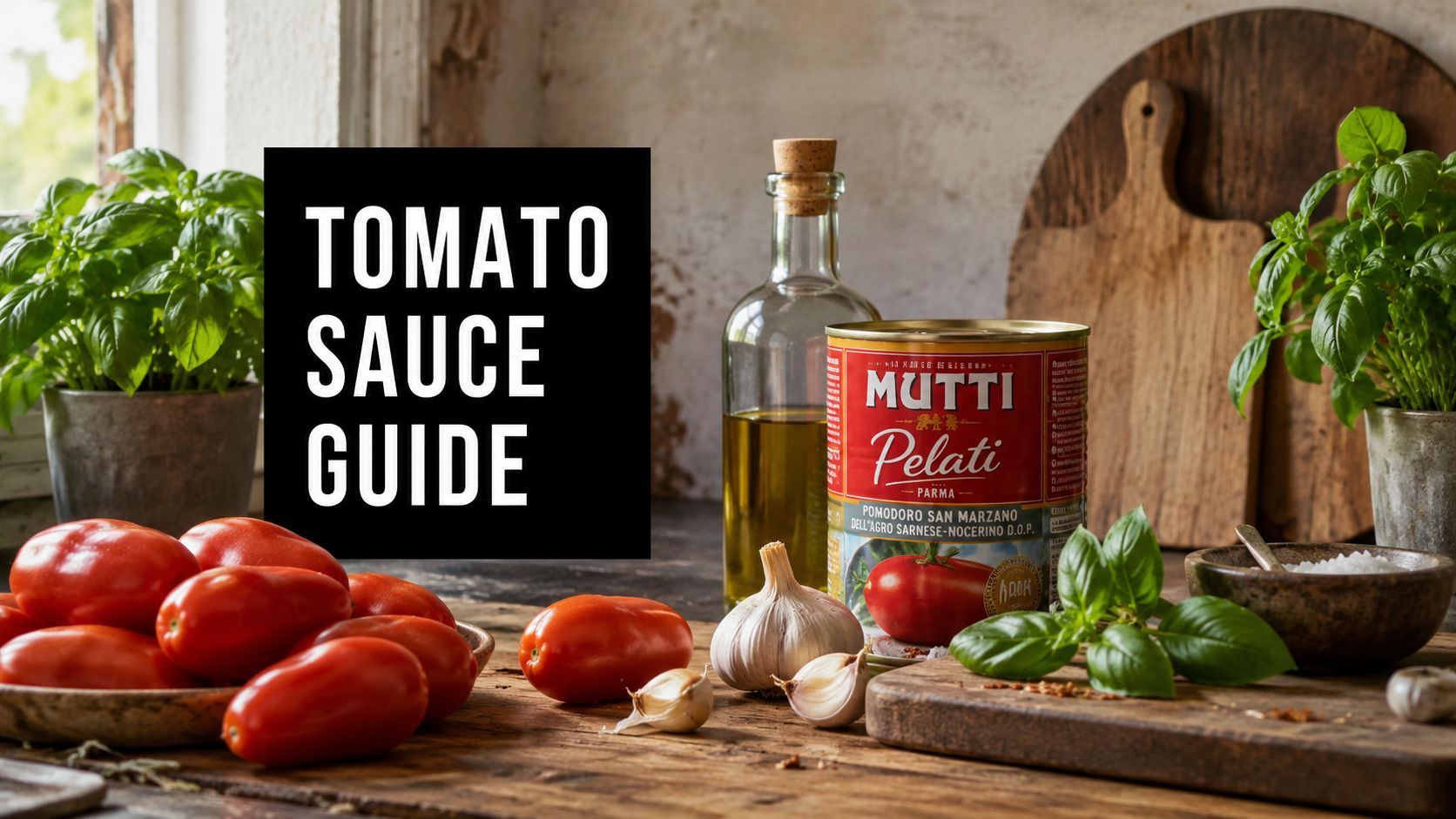
You're standing at a Dubai stove with dinner to make and two choices in front of you, passata or canned tomatoes. That decision feels small, but it changes everything, from how fast the sauce comes together to how it tastes on the plate. Italian tomato sauce isn't one fixed jar, it's a family of sauces built on restraint, good tomatoes, and the right amount of heat. What Italian Tomato Sauce Means Start with the simplest truth If you grew up around sweeter, longer-cooked red sauces, Italian tomato sauce may surprise you. The Italian style usually begins with tomatoes, olive oil, and a few aromatics, then stops before the sauce turns jammy or heavy. That restraint is the point. A good italian tomato sauce should taste like tomatoes first, not sugar, herbs, or cooked-down heaviness. In practice, that means a short simmer, a clean tomato flavour, and enough olive oil to carry the sauce across the pasta. It should coat, not smother. Practical rule: if the sauce needs a lot of sugar to taste balanced, the tomatoes or the method probably need adjusting. Why the category matters Once you stop treating it as one recipe, shopping gets easier. Passata gives you a smooth base, whole tomatoes give you more texture, and canned chopped tomatoes are useful when you want a rougher finish. Different regions in Italy also treat the sauce differently, so “authentic” is really a family tree, not a single ancestor. That matters in the UAE because the pantry here is broad. You'll find premium passata, San Marzano-style tomatoes, and plenty of imported Italian staples, so the skill is matching the product to the dish. A weekday pasta, a pizza base, and a Sunday sugo are all red sauces, but they are not the same thing. A Short History from Naples to Your Kitchen The first printed recipes matter Tomatoes reached Italy in the 16th century, but they didn't become a sauce overnight. The first reference in print appears in 1544 in Pietro Andrea Mattioli's writing, and the first surviving Italian tomato-sauce recipe shows up much later in Antonio Latini's Lo Scalco alla Moderna between 1692 and 1694, which means the foundation period stretches across roughly 150 years from introduction to codified recipe (University of Colorado Extension). Another historical account identifies the first printed recipe as 1692 in an Italian cookbook under the name salsa di pomodoro alla Spagnuola, with Francesco Leonardi's L'Apicio Moderno appearing in 1790 and Neapolitan cookbooks making tomato sauce more common through the 18th century (historical overview). That spread explains why Naples is still treated like the spiritual home of tomato sauce. The sauce was never born finished. Why Naples still shapes the conversation Naples gave tomato sauce a regional identity, and that identity travelled. Trade, migration, and Mediterranean exchange moved tomato cooking across borders, including into Arab culinary traditions. A regional source from Pomi's Middle East page frames tomato sauce within both Arab and Italian traditions, which fits the UAE well because the local food scene sits at that same crossroads (Pomi Middle East). That history is why people in Dubai often mean a Neapolitan-style sugo when they say “real Italian sauce”. They're reaching for a style that grew out of Southern Italian cookbooks, then travelled through the same wider Mediterranean network that still shapes the Gulf table. The Three Sauces Every Cook Should Know Italian cooks use red sauce in more than one way, and the differences matter. If you call everything “tomato sauce”, you miss the whole point of choosing the right one for the meal. Pomodoro, marinara, and sugo are not the same Pomodoro is the quick everyday sauce. It usually relies on tomatoes, olive oil, garlic, and basil, and the cook keeps it short so the sauce stays bright. The reference recipe commonly uses 400 g canned chopped tomatoes, 1 to 2 tablespoons olive oil, 1 clove garlic, optional basil, and an 8 to 10 minute simmer (Inside the Rustic Kitchen). Marinara is a close cousin, but it leans a little more savoury and herbal, often with oregano and sometimes chilli. It is still quick, but it usually has a slightly fuller, more seasoned profile than basic pomodoro. Neapolitan sugo moves in a different direction, because it is built for a Sunday table, often with onion and sometimes with meat or a longer simmer. Taste test: if the sauce is bright and light, you're probably in pomodoro territory. If it tastes rounder and more herbal, think marinara. If it feels slow, deep, and built for a big family meal, you're in sugo country. Sauce Cook Time Key Aromatics Texture Best Pairing Pomodoro Under 15 minutes Garlic, basil Bright, light, loose Weeknight pasta Marinara Short, a little longer than pomodoro Garlic, oregano, sometimes chilli Slightly deeper, still quick Pasta, pizza, dipping Neapolitan Sugo Longer, often slow-simmered Onion, sometimes meat Rich, full, layered Sunday pasta, baked dishes That table is the mental shortcut I wish more cooks learned early. Once you know which sauce you're making, you stop overcooking everything in the same way and start choosing the flavour you want. The Authentic Technique in Five Steps Build flavour without crowding the pan Start with good extra-virgin olive oil in a pan that gives the aromatics room. Heat it gently, then add garlic, and if you're using onion, let it soften without browning. Browning pushes the flavour in a different direction, which can be useful in other dishes, but for a clean red sauce it muddies the tomato. Add the tomatoes next, then season lightly. The sauce should taste like it's been guided, not forced. If you're using fresh tomatoes for a processing-style benchmark, a technical manual from NIFTEM-T describes cooking fresh tomatoes from 4.2–4.5° Brix up to 10–12° Brix for tomato sauce, then finishing with basil or oregano (NIFTEM-T manual). That higher final Brix matters because it gives more viscosity and cling, which is useful in busy UAE kitchens where you want the sauce to coat pasta without leaning on starch or heavy reduction. Finish by tasting, not by guessing A short simmer is not a compromise, it's the method. The sauce should still feel alive, with the tomatoes and oil in balance, not cooked into one flat note. When the sauce is close, add basil or oregano at the end so the herbs stay fresh. The trick is to taste for three things: acidity, salt, and body. If the sauce tastes sharp, the tomatoes may need a little more time or a better starting product. If it tastes thin, the answer is not always more simmering, because over-reduction can flatten the fresh tomato note. Video reference for the technique is here: Passata, Whole Plum, or Chopped The tomato aisle in the UAE can feel crowded, but the labels only matter if you know what each form does in the pan. Smooth passata, whole plum tomatoes, and chopped tomatoes each give a different result, and the best one depends on whether you want silkiness, rustic texture, or convenience. Choose the form that matches the job Passata is strained and smooth, so it's fast and clean. Use it when you want a silky sauce for pasta, pizza, or a weeknight meal that doesn't need much handwork. It's the neatest option when you don't want visible tomato pieces. Whole plum tomatoes are the most versatile choice when quality matters. You crush them by hand or with a spoon, and they give you a sauce with more body and better texture. That's why many cooks reach for them when they want a traditional pomodoro feel. Chopped tomatoes are convenient, but they're the least forgiving. They work better when you're building a longer-cooked sauce and don't mind the texture dissolving into the background. Look for labels that stay honest. San Marzano-style, single-origin, and no added salt are the phrases that usually deserve a second look. If a can says “tomato sauce” but already includes sugar or seed oil, you're buying someone else's idea of seasoning. For readers who also like to batch-cook pasta dishes, the internal pasta reference can help you match sauce to shape: pasta shape pairing guide. A quiet rule in my kitchen is this. If the tomatoes are good enough, the sauce gets simpler. If the tomatoes are mediocre, extra ingredients rarely fix the problem, they only hide it. Beyond Pasta Pairings and Uses Once the sauce is good, don't trap it in one bowl of spaghetti. A solid tomato sauce can move through a whole week of meals if you use it as a base instead of a finished end point. The same pot can feed several dishes For pasta, the easiest pairing is simple. Long pasta handles sauces with a little looseness, while short pasta catches thicker sauce in its ridges and hollows. The point is not a rigid rule, it's surface area. The more places the sauce can sit, the better each bite tastes. The same sauce can also go under stuffed peppers, over baked aubergines, or into a quick fish stew. If you thin it with a splash of pasta water, it becomes a lighter coating for an ordinary Tuesday dinner. In many UAE kitchens, that flexibility matters because one batch can cover both Italian meals and family dishes that lean a little more regional. Make it work across cuisines You can also push the sauce into crossover territory without wrecking it. Spoon it under baked eggs in a shakshuka-style breakfast, or use it as the base for kofta or meatballs when you want a red sauce with familiar warmth. The tomato stays central, which is why the sauce works so well even when the meal crosses borders. For families who want to stretch one pan across several meals, the sauce becomes a planning tool. You make a batch once, then treat it like a building block rather than a one-time condiment. That's how good home cooks save time without settling for bland food. Storage and Preservation for UAE Kitchens Dubai heat changes the way sauce behaves, so storage has to be practical, not optimistic. If you make a batch and leave it sitting around, the climate will teach you a hard lesson. Cool it fast and store it in portions Get the sauce into shallow containers so it loses heat quickly, then refrigerate it once it's no longer steaming heavily. In the fridge, it keeps for 3 to 4 days, which is enough for a few dinners if you plan well. For longer storage, freeze it in flat bags or small containers so you can thaw only what you need. If you like single servings, ice-cube trays work neatly. Pop the cubes out once frozen and move them to a freezer bag, then use them one at a time for quick pan sauces or soups. For proper shelf-stable jars, use safe canning methods and clean jars, because improvising there is a bad idea. Make the pantry and storage area easy to use A sensible kitchen set-up helps more than people think. If you've ever looked at walk-in pantry design inspiration, the lesson is not luxury, it's visibility and access. Ingredients that are visible get used, and that matters when you're trying to keep tomatoes, oil, and pasta in regular rotation. Your home sauce system should feel boring in the best way. Cool, portion, freeze, label, and use. That rhythm saves money, cuts waste, and keeps dinner predictable when the week gets busy. Sourcing Authentic Ingredients from IFM Gourmet A good Italian tomato sauce starts with the tomato, but the rest of the pantry has to pull its weight too. In the UAE, the smartest way to shop is to choose imported staples that behave the way Italian cooks expect, then keep the recipe spare enough for those ingredients to show themselves clearly. What to buy for a cleaner sauce Start with San Marzano tomatoes or a good passata, then add extra-virgin olive oil, dried oregano, and fresh basil when you can find it. If you want a deeper note in other dishes, a little aged balsamic has its place, but it should stay in the background. Labels matter more than glossy marketing, because tomato sauce only needs a few well-chosen ingredients to taste right. IFM Gourmet Dubai is the luxury online gourmet arm of IFM Investments LLC, a UAE-based culinary-focused company that offers authentic Italian gourmet ingredients and artisanal delicacies across the United Arab Emirates, including bronze-die pastas, premium olive oils, traditional balsamic vinegars, and San Marzano tomatoes (IFM Gourmet). That range helps when you want to build a proper sauce instead of patching it together with random supermarket shortcuts. If you are still thinking ahead to your own tomatoes one day, start tomato seeds indoors is a useful seasonal read. For dinner tonight, a well-chosen tin is still the faster answer. A simple shopping shortlist Keep the list short and let quality do the work. Tomatoes: choose passata or whole plum tomatoes for the cleanest result. Oil: use a peppery extra-virgin olive oil, not a neutral one. Herbs: keep basil and oregano separate so you can taste the difference. Extras: balsamic, pasta, and pantry staples make sense if you want to build a fuller Italian meal around the sauce. One practical add-on: IFM Gourmet's catalogue also includes items such as Frozen Pizza Base with Italian Tomatoes Sauce 25 cm, which shows how tomato sauce can sit inside a broader Italian cooking routine, not just a pasta pot. For water, even the brand can matter in a sauce kitchen. A clean mineral profile helps the rest of the ingredients stay readable, which is why some cooks pay attention to details like Lurisia Water when they are choosing what belongs on the shelf. The point is plain. Buy fewer things, buy them better, and let the tomatoes stay in charge. IFM Gourmet Food Store carries the Italian staples that make this style of cooking easier in the UAE, from tomato products and olive oils to pastas and pantry essentials. If you want to cook a cleaner, more confident sauce at home, visit IFM Gourmet Food Store and build your basket around the ingredients that matter.
- Elevate Your Corporate Gifting: Why IFM Gourmet’s Panettone & Artisanal Hampers Are Dubai’s Ultimate Festive Gesture
When the festive season arrives in the UAE, the race begins for corporate gifts that genuinely stand out. Gone are the days when a branded desk calendar or a generic box of chocolates would suffice. Today’s corporate landscape in Dubai demands gifts that communicate prestige, thoughtfulness, and authentic quality. IFM Gourmet | Italian Food Masters Dubai, UAE Gift Hampers Whether you are seeking to express gratitude to VIP clients, reward high-performing executive teams, or build stronger relationships with long-term business partners, IFM Gourmet Dubai offers an unrivaled selection of luxury Italian and European holiday hampers. Featuring authentic, hand-wrapped artisanal Panettoni alongside curated gourmet delicacies, these hampers turn holiday corporate gifting into an unforgettable culinary experience. The Golden Centerpiece: Authentic Italian Panettone & Pandoro At the heart of every iconic European Christmas tradition sits the Panettone—a slow-leavened, golden masterpiece of Italian baking. IFM Gourmet brings this heritage straight from master Italian bakers to office towers across Dubai and the wider UAE. Unlike mass-produced holiday cakes, IFM Gourmet’s featured Panettoni—including renowned creations from historic Italian houses like Flamigni 1930—are crafted through decades-old natural fermentation techniques. Hand-Wrapped Presentation & Silk Ribbon Festive Varieties to Impress Every Palate: The Classic Elegance: Crafted with juicy raisins and fragrant citrus peel, topped with sugar icing or pearl sugar. The Chocolate Indulgence: Fluffy brioche dough studded with rich dark chocolate drops. Traditional Pandoro: The fluffy, star-shaped golden bread dusted with powdered sugar—a crowd favorite for festive office gatherings. "An authentic Panettone isn't just a dessert—it's a celebration of time, tradition, and artistry. Hand-wrapping a 1kg Panettone in silk-finish paper tells your client that their partnership is truly valued." Inside the Hamper: A Symphony of European Flavors A truly memorable corporate hamper is more than just one product—it is a journey through fine gastronomy. IFM Gourmet curates each gift box and basket with products sourced directly from trusted, small-batch producers across Italy and Europe. Here is a glimpse of what makes these hampers a standout choice for corporate offices: Casanova 1748 Extra Virgin Olive Oil & Balsamic Vinegar: Elegant glass-bottled EVOO and aged traditional balsamic vinegars up to 100 years that bring Michelin-star flair to any pantry. Italian Bronze-Die Pasta: Artisanal, colorful pasta from Poseidon Emporium, extruded through bronze dies for the perfect sauce-gripping texture. IFM Gourmet Italian Roast Espresso Beans: Roasted in Tuscany, Italy for an authentic, rich crema that will upgrade any corporate breakroom coffee ritual. Alpine Herbal & Premium Ceylon Teas: Soothing blends from the Italian Alps alongside premium selected Mlesna tea filters. Sweets & Savories: Artisanal Italian chocolates, traditional soft nougats (Torrone), Royal icing cookies: handmade and hand-decorated cookies sugar iced. Designed for Business: Tailored Solutions for Corporate Offices Every business in Dubai has unique gifting requirements, from modest tokens of appreciation to ultra-VIP custom hampers. IFM Gourmet accommodates all scales with dedicated corporate services. How IFM Gourmet Simplifies Corporate Gifting: Feature What It Means for Your Business Bespoke Customization Mix and match extra virgin olive oils, coffee, sweets, or panettoni based on budget and recipient preferences. Elegant Packaging Options Choose between rustic wooden crates, classic woven baskets, sleek golden gift boxes, festive Santa Juta or elegant bags of magnetic bags. Branding & Cards Include custom corporate greeting cards, logo ribbons, and personalized notes for a professional finish. Direct UAE Delivery Hassle-free delivery across Dubai, Abu Dhabi, and all northern emirates directly to your office or recipient locations. Standard Corporate Gifts vs. IFM Gourmet Hampers Why settle for conventional corporate gifts when you can offer an authentic culinary experience? Standard Corporate Gift IFM Gourmet Luxury Hamper │ ✘ Generic logo merchandise │ VS │ ✔ Hand-wrapped Panettone │ │ ✘ Short shelf-life snacks │ │ ✔ Estate Extra Virgin Oil │ │ ✘ Easily forgotten │ │ ✔ Artisanal Chocolates/Tea Because artisanal items like Flamigni Panettoni and small-batch extra virgin olive oils are imported in limited quantities directly from Italian producers, festive demand in Dubai picks up rapidly. Whether you need a dozen hampers for your executive board or hundreds of festive gift baskets for partners across the GCC, IFM Gourmet Dubai provides custom solutions catered precisely to your company’s brand image. Showroom Location: Dubai Investment Park 2 (DIP 2), Dubai, UAE by appointment. Gourmet Selection: Panettoni, Pandoro, Extra Virgin Olive Oils, Aged Vinegars, Fine Chocolates, Italian Coffee, Speciality Sweets and Biscuits and Premium Bronze Die Pasta, Customs Gift Baskets Contact: mob. + 971 50 3848115 Luxury VVIP Gift with limited edition Murano Glass and Premium Italian Panettone at IFM Gourmet Dubai, UAE
- Vegetarian Ice Cream: A Complete Guide
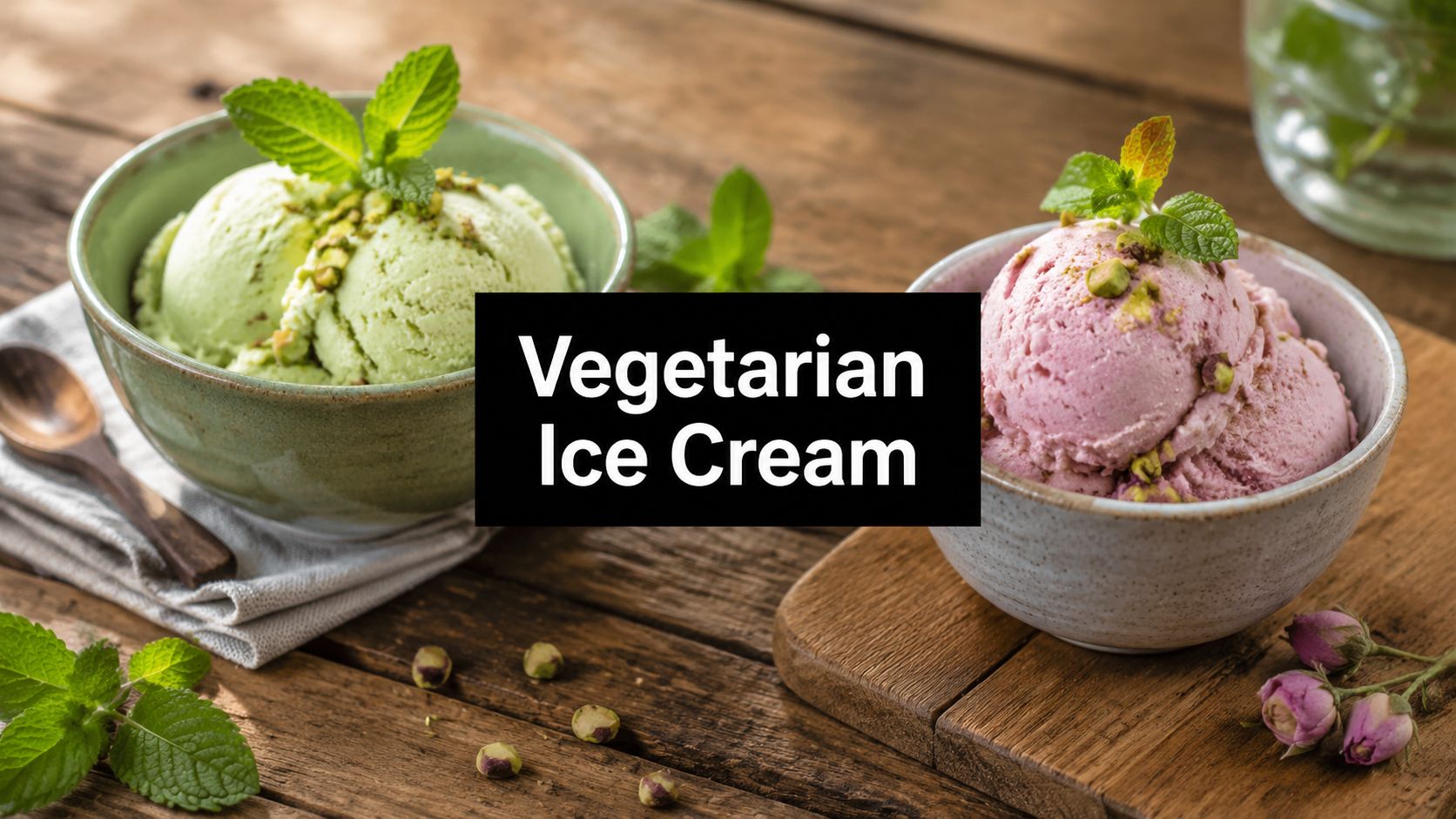
You're standing in a freezer aisle in Dubai, staring at three tubs that look almost identical. One says standard, one says gelatin-free, and one says vegetarian. The labels sound close enough to blur together, but the ingredients behind them can be very different. That confusion is exactly why vegetarian ice cream deserves its own guide. It sits in the middle ground between full dairy ice cream and fully vegan ice cream, and that middle ground is where a lot of shoppers, home cooks, and café buyers get tripped up. The good news is that once you learn how to read the label and understand the base, the category becomes much easier to shop for, make, and serve. What Vegetarian Ice Cream Actually Means A lot of people use vegetarian, vegan, and dairy as if they mean the same thing. They don't. A vegetarian ice cream can still contain milk, cream, eggs, or honey, depending on how strictly the maker or consumer defines vegetarian practice, while vegan ice cream removes all animal-derived ingredients entirely. Practical rule: vegetarian tells you what is not allowed from animals such as meat or fish, but it does not automatically tell you whether dairy or eggs are included. That matters in a place like Dubai, where imported gelato, hotel desserts, and boutique tubs can sit side by side in the same chilled cabinet. One label may be plant-based, another may just be meat-free, and a third may be a classic dairy dessert that never claims to be anything else. The safest habit is simple, read the ingredient list, not just the front of the tub. A useful way to think about it is this. Vegetarian ice cream is a category defined by exclusion, not one fixed recipe. That's why a vanilla tub made with cream and egg yolks can still be vegetarian, while a chocolate sorbet made with coconut milk can also fit the label if it avoids animal-derived additives. The historical backdrop helps too. The broader plant-based frozen dessert market is still relatively small, but it's growing steadily, with estimates placing the global vegan ice cream market at USD 758.01 million in 2025 and projecting USD 1,199.31 million by 2034 at 5.23% CAGR Straits Research. For a shopper in the UAE, that growth explains why the category now feels more visible in premium retail than it did a few years ago. Vegetarian Versus Vegan Versus Dairy Ice Cream The cleanest way to sort the three labels is to compare the ingredients people usually ask about. Milk, eggs, and honey are the obvious ones, but the edge cases matter just as much. Some tubs use plant fats and still contain eggs, while others are dairy-heavy and vegetarian without being vegan. Ingredient Vegetarian Vegan Standard Dairy Milk Allowed in many recipes Not allowed Allowed Cream Allowed in many recipes Not allowed Allowed Eggs Allowed in many recipes Not allowed Often allowed Honey Sometimes allowed, depending on practice Not allowed Sometimes allowed Plant-based fats Allowed Allowed Sometimes used, but not required Gelatin Not allowed if the product is truly vegetarian Not allowed Sometimes used in some products Milk proteins Allowed Not allowed Allowed Vegetarian ice cream is the broadest of the three in everyday use. It can be rich, custard-like, and very close to classic gelato, which is why many cafés and dessert counters treat it as a familiar option rather than a niche one. Vegan ice cream is stricter. It must avoid dairy, eggs, and other animal-derived ingredients, so the maker usually leans on plant fats, stabilisers, and proteins to recreate body and melt. Standard dairy ice cream is the most traditional formulation. It relies on milk solids and milkfat, and sometimes eggs, to build texture. That's why many premium gelato counters in the UAE can serve vegetarian-friendly flavours without changing the whole production line. The labeling gap matters in practice. Vegetarian products are not automatically dairy-free, so anyone shopping carefully still needs to check the panel. That's especially true in imported premium desserts, where the front label may look reassuring even when the ingredient list tells a different story. Non-Vegetarian Ingredients That Sneak Into Ice Cream Some ingredients hide in plain sight because they do not sound obviously animal-based. A tub can look fruit-forward or elegant on the outside, then include an ingredient that makes it unsuitable for a vegetarian diet. The habit that helps is simple, learn the common culprits and scan for them quickly. The usual suspects Gelatin often acts as a gelling agent. You'll see it in some frozen desserts that want a firmer body or a cleaner unmoulded shape, especially novelty products and certain artisanal presentations. Carmine gives a deep red shade. It shows up most often in strawberry, raspberry, and berry tubs that aim for a bold ruby colour rather than a pale fruit tone. Shellac is used as a glaze. It can appear on decorations, toppings, or decorative inclusions, especially when a dessert is finished for visual impact. Isinglass comes from fish bladder collagen. It's more common in clarification work than in ice cream itself, but it can still matter in ingredient supply chains or flavoured components. Animal-derived enzymes can turn up in some cheeses or dessert ingredients, which matters when a tub includes swirls, fillings, or ripple elements. The ACS food science literature on frozen desserts notes that formulation challenges and ingredient functionality are central to this category, which is why ingredient panels can be more complicated than they first appear ACS Food Science and Technology. That is the practical takeaway for shoppers. The panel usually gives you the answer if you slow down and read it. If you are comparing premium dessert habits across categories, a useful side trip is this round-up of vegetarian-friendly Japanese sweets, because it shows how vegetarian-friendly snacking often depends on careful ingredient reading rather than broad assumptions. The same habit applies in frozen desserts. Stabilizers, Dairy, and Eggs in a Vegetarian Base A vegetarian ice cream base works best when it has enough richness to feel satisfying, enough water to stay scoopable, and enough structure to resist icy crystals. The easiest way to picture it is as a small building. Stabilizers act like the framework, while dairy and egg ingredients form the walls that keep the shape in place. A frozen dessert feels smooth only when fat, sugar, water, and stabiliser are working together. What each part does Locust bean gum, xanthan gum, and guar gum help hold water in place, which slows ice-crystal growth. They work like mortar between bricks. You do not taste them the way you taste vanilla or chocolate, but you notice them quickly if the texture turns thin or sandy. Carrageenan and inulin do a similar job in many vegetarian and plant-based formulas. Inulin is especially useful because it adds body and a gentle creamy feel. That is why research formulas for vegan-style ice cream often combine it with protein and gums instead of relying on a single ingredient alone TCU research formulation. On the dairy side, cream, whole milk, condensed milk, mascarpone, and ricotta each change the base in a different way. Cream brings fat, milk brings water and milk solids, condensed milk adds sweetness and density, while mascarpone and ricotta can make a dessert feel softer and more rounded. Eggs, especially egg yolks, are the classic custard tool because they help emulsify fat and water into a smoother base. The standard ice-cream mix architecture usually targets 28 to 40 percent total solids and 55 to 72 percent water, which is why a recipe cannot just be whatever dairy is in the fridge TCU research formulation. Too much water, and the tub freezes hard. Too little structure, and the result can feel heavy or greasy. A food-science reference on milk-vegetable ice cream used 5% fat, no more than 10% sugar, at least 30% dry matter, and at least 4% vegetable-filler dry matter as its targets UJFSt reference. In the same research space, one batch formula used 96 g inulin, 48 g pea protein, 0.8 g locust bean gum, and 0.64 g xanthan gum in a 1 kg-style mix UJFSt reference. That shows the basic principle at work, plant and dairy ingredients can solve the same texture problem in different ways. For shoppers who already use recovery-focused powders in other kitchens, a resource like clean recovery with beef protein shows how ingredient function matters across food categories, even though frozen desserts need a different balance. The same careful reading helps when you compare a vegetarian base with a vegetarian ice cream ingredient breakdown, because the label tells you whether the texture will come from dairy, eggs, gums, or a mix of all three. Three Approachable Recipes to Start With A vegetarian kitchen doesn't need to jump straight into complicated formula work. Start with a custard, move to a semifreddo, then finish with a no-churn fruit base. Each one teaches a different texture lesson, and each one feels at home in a Dubai kitchen. 1. French-style custard ice cream Use egg yolks, cream, milk, sugar, and vanilla for the base. Whisk the yolks with sugar, warm the milk and cream, then temper the eggs slowly so they don't scramble. Cook until the mixture coats the back of a spoon, chill it fully, then churn or freeze in a shallow container. This style suits vanilla, pistachio, or chocolate very well because the custard carries flavour cleanly. For smoothness, lean on the fat in the cream and the emulsifying power of the yolks. If you're sourcing, IFM Gourmet's fine chocolates and premium nuts category fit this style naturally. 2. Churnless semifreddo Use whipped cream, folded meringue, sugar, and flavouring. Whip the cream to soft peaks, fold in the meringue carefully, then pour into a lined loaf tin and freeze. The air whipped into the mixture does the job that an ice cream machine would normally do. This works especially well for dinner parties because it can be sliced straight from the freezer. A small amount of stabiliser is usually unnecessary here, since the meringue already helps with lightness and structure. For flavour ideas, think coffee, hazelnut, or orange zest. 3. No-churn fruit ice cream Use condensed milk, whipped cream, and frozen fruit. Blend or fold the fruit into the base, then freeze until firm enough to scoop. The condensed milk adds sweetness and body, while the fruit keeps the flavour bright. This is the easiest path for a weeknight dessert. It also suits home cooks who want a fast result without buying extra equipment. If you want a visual reference for fruit-forward frozen desserts, the internal image of wild berry sorbet gives a good sense of the colour and freshness to aim for. Adapting Italian Gelato Recipes for a Vegetarian Kitchen Italian gelato already sits close to vegetarian cooking in spirit. Many gelato formulas use more milk than cream and very little, if any, egg yolk, which makes them lighter than some American-style ice creams and easier to adapt for vegetarian households. The dense, elastic texture comes from careful balance, not from excessive richness. Keep the body, not the weight For Gulf kitchens, the main challenge is heat. Ingredients warm up quickly during churning, and finished gelato often has to hold in a display freezer that's warmer than a home deep-freeze. That means you want a base that stays supple without turning soft and sloppy. A classic approach is to build around flavours that already suit gelato's lean structure. Sicilian-style pistachio, Roman-style stracciatella, and seasonal fruit sorbetti all work well because they rely on clear flavour rather than heavy add-ins. If you're making stracciatella, the fine chocolate ribbons should be shaved thin enough to freeze cleanly and melt at the right pace. Practical rule: if the gelato tastes right before freezing, but feels too stiff after freezing, the issue is usually balance, not flavour. The research formula mentioned earlier, with inulin, pea protein, locust bean gum, and xanthan gum in a one-kilogram-style batch, shows how modern dairy-free systems mimic body without relying on milk solids alone UJFSt reference. That doesn't mean every home gelato needs the same lab-style precision. It does mean the home cook can think in the same way, using a small amount of structure to protect texture. For a vegetarian kitchen, the smartest adaptation is usually substitution with restraint. Keep the flavour profile Italian, keep the texture tight, and make only the changes needed for heat stability or dietary preference. The result still feels like gelato, not a compromise. Sourcing Premium Ingredients in Dubai and the UAE A good vegetarian ice cream base starts with ingredients that carry flavour cleanly. In practice, that means single-origin cocoa for chocolate, vanilla pods when you want a fuller aroma, and premium pistachios for nut-heavy bases. If you are making cones or cookie pieces, bronze-die extruded flours can help with texture. In the UAE, many home cooks also look for ingredients that travel well, store well, and behave predictably in warm kitchens, because a dessert can only taste as good as the ingredients allow. IFM Gourmet Dubai is the luxury online gourmet arm of IFM Investments LLC in the UAE, and its selection is arranged around premium gourmet categories such as sweets, savories, fine chocolates, premium teas, cakes, and curated gift hampers IFM Gourmet reference. For a vegetarian ice cream project, that setup is useful because it gives you options for chocolate shards, nut toppings, and tea pairings instead of only a single ingredient aisle. The most practical sections to browse are the fine chocolates for stracciatella, premium nuts and dried fruits for swirls and inclusions, and premium teas if you want a pairing that feels light and polished. IFM also supports bespoke corporate and event services, which matters if you are putting together a dessert table or planning a gift-focused occasion. A pairing can carry the same visual appeal as a dessert board. The vegan wine pairings guide shows how sweet and savoury notes can be matched with care, and that same approach helps when you are choosing toppings or serving styles for vegetarian ice cream. A simple waffle base can do the same job in a more casual way, and a waffle pairing image makes the idea easy to picture for serving at home. In the UAE, that also fits the gift culture naturally. A small tub of homemade vegetarian ice cream can sit beside Italian sweets, fine chocolates, and premium teas in a curated hamper for Ramadan, Diwali, Christmas, or a dinner invitation. Serving, Pairing, and Gifting Vegetarian Ice Cream A tub of vegetarian ice cream keeps its best texture when you handle the cold gently. Press cling film directly onto the surface before sealing the container, place it at the back of the freezer instead of the door, and let it stand for a few minutes before scooping so the aroma has time to open up. That pause matters because frozen fat and sugar need a little warmth before their flavours read clearly on the palate. Pairing is where the category becomes especially useful. In a warm climate, an espresso affogato gives you an immediate contrast between hot coffee and cold cream, while rose with pistachio fits regional flavour traditions without feeling heavy. Fresh fruit also works well, and a light drizzle of olive oil can give the bowl a sharper, more grown-up finish. If you want a savoury-sweet structure for the table, a waffle pairings for ice cream setup adds texture in the same way a crisp cone or biscuit does. For readers who like comparing flavours across vegetarian menus, the vegan wine pairings guide is useful because it shows how sweet and savoury notes can be matched with care. The same logic works with ice cream, especially if you are building a dessert plate for guests who want something polished rather than oversized. The gift angle is easy to miss, but it fits naturally in the UAE. A small tub of homemade vegetarian ice cream can sit beside Italian sweets, fine chocolates, and premium teas in a curated hamper for Ramadan, Diwali, Christmas, or a dinner invitation. IFM's gift hamper setup makes that combination feel organised rather than improvised, and it suits the same careful pairing approach used for dessert boards. A simple checklist keeps the whole thing balanced. Choose one base, one flavour, one texture element, and one serving partner. Keep the ingredient list readable, keep the flavour focused, and do not overload the tub. Vegetarian ice cream is really three ideas in one. It is defined by what it leaves out, it can still be built from familiar dairy and egg ingredients with the help of stabilisers, and premium components are easier to source in Dubai and the wider UAE than many home cooks expect. Try one small experiment this week, swap out carmine or caramel colouring in a favourite recipe and see how the flavour and colour shift. If you want to turn that into a weekend project, start with a flavouring, a topping, or a gift-worthy pairing from IFM Gourmet Food Store. Their gourmet range fits this topic naturally, from fine chocolates and premium nuts to teas and curated hampers. It is a straightforward place to gather ingredients for vegetarian ice cream that feels polished at home or ready for guests.
- Pistachio Nut Paste: Dubai Guide to Buying and Using
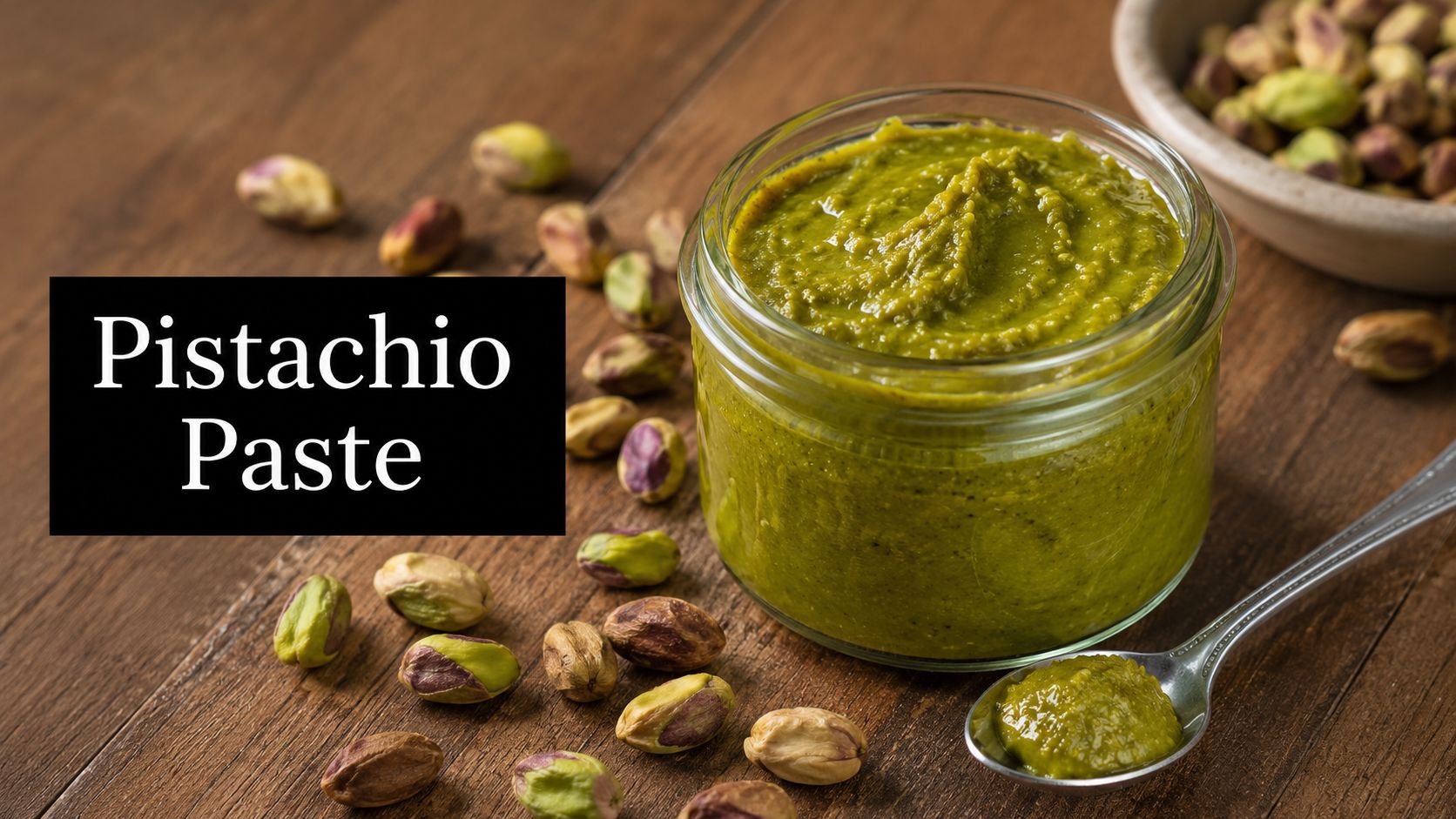
You can stand in a Dubai kitchen with a dessert halfway planned, a recipe tab open, and three jars on the counter that all look suspiciously similar. One says pure pistachio paste, another says pistachio cream, and a third looks like a bulk baking ingredient that seems too soft, too sweet, or just not quite right. That confusion is normal, because pistachio products often get mixed together even though they behave very differently in pastry, gelato, gifting, and everyday home baking. The fix starts with a simple idea. Pistachio nut paste is not just another spread, and it's not always a sweet cream either. In UAE kitchens, the difference affects flavour, pipeability, shelf life, and even whether a filling holds properly inside a tart shell or softens too quickly in the heat. Once you know what to look for, buying becomes easier, recipes get more consistent, and you stop guessing with expensive ingredients. Your Pistachio Paste Journey Starts Here A home baker in Dubai often meets pistachio paste at the exact moment a festive dessert needs a polished finish. The cheesecake base is ready, the kunafa topping is waiting, or the gelato machine is already cold, and then the jar labels create doubt. Pure paste, compound paste, and cream all sound close enough to work, but they don't behave the same way. That's why this ingredient deserves a proper explanation before it hits the bowl. In a market like the UAE, where premium desserts, gifting, and hospitality presentation matter, the wrong pistachio product can change the result more than people expect. A filling can become too loose. A mousse can taste flat. A praline can lose the clean nut finish that makes pistachio feel luxurious in the first place. The practical goal here is straightforward. Learn what pistachio paste is, how it's made, why its texture varies, and how to read the label before you buy. Then you can match the right product to the right use, whether you're making Italian-style pastries, Middle Eastern sweets, or a batch of gift-ready jars for guests. Practical rule: if the jar doesn't tell you whether it's pure, sweetened, or compounded, assume it may not behave like the paste you had in mind. What Pistachio Nut Paste Is and How It's Made Pistachio nut paste is best understood as concentrated pistachio, not a casual spread. This mirrors the difference between orange juice and orange zest. Both come from the same fruit, but one gives you a broad, easy flavour and the other gives you a tighter, more intense expression. Paste sits closer to the latter idea. It's designed to bring pistachio flavour into creams, fillings, and desserts without needing to chew through whole nuts. How the texture comes together Most pistachio paste starts with roasted pistachios that are ground until the natural oils turn the mixture smooth. Some makers keep it simple and stop there. Others add oil, sugar, milk powder, or emulsifiers, which changes the way the paste behaves in dessert work. That's where the labels get confusing, because a product can still be called “pistachio” even when it's no longer a single-ingredient paste. A home processor can make a rough version too, but the timing matters. Available instructions note that blending can take anywhere from 3 to 15 minutes depending on the machine, and the mixture often moves through a sandy stage before becoming smooth. That in-between phase is normal, not a sign that something has gone wrong. Heat, friction, and the pistachios' own oil are doing the work. The more you grind, the more the nuts release their natural oil, so the paste changes from grainy to glossy in stages. Why the label matters Buyers often get tripped up. A paste, a butter, and a cream may all look spreadable, but they aren't interchangeable. Unsweetened paste usually gives the strongest nut flavour and the cleanest control in pastry. Sweetened cream feels softer and more dessert-like. Compound products are built for convenience and standardisation, which can help in large kitchens, but they change the flavour balance and the label story. If you're cooking for a specific result, start with the intended use, not the jar design. A tart filling, a gelato base, and a brunch spread do not need the same texture or sweetness. Once you read pistachio products as formulas rather than just flavours, the whole category gets much easier to understand. Pistachio Heritage and Global Market Roots Pistachios bring a long culinary history with them, and that background gives pistachio paste a sense of trust in desserts that value tradition as much as flavour. Academic reviews describe pistachios as native to western Asia and spread through the Middle East, Mediterranean countries, and Europe through trade, with archaeological evidence of consumption reaching back to Neanderthal-era use and later remains found in Afghanistan and southeastern Iran historical review of pistachio origins. In the UAE, that history fits naturally with baklava, Italian pastries, and luxury gifting, where ingredients with cultural depth carry real appeal. Why the modern supply chain shapes the jar on your shelf The modern market tells a different part of the story. The International Nut and Dried Fruit Council reported that global pistachio exports rose from 514,625 metric tons in 2014 to 615,515 metric tons in 2023, a rise of about 19.6% over the decade, and that the United States held 65% of the global export market in 2023 with 398,799 metric tons global pistachio export statistics. The same council's statistical yearbook also shows world pistachio production at 1.4 million tonnes in 2024, with the United States, Turkey, and Iran accounting for 87% of output. That concentration shapes what buyers in the UAE can source. Pistachio paste usually reaches the market through international exporters rather than local production, so availability and consistency depend on a relatively small set of origin countries. For bakeries, hotels, caterers, and home cooks, that means the jar on the shelf is tied to a supply chain that can influence flavour, texture, and how reliably a filling performs in premium desserts. Heritage and commerce meet in dessert use The same heritage that gives pistachios prestige also helps pistachio paste fit naturally into Middle Eastern and Mediterranean sweets. In practice, the ingredient is doing two jobs at once. It brings flavour, and it signals refinement. A curated gourmet store can matter in Dubai for that reason, because the choice is not only about stock. It is about selecting products whose origin and form fit pastry work, gifting, and hospitality, and that is where sourcing partners such as IFM Gourmet Food Store can help buyers compare options with more confidence. Reading Quality Grades and Technical Specs A jar of pistachio paste should give clues before it reaches your tongue. In a UAE kitchen, the first useful clues are on the spec sheet, not the front label. A high-solids filling paste is often described with 74.0–77.0 °Brix, pH 5.30–5.65, and water activity 0.75–0.78 in one UAE pistachio paste specification. Those figures help buyers separate a paste made for pastry work from a looser product that behaves more like a spread. What the numbers mean in plain language °Brix shows how concentrated the soluble solids are. In a pistachio paste, a higher reading usually points to a denser body and more sweetness coming from the formulation itself. pH shows acidity, while water activity shows how much free water is available for microbial growth. For praline, cream filling, and pastry work, that lower water activity is useful because it supports shelf stability, but the paste still needs careful storage in warm or humid rooms. A good way to read the label is to ask what job the paste has to do. A filling for kunafa, macarons, or layered cakes needs a body that holds shape, while a topping for breakfast bowls can be looser. In other words, the spec is not just a chemistry note, it is a clue about behaviour in the bowl and in the oven. Storage rule: low water activity helps, but it does not protect the paste from humid rooms or warm counters. Comparing pure paste with compound formats The clearest way to judge quality is to compare ingredients, not only flavour descriptions. A 100% pistachio paste benchmark lists 630 kcal per 100 g, 55 g fat, 22 g protein, 9.5 g fibre, and 1.5% moisture 100% pistachio paste benchmark. Integra's product lists 567 kcal per 100 g, 20.95 g protein, 44.82 g fat, 5.45 g saturated fat, and 29.38 g carbohydrates, while identifying the ingredient as 100% roasted pistachios without husks Integra pistachio paste specification. Kataifi Factory EU gives another single-product reference point with 625 kcal per 100 g, 49 g fat, 19 g carbohydrates, 22 g protein, 10 g fibre, and salt below 0.01 g Kataifi Factory pistachio paste listing. These profiles are useful because they show what pure paste looks like on paper. The fat, protein, fibre, and moisture levels sit in a range that supports a concentrated pistachio taste and a thicker texture. A baker in Dubai reading these labels can quickly tell whether the paste is meant to behave like a nut ingredient or like a sweetened filling base. By contrast, an industrial confectionery paste can be much less nut-forward. One listing shows only 16% pistachios, with vegetable fat, sugar, milk powders, and emulsifiers. That is a different tool, even if the jar still says pistachio. Pure paste gives a stronger pistachio identity. Compound paste gives more control over sweetness, texture, and cost. A simple way to choose A clean-label ingredient works best for ganache, gelato, or a premium tart filling, especially when the goal is a direct pistachio flavour and a short ingredient list. A compound product can be useful when a bakery needs the same texture every time and wants easier handling in large batches. The label tells you which world you are buying into, and that reduces trial and error at the mixing bench. For a quick visual check, a waffle-style pistachio filling example shows how a firmer paste can hold shape inside layered desserts, while a softer compound would spread differently. That kind of comparison helps UAE buyers match the product to the job before they place an order. Sweet and Savory Culinary Applications A jar of pistachio paste can go in directions that surprise people. In a Dubai kitchen, one spoon might end up folded into a gelato base, another spread into a croissant filling, and a third loosened slightly for a savoury sauce over roasted vegetables or meat. The ingredient works because it brings both richness and a distinct green nut aroma, so a small amount can shape the whole dish. The easiest way to think about it is by texture control. For gelato, praline, and pastry cream, a smooth paste blends cleanly and gives an even nut note. For savoury use, you usually want the paste loosened or blended into a dressing, dip, or crust mixture so it doesn't dominate with heaviness. A little lemon, rosewater, or citrus zest can make it feel brighter, while a richer dairy base pushes it toward dessert territory. A practical measuring habit helps here. ChefSolver gives pistachio paste a density of 0.95 g/mL and estimates 1 tablespoon as 14 g pistachio paste conversion reference. That matters because spoon-sized portions can look harmless, but fat, flavour, and sweetness balance shift fast once the paste hits a recipe. For a visual recipe reference, the waffles example at this image resource shows how pistachio paste can be used in breakfast-style plating, not just dessert service. The same ingredient can also be handled differently depending on the fat structure. A pure paste tends to give a stronger flavour and a denser mouthfeel. A sweeter or thinned product is easier to drizzle or pipe, but it may not hold the same intensity once it's mixed into creams or baked fillings. That's why experienced cooks taste it before committing. One jar may be perfect for a tart, while another fits a brunch spread better. Buying and Storing Pistachio Paste in UAE A buyer in the UAE often faces the same small problem in the shop or online cart. The label says pistachio, but the jar may be a pure paste, a sweeter spread, or a compound product with extra fats and solids. That difference matters because each one behaves differently in the kitchen, much like three tools that share a shape but do not do the same job. The safest starting point is to ask what the paste needs to do. If it has to carry clean flavour in a tart, ganache, gelato, praline, or premium bakery filling, a pure paste usually gives better control. Compound versions still have a place, but they are built more for easy handling and consistent texture than for the full pistachio note that pastry work often needs. What to look for before you buy Read the label as if you were checking the recipe, not just the name. Single-ingredient or high-pistachio formulas are usually easier to work with when the goal is flavour clarity. In a UAE kitchen, that can mean the difference between a filling that tastes distinctly nutty and one that feels dulled by sugar, milk solids, or added fats. IFM Gourmet Dubai is part of that sourcing conversation as a local option. It operates as the luxury online gourmet arm of IFM Investments LLC in the UAE, and it sits within the broader Italian Food Masters group. Its gourmet range includes artisanal sweets, savories, fine chocolates, premium teas, cakes, and curated gift hampers, so pistachio products are viewed within a wider gourmet selection rather than as a single-purpose baking item. The store's sweet cream spreads selection also includes a pistachio-based spread, which helps when you are comparing a softer cream-style product with a firmer paste. That comparison is useful because many UAE buyers need to decide whether they want something that spreads easily for serving or something that holds shape in pastry work. For category browsing, the sweet cream spreads collection places pistachio alongside other dessert-friendly options. How to store it well Storage belongs in the buying decision, not after it. As noted earlier, the product spec with water activity 0.75–0.78 shows that the paste is made with some shelf stability in mind, yet it still needs protection from humidity and temperature swings. Keep the jar sealed tightly, away from heat, and out of damp cupboards. If you are piping or spreading it, bring only the portion you need to a workable temperature, then return the rest to an airtight container. That habit keeps the flavour steady and the texture usable. It also helps prevent the paste from loosening too much in warm weather, which is a real issue in UAE kitchens where room temperature does not always match what a recipe assumes. For shoppers who are also comparing pistachios in broader diet planning, the guide on are pistachios okay for keto gives useful context. Nutrition Pairing and Final Takeaways Pistachio paste is energy-dense by design, and that's part of why it performs so well in desserts. The product benchmarks above show a range of high fat, meaningful protein, and useful fibre, with salt staying low in one reference at below 0.01 g Kataifi Factory pistachio paste listing. That combination makes it feel rich without needing much volume, which is exactly what you want in a filling or accent ingredient. The flavour pairings are just as important as the numbers. Rosewater softens the nuttiness and pushes the paste toward Middle Eastern dessert territory. Citrus brightens it and keeps the flavour from feeling heavy. Aged cheese can work when you want a savoury counterpoint, especially in small, carefully balanced applications. If you're thinking more broadly about dietary fit, this guide on are pistachios okay for keto gives useful context for how pistachios are viewed in low-carb eating. The main takeaway is simple. Pistachio nut paste is not one product, it's a spectrum. Pure paste gives you flavour clarity and better pastry control. Compound paste gives you convenience and standardisation. Cream gives you softness and immediate spreadability. Once you read the jar correctly, the ingredient stops being confusing and starts being useful. For Dubai cooks, that clarity matters because the ingredient often sits inside expensive desserts, celebration trays, and hospitality service where the result has to look polished. A little attention to formulation saves a lot of disappointment. If you want to shop with more confidence, visit IFM Gourmet Food Store for curated gourmet ingredients and pistachio-related sweet cream options that fit dessert and gifting use in the UAE. You'll find a broader Italian-inspired selection that makes it easier to choose the right format for baking, plating, or festive hampers.
- The Unique Flavor of Italian San Marzano Peeled Tomato DOP at IFM Gourmet Dubai, UAE
Key Takeaway: Renowned globally for their balance of sweetness, low acidity, and rich texture, authentic San Marzano DOP tomatoes are the gold standard for Italian cooking. IFM Gourmet—Dubai’s premier Italian food importer and online gourmet store—delivers certified San Marzano DOP (Agro Sarnese Nocerino) tomatoes directly to home cooks, pizzerias, and executive chefs across Dubai and the UAE in 400g retail and 2.5kg commercial food-service cans. Italian San Marzano peeled tomatoes have long been prized by chefs and food lovers worldwide for their exceptional taste and quality. Now, culinary enthusiasts and hospitality businesses across the United Arab Emirates can experience this Italian treasure through IFM Gourmet, the trusted supplier where you can buy authentic San Marzano tomatoes in Dubai online. This article explores what makes these tomatoes unique, why they stand out in the UAE market, and how IFM Gourmet San Marzano tomatoes UAE bring genuine Italian flavor to kitchens across Dubai. The shape of the San Marzano tomatoes is longer and pointed. What Makes San Marzano DOP Tomatoes Different? San Marzano tomatoes originate from a strictly defined region near Naples, Italy, known as Agro Sarnese Nocerino. The volcanic, nutrient-rich soil of Mount Vesuvius combined with the Mediterranean climate creates the perfect conditions for cultivating tomatoes with a unique balance of natural sweetness and delicate acidity. Unlike standard commercial canned tomatoes, genuine San Marzano tomatoes feature: Thicker Flesh & Fewer Seeds: Provides a denser, richer texture that resists wateriness. Naturally Sweet, Low-Acidity Taste: Requires minimal added sugar or heavy seasoning during cooking. Vibrant Deep-Red Color: Gives sauces and ragùs an inviting, rich appearance. Firm Structural Integrity: Holds up exceptionally well under long cooking times and high heat. Denominazione d'Origine Protetta (D.O.P.) logo indicating protected designation of origin for authentic regional products. The DOP (Denominazione di Origine Protetta) certification strictly guarantees that the tomatoes are grown, harvested, and processed exclusively within this region under traditional quality control standards. Why Chefs Choose San Marzano DOP ? Professional chefs in Dubai demand ingredients that deliver consistent quality and authentic flavor. IFM Gourmet San Marzano tomatoes meet these professional standards through: Guaranteed Authenticity: The official DOP seal protects buyers from imitation brands labeled simply as "San Marzano style." Unrivaled Flavor Depth: Natural sweetness and balanced acidity enhance complex dishes without overpowering subtle ingredients. Culinary Versatility: Ideal for classic Italian pasta and Neapolitan pizza sauces, as well as innovative fusion recipes popular in Middle Eastern fine dining. Flexible Sizing: Available in 400g cans (ideal for retail and home kitchens) and 2.5kg food-service cans (ideal for high-volume commercial kitchens). Andolfo San Marzano Peeled Tomatoes in 400g and 2.5kg cans exclusively at IFM Gourmet Dubai, UA The Role of IFM Gourmet in Bringing Premium Italian Ingredients to Dubai and the UAE Operating under Italian Food Masters (IFM), IFM Gourmet has established itself as a premier importer and distributor of specialty Italian ingredients in Dubai. By offering certified San Marzano DOP tomatoes imported directly from Agro Sarnese Nocerino, IFM Gourmet ensures: Direct Sourcing: Partnering exclusively with certified producers in Italy. Optimal Freshness: Canned at peak ripeness in tomato juice to preserve full aroma and flavor. Reliable UAE Delivery: Nationwide distribution across Dubai, Abu Dhabi, Sharjah, Ajman, Al Ain, Ras Al Khaimah, and Fujairah. Competitive B2B & Retail Pricing: Making authentic imported Italian canned tomatoes accessible to home cooks and wholesale clients alike. How to Use San Marzano Peeled Tomatoes in Your Kitchen San Marzano tomatoes are exceptionally versatile in both simple home recipes and high-end restaurant menus: Classic Neapolitan Pizza Sauce: Hand-crush the whole tomatoes, blend with a pinch of sea salt, fresh basil, and extra virgin olive oil for an authentic pizza base. Rich Pasta Sauce: Simmer gently with sautéed garlic, onions, and fresh herbs for classic Marinara or Arrabbiata sauces. Soups & Stews: Use as a rich, savory base for Minestrone, seafood stews, or tomato bisque. Braising Base: Slow-cook meats, poultry, or roasted vegetables in a rich tomato reduction. Fresh Dips & Salsa: Blend with fresh herbs for a clean, sweet tomato bruschetta topping. Quick Reference: Size & Storage Guide Specification 400g Can 2.5kg Can Best For Home cooks, small family meals, single-use recipes Restaurants, pizzerias, catering, meal prep Storage (Unopened) Keep in a cool, dry place away from heat & direct sunlight Keep in a cool, dry place away from heat & direct sunlight Storage (Opened) Transfer to a glass/plastic airtight container & refrigerate Transfer to a large food-grade container & refrigerate Shelf Life (Opened) Use within 3 to 4 days Use within 3 to 4 days Elevating UAE Cuisine The availability of authentic San Marzano DOP tomatoes through IFM Gourmet continues to influence the UAE’s evolving food scene: Higher Standards: Elevates the authenticity of Italian and Mediterranean menus across Dubai’s top dining venues. Culinary Creativity: Encourages local chefs and passionate home cooks to recreate traditional Italian heritage recipes accurately. Quality Awareness: Builds greater consumer appreciation for single-origin, DOP-certified ingredients in local gourmet markets. San Marzano Tomatoes Red Sauce Why San Marzano Tomatoes Are Worth the Investment While certified San Marzano DOP tomatoes carry a premium compared to mass-market canned tomatoes, the superior yield, natural sweetness, and authentic taste justify the cost. By eliminating the need for excessive spices or added sugars, they deliver an unmistakable taste of Italy in every dish. Explore authentic Italian San Marzano Peeled Tomatoes DOP at IFM Gourmet Dubai and elevate your culinary creations today. ------------ Contact & Ordering Information Website: www.ifmgourmet.com Mobile / WhatsApp: +971 50 384 8115 Phone Enquiries: +971 4 882 9791 Email: contact@ifmgourmet.com Store & Showroom Location: Dubai Investments Park 2, Street 45, Community 597 - 212, EBC Warehouse 2, Dubai, United Arab Emirates Wholesale & B2B Inquiries: Contact our commercial sales team directly for bulk restaurant pricing, trade accounts, and scheduled distribution schedules across the UAE.
- Gift Wrapping Service in Dubai: How to Choose One
You're in Dubai, the hamper is ready, and the only thing standing between a good gift and a polished one is the wrap. If that package is going to a client, a family host, or a partner who expects premium presentation, a gift wrapping service is not decoration. It's packaging discipline, and in this city that difference shows up fast at the handoff. When a Dubai Gift Wrapping Service Actually Helps A wrapping service earns its place the moment the gift has to survive transport, look sharp on arrival, and still feel intentional when it's opened. That's the reality for a Diwali hamper going to a client list, a corporate Eid box heading to multiple addresses, or a panettone crossing town in a courier van. The wrap is doing more than looking pretty. It's protecting the contents, standardising presentation, and making sure the receiver sees value before they touch the product. For Dubai shoppers, the divide is simple. Personal buyers need speed, neatness, and a good message card. Event planners need consistency across many recipients, with fewer mistakes and better handoff control. Corporate buyers need all of that plus brand alignment, because the wrapping becomes part of the company's image, not just the parcel. The UAE market supports that expectation. Global wrapping products were valued at USD 18.02 billion in 2023 and are forecast to reach USD 31.31 billion by 2030 according to the market analysis cited by Dataintelo, while the broader service category was estimated at USD 22.9 billion in 2024 with 6.5% CAGR growth through 2032 in the Grand View Research summary and the Future Data Stats report Dataintelo market analysis, Grand View Research summary, Future Data Stats market report. That matters because premium presentation has moved from courtesy to revenue line. In the UAE, it supports basket value, festive season traffic, and luxury positioning. Practical rule: If the gift can be delivered without wrapping and still feel finished, you probably don't need a custom build. If the contents are fragile, premium, or branded, you do. The best wrapping provider doesn't just tie ribbon. It helps the gift arrive intact, look coordinated, and carry the right message. That's the standard to use when you compare services. Wrapping Styles, Materials, and What Each Suits The wrapping style should follow the product first, then the occasion. A box of fine chocolates can take a softer finish. A glass bottle of olive oil needs a rigid structure. A tall panettone or pandoro needs upright handling, not a loose wrap that slumps in transit. Choose the material by the item, not by habit Printed art paper works for playful gifting and brand-led presentation. It photographs well and gives strong visual impact, but it only makes sense when the parcel shape is clean and the contents are stable. Textured kraft suits rustic gourmet kits and often looks more restrained and polished than people expect. It is the safer choice when the wrap should stay in the background and let the food carry the presentation. Linen wrap and other fabric finishes suit premium gifting where reuse matters and the recipient may keep the cloth. These finishes sit well in air-conditioned interiors and look tidy on a dining table or office desk. A rigid magnetic box is the most dependable option for premium hampers, glass jars, and upright-only items because the structure protects the contents and keeps the presentation intact. Bespoke design fits corporate gifting, hospitality welcome kits, and occasions where the wrap itself carries brand identity. Match the finish to the contents For IFM Gourmet-style assortments, the smartest combinations are obvious once you stop thinking like a decorator and start thinking like a packer. Fine chocolates fit into rigid boxes with a ribbon finish. Premium olive oils and jars need a stable internal fit and a box that does not crush at the corners. Panettone and similar tall items need vertical support so they do not tip or deform before the recipient opens them. Avoid this mistake: never choose a loose decorative wrap for glass, tall cakes, or jar-based hampers just because it looks softer in photos. A neat wrap that fails in delivery is bad packaging. The finishing touch matters too. Ribbon-and-sticker combinations are efficient, clean, and easy to scale. They also work better for photo-friendly gifting than overbuilt embellishment that hides the product. If you want a resource for visual tag ideas, use digital gift tag ideas as a starting point for a cleaner message-card or tag layout. For one premium grocery and hamper option in Dubai, IFM Gourmet Food Store offers curated Italian delicacies and gift hampers that fit these packaging choices naturally, especially when you are wrapping chocolates, teas, cakes, and mixed gourmet sets, and the brand's own Dubai catalogue reflects that presentation-led positioning. Preparing Your Order So Wrapping Goes Smoothly The cleanest wrap job starts before the wrapping table, not at it. Give the provider the full delivery name, phone number, building, tower, floor, and unit details. If any of that is missing, the nicest packaging in Dubai won't matter because the parcel will stall at handoff. Send the provider the right information first Start with the recipient details, then the message card wording, then the hamper contents. That order matters because it stops the common errors. Wrong names on cards look careless. Missing unit numbers delay delivery. Unclear contents lead to broken sets when a fragile item is packed beside something heavy. Use this simple brief when you place the order: Recipient details: full name, contact number, and the exact delivery address. Message card text: short, final wording, checked for spelling and tone. Contents list: every item in the parcel, especially jars, bottles, cakes, or chocolates. Dietary notes: any allergen or ingredient note for edible gifts. Delivery window: the date and time slot that suits the recipient. Handling notes: upright-only, fragile, keep cool, or hand to reception. If you're sending gourmet gifts, add one line about what must stay upright and what can't be compressed. That's particularly important for bottles, glass jars, and boxed sweets. For luxury food gifts, damage-safe wrapping is the whole point. The wrap has to look premium and still protect the item during last-mile movement. Practical rule: treat the message card like a production asset, not an afterthought. If it's wrong, the whole gift feels sloppy. Courier handoff matters too. Give the provider the exact drop-off or collection instruction, and don't assume the driver will ask for clarification. Dubai traffic and building access can eat margin fast, so the cleaner the brief, the fewer follow-up calls. If the order includes multiple parcels, separate them clearly by recipient so the wrap team doesn't cross labels. Pricing, Lead Times, and What Drives Both A reasonable working benchmark for e-commerce wrapping is that the service is often treated as a paid add-on, and Shopify's enterprise guidance places typical pricing at about $3 to $10 per gift wrap service while also recommending that the wrap be structured as a non-physical add-on with the gift message captured in a cart note or custom field Shopify enterprise gift-wrapping guidance. In the UAE, that benchmark matters less as a literal conversion than as a sign that wrapping is a defined service line, not a courtesy gesture. What pushes the price up The biggest cost driver is complexity. A single ribboned box costs less to handle than a bespoke branded box with a custom insert, logo placement, and a signed-off message card. Item size also matters, because merchants can charge differently for smaller or larger items when wrap is added as a cross-sell in cart or checkout Mageworx ecommerce gift-wrapping guide. More items in one order usually mean more labour, more material, and more error control. Lead time stretches for the same reason. Standard wrapping works when the order is simple and the stock is ready. Add custom ribbons, multiple recipients, or branded packaging, and the approval loop gets longer. During Ramadan, Eid, Diwali, and Christmas, that gap gets wider because everyone is ordering at once. A useful planning rule is straightforward. Standard personal orders should be placed early enough to avoid rush handling. Bulk corporate gifting should be locked before the season starts, not during it. Rush orders can be done, but they often cost more because the team has to interrupt queue flow and rework packaging timelines. How to budget without guesswork If you want a price that doesn't bounce around, ask for these three variables first. Item count, finish type, and recipient count. Those three decide most of the labour. A single hamper with ribbon work is one thing. Fifty branded kits with message-card sorting is another. The market context supports premium pricing. Gift wrapping products were valued at USD 19.65 billion in 2024 and are projected to reach USD 41.73 billion by 2033, with 8.5% CAGR from 2025 to 2033 in one separate market report, and gift boxes are expected to command 28.7% share in 2025 Market Data Forecast report. That doesn't tell you the exact Dubai rate, but it does confirm the category is commercially serious and increasingly structured around premium formats. Personalised Tags and Corporate Branded Packaging Personal gifts and corporate gifts follow different wrapping logic, and shops that mix them up usually create avoidable mistakes. A handwritten tag for a birthday hamper serves a different purpose from a brand-approved gift box for a hotel, law firm, or distributor. One is about personal warmth. The other is about consistency, control, and sign-off. Personal wrapping keeps the message close to the recipient For personal orders, a simple name tag, monogram, or short card note is enough if the wrap itself is already well executed. Handwritten details work because the recipient expects individuality, not a marketing treatment. Keep the presentation clean, restrained, and easy to read. Skip cluttered tags, oversized bows, and decorative wording that competes with the gift. If you are deciding on layout, font, and wording, digital gift tag ideas can help you settle on a minimal, playful, or formal note before you send it to the wrapping provider. Finalise the message early. Once the tag is printed or written, the name, greeting, and date should already be locked in. Corporate packaging needs brand control, not just taste Corporate wrapping needs brand guidelines, full stop. Give the provider logo files, approved colour codes, placement rules, and a sample for sign-off before the full run begins. Do not brief them with vague language like “make it premium”. State the exact look you want and the exact assets they are allowed to use. If you are producing 50, 200, or 1,000 units, consistency matters more than individual flair. Corporate rule: approve one physical sample before mass wrapping starts. If the first unit is wrong, the entire order will repeat the mistake at scale. For gourmet client gifting, hospitality welcome kits, and event giveaways, the wrapping should support the contents instead of overpowering them. That is where IFM Gourmet's curated hampers fit naturally, because the product already carries a premium food identity and can be paired with branded packaging without extra visual noise. If the order needs branded support, use the IFM Gourmet logo for Dubai packaging as the reference point for a cleaner presentation flow. Sustainable Wrapping Choices for Premium Gifts Sustainable wrapping only works in Dubai if it still feels premium. If the package looks cheap, folds badly, or fails in delivery, the eco angle becomes irrelevant. The smart move is to reduce waste without sacrificing structure, finish, or recipient experience. Choose reusable or lower-waste materials that still hold shape Recycled kraft paper is the easiest swap because it keeps the look clean and controlled. Furoshiki-style fabric wraps are better when you want the recipient to reuse the material, and they can look more elegant than expected when the folds are neat. Soy-based inks and minimalist ribboning also work well because they keep the visual surface tidy without loading the parcel with unnecessary extras. If you want a broader consumer reference point for reusable carry solutions, the guide to sustainable totes is useful context for the same buyer mindset, because many premium shoppers now prefer packaging they can reuse rather than throw away. Don't push sustainability so far that the gift weakens The wrong eco choice is the one that damages the unboxing. A fragile chocolate selection wrapped in thin paper that tears in transit is not a win. A glass bottle in a pretty wrap with no structure is not sustainable, it's waste after a breakage. The best sustainable options are usually the ones that reduce excess rather than remove protection. Reusable fabric, restrained ribbon, and recyclable outer packaging are sensible. Overly decorative layers, mixed-material bows, and flimsy inserts are not. In a corporate context, that also helps align premium gifting with ESG-minded presentation without making the parcel feel stripped down. Placing the Order with IFM Gourmet and Common Questions Start with the product, not the wrap. Choose the gourmet items, then ask for wrapping and a message card in the same order note, then confirm the address and delivery slot. If the order is going to multiple recipients, separate the names clearly and assign each parcel before checkout so the packing team doesn't have to guess. That's the difference between a smooth premium order and a messy one. If the order includes delicate jars, glass bottles, or tall cakes, flag that up front and ask for upright handling. If it includes multiple destinations, keep one message card per recipient and check that each parcel is labelled before dispatch. For a cleaner visual workflow, the categories reference is helpful as a planning aid when you're separating gourmet items, hampers, and event gifts. For bulk corporate orders, quote the recipient count, the finish type, and whether brand assets are already approved. That's the fastest way to get a realistic timeline. If you're ordering edible luxury gifts, ask whether the wrapping can handle delivery without crushing the box or tilting the contents, because presentation only counts if it survives the last mile. Common questions Can fragile glass bottles be wrapped safely? Yes, if the wrap includes structure and the bottle is packed for upright handling. Ask for a box or insert that prevents movement. Can I send one order to several people? Yes, but split the message cards and addresses clearly. Don't assume the packer will sort it out later. How are corporate orders quoted? By item count, finish, branding needs, and approval time. Bulk work needs a sample check before production starts. What should I avoid? Vague notes, missing unit numbers, and last-minute message changes. Those are the fastest ways to ruin a premium gift. If you want premium Italian gourmet gifts packed properly in Dubai, visit IFM Gourmet Food Store for curated hampers, confectionery, teas, cakes, and corporate gifting options that fit a professional wrapping brief. Bring the recipient details, the message card, and the delivery timing, and you'll get a cleaner result with less back-and-forth.
- Fragrance Mens Gift Sets: A UAE Gifting Guide
You're standing at a familiar Dubai moment. A colleague has gone the extra mile, your brother's Eid gift still needs polish, or a wedding present needs to look more generous than a single box ever could. Fragrance mens gift sets beat a lone bottle almost every time, because they give you presentation, practical use, and a stronger first impression in one clean package. The best sets don't just smell good. They look deliberate, feel more complete, and signal that you thought beyond the last-minute grab. In the UAE, where gifting is tied to occasion, status, and how a present lands in the hand, that matters more than many acknowledge. Why a Fragrance Set Outscores a Single Bottle A single bottle can be good. A boxed set usually feels like you made an effort. That difference matters in Dubai, where gifting often carries a social message as much as a practical one. Take the common corporate thank-you. A bottle alone can feel transactional if the packaging is plain or the size is too modest. A set, on the other hand, gives the recipient a full experience, especially when it includes a full-size fragrance plus complementary items that extend the scent story beyond the first spray. That structure is common across luxury fragrance gifting, where brands bundle eau de parfum or cologne with aftershave, shower gel, or travel sprays to add usable volume and improve the sense of value, as seen in a typical men's gift set format from a luxury retailer like Versace Pour Homme Gift Set. Why boxed sets feel more complete The better set solves three problems at once. It gives the giver a stronger unwrapping moment, gives the recipient more ways to use the scent, and makes the present look more considered on the table or desk. That's why fragrance mens gift sets are the smarter choice for Eid, weddings, and premium thank-yous. Practical rule: if the occasion is formal, boxed wins. If the goal is to look thoughtful, boxed wins again. A single bottle makes sense only when you know the recipient's exact signature scent. If you don't, a set reduces the risk because it feels fuller even when the fragrance choice is conservative. It's not just a more expensive option. It's a more complete one. What Counts as a Mens Fragrance Gift Set A proper mens fragrance gift set is not just a bottle in a pretty box. It's a full-size fragrance paired with complementary items in the same scent line, usually things like travel-size sprays, aftershave, shower gel, deodorant, or body lotion. That's the whole point, the scent shows up across more than one format, so the recipient can wear it in different ways. Think of it as a fragrance starter wardrobe, not a single outfit. One bottle is one look. A set gives a man options for daily use, post-shave care, gym refreshment, or travel, without forcing him to buy the rest later. The category becomes clearer when you separate it from discovery sets. Discovery sets are about sampling breadth, often with multiple mini bottles. A common guide describes men's cologne discovery sets as collections of 4 to 8 mini bottles, usually 5 to 10 ml each, which is useful when the goal is testing, not gifting status. For buyers who want to compare formats before choosing, choosing the best men's scent is a useful starting point because it keeps the focus on matching scent style to the man, not just chasing a brand name. The format matters as much as the scent A gift set's value comes from its structure. A full bottle handles the main wear, while the extras make the gift feel generous without changing the first-spray experience. That's why good sets often land better than a single luxury bottle that looks impressive but feels underbuilt once opened. In UAE gifting, the boxed format also carries cultural weight. Presentation is part of the gift, not an afterthought, and a well-packed set immediately reads as more suitable for Ramadan, Eid, weddings, and close-family occasions. Scent Families and Concentrations Explained Simply Most buyers get stuck here, because fragrance language sounds technical when it doesn't need to be. The easiest way to choose is to match the scent family to the man's style, then pick the concentration based on how long you want it to last and how formal the gift feels. Start with the scent family Woody and leathery suits men who like classic, confident, more traditional scents. Think warm cedar, oud-style richness, smoky leather, and dressed-up evening wear. Aromatic and fresh works better for sporty, clean, or office-friendly recipients, the sort of man who prefers crisp herbs, minty brightness, and an easy daily signature. Spicy and oriental is the stronger, more dramatic lane, good for evening events, winter wear, and men who like bold presence. Citrus is the safe everyday choice, bright and light, especially for someone who wants something easy to wear from morning to late afternoon. Then pick the concentration Eau de Cologne is the lightest. Eau de Toilette is the common middle ground. Eau de Parfum is the strongest of the three in this simple comparison, and it usually reads as more intense and more premium. If you want a practical rule, choose lighter concentrations for office use and warmer climates, and choose stronger ones for evening gifting or when the recipient likes a scent that stays noticeable longer. Practical rule: the more concentrated the fragrance, the more serious the gift usually feels, but also the more important it is to know the recipient's taste. Use this like clothing, not chemistry. You don't need to memorise perfume jargon. You just need to know whether you're buying a crisp white shirt, a relaxed polo, or a formal jacket. Matching Sets to Recipients and Occasions A Dubai buyer should not shop fragrance the same way for a boss, a brother, and a husband. The recipient sets the scent direction, the budget, and the presentation. Miss that, and even a good fragrance can feel ordinary. Budget (AED) Typical Box Contents Best For Presentation Level Under 250 One fragrance plus a small add-on or compact set Casual thank-yous, colleagues, light gestures Simple but neat 250 to 500 Full-size fragrance with one or two matching extras Brothers, close friends, practical gifting Strong boxed presentation 500 to 800 Better-known scent line with fuller complement of items Husbands, partners, premium personal gifts Refined, gift-ready 800 plus Luxury set, richer packaging, more complete format Corporate clients, weddings, prestige occasions High-impact and formal A colleague or boss should get something clean, safe, and polished. Go for aromatic or fresh scent families, keep the box sharp, and avoid anything overly sweet or heavy. A brother or close friend can handle more personality, so woody or spicy works well if he already wears bolder scents. For a husband or partner, I'd choose an eau de parfum set with a richer profile, because the gift should feel intimate and clearly chosen for him. Corporate clients need the most restraint, so the box must look premium without feeling flashy. The category split also helps buyers make faster decisions. Use the fragrance set category guide as a quick check before you buy, especially if you are deciding between a compact box, a fuller grooming-style set, or a more formal gift presentation. Men's fragrance buying is also moving toward better-value formats. A recent report noted that men and shoppers buying for men were spending more on fragrances year over year, tied to pricier gift sets and larger bottles, and that one quarter of purchases opted for gift sets, which tells you how normal this format has become in practical gifting circles (Perfumer & Flavorist report). Ramadan, Eid, Diwali, and wedding seasons all push premium fragrance higher in the UAE, so the smartest buyers treat fragrance as an occasion-first gift, not a random shelf pick. Pairing Fragrance Sets Inside an IFM Gourmet Hamper A fragrance set gets stronger when it sits inside a well-curated gourmet hamper. That combination reads as more personal because it offers scent, taste, and presentation in one gesture. In the UAE, where abundance often signals respect, a hamper with a fragrance anchor feels more deliberate than either a perfume box or a food basket alone. The pairing works because the gift covers different senses without feeling chaotic. Build around the fragrance set, then add one sweet item, one savoury item, and one premium pantry piece. The result is a Savoury-Sweet-Scent triangle that looks luxurious without needing gimmicks. What to pair with the fragrance set Use artisan chocolates for the sweet side. Add premium olive oil or truffle flavourings for the savoury side. Bring in fine teas when the recipient is more restrained, or panettone and pandoro for festive seasons when the hamper needs a celebratory centre. The fragrance set stays the anchor, but the gourmet pieces make the gift feel fuller and more thoughtful. For a visual guide to this kind of curation, the layout in IFM Gourmet Dubai's honey cornflakes cakes product image shows the kind of premium visual balance a hamper should aim for, neat, layered, and easy to read at a glance. A fragrance set inside a hamper should look intentional, not crowded. Leave breathing room in the arrangement so the perfume box remains the hero. A personal hamper can include a woody fragrance set, artisan chocolates, premium tea, and one festive cake item. A corporate hamper should stay more restrained, with a clean aromatic set, dark chocolate, olive oil, and a premium tea selection. If the recipient is a client, elegance beats excess. If the recipient is family, warmth and abundance matter more. Presentation, Storage and Return Basics A good fragrance gift can still fall apart at handover if the presentation is lazy. Keep the box sealed until you're ready to give it, because a taped edge or crushed corner makes the present look handled. Add a handwritten card, even if it's short, because that small detail makes a fragrance set feel chosen rather than purchased in haste. For wrapping, a simple gift bag works for casual gifting, ribbon suits a mid-tier present, and a full hamper makes sense when the occasion is formal or multi-item. If you want ideas that go beyond standard wrapping paper, luxurious gift wrapping ideas can help you think about texture, layering, and finishing details without overcomplicating the result. Storage and authenticity basics Keep fragrance sets away from heat and humidity, especially in the UAE climate. A bathroom shelf is a bad idea, and a car boot is worse. The recipient should store the set in a cool, shaded place so the scent stays stable for longer. Practical rule: the box should look flawless at handover, and the bottle should stay protected after handover. For higher-value gifts, check batch codes, buy through authorised channels, and keep the receipt. That matters even more for corporate orders, where you may need to replace a damaged box or confirm authenticity after delivery. The final 10 percent of the gifting experience is often what people remember most. Common Mistakes and Final Picks The biggest mistake is assuming price alone signals quality. It doesn't. A badly chosen luxury scent still misses, while a well-matched mid-tier set can feel sharper and more generous in real life. The second mistake is skipping the scent test because the box looks impressive. That's lazy buying. The third is choosing by brand name only, which is how people end up giving a fragrance that suits the logo more than the recipient. Style, occasion, and scent family should drive the choice first. My three best picks Our Editor's Choice: an everyday aromatic EDT set for office use, clean daily wear, and easy gifting. Best for the Adventurer: an evening EDP oriental set for men who like a stronger, more distinctive scent profile. Most Luxurious: a layered hamper with a fragrance set and gourmet items for Ramadan, Eid, weddings, and premium corporate gifting. If you want the safest route, buy for the occasion first, then choose the scent family, then decide whether the presentation needs a single box or a full hamper. That order keeps you from overpaying for the wrong thing and makes the gift feel precise. If you want to build a fragrance-led gift that looks polished and feels premium, start with the curated options at IFM Gourmet Food Store. Their gourmet hampers, chocolates, teas, and festive cakes make it easy to pair a fragrance set with something memorable for UAE occasions.
- Maple Syrup Grades Explained for UAE Buyers
You're standing in front of a shelf in Dubai, holding two bottles that both say Grade A, both look polished, and both promise pure maple syrup. One is pale and delicate, the other is deep brown and bold, and the price tags don't make the choice any clearer. That confusion is normal, because maple syrup grades are not a simple “better or worse” score, they're a practical colour-and-flavour system that tells you how the syrup will taste in your kitchen. For a UAE shopper, that matters more than it first appears. In premium retail, hospitality, and gift hampers, the grade helps you predict whether the syrup will vanish subtly over pancakes or stand up in baking and savoury sauces. The North American standard used across the AE region also gives you a cleaner way to compare imported bottles, especially when labels are translated loosely or old stock still sits on shelves. Why Maple Syrup Grades Matter in Your UAE Kitchen A bottle of syrup can look premium and still not be the right bottle for your dish. That's why the grading system exists, it gives you a way to read flavour, colour, and cooking behaviour before you open the cap. In the UAE, where imported syrups show up in gourmet shops, hotel kitchens, and gift boxes, that little grade line can save you from buying the wrong style for the wrong job. Grades are a cooking tool, not a medal The biggest misunderstanding is treating Grade A like a gold star. Under the U.S. standard, Grade A syrup must have not more than 68.9% solids content by weight (Brix) and must be free of off-flavours, cloudiness, sediment, and damage, while anything that misses Grade A but still fits bulk-manufacturing rules becomes Processing Grade, which is packed in containers of 5 gallons or 20 liters or larger (USDA maple syrup grades and standards). That means the grade tells you about quality requirements and use, not a simple “best bottle wins” contest. Practical rule: if you want a syrup for the table, look for clarity and a grade name that matches the dish, not the fanciest label. The modern system also matters because it solved a real consumer problem. Older labels such as Light, Medium, Dark, and Grade B were replaced by a colour-and-flavour framework, so chefs and shoppers could buy with more confidence. For a Dubai home cook, that means less guesswork when a recipe calls for a subtle drizzle versus a syrup that needs to hold its own in batter or glaze. A bottle tells you more than the price tag does Two bottles can both be Grade A and taste very different. One might be gentle and almost floral, another may be darker, deeper, and better for baking. The point of the system is not to tell you which one is “luxury” in the abstract, it's to tell you how the syrup behaves on a spoon, over hot pancakes, or inside a sauce. That is why learning the grades pays off immediately. Once you can translate the label, you stop buying by guesswork and start buying by purpose, which is exactly how a well-run gourmet kitchen should work. How the Modern Grading System Came to Be Before the current names became normal, shoppers had to decode labels like Light, Medium, Dark, and Grade B. That old system was serviceable, but it left room for confusion, especially when bottles crossed borders and different suppliers used different naming habits. The shift to a harmonised framework gave buyers in the UAE a simpler way to compare products from North American sources. 2013 was the turning point The International Maple Syrup Institute adopted the new international grading framework in the fall of 2013, and U.S. rules later became effective in March 2015 (Ohio State University consumer guide to pure maple syrup). The old consumer labels moved aside, and the new system aligned more closely with the Canadian approach. For shoppers, that meant fewer label mismatches and a cleaner path to understanding flavour. A helpful way to think about it is this. The old names were like asking a café for “small, medium, or large” when what you really cared about was the drink's strength. The modern names tell you the strength more directly, so a bottle marked Dark Amber today sits in the same broad family of syrup that older stock once called Grade B. Why chefs and retailers welcomed the change For chefs, the new system made sourcing easier. A breakfast station in Dubai can order a lighter syrup for table use and a darker one for baking without having to decode vague wording. Specialty grocers also benefit because the label now signals flavour intensity in a more predictable way, which reduces confusion at the shelf and behind the counter. The shift was about clarity, not fashion. Once the system became colour-and-flavour based, the bottle label started doing useful work for both shoppers and kitchens. That historical change still shows up in older imported stock. If you see an older label in the UAE market, it usually reflects the previous naming era, not a completely different product philosophy. The new system gives you a better map. The Four Grades Decoded by Colour and Flavour A maple syrup bottle can look simple on the shelf, then taste completely different once it reaches your kitchen counter in Dubai. The reason is colour and flavour, not just sweetness. Maple syrup grades are tied to light transmittance, which measures how much light passes through the syrup. As transmittance drops, the syrup becomes darker and the flavour grows stronger. That is why two bottles can both be labelled Grade A and still belong to very different cooking moments. Golden Delicate and Amber Rich Golden Delicate is defined at 75% or higher transmittance (Cornell University maple syrup grading guide). It is the lightest style, with a gentle taste that works best when you want maple to stay in the background. It acts like a light hand with honey, it adds sweetness and a faint maple note without taking over fruit, yoghurt, or cream. Amber Rich sits at 50.0% to 74.9% transmittance. This is the middle ground many kitchens reach for, because it gives sweetness with more character than Golden Delicate. It still pours smoothly and works in many settings, but the maple flavour is easier to notice, so it holds up better when the dish needs a clearer syrup presence. For a UAE shopper, these two bottles often suit the breakfast table first. A lighter syrup can suit brunch pancakes, fresh fruit, and yoghurt, while a balanced amber bottle feels a little fuller when the plate already has butter, nuts, or cream. Dark Strong and Very Dark Strong Dark Strong falls at 25.0% to 49.9% transmittance (Cornell University maple syrup grading guide). It is deeper in colour and stronger in flavour, so the maple note stays noticeable when heat enters the recipe. That makes it useful for pancakes, batters, and baked desserts, where a lighter syrup can get lost after mixing or baking. Very Dark Strong is anything below 25% transmittance (Cornell University maple syrup grading guide). It has the boldest taste and the darkest appearance, and it belongs in cooking where you want maple to stand up to heat and other strong ingredients. This is the bottle for glazes, savoury dishes, roasted vegetables, and sauces that need a deeper maple presence rather than a light finishing drizzle. Grade Transmittance Colour Flavour Best For Golden Delicate 75% or higher Light golden Mild Drizzling, fruit, yoghurt Amber Rich 50.0% to 74.9% Amber Balanced Pancakes, desserts, everyday use Dark Strong 25.0% to 49.9% Deep brown Strong Baking, sauces, breakfast batter Very Dark Strong Below 25% Very dark Bold Glazes, savoury cooking, flavour-forward recipes Kitchen clue: if you want the syrup to blend quietly into the food, choose a lighter grade. If you want the maple note to stay obvious after heating, choose a darker one. In practical terms, the grade tells you how much flavour will survive from bottle to plate. A lighter syrup can be right for a brunch spread, while a darker bottle can make more sense for baking, glazing, or a gift hamper where the buyer wants a stronger maple taste. That is what makes the grading system useful in a home kitchen, not just on a Canadian label. Matching the Right Grade to Pancakes, Cooking and Baking A Dubai breakfast table does not ask for the same syrup as a tray of muffins or a roasting pan of vegetables. Once you know how the flavour changes from light to dark, the choice becomes easier. The bottle should suit the job, not just the label. For pancakes, waffles, fruit, and yoghurt, Golden Delicate and Amber Rich usually fit best. They pour cleanly, taste bright, and stay out of the way of butter, berries, and cream. A lighter syrup works like a quiet seasoning, it adds maple without taking over the plate. For a visual reference, the Pancakes inspiration image shows the kind of breakfast spread where that balance matters. When the rest of the dish is delicate, a softer syrup keeps everything in proportion. A thick, very dark bottle can make fresh fruit or plain yoghurt taste heavier than you want, while a gentle grade lets the topping do its job without crowding the food. Baking and savoury cooking want more depth Cakes, cookies, and other baked goods often benefit from Dark syrup, because it leaves a clearer maple note after heat does its work. In baking, flavour can fade the way tea does if it sits too long. A stronger syrup helps the maple character stay present in the finished crumb. For glazes, roasted vegetables, barbecue sauces, and salmon, Very Dark Strong can be the better choice. It brings weight and a fuller maple taste, which suits foods that already have a lot going on. The syrup acts more like part of the structure than a light finish. If you want dependable recipe structure for baked dishes, dependable baking instructions can help you see where syrup sits alongside flour, fat, and leavening. The useful part is not the sweetener on its own, it is how it behaves inside the whole recipe. Drinks and desserts need a clean decision Amber is often the easiest all-round choice for desserts like panna cotta or ice cream, because it brings sweetness without turning muddy. In drinks, including maple lattes or cocktail syrups, you usually want the syrup to dissolve smoothly and flavour the glass without tasting burnt or heavy. That is why many hospitality teams keep one lighter bottle and one darker bottle on hand. The video below gives a quick visual way to connect grade and use in the kitchen. For a home cook, the simplest rule is this. Use lighter syrup when maple is a finish, and darker syrup when maple is part of the dish itself. In a UAE kitchen, that difference helps at brunch, in the oven, and in gift hampers where the buyer wants a stronger maple taste. How to Read the Label and Spot Genuine Maple Syrup A bottle can tell you three things before you pour a drop. It can show whether you are holding pure maple syrup, where it was made, and which flavour style you are buying. That matters in a UAE kitchen because the word “maple” alone does not guarantee much, and a polished label does not prove the syrup inside is genuine. What to check first Start with the ingredient list. A genuine bottle should read like a short, honest label, usually just maple syrup. Then check the origin statement, such as Product of Canada or Product of USA, and look for the grade description, like Golden, Amber, Dark, or Very Dark. The grade tells you more than the colour of the bottle. It gives you a first clue about flavour strength, which helps when you are deciding between a topping for brunch pancakes, a syrup for baking, or a bottle for a corporate hamper. Why Brix matters A finished syrup is expected to sit at the proper concentration, with 66° Brix as the technical benchmark for finished syrup and Grade A capped at 68.9% solids content by weight (Cornell University New York State confections notebook; USDA maple syrup grades and standards). In plain language, Brix is a measure of how concentrated the syrup is. If the syrup is too thin, it will not pour or taste like proper maple syrup. If it is properly concentrated, it has the texture and shelf behaviour buyers expect. Simple reading rule: if the bottle is pure, properly labelled, and carries a real grade, you have already ruled out most of the confusion. A darker syrup is not automatically lower quality. For table drizzling, many shoppers prefer a lighter taste, but for cooking, a darker syrup can be the better tool because its flavour stands up to heat and stronger ingredients. That is the part UAE shoppers often miss, because “premium” in everyday language does not always mean “best for this recipe.” Room temperature helps you read the label more calmly too. If a syrup seems clear, thick enough to cling to the glass, and carries a straightforward ingredient list, you are usually looking at a bottle that belongs in the genuine maple category rather than a flavoured substitute. A label with a short ingredient list and a recognised grade is easier to trust than one that hides behind marketing language. A quick shelf check Before you put a bottle in your basket, ask three simple questions. Is the ingredient list clean, is the origin clear, and does the grade match the way you plan to use it? If the answer is yes, you are probably holding the right bottle for your kitchen, whether it is for pancakes at home, glazing in a hot oven, or a gift that needs to taste distinctly of maple. Storing Maple Syrup in the UAE Climate Heat changes how you should handle syrup once it leaves the shelf. A bottle that sits beautifully in a climate-controlled store can behave differently in a parked car, a warm office, or a pantry that gets too much afternoon sun. In the UAE, that practical detail matters as much as the grade on the label. Before opening and after opening Unopened maple syrup can stay stable for a long time if it is kept cool and dark, but once opened it should go in the refrigerator. That is the easiest way to slow mould and fermentation. If you are gifting a bottle, hand it over as close to the event as possible so it doesn't spend hours warming up in transport or at a lobby desk. What spoilage looks like Cloudiness, off-smells, or surface mould are the signs to watch for. Pure maple syrup can sometimes develop mould on the surface, and that does not automatically mean the whole bottle is ruined, but it does mean the syrup needs attention before use. If the syrup still smells and tastes normal, the mould can be skimmed away and the syrup re-boiled before storage. Glass and plastic each have a place. Glass feels more elegant for gifting, while a well-sealed plastic bottle can be more practical for frequent kitchen use. Either way, reseal the cap tightly, keep the bottle away from direct heat, and don't leave it in a hot car boot longer than necessary. A good storage habit is simple, keep it cool, keep it sealed, and refrigerate it once it's open. If a bottle is going into a hamper or office gift, make sure the recipient knows it should not live on the counter forever after opening. That small note prevents wasted syrup and keeps the flavour where it should be. Choosing Maple Syrup for Gifting and Hospitality in the UAE A maple syrup gift only works well in the UAE when the bottle is easy to use, easy to recognise, and pleasant to serve at the table. The grade helps with all three. A smaller amber glass bottle of Dark, full-bodied often works well in a hamper because it looks polished and gives the recipient a syrup that can move from breakfast to baking without feeling too specialised. Picking by occasion For chef clients and tasting-style presentations, Very Dark Strong can be the more distinctive choice because it shows how bold maple can taste when it is meant to stand on its own. For dessert pairings in high-end restaurants, Golden Delicate keeps the finish light and tidy, which suits plated sweets and refined service. The better bottle is the one that matches the use, the same way you would choose a lighter honey for tea and a deeper one for glaze. A Dubai home cook can use the same logic without any special training. If the syrup is meant for weekend pancakes, a balanced grade usually feels most flexible. If it is going into a hamper for a client, the label and bottle presentation matter just as much as the flavour, because the recipient is reading the gift before the cap is ever opened. If you're browsing broader gift ideas, OnlineGifts.us gourmet options show how premium food items are often grouped together in curated baskets. Maple syrup belongs in that same kind of selection, where each item should feel chosen on purpose rather than added just to fill space. Why the grading mindset helps in hospitality Grading is a sorting tool, not a badge of prestige. In hospitality, that simple idea saves confusion. The kitchen needs consistency, while the gift buyer wants a bottle that looks clear, tastes right, and makes sense the moment it is opened. IFM Gourmet Dubai fits naturally into that space as a curated UAE source for properly graded imported maple syrup, especially for shoppers who want premium bottles that make sense in local gifting, home cooking, and restaurant service. A bottle chosen this way can sit beside brunch items, dessert trays, or a corporate hamper without feeling out of place. It also helps the host answer the one question guests often ask first, what is this meant to taste like? When you understand the grade, you stop buying by guesswork. You can pick the bottle that suits pancakes, baking, or a gift tray with more confidence, and that makes the whole purchase feel more intentional.
- Stick of Vanilla: A Complete Guide to Whole Beans
You're standing in a kitchen with a dessert on the clock, maybe a custard base cooling on the counter, maybe a panettone dough waiting for its flavour note, and a single stick of vanilla in your hand. It looks simple enough, but the price makes you hesitate. That hesitation is normal, because whole vanilla beans are not a casual buy, they're a decision about flavour, yield, and presentation. A good bean does more than perfume a recipe. It leaves visible seeds in crème anglaise, it rounds out cold gelato, and it gives a finished dessert that unmistakable sense of care. In premium kitchens, that detail matters because vanilla has a long historical arc from Mesoamerica to global commerce, and its cultivation is still intensely labour-heavy. Each pod is handled 50 to 70 times during cultivation and processing, which helps explain why vanilla remains the second most expensive spice after saffron Symrise's vanilla history and production note. What Makes a Stick of Vanilla Worth the Investment The value of a stick of vanilla shows up when a dessert needs more than background flavour. A bottle of extract can blend in cleanly, but a whole bean brings visible seeds, a fuller aroma, and a finish that reads as deliberate rather than convenient. In a custard, gelato, or cream-based dessert, that difference is easy to see and easy to taste. The sensory payoff is real Whole beans give you the full visual and aromatic experience at once. The seeds show up in custards, gelato, and silky creams, which tells diners they are tasting real vanilla rather than a flat imitation. That matters in plated desserts and gift-ready sweets, where presentation carries part of the value. Practical rule: Use a whole bean when the dessert is meant to be seen as much as tasted, especially in chilled or lightly cooked preparations. The investment also makes sense because vanilla has always been labour-heavy. Once hand-pollination made large-scale cultivation possible outside its native range, Edmond Albius became closely tied to the crop's spread, and BBC Travel describes how that history shaped vanilla's global rise BBC Travel on vanilla's hand-pollination history. That history still shows up in the price today, because each pod reflects careful cultivation, harvest, and curing before it reaches the kitchen. A useful way to judge the cost is by use, not by the sticker alone. One bean can flavour a dessert where the seeds are visible and the aroma needs to stay intact through chilling, whisking, or folding into dairy. In that setting, the bean is doing two jobs at once, flavouring the dish and adding a premium visual cue that extract cannot provide. Where extract falls short Extract works well in recipes where vanilla is not the visual hero, or where heat and other ingredients dominate the flavour profile. A cake batter, a cookie dough, or a spiced syrup can take extract neatly. A bean, though, does something extract cannot quite match, it gives a layered aroma and the tiny speckled look that premium desserts rely on. For a Dubai pastry counter or a home cook serving a special dinner, the decision comes down to the final use. If the dessert needs a polished finish, the stick of vanilla earns its place. If the recipe is everyday baking, extract is often the smarter buy, because the flavour still works without paying for the visible signature of whole seeds. In humid Gulf storage conditions, that choice matters even more, since a bean kept well can keep contributing across several uses, while a poorly stored bean loses value quickly. How to Identify Premium Quality Vanilla Beans Quality starts with your hands before it ever reaches the pan. A good bean should feel flexible, smell rich, and look like it still has something to give. If it cracks like a twig, gives off a weak aroma, or looks dusty and lifeless, you're paying for age rather than flavour. What to check first Start with texture. A premium bean should bend without snapping, and it should feel supple rather than brittle. The jar test helps too, because a fresh bean should not rattle loosely in its container. Then check the surface. You want a deep brown or black pod with a slight oily sheen, not a pale, dried-out stick. Aroma should come forward immediately, with a sweet, warm scent rather than a musty one. That quick sniff tells you more than packaging ever will. A bean can look dark and still be tired. Aroma and pliability matter more than colour alone. Choosing by origin The best origin depends on the dessert. Madagascar Bourbon vanilla is the familiar creamy, sweet style most cooks reach for first. Tahitian vanilla leans more floral and fruity, so it suits delicate creams and fruit-led desserts. Mexican vanilla tends to read as spicier and woodier, which works nicely in richer, warmer preparations. Supply matters here too. Global raw vanilla production in 2023 was 7,433 tonnes, with Madagascar supplying 42% and Indonesia 25%, so just two countries produced 67% of world output vanilla production and concentration overview. Around 80% of the world's vanilla is also described as Bourbon vanilla from Madagascar in that same source, which is why origin and availability can shift pricing in import-heavy markets like the UAE. Origin Flavour profile Best use Madagascar Bourbon Creamy, sweet Custards, gelato, panettone Tahitian Floral, fruity Light creams, fruit desserts Mexican Spicy, woody Rich bakes, chocolate pairings Under ISO 5565-1:1999, vanilla beans are defined for Vanilla fragrans and the standard covers vanilla in pods, bulk vanilla, cut vanilla, and vanilla powder ISO standard overview. For importers and culinary buyers, that gives you a recognised framework for spec checks instead of relying only on sales language. Preparing and Extracting Maximum Flavour from Vanilla Beans The first cut changes everything. A whole bean is dense with aroma, but the flavour stays locked up until you split the pod and expose the seeds and inner surface. Use a sharp knife, steady pressure, and a clean board, then work slowly so you don't shred the bean before it reaches the pot. Split, scrape, and keep the pod Lay the bean flat and slice it lengthwise without cutting all the way through. Open it like a book, then use the back of a paring knife to scrape out the seeds. Those tiny black specks are the first thing noticed in premium gelato or custard. A typical bean weighs about 3.3 g to 4.2 g at 14 to 16 cm, which gives you a practical sense of how much one pod contributes in professional recipe planning bulk vanilla technical specification. The weight is useful because it helps chefs estimate yield instead of guessing from aroma alone. Practical rule: Put the seeds and the scraped pod back into the recipe if the liquid will steep. The pod still has a lot to give. Three ways to use the bean Direct incorporation. Mix the scraped seeds into whipped cream, pastry cream, or batter when you want instant visible specks. Warm infusion. Drop both seeds and pod into milk or cream for custards, ice cream bases, and crème anglaise. Warm liquid pulls flavour from the pod more efficiently than cold liquid. Alcohol infusion. Soak the pod in vodka or another neutral spirit for homemade extract. The bean can continue to flavour future batches after the first use, as long as it's still aromatic. The scraped pod doesn't belong in the bin. Dry it into vanilla sugar, steep it in syrup, or save it for a second infusion. That habit stretches the value of a single premium bean and makes the purchase easier to justify in both home kitchens and hospitality service. A simple visual guide can help when you're teaching staff or family members. Whole Vanilla Beans Versus Extract and Powder The right format depends on the job, not on the romance of the ingredient. A whole bean is not always the answer, and that is fine. Professional pastry chefs compare flavour, appearance, shelf life, and how many portions one purchase can realistically support. Format comparison for real dessert work Format Best Applications Flavour Complexity Visual Appeal Cost per Use Whole vanilla bean Gelato, custards, panna cotta, premium gift desserts Highest, layered and aromatic Strong, visible seeds Higher upfront, lower waste when repurposed Extract Cakes, cookies, syrups, everyday baking Solid, but less textured None Usually easier for frequent use Powder Dry mixes, finishing dusts, shelf-stable blends Moderate, depending on quality Speckled but subtle Useful when moisture is a problem A stick of vanilla behaves like a whole ingredient with two jobs at once. It seasons the base, then adds visual cues that tell the diner something special is inside. That matters in plated desserts, where the specks in a custard or panna cotta help signal that the flavour comes from a real bean, not a shortcut. For gelato and custards, whole beans usually outperform extract because the flavour reads cleanly in cold or gently cooked bases. For panettone, extract can be the more practical choice when the recipe already carries butter, citrus, and dried fruit. Powder sits in the middle, useful when you want vanilla without extra liquid. Visual guide to choosing the right format for plated desserts The market context explains why so many products skip actual vanilla bean. Bean-derived vanilla is said to make up under 1% of the total flavour-market volume Smithsonian magazine on vanilla flavouring, which is why commercial items often rely on cheaper alternatives. That does not make those products wrong, it means they are built for scale, not for the kind of finish a chef wants on a plated dessert. In a UAE setting, the decision often comes down to presentation and storage, especially for luxury hampers or special-order desserts. A box of panettone, a tray of custards, or a gelato base for a celebration deserves a different standard from a weeknight cake. For shoppers sourcing within a curated gourmet range, IFM Gourmet Food Store is one place that carries ingredients and gift-oriented items under the same roof, which can make premium buying simpler. Storing Vanilla Beans in the UAE Climate Heat and humidity are hard on vanilla. A bean can lose suppleness quickly if it sits in the wrong place, and a storage mistake can turn a premium ingredient into something brittle and hard to judge. In the UAE, the challenge is not just keeping flavour in, it's keeping the bean from drying out or picking up moisture. What works best Use an airtight glass container or a vacuum-sealed bag, then keep it in a cool, dark cupboard. That setup protects aroma better than an open packet on the counter and avoids the moisture problems that can come with refrigeration. A pantry shelf away from the oven is usually a safer home than the fridge. Fresh beans should be supple and should not rattle in the jar, while brittle beans signal age. Brittle doesn't automatically mean useless, though. Older pods can still be put to work in milk, cream, syrup, vodka, or ground into powder for later use. Good storage rule: If you can bend it cleanly and smell it without opening the jar fully, the bean is still useful. When to revive rather than replace A dry bean is not always a bad bean. If the aroma is still there, revive it through infusion instead of treating it as a loss. Milk or cream will pull it back into custards and sauces, while alcohol gives you a path to extract. The jar test is useful in hot-weather homes and for caterers who buy beans for festive baking, then don't use them straight away. If the bean still smells lively and feels flexible, keep it. If it's dry but aromatic, repurpose it. If it has gone flat and brittle with little scent, move on. Italian Dessert Applications Where Whole Vanilla Shines A proper vanilla bean earns its keep in desserts that depend on clean dairy flavour and a polished finish. In Italian patisserie, that often means cold creams, enriched doughs, and delicate custards where the vanilla has room to speak without being buried. The seed flecks matter, but so does the aroma when the spoon hits the first bite. Panna cotta, gelato, and panettone Panna cotta is the obvious showcase. The suspended seeds give the dessert a refined look, and the flavour stays soft and rounded instead of sharp. Gelato benefits even more because cold preparation preserves aromatic detail that can fade in other methods. Panettone is a different kind of test. It carries butter, yeast, and candied fruit, so vanilla has to weave through the structure instead of dominating it. A good bean adds warmth and depth without making the loaf taste like dessert syrup. The same logic works in many Italian sweets. Vanilla lifts citrus in Sicilian cream fillings, softens chocolate in flourless cakes, and helps spiced layered desserts feel complete rather than crowded. A baker doesn't need to overuse it, just place it where the recipe can keep the aroma intact. For readers building festive menus or gift boxes, a visual reference can help with product ideas and presentation. Italian candies and party food inspiration is a useful companion when vanilla is part of a larger dessert spread. Where to place the bean in the process Use the seeds early in custard bases so they disperse evenly. Add the pod during steeping, then remove it before the final set if the recipe needs a smooth texture. In baked doughs, the seeds usually matter more than the pod, because the oven does the rest of the work. Making the Right Choice for Your Culinary Needs The simplest rule is this. If the dessert is meant to impress, a whole bean usually earns its place. If the recipe is built for speed, volume, or everyday baking, extract often makes more sense. Powder becomes useful when you want flavour in a dry format or need a shelf-stable option. For home chefs, that means using a stick of vanilla for custards, gelato, panna cotta, and gifting, then saving extract for cookies, cakes, and quick sauces. For hospitality buyers, it means matching the format to service style, because visual appeal and cost per use matter together. The bean is strongest when diners can see or taste the difference. If you're trying to decide between a bean and an extract, start with the final plate, not the ingredient list. A practical next step is to check aroma, flexibility, and origin before buying, then store the beans in a dark airtight container once you get them home. If you also make chai-based drinks or dessert drinks, the guide on Allied Drinks Systems chai methods gives a useful flavour reference for how vanilla behaves alongside spice and milk. For premium sourcing in the UAE, look for retailers that treat vanilla as a culinary ingredient rather than a novelty. IFM Gourmet Food Store is one such option for shoppers who want to pair vanilla with other dessert and gifting items in one order. If you're planning festive baking, a corporate hamper, or a dessert menu refresh, start with a bean, taste the result, and let the recipe tell you whether the premium was worth it. A CTA for IFM Gourmet Food Store.
- Cups and Tumblers Guide for Every Italian Beverage Moment
You're standing in a Dubai kitchen or office pantry, holding two drinks and trying to decide what belongs in which vessel. One looks right in a porcelain cup, the other needs a taller, sturdier tumbler, and the difference matters more than it first seems. In gourmet retail, that choice shapes how a beverage tastes, how it's presented, and even how it fits into a gift hamper. Understanding Cups and Tumblers in Modern Drinkware A shopper in Dubai can walk past dozens of drinkware options and still feel unsure about the words on the shelf. Cup and tumbler sound similar, but they describe different shapes, different uses, and different serving experiences. That matters in a gourmet shop, where the label needs to match the drink, the occasion, and the gift presentation. The basic vocabulary A cup is generally a small container for drinking liquids, usually around 6 to 16 US fluid ounces, or 177 to 473 millilitres, and it may be made from pottery, porcelain, glass, metal, wood, stone, polystyrene, plastic, or lacquerware, as outlined in the standard cup definition (cup reference). That wide material range explains why an espresso cup feels so different from a paper takeaway cup, even when the function is the same. For a practical size reference, the 450 ml everyday cup from Everti is a useful example of how cup sizing can sit neatly in the everyday range without feeling oversized (Everti 450 ml cup). A tumbler is defined by its flat, stable base, which lets it sit upright without a stem. Historically, that stability mattered because older cup forms could be harder to set down, while modern tumblers are usually cylindrical or barrel-shaped with a heavy bottom, which makes them easier to use for everyday service (tumbler reference)). In a gourmet aisle, that distinction helps you separate an espresso cup, a water tumbler, and a stemmed glass at a glance. Practical rule: if the vessel is meant to sit steady for regular use, you're probably looking at a tumbler. If it's smaller and portion-led, you're usually looking at a cup. That simple rule helps when you're building a breakfast tray, a café order, or a corporate gift set for Dubai clients who expect the right drink in the right vessel. Comparing Materials That Shape the Drinking Experience Material changes everything. It changes the feel in your hand, the way the drink looks, how long it stays hot or cold, and how suitable it is for a particular Italian beverage moment. A glass for limoncello, a ceramic cup for espresso, and an insulated stainless tumbler for an iced drink each send a different message before the first sip. Glass, ceramic, stainless steel, and insulated builds Glass works beautifully when the drink itself is part of the presentation. It shows colour, foam, layering, and garnish, which is why it suits sparkling water, digestifs, and clear spirits served after dinner. Ceramic feels more intimate and familiar, especially for coffee, because the heavier body and glazed finish create a warm, grounded table presence. Stainless steel is the durable choice. It suits repeated use, travel, and busy hospitality settings where breakage is a concern. For UAE conditions, insulated stainless construction is especially valuable because it slows heat transfer through the wall and lid assembly, which helps drinks hold temperature better in warm ambient conditions (insulated stainless steel overview). The reusable segment is also worth attention from a buying perspective. One market estimate projects reusable tumblers to grow from USD 3,392 million in 2024 to USD 7,485 million by 2032, with a CAGR of 10.4% over the forecast period (reusable tumblers market). That doesn't tell you which cup to buy, but it does show why reusable drinkware has become a serious category for premium retail and gifting. Good buying logic: choose glass for visual elegance, ceramic for coffee comfort, stainless steel for durability, and insulated stainless steel when temperature control matters most. For a shopper comparing product pages, a compact option such as shop 8 oz cups can be a useful size anchor, especially when the serving is small and the drink is meant to be consumed immediately (Monopack ltd). Sizing Tumblers and Cups for the Right Beverage Capacity should follow the drink, not the other way around. A vessel that's too small forces awkward topping up, while one that's too large can make a modest pour feel lost. In Dubai homes, cafés, and corporate pantries, the best choice is usually the smallest vessel that still gives the drink enough room for ice, foam, and comfortable handling. Match the vessel to the serve A 16 fl oz, or 473 mL, tumbler is a familiar commercial size for standard beverage portions, while 24 fl oz works better for iced drinks because ice takes up space and cold service benefits from extra headroom (tumbler sizing guide). That makes a practical difference in hot weather, where drinks warm quickly and refill frequency becomes part of the customer experience. A larger tumbler can also signal value in corporate gifting, especially when the recipient expects an everyday item they'll use often. A cup, by contrast, usually suits smaller servings. Espresso sits at the compact end, juice lands higher, and water service moves up again depending on the setting. The right size also changes the visual balance of a table, because a short porcelain cup reads as precise and refined, while a tall tumbler feels relaxed and functional. Vessel Capacity Best Beverage Pairing Ideal Setting Espresso cup Small, portion-led Espresso, ristretto Morning coffee tray Cup Around 6 to 16 fl oz Cappuccino, tea, juice Breakfast table, café service Tumbler Around 16 fl oz Cold brew, water, everyday iced drinks Office pantry, casual lunch Large tumbler Around 24 fl oz Iced tea, sparkling water, chilled soft drinks Outdoor entertaining, event service The table works best as a quick buying guide. If you're serving guests outdoors in Dubai, the larger format often feels more forgiving, while a smaller cup keeps a drink controlled and elegant indoors. Pairing Cups and Tumblers with Italian Beverage Moments Italian beverage culture is built on timing. Morning coffee is quick and concentrated, afternoon drinks soften into refreshment, and after-dinner pours shift into slower, more conversational service. The vessel supports that rhythm, so the right cup or tumbler does part of the storytelling before the drink even reaches the table. Morning to late evening For a doppio ristretto, a small porcelain espresso cup gives the drink the right level of focus. The size keeps the pour visually tight, which suits a serious coffee moment rather than a casual one. For cappuccino, ceramic remains the clearest choice because it holds warmth and gives the foam a stable, comfortable resting place. A chilled glass tumbler suits limoncello after lunch. The clarity shows the pale colour, and the straight-sided shape feels clean and bright on the table. For aperitivo spritz, a flared tumbler or a wide glass works well because the drink benefits from aroma space and visible garnish. For a post-dinner amaro, glass again makes sense because the drink is served as a quiet closing note rather than a rushed refreshment. The same logic carries into hotter weather. An insulated stainless tumbler is the most useful choice for a granita by the pool, because it helps the drink stay cold while the setting itself is warm. That's where function and ritual meet, especially in the UAE, where outdoor entertaining often asks more from drinkware than indoor dining does. “Choose the vessel that keeps the drink honest.” A bottle of water also changes mood depending on what surrounds it, and the visual treatment matters. A simple pairing like the one shown in this elegant spring water presentation works because the vessel frame is part of the impression, not just the liquid inside it (Lurisia Water visual). Styling Cups and Tumblers for Gifts and Table Settings A cup or tumbler becomes a stronger gift when it looks intentional. In a Dubai home, that might mean one porcelain espresso cup set beside a tin of Italian coffee and a small chocolate bar. In a corporate hamper, it might mean a stainless-steel tumbler paired with gourmet sweets, syrup, and a tea selection so the recipient sees a complete use case rather than a random object. Turning function into presentation The easiest styling move is to let the vessel lead. A porcelain cup should sit near compact, refined items such as coffee, pralines, or a small biscuit selection. A tumbler can handle more visual weight, so it works well beside infused syrups, tea sachets, or a bright sweet treat that adds contrast. The vessel then acts like the anchor, and the rest of the hamper builds around it. For a table setting, keep the surrounding objects in the same temperature zone. A coffee cup looks more convincing next to grounded, aromatic items, while a cold tumbler feels right near citrus, sparkling drinks, or chilled treats. That makes the whole display read as a single story instead of a loose mix of products. If you're photographing a styled setting, use the cup or tumbler as the nearest object to the camera. It gives the image a clear focus point and helps the viewer understand scale. In gift work, scale matters because a small cup can disappear next to oversized packaging, while a tall tumbler can dominate a compact box if the proportions are off. Corporate and festive gifting Corporate hampers in Dubai often need to work across seasons and occasions, from Ramadan to Diwali to year-end gifting. A well-chosen drinkware piece makes that easier because it sits comfortably in many settings without feeling overly specific. It also helps buyers build a premium look without having to overfill the hamper. Practical framing: one vessel, one drink, one mood. That's the simplest way to make a hamper feel curated instead of crowded. A tumbler with clean lines tends to photograph well in business gifting, while a porcelain cup feels more personal and traditional. Both can be enhanced with sweets, coffee, tea, or pantry items, which is why the vessel choice should come first. Care, Maintenance, and Sustainability in the UAE Drinkware lasts longer when you treat it like a tool, not a disposable afterthought. That's especially true in UAE households, where hard water, frequent washing, and warm storage can shorten the life of premium pieces if you don't build simple habits around them. The good news is that most care routines are easy once you match the method to the material. Cleaning by material Glass and ceramic are generally the most straightforward to maintain, but they still benefit from careful handling after use. Air-drying helps reduce spotting on glazed surfaces, and a soft wash keeps fine pieces looking new for longer. Stainless steel needs a different approach, because residue and mineral build-up show up more easily on the inside and around the lid. Hard water is a real issue in many Gulf households, so periodic descaling is sensible for stainless steel tumblers. A mild vinegar solution is a common practical approach for mineral deposits, especially when the piece is used daily and washed often. The point isn't perfect perfection, it's preventing the dull build-up that makes a good tumbler feel tired before its time. Sustainability and end of life The sustainability gap in drinkware is easy to miss because shoppers tend to focus on style or insulation first. In the UAE, though, waste reduction and segregation are part of the wider civic conversation, so the material question matters at the point of purchase as much as at the point of disposal (drinkware trend coverage). That's why reusable materials deserve more attention than novelty pieces that won't last. Smart habit: buy for repeated use, clean for longevity, and replace only when the material no longer serves the drink safely. The older historical lineage of cups and tumblers also reinforces a simple idea: useful objects survive because they keep serving a purpose. In practice, the best lower-waste choice is usually the one you'll use again and again. For many households and gift buyers, that means durable tumbler builds, reusable cups, and careful maintenance rather than constant replacement. Choosing Cups and Tumblers from IFM Gourmet Dubai A customer standing at the shelf in Dubai often knows the feeling they want before they know the exact vessel. A morning espresso asks for one kind of cup, an iced coffee for another, and a corporate hamper needs a piece that looks thoughtful as well as useful. That is why a curated gourmet seller is easier to shop than a generic store, especially when the choice has to work across everyday cups, reusable tumblers, and gift pieces that sit comfortably inside festive hampers. Why a curated source helps IFM Gourmet Dubai is the luxury online gourmet arm of IFM Investments LLC, a culinary-focused company based in the UAE, and part of the broader Italian Food Masters group, known for quality, authenticity, and culinary elegance across Dubai's gourmet scene (IFM Gourmet). That matters because drinkware does not sit alone. It sits beside coffee, tea, sweets, and gift packaging, so the right source should understand the whole table, not just one item category. A curated retailer also helps you match the vessel to the beverage moment. A small cup suits an after-dinner espresso, a sturdy tumbler suits a workday iced drink, and a well-finished piece can be tucked into a corporate hamper without looking out of place. The logic is simple, like choosing the right pasta shape for the sauce. The shape changes how the experience feels, even when the ingredients are familiar. For buyers in Dubai and the wider UAE, that becomes useful in gifting as well. Ramadan gifts often call for something refined and practical, Diwali hampers benefit from pieces that feel festive without being fragile, and Christmas sets work best when the drinkware feels ready for repeated use after the celebration ends. A source that already thinks in terms of presentation and kitchen use makes those decisions easier. Start with the drink, then match the vessel, then add the surrounding gourmet items. That order keeps the purchase clear, whether you are refreshing a home shelf or putting together a client hamper for explore the full drinkware collection.
- 🧀 The Secret to Restaurant-Quality Pizza & Cheese Boards in Dubai: Fresh Cow Mozzarella Block - 1kg
When it comes to Italian cooking, ask any chef and they will tell you the exact same thing: the quality of your dish is only as good as the freshness of your mozzarella. Whether you are crafting a handcrafted Neapolitan pizza at home, layering a rich, bubbling lasagna, or curating a luxurious cheese platter for guests, standard supermarket cheese just doesn't cut it. At IFM Gourmet Store Dubai, we bring the true taste of artisanal cheese making right to your kitchen with our Fresh Cow Mozzarella Block (1kg)—crafted for culinary perfection and delivered fresh across the UAE. A Fresh Cow Mozzarella Block (1kg) (often referred to as Mozzarella Fior di Latte) is a versatile, semi-soft cheese crafted from 100% cow’s milk. Lower in moisture than soft water-packed mozzarella balls, block mozzarella is specifically designed for slicing, grating, and melting without creating excess wateriness. 🍽 Best Uses & Applications of Mozzarella Block Pizza: The gold standard for homemade or commercial pizzas, providing a rich stretch without sogginess. Baked Dishes: Perfect for lasagnas, baked ziti, eggplants parmigiana, and casseroles. Hot Sandwiches: Ideal for paninis, grilled cheese, and meatball subs. Shredding/Slicing: Block format makes it easy to portion and prep ahead of time. Fresh Cow Mozzarella Fiordilatte at IFM Gourmet Dubai UAE 💡 Storage Tips Refrigeration: Store tightly wrapped at 2°C – 4°C. Post-Opening: Once unwrapped, consume within 5 to 7 days for maximum freshness. Freezing: Block mozzarella freezes exceptionally well. Wrap tightly in plastic wrap and foil; thaw completely in the fridge before shredding or melting. What Makes Fresh Cow Mozzarella Block (Fiordilatte) So Special? Unlike mass-produced processed cheese, authentic Fiordilatte (fresh cow milk mozzarella) is celebrated for its delicate, milky aroma, soft elasticity, and subtle sweetness. Here is why top culinary chefs in Dubai insist on using fresh mozzarella blocks: 1. Peak Freshness & Superior Flavor Because our mozzarella is made locally in the UAE from 100% pure, high-grade cow’s milk, it reaches your kitchen at the absolute peak of its freshness. Every slice offers a velvety texture and an authentic, creamy taste. 2. Unmatched Stretch & Melt Performance Ever wonder how gourmet pizzerias achieve that gorgeous, stringy cheese pull without a greasy mess? Fresh cow mozzarella melts evenly at high heat without burning or separating into heavy oils, giving your pizzas and baked dishes that picture-perfect golden finish. 3. Ultimate Kitchen Versatility Fresh Cow Mozzarella Block Buying mozzarella in a 1kg solid block gives you full culinary freedom: Shred it coarsely for wood-fired style pizzas. Slice it thick for classic Caprese salads with fresh basil and balsamic reduction. Dice it into cubes for stuffed arancini or paninis. Cube it to feature as a showstopper on artisanal cheese platters. 👨🍳 How to Store & Handle Your Mozzarella Block Like a Chef To get the best possible flavor and performance out of your 1kg block, follow these simple chef-approved tips: Keep it Chilled: Store your fresh mozzarella block in the coldest part of your refrigerator between 2°C and 4°C. Bring to Room Temp (for raw dishes): If serving raw on a salad or cheese board, let it sit out for 10–15 minutes before serving to unlock its full milky flavor. Pat Dry for Pizza: When shredding fresh mozzarella for pizza, lightly pat the pieces with a paper towel to remove excess natural moisture—this keeps your pizza crust crisp! Uses of Mozzarella Cheese in Block Elevate Your Culinary Experience with IFM Gourmet At IFM Gourmet Store, we are dedicated to providing exceptional culinary ingredients for home chefs, food lovers, and corporate clients alike. Beyond supplying Dubai’s finest cheeses, we also specialize in bespoke personalized gifts for corporate events and festivities. 📋 Summary of Cuts & Their Best Uses Cut / Prep Style Best Used For Coarsely Shredded Pizzas, Lasagna, Baked Pasta Thick Slices Caprese Salad, Paninis, Toasties Diced / Cubed Wood-fired Pizza, Cheese Boards, Arancini Sticks / Batons Fried Mozzarella Sticks 🚚 Fresh Delivery Across the UAE Craving authentic Italian taste? Buy mozzarella block in Dubai. Order your Fresh Cow Mozzarella Block 1kg Dubai online today and enjoy fast, temperature-controlled delivery anywhere in Dubai and the UAE. 👉 Shop the Fresh Cow Mozzarella Block 1kg Now Fresh cow mozzarella block 1kg Dubai Buy mozzarella block Dubai IFM Gourmet Store Dubai
- Experience Authentic Italian Gelato Indulgence in Dubai, UAE 🇮🇹🍨
Discover in Dubai the exquisite Premium Gelato Latte Macchiato (Milk with Coffee) in Glass (98g/190ml), handcrafted in Venice by the renowned Premiata Gelateria Michielan. This luxurious Italian dessert combines smooth, creamy gelato with the rich aroma and flavor of espresso, creating the perfect harmony between a classic coffee experience and authentic artisanal gelato. Premium Gelato Latte Macchiato in Glass at IFM Gourmet Dubai, UAE Product Features Handcrafted in Venice by renowned gelato artisans. Combines creamy gelato with rich espresso flavor. Served in a reusable glass for an elegant presentation. Perfect for entertaining, gifting, or indulging yourself. Gelato Availability Our Authentic Italian Gelato in Dubai and UAE is an excellent product also for the HORECA (Hotels, Restaurants, Cafés) market. Coffee shops and restaurants increasingly serve premium Italian gelato desserts, especially coffee-based options such as affogato, espresso gelato, and latte macchiato desserts. Many cafés already feature gelato paired with espresso as a premium dessert offering. IFM Gourmet Dubai - Italian Food Masters Elevate Your Dessert Menu with Authentic Italian Gelato Latte Macchiato Looking to offer your guests a memorable Italian dessert experience? Discover Premium Gelato Latte Macchiato in Glass (98g/190ml), handcrafted in Venice by Premiata Gelateria Michielan. Combining creamy artisanal gelato with the rich aroma of authentic espresso, this elegant dessert is served in a reusable glass, making it ideal for cafés, restaurants, hotels, and premium catering. Simply thaw and serve for a sophisticated coffee-inspired dessert that requires no preparation. Why Restaurants & Coffee Shops Love It 🇮🇹 Authentic Italian gelato handcrafted in Venice ☕ Rich Latte Macchiato espresso flavor 🍨 Ready-to-serve gourmet dessert 🥃 Elegant reusable glass presentation ⏱️ Saves preparation time while delivering a premium experience 🍽️ Ideal after lunch, dinner, or alongside specialty coffee Coffee and gelato are a timeless Italian pairing. Premium cafés and restaurants around the world feature espresso and gelato combinations, including affogato-style desserts, making Gelato Latte Macchiato a natural addition to any dessert or coffee menu. Authentic Italian Gelato Dubai UAE Available at IFM Gourmet Dubai in Dubai and UAE, this authentic Italian Gelato premium dessert is suitable for hospitality venues, corporate events, luxury catering, and gourmet retailers across the UAE. Contact IFM Gourmet Dubai to learn more about our range of authentic Italian gelato for the hospitality industry.